
American football betting tips in Great Britain
 Available in US
*Current as of 27 October 2026 · verified against the Gambling Commission’s public register*
How a bet on American football is priced, settled and paid out
American football looks like a market of two and three outcomes on the surface. Behind it, a bookmaker is selling a price for every selection on every market, and that price carries the cost of running the book inside it. The job of the bettor who wants an edge is to read the price as a probability, strip the operator’s margin out, and decide whether what is left is higher than the true chance of the thing happening. That is the whole game. Everything else on this page is a way of getting to that comparison, or a way of paying for the chance to make it.
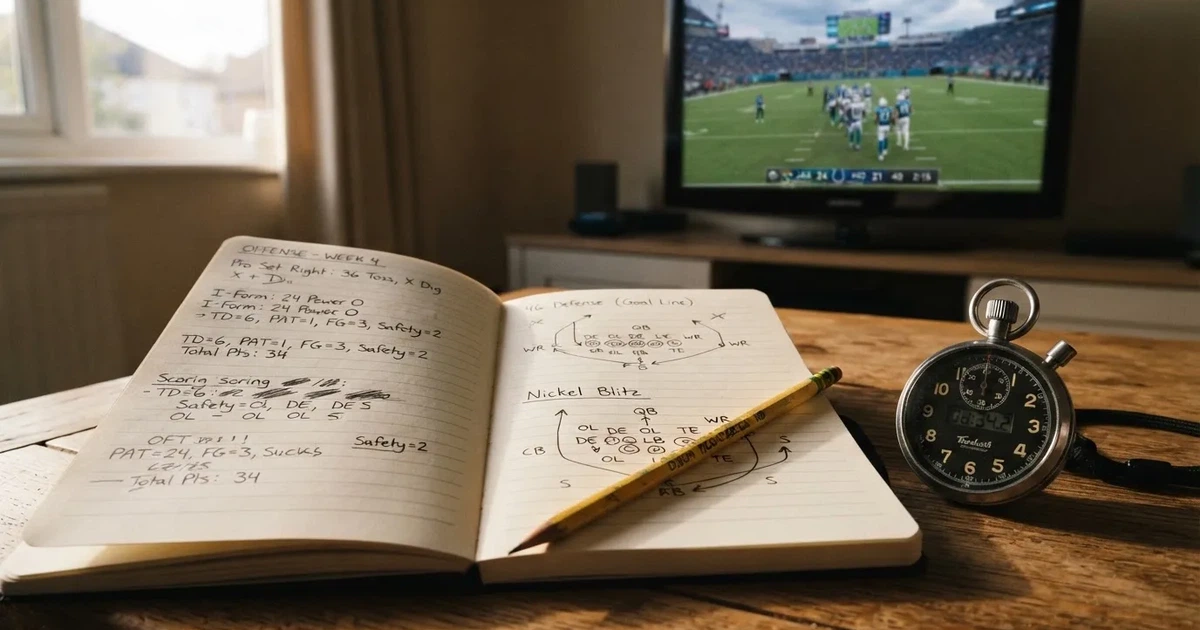
A point worth settling first. There is no such thing as a tip that is certain. The NFL has 32 teams and any one of them can be injured, lucky or simply better on the day; a college side can lose to a worse-ranked opponent three weeks in a row. The line between a “tip” and a guess is whether the person giving it has done the work — watched the snaps, checked the injury report, weighed the weather, looked at how the line has moved — and the line between a guess and a bet is whether the price on offer pays enough to back it. A tip without a price is a story; a price without a tip is a number. A bettor only needs both.
The markets themselves fall into a handful of shapes. The moneyline is the simplest: a price on each side, no handicap, the favourite shorter, the underdog longer. The spread, called the handicap in Britain, gives one side a points head start that turns a one-sided matchup into something closer to a coin toss for the bettor. The total, called the over/under, prices the combined score above or below a line the bookmaker has set. Then come the player markets — a quarterback’s passing yards, a running back’s rushing total, a receiver’s receptions — and the proposition bets on smaller in-game events. Each of these pays out the same way under the hood. The selection wins or it does not. A winning single returns the stake multiplied by the decimal odds; the profit is the return minus the stake, and the stake is the only money the bettor actually put down.
The arithmetic is worth doing once so the rest of the page makes sense. Take a moneyline at decimal odds of 1.90 on one side and 1.90 on the other. A £10 stake at 1.90 returns £19 if it wins, for a profit of £9. Both outcomes priced at 1.90 implies a payout share — the share of every pound wagered that comes back to bettors across all outcomes — of 1 ÷ (1 ÷ 1.90 + 1 ÷ 1.90) = 0.95, or 95%. The remaining 5% is the bookmaker’s margin, sometimes called the overround: the cut the book keeps of every unit staked on this market before anyone is paid out. Anywhere on the page a price is shown, that price already has the margin baked in, and the size of the margin is the difference between a sharp market and a soft one. Two-way markets in the NFL typically sit between 4% and 6%; a market that has drifted to 8% or 10% is one where the book is wider, and a bettor who cares about long-term return should be looking at that number before the team sheet. The margin is the only thing the bookmaker sells — the rest is the bettor’s job.
A handful of rules govern how every one of these markets settles. A handicap or total that lands exactly on the quoted line is called a push, and the stake is returned with no profit and no loss unless a tie is offered as a separate selection. A game that is abandoned or postponed past a deadline set out in the operator’s rules is made void and the stake comes back. Player markets usually carry minimums of play — a receiver has to be on the field for a stated share of offensive snaps, a quarterback has to start — and these minimums are written into the terms behind the market, not into the price. Reading the terms before placing the bet is the only way to know which side of those minimums a withdrawal or a late scratch puts the bet on.
What “value” means in plain terms. A price of decimal 2.00 represents a 50% chance in the bookmaker’s view, because at evens the book breaks even on a 50/50 outcome. If the bettor’s own read on the match is that the home side is a 55% chance to win, then 2.00 is a value price — the bettor’s edge over the book is five percentage points, the kind of gap that turns a season of bets into a profit over many hundreds of selections. A price of 1.70 implies a 58.8% chance; if the bettor’s own number is 55%, the price is bad, even though the side might still win. The team winning and the bet winning are two different questions, and only the second one matters to the bankroll.
That is the foundation. The rest of the page works through where American football is played, who is licensed to take bets on it in Great Britain, what tools a bettor has for staying in control of the spend, and what a bonus or a live market actually costs. The order is not a tip sheet and the conclusions are not picks; it is a way of looking at the next tip, wherever it comes from, and seeing whether the price is one worth taking.
Where the game is played: NFL, college and the calendar that drives the market
American football is played with eleven players on each side, four fifteen-minute quarters, and a scoring system that has more shapes than any other major sport. A touchdown is six points, with a one-point extra-point kick or a two-point conversion tacked on at the bettor’s choice; a field goal is three; a safety, scored by the defence, is two. The mix of those scores is what makes totals markets interesting: a low-scoring, field-goal-driven game plays very differently from a high-scoring, touchdown-driven one, and the shape of the scoring determines whether the over or the under is the better price. Knowing the league’s scoring system in your head saves a reader from being surprised by the line.

The headline competition is the NFL, and the NFL is the market most British bookmakers price in depth. Thirty-two teams split into two conferences of sixteen, the AFC and the NFC, play seventeen games across an eighteen-week regular season, and fourteen sides — seven per conference — reach a single-elimination playoff bracket. The postseason is short and brutal: four rounds, then a conference championship, then the Super Bowl. The 2025 season ended with Super Bowl LX at Levi’s Stadium in Santa Clara on 8 February 2026, where the Seattle Seahawks beat the New England Patriots 29-13 and Kenneth Walker III took the MVP. The next Super Bowl, played in February 2027, will sit in front of the same shape of market: outright winner, conference winner, division winner, MVP, player props, the length of the national anthem — and a price on every one of them, every one carrying the margin described in the section above.
The college game is the second pillar. The NCAA’s Football Bowl Subdivision runs from late August through early January, with a four-team playoff that expands in the next cycle. Bowl games carry their own markets from mid-December onwards, and a single elimination bracket in college means a hot team from a smaller conference can carry sharp money deep into January. For a bettor, college is a wider market with thinner liquidity — fewer bookmakers price every game, and the lines can move further on a single bet — which is sometimes an opportunity and sometimes a warning. Lines that move sharply off a small number of bets are a sign of limited liquidity rather than a sharp take.
Beyond the NFL and college sit the Canadian Football League, a different ruleset with a wider field and three downs rather than four, and the XFL and USFL spring leagues, both of which are covered by some British bookmakers in season. International fixtures — the NFL’s London and Munich games, the league’s regular-season expansion to São Paulo, Madrid and Berlin — are priced too, and a bettor who watches the schedule can find lines that the rest of the market has not yet moved on. The rule of thumb holds: the more a market is priced, the tighter the margin; the less a market is priced, the wider it tends to be, and the wider the margin, the harder it is to find value.
The calendar matters because the season is short and the windows are sharp. The regular season runs from the first week of September to the first week of January, with a six-game slate on Thursdays, a heavier slate on Sundays, a Monday night finish and an occasional Saturday double-header in December. The playoffs fill the four weekends after the regular season, and the Super Bowl closes the year in early February. The combine, the draft in late April and the slow drip of free agency fill the offseason with futures markets that move on rumour, and a bettor who treats those markets as a tip sheet will lose the discipline built up through the regular season. The shape of the calendar is itself a tool: a bettor who plans a staking plan around the weeks when the lines are sharpest — late-season games with playoff implications, divisional matchups, rivalry weeks — spends less time and less money for more signal than one who bets the full calendar.
The ten bookmakers, side by side
The ten bookmakers named below all hold a Gambling Commission remote licence for general betting on real events, which is the only test of whether a brand can lawfully take bets from customers in Great Britain. A licence is not a ranking and not a recommendation; it is a baseline that lets a bettor complain to the Commission, claim GAMSTOP coverage, and rely on the 10x bonus cap and the financial vulnerability check that came in 2024 and 2025. Several of the brands below also offer spread betting, which is a different product with its own regulator — the Financial Conduct Authority — and its own risk profile: spread-bet losses can exceed the original stake, which is a different shape of risk from a fixed-odds loss.

The table reads as four columns. The first names the brand; the second carries the Gambling Commission account number and the licence holder that the public register shows against it. The third is what the operator’s own terms state on the key that matters for this page — the markets and the features that an American football bettor would actually use. Names and account numbers are the basis on which a bettor checks a brand against the Commission’s public register, not a verdict on the brand itself.
| Brand | Gambling Commission remote licence (account, holder) | What the operator’s own terms state on American football |
|---|---|---|
| BetVictor | 39576, BV Gaming Limited | Best Odds Guaranteed on UK and Irish horse racing, with enhanced live race streaming and a BetFinder racing tool, alongside Smart Stats for sports |
| 10bet | 43173, Blue Star Planet Limited | Sportsbook covers football, tennis and horse racing, with Cash out, Bet Builder and Live Streaming across the markets the licence permits |
| Lottoland | 38991, EU Lotto Limited | App combines casino, lottery betting, sports betting and scratchcards; states it is licensed by the Gambling Commission for customers in Great Britain |
| Bet600 | 44731, Tyche Tech Limited | Pays Best Odds Guaranteed on horse racing: if the starting price is bigger than the early or show price taken, the bet is settled at the SP |
| Sporting Index | 27343, Sporting Index Limited | New-customer offer: a £10 fixed-odds bet at minimum odds of 1/2 unlocks three £10 fixed-odds free bets, three £5 Total Goals spread bets, three £5 Winning Favourites spread bets and a £1 Race Index spread bet; the qualifying bet cannot be placed in play or cashed out early |
| BetTom | 64959, Bet Tom Limited | Sports welcome offer is 50% back as a free bet of up to £50, with a matching 50% back up to £50 as free slot funds for casino play; full terms apply |
| Geoff Banks | 54095, GB Sports Advisors Limited | App offers live in-play prices and ante-post prices on future events |
| Star Sports | 9177, Star Racing Limited | Describes itself as the UK’s leading independent bookmaker, with virtual sports, casino and live casino alongside the sportsbook |
| Fitzdares | 400, Fitzdares Limited | App offers cash out, accumulators, Lucky 15s, specials and antepost markets on horse racing, football, tennis, rugby, cricket, golf and American football, with in-play live odds |
| DragonBet | 64908, DragonBet Ltd | Offers cash out both in-play and pre-match, and live streaming of racing |
A few of the columns deserve a second look. Sporting Index is a spread-betting specialist whose new-customer offer is a stack of fixed-odds free bets and spread-bet free bets at small unit stakes; a bettor who reads the headline without spotting the qualifying bet cannot be placed in play or cashed out will find the route to the free bet narrower than it first looked. BetTom’s sports welcome offer is split between a free bet of up to £50 and a free slot-funds bonus of the same size — a useful reminder that a “50% back” headline in a sportsbook often arrives with a casino leg attached, and a bettor who only wants the sports side should read the split before they opt in. Lottoland is principally a lottery brand whose sportsbook sits alongside its main product, and a bettor who joins for the sports markets should be aware that the depth of the sportsbook is a smaller part of what the brand does. Geoff Banks is an independent bookmaker with a smaller app footprint than the larger firms; a bettor who values ante-post prices and an in-play feed on a smaller range of events will find it suits, and a bettor who wants a deep same-game-multi product on every NFL game will not.
What the table does not say is what a brand looks like on the day. The market margin on a Sunday morning NFL spread at a sharp bookmaker can be a percentage point or two tighter than the same spread at a softer one, and that percentage point compounds over a season. A bettor who takes five minutes to compare the same spread at three of the brands above before placing a bet will, over a season, give back a smaller share of stake to the margin. The licence is the floor; the comparison is the work.
What a “bet” actually means: the basic shapes a bettor is buying
The first decision a bettor makes is the type of bet. A single is one selection: a price on one outcome, one event, settled on its own. A double is two selections, both of which must win for the bet to pay. A treble is three, an accumulator or “acca” is four or more, and the odds of each leg multiply together so the final price is the product of the legs. A Lucky 15 is fifteen bets covering four selections in different combinations — four singles, six doubles, four trebles and one four-fold accumulator — at a unit stake per bet, so a £1 Lucky 15 costs £15 in total stake. The same shape applies to a Trixie (four bets across three selections), a Yankee (eleven bets across four), a Canadian (twenty-six across five), a Heinz (fifty-seven across six) and a Goliath (two hundred and forty-seven across eight). The unit stake is what changes the size of the bet, and the bookmaker will multiply the unit stake by the number of bets in the combination when the slip is placed.
A bet builder or same-game multi is a single slip with several selections from the same match — a handicap, a total, a player prop, an anytime touchdown scorer. The legs must all win for the bet to pay, and the price is built from the prices of the legs in the same way an accumulator’s price is built. The trade-off is in the margin. A bet builder’s combined price carries a margin at every leg, and a same-game multi of four legs can carry an effective margin well above what a straight single on the same outcome would. A bettor who values a long price on a strong read of one game is paying a premium for the convenience of one slip.
Cash out is a feature that lets a bettor close a bet before the event has finished, at a price the bookmaker recalculates as the game unfolds. The price is the bookmaker’s view of what the bet is worth at that moment, and it carries the same margin the original price did. Cash out is useful when the game has moved in a way the bettor did not expect and the bet is now a loser — closing early takes a smaller loss than waiting for the final whistle — and it is a loss-making tool when the bettor uses it to lock in a profit on a bet that is winning. The latter habit converts a long-term edge into a series of small wins at a worse price.
Each-way betting is two bets of equal stake: one on the selection to win, one on the selection to place. The place terms — typically a quarter of the win odds for a field of eight or more runners in horse racing — are set by the operator and written into the slip. Each-way has a real place in horse racing and a smaller one in American football, where outright markets on the Super Bowl winner and conference winners carry a place price, and a bettor who wants exposure to a long-priced outsider with some protection against a strong favourite can use the each-way route.
What “exchange” means. A betting exchange is a platform where users back and lay selections against each other, with the exchange taking a commission on net winnings. Backing is the same as a fixed-odds bet: a price, a stake, a payout if the selection wins. Laying is the opposite: the bettor is offering the price to other users, and pays out if the selection wins, keeps the backer’s stake if it loses. The prices on an exchange are set by the users, not by a bookmaker, and the margin is set by the spread between the best back and best lay price rather than by an overround baked into a single price. A bettor who can lay a selection they think is too short — that is, too likely in the bookmaker’s view — is using a different tool from a backer, and the exchange is where the sharpest prices on major events tend to live. Commission and liquidity vary by exchange, and the smaller the event, the wider the spread, so an NFL spread at the top of the market on a Sunday morning is a different product from a small-market college game on a Tuesday.
Spread betting, the financial product, is a different thing again. The bettor buys or sells a “unit” on an index — total goals, race index, total points — at a stated spread, and the payout is the size of the spread multiplied by the number of units staked. The whole stake can be lost, and a loss can be larger than the original deposit. Spreadex is the British brand most associated with the product, regulated by the FCA for spread betting and by the Gambling Commission for fixed-odds betting; a bettor who uses Spreadex’s fixed-odds sportsbook is on the same product as any other British bookmaker, and a bettor who uses the spread-betting side is on a different product with a different regulator. The two are not interchangeable.
What makes a tip worth following: the work that has to go in
A tip is a statement that one selection is more likely to win than the price on offer suggests. The work that turns a guess into a tip is the work that has to be done before the price is read, not after. A short list of inputs that any serious model — whether the bettor is a model or a notebook — should weigh.
Form over a meaningful sample. The NFL season is seventeen games, and a 4-0 start is two wins above an even record. The sample is small. A bettor who reads a four-game form line as a strong signal is over-weighting noise; a bettor who reads it as a small input alongside the rest of the data is closer to the right framing. The deeper the sample — across a season, across a player’s career — the more weight it deserves, and the smaller the sample the more it deserves to be cross-checked against other inputs.
Injuries and the depth chart. A starting quarterback’s absence is the largest single swing in any one game, and the price adjusts sharply; a backup’s absence on the offensive line matters less but matters. A bettor who reads the injury report an hour before kickoff is reading it after the market has moved; the edge is in reading it earlier, with a sense of which players the market has not yet priced in.
The line itself. The handicap and the total are set by the bookmaker, but the line that settles is the line that closes, after the market has had its say. A line that has moved from 3.5 to 4.5 across the week is one where the market has shifted the bettor’s view by a point and a half, and the closing line is the best estimate the market has produced. A bettor who can take a price close to the closing line is taking the price the sharpest money in the market was willing to back.
Weather. Wind is the most under-priced input in outdoor stadiums; a 15 mph crosswind in a December game at Buffalo cuts field-goal accuracy, lengthens passing-game variance, and trims scoring. A bettor who has the forecast and a sense of how the stadium holds wind has an edge the casual market does not.
Coaching and scheme. A coach’s tendencies on fourth down, on two-point conversions, on going for it on his own 40 — these are the inputs that decide totals markets. A coach who goes for it on fourth down more often than average pushes his team’s scoring variance up, and a bettor who knows that before the line is set has a chance to take the over before the price catches up.
None of these inputs is a tip. Each is a piece of evidence the bettor weighs into a probability, and the price is the bettor’s test of whether the evidence is worth backing. A bettor who has done the work and found no value should not bet. The single hardest discipline is the one that says: do not bet this week. The weeks when the bettor does not place a bet are the weeks the bankroll is intact for the weeks when a value price sits on the slip.
A note on tipsters. The British market is full of paid and free tipsters, and the only honest test of a tipster is a long, public record of selections and outcomes, with the price the tipster took and the closing line of the market. A tipster who publishes a winning record at prices the market never reached is one whose results cannot be replicated by a follower, because the follower could not have taken the same price. A tipster who publishes a losing record over a thousand bets is more useful than one who publishes a winning record over twenty. The British market has no regulator for tipsters in the same way the Gambling Commission regulates bookmakers, and a bettor who pays a tipster is paying for an opinion, not a financial product.
The legal frame: how Great Britain regulates sports betting
The Gambling Act 2005 is the statute. The Gambling Commission, a non-departmental public body sponsored by the Department for Culture, Media and Sport, is the regulator. The Act covers Great Britain — England, Scotland and Wales — and Northern Ireland is outside it under an older law, so any phrase about a “GB licence” means the Great Britain regime and nothing else. Since the Gambling (Licensing and Advertising) Act 2014 an operator whose remote facilities are used in Great Britain needs a Commission licence wherever the operator itself is based; a Curaçao, Maltese or Gibraltar licence is not a substitute, and an operator without a Commission licence is committing an offence under section 33 of the 2005 Act by providing gambling facilities in Great Britain.
The Commission’s public register is the whole test of who holds a licence. A bettor who wants to check a brand searches the register by business name, trading name, domain or account number; the result shows the licence category, the holder and the trading names the holder operates. The ten bookmakers in the comparison table all appear on that register under the account numbers in the table, and a bettor who wants to confirm any of them can do so directly. A licence category the table does not list is the betting intermediary licence that covers betting exchanges, which sits separately from the remote general betting standard (real events) licence that covers fixed-odds sportsbooks. The two are different products with different rule sets, and the licence category tells a bettor which product they are using.
Betting exchanges run under a betting intermediary licence. The pool-betting licence covers off-course pool betting on horse and dog racing. The remote general betting standard (virtual events) licence is a separate category for virtual sports, which run on random number generators rather than real events. Several brands hold more than one of these categories under the same licence number, and the public register shows the categories alongside the account number. A bettor who uses a brand across product types is using a brand with the licences those products need, not a brand that has been re-classified.
The minimum age for any gambling product in Great Britain is eighteen. Since 7 May 2019 a customer cannot deposit or gamble — including with a free bet or bonus — without name, address and date of birth being verified. That is the source of the “no anonymous play” rule at a licensed site, and the verification check is the reason a bettor’s first withdrawal at a new bookmaker is sometimes slower than the next one. Identity verification is a licence condition, not a courtesy.
What may be bet on is not on a statutory list. An operator holds a licence for a category and offers markets under its own rules and the Licence Conditions and Codes of Practice. The LCCP is the Commission’s social-responsibility and operational code, and a bettor who reads the LCCP sees the framework the operator works within: customer interaction, self-exclusion, marketing, complaint handling, and the source-of-funds checks that come in at higher spend. The Commission does not approve individual markets; the operator does, under the LCCP, and the bettor’s check is the operator’s terms, not a Commission approval.
Staying in control: the safer-gambling tools every licensed bookmaker must offer
GAMSTOP is the national multi-operator online self-exclusion scheme, and a GB-licensed online operator is required to be a member. A bettor who signs up to GAMSTOP is excluded from every GB-licensed online operator for the chosen period, which can be six months, one year, five years, or five years with auto-renewal. After the chosen minimum period the exclusion stays in place for a further seven years unless the bettor asks GAMSTOP to remove it. The scheme covers online sites and apps; betting shops use a separate, in-shop self-exclusion process. A bettor who has signed up to GAMSTOP and is still able to place a bet at a GB-licensed online operator has found a brand that is breaking its licence condition, and the bettor’s route is to tell GAMSTOP and the Commission.
Deposit limits are a customer-set tool that every licensed operator must offer under the LCCP, with a phased rollout across 2025 and 2026. A deposit limit is a gross ceiling on deposits over a fixed period — daily, weekly or monthly — that the customer sets and the operator must enforce. The customer’s first limit can be set at registration and tightened at any time; loosening a limit has a cooling-off period that the operator must apply, so a bettor who has set a weekly ceiling of £200 cannot raise it to £500 in the same week and start spending the difference.
The financial vulnerability check is a check the operator runs when a customer’s deposits minus withdrawals exceed £150 in a rolling 30-day period. It is a public-record check — for example, bankruptcy or county court judgments — and it is not an income check and not a credit reference check. The check has been in force since 30 August 2024 and the £150 threshold since 28 February 2025. The check is meant to catch customers whose financial situation is publicly recorded as having broken down; it is not a means test and a bettor whose finances are stable will not see it in operation.
Financial risk assessments — the “affordability checks” of the press coverage — sit on a separate, staged timeline. The Commission’s plan was set out on 7 July 2026, with no start date given; the implementation is announced and staged, and a bettor who reads about “affordability checks” as if they were in force today is reading a press summary that is ahead of the regulatory calendar. The right way to write the state of play is that financial risk assessments are announced, staged, and not yet in force, and that the way to find the current state is the Commission’s own communications.
Help is free and confidential. GamCare runs the National Gambling Helpline, with phone, live chat and a self-help toolkit. GambleAware funds treatment, education and research. The NHS runs gambling clinics in several regions of England. Gamblers Anonymous runs peer-support meetings, in person and online. The Commission’s safer-gambling page links to all of these, and a bettor who has noticed a change in their own betting is well advised to use one of them before changing anything else. A bettor who has signed up to GAMSTOP is excluded from the next bet, not the next decision, and the decision is the harder part.
Paying in: what a licensed operator takes, and what it does not
A credit card has been banned for gambling in Great Britain since 14 April 2020, and the ban covers credit-card-funded payments through an e-wallet — a deposit from a Skrill or Neteller account that was funded by a credit card is still a credit-card deposit. Debit cards and bank-based payments — Faster Payments, bank transfer, direct debit — are not covered. A bettor who holds a credit card and a debit card and wants to deposit at a licensed bookmaker uses the debit card; the credit card is declined at the point of sale by the operator’s payment processor, not by the bank.
Identity verification before the first deposit means no anonymous play at a licensed site, and source-of-funds questions at higher spend are normal under the money-laundering rules. A bettor who deposits and withdraws at modest levels will not see a source-of-funds check; a bettor whose net deposits climb into four figures will, and the operator will ask for payslips, bank statements or other evidence. The check is a money-laundering rule, not a credit rule, and the operator is bound by it under the Proceeds of Crime Act and the Commission’s own code.
Cryptocurrency is not on a statutory list either way at a GB-licensed operator. The Commission’s public register shows the licence categories, not the payment methods a brand accepts, and the acceptance of cryptocurrency sits in each operator’s own terms. A bettor who wants to deposit in bitcoin or ethereum at a licensed brand needs to check that brand’s deposit page directly, because no rule forces an operator to take a payment method the operator does not want to take. A bettor who uses an unlicensed brand to deposit in cryptocurrency gives up the GAMSTOP coverage, the Commission complaints route, the 10x bonus cap, the financial vulnerability check and the British consumer protection that goes with a licence, in return for the privacy the unlicensed route offers. Whether that trade is worth it is the bettor’s call, and the rest of the page will not make it for them.
What a bonus really costs: rollover, minimum odds and the 10x cap
“Free bet” and “100% bonus” are the marketing words. The arithmetic is the answer. A free bet is a token the operator credits to a bettor’s account, and the stake is usually not paid back with a win: a £10 free bet at 2.00 returns £10 in profit, not £20 in return. A bonus is a credit tied to a deposit, and the credit must be turned over a stated number of times at a stated minimum price before it can be withdrawn. The cost of either is in the turnover and the minimum price, not in the headline.
Wagering requirements on bonuses at GB-licensed operators are capped at 10x as of 19 January 2026: a £10 bonus at 50x needs £500 of bets, under the cap no more than £100. The cap sits on the wagering requirement, not on the bonus value, and a bettor who reads the cap as a cap on the bonus is reading past it. The cap also sits on the bonus, not on the deposit: a £10 deposit with a 100% bonus at 10x needs £200 of qualifying bets, £100 of bonus and £100 of deposit, on selections at or above the minimum price. A bettor who can find a bonus with a 1x wagering requirement is reading a different product, and that is the shape the cap pushes the market towards.
Mixed-product promotions are banned. An offer that requires gambling on two or more product types — betting, casino, bingo and lottery — is banned as of 19 January 2026, and a bettor who sees an offer that says “bet on football to get free spins” should not see that offer at a licensed operator. Where the cap applies to a free bet with no wagering condition, and any cap on the money value of a bonus, are not established; a bettor who cares about either reads the operator’s terms before opting in.
The economics of a free bet at a typical NFL price. A £10 free bet at decimal odds 2.00, on a market with a 5% margin, returns on average £10 × (2.00 − 1) ÷ 2.00 × 0.95 = £4.75 in expected value. The stake is gone — it is not paid back with a win — and the bettor’s net is the expected value, not the headline. A free bet at 1.50 on the same market is worth about £10 × (1.50 − 1) ÷ 1.50 × 0.95 = £3.17 in expected value. The free bet is worth more at the higher price, and the bettor who uses a free bet on a long-priced selection is using it more efficiently than one who uses it on a short-priced favourite. A bettor who has a free bet and a read on a game should look for the highest price the operator offers on the same selection, and use the free bet at that price.
The economics of a deposit bonus. A £100 deposit with a 100% bonus at 10x requires £2,000 of qualifying bets, with bets at minimum odds of around 1.50 counting fully. On a market with a 5% margin, the expected cost of clearing the bonus is £2,000 × 5% = £100, before any of the bonus is in the bettor’s pocket. A 10x bonus with a 1x wagering requirement is a different shape: a £100 bonus with £100 of qualifying bets costs £5 in expected margin and is worth roughly £95 in expected value. The shape of the wagering requirement is the entire story, and a bettor who reads a 100% headline without reading the 10x is reading the wrong number.
The dead-heat rule, the void rule and the each-way rule. A leg of an accumulator that is made void drops out of the calculation, and the accumulator is settled on the remaining legs at the combined price. A dead heat in an outright market — two horses or two teams judged to have tied — pays out at a fraction of the stake proportional to the share, typically half the stake and half the win price for a two-way dead heat. An each-way bet is two bets of equal stake, and the place terms — usually a quarter or a fifth of the win odds — are written into the slip. None of these rules is a marketing line; all of them are written into the operator’s terms, and a bettor who has not read them is the one who learns them by being on the wrong side of a settlement.
Live betting and cash out: the in-play market and its traps
In-play betting is offered by every GB-licensed sportsbook at the top of the licence range, and the controls are the operator’s own licence conditions, not a statutory rule. The product is the same: a price on a market that updates as the game unfolds, with the option to back or lay at the new price. The product is the same as the pre-match product underneath; the difference is that the price moves fast and the bettor has less time to think.
The shape of an in-play market is determined by the data feed. A bookmaker with a faster, sharper feed can offer a tighter price because the feed has caught up with the score; a bookmaker with a slower feed is either offering a wider price to protect against the lag, or is hedging by limiting stakes. A bettor who can read a bookmaker’s feed speed across the first few games of a Sunday is reading the limit they will hit when the market moves quickly. The operator is not obliged to publish the feed speed, and the bettor’s check is the practical one: how wide is the price, and how quickly does it adjust.
A push on a handicap or total in-play is the same as a push pre-match: a line that lands exactly on the quoted number is a void bet and the stake comes back. A market that is suspended — the price disappears — is a market the operator has paused, usually because the model is being recalculated or because a key event has happened (a touchdown, a red card equivalent in another sport, a quarter break). A bettor who has a bet on a suspended market has the bet live; a bettor who tries to place a new bet on a suspended market cannot, until the operator reopens it. The reopening price is the operator’s new view, and the bettor is taking that view at the operator’s price.
Cash out, on the in-play market, is the feature that lets a bettor close the bet at the operator’s recalculated price. The price carries the margin, the same as every other price the operator offers, and the bettor’s edge is the gap between the operator’s view at the moment of cash out and the bettor’s own view of how the game will unfold from that moment. A bettor who cashes out on every winning bet is converting a long-term edge into a series of small wins at a worse price; a bettor who uses cash out only when the game has moved against the original bet is using the feature as a stop-loss, and that is the use the feature is built for.
Streaming, in-play statistics and the bet builder. Some operators offer live streaming of NFL games; the rights vary by operator and by territory, and a bettor who wants to watch a specific game inside a betting app needs to check the app rather than assume. In-play statistics — possession, yards, the count — sit inside the live data feed and are the bettor’s best read on a game that is moving quickly. The bet builder or same-game multi is the slip with several selections from the same match; the combined price carries a margin at every leg, and a bettor who builds a same-game multi of four legs is paying a premium for the convenience of one slip.
What the reader should take away
A tip is a probability statement the bettor has built from form, injuries, the line, the weather, the scheme, and any other input that moves the read. A price is a probability statement the bookmaker has built, with a margin baked in. The bet is worth placing when the bettor’s probability is higher than the bookmaker’s probability, and not otherwise. The work of finding that gap is the same work whether the bet is on the moneyline, the spread, the total or a player prop, and it is the same work whether the bet is pre-match or in-play. The only thing that changes is the time the bettor has to do it.
The market the bettor is in is regulated. A GB-licensed bookmaker is the floor: GAMSTOP coverage, a Commission complaints route, the 10x bonus cap, the financial vulnerability check, and the British consumer protection that goes with all of them. A bettor who chooses an unlicensed brand gives those up, in return for whatever the unlicensed brand offers, and the rest of the page will not pretend the trade is the same on both sides. An unlicensed brand is not a cheaper version of a licensed one; it is a different product with a different risk profile, and the bettor’s decision is whether the trade is worth it.
Bankroll discipline is the discipline that keeps a bettor in the game. A staking plan — flat stakes, or a percentage of bank, or a Kelly fraction sized to the edge — is the part of the bet that the bettor controls when the price is set by the market. A bettor who has read the page, knows what a price represents, and has a staking plan they follow in the weeks when they have a read and the discipline to skip the weeks when they do not, is the bettor who turns a season of bets into something other than a slow loss. A tip is a probability; a price is a probability; the bet is the comparison. Everything else on the page is a way of getting to that comparison cleanly.
Frequently asked questions
How does a bet on American football work?
A bet on American football is a price on an outcome. A single bet returns the stake multiplied by the decimal odds if it wins, and the stake is the only money the bettor has put down. A moneyline is a price on each side; a spread or handicap is a price on one side with a points head start; a total or over/under is a price on the combined score; player markets are prices on individual performances. A bet on a handicap or total that lands exactly on the line is a push and the stake is returned. A game that is abandoned or postponed past the operator’s deadline is made void and the stake comes back.
What does “American football betting” cover?
American football betting covers the NFL’s seventeen-game regular season across eighteen weeks, the single-elimination playoffs and the Super Bowl; the NCAA’s Football Bowl Subdivision regular season and four-team playoff; the Canadian Football League; and the XFL and USFL spring leagues in season. British bookmakers also price the NFL’s international fixtures in London, Munich, Madrid, São Paulo and Berlin. The depth of pricing varies by bookmaker, and the lines that are most heavily priced — the NFL spread and total at a Sunday morning kickoff — are typically the tightest in margin.
Where can a bettor find the best American football odds?
The best American football odds sit on the price that gives the bettor the highest implied payout share, and that price is found by comparing the same selection at several bookmakers before placing the bet. The closing line — the price the market settles on just before kickoff — is the best estimate the market has produced, and a bettor who can take a price close to the closing line is taking the sharpest money in the market. The bookmaker’s margin is the difference between a sharp price and a soft one, and a market with a 4% margin returns a higher long-term payout share than the same market with a 6% margin on the same selection.
What is a value bet, and why is no tip ever certain?
A value bet is a price whose implied probability is below the bettor’s own read of the true chance. A price of 2.00 represents a 50% chance in the bookmaker’s view; if the bettor’s own read is 55%, the price is value. A value bet is still not certain. The team can lose, the player can be injured, the weather can change, the read can be wrong, and the bettor who treats a value bet as a sure thing is the bettor who loses discipline the first time the value bet does not pay. A value bet is a long-term edge, not a single outcome, and the edge plays out over many bets, not one.
What is the bookmaker’s margin, and how does it show in the odds?
The bookmaker’s margin is the cut the operator keeps of every unit staked on a market before anyone is paid out. A two-way market priced at 1.90 / 1.90 implies a payout share of 1 ÷ (1 ÷ 1.90 + 1 ÷ 1.90) = 0.95, or 95%, and the remaining 5% is the margin. The margin sits inside every price, and the size of the margin is the difference between a sharp market and a soft one. Two-way markets in the NFL typically sit between 4% and 6%; a market that has drifted to 8% or 10% is one where the book is wider, and a bettor who cares about long-term return is reading that number before the team sheet.
How is the return on a bet worked out from the stake and the odds?
A winning single returns the stake multiplied by the decimal odds, and the profit is the return minus the stake. A £10 stake at 1.90 returns £19, for a profit of £9. A combination bet — a double, a treble, an accumulator, a Lucky 15 — multiplies the odds of the legs together into one price, and the return is the stake multiplied by that combined price. A free bet’s stake is not usually paid back with a win, so a £10 free bet at 2.00 returns £10 in profit, not £20 in return. The return is the headline; the margin is the cost; the staking plan is the bettor’s only control.
US & other team sports – Basketball betting
Content created by the «Basketball betting» team
