
Online table tennis betting in Great Britain — markets, odds and the bookmaker's edge
 Available in US
Table tennis sits in an odd position in British betting. The sport has been Olympic since 1988, its professional tours run almost year-round, and fixtures are scheduled at hours that fit a UK evening rather than a UK morning — which means the betting slip gets used. What it does not get is the same weight as football or horse racing on most operator front pages. That makes the sport a useful place to look at how a bookmaker actually behaves when it is not under the spotlight: how its odds are built, what its welcome offer really costs, and whether its in-play product holds up when a match is swinging point by point.
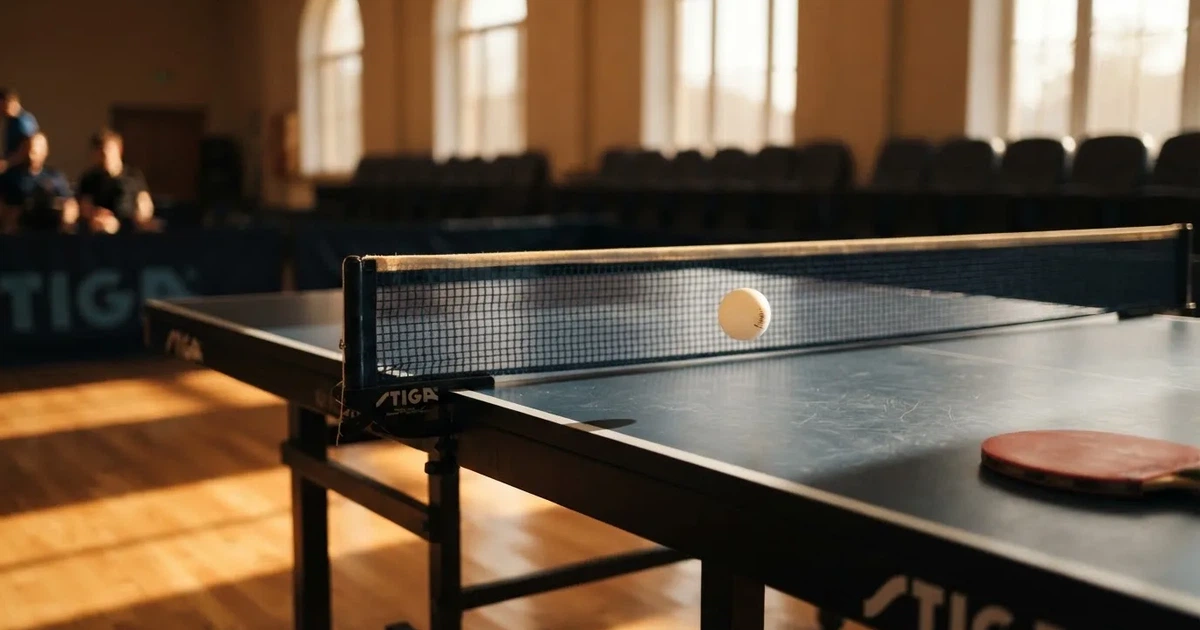
This guide is written for a punter in Great Britain who is sizing up table tennis as either a side interest or a regular line. It explains how a bet on the sport pays out, how the bookmaker’s margin shows up inside every price, what the live markets look like, where bonuses stop being free, and which of the ten licensed brands reviewed here earn their place on a shortlist.
Current as of 27 October 2026, against the Gambling Commission’s public register.
How table tennis odds pay out and what a margin is
A table tennis bet pays the same way any other fixed-odds bet pays. Place a stake at a decimal price, the bet wins if the selection wins, and the return is the stake multiplied by the price. A £10 bet at 2.50 returns £25 — the original £10 plus £15 of profit. The same price in fractional form is 3/2 (the “fractional odds” of 3 divided by 2, plus 1 = 2.50 in decimals), and a punter who thinks in fractions can read 6/4, 5/2, 11/4 the same way. The mechanics are not different from betting on football or tennis.

What is different is the market shape. A typical table tennis match produces three main markets: match winner (sometimes called moneyline), handicap, and total games. Some books also offer an over/under on total points, set betting (correct score in games, such as 3-1), and player-specific props such as “player to win a specific game” or “race to X points”. The match winner market is two-way: only one player can win. That matters for the margin.
Take an illustrative two-way match winner at decimal prices 1.90 and 1.90. The “implied probability” of each side is 1 divided by the price, so 1 ÷ 1.90 = 0.5263, or 52.63%. Two sides add up to 105.26%. That is more than 100%. The excess — 5.26% in this case — is the bookmaker’s overround. The margin, or the slice of every pound wagered that the book expects to keep on average, is 5.0% (calculated as 1 minus the reciprocal of the overround).
A worked example, using the same prices: stake £10 on each side, total £20 staked. One side wins and pays £10 × 1.90 = £19. The book keeps the £10 stake on the loser. Returned to the customer: £19. Kept: £1. The £1 kept out of £20 staked is the 5% margin in real money. The same bookmaker charging 1.85 / 1.85 keeps more; the same bookmaker charging 1.95 / 1.95 keeps less. Punters who compare prices across brands are doing the arithmetic above without writing it down.
A market margin of around 5% is typical for a two-way match winner at a mainstream bookmaker; for an exotic three-way market (such as a tennis set winner where a tiebreak counts as a third outcome) the margin is higher because the bookmaker carries more uncertainty and prices accordingly. Punters do not see the margin printed on the slip, but it is the single number that decides whether a price is sharp or soft, and the only one worth comparing across brands.
Fixtures, formats and why the sport suits in-play
A table tennis game is won by the first player to reach 11 points; if both players reach 10, the first to lead by two points wins the game. A match is the best of any odd number of games — typically best of five or best of seven in professional competition. Service alternates every two points, and once both players reach 10 each serves one point in turn. The rules are not complex, but they matter for in-play: a service change is a small reset of momentum, and a 10-10 game is a different market than the same fixture at 0-0 because the variance is higher.
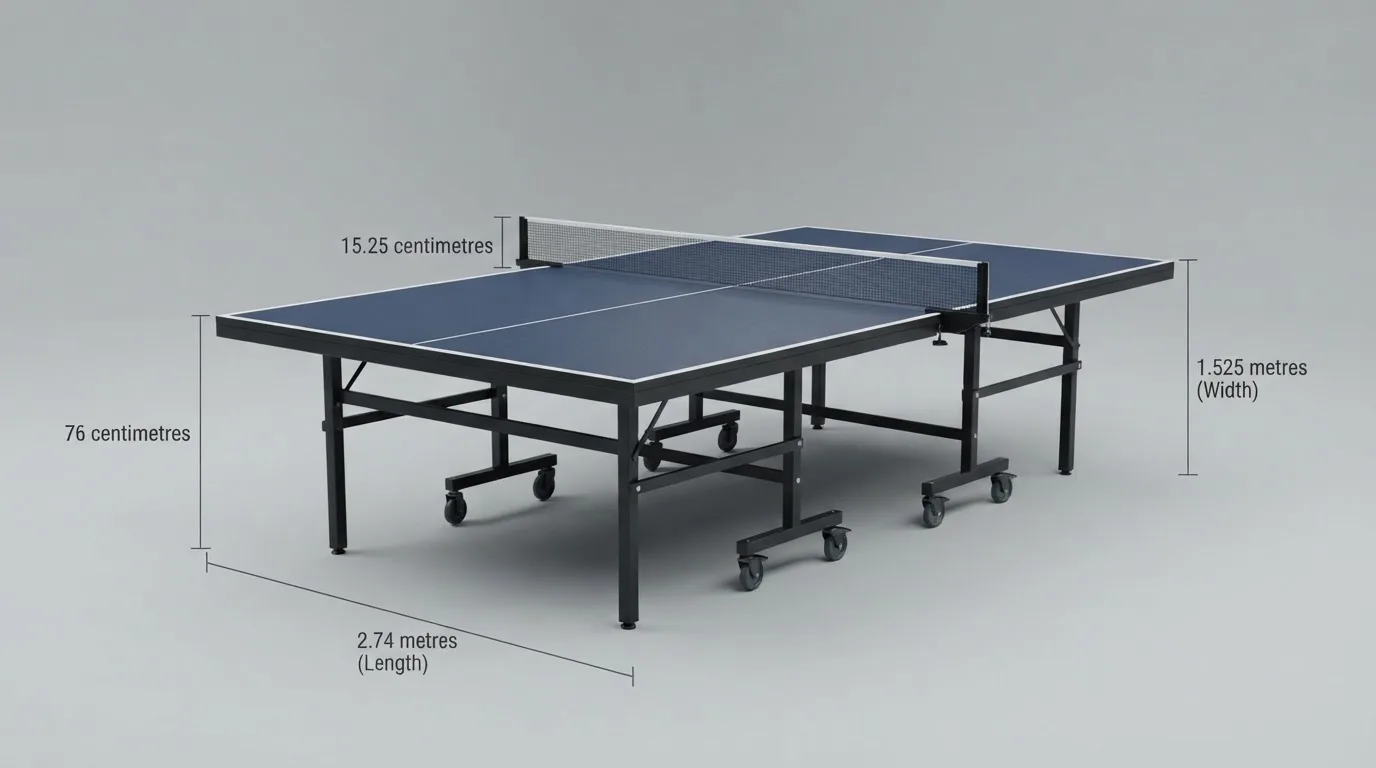
Table tennis suits live betting for three reasons. First, the matches are short — a best-of-five can finish inside half an hour — so the in-play window is the match, not a slice of it. Second, the scoring is continuous and visible, so the market updates constantly rather than waiting for a break in play. Third, the ITTF (International Table Tennis Federation, the sport’s governing body, founded in 1926) tour runs events almost every week somewhere in the world, which means a licensed bookmaker with a serious live product rarely has an empty schedule to fill.
Markets and odds: what a bookmaker actually posts on table tennis
A bettor comparing table tennis markets across brands should look past the headline price and check what is on the slip. The match winner is the obvious entry point, but most licensed books now offer at least the following menu for any match of consequence: match winner, handicap (a virtual head-start given to the underdog, which makes the price closer to evens), total games over/under, set betting (correct score in games), and at least one player prop such as “player to win game one” or “total points in the match over/under”.
A handful of brands go further. Bet builders — a same-game multi that combines several markets from one fixture into a single bet — are now standard on football, and several books have extended the feature to table tennis. The model is the same: pick two or three outcomes from the same match, the prices multiply into one combined price, and the bet wins only if every leg wins. A combined price of 4.00 across two legs at 2.00 each looks generous; in practice the two legs are correlated (one player’s form drives both), so the margin inside the combined price is usually higher than the margin inside either single. That is the trade-off the punter accepts in exchange for the bigger headline price.
Accumulators and the cost of the long price
An accumulator — a multi-leg bet where every leg must win — is the most common way a casual punter builds a table tennis slip. The combined price is the multiplication of the individual prices, so three legs at 2.00 each become 8.00. The stake is small because the headline number is large. What the price hides is the compounded margin: each leg carries its own overround, and the combined overround is larger than any single leg. A five-leg accumulator at 2.00 per leg has the same shape, only more so.
The corollary is that an accumulator at 10.00 is not “10 times more likely to pay a big prize” than a single at 10.00 — it is several singles stitched together, each with its own vig. The bookmaker earns on the average outcome of the bet; the punter pays for the chance of an unusual outcome. A bettor who treats accumulators as the occasional lottery ticket rather than the working tool of a betting bank is reading the price correctly.
Where the market ends
Not every match gets a full menu. Lower-division domestic leagues, women’s qualifiers, and exhibition events are typically priced only on the match winner, sometimes with a handicap. The depth of the menu is a fair proxy for how seriously a brand takes the sport: a bookmaker that posts set betting and player props on a Polish Superliga fixture takes the sport more seriously than one that posts only the winner. Several of the brands reviewed below are strong on the men’s ITTF World Tour and weaker on the women’s tour; one or two carry Setka Cup and TT Cup markets that others do not touch. The depth matters because the price on a thin market is set by the bookmaker alone, and the margin inside that price is the book’s choice rather than the market’s.
Tournaments, tours and the calendar
The professional table tennis calendar runs almost continuously. The ITTF World Tour is the main circuit, with World Tour events, World Championships, World Cup, and continental championships layered on top. The Olympic Games sit on the four-year cycle and pull the largest betting handle when the sport is on. Below the senior tour are junior events, continental opens, and a dense layer of national leagues that run in parallel through the European and Asian season. The Setka Cup and TT Cup are Ukrainian- and Polish-run competitive streams that fill the betting slip between World Tour events; several licensed books carry them precisely because the volume is there and the events are scheduled at convenient hours.
For the punter, the calendar means there is almost always a table tennis match on somewhere — which is good for liquidity and bad for fatigue. Liquidity matters because a price set against many bets settles closer to the true probability than a price set against one; the depth of the betting handle on a World Tour semi-final is materially higher than on a Tuesday morning Setka Cup group match, and the price moves accordingly.
What changes when the Olympics come around
Olympic table tennis is a four-year spike in handle. The sport has been Olympic since 1988, and the singles and team events pull betting volume from casual punters who otherwise do not look at the sport. The bookmakers respond by widening the menu: match winner, handicap, set betting, total points, and the props are all posted for the medal matches. Outside the Olympics, the menu on a World Tour event is thinner but rarely empty.
How the ten licensed UK bookmakers compare on table tennis
The ten brands below all hold a remote operating licence from the Gambling Commission for real-event betting. A place in this comparison is not a licence — every GB-licensed online bookmaker is on the Commission’s public register, and there are far more than ten — and a place in this comparison is not a ranking. What the comparison does is set out, for each brand, the licence that backs it, the table tennis product the brand actually runs, and the one feature that sets it apart from the rest of the field. Each review ends with a verdict — what the brand does well, where it loses to its rivals, and which kind of bettor it suits.
The order is the order research fixed, and the order in which they appear here.
| Brand | Gambling Commission remote licence | What the operator’s own terms state on table tennis |
|---|---|---|
| Betway | 039372-R-319367-029 (account 39372), held by Betway Limited | Carries a full World Tour and Setka Cup schedule, with match winner and handicap as standard; in-play on selected events |
| Dabble | 065677-R-340363-005 (account 65677), held by Dabble Sports UK Ltd | Markets on major ITTF events and lower-tier streams; “social betting” features aimed at recreational punters |
| Spreadex | 008835-R-104580-022 (account 8835), held by Spreadex Limited | Fixed-odds on table tennis plus financial spread betting in one app; table tennis falls under the fixed-odds side |
| bet365 | 055148-R-331498-002 (account 55148), held by Hillside (UK Sports) ENC | One of the deepest in-play menus on the sport, with Bet Builder+ across multiple table tennis markets |
| Smarkets | 039173-R-319366-011 (account 39173), held by Smarkets (Malta) Limited | Exchange format with back and lay prices; commission on net winnings rather than a built-in margin |
| Bet600 | 044731-R-323941-016 (account 44731), held by Tyche Tech Limited | Markets on the ITTF World Tour and the Olympic cycle; price boost feature on selected matches |
| BoyleSports | 039469-R-319383-025 (account 39469), held by Boylesports Enterprise | Standard match winner and handicap on World Tour events; stronger on Irish racing than on table tennis |
| Betfair | 039439-R-319330-013 (account 39439), held by PPB Counterparty Services Limited | Sportsbook plus exchange — the sportsbook carries table tennis; the exchange is where sharp money sits |
| NetBet | 039170-R-319343-032 (account 39170), held by Netbet Enterprises Limited | World Tour and Setka Cup coverage; Daily Boosts and Profit Boosts on selected table tennis matches |
| Swifty Sports | 058957-R-334734-006 (account 58957), held by Swifty Global (UK) Ltd | Match winner and handicap on the major tours; Bet Builder listed as coming soon on the app |
Betway
Betway’s UK remote licence is account 39372, held by Betway Limited, and the brand runs a standard general betting standard (real events) menu. On table tennis, Betway carries a full ITTF World Tour schedule and posts prices on the Setka Cup stream, with match winner and handicap as the working markets. In-play is offered on selected events, and the brand’s Free Bet Club returns up to £10 in free bets every week after a £25 spend on sports, paid as two £5 free bets. The trade-off the punter makes is that the brand is built for football and the table tennis product, while complete, is a smaller surface than the headline sports.
The verdict: a sound choice for the general sports bettor who wants a familiar, reliable interface; less focused, however, for the punter whose primary interest is dedicated table tennis analysis.
Dabble
Dabble’s licence is account 65677, held by Dabble Sports UK Ltd, and the brand has built its identity around a “social betting” model — copy other punters’ bets, follow tipsters, and stake against the crowd. Table tennis markets are posted on the major ITTF events and on the lower-tier streams, and the welcome offer is “Bet £10, Get £10 in Free Bets” on a first deposit for new customers, with a 7-day expiry on the free bet and the stake not returned on a win. The minimum-odds qualifier and the 7-day clock are the two conditions that decide whether the offer is worth the bother.
The verdict: a credible option for the recreational punter who values the social feed; the table tennis product is functional rather than deep.
Spreadex
Spreadex runs on account 8835 with the Gambling Commission for fixed-odds betting, and separately with the FCA for financial spread betting — the only brand in this comparison that holds both. That is the headline feature, and it shapes what the brand offers on table tennis. Fixed-odds markets are posted on the sport, alongside the financial spread book on indices, currencies, and bonds. The Spreadex app combines both products in one place, with one-click, auto and partial cash out, and live streaming of UK and Irish horse racing, greyhounds, tennis, NFL and selected football. The fact that “losses can exceed the deposit” applies to the spread side is worth knowing before opening that part of the account.
The verdict: a strong pick for a punter who actually wants both sports betting and spread betting under one roof; redundant for a punter who only wants table tennis.
bet365
bet365’s licence is account 55148, held by Hillside (UK Sports) ENC, and the brand carries one of the deepest in-play products in British betting — table tennis included. Bet Builder+ combines markets from one event into a single bet, available pre-match and in-play, and the Super Boosts, Winnings Boosts and daily Bet Boosts apply across the sport. The app is the most downloaded sports betting app in the UK App Store, and the brand is the official global betting partner of the UEFA Champions League. None of that is a table tennis fact, but the infrastructure that supports it is what makes the table tennis product as deep as it is.
The verdict: a top-tier choice for those who prioritize in-play depth and a comprehensive sports-book infrastructure.
Smarkets
Smarkets runs on a remote betting intermediary licence — account 39173 — held by Smarkets (Malta) Limited. That is a different licence class from the fixed-odds brands above: a betting exchange is an intermediary that matches backers against layers, with the exchange itself taking a commission on net winnings rather than building a margin into every price. UK debit card deposits are instant from £10 up to £15,000, and open-bank-transfer deposits are instant from £10 up to £10,000; withdrawals are processed within 6 hours from £10 up to £100,000. The table tennis product is the exchange’s order book — back and lay on the match winner, with the depth of the book deciding how much can be staked at any given price.
The verdict: a premier destination for a punter who wants to lay as well as back and prefers a commission-based model to a bookmaker’s margin; not a substitute for the dedicated sportsbook slip.
Bet600
Bet600’s licence is account 44731, held by Tyche Tech Limited, and the brand is a smaller fixed-odds book aimed at the recreational end of the market. Table tennis markets are posted on the ITTF World Tour and around the Olympic cycle, and the brand offers price boosts on selected matches. Best Odds Guaranteed applies on horse racing — if the starting price is bigger than the price taken, the bet is paid at the SP — though the offer does not extend to table tennis.
The verdict: a sensible small-stake book for a punter whose interest is the headline sport; the table tennis product is functional rather than specialist.
BoyleSports
BoyleSports runs on account 39469, held by Boylesports Enterprise, and the brand is an Irish-headquartered bookmaker with a strong UK presence. The sports welcome offer for UK players is £20 in free bets when a £10 bet is placed (€30 in free bets for a €10 bet for Irish players). Table tennis is covered on the World Tour, with match winner and handicap as the standard markets. The brand’s depth is on racing rather than on table tennis.
The verdict: a viable alternative, though its core strengths are clearly aligned with horse racing rather than table tennis.
Betfair
Betfair’s licence is account 39439, held by PPB Counterparty Services Limited — the same parent that runs Paddy Power, and the two brands are not independent operators in any meaningful sense. Betfair is split between the sportsbook (fixed-odds, on the same licence class as the others) and the exchange (a separate product under the betting intermediary model). The sportsbook offers in-play, Bet Builder, free live streaming of UK and Irish horse racing and football, and a 90 Minute Payout market. The exchange is where the sharp money on table tennis sits.
The verdict: a dual-format powerhouse that caters to both exchange traders and sportsbook recreationalists under one roof.
NetBet
NetBet’s licence is account 39170, held by Netbet Enterprises Limited, and the brand runs a fixed-odds sports book alongside casino. The sportsbook offers Daily Boosts, Profit Boosts and free bet offers, a Bet Builder with instant dynamic odds, and sports stats for the major leagues. On table tennis, the coverage spans the World Tour and the Setka Cup, with the boosts applied to selected matches.
The verdict: a credible secondary book for a punter who already has a primary one; less compelling as a single-account choice for a punter whose main interest is the sport.
Swifty Sports
Swifty Sports’ licence is account 58957, held by Swifty Global (UK) Ltd, and the brand is one of the smaller names on the Commission register. The sportsbook offers Best Odds Guaranteed on horse racing, Cash Out on markets including horse racing and football, daily price boosts, live streaming and in-play betting; Bet Builder is listed as coming soon on the app. Table tennis markets are posted on the major tours, with match winner and handicap as the working markets.
The verdict: a watch-this-space brand for a table tennis punter — the app’s product is functional but the wider feature set is still in build.
The licence check every bettor should run
Every brand in this comparison holds a remote operating licence from the Gambling Commission, and the Commission’s public register is the only test that matters. The register can be searched by business name, trading name, domain or account number, and the entry shows the licence class, the licence holder, and any trading names the holder runs. A punter who is weighing a brand should search the register by domain — not by name, because a brand’s name can be carried by an unrelated entity — and check that the entry matches the site being used.
The check is short. A domain search returns a card with the licence number, the licence holder’s legal name, the licence classes (for this page: remote general betting standard (real events), or remote betting intermediary for an exchange), and any operating names. A punter who sees the card and the licence holder matches the brand on the site can place a bet with the Commission’s dispute-resolution route available if anything goes wrong. A punter who cannot find the card is being asked to bet at a site the Commission does not license, which means no GAMSTOP, no Commission complaints route, and no British consumer redress if funds are withheld.
A licence is not a guarantee. The Commission licenses the operator; it does not insure the bet. But it is the floor under which a brand should not fall.
What responsible gambling looks like at a licensed bookmaker
The licensed brands above are bound by the same set of player-protection rules, and those rules are what a punter should look for in the account settings before placing a bet. Three are worth naming.
Identity verification is mandatory at the first deposit: name, address and date of birth are checked before any gambling on the account, including with a free bet or a bonus. That is what stops a licensed site from being anonymous, and it is the rule a punter should expect to meet rather than resent.
GAMSTOP is the national self-exclusion scheme. A punter who registers with GAMSTOP is excluded from every GB-licensed online operator for the period chosen — six months, one year, five years, or five years with auto-renewal — and after the minimum period the exclusion stays in place for a further seven years unless the punter asks GAMSTOP to remove it. It is the single most powerful self-exclusion tool in British online betting, and it covers every brand in this comparison.
Deposit limits are the punter’s own lever. A licensed operator must offer a fixed-time-frame deposit limit in the account settings, and the punter sets the level. A punter who wants a hard ceiling on the bank sets it before the first deposit, not after a losing run.
Beyond those, the help lines are GamCare (the National Gambling Helpline), GambleAware, the NHS gambling clinics, and Gamblers Anonymous. A punter who is worried about their own or someone else’s betting has somewhere to go that is not the bookmaker.
Crypto, anonymity and the British rules
A British punter looking at table tennis betting with bitcoin, with crypto, or via a blockchain-based platform runs into the Commission’s identity rules. Name, address and date of birth are checked before the first deposit at a licensed operator, which means a licensed site cannot be anonymous — the wallet is checked, the customer is checked, and the two are linked. That is incompatible with most “crypto betting” marketing, which sells anonymity as the headline feature.
A punter who actually wants to bet with bitcoin has two routes. The first is a licensed operator that accepts a crypto deposit: the deposit is converted to sterling on the way in, the bet is settled in sterling, and the identity check stands. The second is an unlicensed operator that accepts crypto without any check at all — which means no GAMSTOP coverage, no Commission complaints route, and no British consumer redress if funds are withheld. The brand may advertise “anonymous play” and “instant withdrawals”; it does not advertise what happens when the withdrawal does not arrive.
The honest framing is that licensed play in Great Britain is verified play, full stop. The punter who wants anonymity has to leave the licensed market, and the cost of leaving it is the loss of every protection the licence brings.
Bonuses, free bets and what an offer really costs
A welcome offer on a sportsbook is structured as one of three things: a matched deposit (the book matches a percentage of the first deposit in bonus money), a free bet (a fixed-amount token that can be staked but is usually not returned with a winning bet), or a price boost (an enhanced price on a named selection, settled as a single bet rather than as bonus money). Each carries its own arithmetic, and each carries its own fine print.
A free bet is the simplest. A £10 free bet at decimal price 2.50 returns £25 if it wins — the £15 of profit, with the £10 stake not returned. The expected value of the free bet depends on the price it is used at and the margin of the market. A free bet used at a price of 2.50 on a market with a 5% margin returns, on average, slightly less than the face value of the free bet; a free bet used at a price of 5.00 on the same market returns more. The free bet is worth more the higher the price — which is why some books restrict free bets to certain markets or certain minimum odds.
A matched deposit carries a wagering requirement: the bonus must be turned over a stated number of times before it can be withdrawn. As of 19 January 2026, the Commission caps the wagering requirement at 10x (a £10 bonus at 50x would need £500 of bets; under the cap no more than £100). The cap is on the wagering requirement, not on the size of the bonus — there is no statutory ceiling on the bonus amount itself, and the value of a bonus depends on the size of the deposit and the percentage match.
A price boost is the cleanest of the three. The book enhances a price for a named selection; if the selection wins, the bet is paid at the boosted price; if it loses, the bet is paid at nothing. There is no wagering requirement because there is no bonus. The trade-off is that the boosted price is usually only marginally better than the un-boosted price, and the punter is locked into the named selection rather than free to choose.
The single rule across all three is to read the terms before claiming. The headline number — “£30 in free bets”, “100% bonus”, “bet £10 get £10” — is the opening bid. The expiry, the minimum odds, the wagering requirement, the markets the offer applies to, and the stake-not-returned clause on the free bet are the closing bid. A punter who reads the closing bid before claiming is rarely surprised.
Mixed offers
A promotional offer that requires gambling on two or more product types — betting plus casino, betting plus bingo, betting plus lottery, “bet on football to get free spins” — is banned under the Commission’s promotion rules in force since 19 January 2026. That does not affect a punter who only bets on table tennis; it affects the punter who is sold a “free bet” that is conditional on also playing slots. There is no value in an offer that costs the punter the product they did not want.
Live betting, cash out and the in-play experience
Live table tennis betting is one of the in-play products where the licensed bookmakers are at their strongest. The matches are short, the scoring is continuous, the schedule is dense, and the market updates faster than on football because the events are smaller. A licensed bookmaker with a serious in-play product prices the match winner, the next game, the race to X points, and sometimes the next point outright — and updates the prices as the match unfolds.
Cash out is the bookmaker’s offer to settle a bet before the event is over, at a price the book sets in real time. The cash-out price is built the same way the pre-match price is built: a margin sits inside it, and the punter pays that margin on the way out as well as on the way in. A punter who cashes out a winning position locks in less than the bet would pay at the end; a punter who cashes out a losing position recovers some of the stake. The price is the book’s, not the market’s, and a sharp punter treats cash out as a tool for the cases where the value of certainty beats the value of waiting.
A bet builder on an in-play table tennis market works the same way a bet builder does pre-match: two or three selections from the same match, multiplied into one price, settled as a single bet. The trade-off is the same — the combined price carries a higher margin than any single leg — and the feature is most useful on the matches where the menu is wide enough to make the combination interesting.
Predictions, strategy and the limits of a tip
A tipster sells picks. The picks are framed as “table tennis betting tips” or “best table tennis betting tips” or “predictions” — the wording varies, the underlying product does not: a list of selections on upcoming matches, with a record of past wins and losses. The honest framing of a tipster is that the record is the only thing that matters, and the record is what the tipster chooses to publish. A tipster who publishes only the wins and not the losses is publishing a marketing document, not a track record.
A strategy is a different thing. A strategy is a set of rules for choosing what to bet, how much to stake, and when to stop — applied consistently across many bets, measured against the closing line, and judged over a sample large enough that the result is unlikely to be luck. A punter who wants to take table tennis seriously treats the sport as a sample problem: which markets can be priced, which matches have enough information to be priced, and which bookmakers have prices that beat the closing line on the matches that matter.
The honest answer to “how to win at table tennis betting” is that nobody can guarantee it. A punter who reads form, watches the lower-tier streams, and prices their own matches will beat the average bettor over a long sample; a punter who follows a tipster because the tipster’s Twitter feed says so will not, because the closing line is the market’s view of the same information. The single hardest rule is that there is no shortcut around the closing line.
Reading the licence: what a regulator’s check actually shows
A punter who has decided to place a bet at a licensed site should still run the check. Three things to look at on the Commission’s public register:
The licence classes — the entry will show “remote general betting standard (real events)” or “remote betting intermediary”. A punter who wants fixed-odds wants the former; a punter who wants an exchange wants the latter. A brand that holds one does not automatically hold the other, and a brand that holds neither is not licensed at all.
The licence holder — the entry shows the legal entity that holds the licence, which is not always the trading name on the site. Paddy Power and Betfair, for example, share PPB Counterparty Services Limited as their licence holder, and that is the name that appears on the register. A punter who searches “Paddy Power” and finds the entry under “PPB Counterparty Services Limited” has found the right licence.
The status — the entry will show whether the licence is active, suspended, or surrendered. A licence that has been surrendered is a licence the brand no longer holds, and a brand that is still trading without an active licence is trading illegally. The register is updated, and a punter who sees an entry that is more than a year out of date is looking at a stale record.
The arithmetic of the bookmaker’s margin, one more time
The illustrative two-way match winner at decimal prices 1.90 and 1.90 carries an overround of 5.26%, calculated as the sum of implied probabilities minus 1. The bookmaker’s margin, or the slice of every pound wagered that the book expects to keep on average, is 5.0% (calculated as 1 minus the reciprocal of the sum of the probabilities). Worked in real money: £10 staked on each side, £20 in total, returns £19 to the winning customer and £1 to the book — exactly the 5% the price implied.
In practice, two-way match winners on table tennis at a mainstream licensed bookmaker carry margins of around 5%, give or take a percentage point depending on the event and the time of day. Exotic markets — correct score in games, race to X points, player props — carry higher margins, often 8-12%, because the bookmaker carries more uncertainty and the liquidity is thinner. The punter who compares prices across brands is doing the arithmetic above without writing it down.
The takeaway is the same as it was at the start: a market margin is the cost of the bet, expressed as a slice. A punter who knows the margin of the market they are betting on knows what the book expects to make out of every pound they stake. The punter who does not know is paying for the privilege of finding out.
Frequently asked questions
How do you actually win at table tennis betting?
Nobody can guarantee it. The honest answer is to read form, watch the lower-tier streams, price your own matches against the closing line, and stake a fixed percentage of a fixed bankroll across many bets. A punter who follows a tipster because the tipster’s social feed says so is buying marketing, not analysis. The closing line — the price at the start of the match — is the market’s view of the same information, and a strategy that beats the closing line over a large sample is the only thing that has a chance of working over time.
How do you place a table tennis bet?
Open an account with a licensed bookmaker, complete the identity check, deposit by debit card or bank transfer, navigate to the table tennis schedule, pick a market, enter a stake, and confirm. A bet wins if the selection wins; the return is the stake multiplied by the decimal price (or the stake plus fractional winnings in fractional form). A losing bet loses the stake. Cash out is offered on most pre-match and in-play bets at a price the book sets in real time.
What is the difference between placing a single bet and an accumulator?
A single is one selection; an accumulator is several selections stitched into one bet. The combined price is the multiplication of the individual prices, and the bet wins only if every leg wins. The trade-off is the compounded margin: each leg carries its own overround, and the combined overround is larger than any single leg. A five-leg accumulator at 2.00 per leg is not “5 times more generous” than a single at 2.00 — it is several singles with the vig stacked on top of the vig.
How can I check that a bookmaker holds a Gambling Commission licence?
Search the Commission’s public register by domain (not by name). The entry shows the licence number, the licence classes, the licence holder’s legal name, and any operating names. A punter who sees the card and the licence holder matches the brand on the site can place a bet with the Commission’s dispute-resolution route available. A punter who cannot find the card is being asked to bet at a site the Commission does not license.
How is the return on a bet worked out from the stake and the odds?
For a decimal price, the return is the stake multiplied by the price, and the profit is the return minus the stake. A £10 bet at 2.50 returns £25 and pays £15 of profit. For a fractional price, the return is the stake plus the stake multiplied by the fraction: a £10 bet at 5/2 returns £10 + £25 = £35, with £25 of profit. The two systems describe the same bet, and a punter who reads one can convert to the other by adding one to the fraction (5/2 becomes 2.50 + 1 = 3.50, which is the same as a £10 bet at 3.50 returning £35).
What is the bookmaker’s margin and how can it be seen in the odds?
The margin is the slice of every pound wagered that the book expects to keep, on average. It is not printed on the slip, but it shows up in the prices: an event with two equally likely outcomes priced at 1.90 and 1.90 carries a margin of about 5.26%, calculated as 1 minus the sum of the implied probabilities (1 ÷ 1.90 + 1 ÷ 1.90 = 1.0526). The smaller the margin, the better the price; the larger the margin, the worse. A punter comparing prices across brands is comparing margins without writing them down.
Tennis, darts & cue sports – Basketball betting
Content created by the «Basketball betting» team
