
Horse racing betting predictions: a guide to form, value and the odds
 Available in US
Predictions on horse racing are not forecasts of winners. They are estimates of probability — a judgement that one runner is more or less likely to win than its starting price implies. The trade is built on that gap: a price that is bigger than the chance deserves. Everything that follows on this page is about how to read that gap honestly, what it costs in the long run, and what every licensed bookmaker in Great Britain has to offer around it.

The state of the market below was checked against the Gambling Commission’s public register on 27 October 2026.
Responsible gambling
The first section is about the reader, because the rest of the page is useless if the bettor cannot stay in control. British licensed bookmakers all sit inside the same protective frame, and that frame now includes a hard cap on bonus wagering, a financial-vulnerability check at a defined spend level, and a deposit-limit regime that is rolling out in phases. None of it removes the risk that the bettor simply loses the money. It shapes the conditions under which that loss happens.

What every licensed operator has to offer
The minimum toolkit, by licence condition, is set out in the Commission’s Licence Conditions and Codes of Practice. Deposit limits must be available on a fixed time frame and must be set by the customer before a first deposit under the remote technical standards — the first changes applied from 31 October 2025, a second phase was postponed to 30 September 2026, and whether it is live in this window is not established. Reality checks pop up on screen at intervals the customer sets. Time-out lets a customer suspend an account for a chosen period. GAMSTOP is a national multi-operator online self-exclusion scheme, mandatory for online operators since 31 March 2020 — periods are six months, one year, five years, or five years with auto-renewal, and after the minimum period the exclusion stays in place for a further seven years unless the customer asks GAMSTOP to remove it. The financial vulnerability check is a public-record check (bankruptcy or county court judgments), not an income check, and it applies to remote betting when deposits minus withdrawals cross £150 in a rolling 30 days.
A bettor who wants help at any point can reach the National Gambling Helpline through GamCare, find treatment pathways through the NHS gambling clinics, and use the peer-support network of Gamblers Anonymous. GambleAware funds treatment, education and research. None of these is an operator; none of them is a sales channel.
Credit cards, identity and the offshore gap
Credit cards have been banned for gambling in Great Britain since 14 April 2020 — that covers credit-card-funded e-wallet deposits as well as the card itself, and it is a Commission licence condition rather than a choice by individual bookmakers. Identity checks are real too: name, address and date of birth are verified before the first deposit or bet, and a free bet or bonus does not get round it. A first bet at a licensed site is never anonymous.
An unlicensed site, by contrast, runs without any of this. No GAMSTOP coverage, no approved dispute-resolution body, no British consumer redress if funds are withheld, and no obligation to honour the £150 vulnerability trigger or the 10x bonus cap. The framing that fits is honest: licensed means checks, limits, GAMSTOP and a complaints route, but also identity verification before the first bet; unlicensed means none of those protections and a real chance of losing funds the customer cannot recover. Neither is “the safe choice” by default — a punter who cannot stay in control loses it either way.
Predictions and strategy
This is the part most readers came for, and it is the part most likely to be mis-sold. There is no model that turns horse racing into a reliable income. The honest goal of a prediction is to find prices that are too big — what the market calls a value bet — and to back them at a stake that survives the runs that miss.
What a prediction actually is
A prediction is a probability, stated as a number between zero and one, that a given horse will win. From the probability comes a fair price: divide one by the probability, and you get the decimal odds at which backing the horse is, in the long run, break-even. A bookmaker’s price is fair odds plus the bookmaker’s margin, and a value bet is any price higher than the fair odds the punter has worked out. A horse whose true chance of winning is 25% has fair odds of 4.00; a bookmaker offering 5.00 is asking the punter to take a price that pays for a 20% chance, which is value on the punter’s reading.
The mechanism sounds mechanical; the work is not. The probability has to be built from something. Form is the most common raw material: recent finishing positions, the class of the opposition beaten, the going underfoot, the distance, the course, the draw, the jockey and trainer combination. Statistics sit underneath form — sectional times, speed figures, ratings compiled by private services — and so do the market’s own odds, because the market is a probability estimate made by many people who have already done that work. The market is rarely wrong by much, and it is usually wrong in a direction; spotting the direction is the edge.
The bookmaker’s margin sits inside every price
Every market a bookmaker offers is built to pay less than a fair sum of probabilities. That built-in shortfall is the margin (also called overround), and it is the price the punter pays for the bookmaker’s service. Take an illustrative two-way market at decimal odds of 1.90 against 1.90 — fractional 9/10 each side. The payout share is one divided by the sum of one over each price, which works out to 1 ÷ (1/1.90 + 1/1.90) = 1 ÷ (0.5263 + 0.5263) = 1 ÷ 1.0526 = 95.00%. The margin is 1 minus the payout share, or 5.00%. That is what the bookmaker takes out of every unit bet on this market. A horse-racing book pays on each-way bets, place markets, forecast and tricast bets, and the margin sits inside each one.
The shape of the margin changes with the market. A win market on a big-field handicap is rarely tighter than 15 to 25%, because the bookmaker has to cover a long tail of outcomes. A two-way match bet between two horses is closer to the 5% the worked example shows. Place-only markets, forecasts and tricasts carry their own margins, often higher than the win market they sit beside. A reader comparing prices across bookmakers should do it on the same race and the same market — the margin of one market is not the margin of another, and a bookmaker’s price on one horse is no guide to its price on another.
From probability to a stake: bankroll discipline
The third leg, after form and price, is stake size. A common professional method is to risk a fixed percentage of the bankroll — one or two per cent — on any bet whose edge the punter has sized up. A bankroll is a betting-closed float set aside for the purpose, and it is kept apart from rent money. The point is not to win every bet; the point is that a long losing run does not wipe the bank, and a long winning run does not tempt the punter into staking beyond the edge.
What kills the bank is the opposite: staking up after losses, staking a fixed amount on every bet regardless of the price, or staking a large slice of the bankroll on a confident tip. The cost shows up in the variance, not the average. Two punters with the same expected return can have very different endings if one overstakes and the other does not.
Why no tip is certain
A prediction is a probability, not a certainty. A horse with a 40% chance of winning loses 60% of the time. A bet at decimal odds of 2.50 on a 40% chance has positive expected value, but it is a value bet only over many bets, not on any one race. The honest version of the prediction is the probability; the dishonest version is the win.
Top 10 bookmakers for horse racing in Great Britain
The list below covers ten operators each of whom holds a Gambling Commission remote licence and offers horse racing as a licensed product. The same ten cards appear under no other ranking on this site, and the order is editorial. Nothing here is an invitation to sign up; it is a description of what each brand offers and what its own terms say about the offer.
| Bookmaker | Commission remote licence and holder | What the operator’s own terms state on horse racing |
|---|---|---|
| Tote | 054779-R-331321-008 — TDCO Limited | Pool-betting format on UK and Irish racing with dividend-based payouts |
| Fitzdares | 000400-R-103839-030 — Fitzdares Limited | App offers cash out, accumulators, Lucky 15s, specials and ante-post markets on racing, football, tennis, rugby, cricket, golf and American football, with in-play live odds |
| Bar One Racing | 056516-R-332750-007 — Bar-One Racing Limited | Irish independent bookmaker with shop presence and racing sponsorships at Dundalk, Fairyhouse, Navan, The Curragh, Curraheen Park and Cork |
| 10bet | 043173-R-322899-023 — Blue Star Planet Limited | Sportsbook covers football, tennis and horse racing, with Cash Out, Bet Builder and Live Streaming |
| Fafabet | 057385-R-333191-006 — Taichi Tech Limited | Best Odds Guaranteed on UK and Irish horse racing win and each-way bets from 9am on race days; if the starting price is bigger than the original price, the bigger odds are paid |
| DragonBet | 064908-R-339041-003 — DragonBet Ltd | Cash out both in-play and pre-match, and live streaming of racing |
| bet365 | 055148-R-331498-002 — Hillside (UK Sports) ENC | In-play betting and live streaming of events worldwide, plus Bet Track, Match Live and a Live Golf Tracker for following bets in play |
| Matchbook | 039504-R-319407-024 — Triplebet Limited | Betting exchange where customers bet against other users, with Bet Builder, multiples, in-play betting and live streaming of horse racing and greyhounds |
| Smarkets | 039173-R-319366-011 — Smarkets (Malta) Limited | Two-factor authentication, live charts and an order book view, a quick trade-out option and 24/7 live chat support |
| Betboro | 044181-R-324363-007 — Webmedia Development N.V. | In-play markets and cash-out on football, racing and tennis, boosted odds on selected singles from £10 stakes, plus responsible gambling tools including deposit limits, reality checks and self-exclusion |
Tote
Tote is the pool-betting brand in the set, and the only one whose payouts are computed as dividends rather than fixed prices. A punter into a Tote pool is not betting against the bookmaker; the pool is the bet, and the dividend depends on how much was staked overall and how many winning tickets there were. For a place bet the dividend is calculated separately. The Commission’s licence covers pool betting as well as the general betting standard categories, and TDCO Limited is the holder.
The product sits naturally beside a horse-by-horse read of form, because the pool dividend is a market-clearing price. The trade-off is timing — pool dividends are settled at the end of the race rather than at the off, and the punter cannot lock a price.
Fitzdares
Fitzdares’ app carries cash out, accumulators and Lucky 15s alongside specials and ante-post markets on horse racing and a wider sports list including football, tennis, rugby, cricket, golf and American football, with in-play live odds on the same set. The brand positions itself as a premium offering, and the price on the screen is the price at the off unless the starting price is bigger. Best Odds Guaranteed terms on racing are worth checking directly in the app.
The trade-off is depth: a brand that spans many markets tends to run narrower race-meet coverage per meeting than a specialist racing book. A punter who wants every British and Irish meeting priced on the day may find the choice thinner here than on a racing-first site.
Bar One Racing
Bar One Racing is an Irish independent bookmaker that has rebranded as BAR 1 Betting, with shop presence across Ireland and racing sponsorships at Dundalk, Fairyhouse, Navan, The Curragh, Curraheen Park and Cork. The British-facing site sits under the same Commission’s remote licence, so the offer is available to GB customers without a separate licence.
The brand’s edge is local knowledge of the Irish National Hunt and Flat calendar. The cost of that edge is range: an Irish-led book tends to cover Irish racing in depth and British racing with a smaller card.
10bet
10bet’s sportsbook covers football, tennis and horse racing, with Cash Out, Bet Builder and Live Streaming on the wider product. Best Odds Guaranteed terms on horse racing are stated directly on the operator’s own page rather than implied.
The combination of Bet Builder and racing is unusual — most racing-led brands do not bundle a builder on the racing screen — and the live streaming on the wider product covers race meetings from outside Britain and Ireland. A punter who watches racing on the same screen they bet on has fewer reasons to switch.
Fafabet
Fafabet pays Best Odds Guaranteed on UK and Irish horse racing win and each-way bets from 9am on race days: if the starting price is bigger than the original price, the bigger odds are paid. The 9am trigger is the point to remember — earlier bets do not catch the BOG.
For a punter who prices up the card in the morning and places bets before noon, the trigger is the difference between a price that holds and a price that gets upgraded at the off.
DragonBet
DragonBet offers cash out both in-play and pre-match, plus live streaming of racing. The racing-led product is the brand’s main listing, and the cash-out availability during a race is the practical edge — a punter who wants to lock a price on a horse that has drifted mid-race can do it here without leaving the in-play screen.
The trade-off is range outside racing: the wider sports list is narrower than a multi-sport book.
bet365
bet365 offers in-play betting and live streaming of events worldwide, plus Bet Track, Match Live and a Live Golf Tracker for following bets in play. The horse-racing product is one section of a much wider book, and the in-play coverage of British and Irish racing is among the deepest in the set.
A punter who already has a bet365 account does not need a second book for racing; the cost is that the depth of market is paid for in a price that is rarely the best on the card.
Matchbook
Matchbook is a betting exchange where customers bet against other users, with Bet Builder, multiples, in-play betting and live streaming of horse racing and greyhounds. On an exchange the punter can both back and lay a selection — laying is betting that a horse will lose — and the price is set by other users rather than by a bookmaker’s margin. The trade is between finding the other side of the bet and accepting a commission on winnings.
A punter who wants the same horse at a different price can often find it tighter on an exchange than on a book. The cost is the opposite side has to be there.
Smarkets
Smarkets runs an exchange with two-factor authentication, live charts and an order book view, a quick trade-out option and 24/7 live chat support. The product is exchange-only, so every bet is matched against another user. The order book view is the working tool — it shows the prices at which other users are willing to back and lay.
For a punter who treats the exchange as a trading screen, the layout reads naturally. The cost is the absence of a fixed-odds book: there is no Best Odds Guaranteed to fall back on.
Betboro
Betboro offers in-play markets and cash-out on football, racing and tennis, boosted odds on selected singles from £10 stakes, plus responsible gambling tools including deposit limits, reality checks and self-exclusion. The boosts are on named singles — the price increase is on the selection, not the card — and the minimum stake to trigger them is £10.
A punter who wants a sharper price on a named horse rather than across the card has a clear path here. The cost is the boost’s stake floor, which excludes small-stake punters from the headline prices.
Horse racing in Great Britain: the fundamentals
The shape of British racing sets the terms of every market and every prediction. Distances, race types and the calendar of meetings define what a punter is betting on. Without them the form reads, but it does not land.
Flat and jump racing
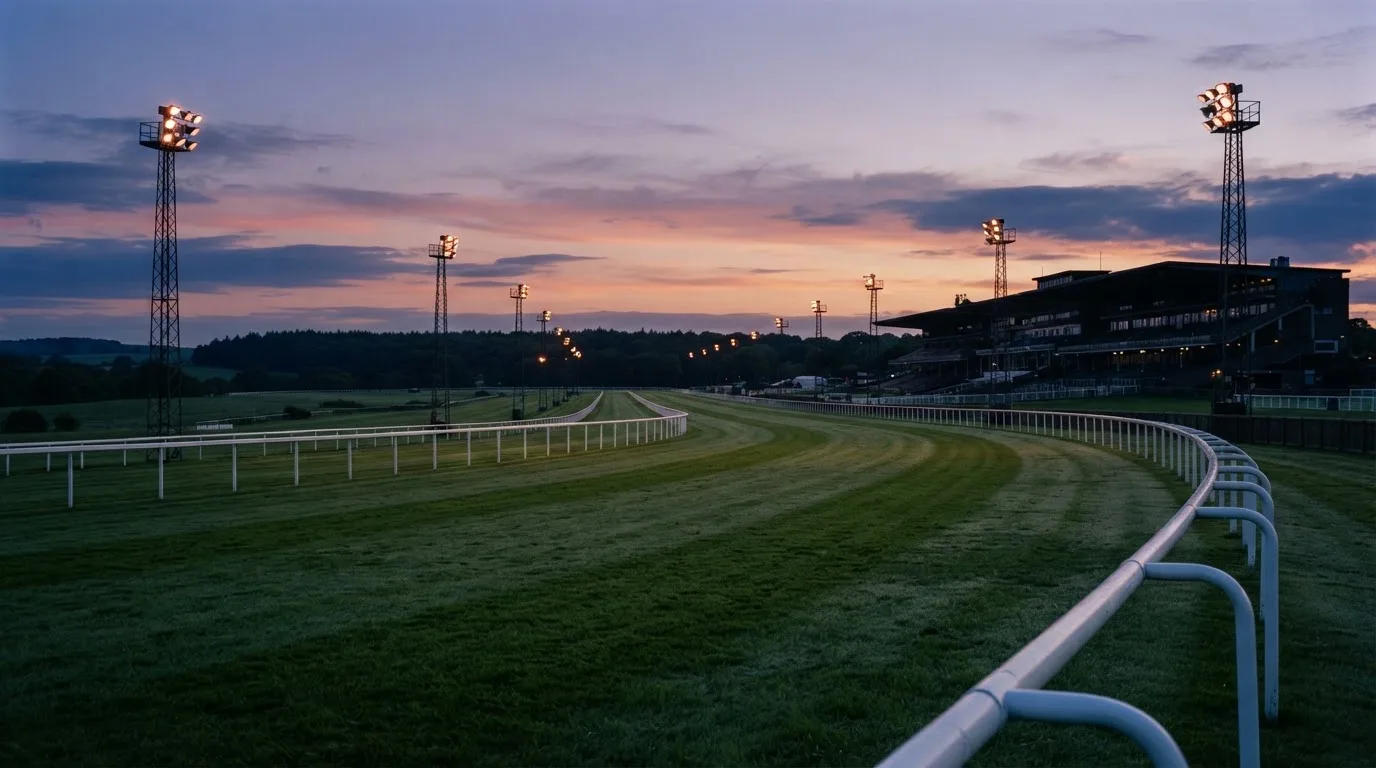
Flat racing is run directly between two points around a straight or oval track, while jump racing — steeplechasing and hurdling — is called National Hunt racing in Great Britain and Ireland. The two seasons sit in different halves of the year: the Flat runs from spring through autumn, the National Hunt from autumn through spring, with the Cheltenham Festival in March and the Grand National meeting in April the cultural peaks of the jumps calendar.
Distances and the card
Flat races range from 440 yards (400 m) to more than four miles (6.4 km), with five to twelve furlongs (1.0 to 2.4 km) the most common distances. National Hunt races are run over longer distances, with two to three miles the standard. The distance shapes the form: a horse bred for speed over five furlongs is not the same horse at two miles on soft ground, and the class of the race — Listed, Group 3, Group 2, Group 1 — sets the quality of the opposition.
Handicaps and conditions races
In handicap races each horse is assigned a different weight to carry based on its ability, while conditions races give horses the same weight with allowances for younger and female horses. The handicap is the bookmaker’s friend and the punter’s test: a field of fifteen with weights ranked by the official handicapper is meant to produce a close finish, and the market tends to be wider than a conditions race.
The British classics
The British Triple Crown consists of the 2000 Guineas, the Derby and the St Leger — three races run over a mile, a mile and a half and a mile and three-quarters respectively. The fillies’ equivalent is the 1000 Guineas, the Oaks and the St Leger. A Triple Crown winner is rare: the last to take all three was Nijinsky in 1970, and the most recent near-miss was Camelot in 2012.
Legality, regulation and the Gambling Commission
The licensing frame is the same frame the responsible-gambling section opened on. The Gambling Commission, a non-departmental public body sponsored by the Department for Culture, Media and Sport, licenses the whole commercial market under the Gambling Act 2005. Since the Gambling (Licensing and Advertising) Act 2014 an operator whose remote facilities are used in Great Britain needs a Commission licence wherever it is based; a Curaçao, Maltese or Gibraltar licence is not a substitute for a GB licence at the point of consumption.
The licence categories
The remote licences relevant to horse racing are remote general betting standard (real events), remote pool betting (for pool products such as the Tote), and remote betting intermediary (for exchanges). The Commission’s public register can be searched by business name, trading name, domain or account number and is the whole test of whether a brand holds a licence. Every operator on this page is on that register against a licensee holding a remote licence for Great Britain.
A brand licensed as a betting intermediary is not licensed as a fixed-odds book, and vice versa. Matchbook and Smarkets hold the intermediary licence; the rest of the set holds the general betting standard licence. A punter choosing a brand by its offering should choose by category too: an exchange is not a substitute for a book when the bet is a fixed-odds single.
Identity, age and the customer check
The minimum age is 18. Name, address and date of birth are verified before a customer can deposit or gamble, and the check has applied since 7 May 2019. A free bet or bonus does not get past the check; identity verification sits in front of the first deposit, not behind the first offer. A credit card cannot be used for gambling at a GB-licensed site — the ban has applied since 14 April 2020 and covers credit-card-funded e-wallet deposits.
Bonuses and the cap on wagering
The promotion rules in force since 19 January 2026 cap wagering requirements on bonuses at 10x. A £10 bonus with a 50x requirement would have asked for £500 of qualifying bets; under the cap no bonus can ask for more than £100 of qualifying bets at a £10 base. Mixed-product promotions — an offer that requires gambling on two or more product types such as betting, casino, bingo and lottery — are banned. The cap applies to bonuses with a wagering condition; whether it applies to free bets with no wagering condition is not established, and any cap on the money value of a bonus is not established either.
Tax on winnings
The player pays no tax on betting winnings in Great Britain. General Betting Duty is the operator’s tax on gross profits, currently 15%; from 1 April 2027 a new remote betting rate of 25% applies within it, while remote bets on UK horse racing, bets on self-service betting terminals in licensed premises, pool betting and in-person betting stay at 15%. Whether operators pass duty on through odds is not established; the framing that fits is the operator pays duty, the punter does not.
How an each-way bet works
An each-way bet is two bets, a win bet and a place bet, so the stake is doubled (a £5 each-way bet costs £10). The place part pays at a fraction of the win odds if the horse finishes in the places, and the place fraction depends on the race. UK each-way place terms: handicaps with more than 15 runners pay 1/4 odds for 4 places; 12–15 runners 1/4 for 3 places; other races with more than 7 runners 1/5 for 3 places; 5–7 runners 1/4 for 2 places; fewer than 5 runners win only.
A worked example
A £10 each-way bet on a 10-1 horse at 1/4 place terms (3 places) costs £20, returns £110 for the win part and £35 for the place part, £145 in total if it wins. The win part pays 10-1 on £10, which is £110 in profit plus the £10 stake back; the place part pays 1/4 of 10-1 (2.5-1) on £10, which is £35 in profit plus the £10 stake back. Total return: £110 + £35 = £145. If the horse places but does not win, the win part loses and the place part pays £35 in profit plus the £10 stake back.
The place terms are not the punter’s choice
The place terms are set by the bookmaker for each race and may vary by bookmaker for the same race. A race with eight runners will pay 1/5 for three places at one book and 1/4 for two places at another, and the difference shows up directly in the place price on the betting slip. A punter comparing each-way bets across books should compare on the same race, the same horse and the same place terms.
Fractional odds, decimal odds and how to convert
British horse racing is priced in fractional odds — 5/1, 11/4, evens — and the same selection is shown in decimal form on most betting apps: 6.00, 3.75, 2.00. The two forms say the same thing; the maths is the conversion. A fractional price a/b converts to decimal as a divided by b plus 1. Five to one is 5 ÷ 1 + 1 = 6.00. Eleven to four is 11 ÷ 4 + 1 = 2.75 + 1 = 3.75. Evens is 1 ÷ 1 + 1 = 2.00.
The return on a bet at decimal odds is stake times the odds. A £10 stake at 6.00 returns £60 in total — £50 profit plus the £10 stake back. The same bet at 5/1 returns £60 in total — £50 profit plus the stake. The profit on a winning bet is stake times (odds minus 1); on a £10 stake at 6.00 that is £10 × 5.00 = £50. For a combination bet the odds of the legs multiply into one price, and the return on a £10 stake on three legs at 2.00, 3.00 and 4.00 is £10 × 24.00 = £240.
Odds-on prices — shorter than evens, like 4/6 or 1/2 — return less than double the stake on a win. A £10 stake at 4/6 (decimal 1.67) returns £16.67 in total: £6.67 profit plus the £10 stake back. A punter pricing an odds-on favourite is paying for the higher probability, not the bigger return.
Best Odds Guaranteed and starting price
Best Odds Guaranteed is the most common concession on British and Irish racing, and its terms are worth reading on each book. The mechanism is simple: if the starting price (SP) — the price on the board at the off — is bigger than the price the punter took, the bigger price is paid. William Hill pays BOG on UK and Irish horse racing from 8am on the day of the race, on both single and multiple bets; it does not apply to ante-post, tote or pari-mutuel bets. Fafabet pays BOG on UK and Irish horse racing win and each-way bets from 9am on race days; if the starting price is bigger than the original price, the bigger odds are paid.
The trigger time is the difference
The 8am trigger at William Hill and the 9am trigger at Fafabet are not the same product. A bet struck before the trigger does not catch the upgrade. A punter who prices the card the night before and places the bet at 7am is on the early side at both books and misses the BOG; a punter who prices the card in the morning and places bets after the trigger catches it.
Ante-post and the loss of BOG
Ante-post bets are bets struck before the final declarations, often days before a race. The price is bigger because the field is not set, and a non-runner means the stake is lost rather than carried over. BOG does not apply to ante-post bets, and the punter pays for the bigger price by losing the safety net.
What a bookmaker’s own terms add to the offer
The promotional frame around a racing book is built from the operator’s own terms. Best Odds Guaranteed is one piece. Cash out is another. Live streaming is a third. Each operator in the table carries its own list.
Cash out, in-play and live streaming
Cash out lets the punter settle a bet before the race finishes, at a price the bookmaker sets. The price is the bookmaker’s, and the punter pays the spread built into that price. In-play betting covers markets priced during the race; not every in-play market is priced at every book. Live streaming covers video of the race on the bookmaker’s site or app, and the depth of coverage — British and Irish racing only, or international meetings too — varies by book.
Bet Builder on racing
Bet Builder, also called a same-game multi, lets the punter combine markets from the same race on one slip. The combined price is bigger than any single leg, and the margin is built into the combination. A 10/1 Bet Builder pays more than a 10/1 single but less than the fair sum of probabilities — the gap is the margin.
Enhanced odds and price boosts
An enhanced odds or price boost is a temporary increase in the price of a named selection. The book names the horse and the boosted price, and the bet must be struck at the boosted price to qualify. The cost is the stake ceiling: a £10 stake on a 50/1 boost pays better than a £100 stake on a 5/1 single only if the longshot wins, and the bookmaker’s risk is capped.
Accumulator insurance
Accumulator insurance refunds the stake as a free bet if one leg of a multiple loses. The refund is in free bets rather than cash, and the stake on the next bet must clear a wagering condition before it pays out as cash. A punter who uses acca insurance often should read the wagering condition in full — it is where the cost lives.
How the margin shows in the odds
The margin is the difference between the fair odds and the price on the screen, expressed as a share of every unit bet. The worked example earlier showed 5.00% on a 1.90 / 1.90 two-way market — that is the band a tight book runs in. A 20-runner handicap will pay more like 20 to 30%, and a place-only market will sit higher still.
What changes the margin
The margin is not fixed across a card. It changes by race, by market, by bookmaker, and by the time of day. A bookmaker who has taken a lot of money on the favourite will widen the place market and tighten the win market to balance the book. A bookmaker whose card is short on a meeting will price aggressively to draw money in. A punter who compares prices on the same race at the same time is comparing the same thing.
A margin is an estimate, not a guarantee
The margin is a long-run average over many bets. On any single bet the bookmaker pays the price on the screen; over many bets the bookmaker keeps the margin. The punter pays the same way: on any single bet the punter either wins or loses the bet, and over many bets the punter keeps the difference between the price taken and the true probability. The number on the screen is the price; the number in the long run is the margin.
Staking discipline in practice
The discipline is the part of the page that actually saves a bankroll. The form can be wrong, the price can be wrong, and the horse can still lose. What keeps a punt alive is how the stake is sized when the bet is placed.
A flat stake as a baseline
A flat stake — the same money on every bet — is the simplest method and the easiest to keep honest. The stake is small enough that a long losing run does not wipe the bank, and the punter records every bet so the long-run return can be checked. The cost is that a strong opinion and a weak opinion both stake the same.
A percentage stake as an edge
A percentage stake, typically one to two per cent of the bankroll, scales the bet with the edge. A strong opinion stakes more; a weak opinion stakes less. The cost is the record-keeping: every bet needs a probability estimate to set the percentage, and the punter has to size up the edge honestly. A punter who inflates the probability to stake more is back to gambling.
The kill list of staking errors
Staking up after losses — chasing — is the classic way to lose a bankroll. Staking a fixed amount regardless of the price means overstake on weak prices and understake on strong ones. Staking a large slice of the bankroll on a confident tip turns a value bet into an all-or-nothing bet, and a single loss wipes a week of edge. The discipline is the dull part of the trade; it is also the part that survives.
Frequently asked questions
What is a value bet and why is no tip ever certain?
A value bet is a price that is bigger than the true probability of the horse winning implies — fair odds come from one divided by the probability, and any price above fair odds is value on the punter’s reading. No tip is certain because a probability is not a certainty: a 25% chance of winning loses 75% of the time, and a value bet pays off over many bets, not on any single race. The honest prediction is the probability, and the honest trade is the long run.
What is the bookmaker’s margin and how can it be seen in the odds?
The margin is what the bookmaker keeps of every unit bet on a market, and it sits inside every price on the screen. For a market with n outcomes at decimal odds o₁, o₂, …, oₙ, the payout share is 1 ÷ (1/o₁ + … + 1/oₙ), and the margin is 1 minus the payout share. An illustrative two-way market at 1.90 / 1.90 gives a payout share of 95.00% and a margin of 5.00%; a 20-runner handicap typically pays a higher margin of around 20 to 30%.
How is the return on a bet worked out from the stake and the odds?
At decimal odds o and stake s, the total return on a win is s × o — that is the stake plus the profit. The profit alone is s × (o − 1). For a combination bet the odds of the legs multiply into one price, and the same formula applies to the combined odds. A £10 stake at 6.00 returns £60 in total, of which £50 is profit and £10 is the stake returned; three legs at 2.00, 3.00 and 4.00 combine to 24.00, and a £10 stake returns £240 in total.
How can it be checked that a bookmaker holds a Gambling Commission licence?
The Commission’s public register lists every licensee and can be searched by business name, trading name, domain or account number. The categories on the register — remote general betting standard (real events), remote pool betting, remote betting intermediary — show what the licence covers. Every bookmaker named on this page holds a Commission remote licence against a named licensee; a brand that does not appear on the register is not licensed for customers in Great Britain.
Which tools for controlling play does a licensed bookmaker have to offer?
Deposit limits on a fixed time frame, reality checks at customer-set intervals, time-out, product restrictions and self-exclusion through GAMSTOP, with the financial vulnerability check applying once deposits minus withdrawals cross £150 in a rolling 30 days. GamCare runs the helpline, the NHS gambling clinics run treatment, and Gamblers Anonymous runs peer support. The frame is set by the Commission’s Licence Conditions and Codes of Practice; a brand that does not offer the minimum toolkit is not licensed.
How do fractional odds such as 5/1 convert to decimal odds such as 6.00?
A fractional price a/b converts to decimal as a divided by b plus 1. Five to one is 5 ÷ 1 + 1 = 6.00. Eleven to four is 11 ÷ 4 + 1 = 3.75. Evens is 1 ÷ 1 + 1 = 2.00. The return at decimal odds o on stake s is s × o, of which s × (o − 1) is profit and s is the stake returned.
Horse racing & greyhounds – Basketball betting
Content created by the «Basketball betting» team
