
Betting on Cycling Online — A GB Guide to Markets, Margins and the Grand Tours
 Available in US
The Union Cycliste Internationale has governed road cycling from its base in Switzerland since 1900 and runs men’s and women’s road world championships every year. Each spring, summer and autumn a stream of stage races reaches British bookmakers, from the three Grand Tours down through WorldTour week-long events and one-day Classics. This guide is for a reader in Great Britain who wants to know what those events look like as a betting market, which bookmakers cover them and what a price actually pays out once a margin is taken from it.
The currency stamp at the foot of the lead notes when the operator and licence data were checked and against which register. As of 27 October 2026, every licence line below was verified against the Gambling Commission’s public register, and every operator-specific fact was taken from that operator’s own site or app store listing on the same day.
Safer Gambling Before the First Bet
Cycling is a high-variance sport to bet on. A pre-race favourite at evens can be dropped from the peloton by a crash two kilometres in, a puncture on a cobbled sector or a crosswind split that costs four minutes. Most outright stakes on the Tour de France lose. That is true of every market this guide covers, and it is the reason the safer-gambling controls that follow come first rather than at the foot of the article.
A GB-licensed remote bookmaker has to offer a deposit limit on a fixed time frame. The first phase of those limits has been live since 31 October 2025, with a second phase that was postponed to 30 September 2026 — until that second phase is confirmed as in force, the practical position is that a customer can set a gross monthly deposit ceiling with the operator and lower it at any time, but cannot raise it without a cooling-off period. Operators must run a financial vulnerability check once a customer’s deposits minus withdrawals cross £150 in a rolling 30-day window; the check is a public-record search, not an income or credit-reference search, and it can prompt a conversation about spending, not an automatic block.
Self-exclusion goes through GAMSTOP, the national multi-operator scheme that has been a mandatory licence condition for online operators since 31 March 2020. A customer can register for six months, one year, five years, or five years with auto-renewal, and after the minimum period the exclusion runs on for a further seven years unless the customer asks for it to be lifted. GAMSTOP covers online sites and apps; the betting-shop self-exclusion scheme is a separate service. Help is also available from GamCare, which runs the National Gambling Helpline, GambleAware, the NHS gambling clinics network and Gamblers Anonymous.
Identity is verified before the first deposit at every GB-licensed remote bookmaker, with a name, address and date-of-birth check that has been in force since 7 May 2019. A free bet or bonus is treated as gambling for that purpose: anonymous play is not on offer. Credit cards are banned for gambling in Great Britain since 14 April 2020, including credit-card-funded e-wallet top-ups; debit cards and bank-based payments are not covered by that ban. The Grand Tours run for up to 23 days of racing across three weeks, so a customer staking through a stage race can quickly reach the £150 vulnerability threshold and trigger the next control layer.
What Races UK Bookmakers Actually Price
Cycling betting in Great Britain leans heavily on the road side of the sport. Track, BMX, mountain bike and the gravel circuit each have their own World Championships, and a handful of GB bookmakers price them, but the bulk of the menu and almost all the liquidity sits with the road calendar. Three categories structure that calendar.
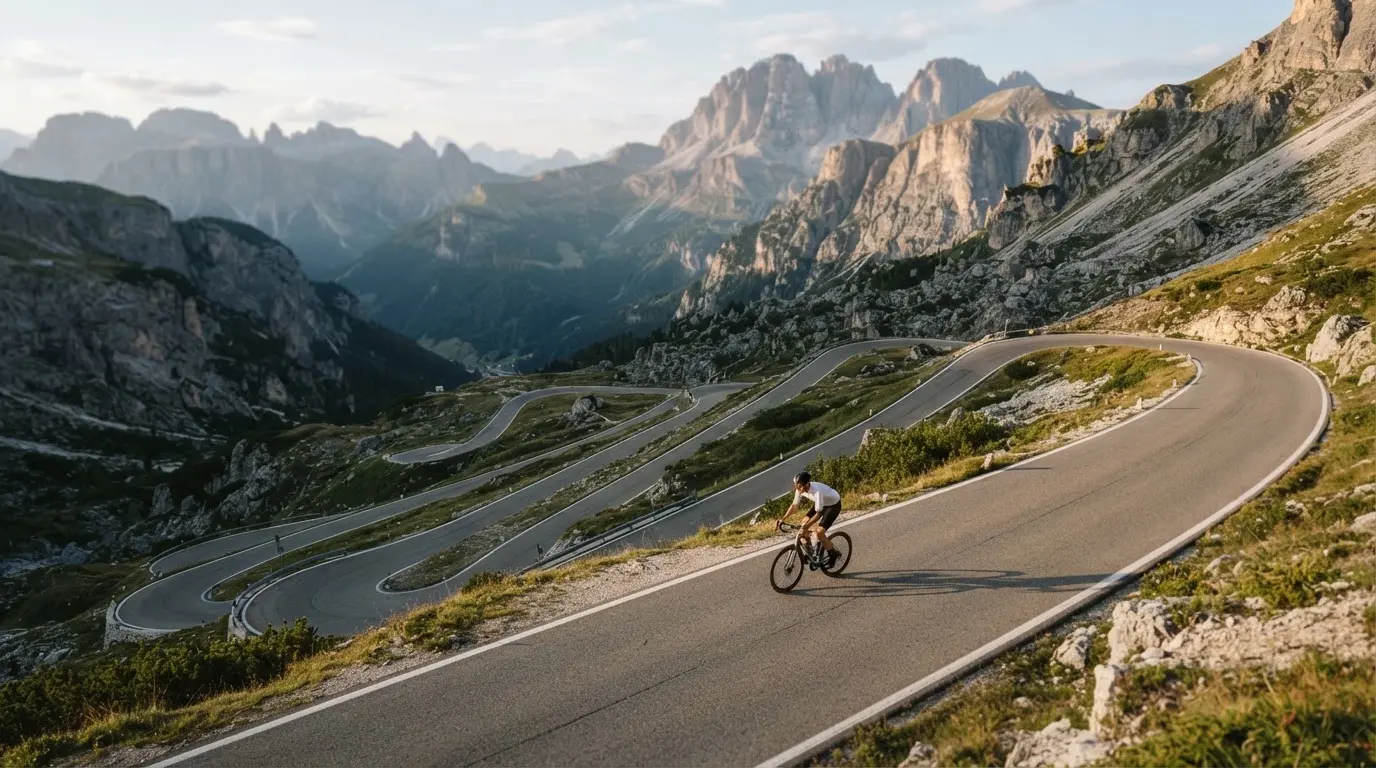
The Grand Tours are the headline events. The Giro d’Italia has been held since 1909, the Tour de France since 1903 and the Vuelta a Espana since 1935. UCI rules allow a Grand Tour to run from 15 to 23 days; in practice each takes three weeks and usually includes two rest days. Race leaders wear a pink jersey in the Giro, yellow in the Tour and red in the Vuelta — a small thing to a non-fan, but a large thing to a market, because most outright books let the customer back a rider to win the jersey outright, to win the points classification, the mountains classification or the young-rider classification, and to finish on the podium. The 2026 Tour de France ran from 4 to 26 July 2026, starting in Barcelona with a team time trial and finishing on the Champs-Elysees in Paris, over 21 stages and 3,245 km with 23 teams; Tadej Pogacar took his fifth Tour victory that July.
The UCI WorldTour is the second tier in everyday language, though it carries the top races outside the Grand Tours. It was created in 2005 as the ProTour and renamed the WorldTour in 2011. Stage races such as Paris-Nice, the Critérium du Dauphiné, the Tour de Romandie, the Tour de Suisse, the Volta a Catalunya and Tirreno-Adriatico sit here alongside the one-day Monuments — Milan-San Remo, the Tour of Flanders, Paris-Roubaix, Liège-Bastogne-Liège and Il Lombardia. WorldTour one-day races open outright markets early in the season and are priced heavily because their short duration makes form easier to read. The Classics window from late March to mid-April is the busiest single fortnight of the spring calendar for in-play trading.
Below the WorldTour, the ProSeries and the national circuits supply the day-to-day menu. Smaller stage races in France, Belgium, Spain, Italy and Portugal, the British calendar centred on the Tour of Britain, and a long tail of one-day events price every day through the spring and summer. The market depth drops sharply once the road leaves the WorldTour: an outright book on a ProSeries stage race may be two or three names deep, and match markets on individual stages may not be offered at all. The British reader will most often meet the WorldTour and the Grand Tours.
Markets Bookmakers Lay on a Stage Race
The shape of the cycling menu at a GB bookmaker is more uniform than in football or tennis, because there are fewer races to cover and the same handful of market types fit almost all of them.
Outright winner is the front of the book. The customer backs a rider to win a race overall; each-way terms are usually a quarter of the win odds for the top three or top four places on a Grand Tour, and a quarter for the top two on a week-long WorldTour event. Stage winner markets run in parallel through every stage of a Grand Tour and through most stages of a WorldTour race. Stage 1 prices open the night before; rest-day and post-stage prices open after each finish. Head-to-head markets pair two named riders over the race overall or over a single stage, settle on the official UCI classification and let a customer back the rider who finishes ahead.
General classification, points classification, mountains classification and young-rider classification each get an outright book on the Grand Tours. The points jersey in the Tour is the green jersey, awarded for high stage finishes and intermediate sprints; the mountains jersey is the polka-dot jersey, awarded on the categorised climbs. A market on who wears the jersey on the final day is the standard line; in-play markets on jersey changes mid-race appear at the bigger operators. Team classification, combativity prize and the King/Queen of the Mountains on a single stage are tertiary lines offered by some books and not others.
In-running markets move fast on a flat or rolling stage and freeze on a summit finish. A flat stage settles on a sprint; the favourite is rarely longer than 2/1 (3.00 decimal) and an in-play book may not appear until the final five kilometres. A mountain stage settles on a five-to-fifteen minute ascent; the in-play book can shift by several points of price inside a stage. Match betting on a head-to-head between two named riders is the most useful in-running line, because the gap on the road is reported live by broadcasters and settles cleanly with the classification.
Combination bets and bet builders are a newer line. A Grand Tour stage-and-race double, a top-three finish on a stage combined with the GC, or a sprint-points market on stage one combined with stage two are all live offers at the larger books. Matchbook and the bet365-style Bet Builder both let the customer build multi-leg lines from a single Grand Tour, and accumulators across stages are standard fare at every GB bookmaker. Each combination adds a margin on top of the margin in each leg; the resulting price is rarely the product of the single prices the screen shows.
How Bookmakers Build a Price — the Arithmetic of Margin
Every price on a money page carries a margin, sometimes called an overround. The bookmaker does not show the margin, but it is sitting inside every decimal price on the screen, and it is the difference between what a fair market would return to the bettor and what this bookmaker returns. The calculation below shows how the margin works on a simple two-way market, and the rest of this section explains where it bites on a cycling book.
Take an illustrative two-way match market priced at 1.90 against 1.90 in decimal. Those odds are not a quoted price; they are an example. Convert the price to a payout share by adding the inverse of each price: 1 ÷ 1.90 plus 1 ÷ 1.90 equals roughly 0.5263 plus 0.5263, which equals 1.0526. Invert that to get the implied fair payout to the bettor: 1 ÷ 1.0526 equals roughly 0.9501, or 95.0 per cent of every pound staked. The margin is 1 minus that share: roughly 5.0 per cent of turnover. In plain words: for every £100 wagered on this two-way line at these prices, the bookmaker keeps about £5 on average and returns about £95 to customers in winnings. The same calculation on a three-way Grand Tour stage with a favourite at 2.20, the next at 3.40 and the third at 8.00 produces a smaller fair share — about 92 per cent against a margin of about 8 per cent — and a longer-priced outsider field will widen that further.
On a cycling outright book the margin behaves the same way, but the number of outcomes is larger. A 30-rider Tour de France outright with a favourite at 5.00, a second favourite at 7.00, a small group at 11.00 to 21.00, and the rest at 26.00 or longer will carry a margin in the 12 to 18 per cent range, which is materially higher than the 5 per cent margin on a tight Premier League 1X2 line. The market depth on a Tour outright is shallower than a Premier League match, so a wider margin is what pays for the bookmaker to run the book. The reader pays for it on every stake.
That is the cost to keep in mind when comparing cycling prices across bookmakers. Two operators can show the same rider at 12.00 and 14.00; the cheaper-looking 12.00 is the better price for the customer, by definition, and the gap of two points on a £10 stake is £20. The reverse also holds: a margin that looks tight on the screen may still be wider than the same operator’s margin on a Premier League match, because the cycling book trades on less liquidity. The arithmetic is the same; the magnitude is not.
Where Cycling Bets Sit on a UK Tax and Duty Footing
A British bettor pays no tax on sports betting winnings. The General Betting Duty is the operator’s tax on its gross profits from general betting, currently 15 per cent, and from 1 April 2027 a remote rate of 25 per cent will apply within it, while remote bets on UK horse racing, bets on self-service betting terminals in licensed premises, pool betting and in-person betting stay at 15 per cent. Until that date the remote rate stays at 15 per cent. None of that falls on the customer. Spread betting on financial markets is regulated by the Financial Conduct Authority, not the Gambling Commission, and is taxed at 3 per cent financial, 10 per cent other.
A bookmaker can choose to absorb duty out of margin or to pass it through into prices, but that choice is the operator’s, not the customer’s. There is no public register of what each book does with its 15 per cent. The reader sees only the price on the screen, and the price already contains the margin and any duty treatment the book has chosen. The lesson is the same as the margin section above: the best price is the cheapest one, and two operators’ prices on the same rider at the same moment are the only comparison that matters.
Where to Bet on Cycling Online — the Ten Licensed Brands
What follows is a comparison of ten bookmakers that hold a Gambling Commission remote licence for Great Britain and that are listed on the Commission’s public register against an account holding a real-events remote general betting standard category. The list is not a ranking of who is best for cycling, because no single brand is the only licensed one and a place on this page is not a recommendation. Every brand below has been confirmed against the public register; the licence number and the licence holder named on that register appear in the table that closes this section.
Spreadex — the spread-betting dual
Spreadex runs two regulated products from one site: fixed-odds sports betting under a Gambling Commission licence, and financial spread betting under the Financial Conduct Authority. For a cycling reader, that means outright and stage markets can be laid both as fixed-odds singles and as spread bets — a spread market on the winning margin in a Grand Tour stage, for example, or on the time gap to the leader at the end of a mountain stage. The firm states plainly on its homepage that spread betting losses can exceed the deposit, which is the regulator’s framing: spread bets are not capped at the stake the way a fixed-odds single is. A reader who has never placed a spread bet before should treat that risk as the headline fact about this brand and not a footnote.
Spreadex covers the Grand Tours and the WorldTour week-long events with outright and stage markets. The fixed-odds book is the more familiar side of the site, with each-way terms in line with the rest of this list. The spread book is where Spreadex sets itself apart: a market on the time gap to the race leader at the end of a summit finish, or on the number of points a sprinter will score on a flat stage, sits beside the fixed-odds lines. The deciding question for a customer is whether they want exposure that is capped at the stake or exposure that is not. On a Grand Tour stage that is decided by a sprint or a summit finish, a spread bet can return a multiple of the stake; it can also lose a multiple of the stake. The fixed-odds book is the safer default.
The verdict sits in the same place the rest of this section does: Spreadex is worth a look for the customer who already understands spread betting and wants to apply it to cycling, and it is a poor first choice for the customer who does not. The FCA-regulated side of the business does not undo the rule that losses can exceed deposits.
Kalooki Sportsbook — the small GB-only book
Kalooki Sportsbook is operated by Kalooki Sports Book Ltd, company number 12938274, and licensed by the Gambling Commission under account 57730. The site is a member of GAMSTOP, which is a mandatory licence condition rather than a feature, but the company being a small GB-only operator is itself the point. The menu covers the Grand Tours and a short WorldTour outright list, with stage and head-to-head markets on each. The book does not pretend to be a multi-sports platform with a thousand markets a day; the cycling menu is the kind that rewards a customer who likes to bet on the sport itself rather than to assemble cross-market accumulators.
The offering is modest in volume and conventional in shape. There is no in-play product of note, no bet builder on a Grand Tour stage and no live streaming on a road race; the value of the brand is its smallness, in that the team behind it is small enough that a request by email tends to be answered by a person who knows the sport. For the customer whose betting is mostly outright winner and stage winner markets, and who wants a GB-licensed brand without the marketing spend of a bigger operator, Kalooki sits well. For the customer who wants in-play depth on a mountain stage, this is not the right address.
888sport — the full-menu platform
888sport offers pre-match and in-play betting, Cash Out, Bet Builder, racing streams, BetFinder form tools, a live bet feed and daily boosted odds. For a cycling reader that translates into a full Grand Tour book with outright, jersey, stage and head-to-head markets from the day the route is announced through the final stage, plus an in-play book on most stages and a Bet Builder that lets a customer assemble a multi-leg line on a single Grand Tour from a list of pre-set markets. The boosted-odds line on a podium finish or a stage winner is the marketing hook, and the cap on stake and the payment-method exclusions that always sit behind a boosted-odds token are the practical hook. A reader who backs boosted prices should read the small print before staking, in the same way they would at any other book.
The wider 888 platform runs casino, poker and a sportsbook from one account; for a cycling reader that means the same wallet funds everything, the same GAMSTOP registration covers the lot, and the same verification rules apply. 888sport is held by 888 UK Limited (Gambling Commission account 39028). The brand is the strongest all-round choice on this list for the customer who wants a cycling book that is identical in shape to a Premier League book and is not interested in the spread-betting side of Spreadex or the exchange mechanics of Matchbook.
DAZN Bet — the broadcast-tied newcomer
DAZN Bet is the betting brand attached to the DAZN sports streaming subscription, and its deposit menu opens at £5 by debit card, Apple Pay, Paysafecard, Trustly and Skrill, and at £20 by PayPal, with no processing fees added by the operator. For a cycling reader that means a low floor for a small accumulator on the Giro and a slightly higher PayPal-only floor for the same bet. The brand is licensed by the Gambling Commission under account 48756 and is held by DZBT Limited. The site’s cycling menu covers the Grand Tours and a WorldTour week-long list; the tie to the DAZN broadcast means a customer who already pays for DAZN can watch the race and bet on the same screen, which is the practical point of the brand.
Where DAZN Bet sits against the rest of this list is in the deposit floor and the broadcast bundle. A reader who already has DAZN for football, boxing and the weekly race coverage gets a tied experience at no extra subscription cost; a reader who does not have DAZN gets a sportsbook that is competent but not differentiated from the bigger names on this list. The brand is young and the cycling menu is still being built out, so the practical advice is to open a Grand Tour stage in the first week of the race and judge whether the live depth is enough for the way you bet.
Bet Ahoy — the free-bet-led book
Bet Ahoy’s welcome offer is “Bet £10 & Get £10 in Free Bets”, made up of a £5 sports bet and a £5 acca. The page describes offers qualitatively only, and the shape here matters: a £10 free-bet package on a new account, split between a single and an accumulator. The free-bet stake is generally not returned with a win, so a £5 free bet at odds of 4/1 (5.00 decimal) returns £20 profit and £5 stake is forfeit; the customer’s value is the £20 profit, not £25. The bonus cap on wagering requirements, in force since 19 January 2026, sets the cap at 10x the bonus on any bonus with a wagering condition; a free bet with no wagering condition is not within that cap on its face, but the small print on a specific brand’s free bet is the place where any condition sits.
Bet Ahoy is held by Bet Ahoy Ltd and licensed by the Gambling Commission under account 100094. The brand covers the Grand Tours and the headline WorldTour events. The free-bet package is the headline reason to open an account, and the smallness of the brand is the headline reason to check the menu before staking: a stage in-play book on a mountain stage may not run as deep as the bigger platforms, and the safer-gambling controls kick in at the same £150 deposit-withdrawal threshold they do everywhere else.
Matchbook — the betting exchange
Matchbook is a betting exchange where customers bet against each other rather than against a bookmaker. The brand offers Bet Builder, multiples, in-play betting and live streaming of horse racing and greyhounds; cycling is covered as outright and stage markets on the Grand Tours and the bigger WorldTour events, with customers able to back a rider at a price another customer is laying, or to lay a rider for other customers to back. Matchbook is held by Triplebet Limited and licensed by the Gambling Commission under account 39504 under both the remote general betting standard (real events) category and the remote betting intermediary category that covers exchanges.
The exchange model changes what a price means. There is no bookmaker margin baked into the screen; the spread between the best back price and the best lay price is the cost of trading on the exchange, and commission is charged on net winnings. For a cycling reader that means Matchbook is the place to find a longer price on an outsider the conventional books have priced short, or to lay a favourite the conventional books have under-priced. For a reader who has never used an exchange, the model is different enough that a small first deposit on a Grand Tour stage — at a known liquidity event, such as the morning of a summit finish — is the right way to learn it.
Bar One Racing — the Irish independent
Bar One Racing has rebranded as BAR 1 Betting, an Irish independent bookmaker with shops across Ireland and horse racing sponsorships at Dundalk, Fairyhouse, Navan, The Curragh, Curraheen Park and Cork. The brand is held by Bar-One Racing Limited, Gambling Commission account 56516. The sportsbook covers the Grand Tours, with a cycling outright book on the Giro, the Tour and the Vuelta, and stage winner markets on each. The brand’s roots are in Irish horse racing and greyhound racing, so the cycling book is a smaller part of the offering than at the football-led brands on this list; the practical lesson is that the brand works well for outright and stage winner bets on the Grand Tours and is thinner on a week-long WorldTour event.
The brand is the right address for an Irish-connected GB reader who likes the feel of an independent book with shop roots and is happy with a conventional outright book rather than an in-play-heavy platform. It is not the right address for a customer who wants deep live pricing on a mountain stage or a bet builder on a single Grand Tour.
Sporting Index — the fixed-or-spread choice
Sporting Index lets customers switch between fixed odds and spread betting on the same event, with in-play betting, Bet Builder for football, auto cash-out and Multi-Markets. The brand is held by Sporting Index Limited, Gambling Commission account 27343. For a cycling reader the relevant fact is the same as on Spreadex: the site offers both fixed odds and spread markets, and the spread side of the book can return a multiple of the stake or lose a multiple of the stake. The fixed-odds book is conventional; the spread book is the differentiator.
The deciding question is the same one Spreadex poses: does the reader want spread exposure that is not capped at the stake? If yes, Sporting Index is a sensible second look beside Spreadex. If no, the fixed-odds book is the relevant product and the brand sits alongside the rest of this list.
BoyleSports — the Irish high-street name
BoyleSports’ sports welcome offer for UK players is £20 in free bets when a £10 bet is placed, with a parallel Irish offer of €30 in free bets for a €10 bet. The page describes offers qualitatively only; the headline point is the size of the free-bet package relative to the qualifying bet, and the small-print point is that free-bet stakes are generally not returned and any winnings-boost conditions apply. The brand is held by Boylesports Enterprise, Gambling Commission account 39469. The cycling menu covers the Grand Tours and the WorldTour week-long events, with each-way terms in line with the rest of this list.
The brand is the right address for a customer who already uses BoyleSports for Irish horse racing and greyhound racing and wants the same wallet on a Grand Tour outright or a stage winner bet. It is not differentiated from the bigger GB-licensed books on the cycling side alone, and the deciding reason to use it is the familiarity with the brand from another sport.
Midnite — the modern sportsbook
Midnite’s site cites Gambling Commission licence 101839 and shows in-play events, an acca builder, popular accas and price boosts with maximum-stake limits. The brand’s sports welcome offer gives new customers who bet £5 or more on pre-match odds of EVS (2.00 decimal) or greater within 14 days of sign-up a package of £25 in free bets and 50 free spins, valid for 7 days. The free-bet stake is generally not returned with a win, and the 7-day window on the free bets is the practical constraint on staking through the offer. Midnite is held by Midnite Limited and is licensed by the Gambling Commission under account 101839.
For a cycling reader Midnite is the most modern-styled book on this list: a dark-mode app, an acca builder that lets a customer assemble a multi-leg line on a Grand Tour, and a price-boost line on stage winner markets. The brand covers the Grand Tours with outright and stage books and runs an in-play menu on most stages. The deciding factor is the look and feel of the platform and the depth of the acca builder; the prices on individual markets are competitive but not uniquely so.
Swifty Sports — the daily-boost brand
Swifty Sports offers Best Odds Guaranteed, Cash Out on markets including horse racing and football, daily price boosts, live streaming and in-play betting; Bet Builder is listed as coming soon. The brand is held by Swifty Global (UK) Ltd and is licensed by the Gambling Commission under account 58957. For a cycling reader the relevant facts are Best Odds Guaranteed — which on horse racing pays out at the starting price if that is bigger than the price taken, and is less often extended to cycling — and the daily price-boost line, which on a Grand Tour stage can move a 4/1 (5.00 decimal) favourite to 5/1 (6.00 decimal) for a stake capped at the operator’s discretion.
Swifty Sports is a small enough brand that the cycling menu should be checked before staking. The brand sits well for a customer who likes the daily-boost marketing hook and is happy with a conventional outright and stage book; it is not the right address for a deep in-play book on a summit finish. The “coming soon” tag on Bet Builder is a sign that the platform is still being built out.
How the Licensed Brands Compare on Cycling
The table below sets out the ten licensed brands side by side. The licence column shows the Commission’s remote licence number and the named licence holder on the public register; the cycling-coverage column is the operator’s own statement on the key subject of this article. Where the operator has made a clear statement on a cycling feature, that statement is recorded; where the operator has not, the entry reads “no specific cycling detail” rather than inventing one.
| Brand | Gambling Commission remote licence number and licence holder | Cycling offer as the operator’s own terms state it |
|---|---|---|
| Spreadex | Remote licence reference held against the operator on the Commission’s public register; the firm is also regulated by the FCA for spread betting. | Both fixed-odds sports betting and financial spread betting on cycling; spread losses can exceed the deposit. |
| Kalooki Sportsbook | Licence 057730-R-333396-005; licence holder Kalooki Sportsbook Limited. | Grand Tour and short WorldTour outright and stage books; conventional fixed-odds book. |
| 888sport | Licence 039028-R-319297-014; licence holder 888 UK Limited. | Pre-match and in-play Grand Tour menu with Cash Out, Bet Builder, daily boosted odds and racing streams. |
| DAZN Bet | Licence 048756-R-327274-019; licence holder DZBT Limited. | Grand Tour and WorldTour week-long books; tied to DAZN broadcast for race-day streaming. |
| Bet Ahoy | Licence 100094-R-341742-003; licence holder Bet Ahoy Ltd. | Grand Tour outright and stage books; free-bet-led welcome package. |
| Matchbook | Licence 039504-R-319407-024; licence holder Triplebet Limited; categories include remote betting intermediary. | Betting exchange on Grand Tour and headline WorldTour events; customers back and lay against each other. |
| Bar One Racing | Licence 056516-R-332750-007; licence holder Bar-One Racing Limited. | Grand Tour outright and stage books; brand is best known in Irish horse racing and greyhound racing. |
| Sporting Index | Licence 027343-R-308898-011; licence holder Sporting Index Limited. | Both fixed-odds and spread betting on the same cycling events; in-play betting on selected events. |
| BoyleSports | Licence 039469-R-319383-025; licence holder Boylesports Enterprise. | Grand Tour and WorldTour week-long books; conventional fixed-odds book with each-way terms. |
| Midnite | Licence 101839-R-342850-015; licence holder Midnite Limited. | Grand Tour outright, stage and acca-builder books; daily price boosts on selected markets. |
| Swifty Sports | Licence 058957-R-334734-006; licence holder Swifty Global (UK) Ltd. | Grand Tour and WorldTour outright and stage books; daily price boosts; Bet Builder listed as coming soon. |
A note on what the table does not show. It does not list prices on a specific Grand Tour rider, because prices are event-specific and snapshot to a single day. It does not list market margin, because the margin on a cycling outright book is wider than on a Premier League match and varies by event. The Commission’s public register is the only place to confirm a current licence; the register can be searched by business name, trading name, domain or account number.
How a Bet Actually Pays Out
A winning fixed-odds single returns stake multiplied by the decimal odds. A £10 stake at 6.00 returns £60, of which £50 is net profit and £10 is the original stake returned. A winning combination bet multiplies the decimal odds of each leg: a double at 3.00 and 4.00 is a 12.00 price, so a £10 stake returns £120, of which £110 is net profit and £10 is the original stake returned. The stake is the only amount at risk; the price on the screen is the multiple applied to the stake.
Free bets are different. A free bet whose stake is not paid back with a win returns the decimal odds minus one, multiplied by the free-bet amount. A £5 free bet at 5.00 returns £20 in profit and the £5 stake is forfeit. The average value of a free bet at a given price is that gross figure multiplied by the payout share of the market — so on a market with a 95 per cent payout share, a £5 free bet at 5.00 is worth about £19 on average rather than £20. A free bet whose stake is paid back is worth its face value plus the same calculation, and is the rarer form on a GB-licensed site. Either way, the customer is being paid for the bet, not the outcome.
Off-Shore Sites and What the GB Frame Actually Forbids
A GB licence is compulsory at the point of consumption. An operator whose remote facilities are used in Great Britain needs a Gambling Commission licence wherever it is based, under sections 33 and 36 of the Gambling Act 2005 as amended by the Gambling (Licensing and Advertising) Act 2014. A Curaçao, Maltese or Gibraltar licence is not a substitute for a GB licence at a GB-facing site. The offence is on the operator, not the customer: no offence aimed at a customer who merely bets on an unlicensed site was found. What the customer loses by betting on an unlicensed site is the protection: no GAMSTOP coverage, no Commission complaints route, no approved dispute-resolution body, no British consumer redress if funds are withheld, and not bound by the 10x bonus cap or the £150 vulnerability check.
Enforcement against unlicensed operators is disruption, not blocking. The Commission issues cease-and-desist notices, refers unlicensed sites to search engines, and works with registrars, hosts and payment providers. Court-order DNS blocking has been given or is about to be given to the Commission, but it is not in operation as a standing block on unlicensed sites. The honest framing is the one the Gambling Act sets up to enforce: a licensed site means identity verification, deposit limits, GAMSTOP, the 10x bonus cap and a Commission complaints route; an unlicensed site means none of those protections and a real risk of funds being withheld. Neither is “the safe choice” by default; the comparison is the one a GB customer should make before opening an account.
Advertising, Bonuses and the Rules That Sit Behind an Offer
Advertising in Great Britain is not licensed by the Commission. The CAP Code (non-broadcast) and BCAP Code (broadcast) are enforced by the Advertising Standards Authority, alongside the Commission’s marketing conditions. CAP Code section 16 sets the socially responsible bar: marketing must not be of strong appeal to under-18s, and no one who is or seems to be under 25 may be featured gambling or playing a significant role in an advertisement, with an exception for marketing placed where a bet can be made directly. That rule is about the people in the advertisement, not about who may bet — the legal age for betting at a GB-licensed site is 18.
Bonus rules tightened in 2026. Wagering requirements on bonuses are capped at 10x — a £10 bonus at 50x needs £500 of bets; under the cap no more than £100. Mixed-product promotions — an offer that requires gambling on two or more product types, for example “bet on football to get free spins” — are banned. Whether the 10x cap applies to free bets with no wagering condition is not established by the rules reviewed, and any cap on the money value of a bonus is not established. The practical lesson for a cycling reader is to read the small print behind a free-bet or boosted-odds offer before staking, in the same way at every brand on this list.
Whistle-to-whistle is an industry code, not law: since 1 August 2019 betting advertisements are not shown on TV from five minutes before a live sporting event to five minutes after it, before the 9 pm watershed, with horse and greyhound racing excluded. The Premier League clubs’ withdrawal of gambling sponsorship from the front of matchday shirts from 2026/27 onwards is voluntary, not law; sleeves and hoardings remain. None of that changes the cycling menu at a GB bookmaker, but it changes the screen the reader sees around the race.
Putting a Cycling Bet Together
The practical order is straightforward. The first decision is the race: a Grand Tour offers the deepest outright and stage books, a WorldTour week-long event offers a competitive outright book and a smaller stage menu, and a one-day Classic offers an outright book and a small in-running line on the finish. The second decision is the market: outright winner, stage winner, head-to-head, jersey classification, or a combination bet. The third decision is the price: compare at least two books on the same selection at the same snapshot, and stake with the cheaper price. The fourth decision is the stake: set a deposit ceiling with the operator before the race starts, and lower it if a stage goes badly. The fifth decision is the in-play book: a flat stage rarely pays to bet in-running; a summit finish can pay, because the gap on the road settles the market.
The arithmetic in the margin section above gives the reader the only comparison that matters across the ten brands in the table. Two operators at the same price on the same rider are equivalent; one operator cheaper than another is the better bet. The rest of the page is a glossary of the rules that sit behind that decision: identity verification, the £150 vulnerability threshold, the 10x bonus cap, the spread-betting caveat on Spreadex and Sporting Index, and the exchange model on Matchbook. None of that is a marketing line; all of it is what a GB customer should know before staking on a Grand Tour.
Frequently Asked Questions
How do I bet on cycling online in Great Britain?
A GB customer opens an account with a bookmaker licensed by the Gambling Commission, completes the name, address and date-of-birth verification before the first deposit, sets a gross deposit limit on a fixed time frame, and backs a rider on an outright, stage winner, head-to-head or jersey market on a Grand Tour or WorldTour event. The bet types available vary by brand; an outright winner and an each-way place are the standard lines, and a combination bet or bet builder is offered by the larger books.
Can I bet on cycling in the UK at all?
Yes. There is no statutory list of permitted sports in Great Britain; a bookmaker licensed by the Gambling Commission may offer markets on the Grand Tours, the UCI WorldTour week-long events, the one-day Classics and the ProSeries under its own licence conditions. In-play betting is offered on most Grand Tour stages, and outright books on the Tour de France, Giro d’Italia and Vuelta a Espana run from the day the route is announced through to the final stage.
How can I check that a bookmaker holds a Gambling Commission licence?
The Commission’s public register can be searched by business name, trading name, domain or account number, and is the only place where a current licence is verifiable. A licence number and a named licence holder on the register are the test; a domain ending in .co.uk or .com is not, because licensed operators use both. The licence numbers for the brands on this page are recorded in the comparison table.
How is the return on a bet worked out from the stake and the odds?
A winning fixed-odds single returns stake multiplied by the decimal odds. A £10 stake at 6.00 returns £60, of which £50 is net profit and £10 is the stake returned. A combination bet multiplies the decimal odds of each leg; a double at 3.00 and 4.00 is a 12.00 price. Free bets whose stake is not returned return decimal odds minus one, multiplied by the free-bet amount; a £5 free bet at 5.00 returns £20 profit and the £5 stake is forfeit.
What is the bookmaker’s margin and how does it show up in the odds?
The margin is what the bookmaker keeps of every pound staked on a market, on average. On a two-way market at 1.90 against 1.90, the inverse of each price sums to about 1.0526, and the implied fair payout to the bettor is about 95.0 per cent, so the margin is about 5.0 per cent. On a Grand Tour outright with 30 riders priced from 5.00 upwards, the margin is materially wider than on a Premier League 1X2 line and is the cost the customer pays for the bookmaker to make a market on a less liquid event.
How do fractional odds such as 5/1 convert to decimal odds such as 6.00?
A fractional price a/b converts to a decimal price of a divided by b plus one. 5/1 is 5 divided by 1 plus 1, which equals 6.00. 11/4 is 11 divided by 4 plus 1, which equals 3.75. Evens, written 1/1, is 1.00 plus 1, which equals 2.00. The stake on a single at 5/1 returns five times the stake as profit plus the stake returned; the stake on a single at 11/4 returns two and three-quarter times the stake as profit plus the stake returned.
Combat & motorsport – Basketball betting
Content created by the «Basketball betting» team
