
Bookmakers with Best Odds Guaranteed in the UK: What BOG Actually Pays
 Available in US
Best Odds Guaranteed (BOG) is one of the more widely advertised concessions in British horse racing. The wording is short, the benefit seems obvious, and the cost is rarely discussed. The point of this page is to put a number on that benefit — and to compare it against the price the bookmaker built into the early market in the first place. Among the ten operators reviewed below, BOG sits alongside a fully checked Gambling Commission licence, a starting-price reference every punter has heard of and a margin that quietly eats into every price they take.
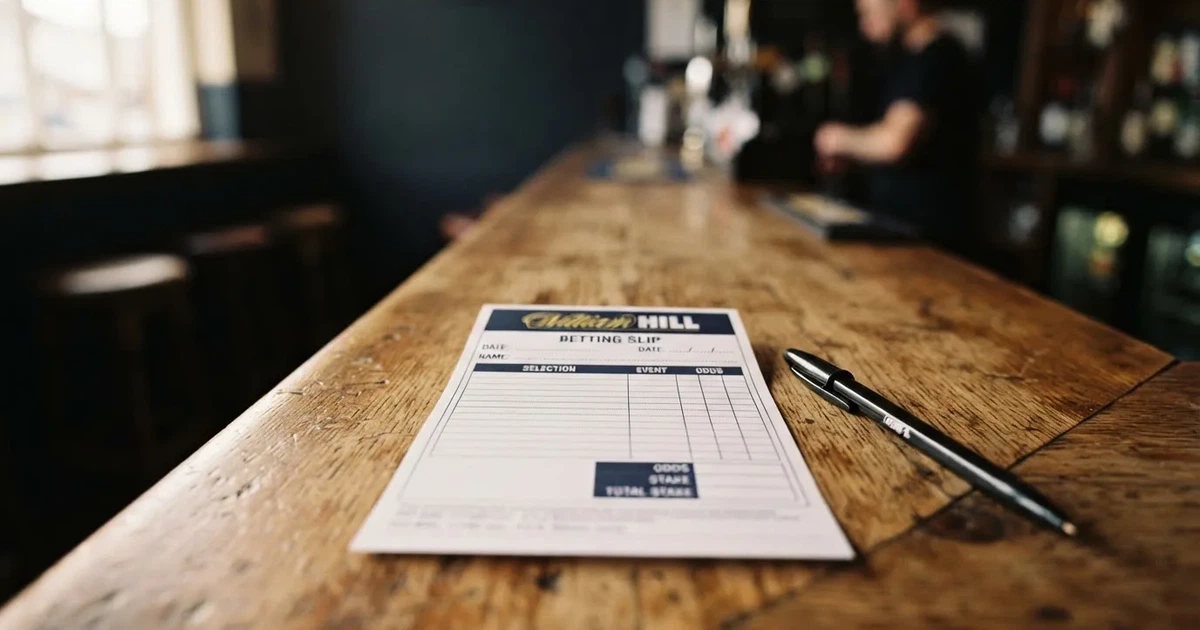
The figures below are current as of 27 October 2026 and were checked against the Gambling Commission’s public register and each operator’s own terms page.
What Best Odds Guaranteed Actually Does
Best Odds Guaranteed is a price adjustment at settlement. A punter takes a price — the early show or fixed-odds price published on a racecard — and the horse runs. If the starting price (SP) is bigger than the price taken, the bet is settled at SP instead. The stake is unchanged. The return is larger. If SP is shorter than the price taken, the bet is settled at the price taken — BOG never works in reverse. The concession is built around two ideas: give the punter a chance to lock in early without being penalised for a drift, and keep the bookmaker from being ambushed by an unexpected steam.

The starting price itself is not a chosen number. For British horse racing it is the median of sampled bookmakers’ prices at the off — the shortest price in the longer-priced half of the sample, so at least half of the firms in the sample offered that price or longer. Where no fixed price is taken, SP is what wins. Where a price is taken, the punter’s price settles the bet — unless BOG is on and SP is bigger.
Two conditions matter more than the headline. The first is that BOG almost always applies only to horse racing, and usually only to UK and Irish meetings — bookmakers named below state this in their terms. The second is that BOG is a concession, not a regulation: no statute requires a bookmaker to offer it, and the rules around which races qualify and which bet types count are the operator’s own.
Why the Headline Price Stops Mattering Beside the Margin
Bookmakers quote prices with an inbuilt edge called the margin (sometimes the overround). On a two-horse market priced at 1.90 / 1.90 the implied probabilities add up to 1/1.90 + 1/1.90, or roughly 105.3% of a unit. The 105.3% is the bookmaker’s margin dressed as probability; the punter’s combined fair price is 100%, and the missing 5.3% is what the market keeps on every unit bet, before a result, before BOG, before the race. Stated as a band, the example settles somewhere in the region of 5% to 6% of every unit, depending on rounding and which runner is sampled. BOG then layers on top of an already-priced market, not on top of a fair one — which is why a 10/1 shot that drifts to 14/1 has paid the punter handsomely on the drift, while the same trade on a 2/1 favourite that drifts to 11/4 has paid the punter modestly on a market where the margin was wider in the first place.

It follows that a punter who only ever takes early prices on short favourites is paying BOG a fee in the form of forgone margin. A punter who backs bigger-priced runners in early markets — where early prices can be slack and the drift moves further — gets more of the feature’s actual value. This is the trade the rest of the page makes concrete: which bookmakers charge what kind of price, and which kind of bettor BOG actually rewards.
How the Concession Is Settled — and Where the Edge Falls Away
On the surface, BOG is two sentences long. Take a price. If SP is bigger, get paid at SP. The mechanics sit under that summary in three places where a sharp punter earns the difference, and three places where a bookmaker quietly clips it.
The first place is the Rule 4 deduction. When a runner is withdrawn from a race and a new market is formed without that horse, Rule 4 applies — a fixed deduction from winning returns, scaled to the withdrawn horse’s price. At Sky Bet, if a price taken receives a Rule 4 deduction, the deduction still applies unless the horse returns at a bigger SP, in which case the bet is paid at SP with no deduction. That carve-out keeps the concession honest: BOG pays the SP, Rule 4 stays in the price book, and the punter does not get both. For an each-way bet the same logic runs twice, once on the win leg and once on the place leg.
The second is the cap. The same Sky Bet terms cap the BOG uplift at £50,000 per bet or per race for horse racing. On a place-and-show market the cap still bites at the level of the bet or the race, and a winning return above that line is paid at the cap rather than the headline uplift. A 100/1 outsider that drifts to 200/1 has, on a £100 stake, a difference of £10,000 between the two prices — comfortably inside the cap. A six-figure backer of the same runner sees the cap, not the drift.
The third is the qualifying market. BOG is offered on horse racing and almost nothing else in the sample reviewed. Spreadex’s spread betting product is a separate conversation and is regulated by the Financial Conduct Authority rather than the Commission; Spreadex makes clear that spread betting losses can exceed deposits. Matchbook is a betting exchange where customers bet against other users — the back-and-lay mechanics sit alongside fixed-odds in a different regulatory frame. Among the ten operators reviewed, BOG is best understood as a horse-racing concession with one or two racing-specific rules stacked on top.
How a Return Is Worked Out
The arithmetic behind a settled bet is short, and skipping it costs the punter the ability to compare offers.
For a single bet at decimal odds *o* with stake *s*, the return if the bet wins is simply *s × o*. The profit, in the punter’s hand, is *s × (o − 1)*. On the price 5.00 with a stake of £10, the return is £50 and the profit is £40. For a double, the price multiplies — two legs at 3.00 and 4.00 settle at a combined price of 12.00, and a £10 stake returns £120 if both legs win. For an each-way bet the stake doubles: half goes on the win at the price taken, half on the place at the place terms, and each half settles separately.
The price includes the bookmaker’s margin, which is what makes the round of arithmetic that opened this section matter. A price of 1.90 implies 52.6% chance of winning; a price of 5.00 implies a 20% chance; summed across a market, those implied probabilities exceed 100%, and the gap is the bookmaker’s edge.
Bookmakers with Best Odds Guaranteed — What the Rest of This Page Does
The ten operators below hold a Gambling Commission licence checked against the public register. Each is described on what it offers, what the licence looks like and what BOG does inside its own terms — and on what makes it a different choice from the one before.
It is worth saying in advance what this page does not do. It does not name a winner of any race. It does not endorse a bookmaker over another on a head-to-head basis. It does not print a working bonus code or a promo. The page’s job is to lay a verifiable basis for a reader’s own decision — what each operator offers, what each set of terms charges, where the price book takes its share.
BoyleSports
BoyleSports is a BoyleSports Enterprise bookmaker, listed on the Gambling Commission’s public register for a remote general betting standard (real events) licence under Commission account 39469, on the BoyleSports website. The BoyleSports Acca Insurance requires opt-in, a stake of at least £5, minimum odds on each leg of 1/2 (1.50 decimal), a maximum free-bet refund of £20, the bet must be placed and settled on the same day, and the refund is paid as a free bet expiring in seven days. The free-bet refund is not a cash refund: the stake is not returned with the free bet, and a winning free bet pays only the profit at the eventual price. Beyond the acca insurance, BoyleSports offers Best Odds Guaranteed on UK and Irish horse racing in line with the house’s wider horse-racing product. For the punter who accumulates, the refund-as-free-bet structure is the cost — for the punter who plays singles, the same offer is largely silent.
BetUK
BetUK runs under a Gambling Commission remote general betting standard (real events) licence with the BetUK website; the licence is held by LeoVegas Gaming PLC, which also publishes the BetMGM UK app and London Bet in this list. Free bets on BetUK exclude virtual sports, esports and non-UK/IE horse racing, and the minimum odds rule, the expiry and the qualifying bet structure follow the operator’s wider offering. For a punter whose accumulator legs tend to land in horse racing outside the UK and Ireland, the exclusion bites — the free bet credit is, in those cases, simply not usable. BOG at BetUK follows the racing-product line, and a punter checking the racing tab on a day of British meetings sees the usual price-then-SP comparison.
London Bet
London Bet is published by Thistle Bet Limited and lists a remote general betting standard (real events) licence on the Gambling Commission register under Commission account 66162, on the London Bet website. The app carries a 17+ App Store age rating, and London Bet operates in the UK under its own platform. The site frames itself around the British racing calendar, with horse racing as the principal BOG-bearing product and standard promotions around accumulators and price boosts. For the punter checking a single brand with a London-themed product, the licence line is straightforward; the rest of the offering sits inside the operator’s own terms page.
DragonBet
DragonBet Ltd publishes dragonbet.co.uk under a Commission account 64908 for a remote general betting standard (real events) licence. The brand’s product centres on Welsh football and rugby, with racing, American football, in-play betting and bet builder markets. For a punter whose accumulator plays Welsh football and British racing in the same week, the brand is a single account for both, and BOG applies to the racing side of that line. For a punter whose bets sit in markets DragonBet does not fully cover — global tennis, deeper basketball markets, esports — the platform shows its narrower focus.
Bet600
Bet600 is operated by Tyche Tech Limited, Gambling Commission account 44731, with a remote general betting standard (real events) licence and brand domain bet600.co.uk. The brand explicitly pays Best Odds Guaranteed on horse racing: if the starting price is bigger than the early or show price taken, the winning bet is paid at the SP. The product is built on a single concession per market, and a punter who keeps a BOG shortlist knows exactly what Bet600 pays on winning bets. Spreadex, Matchbook, and the other bookmakers in this list operate under broader or different licensing categories; Bet600’s line is straightforward horse racing.
Matchbook
Matchbook is a betting exchange, with a Commission account 39504 covering a remote general betting standard (real events) licence and a remote betting intermediary licence, the licence category that lets customers bet against each other rather than against the bookmaker. Brand domain Matchbook; operator Triplebet Limited. The platform also offers Bet Builder, multiples, in-play betting and live streaming of horse racing and greyhounds. For a punter who understands back-and-lay mechanics, Matchbook is structurally different from the other nine — exchange prices do not carry the bookmaker’s margin in the same shape, and BOG as a concept does not apply, since the price a backer takes is the price they negotiate with a layer. For a punter looking for a fixed-odds sportsbook with BOG, Matchbook is not the answer; for a punter laying horses on the racing product, it sits in a separate frame altogether.
Sporting Index
Sporting Index runs under Gambling Commission account 27343, with Sporting Index Limited as the licence holder and a remote general betting standard (real events) licence; brand domain Sporting Index. The new-customer offer is fixed-odds-shaped in part — a £10 fixed-odds bet at minimum odds of 1/2 unlocks three £10 fixed-odds free bets — and the rest of the offer is a spread-bet bundle: three £5 Total Goals spread bets, three £5 Winning Favourites spread bets, and a £1 Race Index spread bet. The qualifying bet cannot be placed in-play or cashed out early. As a spread-betting firm, Sporting Index’s regulated activity is partly FCA (financial spread betting) and partly Commission (fixed-odds), and the customer’s exposure on a spread leg is unlimited losses on a small stake. BOG does not run through Sporting Index in the same shape as a fixed-odds sportsbook; the platform’s racing product carries its own pricing.
Spreadex
Spreadex is regulated by the FCA for spread betting and by the Gambling Commission for fixed-odds betting under Commission account 8835; on the Spreadex website; operator Spreadex Limited. Spread betting losses can exceed the deposit, and the page notes this in plain. Spreadex’s new-customer offer pays £60 in free bets for a £10 fixed-odds bet, with the free bets usable across fixed-odds and spread betting; the qualifying bet must be placed within 28 days of opening the account. As with Sporting Index, the racing product and BOG run on the fixed-odds side of the platform, and the spread side carries its own pricing.
William Hill
William Hill is operated by WHG (International) Limited under Commission account 39225, with a remote general betting standard (real events) licence; brand domain William Hill. William Hill pays Best Odds Guaranteed on UK and Irish horse racing from 8 AM on the day of the race, on both single and multiple bets. The offer does not apply to ante-post, tote or pari-mutuel bets. As one of the larger names in the licensed sample, William Hill’s BOG line is among the more widely advertised in the market, and the time window — 8 AM on the day — bounds which early prices qualify and which do not. For a punter placing ante-post bets months ahead, BOG is simply not on that line; for a punter racing a card the day of the meeting, the feature applies in the standard shape.
QuinnBet
QuinnBet runs under QuinnBet (Gibraltar) Limited with a Commission account 61011 listing a remote general betting standard (real events) licence; on the QuinnBet website. QuinnBet’s free bets are valid for seven days from credit and can be used on any market at minimum odds of 1/2 (1.50 decimal), with a maximum price of 50/1; straight accumulators are permitted, but Trixies, Patents and Yankees are not. The exclusion of multi-leg structures that are not straight accumulators is a specific feature: a Patent — seven bets across three selections — does not qualify for the free-bet credit, and a punter whose accumulator structure uses those combinations does so with their own funds. BOG at QuinnBet applies to the racing product.
The Comparison at a Glance
The table below carries the matters the spec chose for this site, named in a way that fits the page. Each row is a brand; each cell is what each operator’s own terms state. Empty cells are the article-language no-data marker — where research does not name a figure for that operator and that matter, the cell carries no entry.
| Brand | Gambling Commission licence | Best Odds Guaranteed under what the operator states |
|---|---|---|
| BoyleSports | 39469 — remote general betting standard (real events); Boylesports Enterprise | Acca Insurance requires opt-in, stake from £5, minimum odds 1/2, refund up to £20 as a 7-day free bet; bets placed and settled same day |
| BetUK | 39198 — remote general betting standard (real events); LeoVegas Gaming PLC | Free bets exclude virtual sports, esports and non-UK/IE horse racing; minimum odds apply |
| London Bet | 66162 — remote general betting standard (real events); Thistle Bet Limited | Racing product carries BOG under house terms |
| DragonBet | 64908 — remote general betting standard (real events); DragonBet Ltd | Welsh football and rugby core product; racing, American football, in-play and bet builder markets |
| Bet600 | 44731 — remote general betting standard (real events); Tyche Tech Limited | Pays BOG on horse racing; settled at SP when SP exceeds the price taken |
| Matchbook | 39504 — remote general betting standard (real events) and remote betting intermediary; Triplebet Limited | Betting exchange — no BOG in the same sense; bet builder, multiples, in-play, racing live streaming |
| Sporting Index | 27343 — remote general betting standard (real events); Sporting Index Limited | Fixed-odds £10 qualifying bet unlocks spread-bet bundle; qualifying bet not in-play, no early cash out |
| Spreadex | 8835 — remote general betting standard (real events); Spreadex Limited | Spread betting FCA-regulated; fixed-odds side offers BOG on racing under house terms; £60 free bets on £10 qualifying |
| William Hill | 39225 — remote general betting standard (real events); WHG (International) Limited | BOG on UK and Irish horse racing from 8 AM on race day on singles and multiples; not ante-post, tote or pari-mutuel |
| QuinnBet | 61011 — remote general betting standard (real events); QuinnBet (Gibraltar) Limited | Free bets valid 7 days from credit, market odds 1/2 minimum, 50/1 maximum; straight accumulators only |
The table does not rank the operators — it lays them side by side on the matters the spec chose. What it shows at a glance is that licence lines move in step (every brand holds a remote general betting standard licence against a named licensee), that BOG sits inside the racing product on nine of the ten and that one of them (Matchbook) is structurally a betting exchange rather than a sportsbook.
What a Gambling Commission Licence Checks and Where It Does Not
Every brand above shows up on the Gambling Commission’s public register. The register can be searched by business name, trading name, domain or account number, and any brand a reader sees advertised can be checked the same way. A remote licence means the Commission has approved the operating licence holder for the categories shown — in this sample, primarily remote general betting standard (real events), with Matchbook additionally holding a remote betting intermediary licence and Spreadex’s spread-betting activity sitting under the Financial Conduct Authority.
A licence is not the same as a recommendation. Several brands can run under one licensee — and a register lookup returns the licensee, not the brand-by-brand ranking of which brand is “best”. No single licensed brand is the only choice on this market; the sample above is a licensed ten, and the register lists more.
A few rules frame what the licence buys the customer. Identity is verified before the first deposit, so anonymous play is not a feature of a licensed operator. Since 7 May 2019 name, address and date of birth are checked before the customer can deposit or gamble, including with a free bet or bonus. Since 14 April 2020 credit cards are banned for gambling in Great Britain, including credit-card-funded payments through an e-wallet — a debit card or a bank-based payment is not caught by that ban. Since 31 March 2020 GAMSTOP membership has been a mandatory licence condition for online operators, and a customer self-excluded through GAMSTOP cannot deposit or bet at any licensed brand during the exclusion. Since 30 August 2024 a financial vulnerability check has applied at licensed remote betting when a customer’s deposits minus withdrawals exceed £150 in a rolling 30 days, in force since 28 February 2025; this is a public-record check, not a credit-reference or income check. Wagering requirements on bonuses are capped at 10x, with mixed-product promotions banned, under the promotion rules in force since 19 January 2026. None of these rules applies to an offshore brand running outside the GB regime.
What Falls Outside the GB Regime
A bookmaker that takes bets from customers in Great Britain needs a Commission licence wherever it is based, under sections 33 and 36 of the Gambling Act 2005 as amended in 2014. A Curaçao, Maltese or Gibraltar licence is not a substitute; nor is a licence from a different regulator as a route into the British market. Providing gambling facilities in Great Britain without the licence the Act requires is an offence aimed at the operator, not the customer who places the bet — but the customer dealing with an unlicensed brand loses the protections the licensed market relies on: no GAMSTOP coverage, no Commission complaints route, no approved dispute-resolution service, no British consumer redress if funds are withheld, no 10x bonus cap, no £150 vulnerability check. The honest framing of an unlicensed brand is that one might win a bet and never see the funds, not that the brand is “the safe choice” by default.
The Commission enforces the regime through cease-and-desist notices, referrals to search engines, work with registrars, hosts and payment providers, and court-order DNS blocking powers that are being or have been granted. ISP blocking is not in operation across the regime; the building blocks are pointed.
Where Player Protection Sits
The cluster of rules around GAMSTOP, the financial vulnerability check and the deposit-limit requirements is the active frame for player protection. GAMSTOP is the national multi-operator online self-exclusion scheme, with periods of six months, one year, five years, or five years with auto-renewal; after the minimum period, the exclusion stays in place for a further seven years unless the customer asks GAMSTOP to remove it. GAMSTOP covers online sites and apps; betting shops use a separate service.
Help is available outside the operator’s own line. GamCare runs the National Gambling Helpline, GambleAware funds treatment through the NHS and partner organisations, NHS gambling clinics offer face-to-face support in England, and Gamblers Anonymous runs peer-led meetings. None of these is part of an offer — they are listed because a reader who has reached the part of the page that mentions betting limits is sometimes a reader who wanted to read it.
The Margin in Plain Numbers
The arithmetic at the centre of this page belongs with BOG more directly than it might first appear. Take a two-way market priced at 1.90 on each side, the illustrative example used throughout. The combined implied probability is 1/1.90 + 1/1.90 = 105.26%. The corresponding payout share is 1/105.26% = 95.00%, and the margin is 100% − 95.00% = 5.00%, stated as a band rather than a fixed figure: roughly 5% to 6% of every unit bet, depending on rounding and on which runner is sampled. That is what the bookmaker keeps on every unit, before any concession is applied. BOG, on a single bet that has drifted, adds the difference between the price taken and the SP — but it does so from a base that has already given the bookmaker its 5%.
A punter comparing offers on this market alone sees an illusion: the same headline concession from ten bookmakers, with margins that drift in the band and do not match between brands. The page does not attempt to rank bookmakers by margin — research did not provide margins per operator per market — but it does state the one quantification that is fixed: BOG pays the difference when SP is bigger, the margin is what makes that difference monetisable, and the punter paying more margin in the early market is the punter paying BOG a fee.
A Note on Bonuses and Free Bets
The cluster of free bets, acca insurance and acca boosts above is described in shape, not in working terms. A bonus or free bet is described by what its terms require, what it pays and where it does not apply — never as a code to claim it. A free bet whose stake is not paid back has a real value a touch below its headline number, and the page does not retell that with a code or a paste-in offer. Where the offer is a free bet usable across fixed odds and spread betting, what the punter does with it after credit is the punter’s decision; the spec keeps the offer description here because research carries it, and the rest of the page keeps the offer marketing out because the offer marketing does not.
Choosing a Bookmaker for BOG — Three Reader Profiles
A punter’s choice between the ten depends less on who has the best BOG headline and more on what the punter actually bets. Three profiles cover most of the cases a reader of this page fits into.
The racing-only punter wants BOG on every UK and Irish meeting, with the concession settled at SP and the price book running tight enough that early markets are competitive. William Hill’s terms — BOG on UK and Irish racing from 8 AM on race day, on singles and multiples, with ante-post, tote and pari-mutuel excluded — name the time window, the geography and the bet type. Bet600 publishes a single sentence on BOG and settles at SP. BetUK and London Bet run BOG under their own racing product. DragonBet covers Welsh football and rugby in the same product line and carries racing as part of that. For the punter who bettor-frame as a racing-only player, the table’s licence lines matter less than the racing hours and the qualifying bets.
The accumulator punter reads the page differently. BOG accrues per leg, and a four-leg acca that has taken prices on all four could be settled on the bigger of (early prices × early prices × early prices × early prices) and (early × early × early × SP) and so on in combinations. The accumulator is where BOG and acca insurance meet — BoyleSports pays up to £20 as a free bet on a settled accumulator that loses one leg by a minimum-odds rule. The free bet is a credit at the next bet, not a refund of the lost stake. The accumulator punter sees the free bet as a token to add to the next line; the racing punter sees it as a feature they never trigger.
The punt-and-lay punter has a third picture. Matchbook is an exchange; the price a backer takes is the price they negotiate with a layer on that platform, and there is no margin-for-BOG interplay in the same shape. Matchbook’s same-game-multi offer and racing live streaming are separate features, and the BOG comparison does not speak to that structure. For an experienced exchange punter, Matchbook is a tool; for a fixed-odds sportsbook punter, it sits in a different frame.
A Practical Order When Comparing Two Bookmakers
Step one is the licence. Both brands on the register, both lines checked against the public register, both remote general betting standard (real events). Step two is the racing product — does the operator run BOG on the meetings the punter cares about, on the bet types the punter plays, on the geography (UK/Irish racing by default). Step three is the price book — what is the early price, the implied margin, the difference between the price taken and the SP for a typical race. Step four is the qualifying bets — what the free bet requires, what the minimum odds are, what the expiry is. Step five is the settlement story — caps (Sky Bet’s £50,000 per bet or per race), Rule 4 carve-outs, ante-post exclusions. Picking between two bookmakers by headline BOG alone is the loudest mistake on this page, and picking between two bookmakers by margin alone is the second loudest. A reader comparing offers needs to walk the five steps once.
Where the Numbers End and the Reader Begins
The figures above are prices on the products named, licence lines checked against the Commission register, the SP comparison, and the bonus shape. The margin band is the prescribed calculation, given as a range rather than a point estimate. Where research does not carry a margin figure for a market on a brand, the page does not invent one. Where research does not name a free-bet’s expiry on a brand, the page notes it but does not fill it in. A reader who needs the exact figure their chosen bookmaker quotes checks the day’s racing product on that operator’s site — the operator’s own terms run the concession, the operator’s own price is the price the bet will be settled at, and a comparison page that tries to be every punter’s source of truth for prices on a given afternoon ends up mispricing the concessions rather than comparing them.
Three closing notes. First, BOG is a concession, not a regulatory minimum; a bookmaker not offering BOG is not breaking a rule, it is running a different product. Second, the margin on a market is not BOG’s cost — BOG’s cost is the difference between the early price and SP, which is paid by the bookmaker when the drift is large enough that BOG is on the price-setter’s side of the trade; the margin stays in the book across the trade. Third, an account is the bettor’s own and is the bettor’s own comparison: bookmaker A’s racing product, bookmaker B’s accumulator offer and a betting exchange are different products at different price books, and the comparison above is a guide, not a verdict.
Frequently Asked Questions
Which bookmakers offer Best Odds Guaranteed?
The bookmakers reviewed on this page that publish BOG terms include BoyleSports, BetUK, London Bet, DragonBet, Bet600, William Hill and QuinnBet — all treat UK and Irish horse racing as the default BOG-bearing line. Matchbook is a betting exchange where BOG does not apply in the same shape, while Sporting Index and Spreadex carry BOG through their fixed-odds racing product with separate spread-betting offers alongside. The list is not exhaustive: a bookmaker that pays BOG on every UK meeting does so by its own terms, not by statute.
How can it be checked that a bookmaker holds a Gambling Commission licence?
The Commission’s public register can be searched by business name, trading name, domain or account number. Every brand above shows up on that register against a named licensee holding a remote general betting standard (real events) licence, with Matchbook additionally holding a betting-intermediary licence. A register lookup is the whole test; a licence is not a recommendation.
How is the return on a bet worked out from the stake and the odds?
For a single bet at decimal odds *o* with stake *s*, the return if the bet wins is *s × o* and the profit is *s × (o − 1)*. For a double the price multiplies — two legs at 3.00 and 4.00 settle at 12.00, and a £10 stake pays £120. Each-way doubles the stake: half on win at the price taken, half on the place at place terms, settling separately.
What is the bookmaker’s margin and how can it be seen in the odds?
The margin is what the bookmaker keeps on every unit bet on a market. On a two-way market at 1.90 on each side, the combined implied probability is 105.26%, the payout share is 95.00% and the margin is 5.00% — stated as a band of roughly 5% to 6% depending on the sample. The margin sits inside every price before any concession is applied.
Does Best Odds Guaranteed apply to ante-post bets?
Generally, Best Odds Guaranteed does not apply to ante-post, tote, or pari-mutuel bets. These bets are usually excluded from BOG concessions because ante-post pricing reflects a long-term risk and a different market structure. A punter placing an ante-post bet on a race months ahead should check the operator’s specific terms and conditions.
Free bets & offers – Basketball betting
Content created by the «Basketball betting» team
