
UFC betting odds in Great Britain: who prices the fights and what those prices cost
 Available in US
The shortest path through this guide: a price is the bookmaker’s probability dressed up as a payout. Strip the dressing and every UFC betting market is a margin. Once the margin sits in plain view, the question stops being “who has the best odds” — which is a comparison of prices the same bookmaker has already built into his margin — and becomes “whose margin is thinnest on the markets I actually bet on”. From that point the rest of the page follows: how a fight’s settlement rules shape the price (a finish inside the distance is worth less than a decision because finishes are rarer than they look), how a same-event multi ties together method, round and fighter and pushes the margin up, why welcome offers that promise “free bets” sometimes cost more in turnover than the headline figure says, and why “in-play” is a margin with a clock running. This is the practical version of UFC betting odds in 2026: nothing about who wins a bout, only about how a price is made, who sells it, and what the punter pays to take it.

Odds and margins age faster than any other number on a betting page. The figures below were checked against each operator’s own terms and the Gambling Commission’s public register as of 27 October 2026.
How a UFC betting app fits into a punter’s week
A betting app is where a price is read and a stake is committed. For UFC the apps do almost everything a desktop site does — open an account, deposit, place a single, place a multi, settle in-running, settle a price boost, settle a free bet — and the practical difference between them is usually the layout of the bet slip and how fast in-running prices refresh.
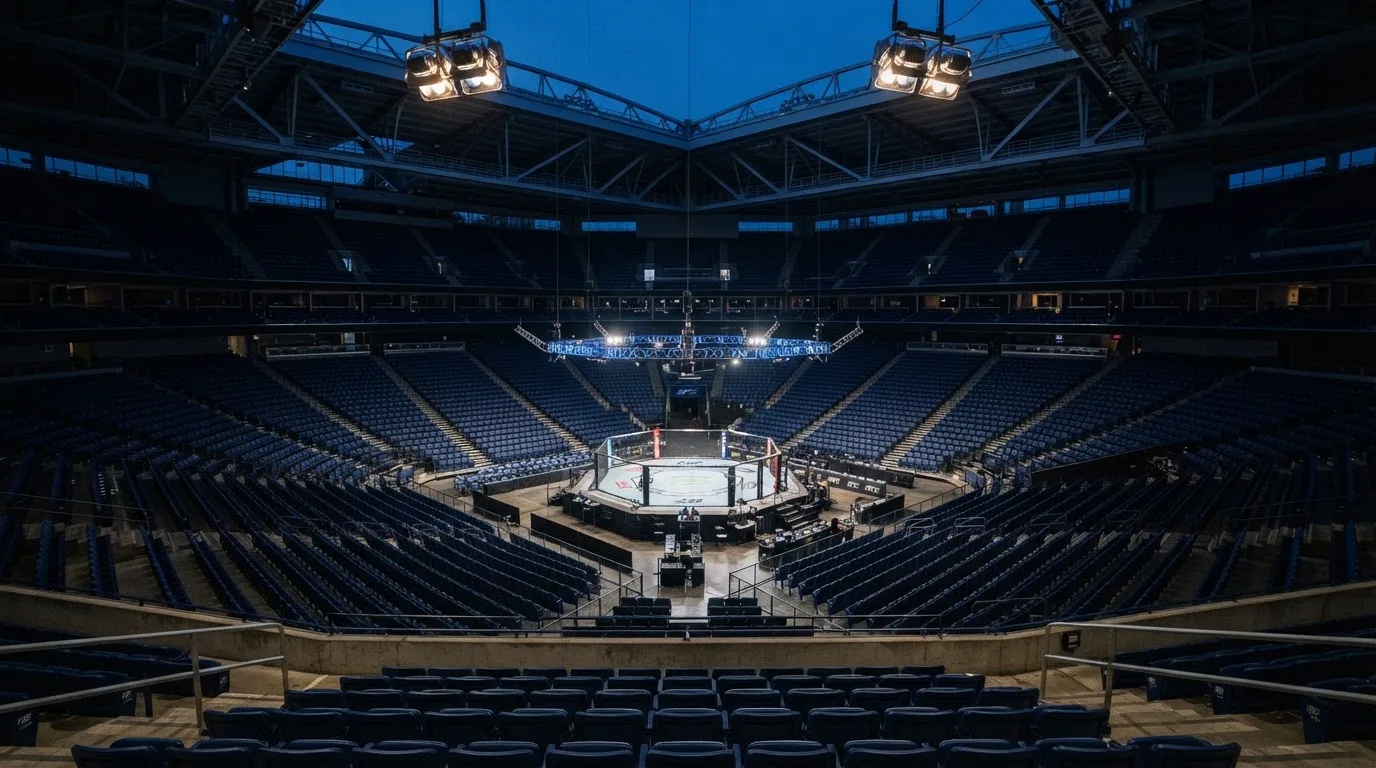
Apps that have grown up around British football and horse racing tend to handle UFC like a satellite sport: a corner of the sportsbook with the headlining fight, the undercard collapsed behind it, and a price for fight outcome, method of victory, round grouping and “go the distance”. Apps that have grown up around an American audience often treat UFC as a centrepiece: a deeper menu, more method markets (submission by type, knockout by strike volume, decision type), more round-grouping brackets, and a same-game multi tied to one bout. Neither shape is a verdict on the price. The price is the margin, and the menu only changes how many ways the margin is repeated.
Two practical points matter more than the marketing copy. First, a same-game multi is a margin with the legs multiplied. The legs multiply into one price; the margin multiplies with them. Build a “to win, inside the distance, in round two” multi and the bookmaker’s cut is the cut of the moneyline times the cut of the method market times the cut of the round market. That is why a multi at 50/1 looks rich: it is rich, the bookmaker’s slice is also there. Second, in-running prices on a UFC bout are thin and they move fast. A knock-down or a takedown can change the outright in two seconds; the app that updates fastest is the one with the smallest lag between the live feed and the price, and that lag is itself part of the price.
The features that mark a UFC app out from the rest of the sportsbook are the same everywhere: a same-game multi product (most brands call it “bet builder” or “acca builder”), a cash-out button on live fights, a price-boost card on the headliner, a free-bet tab that lets a punter drop a “bet credit” onto a selection, and a recent-results strip under the menu. The names are product names, not regulation. The licence behind the product is the Gambling Commission’s remote general betting standard licence, listed against each licensee on the public register. Checking the register is a few seconds of work and is the only test of who holds a GB licence — see the section on legality below for the exact procedure.
Live UFC betting and cash out
UFC is one of the friendlier sports for in-running betting because the action is broken into short, separated rounds. Between rounds a price update is a near-certainty; inside a round the price still moves on a takedown or a cut. Almost every licensed app offers in-play on UFC, and the choice for the punter is not “whether to bet in-running” but “how to handle a price that does not stop moving”.

The products the app stacks on top of in-play matter:
- Cash out. The app offers, mid-fight, to settle the bet at its current paper price. The price on offer is the bookmaker’s, not the punter’s, and on a UFC bout a 50/1 multi rarely cashes out for much. Cash out is a margin with a clock.
- Bet builder in-running. Tied to one fight, the multi updates the price on each meaningful exchange of strikes or a takedown. The legs still multiply; the refresh is the difference. The bookmaker’s cut sits inside the refreshed price.
- Live streaming. A handful of licensed apps stream selected fights under their own commercial arrangements; some show only graphics and round-time bars; others do not stream UFC at all and link out to a partner. A live stream beside a price is useful; a price without a stream depends on the app’s in-app radar and the operator’s data feed.
A practical rule on UFC in-play: cash out is rarely worth it on a multi below 5/1, the spread between pre-fight price and live price is the bookmaker’s move on the strength of the action, and a slip from a contender back to outright after a knock-down can be reversed in the next exchange. Punish the clock, not the price.
UFC betting tips, predictions and the difference between the two
A prediction names a winner. A tip is a price with a method, a round and a stake, and it is wrong far more often than a prediction. The reason for the gap is structural: punters who follow UFC at all have an opinion on each headliner, but opinions on UFC are produced faster than they are tested — by Saturday morning one outlet will have named each pick, by Sunday one or two will have landed, and the rest will be quietly withdrawn without the corrections page showing a change.
A useful filter on tip material in 2026:
- Tips that name only the method (submission, decision, knockout) are usually better than tips that name a round. The method is a property of the match-ups; the round is a property of the action.
- Form reading over the last three fights is more useful than form reading over the last ten. UFC careers are short and the last ten includes a long tail of different eras.
- A “best bet” is a price, not a name. If a tipster’s pick carries a price much shorter than the next bookmaker’s, the price has already done the work and the tip is a marketing nudge.
- A multi assembled from three “best bets” is a margin with three legs. The accumulator does not sharpen the form reading; it adds a third bookmaker’s cut to the first two.
- The tipster with the worst recent record is the one giving the tip with the shortest price. The tipster makes the short price look confident, and the confidence is the marketing.
UFC form moves on weight-cut news, illness, late withdrawals and replacement opponents. The 90 days before a fight carry more useful information than the year before. A punter treating tips as the first source of information usually has to back the tipster’s bookmaker; reading the form first lets the punter pick his own bookmaker.
A useful distinction in this market: betting strategy is not a list of picks. A betting strategy is a rule for the stake — a 1% bank on singles, a 0.5% on a multi, a maximum exposure on the night of 5%, an insistence that no single fight takes more than 2% of the bank. The picks go inside the rule; the rule does not bend to the pick. The strategy is the part the punter owns.
UFC bet types and the odds that go with them
UFC odds are presented in fractional form by most British bookmakers (the older native form), in decimal form by every operator with an app built for the European market (the cleaner form for maths), and in American form by an American-facing menu the British app often hides. For reference: fractional 5/1 is decimal 6.00, evens is 2.00, odds-on 1/2 is 1.50.
The market types the punter sees:
- Outright / moneyline. A, B or draw (very rare on UFC: most fights end before a draw is possible). One price per fighter, the smaller price is the favourite.
- Method of victory. Win by knockout / technical knockout, win by submission, win by decision, the “any other” group. The market is three or four legs depending on the operator; prices vary widely between books because the underlying probabilities depend on each operator’s data feed.
- Round grouping. Win in round 1, round 2, round 3, by decision, in round 4, in round 5 (the last only available on five-round fights). The grouping matters: a finish in round 4 of a five-round fight is short-priced because the fight rarely lasts that long on an average card.
- Total rounds / over-under. A line on how many rounds the fight lasts, set at 0.5, 1.5, 2.5 or — on title fights — 4.5. Under 1.5 is a near-certainty when both fighters are knock-out artists; under 4.5 is a near-certainty when neither finishes fights.
- Go the distance. A binary market on whether the fight runs to the judges.
- Same-game multi. Moneyline, method, round and go-the-distance tied together. The richest prices on the menu and the heaviest multi leg, because the marginal leg in a UFC multi is always the round.
- Each-way method. A handful of bookmakers offer each-way on the headliner: half the win on the method, half the win on the outright. Each-way is a paired bet, so the stake is doubled and the place terms are bookmaker-specific.
- In-play price. A price that resets in-running, with a thinner line and a faster clock than the pre-fight price. The bookmaker’s margin is inside this price too.
The market types that are absent from a British menu compared to an American one: live round-by-round props (which fighter wins round 1), strike volume over/unders, takedown over/unders, “fighter to score a knockdown”, “fighter to attempt a submission”. Some books carry them on the headliner only; most do not.
The general rule: a market built from two independent legs — moneyline and decision — carries roughly twice the bookmaker’s margin of the moneyline alone. A market built from three independent legs — moneyline, decision and round — carries roughly three times. The price grows faster than the probability because the margin grows faster than the price.
The UFC’s place among sports and tournaments
UFC is the largest MMA organisation in the world and the one British licensed bookmakers price comprehensively. The first UFC event was held on 12 November 1993 in Denver, Colorado. The organisation is owned and operated by TKO Group Holdings, with Dana White in place as president since 2001. The UFC has eight men’s and three women’s divisions, and had held over 750 events by 2026.
A UFC fight card has a clear shape: a numbered event once or twice a month (UFC 334 on 14 November 2026 at Madison Square Garden, UFC 335 on 12 December 2026 at T-Mobile Arena), with Fight Night events in the gaps. Five-round fights are reserved for championship bouts and the main event of a numbered card; everything else is three rounds. Each UFC round is a maximum of five minutes with one minute’s rest, and judges use the ten-point must system — the winner of a round gets 10 points, the loser 9 or fewer, with 10-8 rounds for dominant ones.
The shape of the calendar matters to odds more than the calendar’s dates do. A numbered event runs as a pay-per-view on a Saturday night UK time, and the betting market closes earlier than on a Fight Night because the card is bigger. A Fight Night fights on Saturday or Sunday with a smaller card; the betting market opens earlier in the week.
A bout can be won by submission, knockout, technical knockout, the judges’ decision (unanimous, majority, split, or technical), or disqualification. A bout can also be ruled a no contest, and a title fight ending in a draw sees the defending champion retain the title. Each of those rulings has a settlement convention at the bookmaker, and each convention is set by the bookmaker’s own rules: a disqualification on the night usually settles as a win for the opponent, but on a no-contest ruling most books void the bet. The rules are in the bookmaker’s own terms, not in a universal settlement standard.
The position of UFC in a British sportsbook menu: behind football, horse racing and greyhound racing in volume, ahead of tennis in many brands, ahead of most American sports. The licensed bookmakers that carry UFC carry it as a matter of routine and at full menu depth, with a smaller handful treating the headliners as the priority and offering a thin menu on the undercard.
What a licence number actually means and which brands hold one
A bookmaker serving customers in Great Britain needs a Gambling Commission licence wherever it is based. The Commission’s public register, searchable by business name, trading name, domain or account number, is the whole test of whether a brand holds one. A GB-licensed online operator is also a GAMSTOP member, and credit cards are banned for gambling in Great Britain. Identity is verified before the first deposit: there is no anonymous play at a licensed site.
The table below covers every brand reviewed below, with the Commission’s account number and remote licence number under which the brand runs. Both numbers can be entered on the public register; the licence holder is the legal entity the Commission knows, and a domain is not proof of a licence. Where the column reads “lists — terms”, the only evidence for that brand on the key point is the operator’s own terms page, app listing, or another operator-facing channel — not an independent confirmation.
| Brand | Licence number (remote licence — account) and licence holder | What the operator’s own terms state on the key’s subject |
|---|---|---|
| Bet600 | 044731-R-323941-016 (44731) — Tyche Tech Limited | Best Odds Guaranteed on UK and Irish horse racing; settles to SP if the starting price is larger than the early or show price taken |
| BoyleSports | 039469-R-319383-025 (39469) — Boylesports Enterprise | Lists — sports welcome offer is £20 in free bets on a £10 qualifying bet (Irish counterpart: €30 on €10) |
| Matchbook | 039504-R-319407-024 (39504) — Triplebet Limited | Lists — betting exchange against other users; Bet Builder, multiples, in-play and live streaming on horse racing and greyhounds |
| Betboro | 044181-R-324363-007 (44181) — Webmedia Development N.V. | Sports welcome offer: 100% matched free bet up to £25, min £10 debit-card deposit, first bet £5–£25 with three-plus selections each at 3/5 (1.60) or higher |
| Tote | 054779-R-331321-008 (54779) — TDCO Limited | Lists — Best Odds Guaranteed on UK and Irish racing from 8 AM on the day of the race; applies to singles and multiples, not ante-post, tote or pari-mutuel |
| Fitzwilliam Sports | 048760-R-335434-009 (48760) — SBKI Limited | Lists — Dublin bookmaker with capped membership; “High Stakes Welcome” subject to compliance criteria; instant deposits, fast withdrawals, timeouts, deposit limits; links to safer-gambling bodies |
| Bet Ahoy | 100094-R-341742-003 (100094) — Bet Ahoy Ltd | Lists — “Bet £10 & Get £10 in Free Bets” as a £5 sports bet plus a £5 acca |
| Unibet | 045322-R-324275-019 (45322) — Platinum Gaming Limited | Lists — operated since 1999; sports welcome: “Get £40 in Free Bets when you bet £20”, min odds 2.0 (1/1), free bets expire within 7 days, debit card or instant bank transfer |
| Kalooki Sportsbook | 057730-R-333396-005 (57730) — Kalooki Sportsbook Limited | Operator — Kalooki Sportsbook Ltd (12938274), GAMSTOP member, identity verified before first deposit |
| Copybet | 053774-R-330743-010 (53774) — Copybet UK Limited | Lists — Best Odds Guaranteed all day every day on UK and Irish racing; first past the post pays even if the winner is later disqualified |
Several brands carry the same risk profile (a licensed remote betting licence with identity verified before the first deposit), so the differences between them sit in product depth, market depth on UFC, and the value of the welcome — not the licence. Where the brands genuinely diverge is in the offering the table does not show: how deep the UFC market menu runs, whether a same-game multi covers UFC, how the cash-out button behaves in-running.
How the bookmaker’s margin sits inside UFC odds
Decimal odds are a payout: a £10 stake at 2.50 returns £25, of which £15 is profit. The bookmaker’s margin (the “overround”) is what is added on top of true probability so that the implied probabilities add up to more than 100%. A two-way market at decimal 1.90 / 1.90 has implied probabilities of 52.63% on each side (1 ÷ 1.90), totalling 105.26% and leaving a 5.26% margin for the bookmaker. The closer the prices sit to 2.00 / 2.00, the thicker the margin; the closer they sit to 2.10 / 1.90, the thinner — at 2.10 / 1.90 the implied probabilities add to 99.20%, the margin is below 1% and the bookmaker is paying out nearly the full 100% of stakes.
A third outcome (the draw, in any market that carries one) widens the example: three outcomes at 3.20 / 3.20 / 3.20 sum to 93.75% probability, a 6.25% margin — wider because the third outcome lets the bookmaker charge for it. The same applies to UFC’s method markets (knockout / submission / decision), where each leg carries its own margin and the price build is wider than the outright.
A worked example on a two-way UFC market at 1.90 / 1.90:
- The two outcomes imply 52.63% each. The implied probabilities sum to 105.26%, the excess is the bookmaker’s margin.
- Payout share of the market: 1 ÷ 1.0526 = 95.00%.
- Margin of the market: 5.00%.
On a UFC fight with a clear favourite, real-world prices run closer to 1.40 / 3.00 or thinner — summed they give a margin of roughly 6–7%, and on a multi they multiply with each leg. Every 1.90 / 1.90 headline number travels with a roughly 5% bookmaker’s slice; every “fight goes to decision” market carries its own larger slice; every same-event multi adds one more slice per leg. The arithmetic is not a point of view: a 5-leg multi carries five bookmaker margins inside it.
The lesson for UFC betting odds in 2026 is structural. A multi built from three favourite-priced legs at 1.30 each pays roughly 2.20 — below the price of any single leg at a competitor’s price — and carries three bookmaker margins. A single bet at the same competitor’s 1.80 price (a 5.55% implied margin) returns the same money on one of the three outcomes winning, without the multi’s compounded slice. The single carries less of the punter’s bank; the multi carries more of the bookmaker’s.
A useful check before a fight card: open the outright winner market and the method-of-victory market on the same fight at three licensed bookmakers and read the implied margins. The bookmaker offering the thinnest margin on outright is not necessarily the same bookmaker offering the thinnest margin on method; the menu where a punter’s market lives is the menu where the margin matters.
How welcome offers and free bets really cost what they cost
Every welcome offer in UFC betting is built from one or more of three pieces: a free bet (a one-shot stake the bookmaker credits), a price boost (a once-per-customer upgrade on a named fighter), and a deposit-gated package (free bets linked to a deposit method). None of the three pieces is what the marketing says it is.
A free bet’s payout does not include the stake. A £10 free bet at 3.00 returns £30 profit but the £10 stake is not paid back — the punter receives £30, not £40. The economic value is £10 × (3.00 − 1) ÷ 3.00 = £6.67 at the bookmaker’s payout share. Compare a refund as a free bet on a losing bet (the stake is returned as a free bet, the free bet then earns the £6.67 on average), or a matched bet on a £10 deposit (the bookmaker matches the deposit at 100% to £25 as a free bet, which earns £10 × (3.00 − 1) ÷ 3.00 on a single price). The marketing word “free” masks the arithmetic.
A welcome offer with a wagering requirement asks the punter to bet the bonus a number of times before withdrawing. The 10x bonus cap (in force since 19 January 2026 under the promotion rules) means a £10 bonus at 50x needed £500 of bets before withdrawal and the cap would limit similar offers to £100 of play. Mixed-product promotions — those that require gambling on two or more product types — are banned under the same rules. The rules apply to bonuses from licensed operators; offshore brands do not run under them.
Three failing patterns of welcome offer are common in UFC betting:
- Welcome offer tied to a high minimum price. A free bet at 4/5 (1.80) at short prices does not run into a wagering requirement, but a free bet tied to a 3.50 (5/2) market requires the punter to find a fighter at 2.50 or shorter to convert the free bet — which on a UFC card has not always been available on a marquee fight.
- Free-bet cap on winnings. Some free bets cap the profit at a small multiple (sometimes 2x or 3x the free-bet amount). The cap turns a free bet at 3.00 (the headline 4/1 winner) into a winner of £20 on a £5 free bet, not the £15 the price implies. The cap is in the operator’s terms, not on the front page.
- Expiry inside 7 days. A free bet issued on Monday and expiring next Monday fits a Saturday-night UFC card with no margin. The punter either uses it on the undercard or forfeits it.
The cumulative cost to the punter, on any offer, is the difference between the operator’s headline and the actual return after the stake-not-paid-back rule, the wagering requirement, the minimum-price rule, the cap on winnings, the cap on product mix, and the expiry. The math cannot be done on the headline.
The bookmakers reviewed
The ten brands below all hold a Gambling Commission remote general betting standard licence, all run under UK oversight on points like identity verification, GAMSTOP and credit-card use. The differences are the offering the licence number does not show: the depth of the UFC menu, the speed of the in-running book, the value of the welcome, the structure of the same-game multi, and the openness of the cash-out.
The order below is a review order, not a ranking. Names are names, and the page judges each brand on its own merits, not by the position it sits in.
Bet600
Bet600 is the kind of bookmaker that lives or dies on the price on a small race meeting on a Tuesday afternoon. Its name rests on its Best Odds Guaranteed promise on UK and Irish horse racing: take an early or show price on a horse, settle at the starting price if the SP is bigger. The wagering product sits behind the racing product, which means UFC is on the menu but the depth of that menu is not where Bet600’s engineering goes. A punter looking for the headline fight on the card and a single moneyline price will find it; a punter looking for a round-by-round market or a same-game multi tied to a single bout will not.
The brand suits a punter whose betting week is football and racing, who bets on the UFC headliner once a month, and wants the horse racing book beside it. The wagering options on UFC are a thin slice of the menu.
BoyleSports
BoyleSports is a familiar Irish high-street name that crossed into the British app market a long time ago and now sits comfortably on the GB register. The welcome offer for UK players — £20 in free bets on a £10 qualifying bet, with an Irish counterpart of €30 in free bets on a €10 bet — sits at the modest end of the licensed welcome set and reads as a bookmaker building a customer file rather than chasing headline numbers. The UFC menu is at full depth: the outright moneyline, the method-of-victory market and the round grouping are all priced on the headliner, with a Fight Night card under it.
The brand suits a punter who wants a full menu on the headliner and a welcome that earns its keep without a heavy free-bet cap. The free bet is paid in a single credit and the turnover rules are conventional.
Matchbook
Matchbook is the only betting exchange on the reviewed list, and the difference between an exchange and a bookmaker is the heart of the brand. A betting exchange lets the punter lay a fighter as well as back one, and lets him set his own price and wait for it to be matched. The liquidity on UFC is thinner than on horse racing at Matchbook but the headliner is usually supported, and the commission rate on a winning lay or back is the bookmaker’s take rather than the margin on the price. The exchange sits beside a Bet Builder and a multiples product; the offer on the headliner is rarely the headline battleground because the exchange’s price is the punter’s price.
The brand suits a punter who wants to lay an outcome (bet against it winning), who will set a price and wait for the match, and who is comfortable with exchange-style bets where the bet fails to get matched rather than landing. A punter who wants the same price as a bookmaker offers and a cash-out button should pick a bookmaker.
Betboro
Betboro runs a 100% matched free bet up to £25 as a sports welcome offer, behind a debit-card deposit of at least £10 and a first bet of £5 to £25 made up of at least three selections, each at 3/5 (1.60) or higher. The minimum-price floor means the welcome is on the early card’s over/under bets rather than on the headliner’s outright, where the favourite is usually too short to qualify. The free bet is paid back as one credit on settlement of the qualifying bet.
The brand suits a punter building up a welcome sequence across new accounts, who will read the operator’s terms to find the qualifying market and will not chase the highest headline. A punter who wants to bet the favourite for the win straight up will lose the welcome to the rollover.
Tote
Tote carries the pool-betting heritage of a name that began at British racecourses and now runs under a remote betting licence. The pool-betting product on horse racing sits beside a standard fixed-odds sportsbook with Best Odds Guaranteed on UK and Irish racing from 8 AM on the day of the race; the offer applies to singles and multiples but not to ante-post, tote or pari-mutuel bets. The UFC menu is the bookmaker’s standard fixed-odds offering, not the racing heritage.
The brand suits a punter whose interest is split between a Saturday afternoon racing card and a Saturday-night UFC headliner, who values Best Odds Guaranteed more than a heavy welcome offer. A punter hunting a heavy sign-up offer on a UFC card should look elsewhere.
Fitzwilliam Sports
Fitzwilliam Sports is a Dublin bookmaker with a capped membership and a price of its own. The welcome is labelled “High Stakes Welcome” and is subject to compliance criteria, which means the headline is shaped for accounts that place larger bets than a £10 welcome qualifies for. The product on the site lists instant deposits, fast withdrawals, timeouts and deposit limits, with links to GambleAware, GAMSTOP and Gamblers Anonymous. The UFC menu is a complementary product on top of the racing focus.
The brand suits a punter whose betting volume is higher than the welcome account on most licensed bookmakers, who applies for the higher tier of welcome and is comfortable with the compliance step that goes with it. A punter placing £10 bets on the undercard will not find the brand appealing at the volume it expects.
Bet Ahoy
Bet Ahoy runs a “Bet £10 & Get £10 in Free Bets” welcome in a sports-bet-plus-acca shape: £5 in sports free bets and £5 in acca free bets. The split matters because a sports free bet can be staked at a single price while an acca free bet requires a multi; on a UFC card where the headliner is short, an acca-free bet of £5 has to be assembled from the undercard.
The brand suits a punter building a sports book over a year, who values a small acca bonus more than a single big credit. A punter looking for one credit to drop on the headliner will lose half the headline to the acca shape.
Unibet
Unibet is one of the longer-established European operators with a British site run by Platinum Gaming Limited out of Gibraltar under the Commission’s remote licence. The operator has run since 1999, carries a deep menu on most sports and runs a UK welcome of “Get £40 in Free Bets when you bet £20”: a deposit and sports bet of £20 or more, minimum odds 2.0 (1/1), free bets expiring within 7 days of issue, debit card or instant bank transfer. The 7-day expiry matches the Saturday night UFC card with no margin; the punter who misses the card loses the credit.
The brand suits a punter whose betting week is a mix of sports and who wants a deep menu on the headliner as a default. A punter whose UFC card falls outside the 7-day window will lose the welcome to the expiry.
Kalooki Sportsbook
Kalooki Sportsbook is run by a relatively new licensee under the Commission’s oversight, with GAMSTOP membership on a player-protection register run by the operator’s own sign-up. The site is built around a clean sportsbook menu and the standard identity check before the first deposit, with a welcome product on its own terms rather than the headline offers of longer-established brands.
The brand suits a punter who wants a fresh sportsbook, has read the operator’s terms for the welcome and understands the smaller promotional cycle. A punter looking for the depth of a 25-year-old sportsbook will look elsewhere.
Copybet
Copybet is a British-licensed bookmaker that pays Best Odds Guaranteed all day, every day on all UK and Irish racing and pays first past the post on horse racing even if the winner is later disqualified. The “first past the post” settlement rule is a settlement convention a handful of bookmakers offer; the rest void bets when a winner is disqualified. The settlement convention matters when a horse wins on the line and the stewards then strip the place, and the convention is rare enough to be worth picking on the racing side of the menu. The UFC menu sits beside the racing product at standard fixed-odds depth.
The brand suits a punter whose racing habit values the all-day guarantee, and who will use the UFC menu as a secondary product. A punter looking for the heaviest UFC menu should look at a brand built around the sport.
Legality and what it means for the punter
A bookmaker serving customers in Great Britain needs a Gambling Commission licence. The Commission’s public register, searchable by business name, trading name, domain or account number, is the whole test of who holds one. Since the Gambling (Licensing and Advertising) Act 2014, an operator whose remote facilities are used in Great Britain needs a Commission licence wherever it is based; a Curaçao, Maltese or Gibraltar licence is not a substitute for a GB licence.
A licence holds a category on the register. The categories reviewed here are “remote general betting standard (real events)”, which covers a UFC outright winner, method-of-victory or total-rounds bet, and “remote betting intermediary”, which covers a betting exchange. Each licence number is paired with an account number, and the account number is the cleanest search term on the register. The two numbers sit beside each other on the public register’s card for the licensee; the licence holder’s name sits above them.
The Commission licenses the whole commercial market under the Gambling Act 2005 (covering England, Scotland and Wales; Northern Ireland is outside the Act and has its own older law). There is no statutory list of permitted sports or markets — a bookmaker licensed under the general betting standard offers markets under his own commercial judgement and the Licence Conditions and Codes of Practice.
Identity is verified before the first deposit. Credit cards are banned for gambling in Great Britain (in force since 14 April 2020 under LCCP condition 6.1.2). GAMSTOP is a mandatory condition of every GB-licensed online operator since 31 March 2020, with self-exclusion periods of six months, one year, five years, or five years with auto-renewal; after the minimum period the exclusion stays for a further seven years unless the customer asks GAMSTOP to remove it.
Two recent rules sit on top of the older frame. A financial vulnerability check (LCCP condition 3.4.4, in force since 30 August 2024) applies when a customer’s deposits minus withdrawals exceed £150 in a rolling 30 days (since 28 February 2025). It is a public-record check — for example, bankruptcy or county court judgments — not an income check and not a credit-reference check. Promotion rules in force since 19 January 2026 cap wagering requirements on bonuses at 10x and ban mixed-product promotions. A second phase of deposit-limit rules (RTS 12) was postponed to 30 September 2026, and whether it is live is not established. Financial risk assessments (the “affordability checks” of the press) are announced in a staged plan with no start date.
A reminder on the offshore route: a GB licence is compulsory at the point of consumption. An unlicensed brand offers no GAMSTOP coverage, no Commission complaints route, no approved dispute-resolution body, no British consumer redress if funds are withheld, and is not bound by the 10x bonus cap or the £150 vulnerability check. The operator providing the unlicensed service commits an offence under section 33 of the 2005 Act; a customer who merely bets on an unlicensed site commits no offence, but the protections are absent.
Responsible gambling: what a licensed operator owes the punter
Every licensed operator runs GAMSTOP, an identity check before the first deposit, a financial vulnerability check at the £150 deposit-minus-withdrawal trigger, deposit-limit settings, timeouts, self-exclusion, and links to safer-gambling bodies. The punter’s tools are the operator’s tools; the operator earns the licence by offering them, and the punter earns the protection by betting at the licensed brand.
Self-exclusion is the oldest and strongest tool. GAMSTOP excludes the punter from every GB-licensed online operator that holds a remote licence, including every brand reviewed above, for a minimum of six months. Betting shops run a separate self-exclusion register; the punter who has joined GAMSTOP still has to walk into the betting shop and self-exclude separately. A punter betting offshore is not on GAMSTOP and not on the betting-shop register.
A timeout (24 hours, a week, a month) is a softer tool: it sits on the punter’s account and lifts automatically. A deposit limit is the cleanest budget tool: the punter sets a gross-deposit ceiling on a fixed time frame (a day, a week, a month) and the operator enforces it.
The bodies that pick up the phone when the punter’s own tools do not work: GamCare (the National Gambling Helpline), GambleAware, NHS gambling clinics, Gamblers Anonymous. The first conversation is with the operator’s safer-gambling team; the second is with GamCare.
A reminder the punter does not need a hotline to hear: a UFC card has a rhythm that builds late-night spend. Saturday morning the card opens; Saturday afternoon the undercard gets bigger prices; Saturday evening the headliner gets shorter prices and shorter time to decide; Saturday late the cash-out button changes value through five rounds. The punter who has set his stake before the card opened is the punter who does not chase the last round.
Crypto and the anonymity myth at a licensed UFC bookmaker
The premise of a crypto-funded sportsbook is that the deposit carries no name and the withdrawal carries no name. At a GB-licensed operator the premise stops at the front door: identity is verified before the first deposit, and the verification sits on top of the payment rail. A crypto-funded account at a licensed operator is still a verified account, with a name, an address and a date of birth.
The “no KYC” branding some crypto sportsbooks run sits offshore, in jurisdictions outside the Commission’s frame. A GB-licensed operator who accepts crypto will know the punter’s identity and will run a source-of-funds check at higher deposit volumes. A crypto deposit does not exempt the punter from the £150 vulnerability check, the deposit-limit settings, the GAMSTOP membership or the credit-card ban.
The punter looking for a no-KYC route in the British market will not find one at a licensed brand. The punter looking for a faster payment rail than the bank transfer standard will find e-wallets and instant bank transfers at licensed brands; the only licence the bookmaker needs is a GB-licensed operator under the Gambling Commission’s remote general betting standard.
A reminder on the loss of protection at an unlicensed brand: no Commission complaints route, no approved dispute resolution, no British consumer redress, no GAMSTOP. A crypto-funded account at an offshore brand carries none of the protections a licensed account does, and the punter betting on the headliner under such a set-up has no recourse if the brand withholds funds.
Bonuses and free bets: how to read them on a UFC card
A welcome offer is a marketing spend on a punter the bookmaker has not met. The offer turns the punter from a stranger into an account; the account’s value to the bookmaker is the punter’s future play, not the welcome itself. The shape of the welcome reads backwards into the shape of that future play.
Three shapes dominate UFC welcome offers:
- Matched free bet on a first deposit. A percentage of the deposit matched as a free bet, capped, with a wagering requirement and a minimum price on the qualifying bet. The British cap on the wagering requirement is 10x the bonus; mixed-product promotions are banned.
- Risk-free first bet refunded as a free bet. The first bet is settled as a loss if the bet loses; the bookmaker refunds the stake as a free bet. The refund is a free bet, not cash, so the punter’s refund carries the stake-not-paid-back rule of the free bet.
- Price boost on a named fighter. A once-per-customer upgrade on a headliner’s price, paid as cash profit (no wagering requirement). The price boost has no future-play expectation; the bookmaker loses the punter if the price boost lands.
The headline numbers vary. A small welcome (£5–£10 in free bets) sits on the cover of smaller brands; a heavier welcome (£40–£100 in free bets or £25 cash) sits on the cover of newer entrants chasing a customer file. The headline is the marketing spend, not the value. A £40 welcome paid as a £40 free bet on a card where the only qualifying bet is at 1.80 (5.55% margin) is the value of the free bet at the book’s price — and the £40 figure on the cover is not that figure.
The punter’s filter for any welcome offer on UFC:
- What is the minimum price? A floor at 1.60 (3/5) is workable; a floor at 2.50 (3/2) is harder.
- What is the cap on winnings? A £5 free bet capped at 2x returns £10, not the headline.
- What is the expiry? A 7-day expiry fits one Saturday-night card; a 24-hour expiry fits nothing.
- What is the wagering requirement? A 10x bonus cap is the current ceiling under the 19 January 2026 rules.
- Is the free bet paid as cash profit on a price boost? A cash-paid boost is the cleanest offer a bookmaker runs.
Frequently asked questions
Where can I bet on UFC fights in Great Britain?
At a brand that holds a Gambling Commission remote general betting standard licence — BoyleSports, Bet600, Betboro, Tote, Fitzwilliam Sports, Bet Ahoy, Unibet, Kalooki Sportsbook, Copybet, and the betting exchange Matchbook all hold one. Verify each brand on the Commission’s public register before depositing, using the account number.
Where can I bet on UFC?
At the licensed brands listed above. Any brand not on the Commission’s register is offshore, which means those platforms carry no GAMSTOP coverage, no Gambling Commission complaints route, and no British consumer redress if funds are withheld, regardless of any claim about their safety or the currency used for deposits.
How can I check that a bookmaker holds a Gambling Commission licence?
Open the Commission’s public register, search by the brand’s trading name, domain, or account number, and confirm that the licence category is “remote general betting standard (real events)” or “remote betting intermediary” for an exchange. The register is the definitive test of who holds a licence; a domain name is not proof.
How is the return on a bet worked out from the stake and the odds?
Decimal odds multiply the stake: a £10 stake at 2.50 returns £25 in total, with £15 profit. Fractional 5/2 works similarly: profit is stake multiplied by 5 ÷ 2. For a combination bet, the odds of the legs multiply into one final price, so three winners at 2.00 each combine into 8.00.
What is the bookmaker’s margin and how can it be seen in the odds?
The margin is the percentage of every pound bet that the bookmaker keeps. Convert each price to an implied probability (1 ÷ decimal odds), add the probabilities of every outcome, and subtract from 100%. A market with 105% implied probability implies a 5% margin. The smaller the margin, the better the return.
Combat & motorsport – Basketball betting
Content created by the «Basketball betting» team
