
Where the Money-Back Offer Actually Pays in 2026
 Available in US
Money-back offers look identical on a banner. A £10 free bet here, a refund in bonus credit there, an “if-your-bet-loses” promise pasted in block capitals. The £10 amounts rarely change; the small print does. Since 19 January 2026 the Gambling Commission has capped wagering requirements on bonuses at 10x and outlawed mixed-product promotions that drag a betting customer into casino, bingo or lottery. That single rule reset the market. Some operators still run a 50x playthrough on a £5 bonus and find another lever to compensate; others cut the wagering out entirely and pay back winnings, not stake, on a plain free bet. The difference between those two models is the difference between an offer worth claiming and one a careful punter walks past.
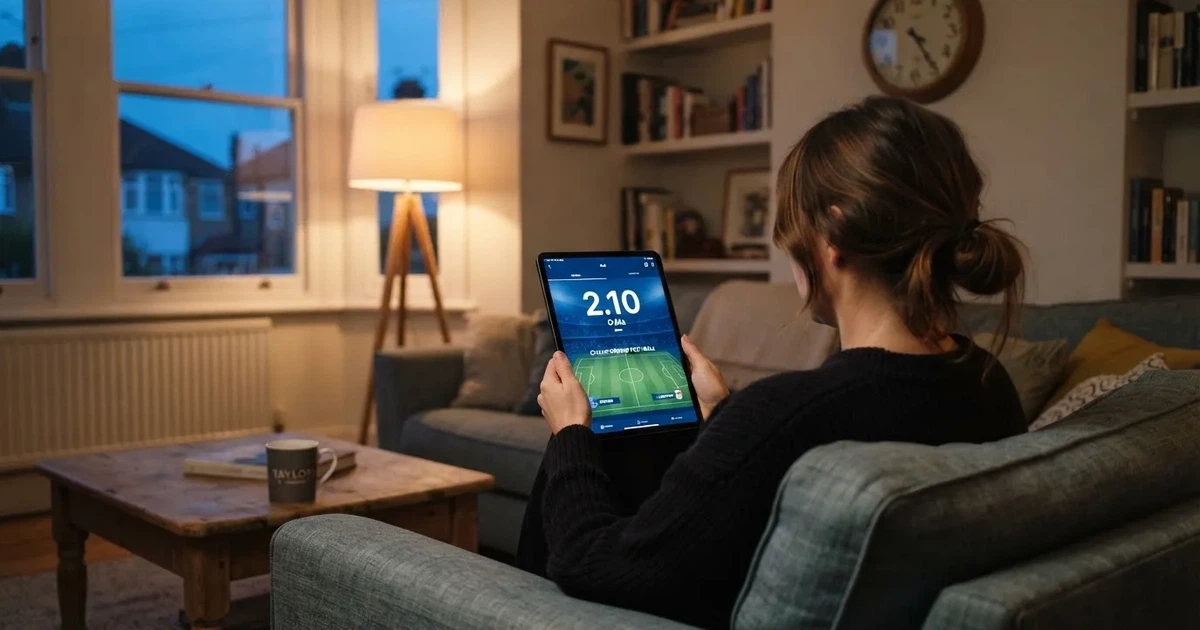
This page ranks the ten Gambling Commission-licensed brands that run a money-back or free-bet welcome structure under that rule, written for the reader who has already accepted that the headline figure is marketing copy and wants to know what the deal actually does. The ranking is not a tip on Saturday’s football. It is a reading of each brand’s own terms page, the Commission’s rules and the arithmetic of a free bet, all in one place. The dispatches pass operators, not leagues; numbers, not names.
A line on framing before the ranking itself: every brand below is licensed. Licensing buys three things the reader can lean on. GAMSTOP coverage, which lets a self-excluded customer block every GB site at once. A complaints route to the Commission and an approved Alternative Dispute Resolution (ADR) body, which means an unpaid withdrawal has somewhere to land. A 10x cap and an identity check that runs before the first deposit, so a free bet or a £5 bonus can never be a back-door route into undisclosed gambling. Unlicensed brands offer none of that, and the rest of this page assumes the reader is choosing between one Commission-licensed brand and another.
Data was checked on 27 October 2026 against the Gambling Commission’s public register and each operator’s own terms pages.
Responsible Gambling and the Real Cost of a Welcome Bonus
The hardest fact about a betting promotion is the one a banner does not print: every bonus has to be turned into withdrawable money through further betting, and the further betting carries the bookmaker’s margin on every wager. A £10 bonus at 50x means five hundred pounds of bets before the credit is yours; the same £10 bonus at 1x means a single qualifying bet. The Commission’s January 2026 rule set that ratio as a ceiling on betting bonuses, and the change had to be read off the licence conditions, not the front page, because no operator shouted it.
The protection a GB licence extends matters well beyond welcome offers. GAMSTOP self-exclusion covers every online operator on the Commission’s register; the minimum period is six months, and the exclusion runs for seven further years unless the customer asks for early removal. A separate scheme handles betting shops. A customer who self-excludes does not need to re-exclude at each brand, and an operator that lets an excluded customer deposit is in breach of its licence. That is why a licensed brand is not interchangeable with an offshore one on the safety axis alone.
Identity and affordability checks sit alongside the bonus cap. A licensed operator verifies name, address and date of birth before the first deposit, and that verification runs before any free bet is credited too. Once a customer’s deposits less withdrawals cross £150 in a rolling 30-day window, a financial vulnerability check runs as a public-record search; it is not a credit check and it is not an income check. Further financial risk assessments were announced in July 2026 in a staged plan with no published start date. Customer-set deposit limits are mandatory on every site, the first phase of changes having applied since October 2025, with a second phase postponed to late September 2026. None of this is the operator being difficult for its own sake; all of it is the licence cost.
Help lines sit behind the licence, not inside the welcome offer. GamCare runs the National Gambling Helpline; GambleAware funds treatment and the National Health Service runs gambling clinics across the regions. Gamblers Anonymous runs peer-support meetings. None of those services needs a brand referral to be reached, and a customer who feels the betting has gone past the welcome bonus does not need to wait until deposit limits arrive to use them. This page assumes the reader knows about those services already, but it names them plainly here because a piece that ranks bookmakers without naming the exit signs is a piece that has missed the job.
Bonuses and Free Bets: What the Terms Actually Say
A money-back offer is, at root, a second chance. The first bet loses; the brand credits the stake back as a free bet, a bonus or, more rarely, cash. The shape of the refund decides whether the offer is worth chasing. A cash refund pays in money: the stake lands back as withdrawable funds, the offer is finished, and the only cost is the time taken to find a losing bet. A free-bet refund does not: the stake comes back in bet credits, which themselves cannot be withdrawn and are spent on another wager on the brand’s terms. A bonus refund sits in the middle: a credit with a wagering requirement attached, capped under the January 2026 rule at 10x the bonus value. Each of those three shapes changes what the offer is worth; reading them the same way is how a reader loses a hundred pounds of chasing to a tenner of headline value.

The free bet itself has its own anatomy. Three terms do most of the work. The expiry turns the free bet into a use-it-or-lose-it coupon, and a typical expiry is seven to thirty days. The minimum odds prevent the free bet from being used on a near-certain price, and a typical floor is 1.50, 1.75 or 2.00 in decimal form. The market restriction, sometimes called “singles and each-way only”, blocks the free bet from being used on a multi-leg accumulator; the rationale from the operator is that an acca at any odds can be combined to clear the bonus without risk, and the rule cuts that route off. A bet that wins on a free bet whose stake is not returned pays the winnings only, not the stake plus the winnings, and that single sentence is the difference between a 1.90 price and a 0.95 net return.
The January 2026 promotion rules cap the ratio at 10x for any bonus with a wagering requirement, and they ban mixed-product offers that force a betting customer into other verticals. “Bet £10 on football, get 50 free spins” is the kind of structure the rule outlaws. “Bet £10, get £10 in free bets” with a 1x turnover on the bonus, no casino credit, is the shape that survives. The position of the £150 free-bet value check sits behind that rule: a free bet with no wagering requirement, which most single-brand free bets are, is a separate case the Commission has not pinned down in writing. A reader who cares about that distinction should read the brand’s own bonus terms, because the rule does not speak for itself on every free bet.
A couple of mechanics are worth pinning down once and referring back to. Rule 4 is a long-standing deduction when a runner is withdrawn from a horse race after the bookmaker has taken bets; the odds are adjusted and the stake returned is reduced by a stated percentage, calculated against the remaining runners. The starting-price rule, sometimes called Best Odds Guaranteed on horse racing, pays the bigger of the price taken and the industry’s starting price, and it is a separate perk from any welcome offer. Each-way betting doubles the stake because the bet is two equal wagers; the place terms are set by the operator and vary by race type. None of those is itself a welcome offer, but a welcome offer that runs into any of them inherits the rules, and the reader who plans to use a free bet on racing needs to read the racing rules on top of the bonus terms.
The fourth mechanic is a void. A selection that is void under the operator’s rules returns the stake; the rest of the bet settles on what is left. A first-goalscorer bet on a player who never comes off the bench is void; if the only goal in a match is an own goal, the first-goalscorer market rolls to the next goal or settles on “No goalscorer” if nothing else is scored. None of these mechanics is novel, but a free bet that is voided does not pay out twice, and a free bet used on a settled void slips back as a returned stake in many cases. The Commission has not standardised any of that. The operator’s rules page does.
Top 10 Money-Back and Free-Bet Bookmakers for 2026
The ranking below is built from one question: how much of the welcome offer lands as withdrawable money in a careful reader’s account, and how much friction sits between credit and withdrawal. The score leans on three hard numbers a brand’s terms page gives without argument: the wagering multiplier on a bonus, the free-bet expiry, and whether the stake is paid back with winnings. A fourth number, the minimum qualifying odds for the welcome bet, decides whether the offer can be qualified at all without punting on a long shot.
Every brand below is licensed for remote general betting on real events by the Gambling Commission, and every brand sits on GAMSTOP. Several carry additional categories (betting intermediary, in Coral’s case); the table records what each licence covers. Off-exchange spread betting is licensed separately to the Commission, with financial spread betting regulated by the FCA, and that sits separately from this ranking.
What each licence covers and what the operator’s own terms say
| Brand | Gambling Commission remote licence number and licence holder | What the operator’s own terms state on the key’s subject |
|---|---|---|
| Smarkets | 039173-R-319366-011 (Commission account 39173), remote betting intermediary; Smarkets (Malta) Limited | SBK sportsbook welcome: £20 first deposit and £20 bet at minimum odds of 3.0 for £60 in free bets within 48 hours; Cash Out, Bet Builder and live horse racing streams |
| William Hill | 039225-R-319373-015 (Commission account 39225), remote general betting standard (real events); WHG (International) Limited | Football Acca Boost on accas of 2 or more legs with each leg at 1/5 or bigger, from 3% on a double up to 200% on 20 legs; maximum boost £10,000 per online bet, running until 30 May 2027 |
| Bet600 | 044731-R-323941-016 (Commission account 44731), remote general betting standard (real events); Tyche Tech Limited | Welcome: at least 5 qualifying single bets of £10 or more at Evens (2.0) or greater within 7 days of registration, then one £10 free bet credited |
| Coral | 054743-R-330863-014 (Commission account 54743), remote general betting standard (real events), remote betting intermediary; LC International Limited | “Get £40 in Free Bets when you bet £20”: debit-card or instant bank transfer, £20 sports bet at minimum odds 2.0, £40 free bets issued within 7 days, expire 7 days after issue; Reward Shaker, Odds Booster and Football Super Series |
| VBet | 044662-R-324273-022 (Commission account 44662), remote general betting standard (real events); SCGO Limited | Welcome: £10 free bet if a new verified customer stakes £10 or more on a first bet that loses |
| Kwiff | 044448-R-323408-017 (Commission account 44448), remote general betting standard (real events); Eaton Gate Gaming Limited | Supercharge can instantly boost odds (for example 2/1 to 20/1), applying to singles or multis on any sport |
| 10bet | 043173-R-322899-023 (Commission account 43173), remote general betting standard (real events); Blue Star Planet Limited | 100% up to £50 betting bonus for UK sign-ups, with daily free bets and free spins advertised in-app |
| Star Sports | 009177-R-104555-019 (Commission account 9177), remote general betting standard (real events); Star Racing Limited | Pre-event and in-play markets with Bet Boosts, Daily Specials and Weekend Enhanced Boosts; in-play on football, horse racing, golf and US sports |
| Sporting Index | 027343-R-308898-011 (Commission account 27343), remote general betting standard (real events); Sporting Index Limited | New-customer offer: a £10 fixed odds bet at minimum odds of 1/2 unlocks three £10 fixed odds free bets, three £5 Total Goals spread bets, three £5 Winning Favourites spread bets and one £1 Race Index spread bet; qualifying bet cannot be placed in-play or cashed out |
| Fafabet | 057385-R-333191-006 (Commission account 57385), remote general betting standard (real events); Taichi Tech Limited | Best Odds Guaranteed on UK and Irish horse racing win and each-way bets from 9am on race days; if starting price exceeds original price, the bigger odds are paid |
Smarkets
Smarkets runs a betting exchange as its main product, and the SBK sportsbook sits beside it under the same Malta company. The Commission licence covers the intermediary side; SBK’s welcome is the £60 in free bets from a £20 deposit and £20 qualifying bet at minimum odds of 3.0, credited within 48 hours. That is the highest headline-to-deposit ratio on the ranking. The catch is the qualifying odds: at 3.0 decimal (2/1) the qualifying bet is a long shot, and a reader who wants to qualify cheaply has to find an event that price or longer. SBK’s free bets are usable as singles, the Bet Builder and live horse racing streams are part of the platform, and the licence is one of the older intermediary licences on the register. Smarkets suits a reader who is comfortable pricing a bet themselves and wants the largest welcome-to-deposit ratio in the GB licensed set.
William Hill
William Hill’s welcome line is the Football Acca Boost rather than a free bet, and that is the cleanest ongoing offer on the ranking. Each leg needs to be at 1/5 or bigger (1.20 decimal), and the boost rises from 3% on a double to 200% on an acca of 20 legs. The cap of £10,000 per online bet is enough for the high-stake reader, and the promotion has a written end date of 30 May 2027, which is unusual on a welcome structure. WHG (International) Limited has held the licence since the early online era, and the Commission’s register lists the brand as one of the longer-tenured general betting licences. William Hill suits a reader who plays football accas as their normal bet and wants a boost that pays on the ticket rather than a refund that pays on the loss.
Bet600
Bet600 is one of the newer licences on the register, with the welcome offer requiring five qualifying singles of £10 or more at Evens (2.0) or greater within seven days of registration, after which one £10 free bet is credited. That is one free bet earned per five qualifying bets, and the qualifying structure rewards a reader who is going to bet anyway. The licence is held by Tyche Tech Limited under Commission account 44731. Bet600 suits a bettor who is settling into a brand and has a week’s worth of singles already lined up; a one-bet reader finds the five-bet minimum too much friction for a single free £10.
Coral
Coral’s welcome is the £40 in free bets from a £20 qualifying bet at minimum odds of 2.0, qualifying on a debit card or instant bank transfer, with the free bets issued within seven days and expiring seven days after issue. The £40-to-£20 ratio is competitive with Smarkets without the 3.0 qualifying odds, and the seven-day expiry is on the shorter end of this ranking. Coral’s licence is held by LC International Limited, the same company that operates Ladbrokes; the Coral product is its own app and the welcome is its own structure. The Reward Shaker, Odds Booster and free-to-play Football Super Series, which has carried a £10,000 jackpot, sit behind the welcome offer. Coral suits the reader who wants a steady welcome paid in free bets without a long qualifying price and is comfortable with a one-week expiry.
VBet
VBet runs a pure money-back structure: £10 free bet if a new, verified customer stakes £10 or more on a first bet that loses. This is one of the more straightforward refund structures on the ranking, with a refund that triggers on a loss rather than a free bet credited up front. The licence is held by SCGO Limited under Commission account 44662. A money-back-if-you-lose structure moves the friction onto the qualifying bet: the reader needs to find a bet they consider likely to lose, which is an awkward framing because anyone who genuinely thought the bet was a loser should not be making it. VBet suits the reader who wants the simplest possible refund and is willing to design a deliberate first bet on an event they have priced as around 50/50.
Kwiff
Kwiff’s licensed product is the standard sportsbook under Eaton Gate Gaming Limited, and its flagship mechanic is Supercharge, a randomised odds boost that can push a price from 2/1 to 20/1 on a single bet. The feature applies to singles or multis across any sport. The welcome structure is the standard sportsbook sign-up; the value-sweetener is the ongoing boost. A reader who wants the welcome offer from Kwiff needs to read the current terms page, because the boost’s stake and time limits are tied to the promotion that runs on the day. Kwiff suits the reader who likes the surprise of a boosted price and is happy to bet small singles where the multiplier does most of the work.
10bet
10bet’s app advertises a 100% up to £50 betting bonus for UK sign-ups, plus daily free bets and free spins, with the licence held by Blue Star Planet Limited under Commission account 43173. A 100% deposit match is the kind of structure the Commission cap bites on, so the wagering requirement on the bonus is the make-or-break term. A reader who picks 10bet for the headline £50 needs the bonus-to-withdrawal ratio in writing before they deposit, because the 10x ceiling is binding but it is not the only lever. 10bet suits a reader willing to read the bonus terms at the deposit page and accepting a matched-deposit bonus with a written playthrough.
Star Sports
Star Sports holds one of the older licences on the Commission’s register, account 9177 with Star Racing Limited, and the product centres on horse racing and football with pre-event and in-play markets. The welcome line comes through Bet Boosts, Daily Specials and Weekend Enhanced Boosts; in-play coverage of football, horse racing, golf and US sports runs through the app. A reader who picks Star Sports does so for the racing product and the in-play schedule, not for a headline free-bet welcome. The brand suits the regular horse racing and US sports punter who wants an in-play book with a long licence history.
Sporting Index
Sporting Index is a sports spread-betting firm with a fixed-odds bookmaker beside it under the same Commission account (27343, Sporting Index Limited). The new-customer offer blends the two products: a £10 fixed odds qualifying bet at 1/2 (1.50 decimal) unlocks three £10 fixed odds free bets, three £5 Total Goals spread bets, three £5 Winning Favourites spread bets and one £1 Race Index spread bet. The qualifying bet cannot be placed in-play and cannot be cashed out early. A spread bet pays on the margin by which a settled number is right or wrong, so a £5 Total Goals spread bet is not the same risk as a £5 fixed odds bet. Sporting Index suits the reader who already understands spread betting and wants a low-risk fixed odds qualifier that unlocks spread-bet action; a fixed-odds reader who picks the offer for the £30 in free bets gets a spread-bet account they may not want.
Fafabet
Fafabet’s licence is held by Taichi Tech Limited under Commission account 57385, with the headline feature being Best Odds Guaranteed on UK and Irish horse racing win and each-way bets from 9am on race days. The welcome structure runs through in-app bonus terms. BOG is the kind of perk that pays a careful punter more over a year than any single welcome offer, because the bigger starting price is paid when the SP beats the price taken, and there is no minimum to lose. Fafabet suits the regular horse racing bettor who is hunting BOG rather than a one-off free bet, with the brand holding the licence under one of the more recent Commission-issued account numbers on the register.
Overview: How Money-Back Offers Sit Inside the GB Market
A money-back offer sits on top of an ordinary betting product. The product is what the reader is really paying for: the price of a football match, the breadth of the horse racing coverage, the speed of the in-play platform. The offer is a sweetener paid by the operator to draw the reader in, and the sweetener has been quietly re-priced since the Commission’s promotion rules landed. A free bet with a 50x bonus attached is now the kind of offer that needs a manual review to ship at all, and most of the brands on the ranking have cut the wagering instead of stopping the offer. The shift is gradual, not dramatic; the headline figures have not moved much, and the small print has.
The shape of the GB market has its own geography. Long-tenured brands like William Hill and Coral hold licences from the early online era; newer entrants like Kwiff and Bet600 carry licences issued during the period when the Commission’s category definitions broadened. A betting exchange licence (Smarkets) is a separate category from a general betting licence (William Hill) and is the only model that takes a commission on winnings. A spread-betting licence sits with the Commission on Sporting Index’s fixed-odds side and is regulated by the FCA on the financial side, and the FCA’s regime does not cover sports spread products. A reader who treats all of those as the same product has already made the first mistake.
Verification is the line no GB bookmaker can cross and no offshore bookmaker can ignore. Identity is verified before the first deposit, and the same check runs on any free-bet or bonus-credit claim. That is the rule that kills anonymous play and the rule that gives a reader a complaints route if the operator withholds funds. A free bet earned under a verified account is paid under a Commission-licensed regime, with ADR and GAMSTOP in place, which is the shape a reader should demand before chasing a promotion. Offshore offers that look bigger use the same marketing language and offer none of that, and the gap is what the licence fee is paying for.
The headline-to-cost gap on welcome offers has narrowed since the 10x cap. A £10 free bet at 1x wagering on the bonus is the kind of offer that was common before, and is now enforced as the ceiling. A 50x structure is still permissible in some international markets and on some legacy products inside GB if the wagering is on a pure cash bonus rather than a free bet, but those are vanishing because the calculation no longer favours either side. Most readers will pick a brand for its product first and its welcome second, and that is the order a careful rank puts them in as well.
Legality: What the Gambling Commission Says and Why It Matters
The Gambling Act 2005 licenses commercial gambling in Great Britain through the Gambling Commission, a non-departmental public body sponsored by the Department for Culture, Media and Sport. Since the Gambling (Licensing and Advertising) Act 2014, an operator whose remote facilities are used in Great Britain needs a Commission licence wherever it is incorporated, which means a Curaçao, Maltese or Gibraltar incorporation is not a substitute. Northern Ireland is outside the 2005 Act and has its own older framework, which is why a “GB” or “Great Britain” licence is the correct wording rather than a UK-wide one. The Commission has no cap on the number of licences and no state monopoly; competition is the explicit policy.
The licence types matter and are easy to miss. Remote general betting standard (real events) is the standard sportsbook licence and is what William Hill, Coral and the rest of this ranking hold. Remote general betting standard (virtual events) covers virtual fixtures. Remote betting intermediary is the exchange licence (Smarkets). Remote pool betting covers Tote-style products. The Commission’s public register is searchable by business name, trading name, domain or account number, and a reader can verify any of the licences on the table in a couple of minutes. Domains prove nothing on their own; an operator may use .com or .co.uk regardless of where it is registered.
The Commission runs three rules that touch welcome offers directly. First, no customer under 18 may register, deposit or gamble, and verification of name, address and date of birth runs before the first deposit, including on a free bet. Second, since 19 January 2026, wagering requirements on bonuses are capped at 10x and mixed-product promotions are banned. Third, GAMSTOP self-exclusion is a mandatory licence condition for online operators (since 31 March 2020); a brand that lets an excluded customer deposit is in breach of its licence. The first rule is the cost of accessing the bonus; the second is the ceiling on what the bonus can demand; the third is the protection that catches a customer whose betting has gone too far. None of the three is the operator being generous; all three are the licence.
A few of the rules that surround welcome offers are not yet final. Whether the 10x cap applies to free bets with no wagering condition is not established in writing. A cap on the maximum value of a bonus has not been published. Financial risk assessments were announced on 7 July 2026 in a staged plan with no start date; the £150 vulnerability check has been in force since 28 February 2025, and that is a public-record check, not an income check. Deposit limits are mandatory on every site; the first phase of changes applied on 31 October 2025, and a second phase was postponed to 30 September 2026. A reader checking the rules in late 2026 should treat the Commission’s own news pages as the source of record, because the licence conditions evolve on a published timetable and the front-page marketing does not.
Advertising is regulated separately. The Commission licenses the product; the ASA regulates the marketing through the CAP Code (non-broadcast) and BCAP Code (broadcast). Section 16 of the CAP Code requires socially responsible marketing, no strong appeal to under-18s, and no-one who is or seems under 25 in the marketing. The “whistle-to-whistle” industry code keeps betting ads off TV around live sport before the 9pm watershed. None of those rules touch the welcome offer’s mechanics, but they shape how the offer is presented and which audiences the marketing can reach. Operators remain responsible for the marketing run by their affiliates; the licence does not insulate the brand from a partner’s campaign.
The tax position is straightforward on the player’s side and worth restating once: betting winnings in Great Britain are not taxed at the customer level, with the caveat that a professional gambler should ask HMRC or an adviser for the rule that applies to their situation. General Betting Duty is the operator’s tax, currently 15%, with a 25% remote betting rate applying from 1 April 2027 to most GB-facing online bets; horse racing and pool betting stay at 15% under the same policy paper. Whether operators pass duty on through odds is not established; the customer is never charged duty directly. That is information, not advice. The Commission’s statutory levy is a separate charge on the operator and not a tax on the player.
The enforcement edge sits against the operator, not the customer. Section 33 of the Gambling Act 2005 makes it an offence to provide gambling facilities in Great Britain without the licence the Act requires; the sanction is up to 51 weeks’ imprisonment, a fine up to level 5, or both on summary conviction (six months in Scotland). No offence aimed at a customer who merely bets on an unlicensed site was found, which is why the right framing is the loss of protection rather than the law being broken. The protections an unlicensed site does not offer are the Commission’s complaints route, ADR, GAMSTOP, the 10x cap and the £150 vulnerability check, along with a path to dispute resolution if funds are withheld. Enforcement against the offshore brand uses cease-and-desist notices, search-engine referrals and work with registrars, hosts and payment providers; the Commission has been given, or is about to receive, court-order DNS blocking powers, and a reader should not write that ISP blocking is in operation until that lands.
How a Free Bet’s Value Actually Computes
A free bet whose stake is not returned is worth less than its face value, and the gap is decided by the odds and the operator’s margin. The standard formulation for a single free bet is value = free-bet amount × (odds − 1) ÷ odds × payout share, where the payout share is 1 minus the bookmaker’s margin on the chosen market. For a £10 free bet placed at decimal odds of 1.90 on a two-way market with equal prices (1.90 / 1.90) the payout share is 1 ÷ (1 ÷ 1.90 + 1 ÷ 1.90), which gives roughly 0.95, and a margin of around 5%. Plugging the figures in yields a free-bet value of approximately £4.75, or just under half the face value. That is the average over many bets, not the result of any one bet, and the same arithmetic on the same assumptions should reproduce it.
Three points belong with that figure. The first is that the free bet never pays the stake back, so the headline £10 is not the same as £10 of withdrawable money after a successful bet. The second is that the chosen odds change the calculation: a free bet placed at 3.00 on a single selection would be worth closer to two-thirds of its face value at the same margin, because the (odds − 1) ÷ odds ratio climbs as the price climbs. The third is that the book’s margin on the chosen market is not the same as the margin on the next market, so a reader who uses a free bet on football 1X2 sees one figure and a reader who uses the same free bet on a goalscorer market sees another. The band, not the single figure, is the right framing for a free bet’s value, and it is the framing the Commission’s promotion rules use when they cap the wagering multiplier.
The figure most relevant to a welcome offer is the bonus-turnover cost. A bonus at 1x on a £10 deposit has a turnover requirement of £10, and the cost of clearing it depends on the margin of the bets used to clear it. The expected cost of the clearance is turnover × margin, so a £10 turnover at a 5% margin is £0.50 of expected house edge, and the same £10 turnover at a 10% margin is £1.00. The Commission cap at 10x is a hard ceiling on that turnover; the operator’s chosen wagering multiple sits inside it.
Frequently Asked Questions
What is a money back as free bet deal?
A money-back-as-free-bet deal refunds the stake of a losing bet as a free bet rather than as cash, so the credit has to be spent on another wager and the stake is not paid back with any winnings. The reader ends up with the cost of a losing first bet refunded as a coupon rather than as money in their account. The headline looks identical to a cash refund; the take-home is half or less of the headline on average.
What does money back in free bets mean?
It means the operator pays back a losing stake in free bets, with the free bets themselves usually carrying a minimum odds floor, an expiry window of seven to thirty days and a market restriction that blocks multiples on some brands. The Commission capped wagering requirements on bonuses at 10x from 19 January 2026, but a free bet with no wagering condition is a separate case the Commission has not pinned down in writing. A reader should read each brand’s own bonus terms for the wagering, expiry and market list that apply.
What does use money back in free bets mean?
It means the credit is spent, not withdrawn: free bets are placed on the brand’s betting slip according to the terms, the winnings are credited and the stake is not returned with those winnings. A winning free bet pays winnings only; the face value of the free bet is gone either way. The use step is where the offer’s value is realised and where most readers give it back.
What is the maximum wagering requirement on a betting bonus in Great Britain?
Ten times the bonus value. The Gambling Commission’s promotion rules in force from 19 January 2026 cap wagering requirements on betting bonuses at 10x and ban mixed-product promotions that require gambling on two or more verticals. A £10 bonus at the cap requires £100 of qualifying bets to clear; a £10 bonus above the cap is not compliant under the rule. The cap sits on the bonus, and how each operator maps it onto its own offer is the term to read.
What do minimum odds and the wagering requirement mean in a sign-up offer?
Minimum odds are the floor price the qualifying bet must clear at for the offer to count, and the wagering requirement is the multiple of further betting the bonus must be turned through before it can be withdrawn. A typical sign-up offer combines a minimum-odds floor (often Evens at 2.0 or larger) with a 1x wagering on the bonus, with free bets usable on singles above a stated minimum odds. Both terms are written on each brand’s bonus page and the welcome structure lives or dies on how they sit with a reader’s chosen bet.
Free bets & offers – Basketball betting
Content created by the «Basketball betting» team
