
UK sports betting apps in 2026: what they cost, what they pay
 Available in US
Verified against the Gambling Commission’s public register as of 27 October 2026. Ten licensed bookmakers, each reviewed for the licence behind the app, what the app itself does, and what the headline offer really asks of the punter who claims it.
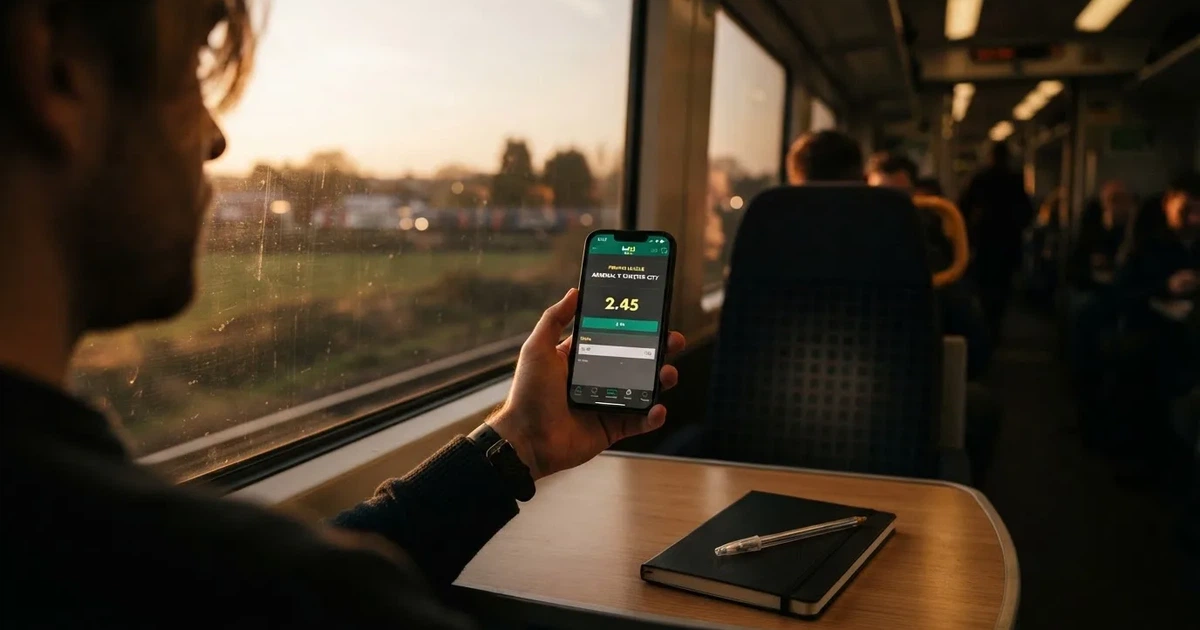
A sports betting app in Great Britain is a thinner surface over the same business as the desktop site. The brand holds a licence, the app is one channel into that licence, and the rules apply whichever screen the punter stokes. What follows walks through what GB licensing actually buys the customer, what an app does that the mobile web does not, and what a “free bet” or a “boost” actually costs once the wagering, the minimum price and the expiry are written down. Ten brands are then reviewed in detail, and a closing section answers the questions a comparison of this kind always leaves on the table.
What a UK sports betting app actually is
A sports betting app is the front end of a remote general betting licence held by a single legal entity. The bookmaker’s company runs the desktop site, the mobile site and the app off the same platform, and the Commission treats all three as one set of remote facilities. The licence belongs to a company; the app does not hold one in its own right.

Three things follow from that, and they shape every section below.
The Commission licence is the test. The Commission’s public register lists the company behind each brand, the category of licence, and the address of the facilities the licence covers. A licensed operator can run a .com or a .co.uk; the domain is not the test. A licence for “real events” covers sports and racing; a separate licence covers virtual events; an exchange runs on a betting intermediary licence; a separate General Betting Duty applies to spread betting that is treated as a financial product under FCA regulation. A GB-licensed app carries exactly these connotations.
Verification happens before the first deposit. Since 7 May 2019, the operator has to confirm the customer’s name, address and date of birth before any money moves — including with a free bet or a bonus, before a stake goes on, before a withdrawal can be taken. No anonymous play at a licensed app exists in GB. The age threshold is 18 and the app-store age rating of 17+ marks the floor of 17, not the legal age to play.
GAMSTOP and the safer-gambling tools come with the licence. GAMSTOP is a national self-exclusion scheme the LCCP makes mandatory for every licensed online operator. Every GB-licensed app is therefore part of GAMSTOP, every app has to offer deposit limits, time-outs and self-exclusion, and the safer-gambling framing on the app’s own pages is not optional decoration. That is the cost of a regulated app and it is the cost a punt on an unlicensed app does not pay.
What is legal, what is not, and why the licence matters
Great Britain licensing runs under the Gambling Act 2005, as amended by the Gambling (Licensing and Advertising) Act 2014. The Act reaches operators by where the customer sits, not by where the company is. An operator whose remote facilities are used in Great Britain needs a Commission licence wherever it is incorporated, which is why a Gibraltar or Malta-registered company can hold a GB licence and run a GB-facing app, and why a Curaçao-only licence is not a substitute. Northern Ireland is outside the 2005 Act, so a GB licence does not authorise a Northern Irish customer; the page reads in the GB sense throughout.

The 2014 Act pulled every remote operator into the GB regime. The Commission’s register lists five operating categories relevant to sports apps: remote general betting standard (real events), its virtual-events sibling, remote general betting limited, remote pool betting, and remote betting intermediary for exchanges. Sports betting lives in the first. Each licence is a real document, and the Commission’s register is searchable by business name, trading name, domain or account number, so the licence can be checked in a few seconds.
No statutory list of permitted bets exists. There is no white-list of sports, leagues or bet types, and no rule that says a particular market may or may not be offered. An operator runs under its own house rules and the LCCP. In-play betting is offered across the GB market and is regulated through the operator’s licence conditions and customer-protection duties, not by a separate in-play permission. Esports sit on the same licence as a football match; pool betting has its own line in the duty. The Tote, for example, runs pool bets on horse racing through a separate pool-betting licence.
The licence has a tax cost, not a price cost, and the two are not the same. General Betting Duty is the operator’s tax on gross profits and the punter pays nothing on winnings. The current remote rate is 15%, and a new remote rate of 25% takes effect on 1 April 2027 within General Betting Duty, with horse racing, pool betting and in-person betting staying at 15%. Until that date, every operator on this page is paying the same 15% on remote gross profit, and the difference between the brands below is what they do with the margin, not what they pay in duty. The punter’s stake and the punter’s winnings are not subject to UK income tax on the offered side.
How a sports betting app works once the licence is settled
Three mechanics sit underneath every app on this page, and they decide what a punt is worth and what it costs.
Odds and what they mean. The standard odds in British apps are fractional (5/1, 11/4, evens) with decimal (6.00, 3.75) shown alongside. A 5/1 price pays £5 of profit for every £1 staked, plus the £1 back, so a winning £10 stake at 5/1 returns £60 in total. The same price in decimal is 6.00: the return on a £10 stake is £10 multiplied by 6.00, which is £60. Each-way doubles the stake into a win bet and a place bet, so a £10 each-way stake at 5/1 is £20 in total for the same selection.
The margin sits inside every price. A bookmaker’s margin — overround, in the British phrasing — is the slice of every pound wagered that the book keeps on average. The bigger the margin, the worse each price is for the punter on average, and the larger the marketing budget the book can spend. A 5% margin is a tight market, a 7-8% margin is the British mainstream on football, and anything above that is the price of a niche market, a small fixture list, or a brand that earns its keep elsewhere.
Cash out, bet builder and acca insurance. Cash out lets the bookmaker close a bet early at a price it sets; the punter takes less than the maximum return if the bet is winning, or limits the loss if it is not. A bet builder combines several markets from one match into one price, with the bookmaker compounding a margin into each leg. Acca insurance refunds the stake as a free bet if one leg of an accumulator loses, not as cash. Each of these is a marketing product with a real cost in margin, and the cost is hard to see without doing the arithmetic.
What safer-gambling rules actually do
Every GB-licensed app carries safer-gambling tools because the GAML, GAMSTOP and the LCCP require them, and the rules tighten every year. The headline points in 2026:
Age and identity. Eighteen is the floor for any real-money bet, and the bookmaker must verify name, address and date of birth before the first deposit — including a free bet or bonus. The verification uses a credit-reference or public-record check on the customer’s name, and it cannot be skipped. The cash-only mode on offer at some bookmakers lets the customer watch markets without staking, but it cannot turn a licensed app into a no-verification one.
Self-exclusion through GAMSTOP. GAMSTOP covers every GB-licensed online operator, so one registration excludes the punter from every app on this page and from every other GB-licensed app at the same time. Exclusion periods run six months, one year, five years, or five years with auto-renewal; after the minimum period the exclusion stays in place for a further seven years unless the customer asks GAMSTOP to remove it. The app is one channel into a brand; GAMSTOP excludes from the brand and from every other licensed app at once.
Deposit limits and time-outs. Operators must offer a gross deposit limit on a fixed time frame, with first changes from 1 October 2025 and a second phase postponed to 30 September 2026. Time-out periods of 24 hours up to six weeks are a standard tool, longer self-exclusion is the safer option. The customer sets the limits; the book cannot lower them without a written request from the customer and a cooling-off period.
Vulnerability and risk checks. A light-touch public-record financial vulnerability check applies when net deposits in a rolling 30 days exceed £150. That check is a public-record check (bankruptcy or county court judgments), not an income check and not a credit reference. More thorough “affordability” or financial-risk assessments have been announced and remain staged, with no start date. A punter who keeps net spend below the £150 line will not meet a check at all.
The credit-card ban. Credit cards have been banned for gambling in Great Britain since 14 April 2020, including credit-card-funded e-wallet deposits. Debit cards, bank transfers and most e-wallets remain available. The ban is on the funding instrument, not on the app, so a credit card in an Apple Pay wallet still fails the deposit.
These tools carry a real cost too. Verification rejects false matches and slows sign-up. The £150 vulnerability check adds friction at a level of deposit a casual punter will never reach. GAMSTOP cuts the punter out of the licensed market entirely; the choice is between no GB app and the GAMSTOP-registered app on these terms. The honest framing is that GB licensing means protection for the punter, not a frictionless product.
Crypto and anonymity at UK sports betting apps
The short version: GB-licensed sports betting apps do not run on cryptocurrencies and do not offer anonymous play. The longer version has three parts.
Crypto on a licensed app. No GB-licensed sports betting app listed on the Commission’s public register accepts Bitcoin, Ether or stablecoins for betting in Great Britain. The licensing regime requires verification of the customer and source-of-funds checks under money-laundering regulations, and unhosted crypto wallets do not fit the verification chain. A crypto deposit would also have to clear the credit-card ban in spirit if not in letter, since the funding source is the holder’s wallet and not a UK-recognised payment instrument.
Anonymity is off the table. Since 7 May 2019, name, address and date of birth have to be verified before the first deposit. A punter cannot open an account with an email address alone and bet into a wallet. Every deposit carries a payment-instrument identity, every withdrawal returns to a verified account in the customer’s name, and the source of large or unusual funds is questioned under the money-laundering rules.
Offshore alternatives are not GB-licensed. A Curaçao-only operator can offer crypto deposits and a sign-up with an email address, and it will sit in an app store listing outside the GB region. The customer pays for that lighter sign-up with no GAMSTOP coverage, no Commission complaints route, no approved alternative-dispute-resolution body, and no British consumer redress if funds are withheld. Section 33 of the Gambling Act 2005 makes the unlicensed provision of remote facilities an offence aimed at the operator. The punter is not prosecuted for using an unlicensed site, but neither is the punter protected when an offshore operator stops paying out.
For a punter who needs crypto on a betting site, the choice is an unlicensed operator with no GB recourse. For a punter who needs a GB-licensed app, crypto is not on the table.
What a UK sports betting bonus actually costs
A bonus is a marketing price; the headline is the figure, and the cost is in the wagering, the minimum price and the expiry. Each part of the offer pulls the offer’s value one way or another, and the only honest reading of a bonus is what the punter has to do to clear it.
The headline. The “free bet” and the “100% bonus” are the two common forms. A free bet credits the punter with a stake the book pays; a deposit bonus matches the punter’s first deposit in bonus money up to a stated cap. The headline on each is the credit the punter sees; the cost is what the punter has to do to turn the credit into cash.
The wagering requirement. A wagering requirement says how much the punter has to stake, in qualifying bets, before the bonus can be withdrawn. The Commission has capped this at 10x on bonuses since 19 January 2026, which means a £10 bonus cannot need more than £100 of qualifying stakes. That cap is part of the GB marketing rule; an unlicensed operator runs on its own house rules. Coral’s “Get £40 in Free Bets when you bet £20” is the simpler shape on the list below: a £20 qualifying bet at minimum odds of 2.0 credits £40 in free bets within 7 days, expiring 7 days after issue, for new GB customers who opt in. There is no wagering multiplier on the free bet itself; the £40 is the value, and any winnings from the free bet are withdrawable.
The minimum qualifying odds. A bonus that lets the punter grind through wagering on short-priced favourites does not move the margin. The minimum odds on a qualifying bet lift the average margin on the qualifying stakes, and a high minimum price can double the cost of clearing a bonus. Coral’s £20 qualifier at 2.0 is on the steep side of casual offers; the average margin on a Premier League 1X2 at 2.0 is higher than the margin on the same fixture at 1.5.
The expiry. A free bet that expires in 7 days cannot be cleared by a careful punter waiting for a price. A bonus that expires in 30 days can be cleared in fits and starts. The expiry is the strongest signal of how much real wagering the book expects.
The mixed-product ban. Since 19 January 2026, mixed-product promotions that ask the punter to bet on one product to get a free spin on another — for example “bet on football to get free spins” — are banned. An offer restricted to one product type is fine; an offer that mixes betting, casino, bingo and lottery is not.
The honest cost. A £20 qualifying bet at 2.0 returns £40 if it wins, £0 if it loses. The expected cost of that single qualifier is the margin on the market it is placed in, which on a Premier League 1X2 sits around 5-8%. The expected cost of a £20 qualifier is therefore around £1-£1.60. The £40 in free bets is worth the free-bet amount times (decimal odds − 1) divided by the odds times the payout share of the market the free bet lands on. At 3.0 decimal odds on a market with a 95% payout share, a £40 free bet is worth around £40 multiplied by 0.667 multiplied by 0.95, which is around £25.30. That is the price-side cost: the punt has to clear a £20 qualifier and earn a free bet that the arithmetic values at less than the headline.
A punter who claims every bonus pays the asking price in time and in expected value. A punter who claims the bonus on a market the punter would have bet on anyway loses the expected cost of the qualifier and keeps the free-bet value; a punter who bets only to clear the bonus pays both costs and the marketing budget is the punter’s loss.
Payments, payout speed and minimum deposits
Every GB-licensed app takes the same basic set of payment instruments, with the differences in the cluster and at the edges.
Debit cards and bank transfers. Visa Debit and Mastercard Debit are accepted across the licensed market, and bank transfers through Faster Payments or Instant Payments clear within minutes for deposits and within hours for withdrawals. Apple Pay and Google Pay sit on top of a debit card and inherit the credit-card ban: a credit card in an Apple Pay wallet will not fund a deposit.
E-wallets. PayPal, Skrill, Neteller and Paysafecard are accepted by most licensed apps, with the e-wallet depositing instantly and the withdrawal returning to the same e-wallet. PayPal carries a slightly higher minimum at DAZN Bet (£20 versus £5 for debit and Apple Pay), and Paysafecard is a deposit-only instrument.
The £5 deposit floor. The minimum deposit on the GB-licensed market sits at £5 for the mainstream instruments, with PayPal usually higher and Paysafecard in the £10–£15 range. DAZN Bet’s published £5 by debit card, Apple Pay, Paysafecard, Trustly and Skrill, and £20 by PayPal, is the typical shape of the market. The minimum stake on a bet is much smaller — 1p on a placepot, 50p on a sports single at some books — and the deposit minimum has nothing to do with the bet minimum.
Payout speed. Withdrawals through Faster Payments clear within minutes at the better books, and within two hours at most. E-wallet withdrawals are usually instant once approved. Bank transfers outside Faster Payments can take a working day. A withdrawal that takes longer than 24 hours is usually sitting in a manual review, and the manual review is usually a source-of-funds check.
Source-of-funds and withdrawal friction. A large withdrawal or a sudden spike in deposits will trigger a source-of-funds request under money-laundering rules. The book can ask for payslips, bank statements, or proof of the source of a deposit, and the withdrawal stays pending until the request is answered. The friction is part of the licence, and it bites customers with irregular income or large windfalls hardest.
The lowest-deposit cluster. A £5 minimum deposit puts every mainstream app within reach of a £5 punter. The £5 floor is a function of the payment instrument, not the app: a £5 deposit by Paysafecard at DAZN Bet is the same £5 deposit by Paysafecard at any other licensed app.
What a sports betting app does that the mobile web does not
An app is a thin surface over the same product, and the differences from the mobile site are at the edges, not in the centre.
Login and biometric unlock. Face ID and Touch ID log a punter in through the device’s secure element, and the punter’s password is not sent to the app on every visit. The login is faster and the password is not exposed to shoulder-surfing in a queue. Not every app on this page has biometric login: bet365 supports Face ID, NetBet supports Face ID and Touch ID, Fafabet supports Face ID and Touch ID. The absence of biometric login is not the absence of customer support; the customer is still served and the deposit is still placed.
Push notifications for markets the user already knows are of interest. Price boosts, score updates and the start of an in-play event arrive through the push channel, not through a tab the punter has to keep open. The notifications are easy to turn off, and the app has to ask the punter for permission before it can use them.
App-only offers and free bets. Most licensed apps run an app-only promotion alongside the desktop promotion. The free bet on the app is usually the same value with a different route to the qualifying bet, not a higher headline. The promotion runs on the same licence and the same T&Cs, with the app-only route being the cost of the marketing.
In-app live streaming and live data. Live streaming of UK and Irish horse racing and football runs in the app at licensed operators, with the Betfair app covering UK and Irish racing plus football under a free live-stream licence and Spreadex covering horse racing, greyhounds, tennis, NFL and selected football. Smarkets’ app shows live charts and an order book view for an exchange-style product; Spreadex’s app runs one-click, auto and partial cash out across fixed odds and spread bets; the Midnite app offers weekly rewards clubs and rapid payouts.
App-store age ratings. App-store ratings are a separate rating, not the legal age. A 17+ App Store rating marks 17 as the rating floor, while the legal age to bet is 18. The rating is what the app store allows, not what the licence allows.
Updates and the live product. An app ships as a packaged binary and updates through the app store, while the mobile site updates continuously. An app update can sit in review for a few days, and a punt the punter wants to place on a Tuesday morning may have to wait for an app the app store has not refreshed yet. The mobile site does not have this problem, and it is the same product the app runs.
Sports and tournaments on UK sports betting apps
The licensed UK market covers the same sports and the same competitions across the brands, with the cluster at the top of the market being the same and the cluster in the long tail being the differentiator.
Football. Premier League, Champions League, Europa League, the FA Cup, the EFL, La Liga, the Bundesliga, Serie A, Ligue 1 and the international tournaments run deep across every licensed app, with bet365 the official global betting partner of the UEFA Champions League. The standard markets are the 1X2, the over/under 2.5, both teams to score, the Asian handicap and the bet builder, with the price the differentiator.
Horse racing. The Tote offers Placepot, Jackpot, Scoop6 and Quadpot bets and the World Pool with French PMU, US and Hong Kong pools. Betfair and Spreadex stream UK and Irish racing live in the app; Best Odds Guaranteed is the standard concession on UK and Irish racing on the licensed market, paying the bigger of the price taken and the starting price.
Tennis. The Grand Slams, the ATP and WTA tours, the Challenger events and the ITF events are covered in depth, with in-play markets on every set and game. Spreadex streams tennis alongside horse racing and football.
Other sports. Rugby union and league, cricket, golf, MMA, boxing, darts, snooker, basketball, American football, baseball and ice hockey are covered by most licensed apps, with the depth of in-play markets varying by sport and by brand. American sports have their own season, and the calendar of fixtures on a Premier League weekend is different from the calendar on an NFL Sunday.
Esports and novelty. Esports sit on the standard licence, and novelty markets on politics and television are offered by GB bookmakers without a statutory prohibition. The cluster is at the edges of the licensed market, and the odds on a niche market carry a wider margin than the odds on a Premier League 1X2.
Tournaments with a name and a year. The Champions League final, the Grand Slams, the Open and the Masters, the Cheltenham Festival and the Grand National are the headline events where every licensed app runs a promotion. The promotion is the marketing; the price is the product, and the price is the differentiator.
Top ten UK sports betting apps reviewed for what they cost
What follows is a ten-brand ranking. Each review names the licence, the company behind the licence, what the app does that the mobile site does not, and what the headline offer or product costs the punter who takes it up. The verdict at the foot of each review is the only editorial sentence in the section.
Kwiff — a mobile-first bookmaker with surprise prices
| Brand | Licence | Kwiff’s terms on what Kwiff does |
|---|---|---|
| Kwiff | Gambling Commission account 44448; remote general betting standard (real events); licence holder Eaton Gate Gaming Limited | A mobile-first product published as kwiff: Sports Betting & Casino; the App Store age rating is 17+; the brand is a Spryme Ltd trademark and describes itself as UK-licensed |
Kwiff’s selling point is surprise prices — “supercharged” odds on selected markets that the customer does not see in advance. The price can be sharply better than the market and can be sharply worse than the launch price, and the punter who likes the model treats Kwiff as a price-shop rather than a main book. The app is the product, and the desktop site runs in the background.
The licence is the standard GB remote general betting licence and the app is GAMSTOP-registered, with the standard 18+ verification before the first deposit. The app-store rating is 17+, which is the rating floor, not the legal age.
Verdict. Kwiff suits a punter who shops prices and likes the surprise-price gimmick more than the punter who wants a stable margin and a known product.
Fitzwilliam Sports — a quiet bookmaker with the standard safer-gambling framing
| Brand | Licence | Fitzwilliam’s terms on what Fitzwilliam does |
|---|---|---|
| Fitzwilliam Sports | Gambling Commission account 48760; remote general betting standard (real events); licence holder SBKI Limited | Instant deposits and fast withdrawals; timeouts; deposit limits; links to GambleAware, GamStop and Gamblers Anonymous on the site and in the app |
Fitzwilliam Sports runs a quieter product than the mainstream books, with the safer-gambling framing — GambleAware, GamStop and Gamblers Anonymous — placed on the homepage rather than buried in a footer. The bookmaker is licensed under the standard remote general betting licence and is GAMSTOP-registered.
The brand’s product is the same shape as every other licensed app: in-play markets, a bet builder, a cash out and the standard safer-gambling tools. The differentiator is the brand voice and the lack of a noisy marketing layer, and the punter who wants a quieter book finds one here.
Verdict. Fitzwilliam is the book for a punter who wants a licensed app and a less aggressive marketing product than the mainstream books.
DAZN Bet — a sportsbook bolted to a streaming subscription
| Brand | Licence | DAZN Bet’s terms on what DAZN Bet does |
|---|---|---|
| DAZN Bet | Gambling Commission account 48756; remote general betting standard (real events); licence holder DZBT Limited | Deposits from £5 by debit card, Apple Pay, Paysafecard, Trustly and Skrill, and from £20 by PayPal; no processing fees |
DAZN Bet sits on top of the DAZN streaming brand, and the sportsbook and the streaming subscription are bundled for the punter who wants both. The deposit minimum is the standard £5 across most instruments, with PayPal at £20; there are no processing fees. The book is licensed under the standard remote general betting licence and is GAMSTOP-registered.
The punter who already pays for DAZN gets the bundle, and the punter who does not is paying for a streaming subscription to fund the betting welcome. The price is the differentiator, and the punter who wants a sportsbook alone finds a tighter offer elsewhere.
Verdict. DAZN Bet pays for itself only when the streaming subscription is wanted as well; the punter who wants a betting app alone would find a tighter product at one of the licensed books that is not bolted to a streaming subscription.
Geoff Banks — a long-form bookmaker with ante-post markets
| Brand | Licence | Geoff Banks’s terms on what Geoff Banks does |
|---|---|---|
| Geoff Banks | Gambling Commission account 54095; remote general betting standard (real events); licence holder GB Sports Advisors Limited | A GB Sports Advisors Limited-published app with live in-play prices and ante-post prices on future events |
Geoff Banks runs a longer ante-post list than the mainstream books, with ante-post prices on the Grand National, the Cheltenham Festival and the major flat meetings deep into the season. The bookmaker is licensed under the standard remote general betting licence and is GAMSTOP-registered.
The app is a thin surface over the desktop site, with live in-play prices on selected sports and ante-post prices on the long-term markets. The punter who wants a futures book finds it here; the punter who wants an in-play book finds a thinner product than at the larger books.
Verdict. Geoff Banks is the choice for the ante-post market; the in-play offer is thinner than the larger books, and the ante-post depth is the differentiator.
Tote — the pool-betting app for horse racing
| Brand | Licence | Tote’s terms on what Tote does |
|---|---|---|
| Tote | Gambling Commission account 54779; remote general betting standard (real events); licence holder TDCO Limited | Placepot, Jackpot, Scoop6 and Quadpot bets; World Pool and international pools (French PMU, US, Hong Kong) |
The Tote is the pool-betting brand, and the app is the thin end of a long British pool-betting wedge. Placepot, Jackpot, Scoop6 and Quadpot are the headline pools, with the World Pool covering the major international meetings and the French PMU, US and Hong Kong pools adding liquidity on those fixtures. The app is published by UK Tote Group Ltd.
The punter who likes pool betting gets a real product, and the punter who does not gets a thin fixed-odds book compared to the licensed mainstream. The licence is the standard remote general betting licence and the app is GAMSTOP-registered.
Verdict. Tote is the app for the punter who wants to access pool markets like the Placepot and Scoop6; a punter who wants the Premier League’s 1X2 at the sharpest price would find a tighter product at the larger fixed-odds books.
VBet — a sportsbook with a bet builder and live streaming
| Brand | Licence | VBet’s terms on what VBet does |
|---|---|---|
| VBet | Gambling Commission account 44662; remote general betting standard (real events); licence holder SCGO Limited | A bet builder, pre-match and in-play betting, live streaming and a live calendar with results and stats |
Vbet’s app carries a bet builder, pre-match and in-play markets, live streaming on selected events and a live calendar of fixtures with results and stats.
The product is the same shape as the larger books, with live streaming on the major sports and a bet builder for the same-game multi. The differentiator is the depth of the live calendar and the live stats, and the punter who likes in-play data finds it here.
Verdict. VBet stands out for the in-play product; the live streaming and the live calendar are the differentiator, and the ante-post offer is thinner than at the dedicated ante-post books.
Unibet — the established European book with the standard safer-gambling suite
| Brand | Licence | Unibet’s terms on what Unibet does |
|---|---|---|
| Unibet | Gambling Commission account 45322; remote general betting standard (real events); licence holder Platinum Gaming Limited | Trading since 1999; safer-gambling tools include deposit limits, a Player Profile test, product restrictions and self-exclusion, with live chat support and links to BeGambleAware, GamCare, GAMSTOP, Gambling Therapy and the BGC |
Unibet is the longest-trading book on this list, with a UK site run by Platinum Gaming Limited out of Gibraltar. The product is the standard European bookmaker: a deep sportsbook, an in-play product, a casino, and a long safer-gambling suite that includes deposit limits, a Player Profile test, product restrictions and self-exclusion, with live chat support and links to BeGambleAware, GamCare, GAMSTOP, Gambling Therapy and the BGC.
The differentiator is the safer-gambling suite and the depth of the European sports product, with the punter who wants a continental menu and a serious safer-gambling framing finding both here. The licence is the standard remote general betting licence and the app is GAMSTOP-registered.
Verdict. Unibet pays for itself for a punter whose interest is the European sports calendar and a serious safer-gambling suite; the cost of the depth is a higher margin on the British sports mainstream than the British-only books.
Coral — the £40 free bet for £20
| Brand | Licence | Coral’s terms on what Coral does |
|---|---|---|
| Coral | Gambling Commission account 54743; remote general betting standard (real events), remote betting intermediary; licence holder LC International Limited | A sports welcome offer of £40 in free bets when you bet £20: a deposit and sports bet of £20 or more at minimum odds of 2.0 (1/1), with the £40 in free bets issued within 7 days and expiring 7 days after issue, for new GB customers who opt in |
Coral runs a sports welcome offer of £40 in free bets when the new customer bets £20: a deposit and a sports bet of £20 or more at minimum odds of 2.0, with the £40 in free bets issued within 7 days and expiring 7 days after issue. The qualifying bet is the cost, the free bet is the value.
The free-bet value calculation on Coral’s headline offer: a £40 free bet at decimal odds of 3.0 on a market with a 95% payout share is worth £40 multiplied by 0.667 multiplied by 0.95, around £25.30. The qualifying bet’s expected cost is its stake multiplied by the margin on the market the punter places it on, around £1-£1.60 on a Premier League 1X2 at 5-8% margin. The punter who places the qualifier on a market the punter would have bet on anyway keeps £23.70-£24.30 of value on average and pays the time of the sign-up.
The licence is the standard remote general betting licence and Coral is also licensed as a remote betting intermediary, the licence category for betting exchanges. The app is GAMSTOP-registered.
Verdict. Coral’s headline pays the cost of a single qualifying stake on a market with a 5-8% margin, and the punter who places that qualifier on a market they would have bet on anyway keeps most of the free-bet value; the punter who bets only to clear the offer pays the asking price.
Midnite — the newer UK book with price boosts and acca insurance
| Brand | Licence | Midnite’s terms on what Midnite does |
|---|---|---|
| Midnite | Gambling Commission account 101839; remote general betting standard (real events); licence holder Midnite Limited | In-play events, an acca builder, popular accas and price boosts with maximum-stake limits; weekly rewards clubs and rapid payouts |
Midnite is a newer UK-licensed book, with a product built around in-play events, an acca builder, popular accas and price boosts with maximum-stake limits. The Dribble Media Limited-published app runs weekly rewards clubs and rapid payouts, and the brand sits on a GAMSTOP-registered licence.
The price-boost product is the differentiator, and the maximum-stake limit is the cost: a boosted price on a popular market usually runs with a £5-£20 maximum stake, which caps the punter’s upside on the boost. The punter who likes the boost format finds a real product, and the punter who wants the deepest in-play menu finds a thinner product than at the longer-established books.
Verdict. Midnite pays for itself for a punter whose interest is the price-boost product more than the depth of the in-play menu; the cap on the boost is the asking price.
BetMGM — the MGM-branded UK book with the LeoVegas licence
| Brand | Licence | BetMGM’s terms on what BetMGM does |
|---|---|---|
| BetMGM | Gambling Commission account 39198; remote general betting standard (real events); licence holder LeoVegas Gaming PLC | A LeoVegas-published app carrying the BetMGM brand, with the standard UK safer-gambling tools and the standard UK payment set |
BetMGM UK runs on LeoVegas Gaming PLC’s licence, with the MGM brand on the front and the LeoVegas platform on the back. The product is the same shape as the LeoVegas UK book, with the MGM branding and the MGM loyalty offers layered on top.
The punter who likes the MGM brand finds a real product, and the punter who wants the tightest UK sportsbook finds a tighter product at the books whose primary product is the UK sportsbook. The app’s age rating and the standard UK safer-gambling suite sit on the LeoVegas licence.
Verdict. BetMGM pays for itself for a punter who wants the MGM brand and the LeoVegas platform; the punter whose only interest is the sportsbook would find a tighter product at the books whose primary product is the UK sportsbook.
Comparison table: ten UK-licensed sports betting apps
| Brand | Gambling Commission licence | What the operator’s own terms state |
|---|---|---|
| Kwiff | Account 44448; remote general betting standard (real events); Eaton Gate Gaming Limited | A surprise-price gimmick with supercharged odds on selected markets, published as a 17+ App Store app |
| Fitzwilliam Sports | Account 48760; remote general betting standard (real events); SBKI Limited | Instant deposits, fast withdrawals, deposit limits, timeouts, and links to GambleAware, GamStop and Gamblers Anonymous |
| DAZN Bet | Account 48756; remote general betting standard (real events); DZBT Limited | Deposits from £5 by debit card, Apple Pay, Paysafecard, Trustly and Skrill; £20 by PayPal; no processing fees |
| Geoff Banks | Account 54095; remote general betting standard (real events); GB Sports Advisors Limited | A GB Sports Advisors-published app with live in-play prices and ante-post prices on future events |
| Tote | Account 54779; remote general betting standard (real events); TDCO Limited | Placepot, Jackpot, Scoop6 and Quadpot bets; World Pool with French PMU, US and Hong Kong pools |
| VBet | Account 44662; remote general betting standard (real events); SCGO Limited | A bet builder, pre-match and in-play betting, live streaming, and a live calendar with results and stats |
| Unibet | Account 45322; remote general betting standard (real events); Platinum Gaming Limited | Trading since 1999; deposit limits, Player Profile test, product restrictions and self-exclusion, with links to BeGambleAware, GamCare, GAMSTOP, Gambling Therapy and the BGC |
| Coral | Account 54743; remote general betting standard (real events), remote betting intermediary; LC International Limited | A £40 free-bet welcome when you bet £20, at minimum odds of 2.0, with the £40 in free bets issued within 7 days and expiring 7 days after issue |
| Midnite | Account 101839; remote general betting standard (real events); Midnite Limited | In-play events, an acca builder, popular accas and price boosts with maximum-stake limits, plus weekly rewards clubs |
| BetMGM | Account 39198; remote general betting standard (real events); LeoVegas Gaming PLC | A LeoVegas-published UK app carrying the MGM brand, with the standard UK safer-gambling tools |
The comparison sits in three clusters. Coral’s licence category is “remote general betting standard (real events), remote betting intermediary” — the betting intermediary category is the exchange licence — and the other nine books sit in the standard remote general betting licence alone. The differentiator on the licence is the exchange permission, not the betting permission, and a punter choosing on the licence alone should stop reading here and pick the book whose product suits the bet.
The deposit floor sits at £5 across most instruments at DAZN Bet and the £5 floor is the standard floor of the GB market. The punter who wants a £5 deposit finds it at the licensed mainstream, and the punter who wants a tighter product than the licensed mainstream has to leave the GB-licensed cluster.
The welcome-offer cluster is Coral’s £40-for-£20, with the rest of the top ten running an app-only promotion rather than a headline sports offer. The £40-for-£20 is the headline the punter sees and the £20 qualifier is the cost; the punter who is looking for a comparable headline for a similar initial stake has other options among the longer-established books.
Frequently asked questions
What sports betting apps are legal in the United Kingdom?
Every sports betting app offering remote facilities to customers in Great Britain needs a Gambling Commission licence under the Gambling Act 2005, as amended by the Gambling (Licensing and Advertising) Act 2014. The licence belongs to a company, the app is one channel into that licence, and the public register at the Gambling Commission’s website lists every licensed operator. A Curaçao, Maltese or Gibraltar licence is not a substitute; an operator whose only licence is offshore is not licensed for GB.
How do sports betting apps work?
A sports betting app is the front end of a licensed remote betting platform. The customer verifies name, address and date of birth before the first deposit; the deposit funds the account through a payment instrument the book accepts; the bet is placed at a price the book quotes; and the winnings return to the verified account. The bookmaker’s margin sits inside every quoted price, the app’s biometric login and push notifications are convenience features over the same product, and the licence makes GAMSTOP and the safer-gambling suite mandatory.
Are sports betting apps legal in California?
California is a US state, and US sports betting is regulated state by state. The question is about GB-licensed apps, and the GB licence authorises the app only for customers in Great Britain (England, Scotland and Wales). Northern Ireland is outside the 2005 Act. A GB-licensed app does not authorise play from a US address, and a US-licensed app does not authorise play from a GB address. The two markets run on separate licences and separate rules.
How can it be checked that a bookmaker holds a Gambling Commission licence?
The Gambling Commission’s public register is the whole test of whether a brand holds a GB licence. The register can be searched by business name, trading name, domain or account number, and the entry shows the licence holder, the licence category, the date the licence was issued and any conditions in force. A licensed brand can run a .com or a .co.uk, and the domain proves nothing on its own.
How is the return on a bet worked out from the stake and the odds?
The return on a single bet is the stake multiplied by the decimal odds. A £10 stake at decimal odds of 3.00 returns £30 in total, of which £20 is profit; the same price in fractional odds is 2/1, paying £2 of profit for every £1 staked. Each-way doubles the stake into a win bet and a place bet, and a combination bet multiplies the odds of the legs into one price.
What is the bookmaker’s margin and how can it be seen in the odds?
The bookmaker’s margin is the slice of every pound wagered that the book keeps on average. It is calculated as 1 minus the payout share, where the payout share is 1 divided by the sum of 1/odds across every outcome of a market. A Premier League 1X2 with home, draw and away at 2.10, 3.40 and 3.50 has a payout share of 1 divided by (0.476 plus 0.294 plus 0.286), around 0.946, and a margin of around 5.4%. The bigger the margin, the worse each price is for the punter on average.
Payments & apps – Basketball betting
Content created by the «Basketball betting» team
