
Free Sports Bet No Deposit in Great Britain — What These Offers Actually Cost
 Available in US
A free sports bet no deposit offer, where one exists, looks like the cleanest deal in betting: stake the bookmaker’s money, keep the winnings. In Great Britain, the picture is more crowded than a single line on a banner advert would have it. The Gambling Commission’s promotion rules have rewritten what a sign-up offer can ask of a customer, operators verify identity before the first free bet is credited, and an offer that ties betting to casino play has been banned outright since 19 January 2026. This page works through what that means for someone comparing offers right now, and what each of the ten licensed bookmakers reviewed below actually gives a new customer — including the conditions the marketing page leaves out.
As of 27 October 2026, all licence and offer details were checked against the Gambling Commission’s public register and the operators’ own current terms.
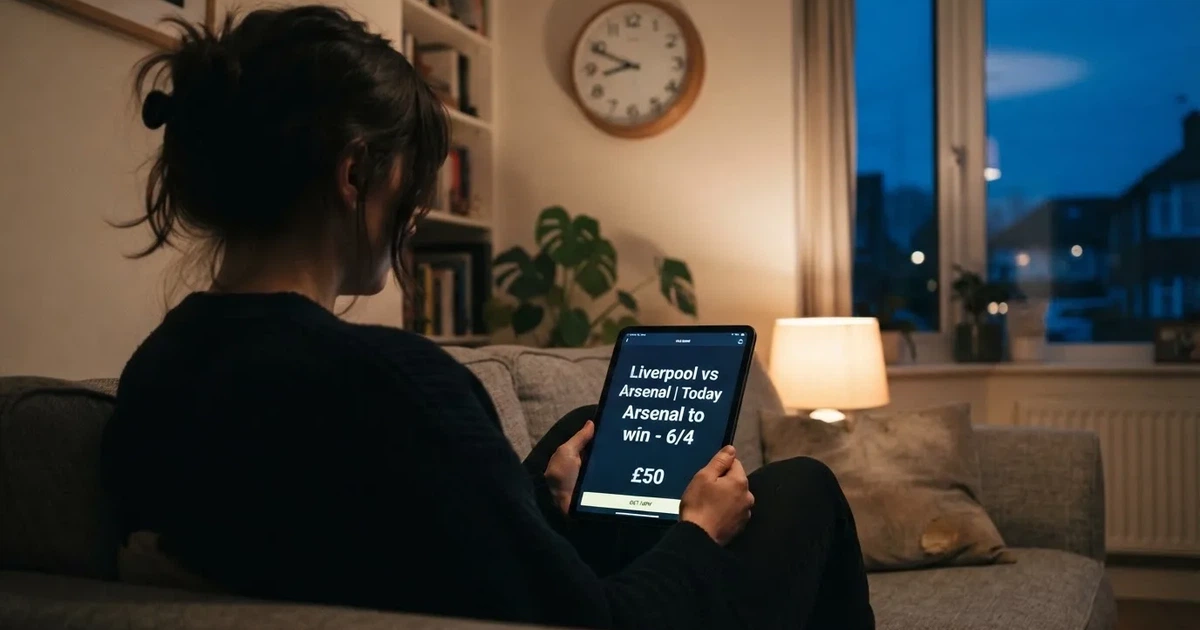
How a “free bet” actually pays out
A free bet is, in plain language, a voucher the bookmaker credits to a customer’s account. It carries its own terms — minimum odds, expiry, eligible markets, withdrawal rules — that the qualifying bet and the deposit behind it do not share. Most offers here are not strictly “no deposit” in the technical sense the search query implies: very few GB bookmakers credit a free bet without a first deposit and a first qualifying bet. What most of them sell as a “free bet” is in fact a matched or refunded bet that requires the customer to first stake their own money. The distinction matters because the maths behind each kind is different.
The clearest figure is what the voucher returns when it wins. On an illustrative two-way market priced at decimal odds 1.90 / 1.90 (fractional 9/10), a £10 free bet whose stake is not returned pays back the stake multiplied by the odds minus one: £10 × 0.90 = £9 gross profit before any market margin. Once the bookmaker’s margin of approximately 5.3% is applied to the implied payout share, the realistic average value of a winning £10 free bet on a market like this settles around £8.50. That band — somewhere between £8 and £9 of real money from a £10 voucher on a near-even outcome — is roughly what most welcome free bets in the table below are worth, before the expiry clock starts ticking.

The number sits below the headline amount on purpose: the bookmaker does not return the stake, the market keeps a margin, and a winning free bet on a long-priced outsider pays proportionally less in expected value even when the decimal odds look generous. A punter who treats a free bet as “free £10 of stake” rather than as a £10 voucher with a built-in cost has already misread the maths.
Promotion rules in force since 19 January 2026
The Commission’s bonus rules changed the shape of what GB-licensed operators can advertise. Two changes stand out, and they apply to every welcome offer reviewed below because every brand here holds a Gambling Commission licence.

Wagering requirements on bonuses are capped at 10x. A £10 bonus with a 50x turnover requirement would have needed £500 of qualifying bets; under the cap, no offer can demand more than £100 of wagering from the same £10 bonus. The cap targets the heavy-turnover marketing that used to lock customers into long sequences of small bets at minimum prices. Some offers still ask for 1x or 2x turnover on a free bet winnings amount, and Betway’s free bet carries a 1x wagering requirement at odds of 1.75 or higher. What the rule does not address — and what the page does not assume — is whether the cap applies to free bets that carry no wagering condition at all. The Commission’s published guidance is silent on that point.
Mixed-product promotions are banned. An offer that makes a customer gamble on two or more product categories — betting and casino, for instance, or betting and bingo — to release a bonus is no longer permitted under any form. A welcome that hands out a “free bet plus free spins” tied together is an example of the kind of package the rule removed. Offers that mix products must keep each side entirely independent. Most of the welcome packages reviewed here are sports-only, which keeps them inside the rule by default. Where a casino element is added, it tends to be unbundled and credited separately rather than gated behind a sports-betting condition, and the operator’s own terms are the place to confirm a particular offer’s structure.
The rules do not cap the headline value of a bonus, and they do not require operators to publish the wagering multiplier on a banner advert. The terms page is where the multiplier lives, and that is the page worth reading before claiming any of the offers below.
Verification before the first free bet
Since 7 May 2019, every GB-licensed bookmaker verifies a customer’s name, address and date of birth before they can deposit or place a bet — and a free bet or bonus is treated as gambling for that purpose, not as a marketing credit. The verification happens against the operator’s own checks and through a third-party identity service, and a customer who fails it does not get the free bet regardless of how the qualifying conditions are met. Kalooki Sportsbook, for instance, runs the same verification through Kalooki Sports Book Ltd (company number 12938274) under Gambling Commission account number 57730, and the GAMSTOP cross-check sits on top of the identity step.
The practical effect on a “no deposit” search is that the offer that costs nothing to claim still costs the time and the personal details of an account application, and the customer who has self-excluded through GAMSTOP cannot use it. An offer advertised as no-deposit is in practice no-fee-to-open, with verification and an age check in the way before any voucher is credited.
The minimum-deposit question
A genuine no-deposit offer asks the customer for no money up front. The Commission’s bonus cap and the verification rule apply the same way regardless. Among the brands reviewed below, the more common shape is a low-deposit welcome — a £5 or £10 qualifying deposit that unlocks a free bet or a bundle — rather than a deposit-free credit. Sky Bet’s terms set the minimum deposit at £5 for every payment method the operator accepts, with the right to change that minimum without notice acting reasonably; the same help page also lists Pay by Bank as a method with no minimum deposit at all.
The reason this matters for the “no deposit” question is that the practical floor in the GB market is £5, not £0. A reader looking at the table below and asking “which of these is truly free?” should treat it as a search for “lowest qualifying stake” rather than “literally no money committed”. Some of the offers cap the qualifying deposit higher — Betway’s minimum deposit is £10, and Coral’s qualifying bet is £20 — and those thresholds raise the real entry cost beyond the headline “free” term.
Payment methods that move money in and out
The free-bet conversation runs in parallel with the payment-method conversation because the qualifying deposit, where one exists, must land through a method the operator accepts, and the winnings of a winning free bet must be withdrawable through a method the customer has used. Credit cards are banned for gambling in Great Britain since 14 April 2020, including credit-card-funded e-wallet payments. The set of accepted methods is narrower than a casual reader might expect.
LiveScore Bet accepts debit cards (Visa and Mastercard), Apple Pay, PayPal, Pay by Bank through Open Banking, and Revolut Pay, which covers most of what a UK customer has in a current account or an e-wallet. Sky Bet accepts debit cards, Apple Pay, Pay by Bank and Revolut Pay in pounds sterling, and limits each customer to three linked debit cards — a restriction that exists because payment-method proliferation has historically been a marker for money-laundering risk rather than because a third debit card breaks anything. The cap on linked cards does not extend to Apple Pay, so an iPhone wallet does not count against the three-card ceiling.
Pay by Bank, where it is supported, sits in a different category from card payments: the money moves directly from a current account rather than from a card balance, and Sky Bet’s help page treats it as carrying no minimum deposit at all. The Commission does not list permitted or forbidden payment methods — the regulator’s rules are about what operators must check, not what they must accept — so the practical map is what each operator’s deposit page says. Cryptocurrency deposits at GB-licensed operators are not clearly permitted or clearly forbidden at the licence level, and the only honest reading is that they sit outside the typical payment-method list rather than either side of it.
What a customer cares about, beyond what the deposit methods are, is what gets paid out. The free-bet winnings of an offer like Coral’s — £40 in free bets from a £20 qualifying stake — lands as withdrawable cash once any wagering requirement is met, and the withdrawal goes through the same set of methods the customer used to deposit, with bank transfers and debit cards as the default fallback.
What the table is showing and what it is not
The comparison block below is not a ranking. The Commission lists well over a hundred licensed online betting operators, and ten of them sit on this page because they are the brands a search for “free sports bet no deposit” surfaces most often and because each holds a current GB remote licence for general betting on real events. The licence column tells the reader which entity the licence is registered against, and the offer column summarises what each operator’s own current terms state — which is the source to read for any actual claim, because the welcome on the headline pages of these brands is updated frequently, while the licence line in the register moves on a different and slower cycle.
Three details before the table: the licence numbers are taken from the Commission’s public register and are correct as of £CURRENT_DATE£; the licence-holder column gives the company that holds the licence, which is sometimes the same legal entity that runs more than one consumer brand; and the offer column describes only what each operator’s own terms state, not the marketing-page headline that may exaggerate the bundle.
| Brand | Gambling Commission remote licence and holder | What the operator’s terms state on the welcome and free bet |
|---|---|---|
| LiveScore Bet | 056859-R-332720-005 (account 56859); LiveScore Betting and Gaming (Gibraltar) Limited | Debit cards, Apple Pay, PayPal, Pay by Bank and Revolut Pay accepted for deposits; welcome offer terms on the operator’s site state a free-bet bundle with minimum odds and an expiry that the reader confirms in the bet’s own terms |
| Betfred | 039544-R-319290-010 (account 39544); Petfre (Gibraltar) Limited | New-customer free bets advertised on the app’s first screen subject to terms; responsible gambling information and GambleAware support contacts visible in the same app |
| 10bet | 043173-R-322899-023 (account 43173); Blue Star Planet Limited | A 100% up to £50 betting bonus advertised for UK sign-ups alongside daily free bets and free spins; full terms on the bonus page |
| BetUK | 039198-R-319450-029 (account 39198); LeoVegas Gaming PLC | Four £10 free bets (two football accas of 4+ selections, two multiples of 2+) on a £10+ deposit and a qualifying sports bet within 7 days of registering; free bets expire after 7 days; opt-in required |
| Fitzwilliam Sports | 048760-R-335434-009 (account 48760); SBKI Limited | A “High Stakes Welcome” described on the home page as subject to compliance criteria; capped-membership model with Dublin roots |
| BetTom | 064959-R-339314-003 (account 64959); Bet Tom Limited | 50% back as a free bet of up to £50 plus an unbundled 50% back up to £50 as free slot funds; full terms on the bonus page |
| Star Sports | 009177-R-104555-019 (account 9177); Star Racing Limited | Pre-event and in-play markets with Bet Boosts, Daily Specials and Weekend Enhanced Boosts; free-bet welcome described in the operator’s full terms |
| Hollywoodbets | 053028-R-330019-013 (account 53028); Hollywoodbets International UK Limited | Stake-back as a free bet of up to £30 on a first losing acca (stake £10+, 3+ legs, odds 4/1 or greater, settled within 7 days); one free bet per customer |
| Fafabet | 057385-R-333191-006 (account 57385); Taichi Tech Limited | Best Odds Guaranteed on UK and Irish horse racing win and each-way bets from 9am on race days; free-bet bundle described on the bonus page |
| London Bet | 066162-R-340278-004 (account 66162); Thistle Bet Limited | UK-licensed welcome on the operator’s own terms; 17+ App Store age rating |
The fine print is the offer, not the headline. BetUK’s four £10 free bets look like a £40 package; the structure is four specific bets (two football accas of 4+ legs, two multiples of 2+ legs) that expire after 7 days, and an opt-in is required at the registration step. Hollywoodbets’ free bet is real, but only fires on the first losing accumulator with three or more legs at minimum odds of 4/1; a first bet that wins produces no free bet at all. Coral’s “Get £40 in Free Bets when you bet £20” is the same pattern in a different shape — a £20 qualifying bet at minimum odds of 2.0 unlocks £40 in free bets that expire 7 days after issue.
What a free bet is actually worth, in numbers
The illustrative calculation above — £10 free bet, 1.90 odds, stake not returned — produces an expected value of roughly £8.50 once the market margin is applied. The band widens depending on what the customer uses the free bet on. A free bet placed at 5.0 decimal odds on a market with a similar 5% margin pays back closer to £32 of expected value from a £10 voucher, because the price is longer and the margin compounds differently. A free bet placed at long odds on a market with a 10% margin — the kind of margin that horse-racing and novelty markets tend to carry — produces more variance, with the expected value drifting lower even on the bigger-looking price.
The honest reading is that the headline amount of a free bet is its maximum value, not its typical value, and the typical value is what a punters’ money in the offer is worth on average. Two offers with the same nominal amount can carry very different expected values depending on the minimum odds, the eligible markets, and the time the customer has to use the voucher.
Where the verified free bets sit, and what they cost
The list of licensed operators reviewed above mixes welcome offers across sports-only and mixed-product structures. The Commission’s mixed-product ban, in force since 19 January 2026, means the bundled offers from this point on either keep the casino side independent (as BetTom’s free slot funds appear to do) or drop the casino element. Sports-only welcomes are not constrained by the ban because the rule targets combinations of product categories, not single-category promotions.
The verification step is the same on every offer: identity, age, and a GAMSTOP check before the welcome is credited. A customer who has self-excluded is excluded at the source, not at the offer. And the wagering cap applies regardless of the headline value, which is why a £30 free bet at 1x wagering is structurally similar to a £10 free bet at 1x wagering in cost-of-turnover terms — the customer does not bet through more than the winnings of the voucher, but the customer’s own qualifying bet is a sunk stake with no recovery.
The choice the moment actually presents
A punter sorting through offers today is not sorting through “free money” packages. The honest frame is closer to “which welcome gives me the most flexible real-money value at the lowest qualifying cost, given that I have already passed identity and GAMSTOP checks before the offer was credited”. The flexibility question splits along three lines.
First, the qualifying deposit. Some of the brands above take £5, some £10, some £20. The Sky Bet £5 floor is the lowest published qualifying stake in this comparison; a customer with a tight budget can use it. The £20 Coral qualifying bet raises the entry threshold and changes the value calculation because the customer’s own stake has no guaranteed recovery.
Second, the free-bet expiry. Seven days is the common window across BetUK’s four £10 free bets, Betway’s free bets, and several others. Thirty days is what Sky Bet free bets carry. The shorter window forces a customer to be ready to bet at the moment they open the account, which is rarely when the punter has done their research. The longer window gives the offer room to be used on a market the customer actually understands.
Third, the eligible markets. Some free bets are tied to accumulators (BetUK’s four bonuses are split between accas and multiples), some to singles or each-way markets (Sky Bet excludes multiples and virtuals), and some to specific sports. A punter who bets primarily on football has more value in an accumulator-friendly offer, and a horse-racing customer wants Best Odds Guaranteed alongside the welcome rather than as a substitute for it.
Where this leaves a punter in £CY£
The free-bet offer in Great Britain is real, regulated, and not what it looks like on the banner. The Commission’s promotion rules have pushed heavy wagering multipliers and mixed-product ties out of the market, which improves the average condition of welcome packages compared with the late 2010s but does not turn any welcome into a free-lunch. The headline amount is an upper bound. The expected value at a typical margin is lower. The qualifying deposit is rarely zero and the time to use the voucher is rarely generous. A punter who reads the terms before claiming gets a real deal; a punter who reads only the headline gets the marketing version.
The shape of this page was, for that reason, deliberately set in the same order as a reader’s natural decision sequence: what a free bet is, what the rules do, what the verification means, what the payment-method picture looks like, what each operator’s offer actually says, and how the numbers read on the page rather than on the banner. The FAQ at the foot pulls the same questions a reader comparing offers tends to ask into one block, in the order the comparison surfaces them.
Frequently asked questions about free sports bet no deposit offers in Great Britain
How does someone claim a free sports bet without paying a deposit in Great Britain?
A genuinely deposit-free offer, where the bookmaker credits a free bet without any qualifying deposit, is rare in the GB market. The more common shape is a £5 or £10 qualifying deposit that unlocks a matched or refunded free bet. Sky Bet’s terms set the floor at £5 across the accepted payment methods, and Pay by Bank carries no minimum deposit at Sky Bet at all. A customer who has self-excluded through GAMSTOP cannot claim any of these offers regardless of how the qualifying deposit is structured, because the self-exclusion check sits ahead of the welcome credit.
Can someone place a sports bet without making a deposit at a licensed bookmaker?
Practically, no. The verification rules in place since 7 May 2019 require name, address and date-of-birth verification before the first deposit or bet, including a free bet or bonus treated as a gambling credit. An account that has not been verified cannot reach the betting slip, and the verification step typically involves photo ID and a proof of address. The “no deposit” framing in marketing describes the welcome offer, not the registration. None of the ten brands in the comparison above offers a deposit-free, no-verification path to a free bet at the time of writing.
What is the maximum wagering requirement on a betting bonus in Great Britain?
The Commission’s promotion rules in force since 19 January 2026 cap wagering requirements on bonuses at 10x. A £10 bonus at 50x would have required £500 of qualifying bets; under the cap no bonus can demand more than £100 of wagering from the same £10. The cap applies to bonuses and to offers with a wagering condition; the position on free bets that carry no wagering requirement at all is not established by the Commission’s published guidance and should be checked against each operator’s terms.
What do minimum odds and a wagering requirement mean in a sign-up offer?
Minimum odds are the decimal (or fractional) price at or above which a qualifying bet counts towards the offer’s turnover; Coral’s qualifying bet, for instance, must be placed at minimum odds of 2.0 (1/1). A wagering requirement is the number of times the bonus, or in some offers the winnings of the free bet, must be staked before the balance becomes withdrawable cash. A 1x wagering on a £20 free-bet winnings amount means the customer bets through £20 once. Bets below the minimum odds — most commonly set at 1.50 to 1.75 in decimal form — do not count towards that turnover.
Why is the stake of a free bet not paid back with the winnings?
Sky Bet free bets, Betway free bets, and most GB-licensed free bets explicitly state that the stake is not returned with winnings. The maths behind the rule: a free bet is treated as a voucher, not as cash. The bookmaker credits the customer the winnings only; the original £10 (or whatever the voucher amount is) stays with the operator as the cost of the offer. The expected value calculation reflects this — a £10 free bet at odds of 1.90 returns roughly £9 of profit, not £19, because the stake is non-refundable by design.
Can a bet on sport be tied to a casino bonus under the Commission’s promotion rules?
No. The Commission’s mixed-product promotion ban in force since 19 January 2026 prohibits offers that require gambling on two or more product categories — betting and casino, for example — in order to release a bonus. A welcome that asks the customer to bet on football to unlock free spins no longer fits the rules. A casino bonus that sits alongside the sports welcome without a cross-condition — for instance, free slot funds credited independently of any sports-bet action — is structured to stay inside the rules. The terms page on each operator’s bonus is the place to confirm the offer’s structure before claiming.
Free bets & offers – Basketball betting
Content created by the «Basketball betting» team
