
High limit betting sites for British punters: what the limits cost
 Available in US
Data current as of 27 October 2026, checked against the UK Gambling Commission’s public register.
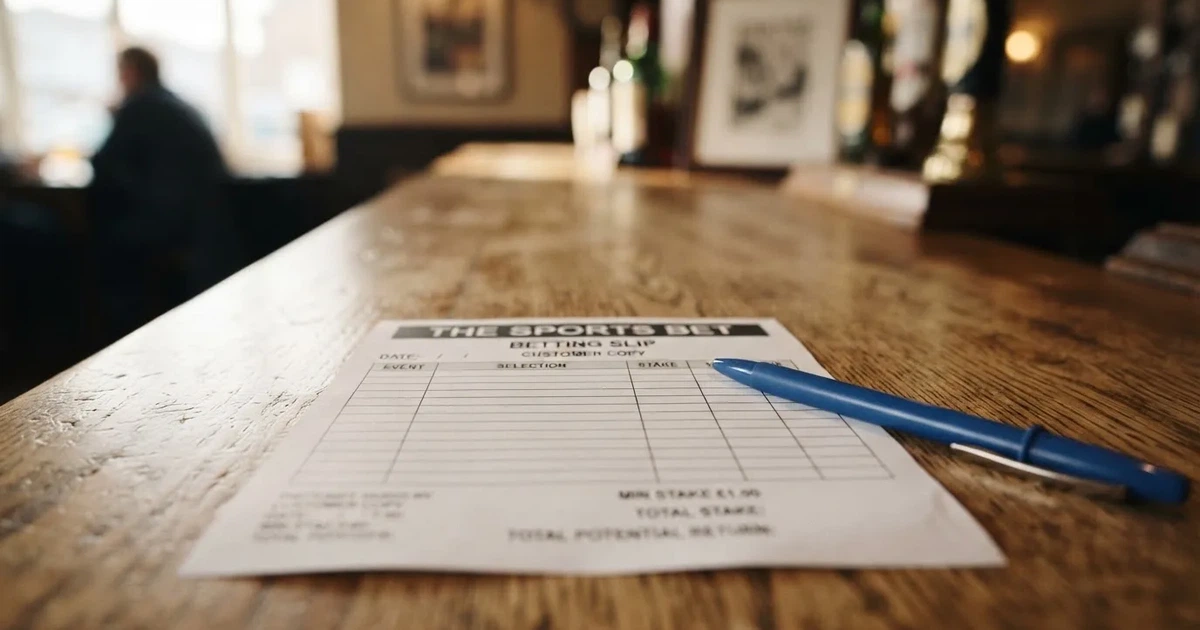
High-limit betting is not a separate market — it is the upper edge of a sportsbook’s stake ladder, and every bookmaker defines that ladder on its own terms. A bettor who wants to put £5,000 on a Premier League match or £10,000 on a Champion Hurdle runner is not asking for a product that does not exist; they are asking how far the existing one stretches. The honest answer in Great Britain in 2026 is that the country’s licensing regime does not set a stake ceiling, the bookmaker’s own trading team does, and the bettor pays for any relaxation of those caps in three currencies the marketing rarely names: margin, wagering requirement, and the loss of consumer protections if the site they pick is not on the public register at all.
This piece works through the mechanics, the licence test, the offers, the markets and the bookmakers themselves. The aim is not to flatter any operator — it is to make the cost of a stake cap visible, so a reader who decides that “high limit” matters to them chooses on terms they actually understand.
What “high limit” means at a British bookmaker
A “limit” at a sportsbook is a maximum stake the operator will accept on a given selection at a given price. It can apply before a bet is placed (the slip refuses the stake), after the bet is placed (the trader cuts the stake back), or over time (the account’s maximum stake drops as the bookmaker reviews the customer’s history). The same word covers three different controls, and the cost to the bettor is different in each case.

The first is the per-market cap. A bookmaker trading a Premier League match in the hours before kick-off will let £20,000 ride on the home win, less on the draw, and a fraction of that on a 0–0 correct-score line. The cap is set by the trading desk’s view of its own exposure on that market, and it can change minute by minute as the market moves. The cap is also why a £/£1,000 stake on Manchester City to win at 1.40 can be accepted while £500 on a 17/2 outsider at the same match is refused — the bookmaker’s edge on the favourite is wider, so its tolerable loss is wider too.
The second is the account cap. Some operators set a customer-level maximum stake that overrides any single-market cap, so a punter whose account is flagged for any reason may find their stake cut on markets where the per-market cap would have allowed it. The flagging is automated and opaque: it can be triggered by a long winning run, by betting patterns that resemble arbitrage, or by staking habits the trading desk reads as professional rather than recreational. A reader who wants to know their own account cap will not find it on the website — it surfaces only when they try to place a bet that crosses it.
The third is the cumulative cap. A bookmaker that pays out a five-figure win on Tuesday may quietly trim the same customer’s stake ceiling on Wednesday. This is the mechanism most often meant by the phrase “the bookmaker limited me”, and it is the one that turns high-limit play from a one-off into a relationship. There is no statutory cap on how aggressively a bookmaker can adjust a customer’s limits in Great Britain — the operator sets them, and the customer’s only real remedy is to move their action elsewhere.
The point is not that any of this is illegitimate. A bookmaker is a counterparty that needs to manage its own risk, and a cap on the largest stake it will accept is the same instrument a bank uses when it caps a wire transfer. The point is that the cap, and the conditions under which it moves, are not visible from the welcome offer, and the bettor who treats “high limit” as a feature is reading one number out of a four-variable contract.
The licence question — and why it is the first thing to check
Every operator offering betting to customers in Great Britain needs a licence from the Gambling Commission, the regulator set up under the Gambling Act 2005. The 2014 amendment to that Act — the Gambling (Licensing and Advertising) Act — closed the point-of-supply loophole, so a Curaçao, Maltese or Gibraltar licence is no longer a substitute. The Commission’s public register is searchable by business name, trading name, domain or account number, and it is the only test of whether a brand holds the licence its website claims. A brand can use .co.uk without being licensed, and a licensed brand can use .com — the domain proves nothing, the register proves everything.

The register also lists the categories the licence covers. Remote general betting standard (real events) is the category a sportsbook needs to take bets on real sporting fixtures; remote general betting standard (virtual events) is a separate category for computer-simulated events; a betting exchange runs under a betting intermediary licence. Pool betting on horse or dog racing sits under its own licence too. An operator’s licence appearing on the register for one category does not mean it is licensed for another — a brand authorised for casino may not, in principle, run a sportsbook without the betting licence too, and the categories on the register are the place to confirm that it does.
There are no corners of the British market exempt from this. Northern Ireland runs under older legislation and is outside the 2005 Act, so an operator licensed by the Commission for Great Britain does not necessarily cover customers there — but anyone reading a “GB-licensed” claim should take it at face value as covering England, Scotland and Wales. The point of writing it in those terms is that the legal geography is not the same as the marketing geography.
Two checks are worth running before opening an account. First, the Commission’s public register, by operator name or domain, with the access date noted (the register is updated continuously and the snapshot matters if a reader ever needs to evidence the check). Second, the licence categories listed against that licence — a brand listed for general betting standard is licensed to take sports bets; a brand only listed for pool betting is not. Both findings should be checked against the operator’s own terms page, because the licence is the floor of what the operator may do, and the terms are the ceiling of what it will.
Player protection — and what a stake cap has to do with it
The stake cap a bookmaker sets is its own commercial decision, but the rules around the customer sitting behind the cap are not. They are set by the Commission’s Licence Conditions and Codes of Practice (LCCP), and they have thickened since 2020 in ways that matter to anyone staking more than a tenner.
GAMSTOP, the national self-exclusion register, has been a mandatory licence condition for online operators since 31 March 2020. Self-exclusion periods run for six months, one year, five years or five years with auto-renewal, and after the minimum period the exclusion stays in place for a further seven years unless the customer asks GAMSTOP to remove it. Every operator reviewed below is on the register; a brand that is not should be treated as one that has not earned the protections British customers are otherwise owed.
Identity verification has applied to every licensed remote operator since 7 May 2019. Name, address and date of birth are checked before a customer can deposit or place a bet — a free bet, a bonus, a no-deposit trial, any of them. The check is run against public-record and credit-reference sources, not against a credit score, and it does not affect the customer’s credit file. It is also why a high-limit customer should expect source-of-funds questions: at higher spend the operator’s money-laundering obligations kick in, and the bettor who cannot demonstrate where the money came from may have winnings withheld while the check runs.
The financial vulnerability check (LCCP 3.4.4) applies where deposits minus withdrawals exceed £150 across a rolling 30-day window, in force since 28 February 2025. It is a public-record check for county court judgments, bankruptcies and the like — not an income check, and not an affordability check in the press sense. The financial risk assessment — sometimes called the “affordability check” — has been announced in a staged plan from the Commission, with no start date. The honest wording is “announced, staged, no start date”; nothing is in force yet.
Deposit limits are the customer’s own tool and are required by the operator under the Remote Technical Standards. The operator must offer a gross deposit limit on a fixed time frame, and the limits are the customer’s choice, not the regulator’s — there is no state-set ceiling in Great Britain. What the Commission tightened is the offer: a first set of changes has applied since 31 October 2025, and a second phase has been postponed to 30 September 2026. Whether the second phase is live is not yet established, and any check of what the operator actually offers should be made against the deposit-limit screen, not the marketing.
A licensed high-limit bettor is also protected by the Commission’s complaints route and by approved alternative dispute-resolution bodies; an unlicensed one is not. A bettor who picks an unlicensed site loses GAMSTOP coverage, the complaints route, approved dispute resolution, the bonus cap, the vulnerability check and any hope of British consumer redress if funds are withheld. The reason a licence matters is not the licence itself; it is the package that comes with it.
Bonuses and free bets — the cost that is easy to miss
Welcome offers and free bets are the visible marketing line, and the cost is almost never on the marketing line. The cost lives in the wagering requirement, the minimum price for a qualifying bet, the expiry window, and the rule on whether the free-bet stake is returned with a win. The bonus cap the Commission brought in on 19 January 2026 is the one piece of regulation the marketing cannot ignore: a maximum 10x wagering multiplier on bonuses (a £10 bonus with a 50x requirement would need £500 of qualifying bets; the cap pulls that down to £100) and a ban on mixed-product promotions — offers that require the customer to gamble on two or more product types, such as betting plus casino or bingo, in the same offer. The cap and the ban apply at licensed operators; whether they apply to free bets with no wagering condition, and any cap on the money value of a bonus, are not settled.
The shape an offer takes decides its real weight. A “free bet” whose stake is not returned with a win is worth less than the headline figure, because the bettor who wins a £10 free bet at odds of 4.00 collects £30, not £40. A “boosted odds” offer on a single line has no wagering requirement on the boost itself, but the boosted price is set at a level that often loses to a non-boosted price elsewhere once the underlying market moves. A “bet builder” boost applies to a same-game multi whose margin is already higher than a single, so the boost is applied to a less favourable base. An “acca insurance” refunds losing stakes as free bets when one leg lets the rest down — the refund is in free bets, not cash, and the free bets carry their own expiry and their own minimum price. None of these is dishonest. Each of them is a different shape of the same marketing word.
The honest reading order is wagering requirement first, expiry second, minimum price third, stake-returned-or-not fourth. A £10 free bet with a 7-day expiry, no wagering requirement, no minimum price and stake-not-returned is a small but clean offer; the same £10 free bet with a 5x wagering requirement at minimum odds of 2.0 (1/1) and a 3-day expiry is a heavier one. The arithmetic on the heavy one is straightforward: £50 of qualifying bets at an average margin of 5% carries an expected cost of £2.50 in margin before any free bet is even credited. The light one carries no such drag.
This is the angle this page takes — what the offer costs. A reader who finds the offer they like should run the wagering requirement, the minimum price and the stake-returned rule against their own staking pattern before they sign up, because the offer is rarely the cheapest way to place the bets they were going to place anyway.
The bookmaker’s margin — the one number on every price
Every odds line a bookmaker publishes carries a margin. The margin is the cut the bookmaker keeps from every unit bet on that market, before any outcome is settled; it is the difference between the true probability of all outcomes (100%) and the implied probability the odds add up to. On a two-way line priced 1.90 / 1.90 in decimal (9/10 each way in fractions), the implied probabilities are 1 ÷ 1.90 and 1 ÷ 1.90, or 52.63% and 52.63%, summing to 105.26%. The 5.26% over 100% is the margin. A punter betting £100 split evenly across the two outcomes expects, before any result is known, to receive £100 × 1 ÷ 1.0526, or about £95, in winnings — and to keep £5 with the bookmaker as the cost of the service.
This is the band’s worth knowing. A two-way market at 1.90 / 1.90 (9/10) sits at a 5.26% margin; the same market at 1.91 / 1.91 (10/11 each way) sits at roughly 4.71%, the same market at 1.95 / 1.95 (19/20 each way) sits at about 2.56%. The price the bookmaker offers is not an accident; it is the price the trading desk has set to balance the book and to keep the right slice of turnover. A punter whose bookmaker offers the same match at 1.85 / 1.95 — 1.85 on the home win, 1.95 on the draw — pays a different margin on each side of the same market and should pick the side they want accordingly.
Three-outcome markets (1X2 on football) carry more margin than two-outcome markets, because the bookmaker has to balance three probabilities rather than two. A 1X2 priced 2.10 / 3.40 / 3.60 (11/10, 24/10, 26/10) sums to 102.4%, a margin of about 2.4% — modest, but on the tighter end for an outright market. The same fixture priced 1.85 / 3.75 / 4.50 sums to 107.6%, a margin closer to 7.6%. Most Premier League 1X2 lines at major bookmakers sit in the 3%–7% band; minor leagues, exotic markets and in-play prices run higher.
Margin is also why a boosted-odds offer is rarely as generous as the headline. A “price boost” of 10.00 (9/1) on a horse whose true price is 7.00 (6/1) is the bookmaker taking a known small loss on that runner to draw the customer in; the boost itself is funded out of the margin the bookmaker keeps on the rest of the day’s betting. A bet builder, which strings together markets from the same match into one line, compounds the margin: each leg carries its own, and the multiplied odds carry the sum. A four-leg builder at legs of 1.90, 1.80, 1.70 and 1.95 prices out at 11.32 (about 10/1), and the underlying margin of those four legs added together sits well above 5%. This is the cost of the convenience.
Bet types that matter at the high end
The bet types a high-limit punter uses are not exotic by design — they are the same singles, doubles and accumulators the rest of the market uses. What changes at the high end is which types survive the bookmaker’s risk controls and which types the bookmaker’s own features help.
A single is the cleanest bet at any stake. The bookmaker’s exposure is on one outcome, the margin is whatever the published price implies, and the only caps that bite are the per-market and account caps described above. At a major bookmaker on a major football fixture, a single on the match outcome will usually accept a stake well into five figures; on a smaller league or a niche market, the cap drops sharply.
An each-way bet is two bets of equal stake — one on the win, one on the place — and the stake the punter pays doubles. The place terms vary by race and by operator: a handicap horse race with eight runners pays a quarter of the win odds on the place; a non-handicap with five runners pays a fifth. Each-way betting is the bet type where the bookmaker’s margin is hardest to read, because the place market is rarely priced on its own page; the punter should treat the place leg as carrying the same margin as the win leg, which it does in most operators’ models.
An accumulator (or “acca”) strings together selections from different events into one bet, with the odds multiplying. The compounded margin is the cost; a four-fold at legs of 1.90, 1.85, 1.80 and 1.95 prices out at around 12.37 (about 11/1), with the underlying margin higher than any single leg. An acca insurance offer refunds the stake as free bets when one leg loses; it does not change the underlying margin on the acca itself, and the refund is in free bets, not cash.
A bet builder is a same-event accumulator, and the bookmaker’s margin on the line is compounded across the legs just as it is across events. A four-leg builder at legs of 1.90, 1.80, 1.70 and 1.95 prices out at 11.32, and the underlying margin sits in the same band as a cross-event acca. The advantage of the builder is that it lets a punter string markets from one match that cannot normally be combined; the cost is that the bookmaker’s compounding effect is harder to read on a same-event line than on a cross-event one.
A bet builder boost or acca boost is the same idea from the bookmaker’s side — a multiplier on the price of the multi, usually capped at a maximum boost (a £10,000 cap on a William Hill Football Acca Boost is the published ceiling for that promotion, running until 30 May 2027). The boost is applied to a compounded-margin base; the punter should read the boost as a percentage, not a pounds figure, and weigh it against the compounded margin underneath.
Cash out is not a bet type, it is a settlement feature: the bookmaker offers to buy the bet back at a price it sets. Cash out is not always available — a William Hill Football Acca cannot be cashed out mid-game if it is each-way, and cash out on accumulators is not guaranteed in general. The price the bookmaker offers is its own margin applied to the current state of the bet, and the punter who takes cash out pays that margin on top of the margin already in the original price.
In-play betting is the same markets priced continuously through the match, with the bookmaker widening its margin to reflect the volatility of the live market. The margin on an in-play 1X2 line sits a couple of percentage points above the pre-match margin on the same fixture. The stake cap on an in-play line is also tighter than the pre-match cap on the same selection, because the bookmaker’s exposure on a moving market is harder to control.
Spread betting on financial markets is regulated by the Financial Conduct Authority, not the Gambling Commission, and the operator that offers it is regulated by both bodies for the two different product lines. Spreadex is the British example: regulated by the FCA for spread betting and by the Commission for fixed-odds betting, and the spread-betting losses can exceed the deposit. The high-end punter looking for genuinely uncapped exposure finds it on financial spread markets, but at the cost of losing the consumer-protection regime the gambling licence provides. A financial spread book is not a sportsbook, and a sportsbook limit cannot be relaxed by moving action to one.
Sports, tournaments and the fixtures where the limits move
The stake cap on a market is a function of the bookmaker’s view of how much liability it can carry on that market without becoming overexposed. That view changes by sport, by tournament, by fixture, and by the time before kick-off.
Premier League football is the deepest market in British bookmaking. A major bookmaker will accept a five-figure single on the 1X2 of a televised match in the hours before kick-off; the same bookmaker may cap the same match at four figures an hour before kick-off if the team news has moved the market in a way the trading desk does not like. The cap on the outright market (who wins the league) sits well into five figures; the cap on the relegation market sits lower; the cap on a corner-count or a player-shot market on the same match sits lower still.
Champions League football sits at similar depth on the group-stage matches of the major clubs; the early rounds of the qualifying competition sit at much shallower depth. The Europa League and the Conference League sit in between. International football, especially the senior men’s tournaments and the qualifiers, sits at similar depth to the Premier League on the major nations’ fixtures; the smaller nations sit shallower.
Horse racing is the sport with the deepest outright market for the major festivals — Cheltenham, the Grand National, Royal Ascot — and a shallow market for a midweek all-weather card at Wolverhampton. The starting price (SP) is the price the industry settles at, and the Best Odds Guaranteed (BOG) promise pays out at the SP if the SP is bigger than the price the punter took. BOG is offered by several of the bookmakers reviewed below, with conditions: William Hill pays BOG on UK and Irish racing from 8am on the day, on single and multiple bets, and excludes ante-post, tote and pari-mutuel bets; Coral pays BOG on UK and Irish racing from 8am and on every UK greyhound race; Fafabet pays BOG on UK and Irish racing from 9am on race days.
Cricket carries a market cap that is event-specific: a Test match sits at decent depth on the match winner and the series winner, and shallower on session lines and player performance markets. The Hundred, the Indian Premier League and the Big Bash carry a similar shape — deep outright, shallow in-play markets. Rugby league and rugby union sit at shallower depth than football on the same betting day. American football (NFL and college) sits at decent depth on the major bookmakers, and on Welsh football and rugby specifically DragonBet has built its offering around the Welsh market.
Tennis sits at decent depth on the major tournaments (Grand Slams, the Masters 1000 events, the WTA 1000) and at shallower depth on the smaller tours. The outright market on a Grand Slam sits into five figures at the major bookmakers. In-play tennis carries a wider margin and a tighter cap than pre-match tennis on the same match. Golf is event-by-event: the majors and the Ryder Cup sit at depth, the secondary tours sit shallower.
The depth a bookmaker offers is also a function of whether it offers Best Odds Guaranteed on the race in question, whether it offers in-play on the sport, and whether it offers a bet builder on the fixture type. A bookmaker that does not offer bet builder on Premier League football is one a bet builder punter should rule out for that market, regardless of the headline stake cap.
How a stake cap moves through a betting day
The cap on a market is not a fixed number for the day; it is a moving target. The pre-match cap a bookmaker publishes is set wide enough to take most action; the in-match cap is set tighter to reflect the volatility of the live market; the close-of-event cap is set even tighter to reflect that the bookmaker has already taken a position on the outcome.
The mechanics, step by step:
- The bookmaker opens the market. The cap is set at the trading desk’s view of tolerable exposure, often deep on outright markets and shallow on niche ones.
- Early money arrives. The cap moves as the book is built: a bookmaker that has taken too much on one side trims the cap on that side; a bookmaker that has under-filled the market widens the cap to encourage action.
- The team news drops. The cap moves sharply as the market reprices; the cap on the affected side tightens, the cap on the opposite side widens.
- Kick-off. The cap tightens further on the pre-match market, which is about to close; the in-play cap opens, with its own ceiling.
- The match plays out. The in-play cap moves with the score and the game state; the bookmaker’s live traders adjust the cap every minute or two.
- The match ends. The in-play cap closes; the market is settled; any unclaimed position is carried into the next event.
The cost to the punter, at each step, is that the cap they see at 9am is not the cap they will see at 3pm on the same market. A high-limit punter who wants to place a four-figure stake on the half-time score needs to be early enough to find the cap high, and patient enough to wait for the cap to reopen on the same line in-play if the pre-match cap has closed.
This is also why bookmakers that advertise a “high limit” headline without specifying the market, the time or the conditions are not really advertising anything. The cap is the cap on a specific selection at a specific price at a specific moment; outside that specification, the headline is decoration.
The ten bookmakers in this comparison
The ten brands below are all on the Gambling Commission’s public register for remote general betting standard (real events), each under a separate licensee. The list is not a recommendation; it is a set of options for a reader who has decided that high-limit play matters, organised by the differences research has surfaced. Several brands can run under one parent group, but each licence is its own licence and each brand is its own operator.
Each review ends on a verdict. The verdict answers a different question for each brand — the one the block above it actually established.
Bet600 — the racing-led newcomer
Bet600 operates under Tyche Tech Limited, holding Gambling Commission account 44731, with a remote general betting standard licence. The brand specialises in horse racing; its standout offer is Best Odds Guaranteed — if the starting price exceeds the early or show price taken, the bet settles at the SP. The football product is conventional by comparison.
The stake cap on major racing festivals is competitive, though the football in-play depth is less extensive than at the largest operators. It is a useful addition to a rotation for racing punters, rather than a primary account for football.
Verdict: a clean BOG racing book, with the limit depth you would expect from a newer brand; worth a place in a rotation rather than a primary account.
VBet — depth and live coverage
VBet (SCGO Limited, account 44662) holds a remote general betting standard licence. The app offers Bet Builder, pre-match and in-play betting, live streaming and a live calendar with results and stats. The in-play football and tennis products are sophisticated, and the bet builder functions as a true same-event multi.
The stake cap remains competitive on major football fixtures, tightening only on smaller leagues. With a wide live streaming catalogue, the brand appeals to punters who want a consolidated in-play football and streaming experience. It is not the market leader on margin, however, so cross-checking prices is advisable.
Verdict: a deep in-play book with strong live streaming; the bet builder and the live calendar carry the day, and the margin is the cost.
Swifty Sports — clean terms, racing-led
Swifty Sports (Swifty Global (UK) Ltd, account 58957) is licensed for remote general betting standard (real events). The offer features Best Odds Guaranteed, Cash Out on horse racing and football, daily price boosts, live streaming and in-play betting, with Bet Builder coming soon. The brand promotes transparency, with clearly stated terms for BOG, cash out and boosts.
Racing stake caps are deep, though football in-play depth trails the market leaders. It suits punters who prioritize clarity and racing features, though those seeking an immediate bet builder experience might look elsewhere.
Verdict: a racing-led book with the cleanest terms in this set; worth a place for BOG and cash out while the bet builder is still listed as coming soon.
Betmaster — the Malta-rooted bookmaker
Betmaster operates under BM Solutions GB Ltd, account 65699, with a remote general betting standard licence. While the company is Malta-registered, the GB licence requirements apply. The sportsbook provides a standard suite of in-play, cash out and bet builder markets.
Football stake caps are relatively deep here, but niche market depth is shallower. This brand serves punters seeking a reliable, standard sportsbook experience under a Malta-rooted GB licensee.
Verdict: a standard bookmaker under a Malta-rooted licensee; the licence is the GB one, the product is the standard one, and the cap follows.
Fafabet — the morning BOG book
Fafabet (Taichi Tech Limited, account 57385) is licensed for remote general betting standard (real events). A key offering is Best Odds Guaranteed on UK and Irish horse racing win and each-way bets from 9am, ensuring the higher of the two prices is paid.
While festival racing caps are deep, football in-play options are functional but not market-leading. This is an excellent morning racing book, though not the primary choice for purely in-play punters.
Verdict: an early-morning BOG book on UK and Irish racing; the racing cap is the depth to look at, the football cap is the one to ignore.
DragonBet — Welsh markets and a regional book
DragonBet Ltd (account 64908) holds a remote general betting standard licence. Its product emphasizes Welsh football and rugby, alongside racing, American football, in-play betting and bet builder markets. The focus on Welsh markets—particularly the Welsh Premier League and international rugby—provides a wider depth than generic operators.
General league caps are shallower than at some larger operators, but Welsh-market limits are noticeably deeper. This makes the brand a specialized choice for punters with a focus on Welsh sport.
Verdict: a regional book that goes deep where the bigger books don’t; the Welsh markets are the reason to be here, the standard markets are not.
Dabble — the social book
Dabble Sports UK Ltd (account 65677) holds a remote general betting standard licence. This is a social-first bookmaker, integrating social features directly into the betting experience. The welcome offer, “Bet £10, Get £10 in Free Bets,” carries standard terms: a minimum qualifying price, 7-day expiry and non-returnable stakes.
Limits on major league football and racing are functional but generally shallower. It is primarily for punters who enjoy social interactivity; serious high-limit players may prefer other platforms.
Verdict: a social book with a clean free-bet structure; the cap is the cost of the social features, and a high-limit punter should look elsewhere.
Betboro — the marketing-led book
Betboro (Webmedia Development N.V., account 44181) holds a remote general betting standard licence. Services include in-play football, racing and tennis, cash out, and boosted odds on select singles. It also incorporates essential responsible-gambling tools like deposit limits and self-exclusion.
Market limits are generally lower, and the boosted odds are the central draw. As the boost cost is reflected in the underlying margin, astute punters should compare these against prices elsewhere. It functions better as a secondary account than a primary high-limit hub.
Verdict: a marketing-led book whose boosted singles are the hook; the cap is the price of the boost, and the punter who values cap depth should not anchor here.
DAZN Bet — the broadcaster’s sportsbook
DAZN Bet runs under DZBT Limited on Commission account 48756, licensed for remote general betting standard (real events). The product includes Cash Out, Bet Builder, daily bet boosts and in-play betting; cash out availability is not guaranteed and bets stand if cash out is unavailable — the standard cash-out caveat rather than a promise.
The stake cap on the major football leagues sits at the shallower end of this set, and the cap on racing is functional. The brand is a fit for a punter whose action is in-play football and who values the bet builder and the daily boosts; it is not a fit for a high-stake punter whose action is on outright markets.
Verdict: a broadcaster’s book with a clean in-play product; the cash-out caveat is the cost of the convenience, and the cap follows.
Betway — the established brand
Betway runs under Betway Limited on Commission account 39372, licensed for remote general betting standard (real events). The welcome offer for new UK and Ireland customers is £40 in free bet tokens (4 × £10) credited on settlement of a first bet of at least £10 at minimum odds of 2.0 (1/1), with a 7-day expiry and debit card deposits only. The credit-card ban that applies to gambling in Great Britain makes the debit-card restriction a description of how the offer works rather than a real constraint — credit cards are not accepted at any licensed operator.
The stake cap on the major football leagues sits at the deeper end of this set, and the in-play product is among the wider ones in this set. The brand is a fit for a high-limit punter whose action is on the major leagues and who wants an established operator with a deep cap; the welcome offer is modest by the standards of this set, and a reader who values the offer should look elsewhere.
Verdict: an established book with a deep cap on the major leagues; the welcome offer is modest, the product is deep, and the cap is the reason to anchor here.
How the comparison lands
The table below maps each brand against three things the high-limit punter actually needs to know: the licence account number on the Commission’s register, the licensee that holds it, and what the operator’s own terms state on the subject of the page. Every entry is drawn from the register or from the operator’s own published terms; nothing is inferred.
| Brand | Licence | What the operator’s terms state |
|---|---|---|
| Bet600 | Account 44731, Tyche Tech Limited | Best Odds Guaranteed on horse racing; SP paid if bigger than the price taken |
| VBet | Account 44662, SCGO Limited | Bet Builder, pre-match and in-play, live streaming, live calendar with stats |
| Swifty Sports | Account 58957, Swifty Global (UK) Ltd | BOG, Cash Out on racing and football, daily price boosts, live streaming, in-play; Bet Builder coming soon |
| Betmaster | Account 65699, BM Solutions GB Ltd | Standard sportsbook product, Malta-registered GB licensee |
| Fafabet | Account 57385, Taichi Tech Limited | BOG on UK and Irish horse racing from 9am on race days |
| DragonBet | Account 64908, DragonBet Ltd | Welsh football and rugby, racing, American football, in-play, bet builder |
| Dabble | Account 65677, Dabble Sports UK Ltd | “Bet £10, Get £10 in Free Bets” on first deposit; minimum price applies; 7-day expiry; stake not returned |
| Betboro | Account 44181, Webmedia Development N.V. | In-play on football, racing, tennis; cash out; boosted odds on selected singles from £10; deposit limits, reality checks, self-exclusion |
| DAZN Bet | Account 48756, DZBT Limited | Cash Out, Bet Builder, daily bet boosts, in-play; cash out availability not guaranteed |
| Betway | Account 39372, Betway Limited | £40 in free bet tokens (4 × £10) on settlement of first bet of £10 at min odds 2.0; 7-day expiry; debit card deposits |
Three patterns sit underneath the table. The first is that every brand runs under its own licence holder — no two of the ten brands share a parent in this set, so the licence test for one is the licence test for that one alone. The second is that the operator’s own terms vary sharply on the subject of the page: BOG, in-play depth, bet builder, the cap on a boosted single. The third is that none of the terms state a headline stake cap — the cap is set per-market at the trading desk’s discretion, and the marketing pitch is the feature (BOG, bet builder, live streaming) rather than the cap itself.
Offers in the wider market
Outside the ten brands in this comparison, the British market carries a wider set of licensed operators whose terms deserve mention because they recur in the high-limit conversation.
bet365 offers Bet Builder+ combining markets from one event into a single bet, available pre-match and in-play; Super Boosts; Winnings Boosts on Bet Builders and selected singles; and daily Bet Boosts. The product is among the deepest on in-play football and tennis, and the stake cap on the major leagues sits at the top of the market. The bet builder is the same-event multi described above, and the boost layer on top is the standard shape.
William Hill pays Best Odds Guaranteed on UK and Irish horse racing from 8am on the day of the race, on both single and multiple bets; the rule excludes ante-post, tote and pari-mutuel bets. The Football Acca Boost covers accas of two or more legs at minimum odds of 1/5, with a boost from 3% on a double to 200% on twenty or more legs, a maximum boost of £10,000 per online bet, running until 30 May 2027. Cash Out is not available on each-way bets and is not always available on accumulators, and William Hill does not guarantee availability.
Betfair Sportsbook offers in-play betting, Bet Builder, free live streaming of UK and Irish horse racing and football within the app, and a 90 Minute Payout market. Betfair Exchange lets customers bet against other customers rather than a traditional bookmaker, with back and lay bets, the option to request a better price, and a MatchMe feature. The exchange model is a different category under the licence (betting intermediary) and the stake cap is set by what the other side of the market is willing to offer, rather than by the operator’s trading desk.
Coral pays Best Odds Guaranteed on all UK and Irish horse racing from 8am and on every UK greyhound race, plus Bet In-Race betting and cash out during races. The sports welcome offer is “Get £40 in Free Bets when you bet £20” — a deposit and sports bet of £20 or more at minimum odds of 2.0 (1/1), with £40 in free bets issued within seven days and expiring seven days after issue, for new GB customers who opt in. The Bet Builder covers match result, goalscorers, total goals and corners across more than 100 football leagues and competitions, with cash out on selected builder markets. The free daily Reward Shaker, the Odds Booster on hundreds of markets, and the Football Super Series jackpot are the marketing layer.
BetVictor offers Best Odds Guaranteed on UK and Irish horse racing, enhanced live race streaming, a BetFinder feature for finding racing bets, and Smart Stats.
These brands are not in the ten-brand ranking above because the ranking is the ten the page has chosen to compare — every brand named in this section is on the Commission’s public register under its own account, and a reader who wants to extend the comparison can do so by checking the register directly.
The arithmetic of a margin
A worked example makes the cost of a margin visible. The example is illustrative, not a quoted price — the page is not reporting what any bookmaker offers on a given fixture, only what the arithmetic of a margin looks like.
Consider a two-way market priced at 1.90 / 1.90 in decimal (9/10 in fractions). The implied probability of each outcome is 1 ÷ 1.90, or 52.63%. The two probabilities sum to 105.26%, making the overround 5.26% and the bookmaker’s margin 5.0%.
A punter who bets £100 on outcome A and £100 on outcome B has staked £200 in total. The bookmaker collects both stakes. If outcome A wins, the punter receives £100 × 1.90, or £190, from the bookmaker; if outcome B wins, the punter receives £190 instead. Either way, the punter’s net position across the two bets is a £10 loss, regardless of which outcome wins. The £10 is 5.26% of the £190 the bookmaker pays out, and 5% of the £200 the punter staked — within rounding, the same number from two sides.
The punter who bets only on outcome A has staked £100 and, if A wins, receives £190. The expected value of the bet, before the result is known, is the true probability of A winning (call it p) multiplied by the profit (£90) plus the probability of A losing (1 − p) multiplied by the loss (£100). At a margin of 5.26%, the true probability of A winning is 50% (the market is fair) and the implied probability is 52.63%; the expected value of a £100 bet on A is £100 × (0.50 × 0.90 − 0.50 × 1.00), or £100 × −0.05, a £5 expected loss. The £5 is the punter’s share of the margin on this bet.
The cost to the punter is the cost of the service: the bookmaker’s margin funds the trading, the platform, the licence, the compliance, the marketing, and the customer service. A punter who chooses a bookmaker at 1.95 / 1.95 (19/20) instead of 1.90 / 1.90 (9/10) keeps the same £100 stake on each outcome and pays a margin of 2.56% rather than 5.26%; the expected loss across the two bets drops from £10 to about £5.12. The bookmaker at the lower margin keeps less of every unit; the punter keeps more.
This is the band the arithmetic lives in. A two-way market at 1.90 / 1.90 sits at a margin of 5.26%; the same market at 1.95 / 1.95 sits at about 2.56%; a three-way 1X2 at 2.10 / 3.40 / 3.60 sits at about 2.4% on the tighter end and at 6%–8% on the looser end. The punter who compares two bookmakers on the same fixture is, in this sense, comparing the cost of the service, and the lower-margin bookmaker is the cheaper one for the same bet.
Payment, identity and the practical cost of high-limit play
The mechanics of funding and withdrawing are where high-limit play meets the practical limits the licence imposes.
Identity verification is required before the first deposit at any licensed operator, including with a free bet or bonus. The check is run against public-record and credit-reference sources, and the punter who cannot verify is not able to fund the account. Source-of-funds questions at higher spend are a normal part of the money-laundering checks, and a punter who places a five-figure single should expect to be asked where the money came from.
Debit cards and bank-based payments are accepted; credit cards are banned for gambling in Great Britain, including credit-card-funded e-wallet payments. Apple Pay and Google Pay sit on top of a debit card at most operators. E-wallets (PayPal, Skrill, Neteller) are accepted at most major bookmakers; some operators exclude e-wallets from welcome offers, and a punter whose deposit method is an e-wallet should check the offer’s terms before claiming. Cryptocurrency is not established as a permitted deposit method at GB-licensed operators; offshore sites that accept it do not carry the GB licence and the protections that come with it.
Withdrawal times vary by method. E-wallets are typically same-day to twenty-four hours; debit cards one to three working days; bank transfers one to three working days. A punter whose stake cap is high but whose withdrawal speed is slow has not really won the high-limit game; the limit and the withdrawal speed are different controls, and a brand can be generous on one and tight on the other.
The financial vulnerability check (£150 deposits minus withdrawals in a rolling 30 days) is the public-record check that runs on a customer’s account, not the announced affordability check. It does not, on its own, trigger a stake limit, but it can trigger a source-of-funds review. A punter whose play crosses that threshold should expect the operator to ask; the check is not a credit check and does not affect the customer’s credit file.
Frequently asked questions on high-limit betting in Great Britain
Which bookmakers do not limit?
No British bookmaker can credibly promise never to limit a customer; the trading desk sets per-market and per-account caps, and adjusts them based on the customer’s staking pattern. The honest answer is that the depth of the cap varies by brand, by market and by sport, and a punter who wants the deepest cap should pick a brand whose trading desk has the appetite for the market they bet on. The ten brands in this comparison are all on the Commission’s register and all carry the licence a high-limit punter needs to look for first.
Why do bookmakers limit winning bettors?
Bookmakers are counterparties, and a customer who wins consistently is one whose edge the bookmaker cannot price out of its margin. Limiting is the operator’s tool for reducing its exposure to that edge — a stake cut on the markets the customer bets on is the cheapest way to limit the damage. The rule is not personal and not arbitrary: the operator is running a business, and a customer it cannot make money from is a customer whose stake is reduced until it can.
Why do bookmakers limit sharp bettors?
A sharp bettor is one whose bets identify mispriced markets more reliably than the trading desk. Limiting a sharp bettor is the same move, expressed differently: the operator reduces its exposure to a counterparty who can extract value the operator’s own traders missed. The practice is industry-wide and not specific to any one brand; the only way to avoid it is to bet in a way the trading desk does not read as sharp, which is a description of recreational play.
How can a bookmaker’s Gambling Commission licence be checked?
The Commission’s public register, searchable by business name, trading name, domain or account number, is the whole test. The licence number on the operator’s own site should match the licence number on the register; the categories listed on the register should cover the products the operator offers; the licence status should be active, not suspended. The check is a one-minute exercise and the only one worth running before opening an account.
How is the return on a bet worked out from the stake and the odds?
For a single at decimal odds o, a stake of s returns s × o if the bet wins; the net profit is s × (o − 1). For a combination bet of n legs, the odds multiply (o₁ × o₂ × … × oₙ) and the formula is the same: stake × combined odds on a win, with the stake returned only on the win. The stake not returned on a free bet is the reason a £10 free bet at odds of 4.00 pays £30 on a win, not £40.
What is a bookmaker’s margin and how is it visible in the odds?
A margin is the cut the bookmaker keeps of every unit bet on a market; it is the difference between the implied probabilities of all outcomes and 100% itself. On a two-way market at 1.90 / 1.90 (9/10 in fractions), the implied probabilities are 52.63% each, the sum is 105.26%, and the overround is 5.26% — which equates to a bookmaker margin of 5.0%. A punter who compares two bookmakers on the same market is, in effect, comparing the margins; the lower-margin bookmaker is the cheaper one for the same bet.
Betting sites & exchanges – Basketball betting
Content created by the «Basketball betting» team
