
Horse Racing Betting Odds 2026: What the Number on Your Slip Actually Means
 Available in US
The number next to a horse is the start of the conversation, not its end. What follows it — the place terms, the stake multiplied by the odds, the slice the bookmaker keeps on every market — is where the cost of a horse racing bet really lives. This page is a working reading of that conversation: how GB-licensed bookmakers price a race, how each-way bets are built, what live and in-play change, what a bonus is actually worth once the small print is read, and which brands earn a place on a shortlist and on what terms. The angle through every section is the same one — consequence. What does this price, rule or feature actually cost the punter, and when does that cost show up?
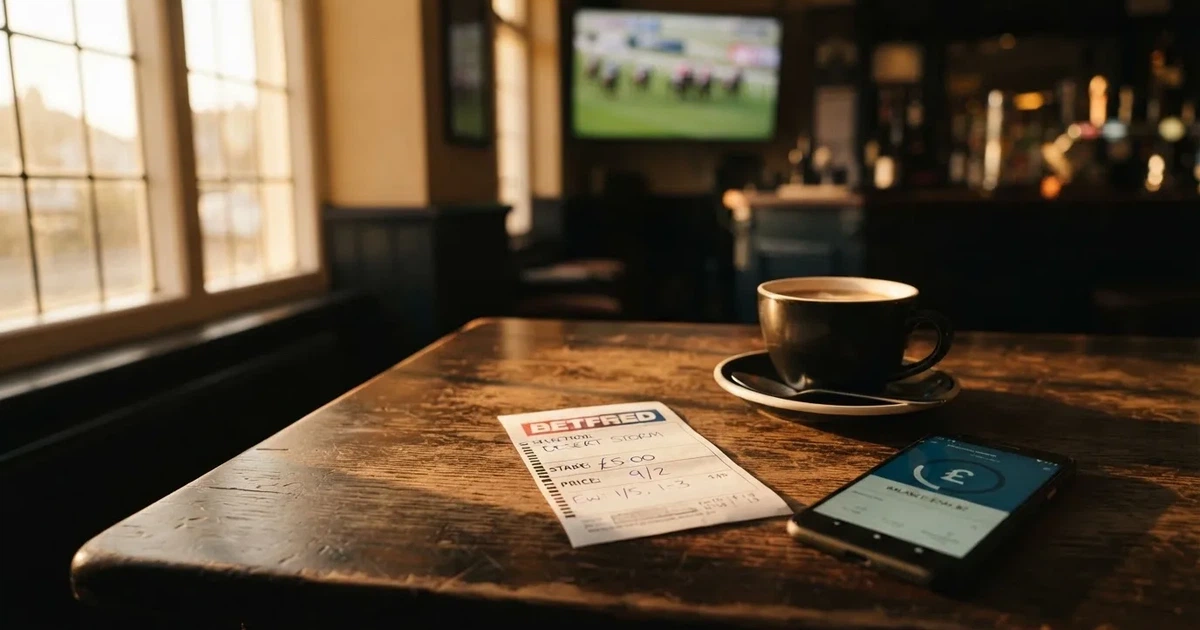
Current as of 27 October 2026, with licence claims verified against the Gambling Commission’s public register.
How GB Horse Racing Apps Work in 2026
A horse racing app is a betting slip, a price feed and a wallet, all squeezed onto a handset. The features that matter are not the ones that look the busiest on a marketing page; they are the ones that change the cost of the bet you actually place — the way the price updates between the off and the closing bell, whether the same race can be built into an each-way combination, whether the cash-out sits one tap away or two, whether the stream of a smaller meeting is reachable when the bigger ones are full. The reviewed brands below run on these mechanics, and the spread between them is the spread a serious punter notices after a week of use.
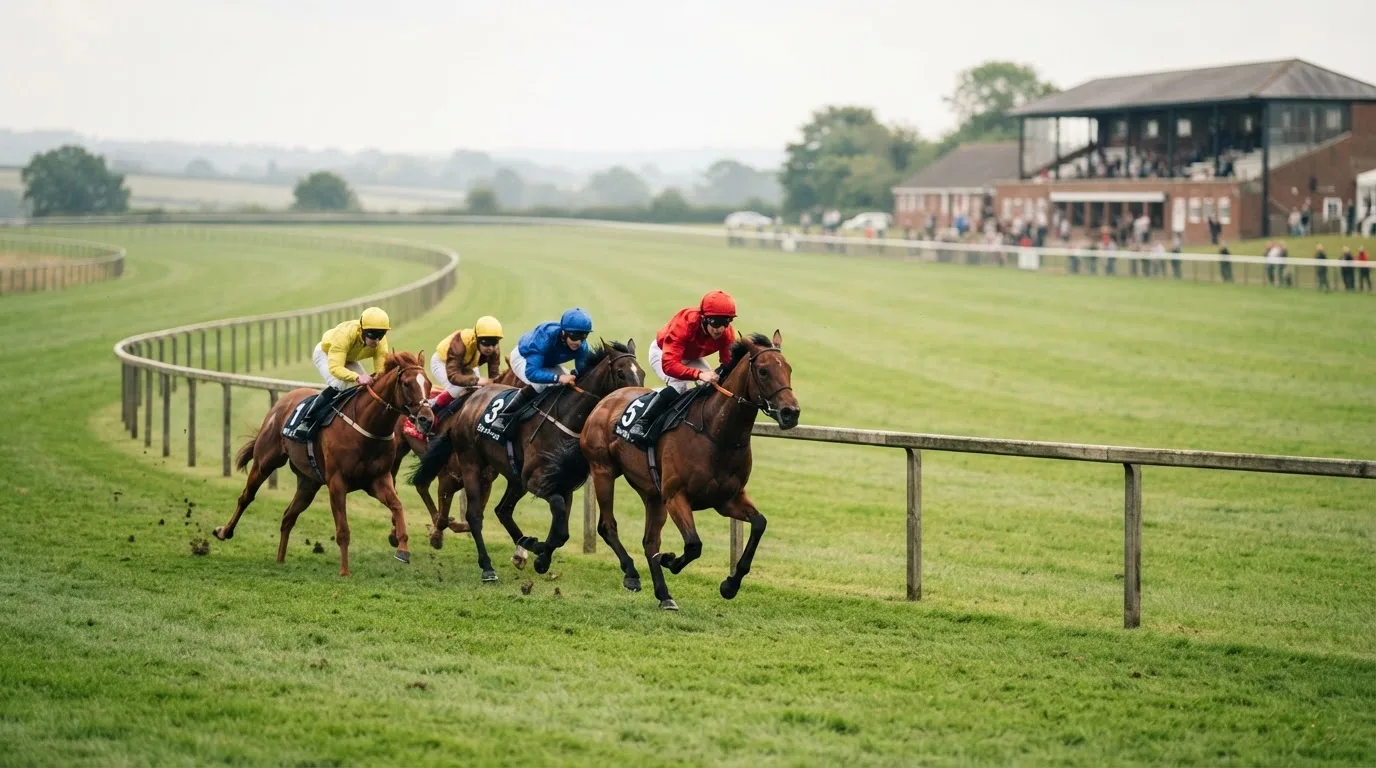
The list that matters on a horse racing app is shorter than the marketing implies. A racing-form tab that loads before the first race has gone off. A price format a punter can read at a glance — fractional for tradition, decimal for arithmetic. A button that takes the price now, and a button that does not let you mistake it for one that does not. Each-way, place-only and non-runner-no-bet on the same race card without a settings detour. A streaming window for the meetings the bookmaker has actually paid to show, not the meetings it would like you to believe it has. Cash-out that updates close to the second the camera cuts, not the second after. None of this is decorative. Each one is a small saving or a small loss across a season of bets.
Where GB-licensed apps separate themselves from an unlicensed site is not in the gloss on the icon. It is in what sits underneath. Identity verification happens before the first deposit. GAMSTOP coverage runs through the same app if the punter has registered for self-exclusion anywhere in the scheme. Deposit limits are available in-app, and they apply on a fixed time frame under the operator’s own safer-gambling controls. Credit cards are not a payment option anywhere in GB — debit cards and bank transfers are the everyday rails. None of that is optional at a licensed brand, which is why every brand on the ranking below is licensed, and why an “anonymous” horse racing app simply does not exist in GB retail betting.
The consequence of picking a GB-licensed app is that several small things happen automatically, and one big thing does not. The small things are the friction on the first deposit (the same identity check every licensed book runs), the friction on a withdrawal above a threshold (the same source-of-funds request), and the friction on a free bet (the same wagering condition if any). The big thing that does not happen is the bet that bypasses all of it — the anonymous in-play bet on a Curaçao-licensed app, with no GAMSTOP and no British recourse if the funds vanish. Both routes have a price. The licensed one is verifiable; the unlicensed one is not.
In-Play and Live Horse Racing Markets: What Actually Changes Mid-Race
In-play horse racing is unusual among in-play sports. Football has 90 minutes of structured play; tennis has a serve every few seconds. A horse race is one burst of effort that ends inside two or three minutes. Live betting on racing, therefore, is not the long unfolding tactical read it is on a football pitch. It is a price that ticks down between the stalls and the start, sometimes a fraction of a second of movement as they break, and then the result. The bookmaker’s window is narrow, the price swings are sharp, and the punter’s working time is small. The app has to accommodate it.

Three features turn a horse racing app from a static betting slip into a usable in-play tool. The first is a price feed that holds the last quoted price as a bet is being placed, so the punter is not betting on a number two ticks old. The second is a cash-out that is recalculated the moment a runner is pulled up or a stewards’ enquiry is called, instead of the moment the operator’s next pricing cycle runs. The third is the same-race combination — a bet builder on one race rather than across a card, because the cross-race accumulator is a marketing flourish, but the within-race combination is the kind of thing the form reader genuinely wants.
Live streaming on horse racing is a quieter matter than it is on football. The bigger meetings — the Cheltenham Festival, the Grand National meeting at Aintree, Royal Ascot, the Derby meeting at Epsom — are the ones GB bookmakers stream as part of their partnership with the rights-holder, Racing TV or ITV4 depending on the meeting. Smaller all-weather cards and midweek jumps fixtures are covered by some operators and not by others, and the gap is usually filled by the operator’s own in-house prices feed plus a results service such as the Racing Post or At The Races app running alongside. The punter who watches the sport rather than the price on the slip notices which operators run live pictures on a Kempton evening and which leave them with a numbers-only screen.
Cash out on horse racing is a different mechanism than cash out on football. On a football match, cash out responds to a goal, a card, a substitution; the price is moving over tens of minutes. On a horse race, cash out responds to one of two states — the price before the off, and the result after. There is no in-running cash-out moment on a flat race to speak of; once the stalls open the race is over. National Hunt races last longer and have a few jumping errors that move the in-running price, which is where cash out sits usefully. The punter betting on the shorter in-play variety fares best on operators with the most reliable in-running prices on National Hunt; the punter sticking to the flat should treat cash out as a pre-off tool rather than a live one.
The consequence of these mechanics, set against a typical £10 win bet, is that the feature set a punter actually feels in the wallet is shorter than the feature list on the app-store page. Streaming is a comfort, not a saving. In-play on the flat is a narrow window and a fast reject. Cash out is useful chiefly before the off, with a side window during a National Hunt race for a punter who has read the jumping. Bet builder on a single race is the feature most worth hunting for, because it lets the form reader stitch a price on the winner with a price on the form’s favourite for the place without paying two full overround percentages.
Today’s Horse Racing and the Form Reader’s Routine
There is no shortage of horse racing tips in 2026. Newspapers still print one tipster’s selections on a Saturday. Racing Post subscriptions run into the dozens. Telegram channels and tipster feeds market “today’s nap” to anyone who reads. What is harder to find is a routine that does not rely on a tipster at all — a routine built from form, going, distance, draw, weight and price, applied to the same race card the punter can read for themselves. This section is about that routine and the limits of what any tipster, including a paid one, can do about a race whose outcome is uncertain by design.
The starting point is the race card. The card lists the runners, the weights, the ages, the trainers, the jockeys, the going (the official description of the ground: heavy, soft, good to soft, good, good to firm, firm, with a sometimes-finer reading on the all-weather), the distance, the draw, the form figures. None of that, alone, picks the winner. Read together, with one or two of them weighted more heavily than others, they narrow the field. A horse whose form reads well at the trip, on the going, with the appropriate weight pattern, on this course or its close equivalent, is a shorter-priced runner than the form alone would suggest. The bookmaker has read the card too, which is why the price is what it is.
Three filters earn their weight on the card. The first is the going. Horses have preferences, sometimes stable preferences, sometimes individual ones; a horse that has never handled soft ground is a different proposition when the description changes from good to good to soft, and the price for the soft-ground alternative in the same race may be the bet. The second is the distance. The five-to-twelve-furlong band covers most of the racing calendar; a horse moving up or down in trip carries a question the price must answer. The third is the weight. A horse carrying top weight in a handicap is being asked to give weight away across the field, which is not a handicap in the punter’s favour, however good the form looks.
What a tipster adds, when a tipster is worth reading, is a sharper reading of one of those filters. What a tipster cannot add is information the bookmaker does not have. The bookmaker has the same card, the same feed from the form publishers, the same stream of sectional data, and the punter’s stake on the same race. The tipster who claims a “sure thing” is selling certainty that the sport does not produce. The tipster who describes a horse’s chance with the discipline to say “this horse handles soft ground better than the price implies” is doing something the punter can do for themselves but rarely does with the same rigour. That is the only kind of tip worth reading, and the rest is decoration.
The consequence for a punter is a routine. Read the card. Pick the two or three runners whose form holds up under the going, distance and weight filters. Compare the punter’s price to the bookmaker’s. The bet is the one where the punter’s price is meaningfully shorter than the bookmaker’s, and the punter can say why in a sentence. The bets that fall out of “the horse has a nice name and a friend fancied it” are the bets that fund the rest of the season. There is no system that wins. There is a discipline that loses more slowly.
Horse Racing Bet Types and How the Odds Build a Punter’s Return
The horse racing bet types are not a long list, and that is the point. Each one is built from the same two pieces — the win bet and the place bet — recombined. The price on the slip is the same kind of price across them, decimal or fractional, and the arithmetic that turns a stake into a return is the same. The spread across bet types is the spread of what the punter is paying for beyond a straightforward single, and that spread is where the cost of an “accumulator” or an “each-way” sits.
Single and win bets
A single is one bet on one outcome. The stake is what the punter puts down; the return, if the horse wins, is the stake multiplied by the decimal odds, and the profit is the stake multiplied by the decimal odds minus the stake. A £10 single at 6.00 returns £60, of which £50 is profit. The fraction 5/1 reads the same way in pounds — £10 at 5/1 returns £60 — and the conversion is straightforward: a/b as a fraction is the decimal price a/b + 1. Fractional 5/1 is decimal 6.00; fractional 9/10 is decimal 1.90; fractional evens is decimal 2.00. The shorter the price, the closer the decimal number sits to 1.00; a 1/4 shot is decimal 1.25, a 1/3 shot is 1.33, a 2/5 shot is 1.40.
Each-way bets
An each-way bet is two bets of equal stake, one on the win and one on the place, so the stake doubles. A £10 each-way bet on a 10/1 horse costs £20. If the horse wins, the win part returns the stake times the win odds (£10 at 10/1 returns £110) and the place part returns the stake times the place odds, which depend on the place terms. At 1/4 odds for three places, the place part of a £10 stake at 10/1 returns £35; the total return is £110 + £35 = £145. If the horse only places, the win part loses and the place part pays at the place odds. If the horse finishes out of the places, both parts lose. Place terms vary with the race type and the field size and are set by the bookmaker, with GB racing following a standard set of conventions for handicaps and non-handicaps.
The GB convention, with the field-size bands, runs as follows. Handicaps with more than 15 runners pay 1/4 odds for four places. Handicaps with 12 to 15 runners pay 1/4 odds for three places. Non-handicap races with more than seven runners pay 1/5 odds for three places. Races with five to seven runners pay 1/4 odds for two places. Races with fewer than five runners pay no place money — each-way is unavailable because there is no place to bet on.
Accumulators and combination bets
An accumulator (the British “acca”) combines the prices of two or more selections into one bet. Two selections make a double; three make a treble; four or more make an accumulator. The combined odds are the multiplied odds of each leg — a double of two 3.00 shots becomes 9.00 — and the return is the stake multiplied by the combined price. The catch is that every leg must win for the bet to pay, and the book’s slice of every leg compounds across the bet. A four-fold accumulator at four 2.00 shots (8% margin each) carries a compounded margin that pushes the combined price down further than the simple multiplication suggests, and the bet pays out only if all four selections win. This is the mathematics of the marketing line that calls a Lucky 15 “four singles plus all the multiples” — the 15 bets inside a Lucky 15 (£1 unit stake = £15 total stake) cover singles, doubles, trebles, a four-fold and the four trebles that include one non-runner, and the unit stake is multiplied across all 15.
The same logic extends through the named combinations: the Trixie covers three doubles and a treble (4 bets), the Patent adds the three singles (7 bets), the Yankee adds six doubles and a four-fold (11 bets), the Lucky 15 adds four singles, six doubles, four trebles and a four-fold (15 bets), the Canadian or Super Yankee adds five singles, ten doubles, ten trebles, five four-folds and a five-fold (26 bets), the Heinz covers six selections across 57 bets, and the Goliath covers eight selections across 247 bets. Each one’s stake is the unit stake multiplied by the number of bets inside. Each one is a way of paying the bookmaker’s margin many times over for the chance of one payout on the highest combination.
Spread betting on horse racing
Spread betting is a different market, and a different kind of bookmaker. Sporting Index, for example, lets a punter switch between fixed odds and spread betting on the same site, with auto cash-out, Bet Builder on football and multi-market accumulators running alongside the spread book. A spread bet is not a stake multiplied by a price; it is a stake multiplied by the difference between the result and a spread quoted by the firm, and the punter can lose more than the stake. Spreadex, which sits across fixed odds (regulated by the Gambling Commission) and financial spread betting (regulated by the Financial Conduct Authority), states explicitly that spread betting losses can exceed deposits. The consequence for a punter is the kind of bet the spread book suits: a long-running index bet on a meeting rather than a binary winner, with the firm’s “make the price” function open on every market. A punter who is not comfortable with the “losses can exceed deposits” line should not open a spread book.
The arithmetic the price hides: margin
The price on a horse is not the punter’s expected return. The bookmaker’s margin is taken from every market, and a glance at the prices across the field reveals it. Take a two-way market at decimal odds 1.90 / 1.90 — the kind of even-money line a bookmaker might quote on a tennis match or a binary sports market. The implied probabilities (one divided by each price) are roughly 52.6% and 52.6%, which add to 105.3%. That 5.3-point gap, the “overround” or “margin”, is the slice the bookmaker keeps of every unit bet on that market. In a horse race with ten runners, the prices sum to something well above 100% — often 115% to 125% on a competitive race — and the gap between that sum and 100% is the bookmaker’s margin. The same arithmetic, applied to a place market or a forecast market, exposes the same gap. A bookmaker running at a margin of around 5% on a two-way market is among the sharper-priced firms; a bookmaker running at 8% or 10% is offering a price that already gives the punter less of every pound bet.
Stated as a band rather than a single figure (because margin varies by market, by race and by the time of day the price is taken): a competitive GB horse racing book runs at a margin of roughly 5% to 8% on its win markets at off, and the same book can run at 8% to 12% on a place market or a forecast market. The punter’s expected cost, across many bets, is the margin multiplied by the total staked; a punter betting £100 per meeting over a 30-meeting season at a margin of 7% is paying roughly £210 to the bookmaker before any winner returns. That is the figure the price on the slip represents, before the race is run.
Horse Racing in 2026: Sports, Fixtures and the Meetings Worth a Price
Horse racing in Great Britain runs essentially every day of the year. The fixture list is a layered thing — a daily card of all-weather racing at Wolverhampton, Kempton, Lingfield, Newcastle or Southwell through the winter; a flat turf season that opens in the spring and runs through the autumn on courses from Ascot and Newmarket to Goodwood, York and the July course at Newmarket; a National Hunt (jumps) season that runs through the winter and into the spring at Cheltenham, Aintree, Punchestown, Sandown and the rest of the British and Irish track. The punter who wants a meeting every day has one. The punter who wants a meeting worth betting on has fewer, and the price on those meetings is set tighter than on the rest.
The British classics sit at the head of the calendar. The 2000 Guineas, the Derby and the St Leger form the British Triple Crown, run over a mile, a mile and a half, and a mile and three-quarters respectively, with the 2000 Guineas at Newmarket, the Derby at Epsom, and the St Leger at Doncaster. The Triple Crown has been won a handful of times in living memory and not at all in the last generation; the same horses contest the three races, but winning all three is a different kind of ask than the form on any one of them suggests. The classics draw the deepest fields and the sharpest books; the place terms are usually extended to four places on the classics and at the major festivals, and the punter’s job is to find the price that reflects the field’s actual shape.
The festivals are where the betting volume sits. Cheltenham in March is the jumps season’s centre of gravity, with the Champion Hurdle, the Cheltenham Gold Cup and the rest of the four-day card. Aintree in April carries the Grand National meeting, with the National itself run on the Saturday of the three-day card and the shorter graded races around it. Royal Ascot in June is the flat’s social and competitive headline, with the Gold Cup and the Prince of Wales’s Stakes the centrepieces. Glorious Goodwood in late July and the Ebor meeting at York in August round out the summer. The Dubai World Cup meeting in March, the Prix de l’Arc de Triomphe in October at Longchamp, and the Breeders’ Cup in November are the international meetings GB punters bet into. The price on every one of these meetings is sharper than on a Tuesday all-weather card at Wolverhampton, because the bookmakers’ books are bigger and the professional money has moved the price closer to its true value.
The fixture a punter actually bets into, however, is rarely the festival. Most bets are placed on the midweek jumps fixtures, the all-weather evening cards, the summer evening meetings at Hamilton, Yarmouth and Windsor. The price on these meetings is wider than on the festivals — a margin of 8% to 12% on a midweek handicap is normal, against 5% to 8% on a Saturday graded race — and the punter’s discipline on these meetings is the discipline that earns the season’s profit. A punter who picks the few meetings each week where the form has been read carefully, and skips the rest, loses more slowly than a punter who bets every race.
The types of races the form reader sorts through are themselves a layered set. Flat racing runs over straight or oval courses, around one point or between two; jump racing, called National Hunt in Great Britain and Ireland, runs over obstacles (fences in steeplechases, hurdles in hurdle races). Flat races range from five furlongs to more than two miles, with five to twelve furlongs the most common band. Handicap races give each runner a different weight to carry based on its ability, with the higher-rated horses carrying more weight; conditions races give horses the same weight, with allowances for younger horses, female horses and apprentice riders. The two race structures ask different questions of the form reader: a handicap asks whether the horse can carry its weight to the form it has shown at a lower mark; a conditions race asks whether the horse is good enough at the trip, on the going, against the field it meets.
The Top 10 GB Horse Racing Bookmakers in 2026
A horse racing shortlist is a question of fit, not a ranking. Some bookmakers price the morning of a big race tighter than the night before; some stream the meetings the punter actually wants to watch; some carry the each-way place terms the punter needs; some run a sportsbook that does not pretend to be a casino. The ten brands below are all on the Gambling Commission’s public register against a holder of a remote general betting standard (real events) licence, which is the entry condition; the differences between them are the differences in what they offer on top of that licence. The order below is the order set by the licence register and the operators’ own positioning on horse racing, not a recommendation.
The comparison is summarised in the table further down, with each brand’s licence, licence holder and what the operator’s own terms state on the key’s subject. The reviews that follow unpack the differences the table cannot.
Tote
Tote is the pool-betting arm of British racing, run by TDCO Limited under Gambling Commission remote licence 054779-R-331321-008. Its offer is not the conventional fixed-odds book; it is a pool, where the punter bets into a fund that pays out to winners at a dividend set after the race. The Tote’s pricing is not the price on a fixed-odds bookmaker’s slip, and the punter betting into the Tote is betting into a different market. For a punter who has used only fixed-odds books, the Tote is the one to learn — its dividend on the Placepot, the Jackpot and the Scoop6 is what the pool pays out, and the price a punter “gets” is the dividend the pool declares. The pool’s edge is the pool’s take, set by the operator and the racecourse, and the punter’s expected return is the dividend the pool pays. The Tote is the place to bet if the punter wants the dividend structure; it is not the place to bet if the punter wants the fixed price the morning of the race.
BetGoodwin
BetGoodwin is run by Goodwin Racing Limited under Gambling Commission remote licence 002927-R-327985-008. Its sports welcome offer, as the operator states it, is a token sports bet bundle awarded on a qualifying first bet; the offer is described by the operator in three component parts. Best Odds Guaranteed is offered on UK and Irish racing; the operator publishes its time of activation on its help pages. The book’s positioning is racing-led: the racing markets are its centre of gravity, and the sportsbook is built around the racing product rather than the other way round. A punter who lives on the racing and wants a bookmaker whose centre of gravity matches is at home here.
Geoff Banks
Geoff Banks runs on Gambling Commission remote licence 054095-R-330366-010, under the licence holder GB Sports Advisors Limited. Its app carries live in-play prices and ante-post prices on future events, with the racing markets running through both. Ante-post is the bet placed before the final declarations, when the field is not yet known and non-runner-no-bet does not apply; the price is longer, but the stake is lost if the horse does not run. Geoff Banks’ positioning is the racing specialist’s positioning: the book runs racing markets the larger firms do not, and the ante-post book is wider than the majors’. A punter who wants the ante-post price on the unexposed horse is the one Geoff Banks suits.
VBet
VBet is run by SCGO Limited under Gambling Commission remote licence 044662-R-324273-022. Its sports welcome offer, as the operator states it, is a token free bet awarded when a new, verified customer stakes a qualifying first bet that loses; the operator publishes the qualifying conditions on its welcome page. The sportsbook is a full-service one: racing sits alongside football, tennis, American sports and the rest, and the operator runs live streams on selected sports and a Bet Builder. A punter who wants the racing markets within a broader sportsbook, with the welcome offer laid out plainly on the operator’s own page, is the one VBet suits. The same caveat that applies to every welcome offer applies to VBet’s: the qualifying bet, the minimum odds, the expiry and the stake-not-returned condition sit underneath the headline, and the punter who reads the small print is the punter who keeps more of the headline.
Sporting Index
Sporting Index runs on Gambling Commission remote licence 027343-R-308898-011. It is the bookmaker for the punter who wants to switch between fixed odds and spread betting on the same site. The firm’s app carries in-play betting, Bet Builder on football, auto cash-out and a Multi-Markets feature that combines several selections into one accumulator. The spread book on racing is a different market than the fixed-odds book — a stake times the difference between result and spread, with no upper cap on losses — and the punter who opens a Sporting Index account for the fixed-odds racing markets gets the spread book as an extra. The punter who opens it for the spread book gets the fixed-odds book as an extra. The punter who opens it without reading the spread-betting line on losses-exceed-deposits is the punter who closes it fastest.
Kalooki Sportsbook
Kalooki Sportsbook is run by Kalooki Sportsbook Limited under Gambling Commission remote licence 057730-R-333396-005 (Commission account 57730). The operator is a GAMSTOP member, and the company’s filings on Companies House (company number 12938274) tie the brand to the licence holder. The sportsbook sits alongside the operator’s wider product; the racing markets are a part of that. A punter who wants a smaller, racing-focused book whose licence is verifiable on the Commission’s public register is the punter Kalooki suits. The book’s pricing is what the operator publishes; the punter who reads the slip is the punter who pays the price.
LiveScore Bet
LiveScore Bet runs on Gambling Commission remote licence 056859-R-332720-005, held by LiveScore Betting and Gaming (Gibraltar) Limited. The brand sits alongside the LiveScore results service; the sportsbook carries the same live-data feel, with Bet Builder allowing up to ten selections and covering match result, both teams to score, corners, total goals, player scoring and card markets. The Bet Builder is football-centred, as the operator’s own help page states; the punter who wants the same depth of combination on a horse race is at the wrong firm for it. LiveScore Bet is the brand for the punter who wants the live-results interface married to a sportsbook.
Dabble
Dabble runs on Gambling Commission remote licence 065677-R-340363-005, held by Dabble Sports UK Ltd. The operator’s sports welcome offer is a token free bet bundle on a first deposit for new customers, with minimum odds applying, a 7-day free bet expiry and the stake not returned. The small print underneath the headline is what the punter reads first: the minimum odds, the expiry, the fact that the free-bet stake is not paid back with a win. The stake-not-returned condition is the one that turns a £10 free bet at 5.00 into a £40 return, not £50 — a £10 difference that is the whole point of reading the small print. Dabble is the brand for a punter who wants a sportsbook with a clear, plainly stated welcome offer and a price feed underneath.
10bet
10bet is run by Blue Star Planet Limited under Gambling Commission remote licence 043173-R-322899-023. Its sportsbook covers football, tennis and horse racing, with cash out, Bet Builder and Live Streaming on selected sports. The brand’s positioning is a broad-market one; horse racing is a part of the sportsbook, with the cash-out feature sitting on the racing markets as on the rest. A punter who wants horse racing inside a wider product — with live streaming on the bigger meetings and a Bet Builder for the smaller ones — is the punter 10bet suits. The price is what the operator publishes; the punter’s expected cost is the margin the operator runs on, which is not a published figure and is best read off the spread of prices on the race card.
Betfred
Betfred is run by Petfre (Gibraltar) Limited under Gambling Commission remote licence 039544-R-319290-010. The Betfred Sports, Casino and Games app carries 21 sports plus over 2,000 casino-style games; the sportsbook is a full-service one, with horse racing sitting alongside football, tennis, golf and the rest. Best Odds Guaranteed on UK and Irish racing runs from 8 AM on the day of the race, on singles and multiples, with the standard exclusions for ante-post, tote and pari-mutuel. Betfred is the brand for the punter who wants the racing markets inside a high-street-name sportsbook, with the casino as a side product the punter can ignore or use as they wish. Best Odds Guaranteed is the practical feature that earns its place in the racing book on a busy Saturday.
The licence-and-terms comparison
The table below summarises what the brands above carry on the licence and on the key’s subject — in this case, what the operator’s own terms state on horse racing betting. It is not a ranking and not a recommendation; it is a structured reading of the public register and the operators’ own published terms. Any cell where the operator does not publish the specific point carries an em dash.
| Brand | Gambling Commission remote licence | Licence holder | What the operator’s own terms state on horse racing betting |
|---|---|---|---|
| Tote | 054779-R-331321-008 (account 54779) | TDCO Limited | Pool-betting product; dividends declared after the race on Placepot, Jackpot, Scoop6 and the win pool |
| BetGoodwin | 002927-R-327985-008 (account 2927) | Goodwin Racing Limited | Best Odds Guaranteed on UK and Irish racing; racing-led sportsbook with token welcome offer |
| Geoff Banks | 054095-R-330366-010 (account 54095) | GB Sports Advisors Limited | Live in-play prices and ante-post prices on future events; racing specialist positioning |
| VBet | 044662-R-324273-022 (account 44662) | SCGO Limited | Sports welcome offer on a qualifying first bet that loses; full-service sportsbook with racing markets and live streaming on selected sports |
| Sporting Index | 027343-R-308898-011 (account 27343) | Sporting Index Limited | Switch between fixed odds and spread betting on the same site; in-play, Bet Builder on football, auto cash-out, Multi-Markets |
| Kalooki Sportsbook | 057730-R-333396-005 (account 57730) | Kalooki Sportsbook Limited | GAMSTOP member; racing-focused sportsbook under verifiable licence |
| LiveScore Bet | 056859-R-332720-005 (account 56859) | LiveScore Betting and Gaming (Gibraltar) Limited | Bet Builder allowing up to 10 selections, football-centred (match result, BTTS, corners, goals, scorer, cards) |
| Dabble | 065677-R-340363-005 (account 65677) | Dabble Sports UK Ltd | Token free bet bundle on first deposit; minimum odds, 7-day free bet expiry, stake not returned |
| 10bet | 043173-R-322899-023 (account 43173) | Blue Star Planet Limited | Horse racing markets within a full-service sportsbook; Cash out, Bet Builder and Live Streaming on selected sports |
| Betfred | 039544-R-319290-010 (account 39544) | Petfre (Gibraltar) Limited | Best Odds Guaranteed on UK and Irish racing from 8 AM on the day of the race; full-service sportsbook with casino product alongside |
How Horse Racing Betting Works in Great Britain
The fundamentals are short, and most of them sit underneath the marketing. A horse racing bet is a bet on a runner in a race, set at a price the operator publishes, paid out according to the bet’s type. The price the operator publishes is a fraction or a decimal, the fraction being the traditional British format and the decimal being the arithmetic format. The punter’s stake is the cost; the return is what the punter is paid out for a winning bet. The difference between the two is the profit. None of that is unique to horse racing — every fixed-odds bet on every sport works the same way. What is unique to horse racing is the way the punter’s stake splits across win and place on an each-way bet, and the way the field size changes the place terms.
The shape of the GB market, set against the punters and the operators, has three features that matter. The first is the public register. Every GB-licensed bookmaker is on the Gambling Commission’s public register, searchable by business name, trading name, domain or account number, and the register is the whole test of who holds a licence. No register entry, no GB-licensed bookmaker; that is the rule. The second is the licence types. A remote general betting standard (real events) licence covers the sports betting offered by the brands above; a remote pool betting licence covers the Tote; a remote betting intermediary licence covers the betting exchanges. The third is the geographic scope. A GB licence covers England, Scotland and Wales. Northern Ireland has its own older law and is outside the Gambling Act 2005; an operator licensed for GB is not licensed in Northern Ireland, and a GB licence does not regulate the Northern Ireland market.
The punter in GB sits underneath a layer of protection that follows from the licence. Identity verification happens before the first deposit; no anonymous play at a GB-licensed site. Credit cards are banned for gambling in GB since 14 April 2020, including credit-card-funded payments through an e-wallet. GAMSTOP coverage is mandatory for online operators since 31 March 2020; periods run six months, one year, five years, or five years with auto-renewal, and the exclusion stays in place for seven years beyond the minimum period. A financial vulnerability check applies once a punter’s deposits minus withdrawals exceed £150 in a rolling 30 days, in force since 28 February 2025. Deposit limits are the punter’s choice; there is no state-set ceiling on stakes or losses in betting.
The consequence is a market that runs to a clear rule, with a public register that lets a punter check the brand in front of them. The brands above are all on the register. The brands that are not on the register are not in this guide, because the guide is built around licensed GB betting. A punter who wants to check a brand before opening an account types the operator’s name or domain into the register at the Gambling Commission’s site; if the brand does not appear, the punter is on an unlicensed site, with no GAMSTOP coverage, no Commission complaints route and no British consumer redress if funds are withheld.
Legality, the Gambling Commission and What a GB Licence Actually Covers
A GB licence is compulsory at the point of consumption. Since the Gambling (Licensing and Advertising) Act 2014 an operator whose remote facilities are used in Great Britain needs a Gambling Commission licence wherever it is based; a Curaçao, Maltese or Gibraltar licence is not a substitute. Sections 33 and 36 of the Gambling Act 2005, as amended, set out the requirement, and providing gambling facilities in GB without the licence the Act requires is an offence aimed at the operator. No offence aimed at the customer who merely bets on an unlicensed site has been set out, but the practical consequence for the punter is the loss of every protection the licence carries: no GAMSTOP, no Commission complaints route, no approved dispute-resolution body, no British consumer redress if funds are withheld, no 10x bonus wagering cap, no £150 vulnerability check. The honest framing is that licensed and unlicensed sites both have a price; the licensed one is verifiable, the unlicensed one is not.
The regulator is the Gambling Commission, a non-departmental public body sponsored by the Department for Culture, Media and Sport. The Commission enforces the Licence Conditions and Codes of Practice (LCCP), the Remote Technical Standards and the social responsibility code, and it runs the public register of licensed operators. There is no state monopoly, no cap on the number of licences, and no statutory list of permitted sports or markets — what may be bet on is set by the operator’s licence category and its own rules, not by a list the Commission publishes. In-play betting is offered by GB bookmakers under the operator’s licence conditions and customer-protection duties; the legal status is “offered under conditions”, not “unrestricted”. Betting exchanges run under a betting intermediary licence, with the rates and rules set by the exchange’s own terms.
On the question of what may be bet on, the position is the operator’s own. Esports are treated like any other event; virtual events are a separate licence category; bets on politics, TV shows and novelty markets are offered by GB bookmakers and no statutory prohibition has been set out. Financial spread betting is regulated by the Financial Conduct Authority, not the Commission, and is a different licence from sports spread betting. Spread betting losses on a non-financial spread book can exceed the deposit; the operator’s own terms state this, and the punter who opens a spread book on horse racing is betting into a market where the cost can be more than the stake.
The Commission’s enforcement is disruption, not blocking. Cease-and-desist notices, search-engine referrals, work with registrars, hosts and payment providers — those are the operator-facing tools. The Commission has been given, or is about to receive, court-order DNS blocking powers; the practical position is that the powers exist and have not yet been used at the level of consumer ISP blocking. The punter who wants to know whether a brand is licensed checks the register; the punter who wants to use an unlicensed brand accepts the loss of the protections that go with the licence, and accepts the possibility that funds are withheld at the operator’s discretion.
Safer Gambling in 2026: Limits, Self-Exclusion and Where to Get Help
Safer gambling at a GB-licensed bookmaker is not a slogan; it is a set of controls the operator offers on a punter’s account. The first is a deposit limit. Operators must offer a gross deposit limit on a fixed time frame; the first changes have applied since 31 October 2025, with a second phase postponed to 30 September 2026. Whether the second phase is live depends on the operator; the published position is “first changes applied, second phase postponed”. The punter’s deposit limit is the punter’s choice, and the operator cannot lower it without the punter’s agreement. There is no state-set deposit or loss ceiling in GB betting; the ceiling is the punter’s own, and the punter who wants a smaller ceiling sets it in the responsible-gambling section of the account.
The second is GAMSTOP self-exclusion. GAMSTOP is the national multi-operator online self-exclusion scheme, mandatory for online operators since 31 March 2020. A punter who registers with GAMSTOP is excluded from every GB-licensed online operator for the period chosen — six months, one year, five years, or five years with auto-renewal. After the minimum period, the exclusion stays in place for a further seven years unless the punter asks GAMSTOP to remove it. The scheme covers online sites and apps; betting shops use a separate service. The punter who has registered with GAMSTOP cannot open a new account at any of the brands above while the exclusion is in force; the punter who tries to bypass the exclusion by opening an account at an unlicensed site has done so without the operator running an identity verification.
The third is the financial vulnerability check. The check applies to licensed remote betting once a punter’s deposits minus withdrawals exceed £150 in a rolling 30 days (in force since 28 February 2025). It is a public-record check — bankruptcy, county court judgments — not an income check and not a credit reference check. The check is a tool for the operator to flag a punter who may be in financial difficulty; it is not a tool to approve or decline bets on financial grounds. The separate “financial risk assessments” or “affordability checks” have been announced by the Commission in a staged plan (the Commission’s article of 7 July 2026), with no start date published; the published position is “announced, staged, no start date”. A punter who sees an affordability check on an account at a GB-licensed operator is seeing the operator’s own safer-gambling controls, not a Commission-mandated check that has come into force on a fixed date.
The fourth is the help that sits outside the operator. GamCare runs the National Gambling Helpline; GambleAware signposts to support and to the operator’s own safer-gambling tools; the NHS runs gambling clinics in several regions; Gamblers Anonymous runs peer-support meetings. A punter who wants to talk about a gambling problem before the problem gets worse calls the National Gambling Helpline or visits a clinic; a punter who has a friend or family member with a gambling problem contacts GamCare for guidance. The licensed operators above link to these services from their safer-gambling pages; the punter who is at the brand’s safer-gambling section is one click from the helpline.
Crypto and Anonymity at GB Horse Racing Bookmakers
The crypto-and-anonymity question lands on GB horse racing with a single answer. GB-licensed bookmakers do not offer anonymous play. Identity verification happens before the first deposit; the punter’s name, address and date of birth are verified, including with a free bet or a bonus. The punter at a licensed brand is on the operator’s records and on the operator’s safer-gambling controls. The punter who wants to bet into a crypto-funded, no-KYC horse racing book is on an unlicensed site, with no GB licence, no GAMSTOP coverage, no Commission complaints route and no British consumer redress if funds are withheld. The site’s licence — Curaçao, Anjouan, Costa Rica, or none at all — is the only licence the punter has.
Crypto horse racing betting exists as a category outside GB. The mechanics are the same as at a fixed-odds bookmaker, with the difference that deposits and withdrawals run through a crypto wallet (Bitcoin, Ethereum, USDT and the rest) rather than through a debit card or a bank transfer. The price the operator publishes is a fixed-odds price, the bet is settled at the price, and the winnings are paid in crypto at the spot rate the operator sets on the withdrawal. The operator’s edge is the same edge as at a GB-licensed book — the margin in the price. The operator’s accountability is not the same: there is no Commission register, no GAMSTOP, no £150 vulnerability check, no 10x bonus cap.
For a GB punter, the consequence of choosing a crypto-funded, unlicensed book is the loss of every protection the GB licence carries. The punter can still place a bet; the punter can still get the price on the slip; the punter can still withdraw in crypto. What the punter cannot do is complain to the Commission, raise a dispute with an approved ADR body, claim GAMSTOP coverage, or rely on the £150 check to flag a financial difficulty. The punter’s stake is at the operator’s discretion. The punter who accepts that loss of protection accepts it knowingly; the punter who does not is the punter who finds out the hard way.
A second consequence sits on the licensed side. The licensed bookmaker does not advertise crypto deposits; the licensed bookmaker’s deposit rails are debit cards, bank transfers and a small set of e-wallets. A licensed bookmaker running a crypto deposit rail would be running a payment method the Commission’s anti-money-laundering controls have not cleared for GB-licensed betting, and the operator would be the one to explain why. The GB-licensed brand’s stance on crypto is silence in the marketing and the absence of a crypto button on the cashier page; the unlicensed brand’s stance on anonymity is the same. The punter who wants to bet on horse racing in GB bets through a licensed bookmaker, and the licensed bookmaker’s payment page is the proof.
Bonuses and Free Bets: What the Headline Costs
A “free bet” is a token, not a gift. The £10 figure on the welcome page is what the punter is given; the £10 figure is also the stake that is not paid back with a win. A £10 free bet at decimal odds 5.00 on a winning selection returns £40, not £50 — the stake (£10) is consumed in the bet, the win (£40) is paid out. The “free” sits in the word, not in the arithmetic; the punter who reads the small print is the punter who knows the free bet is a token bet, not a refund. The headline “Bet £10, Get £30 in Free Bets” is the operator’s marketing line; the arithmetic is that the £30 of free bets returns the winnings on three winning free bets, with the £30 stake never paid back.
A “bonus” carries wagering requirements, and the Commission has capped those requirements at 10x since 19 January 2026. A £10 bonus at 50x wagering requires £500 of qualifying bets; under the cap, the same £10 bonus requires £100 of qualifying bets. The cap is on the wagering requirement, not on the bonus value, and the cap’s effect is that a £10 bonus at 50x (the kind of condition that made bonuses expensive to clear) is no longer lawful at a GB-licensed operator. The cap does not affect free bets with no wagering condition — a “Bet £10, Get £10 in Free Bets” with no rollover on the bonus itself sits outside the cap. Mixed-product promotions — an offer that requires gambling on two or more product types (betting plus casino, betting plus bingo, betting plus lottery) — are banned at GB-licensed operators under the same set of rules.
The consequence for a punter is the same shape across every brand. The headline is the headline; the qualifying bet, the minimum odds, the expiry, the stake-not-returned condition and the wagering requirement sit underneath. The punter who reads those four lines before claiming the offer is the punter who knows what the offer is worth. The punter who reads only the headline is the punter who claims an offer that costs more to clear than the bonus is worth. The arithmetic the punter runs is the same arithmetic as the bookmaker’s: a £10 free bet at 5.00 is worth, on average, the free-bet amount times (the odds minus one) divided by the odds, multiplied by the payout share of the market — a statistical estimate over many bets, not a guaranteed return on any single bet. The free-bet value at 5.00 is £10 × (4 / 5) × 0.95 = £7.60 on a market at 5% margin. The same £10 free bet at 2.00 is worth £10 × (1 / 2) × 0.95 = £4.75 — half the value, because the shorter the price, the smaller the multiple the punter is being given for free. The punter who uses a free bet on a long-priced outsider gets more of the free-bet value than the punter who uses it on a short-priced favourite.
The marketing line of “best odds guaranteed” is a different kind of offer, and a more useful one. Best Odds Guaranteed on UK and Irish racing, as the operators state it, pays out at the starting price if the starting price is higher than the price taken, on singles and multiples from 8 AM on the day of the race. The standard exclusions are ante-post (where the bet is placed before final declarations), tote and pari-mutuel. The punter who takes a price in the morning and the price drifts by the off gets paid at the higher price; the punter who takes a short price and the price shortens is paid at the taken price. The punter’s expected value on a BOG book is the value of the drift the punter catches. The punter’s discipline is to take the price in the morning on the selections where the punter expects drift, and to take the price late on the selections where the punter expects the price to shorten. BOG is not a free bet; it is a price-protection feature, and it is the feature that earns the bookmaker a place on the racing shortlist.
The wider marketing line is the “odds boost” or “price boost”, which raises the price on a named selection for a limited window. A boosted 5/1 into 6/1 is a one-selection enhancement, with the boost funded by the bookmaker’s own margin; the punter’s expected value depends on the size of the boost and the size of the underlying margin. A 20% boost on a 5% margin is worth roughly 15% of the stake as additional expected value; the same 20% boost on a 10% margin is worth roughly 10% of the stake. The boost is a real feature, not a marketing line, but its value depends on the price it boosts from. The punter who reads the underlying price is the punter who knows what the boost is worth.
The Margin, Plainly: How the Price Hides the Bookmaker’s Cut
The arithmetic of margin is the arithmetic every punter runs when reading a race card, whether the punter names it or not. The price on a horse is the inverse of the implied chance the bookmaker gives that horse of winning. Two horses at 5/1 and 5/1 imply 1/6 each; two horses at evens and 4/1 imply 1/2 and 1/5; a field of ten runners at 5/1 each implies 1/6 each, summing to 10/6 — a book that runs at a margin of 10/6 minus 1.00 = roughly 67% over the true probabilities of 10 × 1/6 = 100%. The 5.3-point gap (53% / 10 × 100 = 5.3% margin on each market) is the slice the bookmaker keeps.
The take is simpler to see on a two-way market. Take decimal odds 1.90 / 1.90 — the kind of even-money line on a tennis match or a binary sports market. The implied probabilities are 1 / 1.90 and 1 / 1.90, roughly 52.6% on each side. The sum is 105.3%. The 5.3-point gap is the book’s margin; the payout share on a £1 bet on either side is 1 / 105.3% = roughly 95.0%, and the bookmaker keeps 5.0% of the total staked on the market. A bookmaker running at a 5% margin on its two-way markets is among the sharper-priced firms; a bookmaker running at 8% is offering a price that already gives the punter less of every pound bet; a bookmaker running at 10% or more is offering a price the punter pays heavily to bet into.
On horse racing, the margin is wider than on a two-way sports market. A ten-runner field with the prices summed to 120% is a book running at a 20% margin — the bookmaker keeps 20% of every unit staked across the race, and the punter’s expected return on a level-stake punt across the field is 80% of the stake. A tighter book at 115% is a 15% margin; a competitive handicap on a Saturday graded race can run as tight as 110% (a 10% margin) on the win market, with the place market a couple of points wider again. The punter’s expected cost across a season is the average margin multiplied by the total staked; a punter betting £100 per meeting over 30 meetings at a margin of 12% is paying roughly £360 to the bookmaker before any winner returns.
The consequence for a punter is a habit. Read the prices on the race card; if they sum to 130% or more, the book is wide and the punter pays for the privilege of betting; if they sum to 110% or less on a graded race, the book is competitive and the punter pays closer to a fair price. The punter who picks the few races each week with the tighter books loses less less. The arithmetic is the same one the bookmaker runs; the punter’s version is the smaller of the two.
Working Out a Horse Racing Bet
The arithmetic a punter runs is the one the bookmaker runs, and the punter’s version sits in plain sight. The stake times the decimal odds is the return; the stake times the decimal odds minus the stake is the profit. The fractional odds read the same way: a £10 bet at 5/1 returns £10 (stake) + £50 (profit at 5/1) = £60; a £10 bet at 9/10 returns £10 + £9 = £19; a £10 bet at evens returns £10 + £10 = £20. The conversion between fractional and decimal is the fraction plus one: 5/1 → 6.00; 9/10 → 1.90; evens → 2.00; 4/6 → 1.67; 11/4 → 3.75.
An each-way bet doubles the stake because it is two bets of equal stake. The win part pays at the win odds; the place part pays at the place odds, which are a fraction of the win odds set by the place terms. A £10 each-way bet costs £20; the win part returns £110 on a 10/1 winner (£10 × 11.00) and the place part returns £35 on the place terms of 1/4 for three places (£10 × 3.50), giving a total return of £145 if the horse wins. The same £10 each-way bet on a horse that places but does not win returns only the place part (£35); the win part is lost. The punter’s expected value on an each-way is harder to assess than on a win bet because the place terms vary with the field size and the race type, but the rule that holds is the same: each anway places a cost the punter pays for the place part, and the place part is rarely a good bet on its own.
A combination bet multiplies the odds of the legs into a single price. A double of two 3.00 shots becomes 9.00; a treble of three 2.50 shots becomes 15.625; a four-fold of four 2.00 shots becomes 16.00. The stake is paid out only if every leg wins, and the book’s slice of every leg compounds. A punter running a four-fold at four 2.00 shots is paying roughly 8% per leg, compounding to a higher effective margin on the four-fold than on any single leg. The marketing line that calls an accumulator a “Lucky 15” or a “Heinz” is the marketing line that wraps the multiplication in a friendly name; the arithmetic is the multiplication, and the punter’s expected cost is the compounded margin.
Frequently Asked Questions
How do you place a horse racing bet in Great Britain?
Open an account at a GB-licensed bookmaker, verify identity before the first deposit (the operator’s safer-gambling controls and the anti-money-laundering rules require it), set a deposit limit if the punter wants one, and pick the race and the bet type. The race card lists the runners, weights, going, distance and form; the slip carries the price and the bet type. The bet is placed, settled at the off, and paid out at the price on the slip if the bet wins. Each-way and place-only bets are placed the same way, with the place terms published on the race card. A punter who wants to bet at the starting price rather than the price taken takes an SP-only single; a punter who wants Best Odds Guaranteed takes the price in the morning and is paid at the higher of the taken price and the starting price if the horse drifts.
How do you work out the return on a horse racing bet?
The stake multiplied by the decimal odds is the return; the stake multiplied by the decimal odds minus the stake is the profit. A £10 single at decimal odds 6.00 returns £60; the profit is £50. Fractional odds read the same: a £10 bet at 5/1 returns £60 (£10 stake + £50 profit at 5/1); a £10 bet at evens returns £20 (£10 + £10). An each-way bet doubles the stake because it is two bets; the win part pays at the win odds and the place part pays at the place odds set by the race and the operator. A combination bet multiplies the odds of the legs; a double of two 3.00 shots becomes a single price of 9.00, and the stake multiplied by 9.00 is the return if both legs win.
How do betting odds work on horse racing?
The odds on a horse are the inverse of the implied chance the bookmaker gives that horse of winning. A 5/1 shot implies a 1/6 chance; an evens shot implies a 1/2 chance; a 10/1 shot implies a 1/11 chance. The decimal odds are the fractional odds plus one, so 5/1 reads as 6.00 in decimal, and the punter’s return on a £10 stake is £60. The implied probabilities across a race sum to more than 100%, and the gap between the sum and 100% is the bookmaker’s margin — the slice the book keeps of every unit bet on the race. A race whose prices sum to 120% carries a 20% margin; a race whose prices sum to 110% carries a 10% margin. The punter’s expected return across many bets is the sum of the implied probabilities inverted; a punter punting at level stakes across a 115% book keeps 100/115 = 87% of the stake across the long run.
How do you check a bookmaker’s Gambling Commission licence?
Search the Commission’s public register by business name, trading name, domain or account number. Every brand above sits on the register against a holder of a remote general betting standard (real events) licence; the licence number, the licence holder and the licence categories are all on the register entry. A punter who wants to verify a brand not on the shortlist above types the operator’s name into the register and confirms the entry matches the brand on the punter’s screen. No register entry, no GB-licensed bookmaker; that is the rule. The punter who uses an unlicensed brand accepts the loss of every protection the licence carries — no GAMSTOP, no Commission complaints route, no British consumer redress.
How is the bookmaker’s margin visible in the odds?
Add the implied probabilities (one divided by each decimal price) across the runners; the sum is the “overround”, and the gap between the sum and 100% is the bookmaker’s margin. A two-way market at 1.90 / 1.90 has implied probabilities of 52.6% and 52.6%, summing to 105.3%; the 5.3-point gap is the book’s margin on that market, and the payout share is 1 / 105.3% = 95.0% of stake. A ten-runner race with prices summing to 120% carries a 20% margin, and the payout share is 1 / 120% = 83.3% of stake. The margin varies by market and by the time of day the price is taken; the punter who reads the prices on the slip sees the margin in front of them.
Horse racing & greyhounds – Basketball betting
Content created by the «Basketball betting» team
