
Badminton Betting Odds 2026: What the Bookmaker Keeps and What the Punter Pays
 Available in US
The price on a badminton match tells the reader two things at once. It tells them who the bookmaker thinks will win. It also tells them, in the space between the back and lay numbers, how much of every pound wagered the bookmaker keeps. The first is what the marketing copy sells. The second is the one that matters when the offer is settled, the bonus cleared, the free bet spent. This page reads the odds from that second angle, working through the shape of a badminton betting market in 2026, the regulation that sits behind every licensed price, the offers a punter meets and what each one actually costs them.

Current data: the licence claims below were verified against the Gambling Commission’s public register on 27 October 2026.
How a Badminton Betting Market Is Actually Built
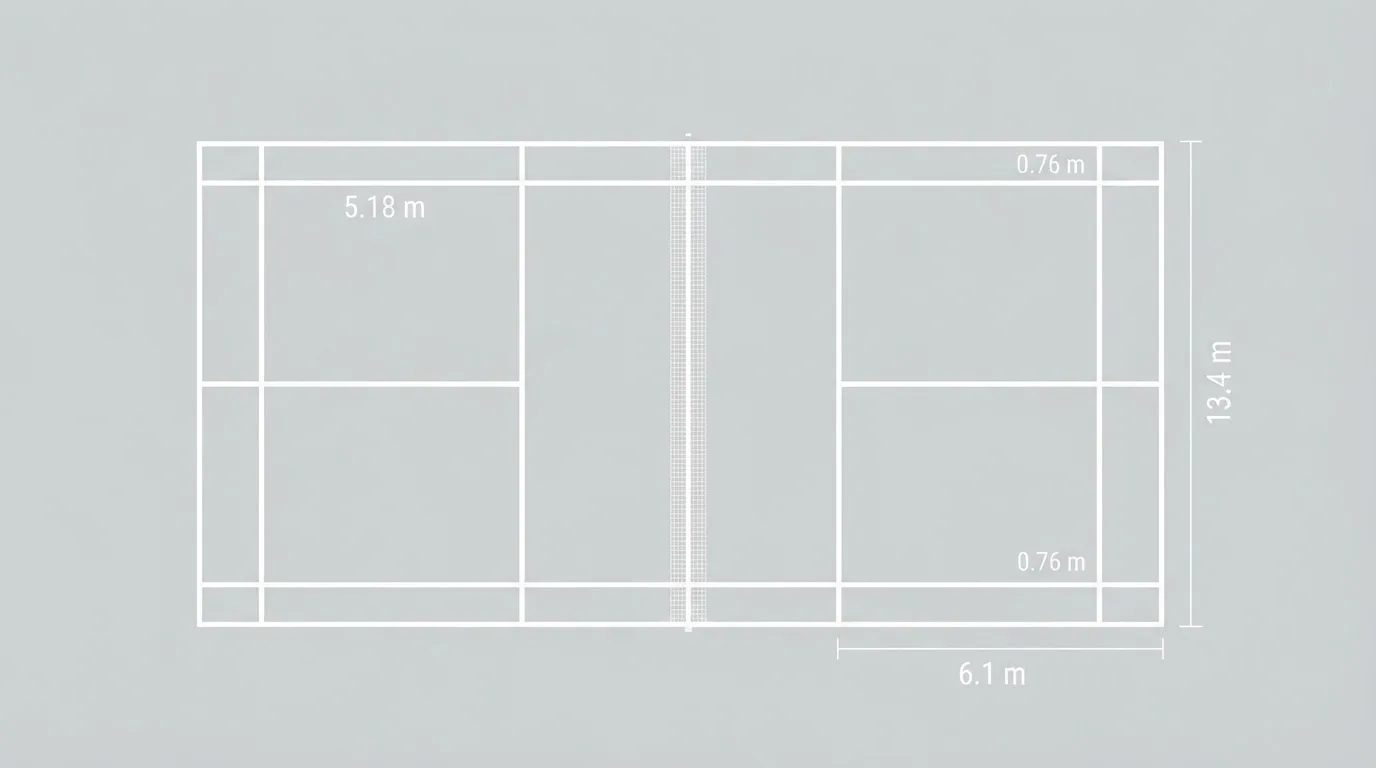
A badminton match is a sequence of short, high-intensity rallies scored under rally-point rules. Each game is played to 21, with play continuing at 20–20 until one side leads by two and the next point deciding at 29–29; a match is the best of three games. Five disciplines sit inside that frame: men’s singles, women’s singles, men’s doubles, women’s doubles and mixed doubles. The five sit on a court 13.4 m long, 6.1 m wide for doubles and 5.18 m wide for singles, with the net 1.55 m high at the edges and 1.524 m at the centre. None of that changes the price a licensed bookmaker publishes, but each piece shapes the markets — the player props, the set totals, the handicap lines — that the odds describe.

The Badminton World Federation (BWF) governs the international calendar. It was founded in 1934 as the International Badminton Federation and runs three team events on a two-year cycle: the Thomas Cup for men’s teams, the Uber Cup for women’s teams and the Sudirman Cup for mixed teams, the last of which began in 1989. Individual play sits on the BWF World Tour, with the All England Open (first held in 1900) and the BWF World Championships (since 1977) carrying the heaviest price weight. Badminton has been an Olympic sport since 1992, with mixed doubles added four years later; that quadrennial appearance concentrates the seasonal handle and the widest range of market types.
That calendar matters because the depth of a badminton betting market is calendar-driven. A grand slam week or a Thomas Cup tie brings a BWF World Tour event into the in-play feed alongside midweek challenger fixtures the same operator priced twelve hours earlier. The margin tightens on the names the betting public has a view on and loosens on everything else. The same licensed bookmaker, the same licence number, the same line on a random Tuesday in the BWF World Tour versus a Saturday semi-final at the All England — both carry the bookmaker’s margin, and both price it differently.
What a Licensed Bookmaker Looks Like in Great Britain
The legal frame is the Gambling Act 2005. Since the Gambling (Licensing and Advertising) Act 2014 amended it, any operator whose remote facilities are used in Great Britain needs a Gambling Commission licence, no matter where the operator itself is incorporated. A Curaçao or Malta registration is not a substitute, and a .com domain proves nothing — licensed operators use .com and .co.uk interchangeably. The Commission’s public register is searched by business name, trading name, domain or licence account number, and it is the whole test of whether a brand is licensed to take bets from a customer in Great Britain.
There is no statutory list of permitted sports or markets for the betting licence. What may be bet on is set by each operator’s licence category and by its own house rules read against the Licence Conditions and Codes of Practice (LCCP). Five licence categories matter to a remote badminton bettor: remote general betting standard (real events), its virtual-events sibling, remote general betting limited, remote pool betting, and the remote betting intermediary licence that runs the betting exchanges. Every featured operator in the ranking below holds the first of those, with the exchange side covered by a betting intermediary licence. The register also lists, beside the licence, the categories the licence covers and the trading name the licence is granted against — a name the registered business may run several customer-facing brands under, so two sites on the ranking can sit under one and the same Commission account without that being a duplicated licence.
Age and identity are the next floor. The minimum age is 18. Since 7 May 2019 the Commission’s customer-identification rules have required name, address and date of birth to be verified before a customer can deposit or gamble with a licensed operator, including with a free bet or bonus — so anonymous play at a licensed site is not on offer, and any brand that lets a punter stake before proving who they are is operating outside that regime. Where the operator’s enterprise is financial spread betting, that activity falls to the Financial Conduct Authority, not the Commission, and the FCA-supervised side carries its own risk warning: spread betting losses can exceed the deposit, which is the spread-bet counterpart of the fixed-odds margin.
What the Bookmaker Is Legally Obliged to Offer the Player
The LCCP and the Remote Technical Standards sit beside the licence. A licensed remote operator must connect to GAMSTOP, the national multi-operator online self-exclusion scheme, which became a mandatory condition for online operators on 31 March 2020. Self-exclusion runs in four lengths — six months, one year, five years, or five years with auto-renewal — and after the minimum period it stays in force for a further seven years unless the customer asks GAMSTOP to lift it. GAMSTOP covers online sites and apps; the betting shops have a separate service. Joining one brand means the others on the register will not let the same person deposit either.
Deposit limits and affordability checks stack on top of GAMSTOP. There is no state-set ceiling on stakes or losses for betting in Great Britain — those are the customer’s choice. Operators must offer a gross deposit limit on a fixed time frame; the first changes have applied since 31 October 2025, a second phase was postponed to 30 September 2026, and whether it is live is not yet a settled matter. Under LCCP condition 3.4.4, in force since 30 August 2024, a financial vulnerability check applies to a licensed remote betting customer whose deposits minus withdrawals cross £150 in a rolling 30 days — the threshold has applied since 28 February 2025 — and the check is a public-record check (bankruptcy, county court judgments and the like), not an income check and not a credit reference check. A wider set of financial risk assessments has been announced in a staged plan, with the Commission’s article of 7 July 2026 setting out the timetable but no start date; writing this in 2026, the right phrasing is “announced, staged, no start date”, not “in force”.
The help line is the National Gambling Helpline via GamCare, with GambleAware funding it and the NHS operating gambling clinics alongside Gamblers Anonymous peer support. None of this replaces a customer-set deposit cap, and none of it stops a licensed bookmaker from closing the account of a customer who fails the vulnerability checks. That is the price of the protection on the licensed side.
The credit-card ban closes one route in. Since 14 April 2020, under LCCP condition 6.1.2, credit cards are banned for gambling in Great Britain, including credit-card-funded payments through an e-wallet — so a punter funding an account with a credit card, or topping an e-wallet from one and then transferring to a bookmaker, is on the wrong side of the rule. Debit cards and bank-based payments are not covered by the ban. A British named-account rule, a state list of permitted payment methods and any rule for or against cryptocurrency deposits at a licensed operator are not established by the inputs the page is built on, so a brand’s stance on those is what its own terms say it is, no more.
What the Welcome Offer Actually Costs the Punter
Three terms shape what a welcome offer is worth: the qualifying bet, the wagering requirement and the time the offer runs in. The qualifying bet is the stake that turns a deposit into a bonus or free bet; the wagering requirement is the number of times the bonus base (or, sometimes, the deposit plus bonus) must be turned over before any winnings become withdrawable; the time window is the deadline. Each looks small in the marketing and is large in the offer’s arithmetic.
A sports welcome framed as “bet £10, get £10 in free bets” carries two costs at once. The £10 stake on the qualifying bet is real money, settled at the published odds. The £10 returned in free bets is not the same £10 — a free bet is a separate instrument whose stake is usually not paid back with a win, and the operator’s terms set the minimum odds a qualifying wager must take, the number of legs an accumulator has to carry and the days within which the offer is settled. A separate offer framed as “bet £20, get £40 in free bets” applies a minimum price to the qualifying wager, splits the free-bet return across several instruments, and writes a seven-day expiry onto the free bet — so the headline figure halve the moment each condition is met.
The wagering cap is the quiet load. From 19 January 2026, the Commission’s promotion rules cap wagering requirements on bonuses at 10x (a £10 bonus at 50x needed £500 of bets before any winnings became withdrawable; under the cap no more than £100), and they ban mixed-product promotions — an offer that requires gambling on two or more product types such as betting, casino, bingo and lottery, the marketing shape “bet on football to get free spins” is the kind of construction that no longer goes through. Whether the cap applies to free bets with no wagering condition, and any cap on the money value of a bonus, are not established by what the inputs carry, so a brand-by-brand reading of those is the only honest frame.
The calendar is the easiest cost to miss. A free bet that expires in seven days locks the punter into finding a price inside a week; an accumulator qualifying bet that must settle before the deadline leaves no margin for a void leg; an acca insurance refund that runs out before the BWF World Tour reaches its last weekend loses the protection at the very moment the field is strongest. The number to keep in mind is the time the offer has to run in. The number in the headline is the offer’s marketing; the number in the small print is the one a punter pays.
What Live Betting on Badminton Actually Means
Badminton is a point-by-point sport. Rallies are short, scores move in two-point clumps, and momentum swings between sides inside a single game. Live badminton betting is the market that fits that pattern: in-play prices move with the score, the serve and the visible tiredness of each player. The 2026 badminton live betting offer on a licensed UK bookmaker typically carries a match-winner line, a game handicap, the next-game winner, and a points total for the next game; the heaviest events (the All England, the Thomas Cup ties, an Olympic bracket) add player props and a set-by-set points spread.
Cash out closes the position before the match ends. The price a bookmaker offers on a cash out is its own, set against the live state of the match and against what the same operator would charge on a fresh bet at the same moment; it is rarely the same as the price the punter took when the bet was struck, and it carries the same margin the operator takes on every other market. The cash-out side can be a quiet way of taking a loss early as well as locking a profit early; the price at the cash-out prompt is the price, the same as it would be on the next bet.
The offering on a typical 2026 licensed site is partial. In-play prices follow the BWF World Tour, and the depth of the feed (the number of markets per match, the latency on a price refresh, the in-play bet builder) varies day by day. Live streaming of badminton is offered by one or two names in the featured set; for the rest the in-play product is the price feed alone. The wagering cap on bonus turnover applies here as it does everywhere else on the licensed side; the same offer terms run on in-play markets as on the pre-match list.
Reading “Predictions” and Tipster Pages for What They Are
A “badminton betting tip” is a forecast. A forecast of a match outcome is not a fact: the same licensed bookmakers list odds on both sides of the same match because neither side is certain. The BWF publishes its own head-to-head and ranking feeds, which are the data a serious tipster page is reading from, and the same feeds reach the betting public without a tipster in between. A tipster site that asks for a subscription is selling the work of curating those feeds; it is not selling certainty.
The shape to watch for is a fixed-odds handicap on an individual match — a -3.5 games line on a men’s singles favourite, say — where a tipster page has named the favourite to cover the line and the public is loading the favourite. The bookmaker’s job is to balance the book on that line, and the price will move accordingly. The punter’s job is to read the line as a price, not as a forecast. A tipster’s record is the only reliable test of whether that page is worth what it asks. Most pages that publish a record are bragging about a number; very few publish what a record that includes losing months looks like.
Statistics software goes one step further — player-level serve speeds, fault rates, ranking-form trends — but it has the same ceiling. A badminton player in form is not a badminton player in form a week later, and a model built on last season’s data has to be retrained on this season’s events or it stops being a model and becomes a description. Where a punter has access to the BWF’s own feeds and the patience to read them, the value of a third-party tipster disappears. Where they do not, the value of a tipster is in the work, and that is what the subscription pays for.
How Badminton Betting Odds Are Priced and What That Means for the Punter
Two kinds of odds run on a UK bookmaker’s badminton page: fractional (5/1, 11/4, evens, odds-on shorter than evens) and decimal (6.00, 3.75, 2.00). The conversion is exact: fractional a/b becomes decimal a ÷ b + 1. A 5/1 shot at decimal 6.00, an 11/4 chance at 3.75, evens at 2.00. The two forms describe the same prices — a stake of £1 at 5/1 returns £6 total (£5 profit plus the £1 stake), the same £1 at 6.00 returns £6 total — and a licensed UK bookmaker lets the punter switch between them on the bet slip.
The stake × odds is the return on a winning single bet; the profit is the return minus the stake. A £10 single at 6.00 returns £60 total and pays £50 of profit. A combination bet multiplies the decimal odds of the legs into one price: a treble of 2.00, 3.00 and 4.00 carries a combined price of 24.00, and a £10 stake on the treble returns £240 if all three legs win. Each leg carries its own probability; the multiplication is a single number, and the margin the bookmaker takes sits in that number as surely as it does on a single bet.
The margin is what is inside every price. A two-way market at decimal odds of 1.90 / 1.90 gives the bookmaker a payout share of 1 ÷ (1/1.90 + 1/1.90) ≈ 0.95, an overround of about 5.26%, and a margin of 5.0%. The same market at 1.85 / 1.85 returns a payout share of about 0.927, an overround of about 7.85%, and a margin of 7.3%. The higher the margin, the smaller the payout share; the higher the margin, the more of every pound staked the bookmaker keeps. The figure a punter sees on the screen is the headline price; the figure the bookmaker has built into the market is the spread between the back and lay numbers and what they would be in a perfectly efficient market.
A simple band emerges from the same arithmetic. A pair of decimal prices at 1.90 / 1.90 on a two-way match-winner line gives a margin of around 5 to 6%; a tighter 1.95 / 1.95 line runs at roughly 2.5%; a longer 1.80 / 1.80 line runs at around 10%. The headline price is the marketing; the margin is the cost. On a 1X2 line on a badminton match the margin typically sits between 3 and 8% at the heavily-priced names, and widens from there as the field thins. A combination bet multiplies the per-leg margin into a larger number; the punter’s expected cost of placing a five-fold accumulator is the margin of each leg compounded, and a five-leg acca priced at 25/1 from five even-money legs has a larger margin than five singles at evens.
What “Best Odds” and “Enhanced Prices” Are Selling
The marketing word is “best odds guaranteed” or “price boost”. A BOG offer pays the larger of the price the punter took and the starting price if the latter is bigger. A price boost raises the price the operator publishes on a named selection for a named window. Each is a small price advantage in a market whose headline price already carries the bookmaker’s margin. The arithmetic works the same way it works everywhere else on the licensed side: the boosted price is the headline, the margin inside it is the cost, the deadline is the time the boost has to run.
“Enhanced odds” on a new-customer welcome are a separate construction. The book is on the operator, not on the punter: the price is higher than the market’s standing line for the duration of the offer, and the offer’s terms (minimum stake, minimum number of legs on an acca, maximum stake in the offer, expiry on free bets paid from the boost) shape what the punter can extract. Where the boost pays in free bets whose stake is not returned with a win, the value of the boost is the free-bet amount multiplied by the extra price edge above the standing line, divided by the boosted price; that is the average over many such offers, not a guarantee on any one.
“Acca insurance” refunds the stake as a free bet or bet credit if one leg of a named accumulator lets the bet down. The refund is capped at a named figure, applies only above a minimum number of legs and a minimum odds per leg, and runs out on a date. A refund framed as a free bet is the offer’s shape, not its value: the value of a free bet on a £10 acca insurance is the average edge a £10 free bet carries at the prices available when the insurance fires. That number is small, and the cap on the refund makes it smaller again.
The Calendar and What It Does to the Markets
The BWF season shapes the badminton betting calendar in a way the football calendar does not. The Thomas Cup and the Uber Cup run on a two-year cycle, the Sudirman Cup since 1989 also on a two-year cycle, and the Olympic tournament on a four-year cycle; the BWF World Tour runs a roughly monthly cadence of Super 1000, Super 750, Super 500, Super 300 and Super 100 events, with the All England Open (first held in 1900) and the BWF World Championships (since 1977) at the head of the individual calendar. Each brings a different depth of market.
The licensed bookmaker prices the headliners tightly and the midweek challenger events loosely; an in-play bet builder on a Thomas Cup tie is a different product from an in-play bet builder on a random Super 100 round of 32. The punter’s read of the same licensed operator changes by week. A trade at evens on a Saturday semi-final is not the same trade as a trade at evens on a Tuesday qualifier, and the explanation sits in the margin, not in the head-to-head. The All England at 11/4 the favourite, the same operator’s market on a Super 100 quarter-final at the same odds two weeks later — different margins, different fees inside the same headline price.
The Olympics are the season’s contraction point. Badminton has been on the Summer programme since 1992, with mixed doubles added four years later, and the bracket compresses the year’s handle into a few days. Live streaming and in-play depth run deepest in those weeks; prices tighten under the volume. A punter planning an Olympic-week acca is buying into the same margin a month later at the World Championships, but at a market in which the book is most nearly balanced.
The Top 10 Licensed Bookmakers for Badminton in 2026
The ranking below carries only operators whose domain appears on the Gambling Commission’s public register against a licensee holding a remote betting licence for Great Britain. Each entry below names the licence number, the licence holder the register grants it to, and the key term the operator’s own site states on the subject the table covers. The featured set is a snapshot of what a reader comparing options in 2026 meets, not the whole register — there are more licensed brands than any article features. Several of the brands sit under one and the same licensee; that is normal, not duplication. Every entry is GAMSTOP-eligible by virtue of holding the licence.
| Brand | Gambling Commission remote licence | What the operator’s own terms state |
|---|---|---|
| Ladbrokes | 054743-R-330863-014 (LC International Limited) | Entain-published app, 4.66 from 101,255 GB App Store ratings. |
| Bet Ahoy | 100094-R-341742-003 (Bet Ahoy Ltd) | Welcome: “Bet £10 & Get £10 in Free Bets” — £5 sports + £5 acca. |
| Fitzwilliam Sports | 048760-R-335434-009 (SBKI Limited) | Dublin bookmaker, capped membership, “High Stakes Welcome” subject to compliance. |
| London Bet | 066162-R-340278-004 (Thistle Bet Limited) | App: sports (football, tennis, horse racing, greyhounds, darts, golf, cricket, NFL, NBA, MLB, snooker) plus Pragmatic Play casino slots and live in-play. |
| Unibet | 045322-R-324275-019 (Platinum Gaming Limited, Gibraltar) | Operating since 1999; “Get £40 in Free Bets when you bet £20”, min odds 2.0 (1/1), 7-day free-bet expiry, debit card or instant bank transfer. |
| Smarkets | 039173-R-319366-011 (Smarkets (Malta) Limited) | Open-bank deposits instant from £10 to £10,000; withdrawals within 6 hours from £10 to £100,000. |
| Fafabet | 057385-R-333191-006 (Taichi Tech Limited) | Best Odds Guaranteed on UK and Irish racing from 9am on race days; SP if bigger. |
| bet365 | 055148-R-331498-002 (Hillside (UK Sports) ENC) | Official UEFA Champions League partner; Bet Builder+, Super Boosts, Winnings Boosts, daily Bet Boosts, in-play and live streaming with Match Live and Bet Track. |
| Hollywoodbets | 053028-R-330019-013 (Hollywoodbets International UK Limited) | Stake returned as free bet up to £30 on first qualifying losing acca (stake £10+, 3+ legs, 4/1+ odds, 7-day settle). |
| Kalooki Sportsbook | 057730-R-333396-005 (Kalooki Sportsbook Limited) | Operated by Kalooki Sports Book Ltd (company number 12938274); GAMSTOP member. |
Ladbrokes — the depth of a generalist bookmaker
Ladbrokes runs on a Commission account granted to LC International Limited (licence 054743-R-330863-014), an Entain subsidiary that publishes the app as the Ladbrokes Sports Betting App — 4.66 stars from 101,255 GB App Store ratings at the snapshot this page is built on. A generalist operator of this scale carries the BWF World Tour on its in-play feed through the season and a deep pre-match board on the headliners, with a price feed and a bet builder that match the volume it serves. The headline welcome is the Entain family offer rather than a badminton-specific deal, and the licensed side of the offer is the standard Commission’s promotion rules apply — the 10x cap, the seven-day clock on free bets, no mixed-product promotion.
Ladbrokes is the kind of bookmaker a punter comparing options picks because the same operator that prices the Tuesday Super 100 fixture also prices the Thomas Cup tie that follows it. The cost is the margin on the per-leg price, the cost is the extensive range of markets covering the long tail of midweek play, and it represents a generalist’s market on the calendar rather than a niche-focused market on the sport itself.
Bet Ahoy — a small-stake welcome framed around an acca
Bet Ahoy sits on Commission account 100094-R-341742-003 under Bet Ahoy Ltd, and its welcome offer as published on its App Store listing is “Bet £10 & Get £10 in Free Bets”: a £5 sports single and a £5 acca. A welcome shaped like this is the segment of the market that turns a deposit into two instruments, each carrying its own minimum odds, its own expiry and its own settle window. The bonus base is small, the qualifying bet is small, and the value of the package sits in how the punter uses the £10 rather than how the offer is named.
Bet Ahoy is the kind of entry-level welcome a punter weighing up the cost of a first bet at a licensed brand picks for the small qualifying figure and the binary shape of the offer. The cost of the welcome is the qualifying stake minus any returns from the free bets, the cost of the wagering terms inside the free-bet credits, and the cost of the seven-day expiry on each free bet that has not been used. The verdict is that this brand provides a functional entry point for the small-stake punter, with the offer’s arithmetic mirroring the standard terms found across the sector.
Fitzwilliam Sports — a Dublin house with a capped roll
Fitzwilliam Sports describes itself as a Dublin bookmaker with capped membership; its licence (account 048760-R-335434-009) sits with SBKI Limited on the Commission’s public register. The welcome offer as the brand publishes it is a “High Stakes Welcome” subject to the brand’s own compliance criteria, so the offer is tailored rather than off-the-shelf, and the deposit-side floor is shaped by the brand’s view of each applicant. Fitzwilliam Sports also publishes a safer-gambling range — instant deposits, fast withdrawals, timeouts, deposit limits — alongside links to GambleAware, GAMSTOP and Gamblers Anonymous.
Fitzwilliam Sports is the kind of bookmaker a punter whose betting is at the upper end of the recreational scale picks for the high-stakes welcome and the Dublin-side tone. The cost is the membership cap and the bespoke welcome, the cost is the brand’s discretion over who it accepts, and it creates a trade-off for a punter choosing between a personalised welcome and the depth of the badminton market through the season.
London Bet — the multi-sport app with Pragmatic casino slots
London Bet’s licence (account 066162-R-340278-004) sits with Thistle Bet Limited. The app listing published on the GB App Store describes a sports product covering football, tennis, horse racing, greyhounds, darts, golf, cricket, NFL, NBA, MLB and snooker, plus Pragmatic Play casino slots and live in-play betting on the same app. A multi-sport app of this kind carries badminton as one of several lines and the depth on the badminton market as the calendar demands, with the casino side of the product under the same licence.
London Bet is the kind of bookmaker a punter who wants a casino product on the same licence as the sportsbook picks for the bundle. The cost is the limited focus on badminton within a multi-sport app rather than a sport-focused one, and it remains a better-suited platform for a punter whose interests span multiple sports rather than focusing only on the tour.
Unibet — the long-running Scandinavian operator on a Gibraltar licence
Unibet’s UK site runs on Commission account 045322-R-324275-019, granted to Platinum Gaming Limited, Gibraltar; the brand states it has operated since 1999. The published sports welcome for new GB customers is “Get £40 in Free Bets when you bet £20”, with a qualifying deposit and sports bet of £20 or more at minimum odds of 2.0 (1/1), free bets expiring within seven days of issue, and funding restricted to debit card or instant bank transfer. The free-bet return is split across several instruments; each carries its own terms.
Unibet is the kind of bookmaker a punter weighing up a £20-qualifying welcome at minimum odds of 2.0 picks for the running scale of the brand and the straightforward shape of the offer. The cost is the qualifying stake at minimum odds of 2.0, the cost is the seven-day expiry on the free-bet bundle, and it offers a workable path for a punter whose initial bet aligns clearly with the minimum-odds terms.
Smarkets — the betting exchange on a Malta licence
Smarkets’ UK side runs on Commission account 039173-R-319366-011, granted to Smarkets (Malta) Limited under the betting intermediary licence category — the licence a betting exchange runs on, rather than the standard general betting standard licence. The published payment rails, as the help centre carries them, are open-bank deposits instant from £10 up to £10,000, withdrawals processed within six hours from £10 up to £100,000, and UK debit-card deposits instant from £10 up to £15,000. An exchange is a different construction from a traditional bookmaker: the punter backs or lays selections against other customers, and the operator’s fee is the commission on net winnings rather than the margin inside a fixed-odds price.
Smarkets is the kind of venue a punter comparing options picks because the price is set by what other customers will back or lay, not by a bookmaker’s trading desk. The cost is the commission on net winnings rather than the margin inside a price, the cost is the liquidity on the badminton markets the exchange carries, and it suits a punter who prioritizes price discovery over the bookmaker’s own specials.
Fafabet — the racing-led bookmaker with BOG from 9am
Fafabet’s licence (account 057385-R-333191-006) sits with Taichi Tech Limited, and the brand publishes a Best Odds Guaranteed offer on UK and Irish horse-racing win and each-way bets from 9am on race days. The BOG pays the starting price if bigger than the original price the punter took. The racing-led construction shows on the site’s priorities: the BOG is on racing rather than on badminton. The rest of the sports product runs to the brand’s standard shape.
Fafabet is the kind of bookmaker a punter whose betting is concentrated on racing picks for the BOG offer rather than for the depth of the badminton market. The cost of running a BOG-led book on badminton involves managing the limited in-play feed on the BWF calendar, the cost is the racing-side edges not transferring to badminton, and it accommodates the punter who treats badminton as a secondary interest to racing.
bet365 — the global partner with Bet Builder+ and live streaming
bet365’s UK side runs on Commission account 055148-R-331498-002, granted to Hillside (UK Sports) ENC; the brand publishes itself as the official global betting partner of the UEFA Champions League and, on the GB App Store, as the most downloaded sports betting app in the UK. The in-app product range as listed is wide: in-play betting and live streaming of events worldwide, Bet Builder+ combining markets from one event into a single bet (pre-match and in-play), Super Boosts, Winnings Boosts on selected Bet Builders and singles, daily Bet Boosts, plus Bet Track, Match Live and a Live Golf Tracker for following bets in play. The same scale carries the BWF World Tour through the season.
bet365 is the kind of bookmaker a punter comparing options picks for the depth of the in-play product, the live-streaming range, and the bet-builder mechanics. The cost is the margin inside the wide price feed, the cost is the in-play latency, and the verdict is that the venue serves the punter who is looking for active, in-play engagement rather than just pre-match static odds.
Hollywoodbets — stake-returned-as-free-bet on a losing acca
Hollywoodbets’ UK licence (account 053028-R-330019-013) sits with Hollywoodbets International UK Limited. The published sports welcome offer, as carried on the App Store listing, is for new players who deposit £10 or more by card and refund their stake as a free bet of up to £30 on their first qualifying losing accumulator, where the qualifying acca carries a stake of £10 or more, three or more legs, odds of 4/1 (5.00) or greater, settled within seven days — one free bet per customer. The refunded free bet is capped, not a refund of the full stake; the offer’s value is the average edge the free bet carries at the prices available when the refund fires.
Hollywoodbets is the kind of bookmaker a punter whose first bet is an accumulator at 4/1 or greater picks for the shape of the refund. The cost is the capping of the free bet at £30, the cost is the minimum number of legs and the minimum price on the qualifying acca, and the verdict is that the offer is a workable fit for a punter whose first bet clears the 4/1 minimum without forcing the selection.
Kalooki Sportsbook — the GAMSTOP member on a small-roll licence
Kalooki Sportsbook is operated by Kalooki Sports Book Ltd (company number 12938274) and runs on Commission account 057730-R-333396-005; the brand lists itself as a GAMSTOP member on its own home page. The brand sits inside the standard general betting standard licence category, and the published safer-gambling side is built around the same Commission’s requirements as the rest of the featured set. A smaller bookmaker on this licence carries the BWF calendar to the depth its scale delivers.
Kalooki Sportsbook is the kind of bookmaker a punter comparing options picks for the brand’s tone rather than for the depth of its market on the BWF calendar. The cost is the depth of the in-play product on a smaller licence holder, the cost is the brand’s quieter brand profile, and the verdict is that the brand is a fit for the punter whose priority is the bookmaker’s safer-gambling page being written in plain language rather than the in-play depth on offer.
The Margin on a Badminton Match in 2026
The arithmetic a punter can run on the published prices reads the same way whether the match is a Thomas Cup tie, an All England quarter-final or a Super 100 round of 32. A two-way market at decimal odds of 1.90 / 1.90 carries a payout share of 1 ÷ (1/1.90 + 1/1.90) — that is 1 ÷ (0.5263 + 0.5263), or 1 ÷ 1.0526, which gives a payout share of approximately 0.9500, an overround of approximately 5.26%, and a margin of 5.0%. The same back-and-lay pair at 1.95 / 1.95 carries a payout share of 1 ÷ (1/1.95 + 1/1.95) — that is 1 ÷ (0.5128 + 0.5128), or 1 ÷ 1.0256, which gives a payout share of approximately 0.9750, an overround of approximately 2.56%, and a margin of 2.50%. The same pair at 1.80 / 1.80 carries a payout share of 1 ÷ (1/1.80 + 1/1.80) — that is 1 ÷ (0.5556 + 0.5556), or 1 ÷ 1.1111, which gives a payout share of 0.9000, an overround of 11.11%, and a margin of 10.00%.
The band of margins on a 2026 badminton two-way match-winner line lands at roughly 2.5% to 10% on the licensed UK side, with the tightest margins running on the headliners (All England semis, Thomas Cup ties, Olympic bracket) and the looser margins on the midweek Super 100 events. The same figure on a three-way line (where a third competitor carries a non-trivial line) rises under the same arithmetic: a 1X2 line on a balanced three-way match priced around 2.50 / 3.50 / 2.80 carries a margin somewhere between 5% and 8% on the licensed side. A combination bet multiplies the per-leg margin into a larger number; five legs at a per-leg margin of 6% carry a combined compounded cost higher than five legs at 4%, and the punter pays the compounded figure on every winning acca whose edges have already absorbed the per-leg bookmaker’s margin.
The punter pays the compounded figure on every winning acca whose edges have already absorbed the per-leg bookmaker’s margin.
The figure a punter sees on the screen is the headline price; the figure the bookmaker has built into the market is the spread between the back and lay numbers and what they would be in a perfectly efficient market. A 1.90 / 1.90 line is one such line; a 1.85 / 1.85 line is the same match at a less generous bookmaker’s price. The price the punter has taken on the bet slip is the price; the same match a week later at the same licensed operator might carry a tighter or a looser line, and the explanation sits inside the margin rather than in the head-to-head.
What It Costs to Bet with an Offshore Brand
A bookmaker whose domain is on the Commission’s public register is licensed for the point of consumption in Great Britain. A bookmaker whose domain is not on the register is not — and providing gambling facilities in Great Britain without the licence the Gambling Act 2005 requires is an offence under section 33 of the Act (on summary conviction up to 51 weeks’ imprisonment, a fine up to level 5, or both; six months in Scotland), aimed at the operator. No offence aimed at a customer who merely bets on an unlicensed site was found in the materials this page is built on; the framing for a customer on the unlicensed side is the loss of the licensed-side protections, not a charge in the box.
The list of protections lost on the unlicensed side is concrete. No GAMSTOP coverage — a self-excluded customer’s exclusion does not move with them off the licensed side. No Commission complaints route and no approved dispute-resolution body; a fund the brand withholds from a customer has no British consumer redress. No 10x bonus cap; the wagering term on a welcome is the brand’s term. No £150 financial-vulnerability check; the deposit is the operator’s check, not the regulator’s. The trade for those protections is the marketing offer the unlicensed brand runs because it is not running under the Commission’s promotion rules — a 200% welcome, a 50x wagering term, a free-bet value the licensed side cannot match because it would not be licensable.
Enforcement is disruption, not blocking: cease-and-desist notices, search-engine referrals, work with registrars, hosts and payment providers; the Commission has been given, or is about to receive, court-order DNS blocking powers. Writing this in 2026, the right phrasing is that the regulator’s tools are upstream of the unlicensed brand and are not a customer-side block. The honest framing on the licensed side is that licensed = checks, limits, GAMSTOP, bonus cap, but also verification before the first bet; on the unlicensed side it is none of those protections and possible loss of funds. Neither frame is “the safe choice” by default.
How a Punter Reads an Offer in 2026
Three questions frame every offer on a licensed UK bookmaker in 2026. The first is whether the wagering requirement on the bonus is within the 10x cap. A £10 bonus at 10x needs £100 of qualifying bets before any winnings become withdrawable, and that is the cap; the same offer at 20x is no longer licensable under the Commission’s promotion rules in force since 19 January 2026. Where the offer sits below the cap, the punter can read the wagering term against the time the offer has to run in.
The second is what the offer pays its winnings in. A free bet is an instrument whose stake is usually not returned with a win; the offer’s headline is the headline, and the offer’s value is the average edge the free bet carries at the prices available when it has been issued. A stake-returned offer — the Hollywoodbets acca refund framed as a “stake returned as a free bet” — is the same shape: it is a free bet, not a money refund. A refund framed in money — a same-price refund in cash — is a different offer entirely, and a punter comparing offers weighs the headline number against the shape of what it pays in.
The third is what the time window does to the offer. A seven-day expiry on a free bet is a working week of evenings and weekends; a seven-day settle window on a qualifying acca is a smaller window by the time the legs settle at different points; a refund that runs out before the BWF World Tour hits the All England is no refund on the match the punter actually wanted to play. The headline figure is the offer’s marketing; the time the offer runs in is the offer’s cost.
A punter weighing up the offer runs the same three checks on every welcome. The bookmaker’s margin sits on the other side of the deal, inside the price the punter takes on the qualifying bet. The bonus is the marketing. The price is the trade.
Tax, Currency and What the Punter Pays
The punter pays no tax on betting winnings in Great Britain. General Betting Duty is the operator’s tax on gross profits, currently 15% under the standard regime; from 1 April 2027 a new remote betting rate of 25% applies within it, while remote bets on UK horse racing, bets on self-service betting terminals in licensed premises, pool betting and in-person betting stay at 15% — a policy paper of 26 November 2025 sets the timetable. Until 1 April 2027 the remote rate stays at 15%; whether operators pass that duty on through odds is not established by what the inputs to this page carry, so writing this as the punter’s tax would be a framing the page does not support.
Spread betting carries its own rates: 3% financial, 10% other. These are the operator’s taxes under the spread-betting regime; they are not the punter’s. A punter on a fixed-odds badminton bet in 2026 is paying the licensed operator’s margin on every price the operator publishes, and that is the cost the punter meets.
The currency is pounds sterling on every published licensed UK bookmaker. £10 is written £10 — currency sign before the number, no space; £5,000 is the same rule at four figures. The decimal-odds form is standard on every licensed UK site in 2026; a punter who wants the fractional form can switch the bet slip, and the same price shows as 9/10 or as 1.90. Both forms describe the same thing: a £10 stake at 1.90 returns £19 total; a £10 stake at 9/10 returns £19 total. The form is the punter’s choice; the price is the operator’s.
Where the Page Stops and What to Read Alongside It
This page describes the badminton betting odds a licensed UK punter meets in 2026 and the regulation, the offer terms and the calendar that shape them. It does not name who will win a match — nobody can, and the page would be a tipster’s page if it tried. It does not publish a working bonus code; a bonus code in the body would advertise an offer and the page describes offers only. It does not carry the tags research uses to track a figure back to the source — those tags belong to the inputs the page is built on, and the figures themselves are written into the sentences where the punter meets them.
The licence numbers in the ranking are the figures a punter can take to the Commission’s public register; the offer terms are the figures a punter can take to the operator’s own terms page; the calendar is the figure a punter can take to the BWF’s own tournament page. The inputs to this page are not a substitute for any of those three checks — and the punter who skips them is the punter the licence regime is built around catching.
Frequently Asked Questions
How do you bet on badminton?
A licensed UK bookmaker’s badminton page lists the BWF World Tour schedule and runs three main market shapes: the match-winner line on each discipline, a game handicap line, and an over/under points total on each match. The qualifying bet, minimum price, accumulator shape, expiry and the time window are the operator’s own terms. The match-winner line carries the bookmaker’s margin between the back and lay prices; the punter pays that margin on the price they take, regardless of the bet’s outcome.
How is a Gambling Commission licence checked?
Search the Commission’s public register at the regulator’s site by business name, trading name, domain or account number. The licence number, the account number, the licence category and the licensee that holds the licence are all listed; the licensee can run several customer-facing brands under one licence. The register is the test of whether a brand is licensed for the point of consumption in Great Britain; the domain — .com or .co.uk — does not prove it.
How is the return on a bet worked out from stake and odds?
For a single bet at decimal odds, return = stake × odds and profit = return − stake. A £10 stake at decimal 2.50 returns £25 total; the profit is £15. For a combination bet, multiply the decimal odds of the legs into one price; a £10 treble at combined odds 24.00 returns £240 total. The bookmaker’s margin sits inside each leg’s price; the compounded cost on a combination bet is the per-leg margin multiplied through the legs.
What is the bookmaker’s margin and how is it seen in the odds?
The margin is the share of every pound wagered the bookmaker keeps. For a two-way market at decimal odds o₁ and o₂, the payout share = 1 ÷ (1/o₁ + 1/o₂), and the margin = 1 − payout share. The bigger the margin, the smaller the punter’s payout share on a winning bet; the bigger the margin, the more of every pound staked the bookmaker keeps. The figure is built into the prices the operator publishes; it does not appear separately on the bet slip.
How do fractional odds such as 5/1 convert to decimal odds such as 6.00?
Fractional a/b becomes decimal a ÷ b + 1. A 5/1 shot becomes 6.00; an 11/4 chance becomes 3.75; evens (1/1) becomes 2.00. The two forms describe the same prices: a £1 stake at fractional 5/1 returns £6 total (£5 profit plus the £1 stake), and a £1 stake at decimal 6.00 returns £6 total. A licensed UK bookmaker’s bet slip lets the punter switch between forms and shows the same figure both ways.
What tools for controlling play does a licensed bookmaker offer?
A licensed remote bookmaker in Great Britain connects the customer to GAMSTOP (six-month, one-year, five-year, or five-year with auto-renewal self-exclusion, plus a seven-year tail), offers a customer-set gross deposit limit on a fixed time frame, runs timeouts, runs a financial vulnerability check against public-record data when deposits minus withdrawals cross £150 in a rolling 30 days, and links the customer to the National Gambling Helpline via GamCare, to GambleAware, and to NHS gambling clinics alongside Gamblers Anonymous peer support. The Commission’s promotion rules cap wagering requirements on bonuses at 10x and ban mixed-product promotions.
Tennis, darts & cue sports – Basketball betting
Content created by the «Basketball betting» team
