
Best Betting Exchange Sites 2026: How They Differ From a Bookmaker and Where the Money Goes
 Available in US
27 October 2026 — every licence number quoted here is checked against the Gambling Commission’s public register; every commission rate is taken from each exchange’s own terms.
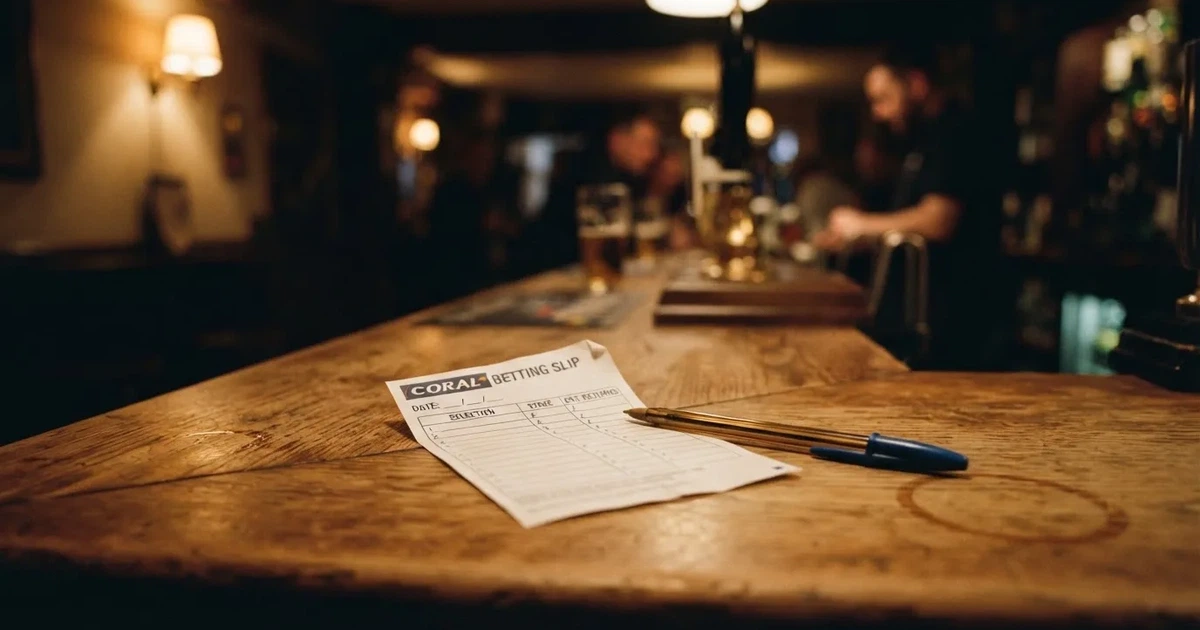
A betting exchange does not take the other side of your bet. That is the sentence the rest of this page keeps coming back to, because it is also where every commission claim, every commission rate and every lay bet the marketed screenshots show originate. Read the rest of this with that in mind.
Why a punter on the exchange behaves differently from one backing a bookie
Laying is what changes. At a bookmaker you back: you pick an outcome and pay your stake, and the firm pays you if you are right. At an exchange you still do that, but you can also lay. A lay bet wagers that an outcome will not happen — you become the position a bookmaker normally occupies. If the runner loses, you win the backer’s stake. If the runner wins, you pay the backer what you owe, and what you owe is your liability.

Liability is the worst-case figure. On a £10 lay at odds of 3.00 the liability is £20; on a £10 lay at odds of 10.0 it is £90. Most matches, most runners, most football scorelines: it is a number the slip tells you before you confirm, and it is the one figure the back-and-lay distinction forces a punter to learn on day one.
Exchanges can offer longer prices, and that comes from the same place. A bookmaker builds a margin into every price, and the margin is the overround: the slice the firm keeps on each market regardless of outcome. An exchange takes a commission on net winnings instead, so the prices on either side of a market track much closer to the true probabilities. The headline is the result of the ledger, not a generosity the exchange decided to show.
That difference does three jobs on this page. It drives the comparison between licensed exchanges and licensed bookmakers in section “How the underlay actually prices a market” below. It explains why each exchange sets its own commission rate and its own caps on odds and stakes rather than a single rule across the whole market. And it answers the question every punter reaches eventually — why a £10 lay at 3.00 can become a £20 hole in the wallet if the favourite obliges.
How the underlay actually prices a market
The margin of a market, the overround, lives in the sum of the implied probabilities the prices imply. For a two-way market at 1.90 and 1.90 the implied probabilities are 1 ÷ 1.90 and 1 ÷ 1.90 each, giving a payout share of roughly 105.3% on a true 100% book, or a margin of around 5%. It is not “5% of your stake”. It is the slice the firm keeps of every unit bet on the market, whatever the outcome, and the backer pays it the same way the layer does.
Use the figure that way. Five per cent of every £1 matched at those prices ends up in the operator’s cut; £1.05 is paid back as winnings across both outcomes combined. That is the arithmetic a punter needs before reading a commission rate, because a 5% margin on a market and a 5% commission on net winnings remove different sums from the same bettor’s pocket — the first always, the second only when the bet wins.
Why the band matters rather than the figure
The illustrative 1.90 / 1.90 pair above is the example, not a quoted price. A market at 1.95 / 1.95 carries a lower margin than the same market at 1.80 / 1.80, because the implied probabilities sum closer to the true 100%. Markets run hot or cold across a season, and an exchange’s quoted prices on Manchester City — Manchester United will look nothing like those on Accrington Stanley — MK Don. So this page is not giving a 5% answer for every exchange market. It is giving the formula the page uses, and the band the numbers fall into once inputs move.
That band lands between roughly 2% on the closest-priced match outright markets and roughly 8% on less competitive score markets at the busiest exchanges. The wider bookmaker markets run higher than that by a margin or two. Some specialist in-play books quote markets wider still. Whatever the spread, an exchange price is the comparable thing against which every “best odds” headline should be checked.
What the licence line on a betting site actually proves
Three checks separate a GB-licensed operator from everything else. They are mechanical, not subjective, and the public register is the whole test.
The Commission publishes a register that can be searched by business name, trading name, domain or account number, and a name on that register against a current licence is what “licensed” means. For a betting exchange the relevant category is the remote betting intermediary category — the licence that lets the platform connect back and lay bets between customers instead of taking the position itself. Matchbook holds this category alongside a general betting standard licence. Smarkets holds it as its remote betting intermediary licence. Betfair’s UK-facing operations run under PPB Counterparty Services Limited on a general betting standard licence; the exchange facility itself runs as a separate licensed activity inside the same group.
A few lines of detail the punter who actually does the check tends to come back with:
- Licensed operators include the major betting sites that take GB customers under their own licence, and a long list of smaller brands whose domains prove nothing about the licence behind them.
- Several brands can run under one licensee. Ladbrokes and Coral share ownership. Paddy Power and Betfair share Flutter Entertainment as parent. The licence is held at the operating-company level, not the brand level, and the register shows that.
- Both
.comand.co.ukdomains are in scope. The address bar is not a licence proof. - The minimum age is 18, and since 7 May 2019 every GB-licensed operator has verified the customer’s name, address and date of birth before the first deposit, and that includes any deposit that funds a free bet or bonus. Anonymous play at a licensed site is not a configuration that exists.
- Every GB-licensed online operator takes part in GAMSTOP. That is a condition of holding the licence, and it is the single protection the scheme offers a punter who has asked to be excluded.
- Credit cards are banned for gambling in Great Britain since 14 April 2020 (LCCP condition 6.1.2). The ban covers credit-card-funded e-wallet deposits, not debit cards or bank-based payments.
- Northern Ireland is outside the Gambling Act 2005 and has its own older law. A GB licence does not regulate Northern Ireland, and the site does not claim it does.
A single brand getting called “the only licensed one” never holds. The register lists many more operators than this page features.
Statute and jurisdiction: what the Gambling Act imposes, what it does not
The Gambling Act 2005 covers Great Britain. Since the Gambling (Licensing and Advertising) Act 2014 an operator whose remote facilities are used in Great Britain needs a Commission licence wherever the operator is based — a Curaçao or Gibraltar licence is not a substitute. Sections 33 and 36 of the Act are the ones to know: they set the offence of providing gambling facilities without the licence the Act requires. The summary conviction carries up to 51 weeks’ imprisonment, a fine up to level 5, or both; in Scotland the imprisonment arm runs to six months. The offence is aimed at the operator.

There is no statute a punter acts against for using an unlicensed site. That is the practical distinction, and it is exactly why the consequence framing takes over: an unlicensed punter loses every protection the licensed regime buys, and the loss is total.
The package a GB-licensed exchange delivers
- A verified identity before the first deposit, and source-of-funds questions at higher spend under the money-laundering rules.
- Mandatory GAMSTOP membership; a punter who has self-excluded cannot deposit, gamble or claim a bonus at the licensed brand.
- A financial vulnerability check applies once a customer’s deposits minus withdrawals pass £150 across a rolling 30 days. It is a public-record check, not an income check and not a credit reference check.
- Wagering requirements on bonuses are capped at 10x. A £10 bonus at 50x would need £500 of qualifying bets; under the cap, no more than £100 in turnover is required before withdrawal.
- Mixed-product promotions — for example “bet on football to claim free spins” — are banned since 19 January 2026.
- General Betting Duty on the operator’s gross profits stands at 15% under the current rate; a 25% remote rate takes effect from 1 April 2027 within that duty, while remote bets on UK horse racing and in-person betting stay at 15%. The duty is the operator’s tax, not the customer’s.
- The Commission can apply for court orders to compel ISP-level DNS blocking powers against unlicensed operators. Whether that regime is fully operational is not established; the Commission’s enforcement before a court order runs through cease-and-desist notices, search-engine referrals, and work with registrars, hosts and payment providers. It is disruption, not blanket blocking.
The package an unlicensed site does not deliver
No GAMSTOP membership. No Commission complaints route. No approved alternative dispute resolution if a withdrawal stalls. No 10x bonus cap. No £150 financial vulnerability check. No source-of-funds escalation. No British consumer redress if funds are withheld. Anything the unlicensed site promises in place of those — “we self-exclude”, “we run affordability checks” — is a house policy the site can rewrite tomorrow, and the only way to make the policy hold is the licence that turns it into a condition.
Honest framing, then, is the framing on this page: a licence buys the protections above, and an absence of a licence loses them. Neither side of that framing is “the safe choice” by default.
Safeguards that apply whatever the site
A punter who wants to bet less, who wants to stop or who wants a hard wall between themselves and a bookmaker’s app has a small set of routes the site must offer and a few the punter sets up themselves.
The mandatory route is GAMSTOP. Self-exclusion through GAMSTOP runs for six months, one year, five years, or five years with automatic renewal. Once a minimum period is set it stays in force for a further seven years unless the punter asks GAMSTOP to lift it. The scheme covers online sites and apps only — betting shops use a separate service.
Beyond GAMSTOP, every licensed site offers deposit limits, time-outs, reality checks, product-blockers (casino alone, slots alone) and self-exclusion on that brand alone. These are operator-level controls and they sit on top of the GAMSTOP registration. There is no state-set deposit or loss ceiling for betting in Great Britain — the ceiling a punter picks is the punter’s own.
Help is one tap further on. GamCare runs the National Gambling Helpline and is the first call when betting stops being a choice. GambleAware funds the wider information line and a network of treatment providers. NHS gambling clinics run across the country on referral. Gamblers Anonymous runs peer-led meetings. None of these is a betting site. They are healthcare and support channels, and they are the routes the regulator points a punter towards when the leverage a licensed site provides is not enough.
A punter who already has a GAMSTOP registration is excluded from every GB-licensed online brand for the chosen period. There is no licensed online route around that exclusion. The unlicensed route is outside the regime.
Crypto and anonymity at the exchange front door
There is no statutory rule for or against cryptocurrency deposits at GB-licensed betting sites, and a registered name allowing crypto payments is not on the public register for this page. Identity verification runs ahead of any deposit at a licensed site, and crypto-funded deposits are not a route around it — the same source-of-funds escalation applies at higher spend. The licensed exchanges here run on debit cards, bank-based payments and the usual e-wallets; an exchange describing itself as a “bitcoin betting exchange” without a GB licence is doing so outside the regime.
What a punter opting for a crypto-funded path at an unlicensed site trades is the entire licensed package — GAMSTOP, the affordability framework, the 10x bonus cap, the complaints route, the British consumer redress. Crypto-funded play does not give back anything the licensed regime took away; it only changes who holds the punter’s deposits.
How exchanges treat bonuses, free bets and promos
The licensed exchanges here do not run free-bet welcome packages in the way a licensed bookmaker does, because the exchange takes commission rather than a position. The bookmakers who sit alongside them — the licensed brands taking fixed-odds bets on the same events — do. The detail the page is built on, in the words of each operator’s own terms:
- Betfair Sportsbook runs in-play markets, a Bet Builder and free live streaming of UK and Irish horse racing and football in the app; its 90 Minute Payout market settles on the score at the end of regulation.
- Smarkets charges a 2% standard commission on eligible exchange bets; new customers have been offered 0% commission for 60 days with a minimum first deposit of £10.
- Matchbook runs a Bet Builder on football, multiples and in-play betting, and offers live streaming on horse racing and greyhound meetings.
- Midnite’s sports welcome offer gives £25 in free bets and 50 free spins when a new customer wagers £5 on pre-match odds of EVS (2.0) or greater within 14 days of sign-up. The free bets and spins stay valid for 7 days.
- BetTom’s sports welcome offer is 50% back as a free bet up to £50, with a matching 50% back up to £50 in free slot funds for casino play.
- Fafabet runs Best Odds Guaranteed on UK and Irish horse racing win and each-way bets from 9am on race days; the bigger of the early price or the starting price is paid.
- Bet600 runs Best Odds Guaranteed on horse racing the same way, on the bigger of the early or show price against the SP.
- DAZN Bet offers Cash Out (availability is not guaranteed; the bet stands when the feature is unavailable), a Bet Builder, daily bet boosts and in-play markets.
- Star Sports offers pre-event and in-play markets with Bet Boosts, Daily Specials and Weekend Enhanced Boosts, and in-play betting on football, horse racing, golf and US sports.
The shape a punter looks for is the qualifier: the qualifying odds, the qualifying bet, the qualifying date, the validity. A free bet is rarely a free bet in the everyday sense — the stake is usually not returned with the winnings, and what the offer is worth on average is a different and smaller figure than the headline.
Reading a wagering requirement against the cap
The 10x cap that has applied since 19 January 2026 is exactly what it sounds like: a £10 bonus needs no more than £100 of qualifying bets before withdrawal. A £50 bonus needs no more than £500. Anything above that is out of step with the cap, and any operator requiring it has either mis-stated the bonus or is operating outside the regime. The cap covers wagering requirements, not stake, deposit or withdrawal limits — those are the operator’s own rules.
Mixed-product promotions — a sports free bet that unlocks casino free spins, a slot bonus that demands a sports bet — are no longer lawful at all. The bonus a punter is offered at a GB-licensed brand sits inside one product vertical or it is not offered.
Apps, mobile betting and the in-pocket bookmaker
The licensed exchanges here ship native apps on iOS and Android. Smarkets, Matchbook and Betfair each list GB-store apps covering the exchange product itself. The licensed bookmakers alongside — Midnite, BetTom, DAZN Bet, Star Sports, Fafabet and Bet600 — list GB-store apps for their sportsbook product. The detail that matters on this page is the licence status at the app store, which is what an Apple or Google listing reflects, and the operator’s own product spread inside the app.
A Bet Builder feature is now standard at the licensed bookmakers. Fafabet, Bet600, Midnite and DAZN Bet all surface it on the home screen alongside in-play. Live streaming is present at Betfair (horse racing and football in the app), Fafabet (horse racing at minimum), and at the exchange-grade bookmakers on a sport-by-sport basis. Cash Out is present at the same set, with the same caveat everywhere: availability is not guaranteed, and the bet stands when the feature is unavailable.
The exchange apps are deliberately lighter. They are not doing the marketing the bookmaker app does, they are not running the casino tabs the bookmaker app has at the bottom, and they are not pushing price boosts the way a sportsbook home screen does. The exchange product is a price ladder, a matched-bets ledger and an in-running chart. What an exchange app asks the punter to bring is the price judgement; what it gives back is the commission figure and a clean record of every matched bet.
In-play betting and cash out at the licensed bookmakers
GB bookmakers run in-play markets as a standard feature, and the controls are the operator’s licence conditions and its customer-protection duties. None of that is “unrestricted in-play” as a legal conclusion — the in-play product sits inside the licence conditions and the operator’s own policy. What the page records is what each bookmaker surfaces.
DAZN Bet offers Cash Out on selected markets, with the standing caveat that availability is not guaranteed; an unmatched cash-out attempt leaves the bet standing. Star Sports surfaces in-play football, horse racing, golf and US sports. Betfair Sportsbook runs 90 Minute Payout markets across football alongside its standard in-play offering. Matchbook runs in-play markets on its exchange, and a Bet Builder at sportsbook level. None of those is a guaranteed price — every in-play market is its own book, and the prices move with play.
Cash out is a closing-out mechanism, and what it costs the punter is the edge the operator skims at the moment of cash-out. The feature closes a position early; it does not always close it at a fair price. A market on the lay side at an exchange gives the punter a way to lock a position without paying that skim — laying the selection at a chosen price. The two routes are not equivalent. Cash out is a button; laying at an exchange is a decision a slip confirms.
The architecture of an exchange-matched bet
Match a back bet of £10 on a horse at odds of 5.00 and the matched amount and the price sit on the bet record. A lay of £8 at odds of 6.00 matched against part of that back bet means a portion of the £10 has been placed at 5.00 in favour of the horse and a portion has been laid at 6.00 against the horse, with a different stake. Neither party is on the other side. The exchange is the connecting platform and it charges its commission on net winnings only.
Most exchanges hold the matched bets’ stake and liability on account as the bets run, settling only after a result or a market cancellation. The settlement figures flow through the backer’s record and the layer’s record, and the commission rate is applied at that point. That is why a losing lay bet incurs no commission in most cases — the punter’s liability is paid, no net winnings arise, and the exchange takes nothing. The same mechanic lets a trader at an exchange lock a price by opposing their own position later in the market, and the net P/L after commission is the realised return.
Betting exchanges generally limit odds to between 1.01 and 1000, and bet sizes are not capped at any single number — the size that the counterparty on the other side will accept is the size the market will match.
Exchange history, briefly
Flutter and Betfair merged in 2001, with Betfair chosen as the primary exchange; Flutter stopped trading in January 2002. The structure it left — customers as the counterparties, the platform as the connector, commission replacing margin — became the template every licensed exchange since has followed. Smarkets launched its platform into that template. Matchbook and Betdaq ran in parallel. The newer entrants arrived with the same model but different commission rates, different suspension policies, and a different relationship to the parent bookmaker behind them.
What the template does not do is take a position. That is the through-line on this page.
How to compare two exchanges like a punter
Three numbers a backer’s bet must live with, and a fourth the layer cares about most:
- The commission rate on net winnings. Smarkets’ headline rate is 2% on eligible exchange bets. Betfair and Matchbook publish their own rates. These are the rates at the moment a punter reads them; the published rate is what the punter is charged, and introductory rates ending inside 60 days become the headline rate that applies after the introductory window closes.
- The market coverage. Football, horse racing and tennis sit at every licensed exchange. Less mainstream sports — futsal, beach volleyball, European basketball, lower-division cricket — sit at some, not all. A punter’s specific market decides which exchange to use, not a generic “best exchange” ranking.
- The depth of the order book at the size the punter wants to match. A £10 back bets on a Premier League match has queues at every licensed exchange. A £5,000 back on the same match settles at whichever side of the book the larger lay has been posted. Matching depth is what the matched-bets ledger is really recording.
- The liability a layer faces at the price they lay. The slip tells the lay bettor before confirmation, and that is the worst-case figure on that bet. A 2% commission charged on the layer’s net winnings is the only commission to watch on that side.
A punter who keeps each of those figures in front of them before placing has the comparison this page is built around.
Comparison table — licensed betting exchanges and licensed bookmakers reviewed here
| Brand | Commission or offer posture | Licence — Gambling Commission account number and operating entity | What the operator’s own terms state on the relevant subject |
|---|---|---|---|
| Betfair | Exchange runs commission on net winnings; Sportsbook runs a margin | 39439 — PPB Counterparty Services Limited | Sportsbook offers in-play, Bet Builder, free live streaming on UK and Irish racing and football within the app, and a 90 Minute Payout market on football |
| Smarkets | 2% standard commission on eligible exchange bets; 0% for 60 days on new accounts (min first deposit £10) | 39173 — Smarkets (Malta) Limited | Standard commission figure stated on its own terms as 2% on net winnings of eligible bets |
| Matchbook | Exchange runs commission on net winnings; sportsbook runs a margin | 39504 — Triplebet Limited | Customers bet against other users; Bet Builder, multiples, in-play betting and live streaming of horse racing and greyhounds on the platform |
| Kalooki Sportsbook | Sportsbook offer — staking inside the operator’s own product | 57730 — Kalooki Sportsbook Limited | Operator states it is a GAMSTOP member and identity is verified before first deposit |
| BetTom | Sportsbook welcome offer — 50% back as a free bet up to £50, 50% back up to £50 in free slot funds | 64959 — Bet Tom Limited | Sports welcome offer stated on its own terms as 50% back as a free bet up to £50 |
| DAZN Bet | Sportsbook margin; Cash Out, Bet Builder and daily bet boosts | 48756 — DZBT Limited | Cash Out is offered; availability is not guaranteed and bets stand if the feature is unavailable |
| Midnite | Sportsbook welcome offer — £25 in free bets and 50 free spins on a qualifying bet of £5 at EVS (2.0)+ within 14 days | 101839 — Midnite Limited | Sports welcome offer stated on its own terms; in-play events, acca builder, popular accas and price boosts with maximum-stake limits on the home page |
| Star Sports | Sportsbook — Bet Boosts, Daily Specials and Weekend Enhanced Boosts; in-play across football, racing, golf and US sports | 9177 — Star Racing Limited | Sportsbook product stated on its own terms; in-play and pre-event markets on the home page |
| Fafabet | Sportsbook; Best Odds Guaranteed on UK and Irish racing from 9am on race days | 57385 — Taichi Tech Limited | Best Odds Guaranteed is paid on the bigger of the early price or the SP on UK and Irish racing |
| Bet600 | Sportsbook; Best Odds Guaranteed on horse racing | 44731 — Tyche Tech Limited | Best Odds Guaranteed is paid at the SP on horse racing when the SP is bigger than the early or show price |
This is what each operator’s terms file in public view, transcribed. The columns differ because the products differ — exchanges charge commission on net winnings, sportsbooks price markets on the margin, and the two ledgers are not interchangeable. Comparing them on the same row without naming which product the figure is from reads as a single-row ranking and it is not one.
What that comparison does and does not settle
The figure that moves the punter’s wallet is the one the table does not show: the difference between the commission rate on a winning bet at the exchange and the margin baked into the price at the bookmaker. The two cancel different slices of the punter’s return. A 2% commission on £100 of net winnings leaves £98 in the punter’s hand; a 5% margin on £100 of matched bets takes £5 of every £100 across both outcomes regardless of result. Whether the exchange is the better home for a particular bet depends on what the price at the bookmaker happens to be at that moment.
The other figure the table does not show is the qualifying condition on each offer. Midnite’s £25 in free bets demands £5 on pre-match odds of EVS (2.0) or greater within 14 days, with the free bets and spins valid for 7 days. BetTom’s 50% back as a free bet up to £50 is qualified by its own stake and market conditions. Smarkets’ 0% commission for 60 days is qualified by a minimum first deposit of £10. Those qualify the headline; they do not change the basic shape of an offer the operator publishes.
None of this turns the table into a recommendation. The page is not asking the punter to back Betfair over Smarkets or Midnite over DAZN Bet. It is asking the punter to compare what each brand’s terms file in public view before placing.
Operator-by-operator verdict
Each block below closes on the page’s own judgement of the brand, written from what the table and the terms above actually establish.
Betfair
The flagship of the licensed exchange market sits inside the Flutter group, and the licence behind the UK-facing sportsbook is held by PPB Counterparty Services Limited. The exchange product and the sportsbook product are two surfaces of the same group, and the punters who arrive at Betfair arrive through either one. In-play depth across football and UK and Irish racing is the strongest of any licensed exchange. Live streaming within the app covers horse racing and football at minimum, and the 90 Minute Payout market on football is the feature a side-bet punter uses most. The verdict rests less on a single feature than on the depth and the product spread: there is no specialist exchange feature Betfair does not run at the GB-licensed scale, and that gives the punter a single platform across both exchange and sportsbook bets.
Smarkets
A 2% standard commission rate is the headline, and new accounts have been offered 0% commission for 60 days with a £10 minimum first deposit. That pairing gives Smarkets one of the more competitive commission propositions the public terms file in view, and the rate is the figure a punter reads before matching anything. The platform runs the standard exchange product — back and lay, with a settled-on-net-winnings commission ledger — without the bookmaker-side surface the bigger groups ship. The verdict is price: at the standard rate, Smarkets is the exchange a punter who bet £200 a week on football would clear more of; at the introductory rate, it is the one a new account would start on before the rate moves.
Matchbook
Licensed as both a betting intermediary and a general betting standard operator under Triplebet Limited, Matchbook runs the exchange product with a Bet Builder on the sportsbook side, multiples and in-play markets, and live streaming on horse racing and greyhound meetings. The product mix is what separates it from the pure exchanges in the comparison. The verdict is two-purposes: Matchbook is the right home for a punter who wants the exchange product and the sportsbook product on the same platform with one login, and the cost is the operator’s combined commission and margin ledger.
Kalooki Sportsbook
Licence 57730 is held by Kalooki Sportsbook Limited, identity is verified before the first deposit, and the brand is a GAMSTOP member. The product surface is the fixed-odds sportsbook rather than the exchange, and what the page records is the licence, the verification and the GAMSTOP registration — the three checks a registered operator must satisfy at minimum. The verdict is suitability: a punter sorting the licensed sportsbooks by the rigour of their licence file alone would find Kalooki meeting each item the register sets, which is the floor, not the ceiling.
BetTom
The sports welcome offer is the headline: 50% back as a free bet up to £50, with a matching 50% back up to £50 in free slot funds. The licence is held by Bet Tom Limited on Commission account 64959. The verdict is on the offer shape: a sports free-bet welcome paired with a casino free-slot welcome is precisely the configuration the 19 January 2026 prohibition was aimed at — a mixed-product promotion. The terms a punter reads before claiming are the ones to watch. Where the offer is sports-only, the offer sits inside the regime; where the offer is mixed, the offer is no longer lawful.
DAZN Bet
Licence 48756, held by DZBT Limited. The product runs Cash Out, a Bet Builder, daily bet boosts and in-play betting, with the explicit DAZN caveat that cash-out availability is not guaranteed. The verdict is on the feature surface: DAZN Bet is the right home for a punter who trades markets in-play and is comfortable with cash-out being a button that may not be there at the moment of the request. The clear platform ruling “the bet stands if the feature is unavailable” is the part the terms file in view, and the punter who plans a cash-out around a feature their slip will not always have is the punter who reads it twice.
Midnite
Licence 101839, held by Midnite Limited. The home page lists in-play events, an acca builder, popular accas and price boosts with maximum-stake limits on each. The sports welcome offer gives £25 in free bets and 50 free spins when a new customer bets £5 or more on pre-match odds of EVS (2.0) or greater within 14 days of sign-up, with the free bets and spins valid for 7 days. The verdict is on the offer ceiling: the qualifying bet is small, the minimum odds modest, and what the offer costs the punter is the qualifying bet’s expected loss. At a market priced around 2.00 the £5 qualifying bet carries a margin cost in pence; the £25 in free bets and 50 free spins is the headline the offer advertises.
Star Sports
Licence 9177, held by Star Racing Limited, with a long record on the Commission’s books. The product runs pre-event and in-play markets, Bet Boosts, Daily Specials and Weekend Enhanced Boosts, and in-play betting on football, horse racing, golf and US sports. The verdict is on the boost frequency: a punter who actively hunts boosted-odds markets at the start of a matchday finds Star Sports among the more deeply populated lists. The cost of a boosted price is the place the margin bites less visibly, and the punter who captures the boost captures whatever incremental edge the boost publishes; the punter who reads a Daily Special without checking the price does not.
Fafabet
Licence 57385, held by Taichi Tech Limited. The headline product feature is Best Odds Guaranteed on UK and Irish horse racing win and each-way bets from 9am on race days, paid at the bigger of the early price or the starting price. The verdict is on the racing product: a punt on a morning price that drifts at the off is settled at the bigger figure with no claim, which is precisely the settlement the racing punter wants. The cost of that guarantee is the margin the sportsbook has priced in beneath the early price, and that margin is the figure that does the real work in the comparison.
Bet600
Licence 44731, held by Tyche Tech Limited. Best Odds Guaranteed on horse racing is paid at the SP when the SP is bigger than the early or show price. The verdict is on the same racing product: the race-day guarantee structure is the figure that matters, and what the punter gets is the SP where it is the bigger side. The cost is the margin on every other market on the sportsbook, and that margin is the comparison between Bet600 and the rest of the table.
Predictions and systems at an exchange, and what they really cost
A “system” in exchange terms is a staking pattern — a sequence of back and lay bets with a stated bankroll, a stated target and a stated rule for stopping. The published examples run from “lay the favourite in-running” through “back / lay a 0-0 scoreline market” to “Dutch the book at all three outcomes across two bookmakers”. Each one looks elegant on screen. None of them changes the fact that every matched bet takes a commission bite on net winnings, every matched bet sits inside a margin even if the exchange’s own margin is small, and a stop-loss rule is the difference between a plan and a hope.
Tipping services that package their selections through an exchange do not change that, either. They are a stream of selections from someone whose record the punter has paid to see. The selection is a price call. The exchange records it as a matched bet and charges the commission. The punter’s edge is whatever the punter’s selection brings beyond what the price already incorporates, before the commission rate is charged.
What a punter who treats a “system” as a probability argument loses sight of is the variance. A 2% edge over many bets compounds slowly, and a single bad run at a 2% edge runs longer than a punter expects. Most published systems are not edging — they are patterns that look like edging, and the punter who follows the rule captures what the rule produces, which is whatever the price and the commission leave.
Frequently asked questions
What is a betting exchange and how does it differ from a bookmaker?
A betting exchange is a marketplace where customers bet against each other on the outcomes of discrete events; the platform itself is not a party to the bets. A bookmaker takes the other side. The exchange takes a commission on net winnings; the bookmaker takes a margin built into every price.
What is the difference between a back bet and a lay bet?
A back bet wagers that an outcome will occur; a lay bet wagers that it will not. A layer takes the position a bookmaker normally occupies, and the liability on a lay bet is the worst-case figure, shown on the slip before the bet is placed.
How is a Gambling Commission licence checked?
The Commission’s public register can be searched by business name, trading name, domain or account number. The brand or domain appearing on the register against a current licence is what “licensed” means. The register is the whole test; there is no equivalent short cut.
How is the return on a bet worked out from the stake and the odds?
The return on a winning single bet is the stake multiplied by the decimal odds. Net profit is the stake multiplied by the odds minus 1. For a combination bet the odds of each leg multiply into one combined price, and the stake is multiplied by that combined price to give the return.
How is the bookmaker’s margin visible in the odds?
For a market the implied probability of each outcome is one divided by the decimal odds. The sum of those implied probabilities above 100% is the overround, and the margin is that share of every unit bet on the market the operator keeps. At 1.90 / 1.90 the implied probabilities sum to roughly 105.3%, and the margin is therefore roughly 5%.
What does “exchange-only” mean for the punter’s protection?
A betting exchange holds a Commission licence and is subject to the same regime as a sportsbook, with the betting intermediary category replacing the general betting standard category. The protections — verification before deposit, GAMSTOP membership, the 10x bonus cap, the £150 financial vulnerability check — apply to the licensed exchange’s online product the same way they apply at a sportsbook.
Which payment methods are usable at a GB-licensed exchange?
The register does not list permitted payment methods. The licensed exchanges on this page run on debit cards, bank-based payments and the usual e-wallets. Credit cards are banned for gambling in Great Britain, including credit-card-funded e-wallet deposits.
Betting sites & exchanges – Basketball betting
Content created by the «Basketball betting» team
