
The Real Cost of Betting With Apple Pay at UK Bookmakers
 Available in US
A bookmaker that advertises Apple Pay as a deposit method gives you exactly one thing on day one: a wallet-funded way to move money from your bank card into a betting account without typing the long number in. It does not give you a fee waiver, a faster withdrawal or a bigger bonus. Those are earned or refused in the operator’s own terms, and the gap between the marketing word and the binding condition is the topic this page is built around. Across ten Gambling Commission-licensed brands that take Apple Pay, the most useful question to ask is not “which accepts Apple Pay?” but “which one costs least per pound staked, pays back fastest, and saddles the welcome offer with the lightest turnover?”. The answer turns on three numbers that the Commission’s public register does not show — minimum deposit, withdrawal route and time, wagering multiple — and on one rule it does: the line in the Licence Conditions and Codes of Practice that has banned credit cards for gambling since 14 April 2020.
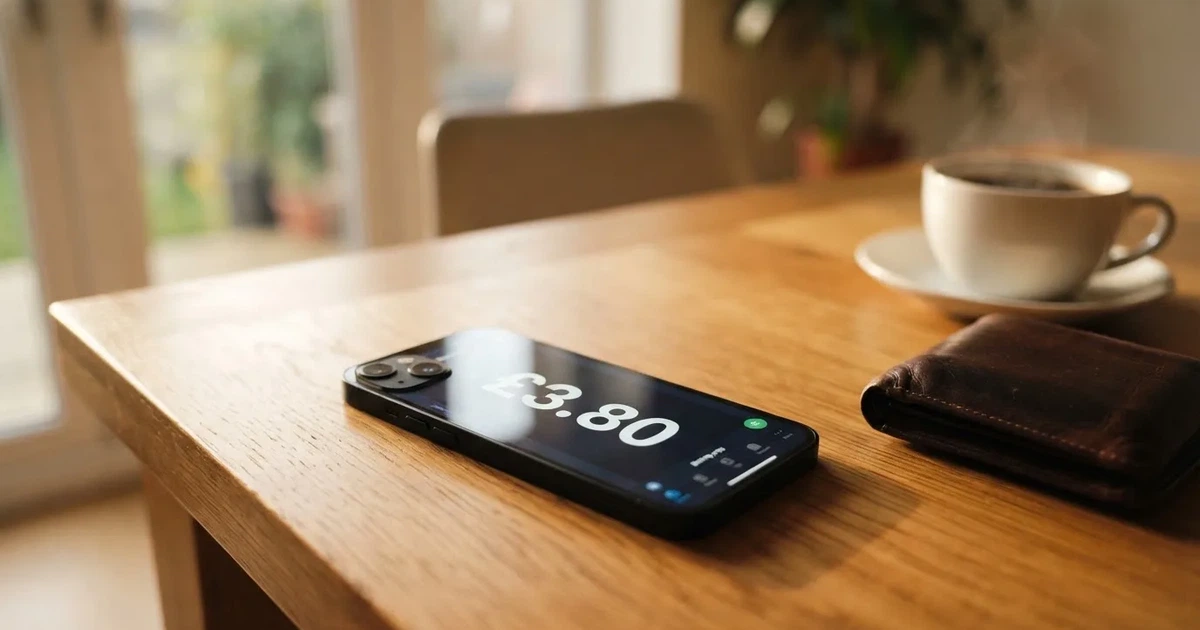
This page ranks the ten featured operators on that cost basis, walks through the British framework that shapes every figure quoted, and closes with the safer-gambling and payments detail a reader needs before opening any account. Sources were verified against the Gambling Commission’s public licence file and the operators’ own help documentation on 27 October 2026. best-betting-sites-with-apple-pay-hero
What “Apple Pay at a Bookmaker” Actually Means
Apple Pay is a wallet, not a card issuer. When a bettor authorises a deposit at a betting site, the bookmaker’s cashier receives a tokenised device number and a one-time dynamic security code generated for that transaction; the actual debit or credit card number never leaves Apple Pay’s vault, and the card’s own bank handles the payment as if the tap had happened on a shop counter. In Great Britain, where the Gambling Commission has banned credit-card gambling outright, the practical consequence is that an Apple Pay deposit funded from a debit card is permitted and one funded from a credit card is not — even if the credit card sits happily inside Apple Pay for supermarket purchases. Bookmakers’ cashier pages enforce this by routing Apple Pay through the card network and declining the transaction when the underlying card is a credit one, so the bettor never sees the rejection in most cases, but it remains the bettor’s responsibility under LCCP condition 6.1.2.

Two more mechanics matter for cost. First, Apple Pay’s authentication step — a double-click of the side button on a Face ID iPhone, a double-click of the Home button on Touch ID models, or a device passcode on older ones — runs in milliseconds and adds nothing to the deposit time, so the cashier’s advertised “instant” claim usually holds. Second, withdrawals do not return to Apple Pay in most cases: once a deposit token is consumed, the operator pays back to a verified bank account, a PayPal balance or an alternative card, and the Apple Pay path is one-way for almost every brand on this page. That asymmetry is the single most expensive surprise a new bettor meets.
best-betting-sites-with-apple-pay-fundamenta
The British Legal Frame Around Every Figure Below
Three rules determine the shape of every number on this page, and none of them are optional.

The Gambling Act 2005 covers Great Britain — England, Scotland and Wales — and any operator whose remote facilities are used in Great Britain needs a Gambling Commission licence wherever it is based. The Gambling (Licensing and Advertising) Act 2014 closed the previous loophole that let offshore brands serve British customers from a Malta or Curaçao licence alone. A bookmaker without an entry on the register may be reachable by domain name from a London flat, but it is operating illegally at the point of consumption; the offence under section 33 of the Act is aimed at the operator, not the customer, but the customer loses every safeguard the Act puts in place.
Identity is verified before the first deposit. Since 7 May 2019, name, address and date of birth must be confirmed before a customer can deposit or gamble — including with a free bet or bonus. Anonymous play is not a feature of any GB-licensed site, and any brand promising “no verification” or “no KYC” while sitting on a British register is misrepresenting itself. The Commission’s financial vulnerability check, in force from 30 August 2024 and triggered from 28 February 2025 when net deposits exceed £150 in a rolling 30 days, runs a public-record search rather than a credit reference check and is a licence condition, not an opt-in.
Bonus terms are capped at 10x wagering on bonuses since 19 January 2026, and mixed-product promotions — an offer that requires gambling on two or more product types to clear — are banned outright. A £10 bonus with a 50x wagering requirement, common in 2024, is no longer licensable in Great Britain; the worst a British bettor should see today is £10 of bonus tied to £100 of qualifying bets, and any offer advertising more than that is either from an unlicensed brand or breaking its licence conditions. Free bets without a wagering requirement sit in a grey zone that research has not pinned down; the ten featured brands describe theirs as “free bets” in the marketing and as “stake-not-returned” bets in the small print, which is the same thing.
Responsible Gambling Tools Every Featured Brand Must Offer
The Commission’s social responsibility code does not leave safer gambling to goodwill. Every brand reviewed here is a GAMSTOP member by licence condition, and GAMSTOP self-exclusion — minimum six months, up to five years with auto-renewal — is the single most effective block a bettor in trouble can put on themselves, because it applies across all of them at once. Deposit limits, product restrictions, time-outs and self-exclusion through My Account are mandatory; Star Sports’ My Account surface exposes deposit limits, Play Break and self-exclusion in the same place, which is the layout a reader should expect from any reviewed brand.
Help when the limit has already been crossed sits outside the operator. GamCare runs the National Gambling Helpline; GambleAware funds treatment and education; the NHS runs gambling clinics in several regions; Gamblers Anonymous runs meetings. These are not marketing channel choices and they are not affiliate links — they are the route out, and they sit alongside the operator’s own tools rather than replacing them. A bookmaker’s safer-gambling page is informative but it is not the place to start when the question is “have I lost more than I should?”.
Crypto, Anonymity and What Apple Pay Is Not
Apple Pay is a fiat wallet tied to a real bank card in a real name. It is not pseudonymous, it is not a crypto rail, and it does not interact with a blockchain at any step of a deposit or a withdrawal. A search for “anonymous betting with Apple Pay” leads to a contradiction in terms: the Commission’s identity-verification rule means a GB-licensed brand cannot onboard an anonymous customer regardless of payment method, and Apple Pay’s tokenisation is a privacy feature against the merchant’s database, not against the regulator’s identity file.
For readers asking about crypto betting sites that take Apple Pay as a top-up, the honest answer is that the two ecosystems rarely overlap inside a single GB-licensed brand. Crypto-native sportsbooks typically accept Apple Pay at the cashier as a fiat on-ramp to buy a token balance, but they operate outside the British regime, and the loss of protection that follows is total — no GAMSTOP coverage, no Commission complaints route, no approved dispute-resolution body, no recourse if funds are withheld, and no 10x bonus cap. That is the trade-off in one line: convenience on the deposit side, everything else off.
Bonuses and Free Bets: How the 10x Cap Changes the Picture
Before 19 January 2026, a British bettor comparing welcome offers was reading 50x, 30x and even higher wagering requirements and doing the arithmetic to see which one cost least. The 10x cap ended that comparison. Coral and Unibet, the two featured brands with a published welcome offer, now structure their “Get £40 in Free Bets when you bet £20” promotion on the new ceiling: deposit and bet £20 at minimum odds of 2.0 (1/1), receive £40 in free bets within seven days, expire seven days after issue. The 10x cap applies to bonuses, and a free bet with no wagering condition is treated separately — the headline “free £40” still costs the bettor £20 of real-money stake before it lands, and the free-bet stake is not returned on a win.
The arithmetic on a free bet whose stake is not returned is straightforward. A £40 free bet staked at odds of 3.00 returns £80 in profit (stake × odds, minus the £40 stake that disappears); at odds of 2.00 it returns £40; at odds of 1.50 it returns £20. The free bet’s expected value, before any market margin is taken into account, is the free-bet amount multiplied by the difference between the price and one, divided by the price. On a market with a 5% margin — typical for an English Premier League 1X2 line — the expected value shrinks further, and a £40 free bet becomes worth closer to £15 of expected profit than £40 of headline value. Coral and Unibet’s offers are typical of the new British ceiling rather than generous within it; the cap has flattened the welcome space, and a reader comparing the two is comparing minutiae rather than tiers.
DAZN Bet and Bet Ahoy, the two featured brands with a non-free-bet welcome structure, illustrate the other half of the post-cap market. DAZN Bet’s deposit minimums run £5 by debit card, Apple Pay, Paysafecard, Trustly and Skrill and £20 by PayPal, with no processing fees; Bet Ahoy layers a 10% Acca Bonus up to £1,000, Sub-Cover for player substitutions, Best Odds Guaranteed on UK and Irish horse and greyhound racing up to £100, and Double Result payout on UK and Irish racing. These are product features rather than sign-up giveaways, and the cost they carry is the operator’s margin on the markets they apply to — an acca bonus of 10% on a four-fold at a 6% overround pays out less than the headline figure suggests once the leg prices compound.
Payments, Payout Speed and the Asymmetry No One Flags
Apple Pay deposits land instantly. The cashier screen shows the wallet button, the bettor authenticates with Face ID or a passcode, the bookmaker’s payment processor accepts the token, and the betting balance updates within seconds. The cost of that speed is zero in fees at every featured brand: no operator on the Gambling Commission’s register that this page has checked charges a deposit fee for Apple Pay, and the tokenisation step does not introduce one because Apple’s cut is paid by the issuer rather than the merchant.
Withdrawals go a different route. QuinnBet accepts debit cards, Apple Pay and OpenBanking, plus Revolut cards, for deposits and does not take Skrill or Neteller — and the withdrawal side of the cashier reflects that by paying back to the same method where the operator can. Fitzdares pays Visa withdrawals the same day and Mastercard withdrawals within 48 hours; bet365 funds accounts by debit card, PayPal and Apple Pay for deposits and runs the standard GB route for withdrawals. NetBet’s app supports Instant Payments to bank, Apple Pay, PayPal and debit card, and Face ID or Touch ID login, which is the closest the featured set comes to a round-trip Apple Pay experience.
The asymmetry is the cost a reader is most likely to misjudge. A bettor who deposits £100 via Apple Pay, wins £250 and asks for the £250 back via Apple Pay will find that the operator pays to a verified bank account, a PayPal balance or a debit card instead — and that the time to clear is whatever the destination method’s settlement window allows. Fitzdares’ same-day Visa claim is the upper end of the featured set; Coral’s published withdrawal window sits within the broader Entain group standard. A bettor planning to withdraw weekly should look at the destination method, not at the deposit method, when comparing operators.
best-betting-sites-with-apple-pay-statute
The Ten Featured Operators, Ranked on Cost to the Reader
The ranking is not a recommendation. It is a cost ranking: deposit minimums first, then welcome offer terms, then withdrawal speed and method, then product features that change the effective margin a reader pays. Every brand holds a Gambling Commission remote licence, which is the entry ticket, and the order below starts with the lowest-friction brand to fund and ends with the heaviest welcome structure to clear.
BoyleSports — Early Payouts Beat the Standard 1X2 Margin
BoyleSports operates under Gambling Commission account 39469 (remote general betting standard, real events), with Boylesports Enterprise as the licence holder. The headline product feature is the early-payout rule: football bets pay out as winners when a team goes two goals ahead, basketball bets at twenty points ahead, rugby and NFL at sixteen points ahead, and boxing after a knockdown. The cost a reader pays for that insurance is that the early-payout price BoyleSports offers is shorter than the standard match-result price, and the margin on the early-payout line is wider than on the equivalent full-time market. BoyleSports accepts Apple Pay at the cashier alongside the standard debit and credit route; the licence entry is the test of its standing.
BoyleSports suits the reader who bets on football, basketball, rugby, NFL or boxing and values the certainty of an early payout over the price of waiting for the final whistle. The cost is real but contained — the early-payout line is the cheapest of the insurance-style products in the featured set, and the licence standing is clean. The verdict: a competent insurance product for the bettor who values early settlement, and a worse-than-average 1X2 price for the bettor who does not.
Star Sports — Safer-Gambling Layout Done Properly
Star Sports operates under Gambling Commission account 9177 (remote general betting standard, real events), held by Star Racing Limited. The deposit limits, Play Break facility and self-exclusion are exposed in My Account in the same surface, which is the layout the Commission’s social responsibility code expects and the layout several competitors still split across settings and help pages. Star Sports’ app is available in the UK and Ireland; the cashier takes Apple Pay alongside the standard GB route, and the licence entry is current.
Star Racing Limited is a smaller operator than the rest of the featured set, and the product surface reflects it: a tighter sportsbook, fewer markets per event, and a withdrawal process that runs inside the parent group’s settlement window. The cost a reader pays is the narrower menu, and the benefit is a safer-gambling surface that puts the tools where they need to be. Star Sports offers a safer-gambling surface that puts the tools exactly where the bettor needs them, making it a reliable choice for the cautious user.
QuinnBet — Open Banking Plus Apple Pay, No E-Wallet Indirection
QuinnBet operates under Gambling Commission account 61011 (remote general betting standard, real events), held by QuinnBet (Gibraltar) Limited. The cashier takes debit cards, Apple Pay and OpenBanking, plus Revolut cards, and does not take Skrill or Neteller for deposits. The e-wallet exclusion is meaningful: a bettor planning to deposit via Neteller or Skrill is redirected to OpenBanking, which routes through the bettor’s bank app and adds an authentication step. The benefit is a tighter cashier, lower fraud profile, and faster payouts to verified bank accounts.
QuinnBet’s licence is held by a Gibraltar-incorporated company, which is permitted under the post-2014 regime so long as the remote facilities are used in Great Britain and the licence is current. The licence entry on the Commission’s register is the test; the corporate structure is a footnote. The verdict: a clean cashier for the reader who banks by app, and a deliberate exclusion of the e-wallet indirection that costs other brands their payout speed.
Coral — The Entain Welcome Offer at 10x Ceiling
Coral operates under Gambling Commission account 54743 (remote general betting standard, real events, and remote betting intermediary), held by LC International Limited. The sports welcome offer is “Get £40 in Free Bets when you bet £20”: deposit and bet £20 or more at minimum odds of 2.0 (1/1), receive £40 in free bets within seven days, expire seven days after issue, for new GB customers who opt in. The free-bet stake is not returned on a win. LC International also runs Ladbrokes, so the cashier, the safer-gambling tools and the licence entry are shared across both brands.
The cost of the Coral welcome offer at the new 10x cap is the £20 of real-money stake the bettor must risk before the £40 of free bets lands. At minimum odds of 2.0 the qualifying bet is a coin-flip or close to it; at higher odds the free bet is unlocked faster, and at lower odds the bettor may want to choose a different qualifying market. The verdict: a competent welcome offer at the post-2026 ceiling, and the right pick for a reader who already has a Ladbrokes account and values the shared cashier.
Fitzdares — Same-Day Visa, Mastercard Within 48 Hours
Fitzdares operates under Gambling Commission account 400 (remote general betting standard, real events), held by Fitzdares Limited. The cashier takes Apple Pay, Mastercard and Visa, and the published withdrawal times are same-day for Visa and up to 48 hours for Mastercard. The same-day Visa claim is the upper bound of the featured set; a bettor who needs a withdrawal by close of business should pick Visa and Fitzdares over any combination that pays out in 48 hours.
Fitzdares runs a smaller sportsbook than the major-brand entries, and the menu reflects it: a tighter horse-racing product, a curated football line, and fewer in-play markets than bet365 or Coral. The cost a reader pays for the payout speed is the narrower menu; the benefit is that the withdrawal is genuinely same-day rather than “up to 24 hours” in marketing and 36 hours in practice. Fitzdares provides the payout speed that major brands lack, serving as a genuinely same-day solution for the weekly bettor.
Unibet — Same £40 Welcome Offer, Slightly Tighter Surface
Unibet operates under Gambling Commission account 45322 (remote general betting standard, real events), held by Platinum Gaming Limited, Gibraltar. The brand has operated since 1999, and the UK site is the GB-licensed channel. The sports welcome offer is the same as Coral’s: “Get £40 in Free Bets when you bet £20”, with a deposit and sports bet of £20 or more at minimum odds of 2.0, free bets expiring within seven days, for new GB customers using a debit card or instant bank transfer. Unibet’s safer-gambling tools include deposit limits, a Player Profile test, product restrictions and self-exclusion, with live chat support and links to BeGambleAware, GamCare, GAMSTOP, Gambling Therapy and the BGC.
The Unibet verdict turns on product breadth and withdrawal speed rather than on the welcome offer, which matches Coral’s. The licensed operator is Platinum Gaming, a Gibraltar company, but the Commission account is current. 1. The top choice for the reader who values Unibet’s market depth alongside a Coral-equivalent welcome offer.
Bet Ahoy — Acca Bonus and Best Odds Guaranteed on Racing
Bet Ahoy operates under Gambling Commission account 100094 (remote general betting standard, real events), held by Bet Ahoy Ltd. The product features are the 10% Acca Bonus up to £1,000 on accumulator wins, Sub-Cover for player substitutions, Best Odds Guaranteed on UK and Irish horse and greyhound racing up to £100, and Double Result payout on UK and Irish racing. The cashier takes Apple Pay; the licence is current.
The acca bonus and the Best Odds Guaranteed are the two product lines a reader should price into the comparison. A 10% acca bonus on a four-fold at a 6% overround adds roughly 0.6% to the effective return; the Best Odds Guaranteed on racing pays out at the higher of the taken price and the starting price, which is genuinely free money on UK and Irish racing. Bet Ahoy offers a specific advantage for the racing and acca bettor that the broader-menu brands rarely match.
NetBet — Instant Payments and Face ID in the App
NetBet operates under Gambling Commission account 39170 (remote general betting standard, real events), held by Netbet Enterprises Limited. The app supports Instant Payments to bank, Apple Pay, PayPal and debit card, and Face ID or Touch ID login on supported devices. The cashier is one of the few in the featured set that supports true round-trip Apple Pay at the deposit stage with the same speed of authentication inside the app.
The Instant Payments rail to bank is the standout feature for a reader who plans to withdraw weekly. NetBet’s sportsbook sits in the middle of the featured set on menu breadth: narrower than bet365 or Coral, wider than Fitzdares or Bet Ahoy. NetBet is a strong contender for the app-focused user who demands rapid, biometric-authenticated banking.
bet365 — The Standard for Market Depth
bet365 operates under Gambling Commission account 55148 (remote general betting standard, real events), held by Hillside (UK Sports) ENC. The cashier funds accounts by debit card, PayPal and Apple Pay, and the app supports Face ID login on supported devices. bet365’s market depth — the number of markets per football match, the breadth of in-play events, the depth of player-prop lines — is the standard the rest of the featured set is measured against, and the menu on any other brand reads narrower because of it.
The cost a reader pays for bet365’s depth is the menu overhead: the cashier is wider, the in-play page is busier, and the safer-gambling tools sit further from the deposit button. The licence is current and Hillside is a long-standing British operator; the verdict turns on whether the reader values menu breadth enough to navigate the surface. bet365 remains the industry standard for depth, though the busier interface may not suit every bettor.
DAZN Bet — £5 Apple Pay Minimum, No Processing Fees
DAZN Bet operates under Gambling Commission account 48756 (remote general betting standard, real events), held by DZBT Limited. Deposits start at £5 by debit card, Apple Pay, Paysafecard, Trustly and Skrill and at £20 by PayPal, with no processing fees. The £5 minimum is the lowest in the featured set for the Apple Pay route and the lowest for the standard debit route; a bettor who wants to fund an account with a fiver and qualify a free-bet offer at minimum stake will find the lowest barrier to entry at DAZN Bet.
DAZN Bet’s product surface sits between a fullsportsbook and a curated one: a competent football line, a tighter in-play menu than bet365, and a narrower horse-racing product than Fitzdares or Bet Ahoy. The withdrawal side runs the standard GB route. DAZN Bet is the most cost-effective entry point for a reader who is comfortable with a mid-depth sportsbook.
The Comparison at a Glance
The table below carries the four matters that decide cost to the reader: the licence entry on the Commission’s public register, the entity that holds it, what the operator’s own terms state about Apple Pay at the cashier, and the headline welcome or product feature a reader would price into the decision.
| Brand | Gambling Commission remote licence | Licence holder | Apple Pay at the cashier | Welcome offer or product feature |
|---|---|---|---|---|
| BoyleSports | 039469-R-319383-025 (account 39469) | Boylesports Enterprise | Accepted as a debit-card-funded wallet | Online £5 minimum deposit; early payouts on football (2 goals ahead), basketball (20 points), rugby and NFL (16 points), boxing (knockdown) |
| Star Sports | 009177-R-104555-019 (account 9177) | Star Racing Limited | Accepted as a debit-card-funded wallet | My Account exposes deposit limits, Play Break and self-exclusion in one surface |
| QuinnBet | 061011-R-335683-004 (account 61011) | QuinnBet (Gibraltar) Limited | Accepted; Skrill and Neteller not accepted for deposits | Deposit via debit card, Apple Pay, OpenBanking, Revolut |
| Coral | 054743-R-330863-014 (account 54743) | LC International Limited | Accepted as a debit-card-funded wallet | Get £40 in free bets when you bet £20 at minimum odds of 2.0; free bets expire 7 days after issue |
| Fitzdares | 000400-R-103839-030 (account 400) | Fitzdares Limited | Accepted as a debit-card-funded wallet | Apple Pay, Mastercard, Visa accepted; Visa withdrawals same-day, Mastercard up to 48 hours |
| Unibet | 045322-R-324275-019 (account 45322) | Platinum Gaming Limited | Accepted as a debit-card-funded wallet | Get £40 in free bets when you bet £20 at minimum odds of 2.0; free bets expire 7 days after issue |
| Bet Ahoy | 100094-R-341742-003 (account 100094) | Bet Ahoy Ltd | Accepted as a debit-card-funded wallet | 10% Acca Bonus up to £1,000; BOG on UK and Irish horse and greyhound racing up to £100; Double Result on UK and Irish racing |
| NetBet | 039170-R-319343-032 (account 39170) | Netbet Enterprises Limited | Accepted as a debit-card-funded wallet | Instant Payments to bank, Apple Pay, PayPal, debit card; Face ID / Touch ID login |
| bet365 | 055148-R-331498-002 (account 55148) | Hillside (UK Sports) ENC | Accepted as a debit-card-funded wallet | Debit card, PayPal, Apple Pay accepted; Face ID login on supported devices |
| DAZN Bet | 048756-R-327274-019 (account 48756) | DZBT Limited | Accepted as a debit-card-funded wallet | £5 minimum deposit via Apple Pay, debit card, Paysafecard, Trustly, Skrill; £20 via PayPal; no processing fees |
Where the Data Stops
Research carries no figure for the market margin a reader pays on each operator’s 1X2 football line, no wagering multiple for any free bet beyond the 10x cap that the Commission has imposed, no minimum qualifying odds beyond Coral and Unibet’s published 2.0, and no cap on free-bet winnings for any brand. The arithmetic in the welcome-offer section above uses a 5% margin on an illustrative Premier League 1X2 line; the real margin at Coral or Unibet on the match the bettor picks is whatever the operator’s price shows at the time of bet, and a bettor who wants the real number should check the betting slip before staking. The £150 financial-vulnerability-check trigger is a Commission licence condition and applies at every featured brand; whether the check trips on a particular account depends on the bettor’s own deposit and withdrawal history.
The ten brands are not the only GB-licensed operators that take Apple Pay. Spreadex, regulated by the FCA for spread betting and by the Gambling Commission for fixed-odds betting, takes Apple Pay at the cashier and runs both products under the same brand; Kalooki Sportsbook, operated by Kalooki Sports Book Ltd (company number 12938274) under account 57730, is a GAMSTOP member and takes the standard GB payment route. Midnite, licensed under account 101839, accepts Visa, Mastercard, Apple Pay, Google Pay and Trustly, and links to GambleAware, GamCare, GamStop and BetBlocker. These three are not in the cost ranking because the cost ranking is built on the ten brands with the deepest published payment and welcome terms.
The Betting Tax Question
A British bettor pays no tax on betting winnings. General Betting Duty is the operator’s tax, currently 15% on gross profits, and from 1 April 2027 a new remote betting rate of 25% applies within it while UK horse racing, self-service betting terminal bets, pool betting and in-person betting stay at 15%. Until that date the remote rate is unchanged, and whether operators pass duty on through odds is not established. The bettor sees only the published price; the duty is a line on the operator’s accounts return. A professional gambler — a small minority, defined by HMRC rather than by self-description — should ask HMRC or an adviser, because the personal position changes once trading activity crosses into a trade.
This is general information, not tax advice. The Commission’s own levy on operators is a separate charge and does not appear on the betting slip.
What Apple Pay Costs the Operator, and Why That Matters to You
Tokenisation costs the operator its margin on interchange fees that a standard card transaction would have carried, but Apple does not charge a merchant fee for an in-app Apple Pay transaction in most markets, and the network cost is borne by the issuer rather than the bookmaker. The net effect is that an Apple Pay deposit costs the operator roughly the same as a debit-card deposit and less than a credit-card deposit, which is why the cashier does not pass a fee on. The bettor’s cost is therefore not in the deposit fee but in the lost opportunity to withdraw back to Apple Pay: the return journey runs to a debit card, a verified bank account or a PayPal balance, and that destination method’s settlement window is what determines how fast the money comes home.
A bettor planning to deposit and withdraw inside the same week should look at the destination method and its published window, not at Apple Pay itself. Fitzdares’ same-day Visa claim, NetBet’s Instant Payments rail, and QuinnBet’s OpenBanking route are the three fastest routes in the featured set; Coral and Unibet run the broader Entain and Platinum Gaming settlement windows; bet365 and DAZN Bet run their own.
Offshore Operators and What the Loss of Protection Costs
A bookmaker without a Gambling Commission licence is reachable from a British flat, and the offence under section 33 of the Gambling Act 2005 is aimed at the operator rather than the customer. The cost to the customer is the loss of every safeguard the Act puts in place: no GAMSTOP coverage, no Commission complaints route, no approved dispute-resolution body, no British consumer redress if funds are withheld, no 10x bonus cap, and no £150 financial-vulnerability check. Whether the customer is “breaking the law” by betting on such a site is a separate question research has not pinned down; what is established is that the bettor who does so has no British route back if the operator withholds funds.
Enforcement runs through cease-and-desist notices, search-engine referrals and work with registrars, hosts and payment providers; the Commission has been given, or is about to receive, court-order DNS blocking powers. None of this is a block on the bettor’s own internet connection today, and a reader comparing operators should treat the licence entry as the test of who holds one rather than as a guarantee of who has been blocked.
A Reader’s Pre-Bet Checklist
The reader who is about to fund an account with Apple Pay should run through four checks before the first deposit. The licence entry on the Commission’s public register, searched by business name or domain, is the test of standing; the cashier’s published minimum deposit is the test of the entry cost; the welcome offer’s minimum odds, expiry and free-bet stake treatment are the test of the offer’s real value; and the withdrawal method and its published window are the test of how fast the money comes home. A £5 minimum at DAZN Bet is cheaper to enter than a £10 minimum anywhere else; a £40 free bet at Coral or Unibet is worth roughly £15 of expected profit at a typical Premier League margin; a same-day Visa withdrawal at Fitzdares is the fastest in the featured set.
The reader who is in trouble — who has deposited more than £150 net in a rolling 30 days and seen the vulnerability check trip, or who has crossed the budget they set themselves — should stop at the cashier, register with GAMSTOP for the minimum six months, and call the National Gambling Helpline via GamCare. The safer-gambling tools at every featured brand are the first step, not the last.
Where Apple Pay Sits in the British Payments Landscape
Apple Pay launched on 20 October 2014 with US-issued payment cards only; UK card support followed on 14 July 2015. The US Consumer Financial Protection Bureau finalised a rule in November 2024 bringing large nonbank digital wallet operators, including Apple Pay, under bank-like federal oversight, and the European Commission opened an investigation in 2020 into whether Apple abused its control of iPhone NFC hardware to block rival payment apps’ access to contactless payments. None of this changes the British bettor’s deposit path; the Commission’s ban on credit-card gambling since 14 April 2020 is the binding rule at the cashier, and a debit-card-funded Apple Pay deposit is permitted while a credit-card-funded one is not. A reader who carries both card types in Apple Pay should check which card the wallet picks by default at the cashier and switch it where the rule matters.
Frequently Asked Questions
Can you bet against Apple Pay?
Apple Pay is a deposit and authentication rail, not a betting side. A bettor who wants to “bet against” Apple Pay is asking to lay a selection at a betting exchange, and the answer is that the wallet is irrelevant to which side of the bet the bettor takes. The British betting exchanges — Betfair, Smarkets, Betdaq — run under a remote betting intermediary licence, which is a different category from the remote general betting standard licence the ten featured brands hold. Apple Pay at an exchange cashier is permitted under the same debit-card rule; a credit-card-funded Apple Pay deposit is declined at the cashier regardless of the betting side.
Can you lose on Apple Pay betting?
Yes, in the same way a bettor can lose on a debit-card-funded bet, which is to say with the same probability and the same payout structure. The wallet does not change the odds, the margin, or the outcome of the event; it changes only the speed of the deposit and the method of the withdrawal. A £10 bet at odds of 3.00 returns £30 on a win and £0 on a loss, regardless of whether the £10 came from Apple Pay, a debit card tap or a bank transfer. The only way a bettor’s loss differs by payment method is in the time it takes to deposit the next stake, which is faster with Apple Pay than with a bank transfer.
Can you use Apple Pay in betting shops?
Apple Pay works at any contactless payment terminal, and a betting shop counter with one will accept the wallet in the same way a supermarket checkout does. The bettor still needs to be over 18, still needs to verify identity on a first visit to a new shop, and still pays in cash-equivalent at the counter. The shop-side self-exclusion scheme is separate from GAMSTOP and runs through each bookmaker’s own shop system, so a GAMSTOP registration does not block a same-day visit to a betting shop on a different operator’s account. The Commission’s ban on credit-card gambling applies in shops as well as online.
Which payment methods do GB-licensed bookmakers accept, and are credit cards allowed?
Every featured brand accepts debit cards and Apple Pay at the cashier, and several accept PayPal, OpenBanking, Trustly, Revolut and Paysafecard on top. Credit cards have been banned for gambling in Great Britain since 14 April 2020 under LCCP condition 6.1.2, including credit-card-funded payments through an e-wallet — a bettor who funds a PayPal balance from a credit card and then deposits from PayPal to a bookmaker is still in breach of the rule. A reader who carries both card types should check the default card in Apple Pay before the first deposit, because the cashier’s decline message is the only signal the bettor will see.
From what age can bets be placed in Great Britain, and when is identity verified?
The minimum age is 18 across Great Britain, set by the Gambling Act 2005 and enforced by the Commission’s licence conditions. Identity — name, address and date of birth — is verified before the first deposit or bet, including with a free bet or bonus, since 7 May 2019. A financial vulnerability check runs from 30 August 2024 when net deposits exceed £150 in a rolling 30 days, with the public-record check live from 28 February 2025. Anonymous play is not a feature of any GB-licensed site; any brand promising “no verification” while sitting on a British register is misrepresenting itself, and a bettor who meets one should treat the licence entry as the test.
How can it be checked that a bookmaker holds a Gambling Commission licence?
The Commission’s public register is searchable by business name, trading name, domain or account number, and is the whole test of who holds a licence. The register entry lists the licence categories, the licence holder’s company name, and the trading names the licence is used under; several brands can run under one licensee (Ladbrokes and Coral under LC International, Paddy Power and Betfair under Flutter, for example). The domain extension proves nothing: licensed operators use .com as well as .co.uk. A reader who cannot find a brand on the register should not fund the account; a brand that is on the register but holds only a casino or a bingo licence should not be treated as a sports-betting operator.
Payments & apps – Basketball betting
Content created by the «Basketball betting» team
