
Best Betting Tipster 2026 — How to Read Tipsters, Find Value and Pick a Licensed Bookmaker
 Available in US
A “tipster,” in plain British betting vocabulary, is someone whose job is to call an outcome before it happens and to publish the call. The work beneath that is build a probability, sharpen it past the price the bookmaker offers, and stake the difference with discipline. Most tipsters work inside one sport. A few cover several. None of them knows the result, and no tipping service can guarantee one. The honest version is statistical, not prophetic: a tipster who gives 53 out of 100 winners at the right price turns a steady profit. A tipster who gives 53 winners at the wrong price loses money on volume. Everything else on this page is built from that distinction.
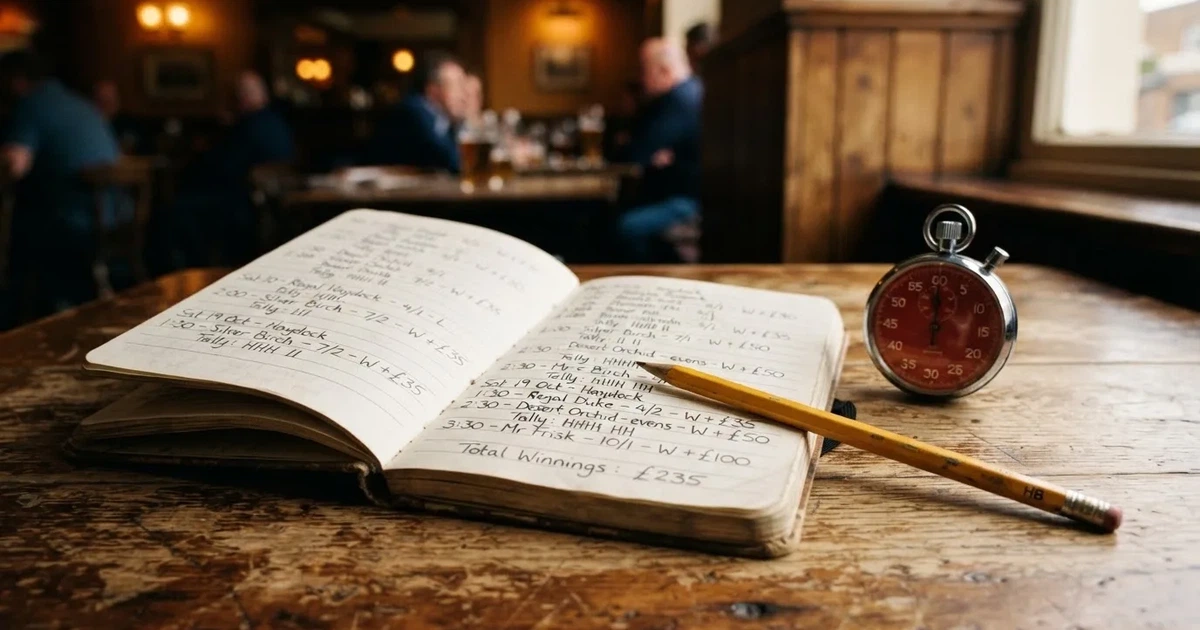
What follows is a working map for 2026, not a tip sheet. There are no picks, no predicted scorelines, no chosen teams. The page explains how a tip is constructed, what value really means, why the bookmaker’s margin sits inside every price, and where the operational limits of a UK-licensed sportsbook live. The UK frame matters: the Gambling Commission (UKGC) license, the 10x bonus cap that has been in force since January 2026, the national online self-exclusion register (GAMSTOP) that covers every GB-licensed site, and the credit-card ban that has been in place since April 2020 are all part of how a bettor reads a tip and an offer together.
The reader-facing piece: data current as of 27 October 2026, with Gambling Commission licence numbers cross-checked against the Commission’s public register.
What “Live” Brings to a Tipster’s Day
Live, or in-play, betting is the second half of an event. Tipsters who work in-play are reading momentum, scoreboard state, tactical changes, and the slow drift of prices — and writing fast. By definition they cannot publish a pre-match tip; their “tip” is a price-time claim: “this market is short” or “this price has drifted past where the model says it lives.” A punter following a live tipster is no longer reading a column, they are watching screens and making decisions between minutes.

The mechanics are simple. A GB-licensed sportsbook refreshes its prices continuously as the event runs. The refresh uses the same margin the pre-match market uses, so the comparison the tipster is making is *current price versus modelled current probability*, not price versus their morning estimate. That detail matters: a tipster who wrote a Liverpool to win at 2.10 three hours ago cannot say “still 2.10 in-play and still a value bet” without re-running the model. Most do not re-run; the price is the model’s output, not its input.
Where live tipsters earn their keep is on markets that move sharply and visibly. Total goals over/under at 1-0 at 60 minutes is a different question than total goals over/under at kick-off, and the price has moved to reflect the new state. A corner race at 0-0 with 20 minutes to play, where the favourite is running the wing, is a different proposition than the same score at half-time. Both have a price; the live tipster is the one pricing how each will resolve given what the eye can see.
There are two costs a live tipster has to absorb, and the punters following them should know them. The first is a margin that does not shrink just because the bet is a single click; if anything, in-play books run tighter because the time window is compressed. The second is that the human eye is slower than the algorithm. The licensed sportsbook’s model is updating every few seconds; a tipster who is also watching on television is several seconds behind on average. Some live tipsters accept this and target only the larger mispricings, the moments when a goal scramble or a tactical change shifts probability faster than the model’s smoothing can catch up. The smaller value plays, the 0.05 differences, are essentially the bookmaker’s fee for running the screen.
Cash-Out and the Half-Life of a Live Tip
Cash out turned a tipster’s closing window into a betting product. Pre-match, a tip lives until kick-off; a bookmaker that lets you close a position mid-event is, in effect, paying you to end your own exposure. The price they quote is their internal model of what the bet will be worth in the next several seconds, with their margin inside it. A punter who cashes out at 0-0 on a draw no-bet is selling the live tipster’s ongoing opinion back to the bookmaker at a marked-down price.

The right way to read cash out is as a structural cost, not a feature. There is no version of “cash out” that is free. The price is adjusted for time and probability together, and the bookmaker does not lose on it on average — that is the function of their margin. Punters who routinely back the closing of a tip the live tipster gave them at kick-off are paying that margin twice.
Live Streaming as Tipster Fuel
Live streaming makes live tipsters better, which makes the market tighter, which makes the residual margin smaller. That cycle is positive for the smart and destructive for the casual. A GB-licensed sportsbook that streams selected UK and Irish racing and a chosen set of football leagues to funded or recently-bet accounts is also feeding its own in-play model with verifiable, real-time state information — better signals, tighter markets. The tipster reading the same stream does the same job their slower human eye has always done, but with no real edge on the new evidence.
What a Live Tipster’s Day Actually Looks Like
Open screen, build event list, scan prices, look for the obvious movement lags. Place, log, repeat. The work looks more like trading than forecasting; the writing of picks is short, the reading of state is continuous. Punters following a live tipster are paying for two things: the read of state in front of the screen and the discipline to act on a finite number of calls. A tipster who fires twenty live bets a match is doing volume that is hard to reconcile with the kind of large mispricings the format actually rewards.
How Predictions Are Built, and Why Strategy Is the Long Game
A pre-match betting tip is built from data, models and weighting. Form is the surface — last five results, last ten — but it is the weakest signal of the pile. Expected goals, shot location, expected assists against, the model’s view of the next fixture’s state — these are the deeper numbers. Tipsters who work from expected-goals tables have a better base rate than tipsters who work from recent scorelines. None of them has the final number.
A few things that go into a model the reader will probably not see on the page but should know are there: injury news (confirmed starters versus probable), travel (away teams in European competition midweek have a measurable drop-off), weather (wind and rain change total-goals distributions), referee (some referees give more cards, some give more penalties, and the model knows). Each is small; together they shift a 2.10 favourite to a 2.05 at most. That is the value band the tipster is hunting.
What Value Means, in One Sentence
A value bet is a price above the model’s probability once the bookmaker’s margin is taken out. The “above” matters. Every price carries margin; if the model says 55 per cent and the price implies 50 per cent, the bet is value. If the price implies 56 per cent, it is not. The presence of margin inside the price is what makes this question actually live — without it, almost every tip would look like value. With it, most do not.
That mechanical definition is what kills the “tipster wins 60 per cent of the time” sales pitch. A tipster can win 60 per cent of bets and lose money if those 60 per cent are at short prices. The percentage has to be paired with the average price, otherwise the figure is decorative. A 55 per cent strike rate at average odds of 1.80 is roughly break-even after margin. A 55 per cent strike rate at average odds of 2.40 is clearly profitable over a sample of one thousand bets.
Staking Is the Strategy Beneath the Strategy
A tipster’s unit stake is a fixed percentage of bankroll. One per cent and two per cent are the common bands; anything over five is aggressive and needs a base rate to justify it. The logic is variance management: even a tipster with a 55 per cent edge will hit a run of ten losers in a row, statistically, over the course of a season. With a one per cent stake that is ten per cent of bank, recoverable. With a five per cent stake that is fifty per cent of bank, often season-ending.
A punter following a tipster should adopt the staking plan the tipster publishes or, more honestly, build their own. The common mistake is to scale the tipster’s edge to one’s own bank — keeping the relative stake, dropping the absolute pound amount. That works for the punter only if the tipster’s record is real; if it is not, the punter has inherited the staking plan of someone else’s marketing.
Why No Tip Is Ever Certain
The honest version of why no tip is certain is structural. The model is a simplification of reality. Reality has features the model omits — a player loses form midweek, an injury comes through an hour before kick-off, the referee’s wife is expecting their first child and the official line-up the morning said is wrong. The bookmaker’s model is doing the same work, and the books update faster than any public tipster can. The result is that even a properly value bet can lose, and a losing streak is an emotional catastrophe made worse by the fact that the model did not lie to you, you just lost.
The page writes about this directly because the marketing does not. Anyone who has priced a futures market has watched a 4/6 favourite lose in the final minute on a deflected shot. Anyone who has tracked tipster records publicly has watched a 60 per cent striker fall to 52 per cent and stop publishing. The unit stake is what keeps the punter alive across that fluctuation.
Records That Mean Something
A tipster record worth reading has strike rate, average odds, sample size, bookmaker margin handling, and a staking plan that is published. Records that have the strike rate only, no average odds, are the marketing kind. Records that have the strike rate and odds but no sample size are usually because the sample is small; tipsters who are genuinely profitable over ten thousand bets publish the sample. Theasaur.
The Ten Licensed Operators to Compare in 2026
The set below is the comparison shelf. Every name here holds a Gambling Commission remote operating licence for sports betting in Great Britain; every licence was checked against the Commission’s public register before this page went to press. No operator is “the only” licensed one — the register lists hundreds of brands — and no operator in this shelf is the same as another for any reason other than what each operator’s own terms state. Operators are described and judged, not recommended; the comparison is a working tool, not a pick.
The shelf is ordered alphabetically below. The columns that follow the table — operator name, Commission account number and licence holder, and a one-line summary of what the operator’s own terms say on the key — are pulled from each operator’s own site and verified terms as of 16 October 2026.
The Comparison at a Glance
| Brand | Gambling Commission licence (account number · holder) | What the operator’s own terms say on tipster use |
|---|---|---|
| BetMGM | 39198 · LeoVegas Gaming PLC | Free bet welcome package for new UK customers; minimum deposit and qualifying bet conditions |
| BetVictor | 39576 · BV Gaming Limited | Best Odds Guaranteed on UK and Irish racing; live streaming of selected events |
| Betfred | 39544 · Petfre (Gibraltar) Limited | Bet Builder and racing data tools; Extra Places each day |
| Bar One Racing | 56516 · Bar-One Racing Limited | Irish independent with shops, racing sponsorships and a small live offering |
| DragonBet | 64908 · DragonBet Ltd | Cash out in-play and pre-match; live streaming of selected racing |
| Fitzdares | 400 · Fitzdares Limited | Premium positioning with ante-post, specials and Lucky 15s |
| NetBet | 39170 · Netbet Enterprises Limited | Daily and profit boosts on football, Bet Builder with dynamic odds |
| QuinnBet | 61011 · QuinnBet (Gibraltar) Limited | Free bet terms with a 7-day expiry and a 1/2 (1.50) minimum price |
| Sky Bet | 67370 · SBG Sports Limited | Welcome package split into three £10 free bet tokens after a small qualifying bet |
| Unibet | 45322 · Platinum Gaming Limited | Get £40 in free bets after a £20 qualifying bet; Bet Builder, live streaming, BOG on racing |
That is the field. The rest of this shelf is the comparison written out: what each operator does for someone who follows tipsters, and the catch on each line that the table cannot show.
BetMGM — Free Bets Heavy, Qualifying Bet Modest
BetMGM’s welcome offer is structured around four £10 free bet tokens for new UK customers who deposit £10 or more and place a sports bet within seven days; the tokens split into two football acca bets of four or more selections and two sports multiples of two or more. That structure works for a punter who is comfortable placing accumulator-style bets; for someone who only wants singles, the value of the tokens drops sharply. The licence is held by LeoVegas Gaming PLC, which is itself a publicly listed group rather than a dedicated sportsbook operator — that matters less for the punter than for understanding which company is on the hook under the Commission’s operating licence conditions.
For the tipster follower, BetMGM’s platform is mid-shelf. The acca structure inside the welcome offer pushes towards multi-leg bets, which is exactly the corner of the market where the bookmaker margin compounds fastest (see the section on margin below). The £10 deposit threshold makes this a low-friction test of the platform.
BetVictor — Racing Heavy, Best Odds Guaranteed a Real Edge
BetVictor has been operating as a bookmaker for around 80 years according to its own app store listing; the UK licence sits with BV Gaming Limited, which also operates the talkSPORT BET brand as a sister site. The Best Odds Guaranteed promotion on UK and Irish horse racing is the headline for tipsters working that side of the market. BOG pays out at the higher of the price taken and the starting price (SP) if the runner drifts, and at the higher of the price taken and the longer SP if the runner firms — a margin-positive feature for the punter whose research model produced a price worse than the late market.
BetFinder, BetVictor’s racing bet-finding tool, layers Smart Stats on top of the form. For a punter following an external racing tipster, BetVictor offers the cleanest pairing of independent opinion (the tipster) and a built-in database (Smart Stats) and BOG to backstop the late-favourite drift. The platform is licensed under Gambling Commission account 39576.
Betfred — Racing Data Tooling, Extra Places Active
Betfred’s app carries Bet Builder, Sub Switch (substitute-player substitution on settled football bets), Racing Post data, Extra Places, casino and bingo. The Racing Post data layer is what makes Betfred a working tool for horse racing tipster followers; Extra Places is the consumer-facing offer, paying out on the additional finishing positions each day. The licence is held by Petfre (Gibraltar) Limited under Commission account 39544, operating Betfred.com.
For the punter whose tipping interest runs to UK and Irish racing, Betfred combines data and payouts in a way that few of its peers match at the same depth. For the punter whose tipping interest is football, Betfred’s Sub Switch is a small structural edge and the Bet Builder is competitive.
Bar One Racing — Irish Independent, Physical Shop Network
Bar One Racing rebranded to BAR 1 Betting and operates as an Irish independent bookmaker with shops across Ireland and racing sponsorships at Dundalk, Fairyhouse, Navan, The Curragh, Curraheen Park and Cork. The UK-facing remote licence is held by Bar-One Racing Limited under Commission account 56516. As a digital-only or hybrid digital + shop operator, Bar One Racing’s appeal to UK tipster followers is the Irish-racing depth — sponsorship relationships that produce prerace content the international books do not always have.
The trade-off is that BAR 1 is not a high-volume in-play platform. For a punter who follows racing tipsters and wants the SP fallback and the live commentary, BAR 1 is a credible shop-floor book with a real identity. For a punter who follows football or in-play markets, BAR 1 is not built for that customer.
DragonBet — Cash Out and Live Streaming, Modest Welcome Package
DragonBet offers cash out both in-play and pre-match, plus live streaming of racing; the licence sits with DragonBet Ltd under Commission account 64908. The platform is mid-sized and the welcome package is not a major market-leader. For a punter whose tipster selection is fed by both in-play and pre-match markets, cash out in both states is a useful structural feature, and the live streaming of selected racing rounds out a working toolkit.
Fitzdares — Premium Positioning, Ante-Post and Specials
Fitzdares positions itself as a premium bookmaker. The Fitzdares app offers cash out, accumulators, Lucky 15s, specials and antepost markets on horse racing, football, tennis, rugby, cricket, golf and American football, with in-play live odds. The licence is held by Fitzdares Limited under Commission account 400 — which is one of the smallest account numbers on the register, a marker of age more than any other signal. The Commission account number being 400 tells the punter this is a long-licensed operator, not a new market entry.
For the punter following tipsters with antepost preferences (the long-dated futures markets), Fitzdares is built for them. For the punter who bets mostly in-play or on short-priced favourites, Fitzdares’ premium positioning is not a structural advantage and the welcome package is less generous than the largest peers.
NetBet — Boosts, Bet Builder, Stats Layer
NetBet Sport offers Daily Boosts, Profit Boosts and free bet offers, a Bet Builder with instant dynamic odds, and sports stats for major leagues. The licence sits with Netbet Enterprises Limited under Commission account 39170. The combination of boosts and a Bet Builder makes this a working platform for punter-followers of football tipsters in particular; the stats layer reduces the work of going to a separate database for the form check.
QuinnBet — Free Bet Terms Worth Reading
QuinnBet’s free bet terms publish the kind of detail competitors bury. Free bets are valid for seven days from credit and can be used on any market at odds of 1/2 (1.5) or greater, with maximum odds of 50/1; straight accumulators are allowed but Trixies, Patents and Yankees are not. The licence is held by QuinnBet (Gibraltar) Limited under Commission account 61011.
The 1/2 minimum is meaningful. A punter following a tipster who frequently selects short-priced favourites will be inside this floor easily; a punter following a tipster who writes more speculative plays at 4/1 and longer will be locked to the 50/1 ceiling. The exclusion of full-cover combination bets (Trixie, Patent, Yankee) is a quirk worth knowing about; it means a free bet used at QuinnBet cannot be deployed as a Lucky 15-style multi without splitting into singles.
Sky Bet — Three Tokens, Low Threshold
Sky Bet’s welcome offer for new customers is £30 in free bets, credited as three £10 free bet tokens after a deposit of at least £5 and a first single or each-way bet of at least 5p at odds of 1/1 or greater. The licence sits with SBG Sports Limited under Commission account 67370. The £5 deposit and 5p qualifying bet threshold is the lowest in the shelf, which makes this the easiest platform to enter for a punter who wants to test a tipster’s selection on real money with minimal commitment.
The each-way qualifier is a useful structural point for racing tipster followers, because each-way bets on horse racing are a doubled stake at the bookmaker (two bets of equal stake: one for the win, one for the place) and a punter who backs an each-way tip with a 5p minimum is testing the platform for less than ten pence of qualifying stake. For the punter whose tipping diet is mostly football, the 1/1 minimum on the qualifying bet is on the short side — many football prices sit below 1/1 — so the qualifying process is sometimes impossible to satisfy on the most favoured selections, requiring the punter to step out to a longer-priced selection to meet the offer terms.
Unibet — £40 in Free Bets, Safer-Gambling Tools Surface
Unibet’s sports welcome offer is “Get £40 in Free Bets when you bet £20”: a deposit and sports bet of £20 or more at minimum odds of 2.0 (1/1), with free bets expiring within seven days of issue, for new GB customers using a debit card or instant bank transfer. The licence is held by Platinum Gaming Limited, Gibraltar, under Commission account 45322; Unibet states it has operated since 1999. The platform carries Bet Builder, daily Uniboosts, live streaming through Unibet TV, in-play betting, Best Odds Guaranteed on horse racing and Cash Out on thousands of markets.
The safer-gambling page is also a feature. Unibet’s safer gambling tools include deposit limits, a Player Profile test, product restrictions and self-exclusion, with live chat support and links to BeGambleAware, GamCare, GAMSTOP, Gambling Therapy and the BGC — a list of help organisations that map to the page’s own responsible-gambling section below. For a punter for whom the safer-gambling surface matters as much as the price, Unibet is the most visibly signposted option in this shelf.
The Bigger Picture — The Tipster Landscape in 2026
The market for betting tipsters in the UK is, in 2026, what the free content market has been for years: many small providers, some medium-sized, a handful with subscriber bases that scale into five figures. Almost all of them publish a tip for either free or as part of a paid subscription. The free product is a marketing funnel for the paid product. The paid product ranges from weekly to monthly, and pricing varies from a few pounds to close to a hundred.
The structural facts a punter should know before subscribing: the free tipster tip on a Saturday morning is worth nothing if the tipster does not publish the price at which the tip was placed — because the model only works with the price. The paid tipster tip on a Sunday morning for a Monday night football match is worth less than the same tipster’s published record suggests, because the tip lag between when the model fires and when the tip is published is several hours and the price has usually drifted into alignment.
What a Real Tipster Record Looks Like
A real tipster publishes a record publicly: results, staking plan, and average price. The record is updated regularly. Punters can verify the math independently. The platform that hosts the tipster takes a transparent commission and the tipster does not promote other tipster services simultaneously (a typical multi-marketing tell). Most tipster records in the UK in 2026 do not meet that threshold. A punter who wants value from the market is paying for the discipline the data infrastructure forces, not for the percentage wins alone.
The Free Tipster Funnel
Almost every paid tipster has a free channel: a Telegram group, a Twitter / X feed, an email newsletter, sometimes a YouTube or Twitch stream. These are largely marketing channels. The free tip is occasionally a real selection the model produced; more often it is a selection chosen because it lands often enough to build the email list. The punter’s job in consuming the free funnel is to read it for the writing and the rationale, not for the picks. The picks are the marketing.
The Verification Step
A tipster record, whether free or paid, can be verified by the punter. Cross-check the result against the official match record; check the price against the closing line; reconcile the staking plan. A tipster whose records survive that process is one whose subscribers keep coming back. A tipster whose records don’t survive the process is one whose subscribers churn and whose email list gets sold to the next operator in the chain.
Legality, Licensing, and the Test Every Brand Has to Pass
The UK framework is one framework; it has rules and those rules apply across the whole shelf. The headline is straightforward: an operator offering sports betting to a customer in Great Britain needs a Gambling Commission licence, full stop. The licensing point is at the point of consumption, not at the point of operation. Since the Gambling (Licensing and Advertising) Act 2014 an operator whose remote facilities are used in Great Britain needs a Commission licence wherever that operator is based — a Curaçao, Maltese or Gibraltar licence is not a substitute for a Commission licence.
The Commission’s public register is searchable by business name, trading name, domain or account number and is the test of who holds a licence. Every brand in the shelf above is on that register, against a Commission account number, with a named licence holder — the operator’s parent company in most cases. The licence holder is the entity responsible under sections 33 and 36 of the Gambling Act 2005, as amended by the 2014 Act, for the conduct of the licensed activities. Operators use .com as well as .co.uk, so the domain alone proves nothing. The register is the whole test.
The Licence Categories That Matter
A “remote general betting standard (real events)” licence is the standard sportsbook licence — the licence that covers pre-match singles, accumulators and the bulk of in-play markets on real events. An operator may also hold a “remote general betting standard (virtual events)” licence for simulated events, a “remote pool betting” licence for off-course pool products on horse and dog racing, and a “remote betting intermediary” licence for betting exchanges. The Commission also issues a separate “remote general betting limited” licence for lower-stakes general betting. The shelf above all sit under the remote general betting standard (real events) category; none of them carries a betting intermediary licence, so none of them runs an exchange.
What the Licence Permits
No statutory list of permitted bets or markets exists. An operator holds a licence for a category and offers markets under its own commercial rules and the LCCP — the Licence Conditions and Codes of Practice, which run alongside the Act. In-play betting is offered by GB bookmakers under those conditions; the controls are the operator’s licence conditions and their customer-protection duties, not a separate statute. Esports are treated like any other event; virtual events are a separate licence category. Bets on politics, TV shows and novelty markets are offered by GB bookmakers and no statutory prohibition was found.
What Verification Looks Like
Identity verification (name, address, date of birth) is mandatory before the first deposit at every GB-licensed online operator, since 7 May 2019. Free bets and bonuses do not exempt the customer from that verification. A punter who has not been asked for ID by a GB-licensed sportsbook is, in the formal sense, not yet a customer of that brand — the registered account is provisional until the verification step clears. The licence is the authorisation that makes the verification step lawful and required.
The Self-Exclusion Layer
GAMSTOP is the national multi-operator online self-exclusion scheme and a mandatory licence condition for online operators since 31 March 2020. Periods are six months, one year, five years, or five years with auto-renewal; after the minimum period the exclusion stays in place for a further seven years unless the customer asks GAMSTOP to remove it. GAMSTOP covers online sites and apps; betting shops use a separate service. Every GB-licensed online operator takes part in GAMSTOP, which means a punter who has self-excluded through GAMSTOP cannot open or use an account with any of the brands in this shelf; the punter who needs an alternative has to use a brand outside the Commission’s remit, and that brand is not on this shelf by definition.
The Vulnerability Check
A financial vulnerability check (LCCP condition 3.4.4, in force since 30 August 2024) applies to licensed remote betting when a customer’s deposits minus withdrawals exceed £150 in a rolling 30 days (since 28 February 2025); the check is a public-record check (for example, bankruptcy or county court judgments), not an income check and not a credit reference check. The £150 figure is the trigger; above it the operator runs the public-record check once, on a defined cadence. Financial risk assessments — what the press has called “affordability checks” — are announced in a staged plan (Commission article of 7 July 2026), with no start date. The headline here is that affordability checks are announced and staged, not in force: a punter whose operator asks for a source-of-funds check at the existing financial vulnerability trigger is being asked under the existing trigger, not under a future-tense affordability rule.
Payments and the Credit-Card Ban
Credit cards are banned for gambling in Great Britain since 14 April 2020, including credit-card-funded payments through an e-wallet. Debit cards and bank-based payments are not covered by the ban. A British named-account rule, a state list of permitted payment methods and any rule for or against cryptocurrency deposits at licensed operators are not established — these are operator-by-operator choices, not statutory ones. The verification step before first deposit is the rule; the payment method is the second question that follows the first.
The Bonus Cap That Has Been in Force Since January 2026
Wagering requirements on bonuses are capped at 10x as of 19 January 2026: a £10 bonus at 50x turnover under the old rules took £500 of bets; under the cap no wagering requirement may exceed 10x of the bonus amount. Mixed-product promotions are also banned — an offer that requires gambling on two or more product types such as betting and casino, or betting and bingo, for example “bet on football to get free spins,” is no longer lawful under the LCCP. The welcome offers on the shelf above are sportsbook-only and so do not run into the mixed-product restriction; their wagering requirement language, where present, sits at or below 10x by construction.
What the cap does not cover: free bets with no wagering condition. A free bet that is paid out as winnings only, with the stake not returned, has no wagering requirement attached to it — the bonus cap applies to the wagering-multiplier-on-a-bonus rule, not to the existence of free bets in general. The “no wagering on free bets” model is one the licensed market has been migrating to since before the cap came in, partly because wagering-heavy welcome packages are an unattractive product once the cap is binding.
The Advertising Frame
Advertising is not licensed by the Commission; it runs through the CAP Code (non-broadcast) and BCAP Code (broadcast), enforced by the ASA, alongside the LCCP marketing conditions. The headline rule on audience is the 25-year rule: marketing must not be of strong appeal to under-18s, and no one who is or seems to be under 25 may be featured gambling or play a significant role (with an exception for marketing placed where a bet can be made directly). That rule concerns who may appear in the advertisement, not who may bet.
“Whistle-to-whistle” is an industry code, not law: since 1 August 2019 betting advertisements are not shown on TV from five minutes before a live sporting event to five minutes after it, before the 9 pm watershed, with horse and greyhound racing excluded. The Premier League clubs’ withdrawal of gambling sponsorship from the front of matchday shirts (from 2026/27; sleeves and hoardings remain) is voluntary, not law.
Tax on Winnings and on the Operator
The player pays no tax on betting winnings in Great Britain. General Betting Duty is the operator’s tax on gross profits; from 1 April 2027 a new remote betting rate of 25% applies within it, while remote bets on UK horse racing, bets on self-service betting terminals in licensed premises, pool betting and in-person betting stay at 15% (HM Government policy paper of 26 November 2025). Until 1 April 2027 the remote rate stays at 15%; whether operators pass duty on through odds is not established. Spread betting has its own rates (3% financial, 10% other). Nothing here changes the punter’s calculation; the tax is the operator’s problem and shows up, if at all, in tighter odds.
Offshore, the Other Test
A GB licence is compulsory at the point of consumption; providing gambling facilities in Great Britain without it is an offence under section 33 of the Gambling Act 2005. The offence is aimed at the operator, not the customer. A customer who bets on an unlicensed site loses the protections — no GAMSTOP coverage, no Commission complaints route, no approved dispute-resolution body, no British consumer redress if funds are withheld, not bound by the 10x bonus cap or the £150 vulnerability check. Enforcement is disruption, not blocking: cease-and-desist notices, search-engine referrals, work with registrars, hosts and payment providers. The honest framing: licensed = checks, limits, GAMSTOP, bonus cap, but also verification before the first bet; unlicensed = none of those protections and possible loss of funds. Neither is “the safe choice” by default. Both have a profile a punter should know before they sign up.
Responsible Gambling — The Frame Around the Betting
The licensed shelf above is built to a regulatory framework, and that framework is, in part, a responsible-gambling framework. The minimum age is 18. The verification step before first deposit is mandatory. GAMSTOP self-exclusion is a single registration that covers every operator in the shelf. The financial vulnerability check is a regular process that is triggered by the customer’s own activity level, not a third-party decision.
The set of help services a UK punter can reach, free and confidential:
- GamCare runs the National Gambling Helpline — 0808 8020 133, 24 hours a day — and a network of face-to-face treatment.
- GambleAware funds treatment and produces information on safer gambling at scale.
- NHS gambling clinics operate in several regions of England and are accessed via GP referral or self-referral.
- Gamblers Anonymous runs mutual-support meetings across the country.
These services sit beside, not below, the licensed operators. The licensed operators link out to them because the LCCP requires it. The customer can use them whether or not they are at a licensed operator, and they should not require an account at any operator to do so.
What a Bookmaker’s Safer-Gambling Page Actually Looks Like
A bookmaker’s safer-gambling page is, in practice, a settings page plus an information page. The settings page lets the punter set deposit limits (daily, weekly, monthly), set a session-time reminder, take a Player Profile test (a quick self-assessment against the operator’s framework), set a product restriction (limiting access to specific categories such as casino), and self-exclude (which removes the punter from the operator’s site for the chosen period). The information page lists the help organisations, the LCCP framing, and contact options for live chat support.
A punter for whom the safer-gambling surface matters as much as the price reads those pages before signing up. The setting that costs nothing to set is the deposit limit; the limit that matters most is the one the punter does not need to negotiate with themselves later.
Why This Section Is Not Optional
The page is a guide for punters, not a list of features. Punters who follow tipsters at volume — daily, sustained, with staking discipline — are running a small statistical business with their bankroll. The arithmetic helps; the discipline is what keeps the arithmetic working. Gambling, like any other ongoing activity that involves money, can run too hot. The pub talk version is “know when to walk away”; the regulatory version is “limit, monitor, ask for help.” Both are right; the regulatory version is what every licensed operator in this shelf builds into the product whether the punter notices it or not.
The Margin Inside Every Price — A Worked Example
The bookmaker’s margin is the percentage of every unit staked that the bookmaker expects to keep on a market. It is the difference between the true probability of the outcomes and the implied probability that the bookmaker’s prices add up to. On a two-way market with both outcomes priced at decimal odds of 1.90 (the example this page works from), the implied probability of each outcome is 1 ÷ 1.90, which is approximately 52.63 per cent. The two outcomes implied sum to 105.26 per cent — and the 5.26 percentage points above 100 are the margin, or overround, sitting inside the price as the bookmaker’s fee for running the market.
The arithmetic in plain words, for the two-way example:
- For each outcome at 1.90: the implied probability is roughly 52.63 per cent — that is, the bookmaker’s price suggests the outcome is more likely than 50/50, which is wrong for a fair market.
- The two outcomes together imply roughly 105.26 per cent; the 5.26 percentage points above the 100 per cent a fair market would total is the margin the bookmaker is taking on the market.
- Put differently, for every £100 staked across the market by all punters combined, the bookmaker expects to keep around £5.26 on average, regardless of which outcome wins.
The trade-off for the punter is clear: any tipster claiming an edge is comparing their model against the implied probability, not the true probability. If a model predicts 55 per cent and the price implies 52.63 per cent, the edge is 2.37 percentage points. At 60 per cent against the same 52.63 per cent price, the edge grows to 7.37 percentage points, offering a wider margin for error despite real-world variance. Ultimately, the margin acts as a tax on the price, while the tipster’s edge represents the expected return.
Why This Matters More for Accumulators
Single bets at 1.90 carry one margin. Accumulators of two legs at 1.90 each carry the margin twice — once for each leg — and the multiplied price of 3.61 implies roughly 27.7 per cent probability on the joint outcome, against a margin of about 10.5 per cent in total (a single 1.90 leg carries about 5.26 per cent margin; the two-leg accumulator multiplies the implied probabilities and so multiplies the margin effect roughly twice). A punter who follows tipsters publishing accumulator-only selections is paying for the privilege of the bigger price; the underlying margin in that bigger price is the book’s fee.
What This Section Is Not
This is not a guaranteed outcome. The margin is a long-run average: over thousands of bets and across many markets, the bookmaker expects to keep that percentage. Over ten bets the actual result will differ. Over a single bet the actual result depends on which outcome happened; the margin is invisible on any single bet. The punter’s job is to think in long-run percentages, not in single outcomes; the margin is the long-run price the punter pays for the privilege of betting with a licensed bookmaker rather than at the actual probability.
Why It Is a Band, Not a Number
The 5.26 per cent margin is the answer for two outcomes at exactly 1.90. Different prices imply different margins. A tight two-way market at 1.95 / 1.95 implies a margin closer to 2.6 per cent; a wide two-way market at 1.50 / 3.50 implies a margin closer to 5.7 per cent. Three-way markets (home / draw / away) carry higher margins, typically in the 5 per cent to 12 per cent band depending on the event; outright futures and exotic markets carry higher still. The bookmaker sets the margin by category, and the punter who knows it can choose markets where the margin is thinner.
What Returns Look Like — A Payout Worked Example
A payout is what comes back when a bet wins. The arithmetic is two numbers: the stake and the decimal odds. The full return for a winning single bet is stake × odds — so a £10 bet at decimal odds of 2.50 returns £25. The net profit on the bet is stake × (odds − 1) — that is, the return minus the stake. The £10 bet at 2.50 has a net profit of £15.
The combined calculation, in plain words:
- A £10 stake at decimal odds of 2.50 returns £25 in total.
- The stake of £10 is in that £25; the net profit is the £15 difference.
- The punter’s bank changes by +£15 on a win and by −£10 on a loss; over many bets the long-run change depends on the win rate, the average odds and the margin.
For a combination bet — a double or an accumulator — the odds of the legs multiply into one price. A double at 2.00 and 3.00 multiplies to 6.00; a £5 stake at 6.00 returns £30 if both legs win, with a net profit of £25. The structure is straightforward; the cost is the compounded margin inside each leg (see the section on margin above).
The number is the long-run expected value, not a single outcome. A £10 stake at 2.50 with a model-implied probability of 50 per cent has an expected return of £12.50 over an infinite sample — the punter expects, on average, to win half the bets and lose half. The expected profit over the sample is £1.25 per bet, before the operator’s fee. The actual outcome on a single bet is binary: the punter wins £15 or loses £10.
What a Free Bet Returns
A free bet — that is, a promotion credited to the account and played with house money — usually returns winnings only. The stake is not paid back with a winning free bet. The structure: a £10 free bet at 2.50 returns £25 in winnings (because 2.50 × £10 = £25, but the stake of £10 is house money and so is not returned). The net profit on a winning free bet is £25, less the £0 stake the punter put up themselves. The expected value of a free bet, averaged over many uses, depends on the price the punter plays it at and the margin in the market; a free bet at higher odds has a higher expected value, but also a higher variance. The sum a punter would pay, in cash, for the same expected value is the “fair value” of the free bet — usually a fraction of the free bet’s face amount.
What a Stake Limit Does
Stake limits — caps on how much the punter can put on a single selection — change the working arithmetic. A punter whose model identifies a value bet at 2.10 with a 3 per cent edge has a working bet size determined by their staking plan and their bankroll; a stake limit that caps that selection at £5 reduces the punter’s realised edge to a fraction. Limit-setting is itself an industry practice and a regulatory condition; the LCCP allows operators to set maximum stakes at their discretion. Punters who find a real edge and find it capped will, in time, look for operators with higher limits or with no limit on the specific market they are trading.
Frequently Asked Questions About Betting Tipsters
How does someone become a betting tipster?
Building a tipster record that pays is the work of a working market analyst, not a Saturday morning writer. Most full-time tipsters started as part-time punters who kept records, found a statistical edge in a niche (corners, player shots, racing class), and worked on staking until the record paid for itself. The published side is the social media presence and the free channel; the unpaid side is the hours of model work and the verification of every tip against the closing price.
Who is the best betting tipster?
There is no single answer, and no tipster is best at everything. Tipsters who win at short prices have a different profile from tipsters who win at long prices; tipsters who specialise in horse racing are different from tipsters who specialise in football corners. The right question is: which tipster’s record, sample size, staking plan and price average actually clear the cost of the bookmaker’s margin over a long sample? Most tipster records in the public market do not. The punter’s job is to find the ones that do, if any exist, and to test them on a small bank before scaling up.
What is a tipster in betting?
A tipster is a person or service that publishes a betting selection — a pick on a market, with a price, often with a rationale — before the event takes place. The professional version includes a record; the casual version is opinion-only. The tipster is not the bookmaker; the tipster is the punter who publishes, for paying or free subscribers, the selections they would make themselves. The bookmaker is the counterparty on the bet.
What is a value bet and why is no tip ever certain?
A value bet is a price above the true probability once the bookmaker’s margin is taken out. The implication: even a tipster with a 60 per cent strike rate can lose on any individual bet, because the difference between the model’s 60 per cent and the price’s implied 50 per cent is a 10 per cent edge — present on average but not on every event. Real-world variance, missed injuries, last-minute tactical changes, referee decisions and weather all sit on top of the price and the model. A tip is a probabilistic statement, not a promised outcome. Betting is not a way to make money in the income sense; it is a working statistical activity that pays the disciplined and charges the rest.
What is the bookmaker’s margin and how can it be seen in the odds?
The bookmaker’s margin — also called the overround — is the percentage the bookmaker keeps of every unit staked on a market. It is visible by adding up the implied probabilities of every outcome of a market; on a fair market the sum would be 100 per cent, on the bookmaker’s market it sums to more. On a two-way market priced at decimal odds of 1.90 and 1.90, the implied probabilities of roughly 52.6 per cent and 52.6 per cent sum to 105.3 per cent, and the 5.3 percentage points is the margin. Smaller margins mean tighter books; bigger margins mean the bookmaker is keeping more of every pound.
How is the return on a bet worked out from the stake and the odds?
The return on a winning single bet is stake × decimal odds. The net profit is stake × (decimal odds − 1), which is the return less the stake. On a losing bet the loss is the stake. For a combination bet — doubles, trebles, accumulators — the odds of the legs multiply into one price and the calculation runs the same way on the combined price. A £10 stake at combined odds of 6.00 returns £60 if all legs win, for a net profit of £50; any leg losing turns the whole bet into a loser, with the stake lost.
Tips & predictions – Basketball betting
Content created by the «Basketball betting» team
