
No-limit betting sites in Great Britain: what the open stake really costs
 Available in US
No-limit betting is one of those phrases that sounds like a feature and lands as a question. A bookmaker in Great Britain sets its own maximum stake on any market; there is no statutory ceiling, and the Commission’s licence conditions leave the number to the operator’s commercial judgement. Whether that operator will actually take the stake you want to place depends on the market, the bet type, the account you hold and the way the firm reads your recent play. The page below looks at what “no limit” actually means in practice, who offers it, and what a bettor gives up to keep their account open.
The figures below are checked against each operator’s own terms and against the Gambling Commission’s public register as of 27 October 2026.
The open stake, the soft cap and the limit no one publishes
A “no limit” bookmaker is a fiction of marketing copy, and worth taking apart before any other. Every licensed operator in Great Britain runs a betting platform that has to handle the worst case a trader can imagine — a £50,000 single on a 33/1 outsider in an FA Cup tie, for example — and that hand-off is managed through a maximum stake field on every price. The field is high enough that most recreational punters never see it; it is low enough that the trader’s exposure is bounded. “No limit” in the marketing sense usually means the field sits above what the median customer would consider staking, not that the field has been removed.

Below that headline cap sits a softer layer. Operators reserve the right to limit, restrict or close the account of any customer whose pattern of betting looks profitable to them. The practice is well documented in the trade press, in arbitration rulings and in the Commission’s own guidance on social responsibility, and a customer who has run up a streak of winners on a niche market — a market the firm prices less efficiently than its peers — will often find their maximum stake cut from four figures to two, sometimes without warning or with a brief note about “trading risk”. The bookmaker’s terms put this on the page in language like “we may at any time restrict or close your account at our discretion”; the effect, in practice, is that the open stake is real for some customers and theoretical for others.
A third layer sits below that, in the rules of the individual market. Some markets carry a stated maximum stake regardless of the account, because the underlying liability is hard to lay off. Placepot jackpots on big race meetings, novelty markets on politics, certain exotic bets on US sports — these have ceilings the operator publishes on the coupon, and the “no limit” promise does not extend to them. A bettor looking for genuinely open staking needs to read both the headline maximum and the per-market note.
The unit behind this tells the same story from a different angle. A bet is the basic unit of staking: one stake, one selection, one return. A combination bet — a double, an accumulator (the “acca”) or one of the multiples named below — joins two or more selections into a single price, and the maximum stake on the combined bet is almost always lower than the maximum on any one leg. Each extra leg multiplies the price, which multiplies the potential payout, which forces the trader to shrink the unit stake to keep the worst case inside their book. A treble of three short-priced favourites can carry a smaller unit stake than any one of its singles.
Crypto, no-limit, and the point at which the two do not meet
Crypto betting and no-limit staking are often sold as a single package, and it is worth separating them. A bet settled in bitcoin or another cryptocurrency is settled at the value the coin carries when the bet is settled, not when it is placed; the stake and the return are both exposed to that movement over the hours and days the bet is open. A “no limit” bookmaker is one whose maximum stake sits high enough that the bettor is unlikely to hit it; the two attributes belong to different parts of the platform and they do not come bundled.

In Great Britain the two attributes meet rarely, and with friction. The Commission’s public register lists a remote general betting standard licence against each operator; the register does not list accepted deposit methods. A licence holder that takes bitcoin deposits is operating under its own terms, and those terms describe a verification regime that already requires a name, an address and a date of birth before the first deposit. Crypto deposits run through an exchange with its own know-your-customer rules, and the exchange will pass some of that information to the betting account when funds move. “Anonymous” is therefore a relative word in this market, and “unverifiable” is not on offer at any licensed brand.
The deposit ceiling, where it applies, sits on the customer’s side rather than the operator’s. A bettor who values their privacy sets their own deposit limit at the lowest level the platform allows, accepts that winnings are paid back to the same method they came from, and accepts that the Commission’s money-laundering rules give the operator grounds to ask for source-of-funds evidence at higher spend. The same bettor, looking for an open stake, accepts that the maximum-stake field on a market is set by the trader’s book and not by anything on the blockchain. The two settings do not reinforce each other; the bettor is making two separate decisions.
This is the part of the market where offshore brands that hold a Curaçao or Anjouan licence are sometimes held up as the alternative. The framing is straightforward: no Commission registration, no GAMSTOP coverage, no British consumer redress if funds are withheld, and the offshore regulator’s own protection regime is thinner than the Commission’s. A GB punter using such a site gives up the checks, the limits and the dispute route the Commission sets, and trades them for a marketing line about open staking. The exchange rate is not in the bettor’s favour.
What an open stake looks like across markets and bet types
The shape of a bet changes the size of the stake the trader is willing to lay off, and the shape of the price changes the size of the margin the operator keeps. The two together determine how much of your stake is yours and how much is theirs. The bets and the markets below are the ones a no-limit focused punter will meet first.
A single is one selection, one price, one return. The return is stake × odds; net profit is stake × (odds − 1). At fractional odds of 5/1 the decimal price is 6.00 and a £10 stake returns £60; at 11/4 the decimal is 3.75 and £10 returns £37.50. A single is the unit on which combination bets are built.
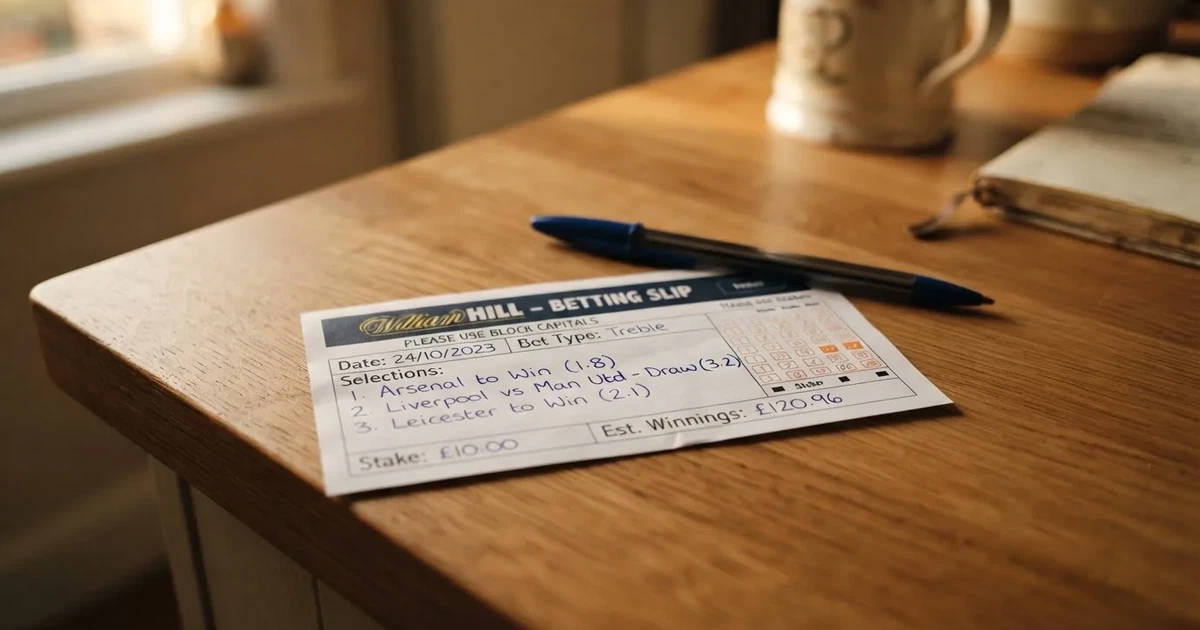
A combination bet multiplies the prices of its legs into one price and then pays the unit stake × that combined price. A double on 5/1 and 11/4 multiplies 6.00 × 3.75 = 22.50 (decimal) or 21/2 (fractional); a £10 stake returns £225. A treble multiplies three; an accumulator or “acca” multiplies four or more. The unit stake the trader is willing to accept on a combination shrinks quickly because the price grows quickly: an acca of ten short-priced legs at 1.50 decimal (1/2) multiplies to 57.67, and a £100 unit stake on that acca exposes the firm to £5,667 of liability on the worst leg. The maximum-stake field on long accas is small for that reason.
An each-way bet is two bets of equal stake — one on the win, one on the place — and the total stake doubles. Place terms vary by race and by operator and are not negotiable. A £10 each-way bet costs £20 and settles in two parts at the end of the race.
A bet builder (also called a same-game multi) joins markets from one event — typically goalscorer, total goals, corners and match result in football — into a single price with a margin that is usually higher than the sum of the singles. The convenience is the point; the cost is the margin.
A betting exchange lets customers back and lay against each other rather than against a bookmaker. The maximum stake on the back side is set by the available liquidity at that price; the maximum on the lay side is set by the backer’s stake. Smarkets applies a standard commission of 2% on eligible exchange bets, and a separate new-customer offer has run at 0% commission for 60 days with a minimum first deposit of £10. The exchange side is genuinely open-stake in a way the bookmaker side is not, because the counterparty is another customer rather than the firm.
A spread bet, run by Spreadex and a handful of other firms, is a different product and is regulated by the Financial Conduct Authority for financial spreads and by the Gambling Commission for fixed-odds bets. A stake on a financial spread can lose more than the deposit, and the firm’s own homepage warns that spread betting losses can exceed the deposit. It is a different conversation from a fixed-odds book.
Cricket’s run lines and totals, horse racing’s each-way and forecast markets, football’s Asian handicaps — each market has its own ceiling, and the ceiling is usually published on the bet slip before the bet is placed. A no-limit bookmaker is generous on the markets it wants volume on and tight on the markets it does not. The punter’s job is to read the slip before committing, and to recognise that “open” on the homepage and “open” on the bet slip are not the same word.
Sports, tournaments, and where the open stake shows up first
Sport-by-sport, the open stake shows up in different places. The headline markets — Premier League match result, Champions League group stage, the major US sports — are priced by every licensed firm and the maximum stake is competitive. The minor leagues, the lower divisions, the qualification rounds, the women’s game and the smaller tournaments are priced by fewer firms and the maximum stake is thinner, because the trader has fewer counterparties to lay the risk off with.
Horse racing sits in a special position. Every licensed firm offers Best Odds Guaranteed (BOG) on UK and Irish racing from 8am on the day of the race, paying the bigger of the early price taken and the starting price if the SP is bigger; William Hill’s published rule extends BOG to both single and multiple bets, while excluding ante-post, tote and pari-mutuel bets. Bet600 pays BOG on its racing markets on the same rule. Coral runs BOG on every UK and Irish horse race from 8am and on every UK greyhound race. Each-way terms apply by race type and by number of runners. The unit stake the firm will accept on a £500/1 outsider in a handicap at Kempton is smaller than the unit stake on a 4/6 favourite in the Champion Hurdle, because the firm’s exposure scales with the price.
Football’s in-play markets are the largest by volume and the thinnest on the trader side during the match. The unit stake on a 0-0 Correct Score market at half-time is small for the firm because the market is volatile and the lay-off is harder; the unit stake on Match Result before kick-off is much larger for the same reason in reverse. A live-betting focused punter sees the maximum-stake field change as the match progresses, sometimes several times in a half. Midnite’s site shows in-play events with maximum-stake limits displayed against the price boost, acca builder and popular accas on the homepage.
US sports — NBA, NFL, NHL and MLB — run tighter limits during the match and looser limits before it, with the major spread and total markets priced by every firm and the player props priced by a handful. The limits on tennis are tighter on the challenger tour and looser on the Slams; the limits on golf are tighter on the secondary tours and looser on the majors.
Esports, virtual sports and novelty markets on politics and TV are priced by some firms and not by others, and the maximum stake is set per market rather than per account. Virtual events are a separate licence category on the Commission’s register and the operator that holds the betting standard (real events) licence may not hold the virtual events licence; the markets are not interchangeable.
How a bet is actually placed, settled and paid out
The flow of a bet, end to end, runs through four stages and each one shapes the cost.
In the first stage, the bettor selects a market and a price. The bet slip shows the unit stake the platform will accept at that price, and a stake above the field is rejected before it is submitted. A platform that hides the field will reject the bet after the bettor has tried to place it; the bettor’s experience is the same.
In the second stage, the bettor confirms the stake. A combined bet — a double, a treble, an acca or one of the named multiples — is submitted as a single transaction and settles as a single transaction; a push (a leg made void) and a non-runner (in horse racing) reduce the price and the return according to the operator’s published rules. A Rule 4 deduction, where it applies, takes a fixed fraction of the winnings to reflect the withdrawal of a horse from the race.
In the third stage, the bet is settled. A win returns stake × odds; a loss returns nothing; a void returns the stake. Cash Out, where the operator offers it, lets the bettor lock in a position before settlement; Coral offers Cash Out on selected Bet Builder markets, and William Hill’s published rule on Cash Out is that it is not available on each-way bets and is not always available on accumulators, with no guarantee of availability. Each-way bets settle in two parts.
In the fourth stage, winnings are returned to the payment method that funded the deposit. Credit cards are banned for gambling in Great Britain since 14 April 2020, including credit-card-funded e-wallet top-ups; debit cards and bank-based payments are not covered. The return of funds through the same method is a money-laundering rule and a Commission licence condition, and a bettor who wants winnings paid to a different account will be asked for source-of-funds evidence.
The order above is the practical order the punter follows, and the time the bet is open is the time the price carries risk. A £10 acca placed four hours before kick-off and a £10 acca placed ten minutes before kick-off are settled by the same rule, but the second one has had less time for the price to move and is easier for the trader to manage; the maximum stake on the second is therefore usually higher.
Ranking the open-stake brands and how they compare
The ten operators below all hold a remote betting licence from the Gambling Commission and all appear on the Commission’s public register; the brands differ on what “no limit” means in their terms, what is published on the bet slip and what the rest of the package looks like. The table is followed by a short review of each.
| Brand | Gambling Commission licence | Stance on staking and limits |
|---|---|---|
| Star Sports | Star Racing Limited (account 9177), remote general betting standard (real events) | Pre-event and in-play markets with Bet Boosts, Daily Specials and Weekend Enhanced Boosts, plus in-play on football, horse racing, golf and US sports |
| NetBet | Netbet Enterprises Limited (account 39170), remote general betting standard (real events) | Daily Boosts, Profit Boosts and free bet offers, a Bet Builder with instant dynamic odds, plus sports stats for major leagues |
| Swifty Sports | Swifty Global (UK) Ltd (account 58957), remote general betting standard (real events) | Best Odds Guaranteed, Cash Out on horse racing and football, daily price boosts, live streaming and in-play betting; Bet Builder listed as coming soon |
| Lottoland | EU Lotto Limited (account 38991), remote general betting standard (real events) | Casino, lottery betting, sports betting and scratchcards under one GB licence |
| DragonBet | DragonBet Ltd (account 64908), remote general betting standard (real events) | Welsh football and rugby markets, racing, American football, in-play betting and bet builder markets |
| Hollywoodbets | Hollywoodbets International UK Limited (account 53028), remote general betting standard (real events) | Stake returned as a free bet of up to £30 on the first qualifying losing accumulator (stake £10+, three legs or more, odds of 4/1 or greater, settled within seven days); one free bet per customer |
| Bet600 | Tyche Tech Limited (account 44731), remote general betting standard (real events) | Best Odds Guaranteed on horse racing, paying at the SP if the SP is bigger than the early or show price taken |
| VBet | SCGO Limited (account 44662), remote general betting standard (real events) | Bet Builder, pre-match and in-play betting, live streaming and a live calendar with results and stats |
| Smarkets | Smarkets (Malta) Limited (account 39173), remote betting intermediary | Exchange model with standard 2% commission on eligible bets; a separate new-customer offer has run at 0% commission for 60 days on a £10 minimum first deposit |
| BetUK | LeoVegas Gaming PLC (account 39198), remote general betting standard (real events) | Free bets exclude virtual sports, esports and non-UK/IE horse racing, and minimum odds apply |
The brands and the order are fixed; the column at the right is a digest of what each operator’s own terms and home page say about staking and limits. None of the entries is a recommendation, and a “no-limit” label on the marketing side does not bind the operator to accept any specific stake from any specific customer. The Commission’s register is the check on the licence; the operator’s terms page is the check on the rule.
Star Sports prices the deep on the headline UK racing horse racing and US sports markets and runs a sharper Bet Booster menu than most of its peers. A trader-focused punter will find the in-play menus on football and US sports priced competitively, and the Daily Specials list is wide enough that one of them will usually be the bettor’s intended bet. The maximum stake on a price boost is set per market and the unit stake can be small; on the headline match result markets before kick-off the field is wider. The brand’s stance is closer to “open on what we want, tight on what we do not” than to a blanket no-limit promise.
NetBet is the bigger of the two operators in this set by marketing footprint and the smaller of the two on the racing side. The Bet Builder runs with instant dynamic odds and the margins on the legs are higher than on the singles, which is the standard trade-off for the product; the unit stake on the combined bet is smaller than the unit stake on any single leg for the same reason. Sports stats for the major leagues are bundled into the platform, which the bettor pays for in margin rather than in cash.
Swifty Sports runs Best Odds Guaranteed on its racing markets, Cash Out on horse racing and football, daily price boosts, live streaming and in-play betting; the Bet Builder is listed as coming soon on the App Store listing, which means the product on the platform today is a thinner menu than the marketing suggests. The licence is fresh and the brand is small, which leaves room for a tighter maximum stake than the bigger firms on the same markets. The relevant trade-off is between the package on offer and the unit stake at which the package is offered.
Lottoland is the outlier on product mix: casino, lottery betting, sports betting and scratchcards under one GB licence. The sportsbook is a smaller part of the platform than it is at the dedicated sports brands, and the unit stake on the headline markets is set to a level that suits the typical lottery bettor rather than the typical sports trader. The relevant trade-off is breadth of product against depth of market.
DragonBet is the Welsh-focused brand in the set, with markets on Welsh football and rugby alongside the standard racing, American football and in-play menus. The Bet Builder product is on the platform and the unit stake on Welsh football is a fraction of the unit stake on Premier League football for the simple reason that the trader’s lay-off book is shorter. A punter with a view on the Cymru Premier and the United Rugby Championship will find the brand covers markets that the bigger firms price loosely, and the maximum stake reflects that.
Hollywoodbets is the offer-led brand in the set, with a stake returned as a free bet of up to £30 on the first qualifying losing accumulator: stake £10 or more, three legs or more, odds of 4/1 or greater, settled within seven days, one free bet per customer. The offer’s headline is the £30 free bet; the arithmetic the offer needs is three legs at a combined price of 4/1 or more, which a careful price-checker can clear without trouble, and the stake is returned as a free bet whose stake is not paid back with a win. A punter who sees the offer as “£30 free” rather than as “a refund on a losing acca, paid as a free bet” is reading the offer as the marketing reads it.
Bet600 runs Best Odds Guaranteed on horse racing and pays the bigger of the early or show price taken and the SP if the SP is bigger. The racing focus is the brand’s strong point and the unit stake on the headline markets is generous for a brand this size; the rest of the platform is thinner than the dedicated sports books and the Bet Builder menu is smaller. The relevant trade-off is the racing package against the breadth of the platform.
VBet runs Bet Builder, pre-match and in-play betting, live streaming and a live calendar with results and stats, with the licence held by SCGO Limited. The platform is a complete sportsbook rather than a racing-led offering and the maximum stake on the headline markets is set to a level that suits the typical recreational bettor. The relevant trade-off is the breadth of the product against the unit stake at which the product is offered.
Smarkets is the only exchange in the set and the only brand whose staking is genuinely open at the customer level, because the counterparty is another customer rather than the firm. The 2% commission on eligible exchange bets is the price the bettor pays for the openness; the new-customer 0% commission for 60 days on a £10 minimum first deposit is the offer. The platform runs back and lay bets with the option to request a better price and a MatchMe feature; the maximum stake on the back side is set by the available liquidity at that price. The relevant trade-off is the openness of the staking against the openness of the market — an illiquid event on the exchange is just as hard to back at size as it is on a bookmaker.
BetUK runs free bets that exclude virtual sports, esports and non-UK/IE horse racing, with minimum odds on the qualifying bet. The licence is held by LeoVegas Gaming PLC, which also runs BetMGM UK under the same Commission account; the two brands share an operating company and the staking rules reflect the operator’s house policy. The relevant trade-off is the offer against the markets it excludes.
What “no limit” really means at a licensed bookmaker
The phrase is at its most accurate when the maximum stake on a market is high enough that a punter with a normal bankroll never sees the field, and at its least accurate when the open stake is taken away from the same punter after a winning run. The two cases are not contradictory: the first is a property of the market, the second is a property of the account. A no-limit bookmaker is generous on the first and the second together, and a punter who values the second as well as the first has a shorter list of candidates than the marketing suggests.
The Commission’s licence conditions and codes of practice do not cap the maximum stake on a market — the cap is the operator’s commercial judgement — and they do require the operator to set its own social responsibility measures, including the financial vulnerability check on deposits above £150 in a rolling 30 days. The check is a public-record check, not an income check and not a credit reference check, and the operator is allowed to ask for source-of-funds evidence at higher spend. The punter’s open stake is open in the marketing sense and shaped in the back-of-house sense.
The second thing the marketing gets wrong is the comparison with the offshore book. An offshore brand that holds a Curaçao or Anjouan licence is not licensed in Great Britain and is not covered by GAMSTOP, the Commission’s complaints route, an approved dispute-resolution body, the £150 vulnerability check or the bonus cap. A punter who moves to an offshore brand for the open stake gives up the Commission protections for the openness the offshore brand markets. The trade is the punter’s, but it is not the trade the marketing presents.
The third thing the marketing gets wrong is the bonus. A “no limit” bookmaker with a generous welcome offer is offering the punter two things at once: an open stake and a deposit-gated refund. The two are independent and the second usually has a wagering requirement, a minimum price for the qualifying bet, a deadline and a cap on the winnings. Hollywoodbets’ stake-back as a free bet of up to £30 on a losing acca of three legs or more at combined odds of 4/1 or greater is the offer on this page; Coral’s separate “Get £40 in Free Bets when you bet £20” carries a minimum odds of 2.0 (1/1), an issue window of seven days and an expiry of seven days after issue, all on new GB customers who opt in. Both offers are described in the operator’s own terms; both rewards are described in the operator’s own terms. A punter who reads only the headline is paying the marketing’s price.
The fourth thing is the deposit limit. The deposit limit sits on the customer’s side rather than the operator’s and is the bettor’s tool, not the operator’s. The first phase of the Commission’s deposit-limit regime has applied since 31 October 2025, with a second phase postponed to 30 September 2026 and whether it is live not established; in either phase there is no state-set ceiling for sports betting and the limit is set by the customer. A punteter who wants an open stake does not need an open deposit limit; the two are different settings and the open stake is unaffected by the deposit cap.
The legal frame around open staking
A bookmaker that takes bets from customers in Great Britain needs a Gambling Commission licence, and a Commission licence means the operator is on the public register, runs under the Gambling Act 2005 and complies with the Commission’s Licence Conditions and Codes of Practice. Northern Ireland is outside the Act, and a GB licence does not cover Northern Ireland; a brand that operates under a GB licence is operating in Great Britain, not in the United Kingdom as a whole. The Commission’s public register can be searched by business name, trading name, domain or account number and is the test of whether a brand holds a licence; the register does not list accepted deposit methods, and a brand on the register is no proof that the brand takes cryptocurrency.
The minimum age is 18, and a name, address and date of birth are verified before a customer can deposit or gamble, including with a free bet or a bonus. The check has been in force since 7 May 2019 and the Commission made verification mandatory for free bets as well as for cash play because of the earlier practice of letting customers register and claim an offer without the checks being completed. Anonymous play at a licensed site is not on offer.
GAMSTOP is the national multi-operator online self-exclusion scheme and a mandatory licence condition for online operators since 31 March 2020. Periods are six months, one year, five years, or five years with auto-renewal; after the minimum period the exclusion stays in place for a further seven years unless the customer asks GAMSTOP to remove it. GAMSTOP covers online sites and apps; the over-the-counter self-exclusion at betting shops is a separate service. A licensed brand that does not enrol a self-excluded customer is in breach of its licence condition.
Credit cards are banned for gambling in Great Britain since 14 April 2020, and the ban covers credit-card-funded top-ups through an e-wallet. Debit cards and bank-based payments are not covered. The ban is a Commission licence condition, and an operator that takes a credit-card deposit is in breach of its licence condition. A punteter who funds an account with a credit card is funding it through a payment the ban does not reach; the deposit is the punteter’s responsibility.
Bonuses are capped at 10x wagering since 19 January 2026, so a £10 bonus at 50x wagering needs £500 of qualifying bets; under the cap no more than £100 of qualifying bets can be required for a £10 bonus. Mixed-product promotions — an offer that requires gambling on two or more product types, such as betting plus casino, or sports plus bingo — are banned in the same rule. Whether the cap applies to free bets with no wagering condition is not established. The cap is a Commission rule and an operator that ignores it is in breach.
Advertising is not licensed by the Commission; it runs through the CAP Code for non-broadcast advertising and the BCAP Code for broadcast, both enforced by the ASA, alongside the Commission’s marketing conditions in the LCCP. The CAP Code section 16 rule is that no one who is, or seems to, is at least 25 may be featured gambling or play a significant role in a gambling advertisement; the rule is about who appears in the advertisement, not about who may bet. The “whistle-to-whistle” industry code, in force since 1 August 2019, blocks betting advertising from five minutes before a live sporting event to five minutes after it, before the 9pm watershed; horse and greyhound racing are excluded. The Premier League clubs’ withdrawal of gambling sponsorship from the front of matchday shirts from the 2026/27 season is voluntary, not law; the sleeves and the hoardings are still up for sponsorship.
The player pays no tax on betting winnings in Great Britain; General Betting Duty is the operator’s tax on gross profits, currently 15%, with a remote rate of 25% in force from 1 April 2027 (HM Government policy paper of 26 November 2025); UK horse racing, self-service betting terminals, pool betting and in-person betting stay at 15%. Spread betting has its own rates (3% financial, 10% other). Until 1 April 2027 the remote rate stays at 15%; whether operators pass duty on through odds is not established. A professional gambler should ask HMRC or an adviser; the duty is the operator’s, the player’s winnings are the player’s.
Offshore brands are a separate frame. Providing gambling facilities in Great Britain without the licence the Act requires is an offence under section 33 of the Gambling Act 2005, aimed at the operator; no offence aimed at a customer who merely bets on an unlicensed site was found. The loss of protection for the customer is the issue: no GAMSTOP coverage, no Commission complaints route, no approved dispute-resolution body, no British consumer redress if funds are withheld, and not bound by the 10x bonus cap or the £150 vulnerability check. Enforcement is disruption rather than blocking: cease-and-desist notices, search-engine referrals, work with registrars, hosts and payment providers, and the Commission has been given, or is about to receive, court-order DNS blocking powers. ISP blocking is not in operation; “legal to use” is not the right framing.
Looking after yourself when the stake stays open
The stake can stay open for longer than the punter planned for, and the platform has a small set of tools that put the customer back in charge of the size of the betting. The tools sit on the customer side of the register, and the register’s social responsibility code requires the operator to make them available.
A deposit limit caps the gross amount the customer can deposit over a rolling period, set by the customer and reduced at any time; an increase in the limit has a cooling-off period the operator publishes on the platform. The limit is the customer’s tool, not the operator’s, and the operator is not allowed to suggest a higher limit to a customer who has set one.
A time-out takes the account offline for a fixed period — 24 hours, a week, a month, six weeks — and reactivates automatically at the end of the period. A self-exclusion through GAMSTOP covers every licensed brand for six months, one year, five years, or five years with auto-renewal, and stays in force for a further seven years after the minimum period unless GAMSTOP is asked to remove it.
The financial vulnerability check on deposits above £150 in a rolling 30 days is a public-record check — bankruptcy and county court judgments, for example — and is not an income check and not a credit reference check. The Commission announced staged financial risk assessments in a Commission article of 7 July 2026 with no start date; the financial vulnerability check is in force at the date on this page, the financial risk assessment is announced and staged. A customer who sees a request for source-of-funds evidence is being asked under the Commission’s money-laundering rules and the operator’s licence conditions; the customer is not being asked for a payslip.
The help lines for a customer whose betting has moved past the recreational are GamCare, which runs the National Gambling Helpline; GambleAware; the NHS gambling clinics; and Gamblers Anonymous. The four are separate organisations with separate remits, and a customer who wants to talk will find one of them open. The customer tools above are the practical levers; the help lines are the practical hand.
How the margin shows up in the price
The bookmaker’s margin is the share of every pound staked that the firm keeps on average across a market, and it is hidden inside the odds. The mathematics of the margin is straightforward: the implied probability of an outcome at decimal odds o is 1/o, and the sum of the implied probabilities across all outcomes of one market is the “overround”. A market with no margin sums to 1.00; a market with margin sums to more than 1.00, and the excess is the firm’s take.
Take a two-way market priced at 1.90 / 1.90 in decimal. The implied probability of either side is 1 ÷ 1.90 = 0.5263, and the sum is 1.0526. The overround is 5.26% and the payout share is 1 ÷ 1.0526 = 95.0%. A £100 stake split evenly across the two outcomes returns £95.00 on average across many such markets; the £5.00 difference is the firm’s margin. In fractional odds, 1.90 decimal is 9/10, and the same arithmetic gives the same answer.
The margin varies market by market. The 1X2 (match result) market on a Premier League fixture is typically priced at 5–7% margin at the major firms; the Correct Score market is priced at 10–15% because the outcomes are harder to price; the Asian Handicap market is priced at 2–3% because it is the market where the sharpest customers trade. A market with a 2% margin is a tight market, a market with a 15% margin is a wide market, and the difference between the two is the difference between the punter’s return on the same pick. The bettor’s job is to read the margin as well as the price.
The “no limit” label does not change the margin. The margin sits inside the price and the price is what the bettor pays; the maximum stake on the market is independent of the margin and the margin is independent of the maximum stake. A bookmaker can be generous on the stake and tight on the margin, or tight on the stake and generous on the margin, and the two settings do not reinforce each other. The punter who values openness writes a real result and the punter who values margin writes a real result, and the two are not the same bet.
The number a punter actually sees
A punter who places a £10 single at fractional odds of 5/1 is betting on a selection with a decimal price of 6.00. The return is £10 × 6.00 = £60; the net profit is £10 × (6.00 − 1) = £50; the stake is included in the £60. The same punter on a double at 5/1 and 11/4 has a combined decimal price of 6.00 × 3.75 = 22.50; the return is £10 × 22.50 = £225; the net profit is £10 × (8.50) (wait, that should be 22.50 − 1) — the net profit is £10 × (22.50 − 1) = £215; the stake is included. A treble, an acca, a Trixie, a Patent, a Yankee, a Lucky 15, a Super Yankee / Canadian, a Heinz and a Goliath multiply the prices the same way, and the total stake on the named multiple is the unit stake × the number of bets in the multiple (a Lucky 15 is 15 bets at the unit stake; a Heinz is 57; a Goliath is 247).
A punter who places a £10 each-way on a 5/1 shot pays £20 total — £10 on the win, £10 on the place — and is paid in two parts if the horse wins (the win part at 5/1, the place part at the place terms, typically 1/4 or 1/5 of the win odds) or one part if the horse places. A non-runner voids the bet and the stake is returned; a Rule 4 deduction takes a fixed fraction of the winnings to reflect the withdrawal of another horse from the race.
A punter on a spread bet pays a different stake: a £10 stake per point on a total goals market at 2.7, settled at the actual total. A result of three goals settles £10 × (3 − 2.7) = £3 profit on the buy side, or £10 × (2.7 − 3) = £3 loss on the sell side; a result of five goals settles £10 × (5 − 2.7) = £23 profit on the buy side. The stake is a per-point number, not a total, and the punter’s exposure is the per-point stake multiplied by the worst-case point spread on the underlying market. Spreadex’s own homepage warns that spread betting losses can exceed the deposit.
The arithmetic is the same on every platform: return = stake × odds, profit = stake × (odds − 1), total stake on a combination = unit stake × number of bets. The price the punter pays is the margin in the odds; the stake the punter risks is the unit stake on the slip; the return is the product. A punter who can read those three numbers can read any bet slip, on any bookmaker, on any market, at any price.
Frequently asked questions on no-limit staking
Which bookmakers do not limit?
No licensed brand in Great Britain promises not to limit any customer; the Commission’s licence conditions and codes of practice leave the decision to the operator, and a customer’s maximum stake can be cut, restricted or closed at the firm’s discretion. A brand that has not cut a particular customer’s stake is a brand whose own commercial judgement has not yet reached the conclusion, not a brand that has bound itself to keep the stake open in every future state of the market.
Why do sportsbooks limit winning bettors?
A bookmaker’s prices are an average over the customers who bet with the firm, and a customer who picks winners at a rate above the average erodes the margin on the markets they bet on. The firm responds by lowering the unit stake that customer can place on the affected markets, by restricting the markets they can bet on, or by closing the account. The clause that allows the firm to do this is in the operator’s terms and the practice is documented in arbitration rulings, in the trade press and in the Commission’s own social responsibility guidance.
Why do sportsbooks limit sharp bettors?
A “sharp” bettor is one whose picks reflect a more accurate model of the outcome than the firm’s own model — a professional or semi-professional trader, often working in teams, often on niche markets where the firm prices loosely. The firm’s model of the market is being corrected by the bettor’s stake, and the firm responds in the same way as for any winning customer: by cutting the unit stake, restricting the markets or closing the account. The detection is partly statistical (the firm’s trading desk) and partly the trading patterns themselves (a stream of bets on the same side of the same market at prices the firm has mispriced).
How can it be checked that a bookmaker holds a Gambling Commission licence?
The Commission’s public register is searchable by business name, trading name, domain or account number. The register lists the licence type (remote general betting standard, remote betting intermediary and so on), the licence holder’s name, the trading names that operate under the licence and the account number. The brands in the ranking above all appear on the register as of the date on this page, and each carries the account number beside its name in the table.
How is the return on a bet worked out from the stake and the odds?
Return = stake × odds in decimal form, with the stake included. Net profit = stake × (odds − 1), with the stake not included. At fractional odds of 5/1 the decimal price is 6.00 and a £10 stake returns £60; net profit is £50. The same arithmetic applies to combination bets, where the price of the combination is the product of the leg prices and the stake is the unit stake on the combination.
What is the bookmaker’s margin and how can it be seen in the odds?
The margin is the share of every pound staked that the firm keeps on average across the outcomes of a market. It is hidden in the odds: sum the implied probabilities (1/odds in decimal form) across all outcomes of one market, and the excess over 1.00 is the overround. A two-way market priced at 1.90 / 1.90 has an overround of 5.26% and a payout share of 95.0%; a market with a 15% overround is a market that keeps 15p in every pound staked.
Betting sites & exchanges – Basketball betting
Content created by the «Basketball betting» team
