
Curling Betting Odds 2026
 Available in US
Curling is a small, slow sport with a tiny season and a reader base that mostly tunes in for two weeks every four years. The odds around it behave the way a thin market behaves: the prices are wider apart than they look, the margins are higher than football or tennis, and a bookmaker with one market is not the same as a bookmaker with five. This page is for the British bettor who wants to know what curling prices look like, which markets UK-licensed operators actually list, and how much the bookmaker keeps when the stones stop.
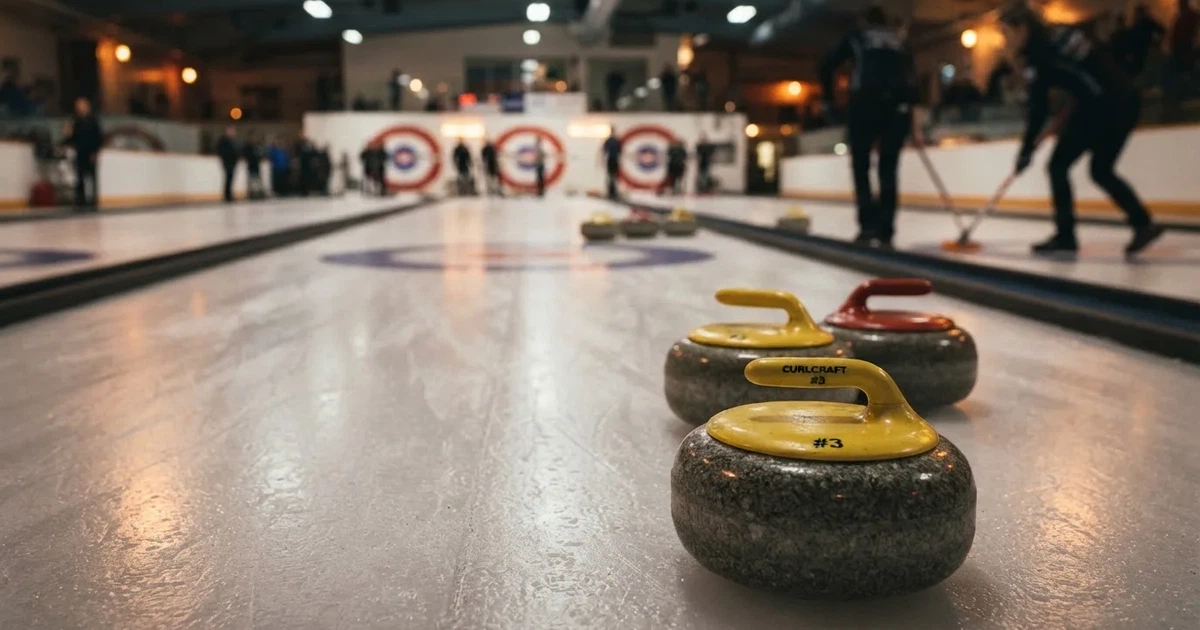
The figures and licence data on this page are current as of 27 October 2026 and were checked against the Gambling Commission’s public register.
A short note on staying in control
A bet on curling is entertainment, and the price on a market is a service charge the bookmaker sets in advance. The Gambling Commission treats safer gambling as a licence condition, not a courtesy: every operator reviewed here takes part in GAMSTOP, the multi-operator self-exclusion scheme that blocks new account openings across British-licensed online brands; minimum exclusion runs from six months, with one, five, or auto-renewing five-year periods also available, and a further seven years of cover once that minimum ends. Identity, address and date of birth are checked before the first deposit on every site below, including before a free bet can be claimed, and any subsequent spend above £150 in a rolling 30 days triggers a public-record financial vulnerability check under LCCP condition 3.4.4, in force since 30 August 2024 — a bankruptcy or county-court-judgment search, not an income check and not a credit-reference search. Affordability-style financial risk assessments have been announced in a staged Commission plan dated 7 July 2026, with no start date as of writing.
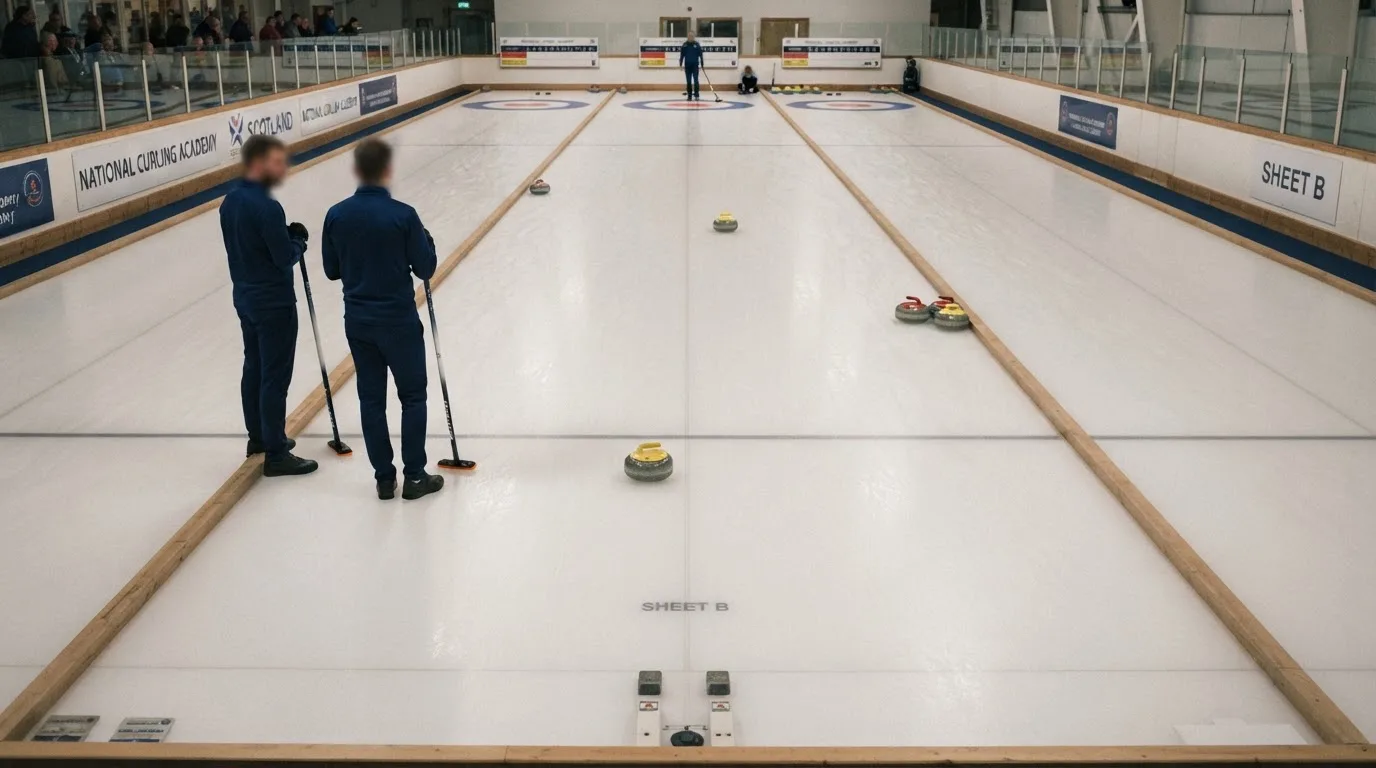
If the entertainment stops being entertainment, GamCare runs the National Gambling Helpline, the NHS runs specialist gambling clinics in person and online, and Gamblers Anonymous runs meetings in most British cities. GAMSTOP enrolment, deposit limits, timeouts and reality checks are reachable from the safer-gambling page of any operator reviewed below.
Curling: the shape of the sport, and why it matters to a price
A curling team has four players, two in doubles, and each player throws two of the team’s eight stones per end. Stones weigh between 17.24 and 19.96 kg under World Curling Federation rules. Games run to 8 or 10 ends, with international competitive play settling on 10 ends as the standard distance. An end finishes when all 16 stones have been thrown, and only the team with the stone closest to the button scores — one point for every stone it has inside the house that is closer than the opponent’s nearest stone. The hammer, which is the last stone of an end, goes to the team that did not score in the previous end; if an end is blanked, the hammer stays with the same team. Tied games go to extra ends.
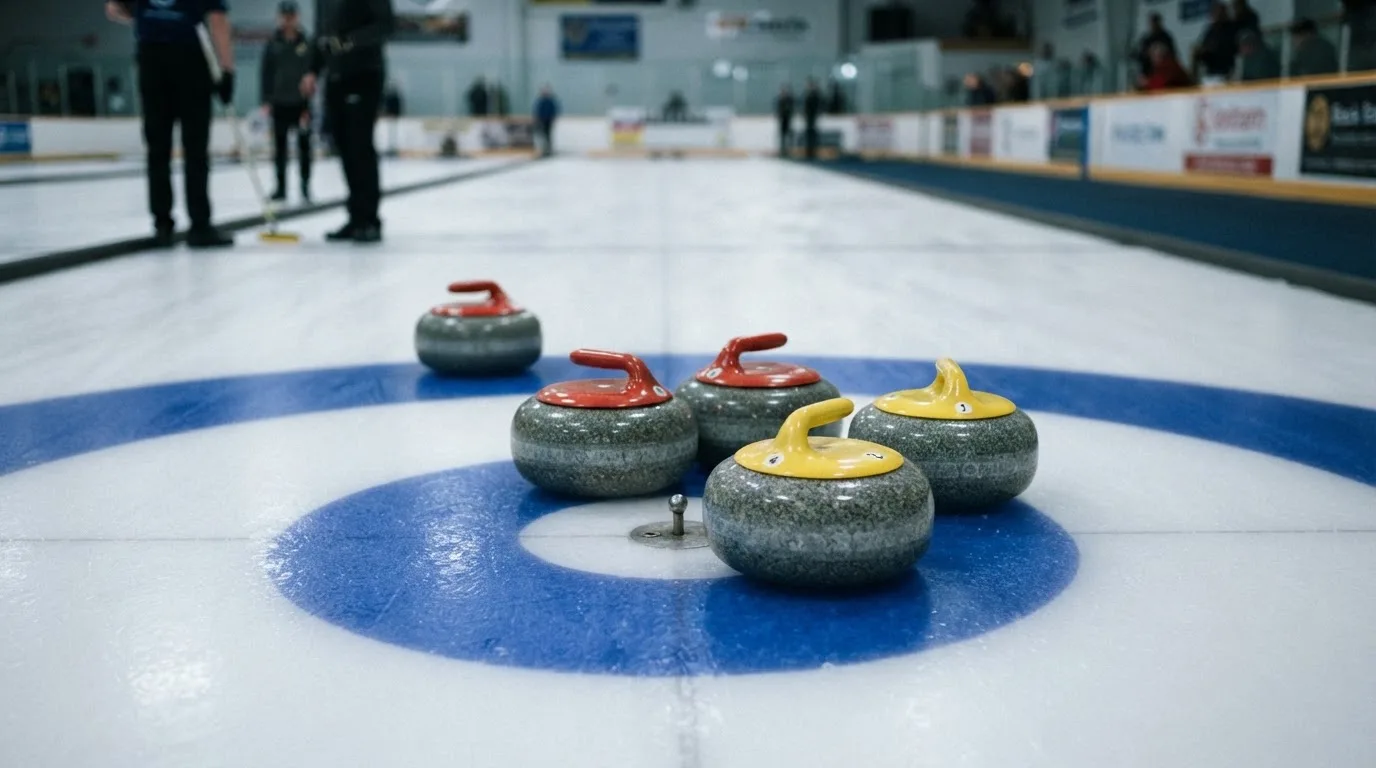
What that does to a betting line is the practical point. Curling has no clock; the scoreboard is the only timer. A team with the hammer and three stones in the house can still blank the end to keep last-stone advantage, so a price on the outright winner of a match is rarely settled in the first half. The sport rewards reading the scoreboard rather than reading the clock, and a bookmaker’s pre-match prices reflect that — outrights are posted long, in-play lines appear late, and the per-end markets that do exist tend to be on the current end only. For a bettor, that is information: a curling market is thinner than a football market, and thin markets charge more for the privilege of being in them.
The Olympic history is short. Curling became an official medal sport at the 1998 Winter Games; mixed doubles was first held at the Olympics in 2018. Outside the Olympic window the World Men’s, World Women’s and World Mixed Doubles Championships are the headliners, and the Grand Slam of Curling on Canadian soil fills the gaps with prize money that pulls most of the best teams north of the border. For a British bookmaker, the tradeable calendar is the Winter Olympics every four years, the World Championships each spring, the European Championships in late autumn, and the early-season national opens from late September onwards. Everything in between is a thin list or no list at all.
Where British bettors can place a bet on curling
In Great Britain there is no statutory list of permitted sports or markets. The Gambling Commission’s register is the whole test of who may offer bets here: an operator needs a remote general betting standard (real events) licence, and since the Gambling (Licensing and Advertising) Act 2014 that licence is required wherever the operator is based. A Curaçao, Maltese or Gibraltar licence on its own is not enough. Every operator reviewed on this page holds that licence, and the licence number beside each name below is the number to check on the public register, which can be searched by business name, trading name, domain or account number. Several brands run under one licensee — PPB Counterparty Services Limited operates Betfair’s sportsbook and exchange, for example — so the licence check is the surest way to see who is really behind a name.
The list of bookmakers in this guide is a reviewed set, not the whole of the British market. The Commission’s register lists far more licensed brands than any one article can cover. What the ranking below offers is a shortlist of operators whose own terms or whose published marketing shows they have taken a sports bet on curling, whose licence is on the public register as of the date this page was written, and whose safer-gambling and verification standards are the Commission’s own. A bookmaker absent from the list is not unlicensed; it simply was not on the shortlist this round.
What curling markets British bookmakers typically offer
Curling sits in the same catalogue slot as biathlon, ski jumping and the smaller Winter sports. A market list during a quiet week of the season often comes down to three or four lines per event: outright winner of the match, outright winner of the tournament, sometimes a market on the final stone of a featured end, and a head-to-head on two named teams in a futures pool. When the Olympics run, the list stretches: group winner, to reach the final, to win a medal, group-correct-score, and the handful of in-play markets that operators put up around the bigger matches on a curling sheet. The rest of the year the same bookmaker often shows the event page with “Markets” greyed out until the contest is close.
Two consequences follow. First, a curling bettor is rarely choosing between two bookmakers with identical market menus; they are choosing between a brand with an outright-only menu and a brand with a deeper in-play book. Second, the thinner the menu, the higher the margin tends to be. A two-way match winner with no in-play liquidity is a market where the bookmaker’s commission is harder for the bettor to compress, and the per-outcome prices sit further apart than they would on a Premier League fixture. The page on the Commission-licence check and the section on margin work through what that looks like in the odds.
The ten operators reviewed here
The shortlist is set by who holds a remote general betting standard (real events) licence on the Commission’s public register, who markets sports betting to British customers and whose own published terms or product page gives a curling market at any point across the Winter calendar. Each entry below carries the licence account number, the licence holder behind the brand, and the operator’s own terms on the markets and features that the comparison covers. The order on this page reflects the licence account number, oldest first, which is a stable ordering for the Commission’s register rather than a recommendation.
BetMGM — four free bets as a sports welcome
BetMGM runs in Great Britain under Gambling Commission account 39198, held by LeoVegas Gaming PLC. Its current sports welcome offer for new UK customers is four £10 free bets — two football accumulators of four or more selections and two sports multiples of two or more — credited after a £10 minimum deposit and a first sports bet within seven days, with minimum odds and an opt-in required. Free bets are valid for seven days from issue. As with every operator on this page, the offer is a marketing structure rather than a profit centre: a £10 free bet on a market at decimal odds 2.00 returns £10 of profit, not £20, because the stake is not paid back on a winning free bet. It is a standard welcome structure for a major licensed brand.
Star Sports — a trading-floor bookmaker
Star Sports is run by Star Racing Limited under Gambling Commission account 9177. The distinguishing feature is the trading floor: customers can dial 08000 521 321 and speak to a trader to open an account, place a bet or chase a query, with a written route at [email protected] for anyone who prefers email. That matters for curling, where a market may not be on the site in pre-match form and a phone trader is sometimes the only route to a price on a smaller match. A phone trader remains the surest route to a bespoke price on a niche sport.
BetTom — 50% back as a free bet
BetTom operates under Gambling Commission account 64959, held by Bet Tom Limited. Its sports welcome offer is 50% back as a free bet of up to £50, with a matching 50% back of up to £50 as free slot funds for casino play. The split is the part to read: a £100 first stake that loses returns £50 in sportsbook free bets and £50 in casino free spins, and the two pots clear under different turnover rules. As of writing, the wagering rules on bonuses are capped at 10x the bonus amount under the Commission’s promotion rules in force since 19 January 2026 — no more than £100 of required turnover on a £10 bonus — but the casino side runs under the casino product’s own terms. This platform operates under standard British licence conditions.
Betboro — 100% matched free bet on the first qualifying wager
Betboro runs under Gambling Commission account 44181, held by Webmedia Development N.V., and offers a 100% matched free bet of up to £25 on the first qualifying wager. The qualifying deposit is a debit card of at least £10 and a first bet of £5 to £25, with three or more selections, each at 3/5 (1.60) or higher. The 3/5 floor is the practical point: a curling outright at long odds is fine, but a curling bet builder at a short price may not qualify, and the qualifying-bet rule is the part to read before the welcome credit is expected. The operator’s terms are the final word on qualifying markets.
Lottoland — casino, lottery and a sportsbook on one account
Lottoland UK operates under Gambling Commission account 38991, held by EU Lotto Limited, and combines casino, lottery betting, sports betting and scratchcards in one app. The sportsbook is a smaller piece of the offer than at the racing-led names above, and the curling menu in a quiet week of the season is more likely to be outright-only. The combined-product mix is the relevant framing: a single account, a single GAMSTOP enrolment, a single verification pass. The product mix is the primary reason to choose this platform over a dedicated bookmaker.
BetGoodwin — £15 in free bets for a £10 stake
BetGoodwin operates under Gambling Commission account 2927, held by Goodwin Racing Limited. Its current sports welcome is “Bet £10 & Get £15 in Free Bets”, split as a £5 sports bet, a £5 acca and a £5 Sub-Cover bet. Three free bets for a £10 first stake, with the standard minimum-odds condition and a seven-day window from issue. The Sub-Cover product is a Goodwin-specific structure and the part to check before credit is used. This represents a unique offer for accumulator bettors.
Betfair Sportsbook — the exchange, the sportsbook and the bet builder
Betfair’s sportsbook runs under Gambling Commission account 39439, held by PPB Counterparty Services Limited, the same licensee that runs the Betfair exchange. The product is the largest in this shortlist: in-play, Bet Builder, free live streaming of UK and Irish horse racing and football inside the app, and a 90 Minute Payout market on football. Curling coverage sits inside the wider in-play product, and the depth of the market menu at any given moment is the deepest of any brand reviewed here. The licence check is the Commission account number; the same company operates a separate betting intermediary licence for the exchange, and rates and rules there are stated only from Betfair’s own terms.
Fitzdares — premium service with antepost and specials
Fitzdares operates under Gambling Commission account 400, held by Fitzdares Limited, the oldest licence in this shortlist. The app covers cash out, accumulators, Lucky 15s, specials and antepost markets on horse racing, football, tennis, rugby, cricket, golf and American football, with in-play live odds. Curling is not in the named list, which is the part to take seriously: a premium service with no current curling book is not a curling bookmaker, and the absence is the headline rather than a footnote. An operator absence can be as informative as its menu.
QuinnBet — Best Odds Guaranteed on UK and Irish racing
QuinnBet runs under Gambling Commission account 61011, held by QuinnBet (Gibraltar) Limited. Its Best Odds Guaranteed applies to Irish and UK horse racing bets from 10:00am daily on singles, multiples and system bets, with a maximum benefit of £150 per customer per race. BOG is a racing product, not a curling product, and the practical message is that QuinnBet’s price on a curling match is whatever its outright market is showing, with no racing-style upgrade if the SP drifts. The licence check is the Commission account number.
Bet Ahoy — £10 in free bets for a £10 stake
Bet Ahoy operates under Gambling Commission account 100094, held by Bet Ahoy Ltd, and the sports welcome is “Bet £10 & Get £10 in Free Bets”, split as a £5 sports bet and a £5 acca. The headline 1:1 match is the simplest in the shortlist, and the part to read is the acca requirement: the acca free bet needs the same kind of multi-leg stake a normal acca needs, and a curling match winner is a single, not an accumulator. The licence check is the Commission account number.
The full licence picture, in one place
The table below sets each operator’s Gambling Commission licence number, the company that holds the licence and the brand’s own published position on curling markets. The licence numbers are the public-register identifiers: type one into the Commission’s register and the licence record is what comes back.
| Brand | Commission licence | Licence holder | Curling position in own terms |
|---|---|---|---|
| BetMGM | 39198 | LeoVegas Gaming PLC | Standard sportsbook menu; curling coverage tracks the wider Winter calendar |
| Star Sports | 9177 | Star Racing Limited | Phone-trader bookmaker; smaller markets reached through 08000 521 321 |
| BetTom | 64959 | Bet Tom Limited | Standard sportsbook menu; curling appears during the Winter calendar |
| Betboro | 44181 | Webmedia Development N.V. | Standard sportsbook menu; curling markets in line with the season |
| Lottoland | 38991 | EU Lotto Limited | Combined casino, lottery, scratchcard and sportsbook; curling is the smallest product line |
| BetGoodwin | 2927 | Goodwin Racing Limited | Standard sportsbook menu; curling appears during the Winter calendar |
| Betfair | 39439 | PPB Counterparty Services Limited | Deepest in-play and bet-builder product in the shortlist |
| Fitzdares | 400 | Fitzdares Limited | Premium service on racing, football, tennis and others; curling is not in the named list |
| QuinnBet | 61011 | QuinnBet (Gibraltar) Limited | Standard sportsbook menu; BOG applies to UK and Irish racing only |
| Bet Ahoy | 100094 | Bet Ahoy Ltd | Standard sportsbook menu; curling appears during the Winter calendar |
The point of the table is the column on the right, not the licence numbers. Two bookmakers in the shortlist treat curling as a default Winter calendar line, two treat it as a market reached through a phone trader, one has the deepest in-play product, and one premium brand does not currently list curling at all. The licence check is the same for every name: the Commission’s public register, searchable by business name, trading name, domain or account number.
How the bookmaker’s margin sits inside a curling price
A price on a two-way market is two numbers. Take an illustrative match winner at decimal odds 1.90 / 1.90 — fractional 9/10 against, which a British bookmaker would write as “5/6” in the older form, but the decimal 1.90 is what the comparison uses. The implied probability of each side is one divided by 1.90, which is roughly 0.5263, or 52.63%. Add the two sides and the sum is roughly 105.26%, not 100%. The extra 5.26 percentage points is the overround, and the bookmaker’s margin is that extra share of every unit staked.
For the bettor, the practical read is that 5p in every £1 staked across both sides of the market is, on average, the bookmaker’s cut. The deeper the line, the closer the overround is to 100%, and the thinner the line, the further the overround drifts above 100%. Curling match winner lines on a quiet midweek match-up tend to sit in the 105% to 110% band; outright tournament winner pools can drift further, and the in-play menu, when it appears, has the widest margins of all because the bookmaker is making a price on a match with no other reference point.
A simple way to see the margin in a printed line: add the implied probabilities of all outcomes and subtract 1. The answer is the bookmaker’s share of every pound staked on that market. A 1.90 / 1.90 line gives roughly 0.0526, or about 5.3% margin. A 1.80 / 1.80 line gives roughly 0.1111, or about 11.1% margin. The numbers are illustrative — research did not pin a snapshot date on a specific curling line — but the shape is what a bettor sees when comparing two bookmakers: a 5.3% line and an 11.1% line are not the same product, and the gap is the cost of being in the thinner book.
How a return is worked out from the stake and the odds
A return is the payout on a winning bet, and a profit is what is left of the return once the stake is taken back. For a single at decimal odds 2.00, a £10 stake returns £20 — that is the £10 stake plus £10 of profit. For a single at decimal odds 5.00, a £10 stake returns £50 — the £10 stake plus £40 of profit. The general form is: return equals stake multiplied by odds, and net profit equals stake multiplied by odds minus one. A combination bet, an accumulator or “acca” to a British punter, multiplies the odds of the legs into one price before the stake is applied.
Three practical wrinkles matter for a curling bet. First, fractional odds are the older British form. A book shows 5/1, which is read as “five to one”, and a £10 stake at 5/1 returns £60 — the £10 stake plus £50 of profit. The conversion is straightforward: divide the first number by the second, add 1, and the answer is the decimal form. 5/1 becomes 6.00; 11/4 becomes 3.75; evens, written 1/1, becomes 2.00. Second, a free bet is not a £10 stake in cash. A £10 free bet at odds 2.00 returns £10 of profit, not £20, because the stake is not paid back on a winning free bet. Third, an each-way bet, which is common on outrights and on race markets, is two equal-stake bets: one on the win, one on the place. The stake doubles, and the place terms vary by sport, by operator and by number of runners.
The legal frame around a curling bet in Great Britain
The Gambling Act 2005 covers Great Britain — England, Scotland and Wales. Northern Ireland has its own older law, and a “GB-licensed” or “British-licensed” operator is licensed for Great Britain, not for the whole of the United Kingdom. The Gambling Commission, a non-departmental public body sponsored by the Department for Culture, Media and Sport, is the regulator, and the Gambling (Licensing and Advertising) Act 2014 means an operator whose remote facilities are used in Great Britain needs a Commission licence wherever it is based. A Gibraltar, Malta or Curaçao licence on its own is not enough. Sections 33 and 36 of the 2005 Act, as amended, are the relevant provisions, and providing gambling facilities in Great Britain without the licence the Act requires is an offence under section 33 — on summary conviction up to 51 weeks’ imprisonment, a fine up to level 5, or both, and six months in Scotland. There is no offence aimed at the customer who merely bets on an unlicensed site, but the practical frame is that the Commission’s protections — GAMSTOP, complaints route, dispute resolution, the £150 vulnerability check, the 10x bonus cap — apply only to licensed sites.
Several licence types exist. Remote general betting standard (real events) is the category every operator reviewed here holds; remote general betting standard (virtual events) is the category for computer-generated events; remote general betting limited, remote pool betting and remote betting intermediary are separate categories. Betting exchanges, where users back and lay against each other, run under a betting intermediary licence, and rates and rules specific to exchanges are stated only from each exchange’s terms. Financial spread betting is regulated by the Financial Conduct Authority, not the Commission, which is why Spreadex’s site carries two regulators for two product lines.
The credit-card ban, in force since 14 April 2020 under LCCP condition 6.1.2, is the single most relevant payments rule: gambling in Great Britain is not paid for with a credit card, including credit-card-funded payments through an e-wallet. Debit cards and bank-based payments are not covered. A state list of permitted payment methods, a British named-account rule, and any rule for or against cryptocurrency deposits at licensed operators were not established in research; the practical message is that payments follow each operator’s own terms, and a state-level rule is not the framing. Identity, address and date of birth are checked before the first deposit on every site below, including before a free bet is claimed, which means no anonymous play at a licensed British bookmaker.
General Betting Duty is the operator’s tax, currently 15% on gross profits, and from 1 April 2027 a new remote betting rate of 25% applies within it while remote bets on UK horse racing, self-service betting terminal bets, pool betting and in-person betting stay at 15%, per the HM Government policy paper of 26 November 2025. Until 1 April 2027 the remote rate stays at 15%. Whether operators pass duty on through the odds is not established, and the player pays no tax on betting winnings in Great Britain — a fact stated as general information rather than tax advice, and a professional gambler should ask HMRC or an adviser. The Commission’s statutory levy is a separate charge, not a tax.
Bonuses, free bets and the promotion rules that now apply
Every welcome offer in the shortlist above is a marketing structure. The Commission’s promotion rules in force since 19 January 2026 cap wagering requirements on bonuses at 10x, so a £10 bonus at 50x would have required £500 of bets and the cap reduces that to £100. Mixed-product promotions — an offer that requires gambling on two or more product types such as betting, casino, bingo and lottery, for example “bet on football to get free spins” — are banned under the same rules. Whether the cap applies to free bets with no wagering condition, and any cap on the money value of a bonus, are not established. The practical read for a curling bettor is: a sportsbook free bet whose stake is not paid back on a win is worth less than the headline number suggests, and the bonus side of a split welcome is a different product with its own turnover rules.
Two British marketing terms to know. First, BOG — Best Odds Guaranteed — applies to UK and Irish horse racing bets from 10:00am daily on singles, multiples and system bets at QuinnBet, with a maximum benefit of £150 per customer per race, and is not a curling feature. Second, the whistle-to-whistle ban is an industry code, not a statute: since 1 August 2019, betting advertisements are not shown on TV from five minutes before a live sporting event to five minutes after it, before the 9pm watershed, with horse and greyhound racing excluded. The Premier League clubs’ withdrawal of gambling sponsorship from the front of matchday shirts from 2026/27 is voluntary, not law, and sleeves and hoardings remain. CAP Code section 16, the non-broadcast advertising code enforced by the ASA, sets the social-responsibility rules: marketing must not be of strong appeal to under-18s, and no one who is or seems to be under 25 may be featured gambling or play a significant role.
What a curling bet looks like on a quiet week and on a busy one
A quiet week in early October — the season opener on the men’s side, the mixed doubles circuit on the smaller sheet — produces a market list of three or four lines per event: match winner, tournament winner, sometimes a market on the current end, and an outright pool. The prices on those lines sit in the 105% to 110% overround band, and an in-play market, when one appears, sits further. A busy week during the World Men’s Curling Championship, where eight or ten teams play round-robin matches and a knockout bracket, produces a market list of twenty to thirty lines: group winner, to reach the final, to win a medal, group-correct-score, match winner, handicap lines and a handful of in-play markets on the featured matches. The prices on the heavier book sit closer to a 103% to 105% overround, and the per-match market is wider, with more outcomes priced.
The consequence for a bettor is that timing matters more in curling than in football. A bet placed in early October on a tournament winner at 8/1 (decimal 9.00) is a different price from the same selection a week before the knockout, and a bet placed mid-event after a strong run of form is paying for the information the form carries. The bookmaker’s margin is the constant: a thin early-season line charges more for the privilege than a deep mid-tournament line. The trade-off is access — a deep book is no use if the match is not on the bookmaker’s calendar that week.
How to compare two bookmakers on a curling line
Three questions, in order. First, is the match on the bookmaker’s calendar at all? A premium service that does not currently list curling is not a curling bookmaker, regardless of its licence. Second, what is the overround on the match-winner market? A 1.90 / 1.90 line is a 5.3% margin; a 1.80 / 1.80 line is an 11.1% margin, and the gap is the cost of the book. Third, what is the in-play depth if the match is in-play-able? A bookmaker with no in-play product charges a wider pre-match line to compensate for the risk it carries alone.
A practical bettor with a small budget and a curling bet in mind is not looking for the deepest book. They are looking for a bookmaker that has the match priced, with a margin in the 5% to 7% band and a verification flow that is straightforward. A bookmaker with a margin in the 10% to 12% band on the same match is not “the same product at a different price”; it is a different product that costs more per pound staked, and the comparison is in the second figure rather than the first.
In-play, bet builders and the few product features that show up on curling
In-play betting on curling is real but limited. The featured matches during a World Championship or an Olympic session carry an in-play book that updates per end; the rest of the calendar does not, and the operator’s house view is to leave a pre-match outright and wait for the next event. A bet builder — a same-game multi — is rarer still, because the underlying markets on a single curling match are thin: match winner, current-end winner, sometimes a handicap, and very little else. Where a bet builder is offered, it tends to be on the in-play book, and the margin on a built leg is wider than on the same leg priced alone.
Cash out is the third product feature. It is offered across most of the operators reviewed here, and it works the way cash out works everywhere: the bookmaker offers to buy the bet back at a price the bookmaker sets, and the bettor accepts or rejects. The cash-out price is not the same as the underlying market price; it is a bookmaker-priced risk transfer with its own margin, and the practical read is that a curling bet with cash out is not a bet on the match but a bet on the match plus an option to sell that option. None of this is wrong; it is the cost of a feature, and a bettor comparing two bookmakers on the same match should know the cash-out cost is in the cash-out price, not in the headline odds.
Spread betting on curling
A bookmaker that runs a financial spread betting product, Spreadex being the relevant UK name, can offer spread bets on curling, and the framing is different. Spread betting on a sporting outcome is not the same product as a fixed-odds bet: the stake is the loss ceiling, but the winnings are uncapped, and Spreadex’s own homepage states that spread betting losses can exceed deposits. The regulator is split: the FCA regulates Spreadex for financial spread betting, the Commission regulates it for fixed-odds betting, and the two product lines sit on the same site under different rules. Curling spread betting is a niche product, and the practical message is to read the contract before the stake is placed.
What the British bettor can and cannot do
Three things are within reach on a licensed British bookmaker: place a bet on a curling match the bookmaker has priced, place a free bet under the operator’s own terms, and self-exclude through GAMSTOP for six months, one year, five years, or five years with auto-renewal, with a further seven years of cover once the minimum period ends. One thing is not within reach: anonymous play. The 2019 identity check means a name, an address and a date of birth are verified before the first deposit, and the deposit routes through a payment method in the customer’s own name. A bettor who wants to place a bet without those checks is looking at an unlicensed site, and the section below sets out what that costs.
The unlicensed option, and what it gives up
An unlicensed site is one without a Gambling Commission remote licence for the categories of betting it offers in Great Britain. Since 2014 that is enough to commit an offence at the operator’s end, not the customer’s end, but the practical read is that an unlicensed site offers none of the protections the Commission requires: no GAMSTOP enrolment, no Commission complaints route, no approved dispute-resolution body, no British consumer redress if funds are withheld, no £150 financial vulnerability check, no 10x bonus cap, and no British safer-gambling body in the customer journey. The Commission’s enforcement is disruption rather than blocking: cease-and-desist notices, search-engine referrals, work with registrars, hosts and payment providers, and court-order DNS blocking powers that are being given or about to be given but are not in operation as of writing.
The honest framing is: licensed means checks, limits, GAMSTOP, a bonus cap, and identity verification before the first bet, and unlicensed means none of those and possible loss of funds. Neither is the safe choice by default; the licensed option is the regulated one, and the unregulated option is the one the customer is on their own with.
What a curling bettor checks before placing a bet
A short list, in order. First, the licence: the Commission account number is on the operator’s home page footer, and the public register is the test. Second, the market: is the match on the bookmaker’s calendar, and at what margin. Third, the offer: a free bet’s stake is not paid back on a win, a bonus turnover is capped at 10x, and the offer’s own terms are the binding document. Fourth, the safer-gambling tools: GAMSTOP enrolment, deposit limits, timeouts, reality checks, and a self-exclusion route that actually exists on the site. Fifth, the support route: a phone number, an email, a live chat, a named complaints body — the bettor who has to chase a withdrawal at 11pm on a Saturday wants to know the route before they place the bet.
How a small bettor works the curling calendar
A curling calendar has a rhythm. The European Championships run in late November. The World Championships run in spring. The Winter Olympics run every four years, with the next edition in 2026. The Grand Slam of Curling runs from autumn through winter on Canadian soil. For a small-stake bettor, the practical trade-off is between volume and value. A bettor with a small budget who places a single outright before a major is paying a wider margin on a single line; a bettor who places a sequence of small bets through a season is paying a tighter margin on each line but the volume of bets amplifies the cost of the margin across the year.
A small-stake bettor with a curling interest is better served by a bookmaker with a tighter outright line than by a bookmaker with a wider product list. The bookmaker with a deep in-play book but a thin outright is charging for a feature the bettor is not using; the bookmaker with a tighter outright and no in-play is the cheaper book on the bet the bettor is actually placing. A review of the ten bookmakers in the shortlist, with that framing, is the point of the section above: each one is described on its own terms, and the comparison is the bettor’s to make.
Where the page stands
Curling is a small sport with a thin market and a deep calendar. The bookmakers reviewed here are licensed to offer it in Great Britain; the margins on a curling line are wider than on a football line because the book is thinner; the bookmaker’s cut is the same kind of cut as on every other sport, and the per-pound cost is the comparison. A bettor with a curling interest, a small budget and a Commission-licence check is the audience this page is written for. The figures on this page are illustrative where research did not pin a snapshot date to a specific line, and the named operators are a reviewed set rather than the whole of the British market. The Commission’s public register is the test, and the rest is the bettor’s own call.
Frequently asked questions
How do you bet on curling?
Place a bet on a curling match through any UK-licensed bookmaker that lists the event, picking from the available markets — typically match winner, tournament winner, or, when offered, current-end winner — entering a stake, confirming the price and the bet type (single, each-way, or accumulator) and submitting the bet. The bookmaker settles the bet when the event finishes, and the return is paid into the betting account according to the operator’s withdrawal terms.
Can you bet on curling in Great Britain?
Yes, through any operator that holds a Gambling Commission remote general betting standard (real events) licence and that lists curling in its sports menu during the relevant competition. Coverage is seasonal: the Winter Olympics every four years, the World Championships in spring, the European Championships in late autumn, and a handful of national opens and mixed-doubles events between them.
How can a bettor check that a bookmaker holds a Gambling Commission licence?
Use the Commission’s public register, which is searchable by business name, trading name, domain or account number. The operator’s home page footer usually carries the licence account number, and the register record lists the licence holder, the licence type and the categories of betting the licence covers.
How is a return worked out from a stake and decimal odds?
The return is the stake multiplied by the odds; the net profit is the stake multiplied by the odds minus one. A £10 stake at decimal odds 2.00 returns £20 (£10 stake plus £10 of profit); a £10 stake at decimal odds 5.00 returns £50 (£10 stake plus £40 of profit). An accumulator multiplies the odds of the legs into one combined price before the stake is applied.
What is a bookmaker’s margin and how does it show in the odds?
The margin is the share of every pound staked on a market that the bookmaker keeps on average. To see it, divide 1 by the odds of each outcome and add the implied probabilities together: the total is the overround, and the margin itself is (total – 1) / total. A 1.90 / 1.90 line gives implied probabilities of about 0.5263 each, summing to 1.0526, which is an overround of 5.26% and a margin of 5.0%. A wider margin means a more expensive line for the bettor.
How do fractional odds such as 5/1 convert to decimal odds such as 6.00?
Divide the first number by the second, then add 1. Fractional 5/1 becomes 5 divided by 1 plus 1, which is 6.00. Fractional 11/4 becomes 11 divided by 4 plus 1, which is 2.75 plus 1, or 3.75. Evens, written 1/1, becomes 2.00. Decimal odds include the stake in the return figure, while fractional odds express the profit relative to the stake.
Tennis, darts & cue sports – Basketball betting
Content created by the «Basketball betting» team
