
Cycling betting odds: how UK bookmakers price the Grand Tours
 Available in US
The Union Cycliste Internationale has run road cycling since 1900, and the three Grand Tours — the Giro d’Italia, the Tour de France and the Vuelta a España — sit at the top of its calendar. A licensed British bookmaker can take bets on any of them, because there is no statutory list of permitted sports in Great Britain: the Gambling Commission licences the operator, the operator decides the markets. What a punter pays for that freedom is the margin built into every price. The page below works through that mechanism: how a two-way line is built, what a margin of roughly five per cent does to a winning stake, which Grand Tour markets the UK-licensed set actually carries, and where the bookmaker’s own terms step in.
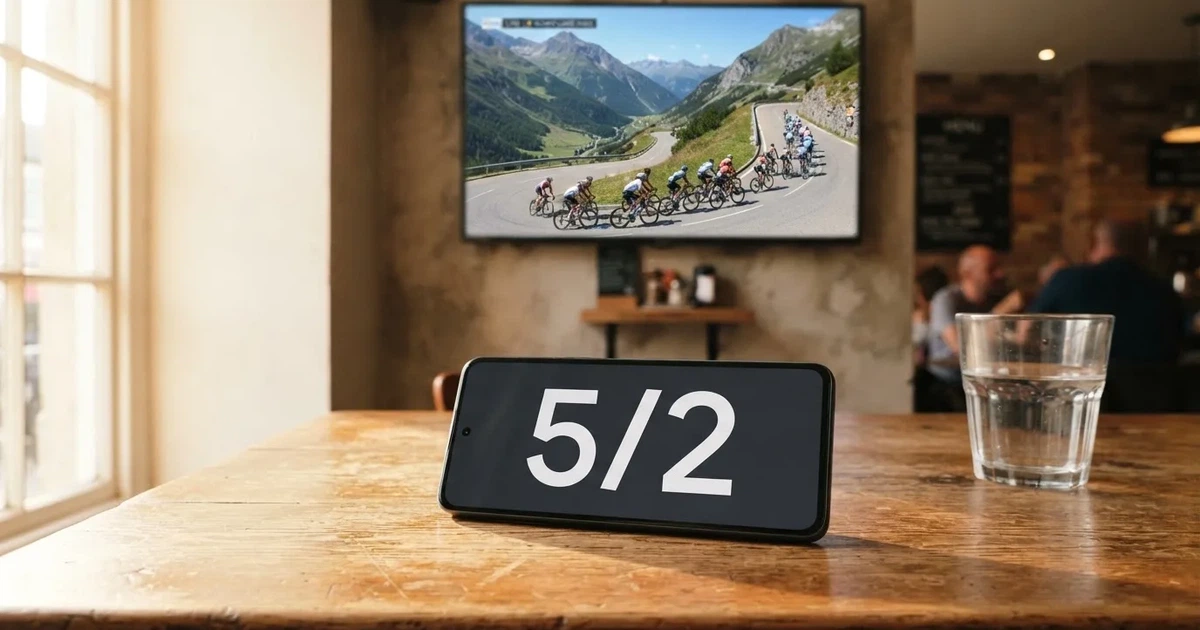
The odds and licence entries below were checked against the Gambling Commission’s public register and each operator’s terms as of 27 October 2026.
Staying in control while a Grand Tour runs for three weeks
Three weeks of daily stages is a long time to keep a bankroll steady. The Commission has not set a deposit ceiling for betting, so limits are the customer’s choice, set in the account settings of any licensed bookmaker. GAMSTOP is the national multi-operator self-exclusion scheme, mandatory for every online operator since 31 March 2020, with exclusion periods of six months, one year, five years, or five years with auto-renewal — and after the minimum period the exclusion stays in place for a further seven years unless the customer asks GAMSTOP to remove it. The scheme covers online sites and apps; high-street bookmakers run a separate over-the-counter register.
A financial vulnerability check, in force since 30 August 2024, applies when a customer’s deposits minus withdrawals exceed £150 in a rolling 30 days. It is a public-record check — for example bankruptcy or county court judgments — not a credit reference or income check, and it triggers automatically. Financial risk assessments, the more invasive “affordability checks” reported in the press, were announced in a staged plan, with no start date. Where a cycle race becomes a problem rather than a pastime, GamCare runs the National Gambling Helpline, GambleAware publishes guidance, the NHS runs gambling clinics, and Gamblers Anonymous holds meetings — links appear in the safer-gambling footer of every licensed bookmaker.
The calendar that shapes a cycling odds page
Road cycling answers to the UCI, the Switzerland-based body that has governed the discipline since 1900 and runs annual men’s and women’s road world championships. The UCI WorldTour sits underneath it, created in 2005 as the ProTour and renamed the WorldTour in 2011, and gathers the Grand Tours and other major stage races on one calendar.
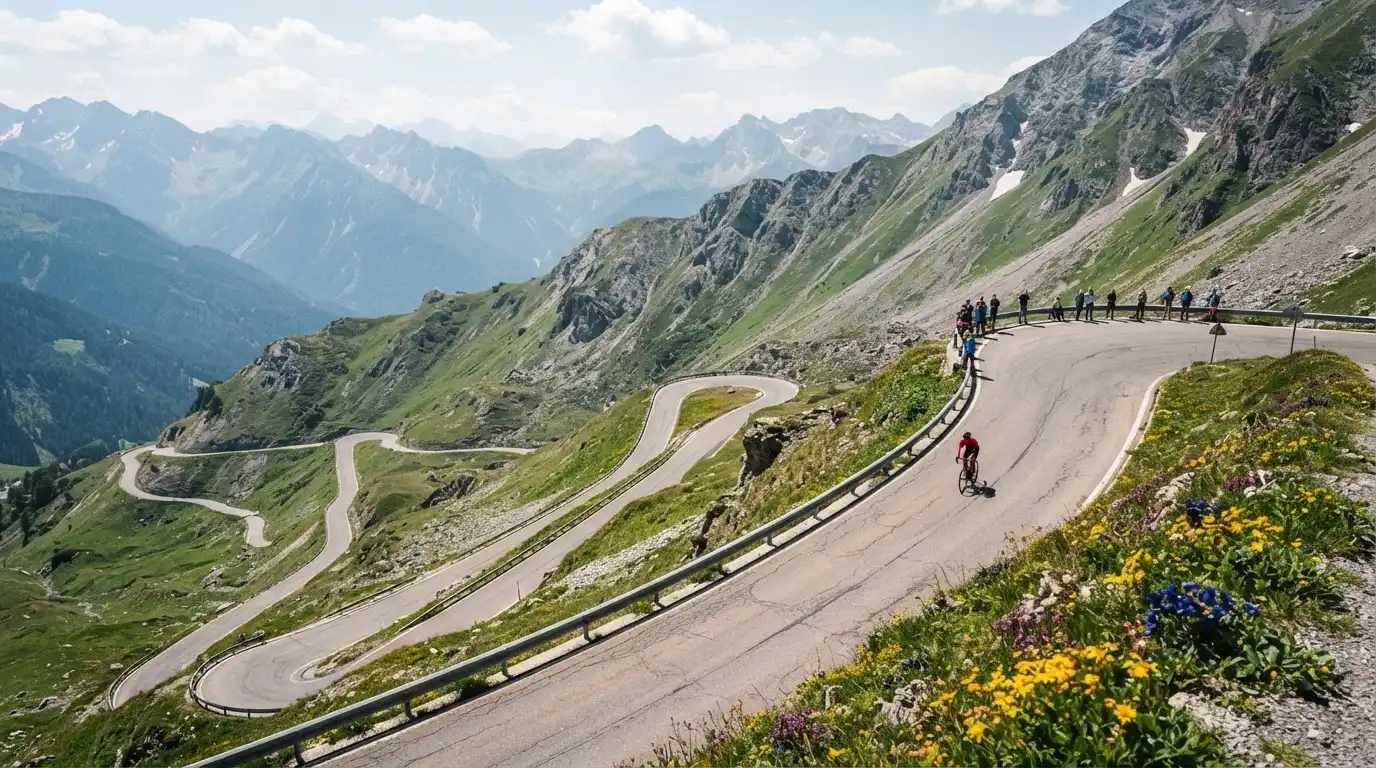
The three Grand Tours are the Giro d’Italia (first held 1909), the Tour de France (1903) and the Vuelta a España (1935). UCI rules allow them to last between 15 and 23 days, and a typical edition includes two rest days. The race leader’s jersey is pink in the Giro, yellow in the Tour, red in the Vuelta — a small fact that matters for the in-running market, because a crash or a time cut on a rest day can hand the jersey over without a stage result. The 2026 Tour de France ran from 4 to 26 July 2026, starting in Barcelona with a team time trial and finishing on the Champs-Élysées in Paris, over 21 stages and 3,245 km with 23 teams. Tadej Pogačar (UAE Team Emirates, Slovenia) won the race — his fifth Tour victory.
Stage races are not the whole of a cycling odds page. One-day Classics — Milan–San Remo, the Tour of Flanders, Paris–Roubaix, Liège–Bastogne–Liège, Il Lombardia — sit alongside the Grand Tours and run from spring to autumn. National championships feed World Championship selection. Track, BMX, cyclo-cross and mountain bike carry their own calendars and their own odds lines, and the depth on offer at any one bookmaker varies from a full road-racing card to a single line on the Tour winner.
How an odds line is built: the margin behind the price
Every price a bookmaker offers is a market with a margin baked in. The cleanest way to see it is a two-way line, the kind a bookmaker posts on a head-to-head match bet or a yes/no proposition: two outcomes, mutually exclusive, one must land. Take an illustrative line at decimal odds 1.90 / 1.90 — fractional 9/10 — the kind of price a bookmaker might post on a head-to-head sprint finish or a 1X2-style proposition. The payout share for this market is one divided by the sum of the implied probabilities, which gives a payout share of about 95 % and a margin of about 5 % of every unit staked. The reader keeps roughly 95p of every pound wagered across both outcomes in the long run; the bookmaker keeps the rest.
The formula is the same for any market with n outcomes: take the implied probability of each outcome (1 divided by the decimal price), sum them, and the margin is 1 minus that sum. A three-way market — winner, each-way place, dead heat — runs higher, because the bookmaker is pricing three outcomes and the margin scales with the number of legs. A stage-rider market, where a bookmaker offers twenty or thirty names on a Grand Tour winner, runs higher still, often 10 % to 20 %, because the long tail of names is harder to balance and the bookmaker’s protection costs more.
That is why a price boost on a short-priced favourite is not a free lunch. A bookmaker offering enhanced odds on Pogačar to win the Tour is selling the same market at a thinner margin on that one outcome, paid for by a thicker margin on the field. The headline price moves; the long-term cost of the bookmaker’s full card does not.
The takeaway for a punter: a margin of 5 % on a two-way line is the floor of a competitive market, and a margin above 8 % on the same shape of bet is the ceiling a sharp price looks for before it is worth walking away. The cost shows up only over hundreds of bets, not on any one coupon.
What a winning bet pays back
The arithmetic of a settled bet is straightforward. Return equals stake multiplied by the decimal odds, and net profit equals stake multiplied by (odds minus 1). A £10 bet at decimal odds 6.00 — the kind of price a bookmaker might offer on an outside Tour contender — returns £60, of which £50 is profit. A £10 each-way bet at 6.00 on a horse race is two bets of £10, so the total stake is £20, and the place terms determine what the place leg pays. For a combination bet — a double, a treble, an accumulator — the odds of the legs multiply into a single price, and a £5 accumulator with three legs at 2.00, 3.00 and 4.00 carries combined odds of 24.00, for a return of £120 on a winning coupon.
Fractional odds translate the same way: a price of 5/1 means a £1 stake returns £6 (£5 profit plus the £1 stake back), or decimal 6.00. A price of evens is 1/1, decimal 2.00. A price shorter than evens — odds-on — is 4/6, decimal 1.67, and a winning £10 bet at 4/6 returns £16.67, of which £6.67 is profit. The conversion is a single step: divide the numerator by the denominator and add one.
What the reviewed UK-licensed bookmakers offer
The set below is built from the Gambling Commission’s public register. Every brand holds a remote general betting standard (real events) licence and offers cycling as part of a wider sportsbook; none of the ten specialises in the sport, and the difference between them is in the shape of the surrounding product rather than the cycling line itself. The licence is the floor; what sits on top is each operator’s own terms.
| Bookmaker | Gambling Commission remote licence | What the operator’s own terms state on cycling and the wider sportsbook |
|---|---|---|
| DragonBet | 064908-R-339041-003, account 64908 — DragonBet Ltd | Sportsbook with Welsh football and rugby markets, racing, American football, in-play betting and bet builder markets; cycling sits inside a general sports card |
| Fafabet | 057385-R-333191-006, account 57385 — Taichi Tech Limited | Best Odds Guaranteed on UK and Irish horse racing win and each-way bets from 9am on race days — if the starting price is bigger than the original price, the bigger odds are paid; cycling follows the operator’s general pricing rules |
| Betboro | 044181-R-324363-007, account 44181 — Webmedia Development N.V. | Sports welcome offer is a 100% matched free bet of up to £25 on the first qualifying wager, requiring a debit card deposit of at least £10 and a first bet of £5 to £25 with at least three selections each at 3/5 (1.60) or higher |
| Matchbook | 039504-R-319407-024, account 39504 — Triplebet Limited | Betting exchange where customers bet against other users, with Bet Builder, multiples, in-play betting and live streaming of horse racing and greyhounds; exchange prices carry a different margin shape because the counterparty is another punter rather than the bookmaker |
| Spreadex | 008835-R-104580-022, account 8835 — Spreadex Limited | Combines fixed-odds and spread betting in one app, with one-click, auto and partial cash out, Bet Builder across fixed odds or spreads, and live streaming of UK and Irish horse racing, greyhounds, tennis, NFL and selected football; spread betting is FCA-regulated and losses can exceed the deposit |
| DAZN Bet | 048756-R-327274-019, account 48756 — DZBT Limited | Deposits start at £5 by debit card, Apple Pay, Paysafecard, Trustly and Skrill, and at £20 by PayPal, with no processing fees; cycling markets follow the general sportsbook |
| Bet Ahoy | 100094-R-341742-003, account 100094 — Bet Ahoy Ltd | Welcome offer of a £5 sports bet and a £5 acca on a first £10 wager; cycling covered as part of the wider sports card |
| London Bet | 066162-R-340278-004, account 66162 — Thistle Bet Limited | Sports betting on football, tennis, horse racing, greyhounds, darts, golf, cricket, NFL, NBA, MLB and snooker, with casino slots and live in-play; cycling included on the general card |
| 10bet | 043173-R-322899-023, account 43173 — Blue Star Planet Limited | Sportsbook covers football, tennis and horse racing, with Cash out, Bet Builder and Live Streaming; cycling included on the general card |
| Hollywoodbets | 053028-R-330019-013, account 53028 — Hollywoodbets International UK Limited | Sports welcome offer refunds the stake as a free bet of up to £30 on the first qualifying losing accumulator (stake £10+, 3+ legs, odds of 4/1 or greater, settled within 7 days); one free bet per customer |
DragonBet
A Welsh-rooted sportsbook with a licence held by DragonBet Ltd and a card weighted toward Welsh football and rugby, alongside racing, American football, in-play betting and bet builder markets. Cycling sits inside the general sportsbook rather than as a featured vertical, and the depth of Grand Tour markets at any given moment is a check the punter makes on the operator’s own site before staking.
For a bettor who wants a GB-licensed bookmaker with a regional slant and a bet builder across sports, DragonBet is a fit. The cycling line is functional rather than deep.
Fafabet
Best Odds Guaranteed on UK and Irish horse racing — the bigger of the original price and the starting price is paid from 9am on race days — is the headline feature, held by Taichi Tech Limited. The cycling offer is part of the general sportsbook, and the deeper question for a punter is the operator’s policy on cycling-specific promotions, which are stated only in the live terms.
The horse-racing guarantee transfers no automatic benefit to cycling, but the underlying licence is the same and the in-play infrastructure is mature. For a racing-led punter who also wants a Grand Tour line, Fafabet is a fit; a cyclist betting strictly on road races, however, may find the racing-specific features under-utilised.
Betboro
The welcome offer is a 100% matched free bet of up to £25 on the first qualifying wager, requiring a debit card deposit of at least £10 and a first bet of £5 to £25 with at least three selections each at 3/5 (1.60) or higher. The licence is held by Webmedia Development N.V. The minimum price of 1.60 is the cut-off: a bet with any leg shorter than 1.60 does not qualify, and the punter’s stake sits on the line. The three-leg minimum is also a constraint — a single or a double is not enough.
The free bet is the kind that does not return the stake on a win, and the punter keeps only the profit, with the value of the free bet itself eaten by the bookmaker. For a punter with a multi-stage bet already in mind, the welcome terms are workable; for someone whose first bet is a single, the offer is a poor fit.
Matchbook
A betting exchange where customers bet against other users, licensed to Triplebet Limited under both remote general betting standard (real events) and remote betting intermediary categories. The bet builder, multiples, in-play betting and live streaming of horse racing and greyhounds sit on top. On an exchange, the price is set by what other punters will back and lay, and the bookmaker’s margin is replaced by the exchange’s commission. A backer’s edge on an exchange is closer to a peer-to-peer price than to a bookmaker’s margin.
For a cycling punter who wants the thinnest margin available and is comfortable laying bets as well as backing them, Matchbook is a fit. The counterparty is another punter, and liquidity on niche cycling markets is thinner than on a Premier League match — the price exists, but the stake a bookmaker will accept may not.
Spreadex
A two-product bookmaker: fixed-odds and spread betting in one app, with one-click, auto and partial cash out, Bet Builder across fixed odds or spreads, and live streaming of UK and Irish horse racing, greyhounds, tennis, NFL and selected football. The licence is held by Spreadex Limited. The fixed-odds side runs under the Gambling Commission; the spread betting side is regulated by the Financial Conduct Authority, and losses on the spread book can exceed the deposit.
For a cycling punter who also trades financial or sports spreads, Spreadex is a fit. A punter focused solely on fixed-odds betting may find the spread book complex, and should note the FCA-side risk warning before committing to an account.
DAZN Bet
The deposit policy is the most clearly stated of the set: £5 by debit card, Apple Pay, Paysafecard, Trustly and Skrill, and £20 by PayPal, with no processing fees. The licence is held by DZBT Limited. The cycling offer follows the general sportsbook, and the deeper test is the operator’s policy on minimum stakes, maximum payouts and the speed of withdrawals on a winning Grand Tour bet.
The deposit floor of £5 is the lowest in the set, and for a punter who wants to keep a small bankroll on a stage race the threshold matters. For a punter staking larger sums, the PayPal minimum of £20 is the binding constraint.
Bet Ahoy
The welcome offer is a £5 sports bet and a £5 acca on a first £10 wager, with the licence held by Bet Ahoy Ltd. The total free-bet value is small — £10 against a £10 qualifying bet — and the two-part split between a single and an accumulator is unusual. Each half is governed by its own terms, and a punter who uses the single half on a cycling bet and the acca half on a different sport is splitting the qualifying bet across two products.
For a punter who bets small and wants a low-friction welcome, Bet Ahoy is a fit. For a punter chasing value, the £10 cap on free bets is the binding constraint.
London Bet
A combined sportsbook and Pragmatic Play casino product, with a licence held by Thistle Bet Limited. The sports card covers football, tennis, horse racing, greyhounds, darts, golf, cricket, NFL, NBA, MLB and snooker, with live in-play; cycling is part of the general offer. The casino side is a separate product under a separate licence condition, and the punter’s stake on a Grand Tour bet does not interact with the casino wallet.
For a punter who wants sports and casino on one account, London Bet is a fit. Those betting exclusively on cycling will see the casino elements as secondary rather than core to the experience.
10bet
A sportsbook with Cash out, Bet Builder and Live Streaming, with a licence held by Blue Star Planet Limited. The stated verticals are football, tennis and horse racing, with cycling inside the general sportsbook. The cash-out function is the headline feature, and the question for a cycling punter is whether the cash-out price holds during a stage — the answer depends on the operator’s in-play trading, not on the cash-out button.
For a punter who wants to trade a position during a stage, 10bet is a fit. For a punter who lets bets ride to settlement, the cash-out function is irrelevant.
Hollywoodbets
The welcome offer refunds the stake as a free bet of up to £30 on the first qualifying losing accumulator, with a stake of £10 or more, three or more legs, odds of 4/1 or greater, settled within seven days, and one free bet per customer. The licence is held by Hollywoodbets International UK Limited. The seven-day settlement window is the binding constraint: a Grand Tour acca that runs into the second week of a three-week race needs to be settled well inside the window, and a long-shot leg that places rather than wins can be a problem.
For a punter with a short-priced multi already in mind, Hollywoodbets is a fit. For a punter with a long-shot stage acca, the seven-day window is the constraint that decides whether the welcome offer is worth claiming.
The legal frame for betting on cycling in Great Britain
The Gambling Commission, a non-departmental public body sponsored by the Department for Culture, Media and Sport, licences the whole commercial market under the Gambling Act 2005, which covers Great Britain — England, Scotland and Wales. Northern Ireland sits outside the Act under its own older law, so a GB licence does not regulate Northern Ireland. Since the Gambling (Licensing and Advertising) Act 2014 an operator whose remote facilities are used in Great Britain needs a Commission licence wherever it is based, and a Curaçao, Maltese or Gibraltar licence is not a substitute. There is no state monopoly and no cap on the number of licences.
The Commission’s public register can be searched by business name, trading name, domain or account number, and it is the whole test of who holds a licence. Licensed operators use .com as well as .co.uk, so the domain proves nothing. A punter who wants to confirm a brand’s licence looks the operator up by name on the register; the licence categories and the licence holder’s name appear on the public record, and an account number alone is not a substitute for the name.
Betting licence types are: remote general betting standard (real events), remote general betting standard (virtual events), remote general betting limited, remote pool betting, and remote betting intermediary — the last one is the licence for betting exchanges. The ten bookmakers reviewed above all hold the remote general betting standard (real events) licence; Matchbook additionally holds the remote betting intermediary licence. Minimum age 18, and name, address and date of birth are verified before a customer can deposit or gamble — since 7 May 2019 — including with a free bet or bonus, so there is no anonymous play at a licensed site.
What may be bet on: no statutory list of permitted bets or markets exists. An operator holds a licence for a category and offers markets under its own rules and the Licence Conditions and Codes of Practice. In-play betting is offered by GB bookmakers and the controls are the operator’s licence conditions and customer-protection duties; the legal conclusion is not that in-play is “unrestricted”. Esports are treated like any other event; virtual events are a separate licence category; bets on politics, TV shows and novelty markets are offered by GB bookmakers and no statutory prohibition was found. Spread betting that is not a financial product sits inside General Betting Duty. Off-course pool betting on horse or dog racing is a separate licence and duty. There is no statutory cap on stakes in sports betting: operators set their own maximum stakes and may restrict customers.
Player protection under the LCCP: GAMSTOP is mandatory for online operators, with the periods and the seven-year tail described in the opening section. The financial vulnerability check applies at the £150-in-30-days threshold. Deposit limits under RTS 12 are operator-set on a fixed time frame, with the first changes live since 31 October 2025 and a second phase announced for 30 September 2026; whether the second phase is live is not established. There is no state-set deposit or loss ceiling for betting: limits are the customer’s choice. Where a cycle race becomes a problem, the help lines and clinics in the opening section are the route.
Payments: credit cards are banned for gambling in Great Britain, since 14 April 2020, including credit-card-funded payments through an e-wallet; debit cards and bank-based payments are not covered by that ban. The British named-account rule, a state list of permitted payment methods, and any rule for or against cryptocurrency deposits at licensed operators are not established, and payments are described here only from each operator’s terms.
Advertising and bonuses: advertising is not licensed by the Commission; it runs through the CAP Code (non-broadcast) and BCAP Code (broadcast), enforced by the ASA, alongside the LCCP marketing conditions. Promotion rules in force since 19 January 2026 cap wagering requirements on bonuses at 10x, and ban mixed-product promotions — an offer that requires gambling on two or more product types such as betting, casino, bingo and lottery, for example “bet on football to get free spins”. Whether the cap applies to free bets with no wagering condition, and any cap on the money value of a bonus, are not established. “Whistle-to-whistle” is an industry code, not law: since 1 August 2019 betting advertisements are not shown on TV from five minutes before a live sporting event to five minutes after it, before the 9pm watershed, with horse and greyhound racing excluded. The Premier League clubs’ voluntary withdrawal of gambling sponsorship from the front of matchday shirts, from 2026/27, leaves sleeves and hoardings untouched and is not law. Operators are responsible for marketing by their affiliates.
Tax: the player pays no tax on betting winnings in Great Britain — a point of general information, not tax advice, and a professional gambler should ask HMRC or an adviser. General Betting Duty is the operator’s tax on gross profits, currently 15 %; from 1 April 2027 a new remote betting rate of 25 % applies within it, while remote bets on UK horse racing, bets on self-service betting terminals in licensed premises, pool betting and in-person betting stay at 15 %. Until 1 April 2027 the remote rate stays at 15 %, and whether operators pass duty on through odds is not established. The Commission’s statutory levy is a separate charge, not a tax.
Offshore: a GB licence is compulsory at the point of consumption. Providing gambling facilities in Great Britain without the licence the Act requires is an offence under section 33 of the Gambling Act 2005 — aimed at the operator. No offence aimed at a customer who merely bets on an unlicensed site was found, so the framing is the loss of protection: no GAMSTOP coverage, no Commission complaints route, no approved dispute-resolution body, no British consumer redress if funds are withheld, and not bound by the 10x bonus cap or the £150 vulnerability check. Enforcement is disruption, not blocking: cease-and-desist notices, search-engine referrals, work with registrars, hosts and payment providers, with court-order DNS blocking powers announced but not in operation.
What to check before placing a cycling bet
A cycling bet is settled under the operator’s own terms, and the terms are the document that decides what happens when a stage is shortened, a rider withdraws, or a race is cancelled. The points that catch a punter most often:
- Non-runner rules. A Grand Tour winner market that runs across three weeks can see a key contender abandon in week one. The operator’s non-runner rule decides whether the bet is void or stands at a revised price.
- Each-way terms. Each-way bets are two bets of equal stake, so the total stake doubles. Place terms on a stage or a one-day Classic are not the same as place terms on a horse race, and the operator’s terms state the place fraction.
- Rule 4 deductions. A Rule 4 deduction is a bookmaker rule, not a cycling rule: when a horse withdraws from a race, the bookmaker reduces the odds on remaining runners. The rule does not apply to cycling in the same form, but a comparable clause can apply to a stage-rider market.
- In-play trading. Cash out and partial cash out are operator features, and the price a punter sees is the operator’s price at the moment of the trade. On a stage that turns on a crash, the price can move sharply, and a punter who clicks cash out at the wrong second takes a smaller return than the screen suggested.
- Welcome offers. The welcome offers above are deposit-gated and carry wagering conditions or minimum price thresholds. The terms state the deadline, the minimum price and the qualifying bet, and a punter who bets without reading the terms loses the offer.
- Stake limits. Operators set their own maximum stakes, and a winning Grand Tour acca that exceeds the operator’s payout cap is settled at the cap. The cap is in the terms, not on the betting slip.
For a punter who wants the thinnest margin, the betting exchange is the better venue than any of the fixed-odds bookmakers above, at the cost of thinner liquidity on niche cycling markets. For a punter who wants a free bet or an enhanced price, the fixed-odds bookmakers run the welcome offers and the price boosts, at the cost of the bookmaker’s margin. The two products are not substitutes; the punter picks the one that matches the bet.
The shape of a cycling betting slip
A Grand Tour betting slip at a UK-licensed bookmaker typically carries: race winner, each-way terms, top three, top finish by nationality, stage winner, individual stage place markets, head-to-head match bets between named riders, team classification, points classification, king of the mountains, and youth classification. The deeper the race, the more the markets spread. The Tour de France and the Giro d’Italia carry the deepest books; the Vuelta a España is shorter, and one-day Classics carry the thinnest.
In-running markets follow the same shape. A bookmaker with mature in-play trading will offer a next-stage winner market, a current-race leader market and a head-to-head market during the stage itself, with prices updating as the breakaway forms, the peloton catches up, or a crash reshapes the field. A bookmaker with thin in-play trading will offer only the pre-race winner market in running, and the punter who wants to trade a position during a stage is restricted to the operators that carry the in-play depth.
The punters the market fits: a bettor who wants a long-shot Tour winner acca with a seven-day settlement window, a bettor who wants to lay a name on an exchange, and a bettor who wants the thinnest fixed-odds margin on a stage head-to-head. The punters the market does not fit: a bettor who wants a daily in-play product on a one-day Classic, and a bettor who wants a deep futures book on a track cycling World Championship.
A calculation the page earns
Take an illustrative two-way market at decimal odds 1.90 / 1.90 — fractional 9/10 — the kind of price a bookmaker might post on a head-to-head sprint finish or a 1X2-style proposition. The implied probability of each outcome is 1 ÷ 1.90, or about 52.6 %, and the sum of the two implied probabilities is about 105.3 %. The payout share is 1 ÷ 1.053, or about 95.0 %, and the margin is 1 minus the payout share, or about 5.0 % of every unit staked.
A punter staking £10 on each outcome of a £20 total-stake two-way line at 1.90 / 1.90 expects a return of £19 on the winning leg, for a net position of −£1 across both outcomes. That −£1 is the bookmaker’s margin in cash, taken on a market the bookmaker has balanced perfectly. On a real Grand Tour market with twenty or thirty riders priced, the margin runs higher — often 10 % to 20 % — and a punter staking the same £1 unit across the field keeps a smaller share of every pound wagered in the long run. The result is a band: roughly 5 % on a tight two-way line, 10 % to 20 % on a deep stage-rider market, with the cost showing up only across many bets, not on any one coupon.
The gloss of the formula is what a winning bet returns on average across many bets, not what any single bet pays back. A punter who treats the margin as a long-run cost, not a coupon-level tax, reads the price the way the bookmaker wrote it.
Frequently asked questions
Where can a UK punter bet on cycling?
Any bookmaker licensed by the Gambling Commission for remote general betting standard (real events) may offer cycling under its own sportsbook. The Commission’s public register is the test of who holds such a licence, and the ten bookmakers reviewed above all appear on it. There is no statutory list of permitted sports; the depth on offer at any one bookmaker varies from a full road-racing card to a single line on the Tour winner, and the punter checks the operator’s own site for the current market list before staking.
Can a betting exchange be used for cycling?
A remote betting intermediary licence — the licence for betting exchanges — covers the back-and-lay model where customers bet against each other rather than against the bookmaker. Matchbook is the exchange in the reviewed set. On an exchange the counterparty is another punter and the price is set by what other users will back and lay, with the exchange’s commission replacing the bookmaker’s margin. Liquidity on niche cycling markets is thinner than on a Premier League match, and the punter accepts a smaller maximum stake in exchange for a thinner margin.
How is a Gambling Commission licence confirmed?
The Commission’s public register can be searched by business name, trading name, domain or account number. A punter who wants to confirm a brand looks the operator up by name on the register, checks the licence categories — for cycling the relevant one is remote general betting standard (real events) — and confirms the licence holder’s name. The domain is not proof on its own, because licensed operators use .com as well as .co.uk. The register is the whole test of who holds a licence, and a brand that does not appear on it is not licensed for Great Britain.
How is the return on a bet worked out from the stake and the odds?
Return equals stake multiplied by the decimal odds, and net profit equals stake multiplied by (odds minus 1). A £10 bet at decimal 6.00 returns £60, of which £50 is profit. For a combination bet, the odds of the legs multiply into a single price. The arithmetic is the same for fractional odds after conversion: a price of 5/1 is decimal 6.00, and a £1 stake returns £6.
What is the bookmaker’s margin and how can it be seen in the odds?
The margin is the share of every unit staked the bookmaker keeps across all outcomes of a market, calculated as 1 minus the sum of the implied probabilities. An illustrative two-way line at 1.90 / 1.90 carries a margin of about 5 %. A deep Grand Tour winner market with twenty or thirty riders runs higher, often 10 % to 20 %. The margin shows up only across many bets, not on any one coupon, and a punter who treats it as a long-run cost reads the price the way the bookmaker wrote it.
How do fractional odds convert to decimal odds?
A fractional price a/b converts to decimal as a ÷ b + 1. A price of 5/1 is 5 ÷ 1 + 1, or 6.00. A price of 11/4 is 11 ÷ 4 + 1, or 3.75. A price of evens is 1/1, or 2.00. A price shorter than evens — odds-on — is 4/6, or 1.67, and a winning £10 bet at 4/6 returns £16.67, of which £6.67 is profit. The conversion is a single step and is the same for every market the bookmaker prices.
Combat & motorsport – Basketball betting
Content created by the «Basketball betting» team
