
Reading esports odds in Great Britain: how the price is built and what it keeps
 Available in US
Betting on esports in Great Britain sits inside the same legal frame as betting on football, horse racing or any other sport. There is no statutory list of permitted esports titles, no separate “esports licence” and no carve-out for in-play markets. A bookmaker taking bets from customers in this country needs a Gambling Commission remote licence; whether it then offers League of Legends, Dota 2, Counter-Strike, Valorant, Rocket League or any other title is a commercial choice made on its own platform. That is why the page below starts from how odds work, then walks through what the licensed operators in this comparison actually publish about esports — and what the price in front of a punter is really doing once the bookmaker’s margin has taken its share.
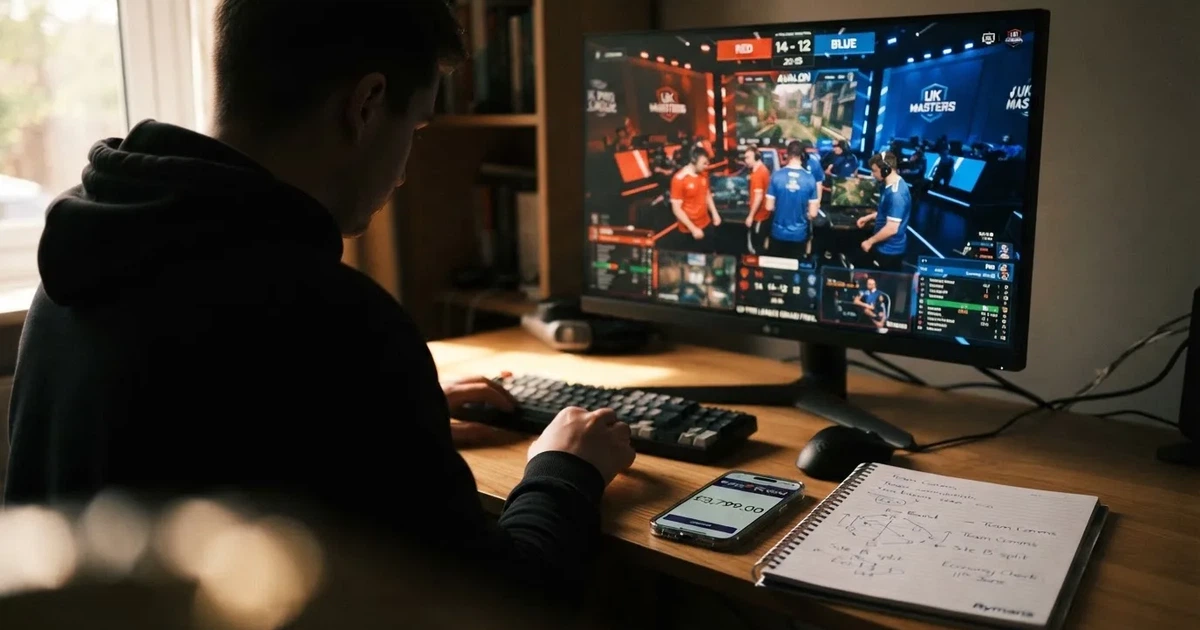
Data current as of 27 October 2026, verified against the Gambling Commission’s public register.
The shape of an esports betting market
Esports itself is a form of organised competition using video games, played individually or in teams, almost always in professional leagues or tournaments with prize money attached. The titles a British punter will meet most often are League of Legends, Dota 2, Counter-Strike, Valorant, Overwatch, Call of Duty, Fortnite, Rocket League and StarCraft. The tournaments that anchor the calendar are the League of Legends World Championship, Dota 2’s The International, the Evolution Championship Series (EVO) for fighting games and the Intel Extreme Masters circuit, with newer multi-game events such as the Esports World Cup running alongside them — the 2026 edition in Paris carries a US$75 million prize pool across 24 games between 6 July and 23 August 2026, and the 2025 edition closed on US$71.5 million with Team Falcons taking the club title. The International 2021 for Dota 2 set the long-standing benchmark at over US$40 million in prize money, the largest single esports purse at that time.
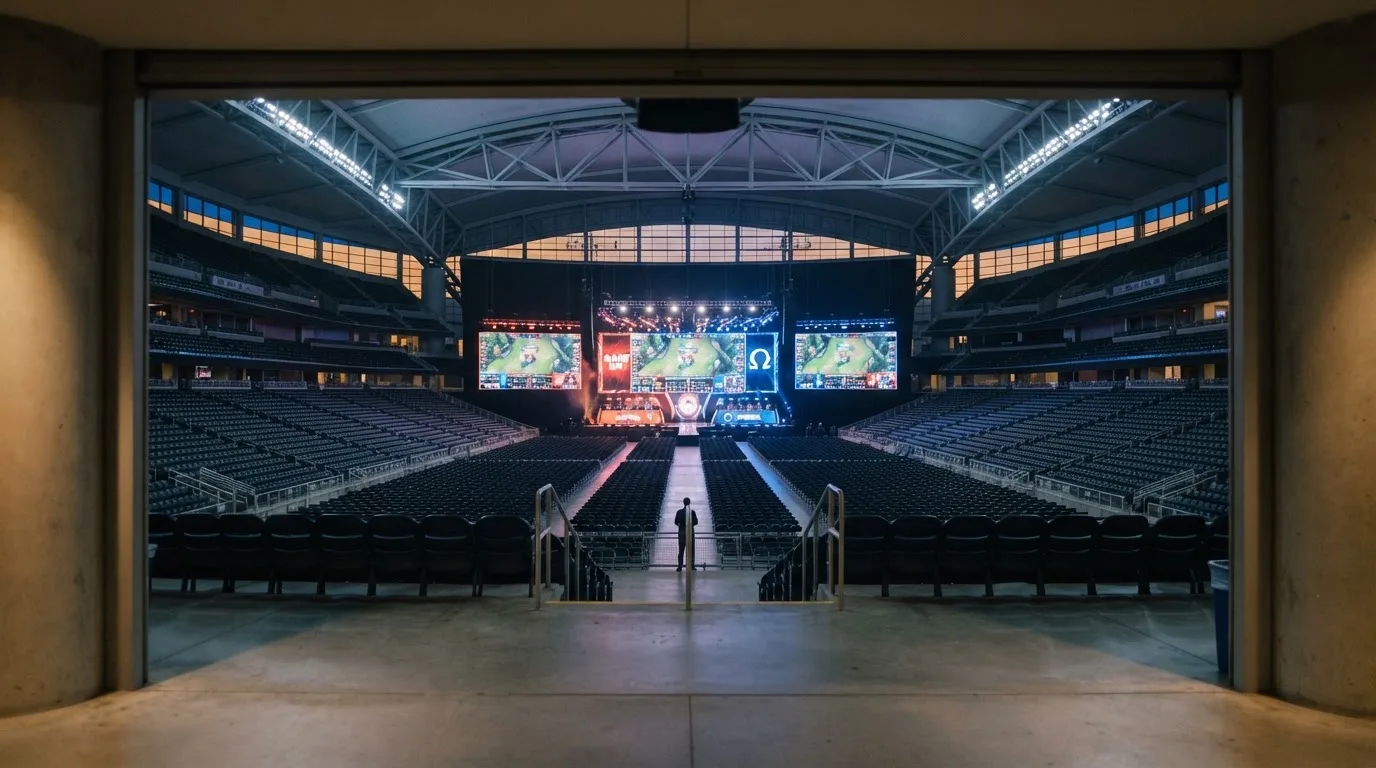
The point for a punter is structural rather than thematic. Esports tournaments have rosters, fixtures, group stages, brackets and best-of series, and a licensed bookmaker maps that structure onto its markets. The same way a Premier League match becomes a 1X2 market, a best-of-three Counter-Strike series becomes a match-winner market, a map handicap, a total maps line, an outright to win the event and, during the match, an in-play price on the next round or the next map. The vocabulary is shared with conventional sport; the underlying fixtures come from a server in Los Angeles or Seoul rather than a stadium in Manchester.
How a price is built: the margin inside the odds
A decimal price is the figure a stake is multiplied by to work out the return. At 1.90 a £10 stake returns £19, the original £10 plus £9 of profit. A £10 stake at 3.50 returns £35, the £10 plus £25 of profit. That is the mechanical side, and the same arithmetic runs through every market on a licensed platform.

What sits inside the price, and what makes one bookmaker’s esports offering different from another’s at first glance, is the margin — the slice of every pound staked that the bookmaker expects to keep, averaged over many bets. The arithmetic is direct. For a two-way market with decimal prices 1.90 and 1.90, the payout share is 1 ÷ (1 ÷ 1.90 + 1 ÷ 1.90), which is 1 ÷ (0.5263 + 0.5263) = 1 ÷ 1.0526 = 0.9500, or 95.00%. The margin is 1 minus that, or 5.00%. Two near-identical prices on a balanced two-way line produce a 5% margin; pull one price in to 1.80 and 2.00, the share drops to 1 ÷ (0.5556 + 0.5000) = 1 ÷ 1.0556 = 94.74% and the margin climbs to roughly 5.26%. Spread the same two prices further apart and the margin widens. The pattern is consistent across markets: the closer the two prices sit to one another, the more of each pound is returned to punters in aggregate; the further apart they sit, the more the bookmaker keeps.
The band matters because it is the one number that ages fastest and the one that no headline price tells the reader. A headline boost from 1.85 to 2.00 on a selection looks like a gift; set against the rest of the market and the rest of the book, it is a different size of gift. The single price a punter sees is the visible part. The invisible part is the margin that ran the moment the two sides of the market were framed, and that margin is what determines what a season of bets costs in aggregate, regardless of which side wins any one match.
That is also why “best odds” claims need a frame. A bookmaker can publish the highest price on the single most popular League of Legends fixture of the weekend and still run a wider margin across its full esports card than a competitor that prices every selection a couple of points shorter. The headline is real; the comparison is not. The way to read an esports book is across a sample of markets — match winner, map handicap, total maps, outright tournament winner — not on a single match at a single moment.
Fixtures and what an esports calendar actually carries
An esports calendar runs almost year-round because the games themselves do. The League of Legends season has its spring and summer splits, a Mid-Season Invitational and a World Championship in autumn. Dota 2 has its DPC Pro Circuit running into The International as the season’s cap. Counter-Strike runs through a stack of tier-one events under the broader banner of Intel Extreme Masters, BLAST and ESL Pro League, with majors acting as the season’s anchor points. Valorant runs the VCT circuit across regional leagues and a global championship. The fighting-game community funnels into EVO each summer. Rocket League runs the RLCS through splits and a world final. The Esports World Cup in the summer of 2026 brings twenty-four games into one venue across July and August.
For a licensed British bookmaker, the practical question is which of those events to price. Some operators carry deep outright markets on a dozen titles. Some carry a thin in-play offering on three or four. Some price match winner only and leave the map lines, the round lines and the prop markets to specialists. None of that is restricted by the Gambling Commission’s licence categories, which treat esports like any other event; the shape of the book is a house decision, and a punter who wants a particular market checks the platform’s esports tab before staking a penny.
The volatility inside a match is also worth flagging. A Counter-Strike map can flip on a single round. A League of Legends game can pivot on one team-fight around a major objective. The market’s in-play price moves with the action, and licensed operators in this comparison publish in-play markets as a standard feature. Whether the book holds up under a 5-0 lead in the first half of a map is a different question and one the punter answers with a small stake the first time, not a season’s bank on the first map of the day.
Crypto, anonymity and the licensed perimeter
The question of paying for an esports bet in bitcoin or another cryptocurrency meets the question of who is licensed to take that bet from a customer in Great Britain, and the two questions do not have the same answer. A licensed British bookmaker is bound by anti-money-laundering and source-of-funds rules that mean a customer is identified before a first deposit, that deposits and withdrawals use the customer’s own payment methods, and that a £150 rolling 30-day spend triggers a financial vulnerability check. Crypto sits awkwardly inside that frame because the regulated payment routes the operator offers are the ones that hold up under those checks, and the operator’s own terms govern which of them is open to a given account.
For a punter who wants the cryptocurrency route specifically, the practical situation is that the licensed operators featured below take bets in pounds through regulated rails, and the licensed perimeter is the perimeter in which a British customer’s funds have the protections the Gambling Act provides. Brand-specific positions on which coins or tokens are accepted for deposit at a licensed British bookmaker are not established on a uniform basis across the licensed set; where a brand publishes one, that is what the punter reads before funding. A pure “crypto esports betting” site licensed nowhere in Great Britain sits outside that perimeter; the bet itself is taken, the funds sit in the site’s house rules, and the protections the Gambling Act offers — GAMSTOP, the Commission’s complaints route, an approved dispute-resolution body, the 10x bonus cap, the £150 vulnerability check — do not travel with the deposit. That is not a claim about criminality; it is a statement about where a fund held by a customer in this country does and does not have the backstop of a British licence.
The marketing word that does the most work in this corner of the market is “anonymous”. A licensed British site does not, and under the 2019 verification rules since 7 May 2019 cannot, take an anonymous bet. The name on the account, the address and the date of birth are checked before a deposit or a free bet is credited, and the check is not optional. Any pitch that promises anonymity alongside a British bet is selling one of two things it cannot lawfully deliver.
Bonuses and free bets: what an offer actually costs
A welcome offer on a licensed British esports book is a marketing line with conditions attached, and the conditions determine what the offer is worth. Three mechanics do most of the work in this market and are worth being precise about.
A free bet, in the form most often published on these sites, is a token that lets a punter place a bet without committing a stake from the cash balance. The stake is not returned with a winning free bet; only the profit lands. A £10 free bet at decimal odds of 3.00, on a market with a 5% margin, has an expected value of £10 × (3.00 − 1) ÷ 3.00 × 0.9500 = £6.33. That is what the offer is worth on average across many such bets, not what it pays on any single bet, and it is the number a punter should hold in mind when comparing offers. A £20 free bet at the same price is worth roughly twice as much, again on average.
A “matched” or “refund” offer refunds a losing first bet in whole or in part, often as a free bet rather than as cash. The refund is conditional on the first bet losing; a winning first bet pays normally and the refund disappears. The expected value of a refund-as-free-bet offer depends on the probability the first bet loses and on the free-bet value above, not on the headline refund figure alone.
A deposit bonus credits a percentage of the deposit as bonus funds, with a wagering requirement. Under the Commission’s rules in force since 19 January 2026, the wagering requirement on a bonus is capped at 10x. A £10 bonus at 50x wagering would have needed £500 of qualifying bets; under the cap, no bonus can carry that condition. A £50 bonus at 10x means £500 of qualifying bets at the minimum price the operator publishes in its terms. Whether the cap reaches a free bet with no wagering condition is not established; what is established is the cap on bonus wagering and the ban on mixed-product promotions — the offer that requires a bet on football to release free spins, or a sports bet to release casino credit, is not a lawful promotion on a British site.
Two further mechanics recur. Acca insurance refunds a losing accumulator as a free bet if one leg lets the punter down, usually when the accumulator has five or more legs. A price boost raises the decimal price on a named selection for a limited window, and the boost is paid as cash winnings on the boosted portion on most licensed platforms. Each of these is worth what its own terms say, and each is worth less than its headline suggests when the conditions are read.
A practical note: the conditions that change the value of a free bet or a bonus — the minimum price for a qualifying bet, the deadline, the cap on free-bet winnings, the list of markets the offer covers — sit in the operator’s own terms, not in the headline, and they vary by brand. A punter who has settled on a welcome offer reads those four conditions before clicking claim, because each one is a small print clause that can change the offer from useful to marginal without changing the headline.
Payments and payout speed
The mechanics of getting money in and out of an esports book are the most concrete part of the experience, and the most underrated by readers who weigh only the welcome offer. Five rails carry most of the traffic on the licensed set in this comparison.
Debit cards and the major card networks are accepted across the licensed set for deposits and withdrawals. A Visa or Mastercard debit is the default rail, and withdrawals return to the same card in most cases. Bank transfer is widely available and is the rail of last resort for larger sums, with the same-day instant options now common through Faster Payments. E-wallets such as PayPal, Skrill and Neteller are accepted by some of the licensed brands in this comparison for deposits, and where the brand accepts PayPal for deposits it usually returns withdrawals to the same PayPal account. Prepaid solutions such as paysafecard work on the deposit side at a subset of the licensed set, with the practical limitation that a paysafecard-funded account has limited withdrawal options because the card is one-way. The Trustly-style instant bank-route is published by some of the licensed set as a deposit and payout method that links a bank account without a card detail.
A credit card is not a deposit method for gambling in Great Britain under the LCCP since 14 April 2020, and a credit-card-funded payment through an e-wallet is captured by the same rule. The licensed set does not advertise a credit-card route for the same reason, and any third party offering a workaround is one the punter avoids on principle.
Payout speed is where the licensed brands in this comparison diverge, and it is worth holding the differences honestly. A PayPal withdrawal at a brand that supports it tends to clear inside a working day. A debit card withdrawal tends to clear in one to three working days, depending on the issuer. A bank transfer through Faster Payments can clear inside hours. A withdrawal to a bank account through standard BACS runs two to three working days. The brand’s own published timeframe and the customer-service queue at the time of the request are the two variables that determine the answer a punter actually experiences; the headline “instant withdrawals” is the marketing line, and the small print is the queue.
The wider point is that the rail determines the speed. A punter who has chosen a brand for the depth of its esports book, and who reads the small print only at withdrawal, has read the wrong small print.
Mobile and app experience
Most of the betting on a British licensed esports book now happens on a handset, and the published app is the surface the punter actually uses. The licensed set in this comparison publishes a mobile app on at least one of the major stores, with the Apple App Store as the most consistent reference; the descriptions on the store pages are the cleanest cross-brand summary of what each app carries, because the operator lists its own features there and updates the listing when features change.
Three features do most of the work for an esports punter on mobile. In-play betting is the headline: prices updating in real time, with a stake box large enough to use one-handed and a confirm button that does not sit under a thumb that drifts. Cash out is the safety valve: the operator offers a price on an open bet, the punter takes it, the bet is settled at that price, and the rest of the match plays out without the original stake in it. Live streaming, where the operator has the rights, embeds the event inside the app alongside the bet slip, so a punter watching a Counter-Strike series through the same window in which the bet sits is the standard experience on the brands that have it.
A bet builder is the fourth feature and the one that has reshaped the in-play experience. A bet builder takes two or more markets from the same event — match winner and total maps on a best-of-three, say — and combines them into a single price that is the product of the two. The catch is that the combined price carries a wider margin than either leg, and the legs are correlated in a way that the headline price does not show. A bet builder is useful in a specific situation, not in every situation, and a punter who treats it as a default is paying a margin for the convenience of one tap.
The cross-store feature list, as published by the operators themselves, is the cleanest reading of what an app does: a list of features written by the people who built the product, with a date the listing was last updated. A punter who treats the store listing as a starting point, and the in-app reality as the test, is closer to the truth than one who reads the homepage and stops.
Live betting and cash out on esports
In-play betting on esports is structurally similar to in-play on any other sport, and it is offered across the licensed set in this comparison. The mechanics on the bookmaker side are the same: a feed of state data from the game, a margin applied to the live price, an in-play suspension when something significant happens in the match. The mechanics on the punter side are the same as well: the price moves with the action, a stake confirmed at one price settles at that price, and a stake placed during a suspension is held until the market reopens.
The cash-out feature is the natural pair to in-play. A bookmaker offers a price on an open bet; the punter accepts, the bet is settled, the rest of the match plays out without the original stake. Cash out is most useful on a bet whose value has moved in the punter’s favour and where the punter is unwilling to ride out the rest of the match; it is least useful as a default. A punter who cashes out every winning position surrenders the long-run edge of waiting; a punter who never cashes out surrenders the discipline of a stop. The honest use of the feature is between those two extremes, and the only honest test of a particular bookmaker’s cash-out is the price it offers against the live market — not the existence of the button.
One detail specific to esports is the granularity of the live market. A Counter-Strike best-of-three can carry in-play prices on the match, the map, the next round, the next pistol round and, on some books, the next five-round window. A League of Legends match can carry prices on the next major objective, the next team-fight, the next inhibitor. The market depth is brand-specific, and it is the single best test of whether a bookmaker is serious about esports or whether the tab is a marketing line. A punter who wants a deep in-play experience finds the book with the deepest market and pays the price, in margin, for that depth.
Predictions, tips and what a tip actually carries
A market of tipsters, prediction sites and analytics pages sits alongside the licensed bookmakers, and the standard reader is right to be sceptical of the marketing. The “most profitable bets today” framing is a sales pitch; the contents behind it are some mixture of statistical modelling, insider information, paid-for picks and the residual output of a long losing run. None of that is licensed by the Gambling Commission, and the protections a punter has on a licensed betting site — GAMSTOP, the complaints route, the dispute-resolution body, the bonus cap, the financial vulnerability check — do not apply on a tipster site. The tip is information; the bet is the punter’s; the two should not be confused.
The statistical approach is more useful and more boring. League of Legends and Dota 2 publish roster changes, head-to-head results, draft histories, side selection rates, map win rates and, for some leagues, individual player statistics. Counter-Strike publishes round-by-round results, map-pool strengths and recent form. A punter who builds a model from those inputs and back-tests it across a season has done what a tipster claims to have done. A punter who pays a tipster has bought a claim, not a model. The two are different products with different prices, and the difference is what a tip actually carries.
A second, more practical point: a tip cannot be back-tested without a price, and a price is what the bookmaker is selling. A tip that names a side without a price is information in a vacuum; the punter’s decision is at what price to take it, and the model that supports the tip has to clear the book’s margin to be worth following. The arithmetic that follows from the margin calculation in the section above is the test: if the model’s edge is below the book’s margin, the tip is worth less than its headline.
The single most useful habit a punter can develop is reading the closing line. A bookmaker’s price at the moment the match starts, after the steam and the syndicate money has moved the line, is the cleanest estimate of the true probability the market has produced. Beating the closing line over a season is a real test of a model; beating the morning line is a less interesting one.
Bet types and the odds that frame them
The bet types a British licensed bookmaker publishes on esports track the underlying game. A match-winner market is the standard, with two or three selections depending on whether the format is best-of-one, best-of-three or best-of-five, and with the third selection on a best-of-three being the draw at 2-2 maps settled. A map handicap sets a line at, say, +1.5 maps on the underdog, and a total maps line sets an over/under on the number of maps played. Outright markets on the tournament winner run throughout the event, and a place market on each finalist is published at most licensed books.
A bet builder, described in the mobile section, takes markets from the same event and combines them. An accumulator takes markets from different events and combines them, with the cumulative price being the product of the legs and the cumulative margin being the wider of the legs. A each-way bet, common on outrights at racing-led books, splits the stake into a win portion and a place portion with the place terms set by the book; on outrights the place terms tend to be a quarter of the win odds for the first two places, and the stake doubles because it is two bets of equal size. An each-way bet is two bets, not one, and a punter who treats it as one is understating the stake.
The settle and void mechanics on esports have their own specifics. A walkover, a server disconnection mid-round, a roster change after the bet is struck, a map restart for a technical reason: each of these is a settlement event the bookmaker’s own rules govern. The rules are published in the operator’s terms, and a punter who has not read them is taking a position the bookmaker has written on the punter’s behalf. The standard reading is to scan the esports settlement rules before staking on an outright that runs across a season.
The single most useful practical habit on bet types is to ask, before placing a bet, what the price would be on each leg separately. If the combined price on a bet builder is shorter than the product of the two leg prices, the builder is applying a margin on top of the margin. If the combined price is the product, the builder is free of that second margin. A bet builder at the product of the legs is a useful convenience; a bet builder below the product is a tax on the convenience.
The licensed set in this comparison
Ten operators hold a Gambling Commission remote licence for real-event betting and are reviewed below. The list is the featured set; it is not the whole market. A reader comparing options is reading ten write-ups, and the Gambling Commission’s public register is the test of who else holds a licence for customers in Great Britain. The order below is the order on the page; it is not a ranking. Each write-up closes with a verdict that is the page’s own judgement of the brand.
Coral — established UK brand with a wide esports card
Coral has been a fixture of British high-street betting for decades and the online operation runs under a Gambling Commission remote licence, with the licence in the name of LC International Limited. The published sports welcome offer is a £20 qualifying sports bet at minimum odds of 2.0 (1/1) for £40 in free bets, credited within seven days of the qualifying bet settling and expiring seven days after issue, for new customers in Great Britain who opt in. The platform publishes a deep esports card across football, US sports and racing, with a strong in-play section and the price-boost mechanics that have become standard on UK-facing books. The Coral sportsbook sits on a wider platform that includes casino, bingo and a sportsbook app.
What this brand carries is a long-established sportsbook with a full-feature app and a UK-facing customer service operation. The pricing is standard across the board, with the welcome offer a useful addition for a new customer. The verdict: a reliable platform for a punter who wants one account covering racing, football and esports, though a punter who needs specialist depth might find the standard markets more limited.
Betmaster — esports-led mid-tier book
Betmaster is published by BM Solutions GB Ltd and the app description on the Apple App Store names football, cricket, horse racing, NFL and esports — specifically League of Legends and Dota 2 — as the sports the app covers. This operator holds a Gambling Commission remote licence in the name of BM Solutions GB Ltd, and the platform publishes in-play and pre-match markets across its covered sports. The welcome offer is the standard deposit-and-bet structure published by the licensed set, with the specific terms on the operator’s own site. The platform sits in the mid-tier of the licensed UK set: not the largest brand by customer base, but a serious esports offering with named coverage of the two most-bet-on titles.
What this brand carries is a focused esports product. The depth of the in-play market on major titles like League of Legends and Dota 2 is a strong fit for a specific fan. The verdict: a sensible choice for a punter whose interest is primarily in these two titles, though the platform footprint is smaller than larger generalist operators.
Sporting Index — fixed odds and spread on the same platform
Sporting Index publishes both fixed-odds betting and spread betting, with the spread side regulated by the Financial Conduct Authority and the fixed-odds side by the Gambling Commission. The app on the Apple App Store lists in-play betting, a Bet Builder for football, auto cash-out and a Multi-Markets feature. Sporting Index Limited operates under a Gambling Commission remote licence, offering a niche within the licensed UK set that features both spread and fixed-odds products. The financial product carries its own risk: spread betting losses can exceed deposits, which is the standard FCA disclosure on a UK spread bet.
What this brand carries is the spread product, which is distinct from the fixed-odds markets a standard sportsbook offers. A spread bet on a map total, for example, functions differently than a traditional over/under. The verdict: a distinctive choice for a punter who wants both spread and fixed-odds products, rather than just conventional match-winner markets.
Betfair — exchange and sportsbook on one platform
Betfair runs both a sportsbook and a betting exchange, with the exchange covered by a betting intermediary licence and the sportsbook by a remote general betting standard licence, both under the Gambling Commission and the same parent group. The app on the Apple App Store lists in-play betting, a Bet Builder, free live streaming of events such as UK and Irish horse racing and football, and a 90 Minute Payout market on football. The exchange is the structural advantage: a punter can lay a selection as well as back it, with the price set by other punters rather than by a bookmaker’s margin. The sportsbook sits alongside the exchange, with the price-boost and acca-insurance mechanics that are standard on the licensed UK set.
What this brand carries is the exchange liquidity, where the market frames the price rather than the bookmaker’s margin. A punter who can use both sides of the book gains a different range of options. The trade-off is a more complex interface than a typical sportsbook. The verdict: a powerful tool for a punter who values the exchange model, while a sportsbook-only player might find it less intuitive.
Fitzdares — premium positioning with antepost depth
Fitzdares publishes a sportsbook that emphasises antepost markets on horse racing, football, tennis, rugby, cricket, golf and American football, with in-play live odds, accumulators, Lucky 15s, specials and a cash-out feature. The app on the Apple App Store is positioned as a premium product. Fitzdares Limited is licensed by the Gambling Commission, positioning itself in the premium segment of the licensed UK set. The esports offering is published alongside the racing and football card, and a punter who has used Fitzdares for racing will recognise the look and the antepost depth.
What this brand carries is a premium positioning, with a brand identity that leans into a specific punting experience. The verdict: a useful secondary account for a punter who values that specific brand identity and antepost markets, rather than a primary platform for pure esports action.
BetGoodwin — racing-led book with a free-bet welcome
BetGoodwin is built around a racing-led sportsbook, and the welcome offer is “Bet £10 & Get £15 in Free Bets”, made up of a £5 sports bet, a £5 acca and a £5 Sub-Cover bet. Goodwin Racing Limited operates under a Gambling Commission remote licence, and the platform occupies the racing-led niche of the licensed UK set. The esports card is published alongside the racing card, and a punter who has used BetGoodwin for racing will recognise the look.
What this brand carries is a racing-led sportsbook, with esports markets included alongside its primary racing coverage.
Kwiff — supercharged odds on a smaller brand
Kwiff is published by Spryme Ltd and is licensed by the Gambling Commission, with the licence in the name of Eaton Gate Gaming Limited. The app on the Apple App Store has a 17+ age rating, reflecting the licensed-betting status, and the platform’s distinguishing marketing line is “supercharged” odds — random boosts applied to selections on the bet slip. The platform sits in the niche of the licensed UK set that has built a brand around the boost mechanic.
What this brand carries is the boost mechanic, where the final price on the slip can be higher than the headline odds. The platform prioritises this engagement hook over the deep market-by-market structure of larger brands. The verdict: a useful account for a punter who enjoys surprise price boosts, even if the depth isn’t the primary focus.
bet365 — the largest UK-facing book with the deepest feature set
bet365 is the official global betting partner of the UEFA Champions League and is described on the Apple App Store as the most-downloaded sports betting app in the UK. Hillside (UK Sports) ENC holds a Gambling Commission remote licence, and the app lists Bet Builder+ (combining markets from one event into a single bet, available pre-match and in-play), Super Boosts, Winnings Boosts on Bet Builders and selected singles, daily Bet Boosts, in-play betting and live streaming of events worldwide, plus Bet Track, Match Live and a Live Golf Tracker. The platform sits at the top of the licensed UK set by customer base, by market depth and by the breadth of features the app carries.
What this brand carries is comprehensive depth, from match-winner markets to detailed map lines and in-play coverage. The live-streaming service also provides wide calendar coverage. The verdict: a strong default option for a punter who prioritises depth, though a specialist looking for the absolute tightest margins may look elsewhere.
BetVictor — racing-led book with a Smart Stats edge
BetVictor publishes Best Odds Guaranteed on UK and Irish horse racing, enhanced live race streaming, a BetFinder feature for finding racing bets and a Smart Stats feature for the same purpose. BV Gaming Limited holds a Gambling Commission remote licence, and the platform sits in the racing-led niche of the licensed UK set. The esports card is published alongside the racing card, and a punter who has used BetVictor for racing will recognise the look and the Best Odds Guaranteed mechanic.
What this brand carries is a racing-led sportsbook with the Smart Stats feature, with esports markets integrated into its overall offering.
888sport — broad sportsbook with a deep feature set
888sport publishes pre-match and in-play betting, Cash Out, Bet Builder, racing streams, BetFinder form tools, a live bet feed and daily boosted odds. 888 UK Limited holds a Gambling Commission remote licence, and the platform sits in the broad-feature niche of the licensed UK set. The esports card is published alongside the racing and football card, and a punter who has used 888sport will recognise the feature set.
What this brand carries is a broad feature set. The verdict: a practical option for a punter who already uses 888sport for other sports, whereas a dedicated esports specialist might prefer a more focused platform.
How the price you see is actually built
The arithmetic that frames an esports price is the same arithmetic that frames a football price, and it is worth being precise about. A decimal price is the multiplier on the stake that produces the return. At 1.90 a £10 stake returns £19. At 3.50 a £10 stake returns £35. The mechanical part of a price is direct, and a punter can compute a return from any stake in a moment on a phone.
The non-mechanical part is the margin. The illustrative calculation in the section above took a balanced two-way market at 1.90 / 1.90 and produced a payout share of 95.00% and a margin of 5.00%. That is the band a balanced esports market on a competitive bookmaker sits inside, and a punter can use the same calculation to read the margin on any market by taking the reciprocal of each price, summing, taking the reciprocal of the sum and subtracting from 1. The band is the right one to hold in mind because it is the one a punter meets on the majority of markets, and the spread of the band is the right one to hold in mind because a margin of 5.0% on a balanced two-way market is a different number from 5.0% on a three-way market, which is a different number from 5.0% on a market where the prices sit 1.80 / 2.00 instead of 1.90 / 1.90.
The conclusion is the one the formula produces and nothing beyond. The arithmetic says what the bookmaker keeps of every unit bet on this market, averaged across many bets. It does not say who will win any one match, and it does not promise a return. The punter’s edge, if there is one, is the gap between the model’s probability and the implied probability in the price, and the model’s edge has to clear the margin to be worth following. That is the test, and the margin is the hurdle.
Reading the licensed market in Great Britain
A bookmaker taking bets from customers in Great Britain needs a Gambling Commission licence under the Gambling Act 2005, with the Commission’s public register the test of who holds one. The Act covers Great Britain — England, Scotland and Wales; Northern Ireland sits outside the Act and has its own older law, so a “GB-licensed” bookmaker is licensed for customers in Great Britain and not for customers in Northern Ireland under that licence. The Commission’s register can be searched by business name, trading name, domain or account number, and the licence categories on the register tell the punter what kind of betting the licence covers. The category relevant to a punter of esports is “remote general betting standard (real events)” for a sportsbook, with “remote betting intermediary” the category for a betting exchange.
There is no statutory list of permitted sports or markets. The Commission’s framework treats esports like any other event, and the markets a bookmaker offers are a commercial decision made on its own platform. In-play betting is offered by GB bookmakers and the controls are the operator’s licence conditions and customer-protection duties; nothing in the statutory framework restricts in-play on esports specifically, and the practical restrictions are the operator’s risk-management decisions rather than a rule of law. A bookmaker can offer outrights on a tournament, match winner on every fixture, map lines on Counter-Strike and round lines on Valorant without a separate permission, and the licence category is the same as for a Premier League match.
Player protection runs through the Commission’s Licence Conditions and Codes of Practice, the social responsibility code and the Remote Technical Standards. GAMSTOP is the national multi-operator online self-exclusion scheme and is a mandatory licence condition for online operators since 31 March 2020; a punter who has self-excluded through GAMSTOP cannot open a new account with any licensed online operator for the period of the exclusion. A financial vulnerability check applies to licensed remote betting when a customer’s deposits minus withdrawals exceed £150 in a rolling 30 days; the check is a public-record check rather than an income or credit check, and it triggers on the spend level the Commission has set. A financial risk assessment has been announced in a staged plan with no start date. Deposit limits are the customer’s choice within the operator’s gross deposit limit framework, with a phased rollout of further changes; there is no state-set ceiling for bets or losses. The minimum age is 18 and name, address and date of birth are verified before a first deposit.
The Commission’s complaints route, the approved alternative dispute-resolution bodies and the small-claims route are the backstop if a dispute with a licensed bookmaker cannot be resolved through customer service. A punter who has used a licensed British book and has not been able to resolve a complaint with the operator has, in that order, the operator’s own escalation, the ADR body the operator is signed up to, the Commission’s complaints function, and the small-claims route. A punter who has used an unlicensed book has none of those, because the Commission has no jurisdiction over an operator it does not licence.
Tax on betting winnings in Great Britain is paid by the operator, not the player. General Betting Duty is the operator’s tax on gross profits, currently 15%, with a remote betting rate of 25% from 1 April 2027 inside it while remote bets on UK horse racing, bets on self-self-service betting terminals, pool betting and in-person betting stay at 15%. The player pays no tax on winnings; whether the operator passes duty on through tighter odds is a commercial decision and is not established, and the practical reading is that the price the punter sees is the price the bookmaker publishes, with the duty already absorbed into the margin. A professional gambler’s tax position is a different matter and is a question for HMRC or an adviser.
Responsible gambling on a licensed book
A licensed British bookmaker carries the safer-gambling infrastructure of the Commission’s framework as a condition of its licence, and a punter who has decided to use one is using that infrastructure whether or not they engage with it. The framework is built around three practical levers, and a punter who uses them tends to use them before a problem develops rather than after.
A deposit limit is the simplest lever: a cap on the gross amount that can be deposited into the account over a chosen period — daily, weekly or monthly. A punter who sets a weekly limit of £100 has put a floor under the worst case, and the operator is required to honour the limit. The limit is the customer’s, not the operator’s, and the practical question is whether the limit a punter sets is one they can actually afford to lose, which is a different question from one they are willing to lose. The answer to the first is what should set the limit; the answer to the second is what tends to set it in practice.
A time-out is the second lever: a suspension of the account for a chosen period, from 24 hours to several weeks, during which the account cannot be reopened. A time-out is most useful in the moment a punter notices the betting is no longer a leisure activity, and the operator’s small print on time-outs is short and worth reading in that moment rather than after. A self-exclusion through GAMSTOP is the third lever, with a minimum period of six months and a maximum of five years, and the exclusion covers every licensed online operator the customer would otherwise be able to use. A self-exclusion is the right answer when a time-out is not enough, and the GAMSTOP registration is the action that makes it stick across operators.
Outside the operator’s own tools, GamCare runs the National Gambling Helpline, GambleAware funds treatment and education, the NHS runs gambling clinics across Great Britain and Gamblers Anonymous runs peer-support meetings. A punter who has decided to ask for help has a route that does not depend on the operator, and the help line is free, confidential and available 24 hours a day. The page below lists the routes because the safer-gambling section of a betting guide is the part that has to be there in full, in plain language, and at the end of the page rather than in a footnote.
Comparing the licensed set at a glance
| Brand | Gambling Commission remote licence | Licence holder | Position on esports |
|---|---|---|---|
| Coral | 054743-R-330863-014 (Commission account 54743) | LC International Limited | Wide esports card on a long-established UK sportsbook |
| Betmaster | 065699-R-339929-002 (Commission account 65699) | BM Solutions GB Ltd | Esports-led mid-tier book naming League of Legends and Dota 2 |
| Sporting Index | 027343-R-308898-011 (Commission account 27343) | Sporting Index Limited | Fixed-odds plus spread on the same platform |
| Betfair | 039439-R-319330-013 (Commission account 39439) | PPB Counterparty Services Limited | Sportsbook plus exchange on one platform |
| Fitzdares | 000400-R-103839-030 (Commission account 400) | Fitzdares Limited | Premium racing-led book with antepost depth |
| BetGoodwin | 002927-R-327985-008 (Commission account 2927) | Goodwin Racing Limited | Racing-led book with a free-bet welcome |
| Kwiff | 044448-R-323408-017 (Commission account 44448) | Eaton Gate Gaming Limited | Smaller brand built around the “supercharged” boost mechanic |
| bet365 | 055148-R-331498-002 (Commission account 55148) | Hillside (UK Sports) ENC | Largest UK-facing book with the deepest feature set |
| BetVictor | 039576-R-319370-028 (Commission account 39576) | BV Gaming Limited | Racing-led book with Best Odds Guaranteed and Smart Stats |
| 888sport | 039028-R-319297-014 (Commission account 39028) | 888 UK Limited | Broad-feature sportsbook with daily boosted odds |
The table is a snapshot of the featured set. The Commission’s public register is the test of who holds a licence, and the list of licensed online operators is longer than ten brands; a punter comparing options is reading this set, and the register is the next step for anyone whose shortlist has narrowed.
Where this leaves the punter
An esports punter in Great Britain is buying a price on a market, the price is set by a bookmaker on a licensed platform, and the platform is regulated by the Gambling Commission under the Gambling Act 2005. The arithmetic that builds the price is the same arithmetic that builds a football price, and the conclusion it supports is the conclusion the formula produces and nothing beyond: the bookmaker keeps a slice of every pound staked, averaged across many bets, and the slice is wider on markets where the prices sit further apart. The licensed perimeter gives a British punter the protections the Act provides — GAMSTOP, the Commission’s complaints route, an approved dispute-resolution body, the 10x bonus cap, the £150 vulnerability check, a verification before the first bet. The unlicensed perimeter does not give any of those, and the difference is the difference between a fund that has a British backstop and one that does not.
The featured set in this comparison is ten operators; the licensed set in Great Britain is larger. The page above is what the ten look like, and the Commission’s register is what the wider set looks like. The punter’s job is to read the price, read the small print and read the licence, in that order, and to stake what the limit says rather than what the headline says.
Common questions on esports betting odds
How do I bet on esports in Great Britain?
A punter in Great Britain opens an account with a bookmaker that holds a Gambling Commission remote licence for real-event betting, verifies name, address and date of birth before the first deposit, funds the account through a permitted method (debit card, bank transfer or an accepted e-wallet), and stakes on the markets the bookmaker offers on the esports calendar. The licensed set in this comparison is the starting shortlist; the Commission’s public register is the wider list.
What is esports betting?
Esports betting is wagering on organised, professional video-game competition. The titles most commonly priced are League of Legends, Dota 2, Counter-Strike, Valorant, Overwatch, Call of Duty, Fortnite, Rocket League and StarCraft, with the calendar anchored by events such as the League of Legends World Championship, The International for Dota 2, EVO for fighting games and Intel Extreme Masters. The bet types track the underlying game: match winner, map handicap, total maps, outright tournament winner and in-play markets on rounds, maps and objectives.
Where can I bet on esports in Great Britain?
On any bookmaker that holds a Gambling Commission remote licence and publishes esports markets. The licensed set in this comparison covers ten such operators, and the Commission’s public register is the test of who else holds one. An unlicensed book is a different product with a different perimeter and none of the protections the Act provides.
How can I check that a bookmaker holds a Gambling Commission licence?
The Commission’s public register can be searched by business name, trading name, domain or account number, and is the test of who holds a licence. The categories on the register tell the punter what kind of betting the licence covers; for a sportsbook on esports the relevant category is “remote general betting standard (real events)”. A punter who has the account number can confirm the licence in a moment; a punter who has only the trading name can search on that and read the result.
How is the return on a bet worked out from the stake and the odds?
In decimal odds the return is stake multiplied by the price; a £10 stake at 1.90 returns £19, and a £10 stake at 3.50 returns £35. The profit is the return minus the stake, so £9 and £25 respectively. In fractional odds the decimal equivalent is the numerator divided by the denominator plus one: 5/1 is 6.00, 11/4 is 3.75, evens is 2.00.
What is the bookmaker’s margin and how can it be seen in the odds?
The margin is the slice of every pound staked that the bookmaker expects to keep, averaged over many bets. For a two-way market at 1.90 / 1.90, the calculation gives a payout share of 95.00% and a margin of 5.00%. A wider spread of prices widens the margin; a tighter spread narrows it. The same calculation reads the margin on any market by summing the reciprocals of the prices, taking the reciprocal of the sum and subtracting from one. The conclusion is what the bookmaker keeps on average across many bets; it does not say who wins any one match.
US & other team sports – Basketball betting
Content created by the «Basketball betting» team
