
High Stakes Betting Sites 2026 — Where the Big Money Lands and What It Costs
 Available in US
Current as of 27 October 2026, verified against the UK Gambling Commission’s public register.
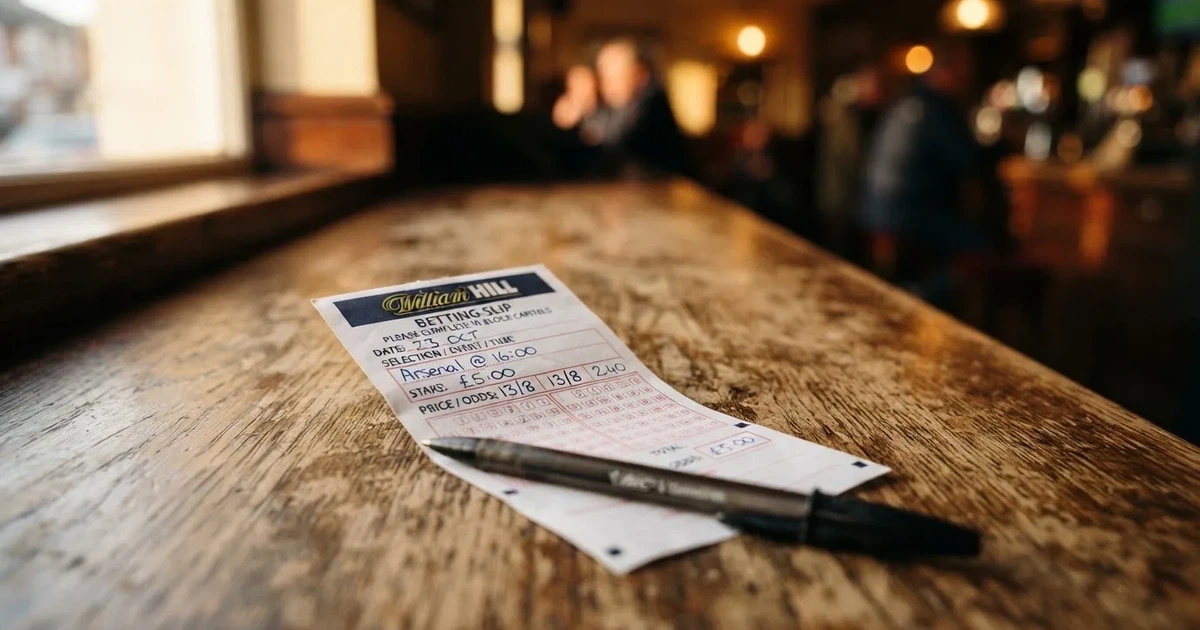
A large stake is not just a bigger number on the slip. The same wager pushes against limits the casual bettor never notices, brings identity checks earlier than the small-stake routine, and reacts differently to offers the marketing tends to dress up as “free”. This page is the read on that — how a high-stake bet at a UK-licensed bookmaker is priced, settled and paid out, what the operator’s own terms say about maximum stakes and withdrawals, and where the choice between ten licensed brands actually falls.
Safer gambling comes first because the rest depends on it
Why the responsible-gambling frame sits at the top of a high-stakes page
The framing sounds upside down until you understand who carries it. The Gambling Commission’s social responsibility code applies to every licensed remote operator, and several of its conditions bite specifically when a customer reaches the kind of spend that turns a hobby into something else. A punter staking £500 on a football match sits in a different regulatory neighbourhood than one staking £5, even though both use the same betting slip and the same brand. So the regulation of stake size is the regulation of harm: the higher the exposure, the more the rules demand from the operator, and the more the punter needs to know what those rules actually are — because a rule the bookkeeper applies silently looks a lot like a rule that does not exist at all.

What GAMSTOP does, and what it cannot do
GAMSTOP is the national multi-operator online self-exclusion scheme, and since 31 March 2020 every Gambling Commission remote licence holder has had to take part. A self-exclusion runs for six months, one year, five years, or five years with auto-renewal. After the minimum period the exclusion stays in place for a further seven years unless the customer asks GAMSTOP to remove it, and that request sits at the end of a cooling-off process rather than the start of one. GAMSTOP covers online sites and apps, including high-stakes betting sites; the betting shop uses a separate service.
The thing GAMSTOP cannot do is manage a session. It is not a deposit ceiling, not a stake cap, not a timeout switch. A punter who has voluntarily excluded through GAMSTOP and then tries to open a new account at a different brand will be refused, which is the whole mechanism; it has no opinion on what a customer bets on or how much. For the high-stakes reader that is worth being precise about: the tool blocks account creation; it does not steer behaviour inside an account.

The £150 vulnerability check and what it actually checks
Since 28 February 2025 a licensed operator running a remote betting product must run a financial vulnerability check on a customer whose deposits minus withdrawals cross £150 in a rolling 30 days. The check is a public-record check — bankruptcies, county court judgments, the kind of record that lives on the public side of the courts — not an income check and not a credit reference check. The mechanism sits inside Licence Conditions and Codes of Practice (LCCP) condition 3.4.4, in force since 30 August 2024.
A punter staking £10 a match will rarely cross the £150 deposit-minus-withdrawal line in a calendar month. A punter staking £100 on a Saturday accumulator will cross it in two bets. That gap is the reason the trigger exists, and it is also the reason the page mentions the figure now rather than in a deposits section later. The check is mandatory, it pauses nothing about a settled wager, and the customer’s account is not closed because a public record came back. What it changes is the conversation the operator is required to have on top of the bet — interaction steps, interactions the Commission describes under social responsibility and which a high-stakes reader should expect to receive rather than be surprised by.
Affordability checks: announced, staged, no start date
The Commission’s wider plan for affordability checks has been described in stages. A Commission article of 7 July 2026 set out a staged approach without giving a start date. For a punter the practical answer is unchanged from earlier this year: no operator is currently operating affordability checks on a published threshold. When the threshold lands, it will be a Commission rule rather than a brand choice, and it will be in addition to the £150 vulnerability check that already runs. Treat it as something to expect, not something to plan around today.
Deposit limits the operator must offer, and deposit limits the punter chooses
Remote Technical Standard 12 requires a licensed operator to offer a gross deposit limit on a fixed time frame. The first changes have applied since 31 October 2025; a second phase was postponed to 30 September 2026, and whether it is live is not established at the time of writing. The phrase “must offer” is doing the work: the operator has to make the limit available, the punter does not have to take it. There is no state-set deposit or loss ceiling for betting anywhere in GB law, on any stake size. Limits are the customer’s choice, even when the marketing would rather the punter did not make one.
Help lines that answer regardless of stake size
GamCare runs the National Gambling Helpline. GambleAware signposts treatment and support. NHS gambling clinics offer specialist treatment on referral. Gamblers Anonymous runs mutual-aid meetings across the country. None of these has a stake-size threshold for who can call. A punter worried about a high stake is welcome to call, and the call is the same kind of conversation whether the stake is £5 or £5,000.
How a bet is built, priced and settled
Single, each-way, accumulator — same cash, different shape
A single is one selection, one outcome, one settlement. An each-way bet is two equal-stake bets on the same selection — one on the win, one on a place — so a £10 each-way stake spends £20 and pays on two outcomes at place terms that vary by race and operator. An accumulator (“acca”) multiplies the odds of each leg into one price, which is why five short-price favourites pay handsomely when they all win and lose the whole stake when one does not.
For a high-stake punter the shape matters because the bookmaker’s margin compounds across accumulator legs. Two legs at decimal odds 1.90 each multiply to 3.61, but two single bets at 1.90 each leave the punter with two independent chances to settle. The acca rises faster on the upside; the singles drop the upside and shrink the compounded take. There is no free lunch in either shape: the margin sits inside every price, and the more prices an accumulator multiplies, the more margin it carries.
How a winning bet’s return is worked out
Return equals stake multiplied by odds. A £100 single at decimal odds 6.00 returns £600 (the £100 stake plus £500 profit). A £10 each-way at decimal odds 6.00 with a quarter odds place pays £10 × 6.00 = £60 on the win half plus £10 × 2.50 = £25 on the place half, totalling £85 on a £20 stake. Profit is return minus the total stake the customer actually paid — the £20 in the each-way example, the £100 in the single.
The bookmaker’s margin, sitting inside every price
The margin is what the bookmaker keeps out of every unit bet on a market. It is calculated over all outcomes of that market. Take a two-way market priced at decimal odds 1.90 / 1.90. The fair payout share for both outcomes adds up to 1 ÷ (1/1.90 + 1/1.90), which works out to about 0.95, meaning the bookmaker keeps about 5.0% of every unit staked on that market. The 1.90 / 1.90 price is an example, not a quoted price from any operator.
A punter who has never seen the calculation meets it the first time they wonder why the book wins on losers’ money. Two prices of evens (2.00 each) would imply a payout share of exactly 1.0 — every pound back, no margin — so two outcomes at evens would only appear if the bookmaker was prepared to break even on the market, and that almost never happens. Tight to 1.90 around an even chance still leaves room for the bookmaker’s take. A margin of around 5% on a market like match result is a normal figure at major operators; a margin of around 2-3% sits in the tight range for high-liquidity events; a margin above 10% on a mainstream market is the cue to bet somewhere else.
The full band the example covers is roughly 4.8% to 5.3% across small shifts in the symmetric odds around 1.90, which is the kind of band a reader should treat as a ceiling for tight markets rather than a single number to chase.
Fractional and decimal — same price, different vocabulary
A fractional price of 5/1 is the same as decimal odds 6.00: each unit staked returns 5 plus the stake back, and 5 + 1 = 6 in decimal. “Evens” is the British term for 1/1 or 2.00 decimal. A price “odds-on” sits below evens, meaning the punter’s profit is smaller than their stake on a win. The conversion runs a/b → a ÷ b + 1 — 11/4 becomes 3.75, 4/6 becomes 1.67 (or 2/3 in tidy form), 5/2 becomes 3.50. UK-licensed bookmakers display both formats because the customer base uses both; a page written for a British reader can present the calculations either way and reach the same number.
Maximum stakes and the soft cap the brand never publishes
There is no statutory cap on stakes in sports betting anywhere in GB law. Each operator sets its own maximum stake, and that stake is a property of the bet, not the customer: a brand’s headline offer on a Premier League match might cap at £50,000 while the same brand’s cap on a Tuesday-night Conference game sits at £500. The cap can move event by event, market by market, and on a single live event from minute to minute. A punter should check the slip’s limit before assuming the marketing’s headline figure applies to their stake.
In-play, cash out, bet builder — the three features that change how a stake is held
In-play betting at a GB-licensed bookmaker is offered under the operator’s own licence conditions; there is no statutory rule that the market is open, and no statutory rule that it is closed. Cash out lets the punter settle a position before the event ends, at a price the bookmaker sets. Cash out is not guaranteed — for example William Hill states that Cash Out is not available on each-way bets and is not always available on accumulators, and William Hill does not guarantee its availability. A bet builder combines multiple selections from one event onto one slip, which means the customer is choosing what to combine and the bookmaker is choosing how to price the combination.
The high-stakes consequence is that the same stake behaves differently across the three. A £500 in-play bet that goes against the punter three minutes after kick-off is a £500 lesson; the same £500 cashed out early can be a £150 lesson instead. The features are not free — every cash-out price embeds the bookmaker’s margin — but they do move the moment a stake is exposed.
The ten high-stakes bookmakers covered here
| Brand | Commission remote licence (account) | Licence holder | What the operator’s own terms state on stake caps, offers and acca features |
|---|---|---|---|
| Betfred | 039544-R-319290-010 (39544), remote general betting standard (real events) | Petfre (Gibraltar) Limited | Bet Builder, Sub Switch, Racing Post data, Extra Places, live casino and bingo; app feature set described on the store listing |
| Midnite | 101839-R-342850-001 (101839), remote general betting standard (real events) | Midnite Limited | In-play events, acca builder, popular accas and price boosts with maximum-stake limits shown next to each boost |
| Sky Bet | 067370-R-341330-005 (67370), remote general betting standard (real events) | SBG Sports Limited | Welcome offer: £30 in free bets credited as three £10 free bet tokens after a £5 deposit and a first single or each-way bet of 5p at odds 1/1 or greater |
| Kwiff | 044448-R-323408-017 (44448), remote general betting standard (real events) | Eaton Gate Gaming Limited | Supercharge feature can instantly boost the odds on a bet, for example from 2/1 to 20/1, on singles or multis on any sport |
| Ladbrokes | 054743-R-330863-014 (54743), remote general betting standard (real events), remote betting intermediary | LC International Limited | Odds boosts on horse and greyhound bets, Best Odds Guaranteed on UK and Irish horse races, in-play and Acca Boosts |
| William Hill | 039225-R-319373-015 (39225), remote general betting standard (real events) | WHG (International) Limited | Best Odds Guaranteed on UK and Irish horse racing from 8am on race day, single and multiple bets; Cash Out not on each-way; Football Acca Boost up to 200% on 20+ legs, £10,000 cap per online bet, until 30 May 2027 |
| BetGoodwin | 002927-R-327985-008 (2927), remote general betting standard (real events) | Goodwin Racing Limited | Welcome offer: £15 in free bets (£5 sports, £5 acca, £5 Sub-Cover) for a £10 qualifying sports bet |
| BetVictor | 039576-R-319370-028 (39576), remote general betting standard (real events) | BV Gaming Limited | Best Odds Guaranteed on UK and Irish horse racing, enhanced live race streaming, BetFinder and Smart Stats on racing |
| QuinnBet | 061011-R-335683-004 (61011), remote general betting standard (real events) | QuinnBet (Gibraltar) Limited | Free bets valid 7 days from credit, used on any market at minimum odds 1/2 (1.5), maximum odds 50/1; straight accumulators allowed, Trixies, Patents and Yankees excluded |
| Swifty Sports | 058957-R-334734-006 (58957), remote general betting standard (real events) | Swifty Global (UK) Ltd | Best Odds Guaranteed, Cash Out on horse racing and football markets, daily price boosts, live streaming, in-play; Bet Builder listed as coming soon |
What the licence account column actually says
Every account number on that list is the public record. Each appears on the Commission’s register under the named holder, with the licence categories stated, and a punter who wants the check can search the register by account or by domain. Several of these brands run from Gibraltar or Malta while holding a Commission remote licence — that is allowed under section 33 of the Gambling Act 2005 as amended by the Gambling (Licensing and Advertising) Act 2014, which requires a Commission licence for any operator whose remote facilities are used in Great Britain, wherever the operator is based. A Curaçao or Maltese-only licence without a Commission entry is not a substitute for a GB one.
What the offer column actually says
The welcome figures in that table are best read as floor plans, not rent. A £30 free bet credited as three tokens of £10 each is smaller than a £40 free bet, but the qualifying bet’s odds, the expiry on each token, and the markets they are allowed on are the variables that move the actual value. The Marketing rules since 19 January 2026 cap the wagering requirement on a bonus at 10x: a £10 bonus at 50x would have needed £500 of bets; under the cap no more than £100 — and a large stake punter can run that betting volume in two bets at this bookmaker rather than fifty. That ceiling is on the bonus’s wagering, not on whether the bonus is a free bet with no playthrough at all, and the unregistered corners of the offer — minimum price, market eligibility, expiry — are what each operator’s own terms settle.
Reading the table as a comparison
What sits behind the headline price
Two operators can show the same Premier League match at decimal odds 1.95 / 1.95 on Tuesday and at 1.91 / 1.91 on Saturday, and the 0.04 of margin between them is exactly the kind of spread a high-stakes bettor cares about. On a £5,000 stake the difference between a 5.1% margin and a 4.7% margin is, in the long run, about £20 of every 100 staked kept by the bookmaker rather than returned on winners. Across a season the figure accumulates.
What the qualifying bet really requires
The Sky Bet qualifying line — a first single or each-way bet of 5p at odds 1/1 or greater — sounds like the smallest qualifying bet on the list. The 5p is the price of the seat; the £5 deposit is the ticket; the £30 in free bets is what the seat delivers. A punter who reads only “£30 free bets” misreads the offer, because the £30 is paid out as three £10 tokens, each with its own expiry, and the tokens are the items whose stakes are not returned with a win.
What the bonus-wagering cap does and does not change
A punter who clears a bonus at a UK-licensed operator today lives inside a 10x ceiling rather than a 50x ceiling. The change moves volume from the clear-down desk to the betting slip, and on a high stake the volume finishes in a handful of bets rather than dozens. What the cap does not change is the kind of bets that count: minimum odds rules, market eligibility rules, and exclusions on certain bet types all sit on top of the 10x ceiling, and each operator’s own terms spell them out.
Where the exchange sit fits
Ladbrokes’ licence covers the betting intermediary category because the wider group runs Betfair Exchange — peer-to-peer betting with back and lay sides, a request-a-better-price feature, and a MatchMe facility. An exchange is a different product from a sportsbook: the back side prices against other customers, the lay side prices against the punter’s stake, and the margin between matched bets is smaller than what a traditional bookmaker offers because no bookmaker’s take sits inside it. For a punter whose edge is price-dependent, the exchange is a useful tool, assuming the depth of market is sufficient to match the position without hitting a slippage ceiling.
What the 90 Minute Payout market does for in-play readers
A 90 Minute Payout market — offered by Betfair Sportsbook within the app — pays out if the selected team goes two goals ahead at any point during the match, regardless of the eventual result. The market is its own pricing problem: the payout kicks in earlier than the final whistle, so the price has to reflect that, and a high-stakes reader should weigh the early payout against the price the same fixture carries in the standard match-result market.
Betfred — the heavyweight UK brand with a strong racing tilt
What the licence and the app tell you
Betfred is operated under Commission remote licence 39544 by Petfre (Gibraltar) Limited. The app promotes Bet Builder, a Sub Switch feature (letting the punter swap out one leg of an open accumulator), Racing Post data integration, Extra Places on racing, live casino and bingo. None of those features is, by itself, a stake-size defence — they are product width. The stake-size defence is the licence and the holder; the brand width is what the brand does with it.
What the racing tilt means for a high-stakes reader
Betfred’s extra-place concessions, Best Odds Guaranteed on UK and Irish racing under group policy (where the brand applies the rule), and the data integration point to racing as the brand’s anchor sport. For a high-stakes reader who follows racing as a primary product that means wider each-way terms and earlier price locks on a feature product; for one who only bets on football it means the racing extras are irrelevant and the question becomes how the brand prices football markets at the volume the customer wants.
Verdict
Betfred is the bookmaker for a high-stakes punter whose week runs through the racecard and whose accas lean on football legs. The product breadth is on the page; whether the prices match a brand that trades volume is a figure that moves event by event, and is worth checking on the brand’s own slip before a sizeable wager.
Midnite — the newer-licence brand with a price-boost tilt
What the licence and the site tell you
Midnite is operated under Commission remote licence 101839 by Midnite Limited. The site shows in-play events, an acca builder, popular accas and price boosts, with maximum-stake limits stated next to each boost. The price-boost format is the brand’s signature: a stated price on a selection is the moment the boost applies, the stake ceiling is the price the customer pays for taking the boosted price.
How the boosts interact with a large stake
A boost with a £500 ceiling and a 33% boost is good for £500. The same boost with a £50 ceiling is a different deal: a £500 punter takes 10 boosts at the price. The header looks generous; the ceiling makes the generosity figure-by-figure. For a punter managing their bankroll, the question is the per-boost ceiling and eligibility, which the brand clarifies on the boost tile for every customer, regardless of stake size.
Welcome offer mechanics
The Midnite welcome offer, as stated on the operator’s store listing, is £25 in free bets and 50 free spins for new customers who bet £5 or more on pre-match odds of EVS (2.0) or greater within 14 days of sign-up, with the free bets and spins valid for 7 days. The free-bet stake is not returned with a win, which is the standard mechanic.
Verdict — Midnite
Midnite suits a high-stakes punter who wants to break a stake across multiple small boosts and is willing to take the ceiling each boost imposes. A single-big-stake punter gets less from this brand than a multi-boost punter does.
Sky Bet — the small qualifying bet on a large offer
Licence, holder and product set
Sky Bet is operated under Commission remote licence 67370 by SBG Sports Limited, with Sky Bet as the trading domain. The welcome offer is the smallest qualifying bet on this list — a deposit of at least £5 and a first single or each-way bet of at least 5p at odds of 1/1 or greater — and £30 in free bets credited as three £10 tokens. The smaller qualifying stake is the price of entry; the £30 in tokens is what the entry delivers.
What the token split does to the value
Three tokens of £10 each, rather than one token of £30, is a small print distinction with a small print consequence. Each token has its own stake-not-returned rule and its own expiry; each can be aimed at a different market or carried into a different week. For a punter with a staking plan, this format allows the value to be spread strategically across multiple bets rather than tying the entire offer to a single large-value token.
Verdict — Sky Bet
Sky Bet is a sensible brand for a punter who wants a low qualifying outlay to access a £30 free-bet bundle, and who plans to split the bundle across three bets rather than let one token expire unused. The product is generalist; the offer is the wedge.
Kwiff — the surprise-multiplier brand
Licence, holder and signature features
Kwiff is operated under Commission remote licence 44448 by Eaton Gate Gaming Limited. The Supercharge feature is the brand’s hook — it can instantly boost the odds on a bet from 2/1 to 20/1, on singles or multis, on any sport. The surprise element is the design: the punter does not pick the boost amount in advance, the boost applies at the operator’s discretion, and the new odds flash on the slip once they have been generated.
How “surprise” sits next to a high stake
A surprise boost at low stake is a free kick. The same surprise at high stake is a price the punter is willing to back into because the boosted odds make sense for a chunk of bankroll. The ceiling sits inside the product: a boost that lands at decimal odds 21.00 is a different price to back at £50 than at £5,000, and the brand states the cap on each boosted slip inside the app.
Verdict — Kwiff
Kwiff suits a high-stakes punter who treats the surprise as a price signal rather than a lottery ticket, and who sizes stakes to whichever boost lands. It does not suit a punter who needs to know the price before committing the slip.
Ladbrokes — the high-street legacy with an exchange in the group
Licence, holder and betting group features
Ladbrokes is operated under Commission remote licence 54743 by LC International Limited. The licence covers remote general betting standard (real events) and remote betting intermediary — the latter because the wider group runs Betfair Exchange. The product set: odds boosts on horse and greyhound bets, Best Odds Guaranteed on UK and Irish horse races, in-play betting and Acca Boosts.
What the group’s exchange adds to a high-stakes reader
A peer-to-peer Exchange inside the same group is useful to a high-stakes punter whose price edge is sharper than the sportsbook’s. Ladbrokes the sportsbook and Betfair the exchange share licence categories under the same holder, and a punter who wants the bookmaker’s promotional levers (BOG, in-play, boosts) and the exchange’s pricing (matched bets, lay side) can use both under one accountable group. The trade-off is that the two products are different enough that the same punter will not get the same feature set out of both.
Verdict — Ladbrokes
Ladbrokes is the brand for a punter who wants a deep racing product on the sportsbook and is willing to use the group exchange for the bets the bookmaker is not pricing the way the punter wants. The £20-£40 free bets welcome range across the UK market applies here under the group’s current offer; the specifics are on the operator’s own site.
William Hill — the long-money acca brand
Licence, holder and product set — William Hill
William Hill is operated under Commission remote licence 39225 by WHG (International) Limited, with William Hill as the trading domain. The product set includes Best Odds Guaranteed on UK and Irish horse racing from 8am on race day (single and multiple bets, no ante-post, no tote, no pari-mutuel), a Football Acca Boost with a tiered structure from 3% on a double up to 200% on 20 or more legs (each leg at 1/5 or bigger), a maximum boost of £10,000 per online bet, running until 30 May 2027, and Cash Out that is not available on each-way bets and not always available on accumulators.
What the acca boost means in cash
A punter hitting a 10-leg acca at the average price the legs justify gets a 50% boost to their returns; a 20-leg acca gets 200%. The £10,000 cap is the ceiling: a winning bet whose boosted profit exceeds the cap pays the cap. The brand’s boost is generous on a wide-stake shape, though the maximum payout on the boost is fixed at the cap.
What Cash Out’s “not guaranteed” rule actually does
William Hill states that Cash Out is not available on each-way bets and is not always available on accumulators, and the brand does not guarantee Cash Out availability. In practice that means the punter cannot plan a sizing strategy around Cash Out on a William Hill acca — the feature is a possibility, not a contract. A high-stakes punter who wants cash-out certainty needs a brand that states the feature in unconditional terms.
Verdict — William Hill
William Hill suits a punter who builds wide-leg accas and is comfortable with the £10,000-per-online-bet cap on the Football Acca Boost. The Cash Out caveat is the reason this brand is not the cash-out choice; the racing BOG is the reason it sits in racing conversations either way.
BetGoodwin — the racing-led smaller brand
Licence, holder and racing product set — BetGoodwin
BetGoodwin is operated under Commission remote licence 2927 by Goodwin Racing Limited, with betgoodwin.co.uk as the trading domain. The welcome offer is “Bet £10 & Get £15 in Free Bets”, split into a £5 sports bet, a £5 acca and a £5 Sub-Cover bet. The name and the licence both point to a heritage shop tradition — Goodwin Racing — translated into a remote licence for a bettor-led product set.
What “racing-led” means in product terms
A racing-led brand prices racing deeper than a generic bookmaker does: more extra-place markets, more ante-post offers, more coverage of the smaller British and Irish racecourses. For a high-stakes punter who bets on Saturday’s full card, racing depth is more valuable than a football cash out. The trade-off is football product width, where BetGoodwin will not match a brand whose anchor sport is football.
Verdict — BetGoodwin
BetGoodwin is the high-stakes racing book for a punter whose weekend runs from the first race to the last. Football as a side product is fine; football as the anchor is a different brand.
BetVictor — the racing-trends brand
Licence, holder and racing data — BetVictor
BetVictor is operated under Commission remote licence 39576 by BV Gaming Limited. The product set: Best Odds Guaranteed on UK and Irish horse racing, enhanced live race streaming in the app, a BetFinder feature for finding racing bets and Smart Stats to support the form work. The brand’s racing tilt is in the data, not in the headline offer.
What Smart Stats and BetFinder do at large stake
Smart Stats and BetFinder are form-finding tools that sit on the racing page. For a high-stakes punter with a sizing strategy that depends on the data — a model-driven staking plan, a form-driven ante-post play — the value of those tools is the time saved before the slip is built. The tools do not change the margin; they change the time-to-slip.
Verdict — BetVictor
BetVictor suits a racing-led punter who wants the data before the bet. The features are aimed at the runner before the punt, not the punt itself.
QuinnBet — the free-bet rules strict brand
What the licence and the app tell you — QuinnBet
QuinnBet is operated under Commission remote licence 61011 by QuinnBet (Gibraltar) Limited. The free-bet rules on the brand’s own terms: free bets are valid for 7 days from credit, usable on any market at minimum odds 1/2 (1.5) and maximum odds 50/1, straight accumulators are allowed, Trixies, Patents and Yankees are not. That is a longer and tighter list than most brands publish.
What the maximum-odds rule does at high stakes
A 50/1 cap on free bets is the kind of ceiling that looks small next to a brand’s headline price on a longshot. A free bet on a 66/1 outsider is not honoured at QuinnBet. A punt locked into this brand for a free-bet stake knows the price boundary before the slip is built, which is the kind of front-end clarity a high-stakes bettor needs to avoid a free bet that lands as a voided line.
Verdict — QuinnBet
QuinnBet is the brand whose free-bet price ceiling is on the page. A high-stakes punter who plans the price rather than the offer takes the boundary; a punter who plans the offer will hit the boundary more often than expected.
Swifty Sports — the in-progress newer brand
What the licence and the app tell you — Swifty Sports
Swifty Sports is operated under Commission remote licence 58957 by Swifty Global (UK) Ltd, with swiftysports.co.uk as the trading domain. The product set: Best Odds Guaranteed, Cash Out on horse racing and football markets, daily price boosts, live streaming and in-play betting. The app listing states that Bet Builder is coming soon.
What a coming-soon build means in practice
A product on the page as “coming soon” is a brand in build, and a high-stakes punter wants the feature now rather than on a date the brand has not published. The other features are live; the Bet Builder is the kind of feature whose absence turns football markets into single-select slips rather than same-game multis. The trade-off is between the deeper cash-out and BOG the brand already offers and the feature the brand still has to ship.
Verdict — Swifty Sports
Swifty Sports suits a punter whose staking plan runs on racing and in-play rather than on combined-market football slips, and who is happy to wait for a Bet Builder or use a different brand for the combination bets.
Licence, jurisdiction and the offshore counter-question
What a Great Britain licence means on the operator’s side
A bookmaker whose remote facilities are used in Great Britain needs a Gambling Commission licence, regardless of where the operator is incorporated. Sections 33 and 36 of the Gambling Act 2005, as amended by the Gambling (Licensing and Advertising) Act 2014, are the source of that rule. The Commission is a non-departmental public body sponsored by the Department for Culture, Media and Sport. The licence categories relevant to high-stakes sports betting are remote general betting standard (real events), remote general betting standard (virtual events), remote general betting limited, remote pool betting and remote betting intermediary. The Commission’s public register is searchable by business name, trading name, domain or account number.
What the same licence means on the punter’s side
For a customer the licence unlocks a layer of consumer protection: GAMSTOP coverage, a Commission complaints route, an approved alternative dispute resolution body, the 10x bonus-wagering cap, the £150 vulnerability check, and the LCCP social responsibility code. None of these protects the customer’s bankroll — none of them guarantees an outcome, hedges a stake, or promises a withdrawal — but each of them puts a process behind the punter that an unlicensed brand does not.
The offshore counter-question
An operator outside the GB regime holds its own house rules, its own bonus terms, and its own complaints process. A Curaçao, Maltese or Gibraltar-only brand without a Commission entry is not a substitute for one. Honest framing: licensed equals checks, limits, GAMSTOP and the bonus cap, but it also equals verification before the first deposit; unlicensed equals none of those protections and the possibility of funds being withheld with no British consumer redress. The Commission has enforcement tools aimed at the operator — cease-and-desist notices, search-engine referrals, registrar work, and (announced) court-order DNS blocking powers — not at the customer who merely bets on an unlicensed site. So a British punter who chooses an unlicensed brand is choosing a different protection regime, not a less-regulated one.
Tax, on the side the punter actually pays
The player pays no tax on betting winnings in Great Britain. That is general information, not tax advice, and a professional gambler should ask HMRC or an adviser. General Betting Duty is the operator’s tax on gross profits, currently 15% with a new remote betting rate of 25% from 1 April 2027 for remote general betting on events that are not UK horse racing; the standard 15% remains for remote bets on UK horse racing, bets on self-service betting terminals, pool betting and in-person betting. Spread betting has its own rates (3% financial, 10% other). Whether operators pass duty on through odds is not established, and nothing on this page asserts that the player is charged duty.
Advertising, the rules the Commission does not run
Advertising is not licensed by the Commission. The CAP Code (non-broadcast) and BCAP Code (broadcast), enforced by the ASA, are the rules the marketing side runs under alongside the LCCP. CAP Code section 16 sets out three rules worth knowing: marketing must be socially responsible, must not be of strong appeal to under-18s, and no one who is or seems to be under 25 may be featured gambling or in a significant role, with an exception for marketing placed where a bet can be made directly. The “whistle-to-whistle” TV ban is an industry code since 1 August 2019: no betting advertisements on TV from five minutes before a live sporting event to five minutes after, before the 9pm watershed; horse and greyhound racing are excluded.
Working the margin in plain language
Why the margin figure is the one to chase
A punter who reads the offers column on the comparison table and stops there is reading the marketing. A punter who reads the margin column on a market is reading the operating cost. The two are not the same number; the marketing number is the entry price, the operating cost is what the entry price pays for.
The illustrative 1.90 / 1.90 example in plain prose
Take an even-chance two-way market priced at decimal odds 1.90 on each side — an example, not a quoted price. The payout share for both sides adds up to 1 ÷ (1/1.90 + 1/1.90), which is about 0.95. The margin is the difference, about 5.0%, meaning the bookmaker keeps on average 5.0 pence of every pound staked on the market across both outcomes.
A small shift in either price moves the band. A symmetric 1.88 / 1.88 produces a margin closer to 6.4%; a symmetric 1.95 / 1.95 produces a margin closer to 2.6%. So the band the example covers is roughly 4.8% to 5.3% across small symmetric shifts, with the 5.0% centre as the headline number. That band is the ceiling a high-stakes punter should treat as tight on a major football match result market; outside the band, the price is doing more for the bookmaker than for the punter.
What the figure is not
The margin is a long-run average across many bets on the same market. It is not what any single bet costs, and it is not a guaranteed loss for any single punter. Two bets at 1.90 / 1.90 can both lose; ten bets at 1.90 / 1.90 can lose eight. The 5% is the price of admission averaged out, not the price of admission on each bet.
What a high-stakes punter should do before the slip is built
The five checks
- Check the licence on the Commission’s public register — the licence is the entry point, and the register is searchable by domain, business name or account number.
- Check the maximum stake on the specific selection on the specific market — the slip’s ceiling is the figure that matters.
- Read the welcome offer’s qualifying terms — minimum odds, deposit, expiry, token count — not the headline figure.
- Read the bonus terms if a bonus is taken — minimum odds, market eligibility, expiry, wagering cap, and the small print of what does not count.
- Read the withdrawal terms — the cycle, the method, the minimum and the maximum, especially on a stake volume that is going to deliver a withdrawal large enough to need a tiered payment.
The two things the framing does not promise
A high-stakes bet at a UK-licensed bookmaker does not give the punter a margin advantage over the operator. The same margin sits inside each price whether the stake is £5 or £5,000. A high-stakes bet does not change the probability of winning either; it changes what the win pays back, and what the loss costs. The pages run on this — verification, limits, offers, product features — sit in front of those two plain facts.
FAQ
How can I check that a UK bookmaker holds a Gambling Commission licence?
Search the Gambling Commission’s public register by business name, trading name, domain or account number. The register shows the licence category, holder and active status. A bookmaker serving customers in Great Britain must hold a Commission licence for the categories under which it offers bets — any brand without an entry is not licensed for GB.
How is the return on a bet worked out from the stake and the odds?
Return equals stake multiplied by decimal odds. A £100 single at decimal odds 6.00 returns £600, which is the £100 stake plus £500 profit. Profit equals stake multiplied by (decimal odds minus 1). For an accumulator, multiply the decimal odds of each leg together to get the combined price before multiplying by the stake.
What is the bookmaker’s margin, and how can it be seen in the odds?
A market’s margin is the share the bookmaker keeps on average out of every unit staked. It equals 1 minus the payout share over all outcomes, where the payout share is 1 divided by the sum of 1 divided by each outcome’s decimal odds. For a symmetric two-way market at 1.90 / 1.90 the payout share is about 0.95, so the margin is about 5.0%. Tighter prices mean a smaller margin; wider prices mean a larger one.
How do fractional odds such as 5/1 convert to decimal odds such as 6.00?
Take the first number, divide by the second, then add 1. 5/1 becomes 5 divided by 1 plus 1 = 6.00. 11/4 becomes 11 divided by 4 plus 1 = 3.75. 4/6 (or 2/3) becomes 0.67 plus 1 = 1.67. “Evens” is 1/1 in fractional and 2.00 in decimal. UK sportsbooks display both formats.
Which tools for controlling play does a licensed bookmaker have to offer?
GAMSTOP (multi-operator self-exclusion, mandatory for online operators), deposit limits (mandatory under Remote Technical Standards), time-outs, reality checks and the National Gambling Helpline via GamCare. The bookmaker must also run a financial vulnerability check for customers whose deposits minus withdrawals cross £150 in a rolling 30 days. Affordability thresholds are announced and staged, with no start date published.
Are betting winnings taxed in Great Britain?
No. The player pays no tax on betting winnings in Great Britain. General Betting Duty is the operator’s tax on gross profits; the current rate is 15%, with a new remote rate of 25% from 1 April 2027 for general remote betting on events that are not UK horse racing. A professional gambler should ask HMRC or a tax adviser for advice on their own situation.
Betting sites & exchanges – Basketball betting
Content created by the «Basketball betting» team
