
Motorsport betting tips: a cost-first guide for the UK punter
 Available in US
“Tips” sell the dream of a winning bet. The reality underneath them is the same mechanics every other sports market runs on: probability, the bookmaker’s margin, the way an offer is structured. This guide is for the punter who wants to see those mechanics clearly. It is a guide, not a tip sheet — no matches are picked here, no winners are named, and nothing on this page should be read as a promise of profit.
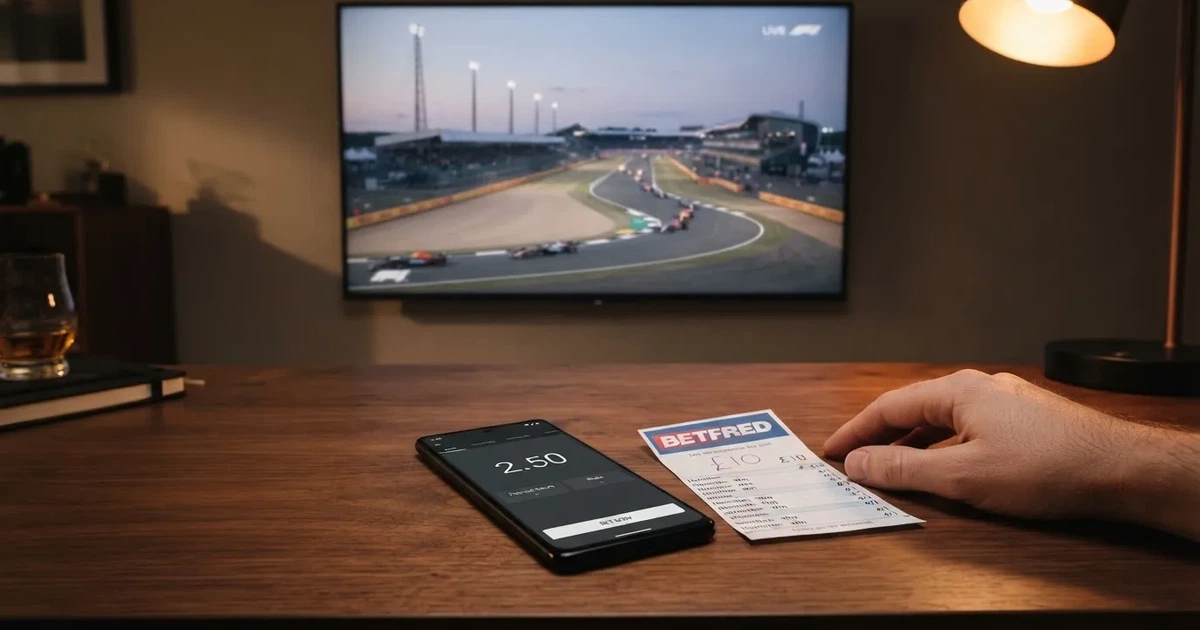
Tips are often sold as certainty, but the reality is more mundane. A genuine tip is simply a reasoned statement of probability, weighed against a price, accounting for the bookmaker’s margin and the specific licences, limits and tools the British framework provides. The 2026 Formula One season is the obvious backdrop: 23 Grands Prix from Albert Park in March to Yas Marina in December, eleven teams, and a regulation reset that will reshape form from the first race.
A line on what follows and how fresh it is: the data in this guide was checked on 27 October 2026 against the Gambling Commission’s public register, the operators’ own published terms, and the cited industry pages. Offers and licences move. Always recheck before staking.
The ten bookmakers on the shortlist
A shortlist of ten bookmakers sits in front of every comparison on this subject, and a reader can save themselves a great deal of time by knowing which of the ten actually fits the way they want to bet. The list below is built from the same ten brands that appear throughout this guide. Each holds a Gambling Commission remote licence as recorded in the Commission’s public register on the date of writing; each offers a motorsport market of some kind; each is described for what it does, not whether it is “the best”. The ten appear in the same order on the comparison table further down the page.

- bet365 — global sportsbook with the most-downloaded sports betting app in the UK, the official betting partner of the UEFA Champions League, in-play markets on every F1 session, live streaming, and a Bet Builder+ that combines markets from one event.
- Fafabet — independent sportsbook best known for its racing terms, with a motorsport section that covers F1 and selected series.
- Matchbook — a betting exchange where customers bet against each other rather than against a book, with Bet Builder, multiples, in-play and live streaming of racing.
- BetMGM — the UK arm of the MGM brand, offering a four-free-bets sports welcome for new customers, plus the MGM Rewards programme and an acca-heavy product.
- Coral — long-established British high-street bookmaker with a deep online book, acca offers, and a £20-in-£40-free-bets welcome for new GB customers.
- Betboro — international operator running a 100% matched free bet welcome for new customers depositing with a debit card, and a sports menu that includes motorsport.
- 888sport — the sportsbook from 888, with Cash Out, Bet Builder, racing streams, BetFinder form tools, a live bet feed, and daily boosted odds.
- Sky Bet — the betting brand of Sky, offering enhanced odds, acca boosts and a sports welcome whose free-bet terms are among the most restrictive on the market.
- Bar One Racing — Irish independent bookmaker rebrand of Bar One, with sponsorship at Dundalk, Fairyhouse, Navan, The Curragh, Curraheen Park and Cork, and a more racing-led motorsport offering.
- BetVictor — long-established operator with Best Odds Guaranteed on UK and Irish horse racing, enhanced live race streaming, BetFinder and Smart Stats.
That is the shortlist. A reader who already has a preferred book may skip this section; a reader who is choosing one should keep reading. The next sections explain what each of these operators does with a motorsport market, what the licence on the register actually buys, what the welcome offer takes to clear, and which brand suits which kind of punter.
What “tips” really are, and why the word sells more than the thing
Search for “motorsport betting tips” and the page returns a confident list. Pick a winner. Back the form driver. Back the underdog at 200/1. The useful version of the word is older and duller: a tip is a reasoned statement of probability, expressed in numbers, weighed against a price. The mechanics behind it are five:

- Form. Where the driver or team finished in the last few races, on comparable circuits, in comparable weather. Form is a starting point, not a conclusion — regulation resets (the 2026 F1 rules drop the MGU-H, raise MGU-K output to 470 bhp, replace DRS with active aerodynamics) reset form too.
- Statistics. Lap times, sector splits, stint pace, qualifying gaps, pit-stop times, top-speed traps. Statistics need context: a 0.2-second gap in free air means less than the same gap in traffic.
- Line-ups. Driver changes, team orders, junior-driver promotions, injury stand-ins. The 2026 grid adds Cadillac as a new team and brings Audi in as a works outfit after acquiring Sauber — that sort of structural change matters more than last year’s form table.
- The market’s own odds. The market is the collected estimate of everyone willing to back or lay a runner. It carries information, and it carries the bookmaker’s margin on top.
- Bankroll discipline. How much of a bank to stake on any one bet, so a losing run does not end the betting. A model that “tips” a runner without a stake is half a model.
A tip in this sense is not a name on a slip. It is a number — a probability — and the job of the bettor is to compare that probability to the price on offer. When the probability the bettor arrives at is higher than the probability implied by the odds, the bet has positive expected value. That is the only edge that exists, and it is small, and it closes the moment a market sharpens.
What a tip is not: a promise. A 4/1 shot wins sometimes. The probability of a 4/1 shot winning, before the bookmaker’s margin is removed, is roughly one in five; the probability after the margin is removed is closer to one in 5.3. The two figures are not far apart, but they are the difference between “the price looks generous” and “the price is unfair”. A reader who treats a tip as a verdict and a bet as a confirmation is gambling on a guess. A reader who treats a tip as a hypothesis and a bet as a test is what the rest of this guide is written for.
How a motorsport book works: from the sport to the slip
A motorsport book is structured by race, session and market. The race is the Grand Prix or the rally or the endurance event; the session is practice, qualifying, sprint, the race itself; the market is the way the book lets the punter back a view. The shape is similar across series — Formula One, Formula E, IndyCar, the FIA World Endurance Championship (the 24 Hours of Le Mans, each June in France, sits inside it), the World Rally Championship, MotoGP — but the depth differs.
A bookmaker with serious motorsport ambition offers winner, podium, top-six, fastest lap, qualifying head-to-head, fastest in each sector, finishing position markets, retirement markets, and a sequence of session-specific props during a Grand Prix weekend. A bookmaker that treats motorsport as a box-ticking exercise offers winner and not much else. The ten brands on the shortlist differ here: bet365, Sky Bet and Coral carry the deeper motorsport books, with in-play markets on the race itself; Bar One Racing and Fafabet lean more heavily to the racing side; Matchbook’s exchange carries a thinner pre-race F1 menu but lets a punter name a price on a runner that no bookmaker has priced.
A bookmaker also sets its own maximum stake and its own margin. A 50p minimum stake and a £100,000 maximum stake on a winner market is a typical shape; the margin sits on top of the true odds and is the bookmaker’s gross profit on the book. The section below on odds and margin works through the arithmetic in full.
Live betting — backing a driver mid-race at updated prices — is offered across the major brands. The in-play margin is usually wider than the pre-race margin, because the bookmaker’s information is imperfect and the book has to protect itself. A reader who bets only in-play gives that wider margin back every race.
Mobile is the main way motorsport is bet now. The bet365 app is described as the most downloaded sports betting app in the UK; the Coral, Sky Bet, 888sport, BetMGM, Matchbook, BetVictor, Fafabet, Betboro and Bar One Racing apps all carry the same motorsport menu, more or less. The mechanics are the same on a phone as on a desktop: the slip, the price, the stake, the confirmation. The risk is the same too — a bet placed in two taps from a phone is the same bet, and a bettor who has not set a stake limit before the race starts may place more than they meant to.
Odds, margin and the price of a tip
The price on a betting market is the bookmaker’s quote for what a winning bet returns. Two formats are used in Britain. Fractional odds (5/1, 11/4, evens) write the profit as a fraction of the stake. Decimal odds (6.00, 3.75, 2.00) write the total return — stake plus profit — as a multiple of the stake. The conversion is exact: a/b in fractional form becomes a ÷ b + 1 in decimal form. 5/1 is 6.00; 11/4 is 3.75; evens (1/1) is 2.00. The bookmaker’s site will show both, and a reader who thinks in one form should learn to glance at the other — a market quoted only in decimal is no harder to read.
A winning bet at 6.00 on a £10 stake returns £60: £10 of the original stake and £50 of profit. That is the easy arithmetic. The harder arithmetic is what that price actually says about the bettor’s chance of winning. A price of 6.00 implies a probability of 1 ÷ 6.00, which is 16.67%. The price is not a probability, but it is built from one, and a punter who reads prices as probabilities will get the maths right and the marketing wrong.
The bookmaker’s margin sits between the price and the true probability. On a two-way market priced 1.90 / 1.90 (decimal; 9/10 in fractional), the implied probabilities are 52.63% on each side. Add them: 105.26%. The extra 5.26 percentage points is the margin. The arithmetic in full:
- Payout share per unit staked = 1 ÷ (1 ÷ 1.90 + 1 ÷ 1.90) = 1 ÷ 1.0526 = 0.9500, or 95.00%.
- Margin = 1 − 0.9500 = 0.0500, or 5.00%.
That is the band: a two-way market at 1.90 / 1.90 returns 95 pence of every pound staked on average and keeps 5 pence for the bookmaker. The 5.00% is a band because the margin is not a single number — it varies by market, by bookmaker, by how close the race is, and by whether the price was struck pre-race or in-play. Pre-race winner markets on tight F1 fields run at 4% to 6%; in-play markets routinely run at 7% to 10% because the book has to price with less information. A reader who treats a 5% margin as a rule rather than a band will be wrong about half the markets they bet on.
What the margin means for a punter is straightforward. A bettor who backs a 6.00 shot at the true 16.67% probability breaks even before the margin; the same bettor at the 1.90 / 1.90 example above is paying 5.00% of stake for the privilege of having the bet. Over a season of small bets, that 5% is the difference between a punter who funds their betting out of winnings and a punter who subsidises the bookmaker’s overhead.
A value bet, then, is a price the punter judges to be higher than the probability the punter has arrived at, after the margin is taken out. A punter who rates Lando Norris at 35% to win the 2026 championship and finds a book quoting 3.50 (28.57% implied) is not looking at a value bet, because 28.57% is lower than 35%. A punter who finds a book quoting 4.00 (25% implied) at the same 35% rating is looking at a value bet: the price implies a 25% chance, the punter’s own model says 35%, and the gap is the edge. That gap exists for the bookmaker only as a margin, and the bookmaker’s job is to keep it. The punter’s job is to find the rare race where the book has priced badly, place the bet, and stop.
The law that frames a British motorsport bet
Betting on motorsport in Great Britain is regulated by the Gambling Commission, a non-departmental public body sponsored by the Department for Culture, Media and Sport. The framework is the Gambling Act 2005, which covers England, Scotland and Wales; Northern Ireland sits outside the Act and runs under an older regime, so a “GB licence” or “Great Britain licence” is the right term, and a GB licence is not framed as a Northern Ireland licence.
Since the Gambling (Licensing and Advertising) Act 2014, an operator whose remote facilities are used in Great Britain needs a Commission licence wherever it is based. A Curaçao licence, a Maltese licence or a Gibraltar licence is not a substitute. The Commission’s public register is searchable by business name, trading name, domain or account number, and is the whole test of whether a brand holds a licence at the moment of checking. Every brand in the shortlist above is on that register on the date of writing; the table further down the page quotes the licence numbers, and a reader can recheck them on the register itself before staking.
The Commission licenses categories of betting. The categories on a remote operator’s licence matter: a remote general betting standard (real events) licence covers pre-race and in-play sports betting; a remote betting intermediary licence is the one betting exchanges run on. Matchbook and Coral both hold intermediary licences as well as general betting licences. A remote pool betting licence covers pool products on horse and dog racing; a remote general betting standard (virtual events) licence covers virtual sports. No statutory list of permitted bets or markets exists, and the operator runs under its own licence conditions and codes of practice.
The minimum age for betting in Great Britain is 18. Since 7 May 2019, name, address and date of birth are verified before a customer can deposit or gamble — including with a free bet or bonus. Anonymous play at a licensed site is no longer available. The credit-card ban for gambling, in force since 14 April 2020, covers credit-card-funded payments through an e-wallet; debit cards and bank-based payments are not covered by it. The player pays no tax on betting winnings; General Betting Duty is the operator’s tax on gross profits, currently 15%, with a new remote rate of 25% applying from 1 April 2027 within the existing framework.
What the licence buys the punter is a list of protections: GAMSTOP, the national multi-operator self-exclusion scheme, which has been a mandatory licence condition for online operators since 31 March 2020; the social-responsibility and money-laundering controls in the Licence Conditions and Codes of Practice; the dispute-resolution route through approved bodies; and the Commission’s enforcement powers when an operator falls short. What it does not buy is a winning bet.
Offshore is a separate conversation. Providing gambling facilities in Great Britain without the licence the Act requires is an offence under section 33 of the Gambling Act 2005 — aimed at the operator, not the customer. The customer who bets on an unlicensed site loses the protections: no GAMSTOP coverage, no Commission complaints route, no approved dispute resolution, no British consumer redress if funds are withheld, no cover under the bonus cap or the financial-vulnerability check. Honest framing: licensed means checks, limits, GAMSTOP, the bonus cap — and verification before the first bet. Unlicensed means none of those protections and the risk of losing the balance. Neither is “the safe choice” by default.
Tools a licensed bookmaker has to offer, and the punters they suit
A licensed bookmaker has to offer a set of safer-gambling tools, and a punter who uses them gets a different kind of bet. The set is fixed; the choice about whether to use any of them is the punter’s.
- GAMSTOP. The national multi-operator self-exclusion scheme. Exclusion periods are six months, one year, five years, or five years with auto-renewal; after the minimum period the exclusion stays in place for a further seven years unless the customer asks GAMSTOP to remove it. GAMSTOP covers online sites and apps; betting shops use a separate service. Every GB-licensed online operator takes part in GAMSTOP, and the punter who has self-excluded cannot open a new account on any of them while the exclusion is live.
- Deposit limits. Operators must offer a gross deposit limit on a fixed time frame under the Remote Technical Standards. The first changes have applied since 31 October 2025; a second phase was postponed to 30 September 2026. There is no state-set ceiling; the limit is the customer’s choice, and a punter who sets one and then asks the operator to raise it goes through a cooling-off period the operator sets.
- Financial vulnerability check. A check of public records (bankruptcy, county court judgments) that applies once a customer’s deposits minus withdrawals exceed £150 in a rolling 30 days. It is a public-record check, not an income check and not a credit reference check. It was in force from 28 February 2025; financial risk assessments (the “affordability checks” of the press) have been announced in a staged plan with no start date.
- Time-outs and self-exclusion at the operator. A punter can set a cooling-off period on a single account without enrolling in GAMSTOP. Time-outs are short; self-exclusion at the operator is longer.
- Reality checks and activity statements. Pop-up reminders and account statements that show the punter what they have deposited, staked and lost over a chosen period.
- Help lines. GamCare’s National Gambling Helpline, GambleAware, the NHS gambling clinics network and Gamblers Anonymous are signposted on every licensed site. A punter who wants help finds it without leaving the betting app.
What the tools are for is a punters’ question, and the answer depends on the punter. The punter with a small bank sets a deposit limit before the season starts and never raises it. The punter who has been on a losing run sets a time-out on a single account. The punter who is finding it hard to stop enrols in GAMSTOP and excludes from every licensed site in one step. A punter who is not in any of those situations is welcome to ignore the tools — they sit there, they do not prompt unless the punter has set them, and the bookmaker is not allowed to push them.
What a motorsport welcome offer really costs
A welcome offer is what a bookmaker gives a new customer to open an account. The cost of clearing it is what the offer is actually worth, and the difference between those two numbers is the reason the same offer can be the headline of a marketing email and a poor deal in the small print.
The shape of the offers on this shortlist, from the operators’ own terms as published on the date of writing:
- BetMGM: four £10 free bets for new UK customers who deposit £10 or more and place a sports bet within 7 days. Two of the free bets are football accumulators of four or more selections, two are sports multiples of two or more. The free bets are valid for 7 days, and minimum-odds and opt-in conditions apply.
- Coral: £40 in free bets when a new GB customer deposits and bets £20 or more at minimum odds of 2.0 (1/1). The free bets are issued within 7 days and expire 7 days after issue; opt-in required.
- Betboro: 100% matched free bet of up to £25 on the first qualifying wager, requiring a debit-card deposit of at least £10 and a first bet of £5 to £25 with at least three selections each at 3/5 (1.60) or higher.
- Sky Bet: free bets whose terms — 30-day expiry, single or each-way use only, no multiples, no virtuals, no stake return on winnings, non-withdrawable — are the most restrictive on the shortlist and a fair test of the value of a free bet that does not return its stake.
- 888sport, bet365, Fafabet, Matchbook, Bar One Racing, BetVictor: each carries its own welcome. A reader who plans to claim one should read the terms on the operator’s own site before clicking through, because the headline number is the least of the figures that matter.
The cap on wagering requirements is the more important figure, and it is a rule rather than an offer. Since 19 January 2026, wagering requirements on bonuses at GB-licensed operators are capped at 10x — a £10 bonus at 50x needed £500 of qualifying bets; under the cap no more than £100. The cap applies to bonuses with a wagering condition; whether it applies to free bets with no wagering condition is not established, and the page does not guess. Mixed-product promotions — an offer that requires the punter to bet on two or more product types such as betting, casino, bingo and lottery — are banned.
A free bet whose stake is not returned with winnings is worth less than the headline number. A £10 free bet on a 6.00 shot returns £50 of profit, not £60, because the £10 stake is not paid back. The same free bet, used on a price too short to clear the bookmaker’s margin, returns less again. The Sky Bet terms make the cost explicit; the other operators’ terms make it implicit, and a punter who has not read the difference will see a free bet as a gift and feel a smaller bank as a surprise.
A “risk-free” bet refunded as a free bet is not a refund in money, and a “boosted odds” price boost is paid on the wager, not on the stake. The page does not name the offer the punter should take. It says: read the offer’s small print, weigh the wagering requirement against the offer’s headline, and decide whether the offer is worth more than the bet it costs.
What kind of bet on motorsport, and what the bet is worth
The bets a bookmaker takes on a Grand Prix weekend fall into a handful of shapes. The shapes have British names, the bets have a structure, and the structure determines the return.
A single is one bet on one outcome. A £10 single at 6.00 returns £60 if the bet wins, £0 if it loses.
A double is one bet on two outcomes, both of which have to win. The odds of the two legs multiply: 3.00 and 4.00 become a double at 12.00. A £10 double returns £120 if both legs win, £0 if either loses.
A treble is the same shape, with three legs. An accumulator — “acca” — is any combination of four or more legs; a four-fold is a four-leg acca, a five-fold is five, and so on. The odds multiply across every leg, and the bet wins only if all of them win. A 10-leg acca at average odds of 2.00 is a single bet at 1024.00, and a 10p stake would return £102.40. The price is the appeal; the probability is the cost, because every extra leg multiplies the chance of one of them letting the bet down.
Each-way bets are two bets of equal stake. The first is on the runner to win; the second is on the runner to place, with place terms set by the operator and the race (a third of the field, a quarter, a fifth, depending on the number of runners). An each-way bet costs the punter twice the unit stake, and the payout on the place leg is a fraction of the win odds — typically a quarter at a third of the odds, or a fifth at a quarter. The fraction matters: a £10 each-way at 6.00 costs £20, returns £60 on the win part if the runner wins, returns £25 on the place part if the runner places (one quarter of the win profit on a quarter of the win odds, plus the £10 place stake), and the place part is a separate bet that does not depend on the win.
A bet builder or same-game multi is the bookmaker letting the punter combine markets from one event — winner, fastest lap, top-six — into a single bet. The price is built from the prices of the legs, with the bookmaker’s margin applied to the combined price rather than to each leg separately. The shape looks like an acca, and the maths is similar; the difference is that the legs are correlated (the same driver winning and taking fastest lap is more likely than two independent events at those individual prices) and the bookmaker knows it.
A cash out is the bookmaker buying the bet back at a price of its own. The cash-out price is not the true value of the bet — it is the true value minus the bookmaker’s margin on closing the position. A punter who cashes out a winning position early gives the bookmaker the rest of the value of the bet in exchange for certainty. A punter who cashes out a losing position limits the loss; the bet is gone either way, and the cash-out price is the price of the certainty.
A price boost is the bookmaker offering a higher price on a specific outcome, usually for a limited period. The boost is the bookmaker’s marketing spend on that bet; the price is still the bookmaker’s price, and the underlying market is the same one the punter could have taken at the un-boosted price. A punter who has done the work to know the true price of the bet does not need the boost; a punter who has not done the work cannot tell whether the boosted price is fair.
A betting exchange is a different kind of market. Matchbook runs as a betting exchange, where customers back and lay against each other and the exchange takes a commission on net winnings. The back price and the lay price sit on either side of the true price, and the gap between them is the exchange’s equivalent of a bookmaker’s margin. A punter who can name a price the exchange has not priced finds value; a punter who cannot pays the gap.
What the bet is worth is the stake times the price, with the bookmaker’s margin taken out. The arithmetic in the section on odds works the example; the same arithmetic applies to every bet on this page. A 6.00 shot is not a 6.00 shot in real money terms, and a bettor who treats the price as the bet’s value gives the bookmaker the difference every time.
The motorsport calendar and what each series asks of the bettor
The motorsport calendar is a sequence of events, and the shape of the betting market depends on the series. Formula One carries the deepest book; Formula E, IndyCar, the World Endurance Championship, the World Rally Championship and MotoGP carry thinner ones. A punter who knows the shape of the series knows where the price is sharp and where the price is soft.
Formula One. The 2026 championship runs 23 Grands Prix, from the Australian Grand Prix at Albert Park on 8 March to the Abu Dhabi Grand Prix at Yas Marina on 6 December. Eleven teams are on the grid: Cadillac is new, and Audi enters as a works team after acquiring Sauber. The 2026 regulations drop the MGU-H, raise MGU-K output to 470 bhp (350 kW), and replace DRS with active aerodynamics, including an overtake mode available within one second of the car ahead. Lando Norris is the reigning Drivers’ Champion going into the season. The team cost cap is 215 million US dollars. The shape of the betting market: deep winner and podium markets on every race, qualifying head-to-heads, in-play markets during the race itself, and a season-long championship market. The form resets at the first race, and the punter who leans too heavily on 2025 form will be early wrong.
Formula E. The all-electric series runs a winter calendar with races in city centres; the cars and the spec change every few seasons, and the field is closer than Formula One. The betting market is thinner than F1, the in-play margin is wider, and the punter who wants in-play liquidity should look at the pre-race markets instead.
IndyCar. The North American open-wheel series runs the Indianapolis 500 as its centrepiece, plus a road-course and oval calendar. The 500 is the deepest single-race market outside F1. The book on the rest of the season is shallower, and the oval races carry the highest variance of any series on this list.
FIA World Endurance Championship. The 24 Hours of Le Mans, held each June in France, is the headline event, with the rest of the calendar made up of shorter endurance races (6 hours, 8 hours, 1000 miles). The market on Le Mans is deep; the market on the rest of the calendar is thin, and the in-play market is largely absent because the race is too long for a bookmaker to price accurately.
World Rally Championship. Rallying is a stage-by-stage sport with a three-day format. The betting market is dominated by the winner market; the stage markets are thin and the in-play market is narrow.
MotoGP. The premier motorcycle class, with a calendar that mirrors F1’s. The market is shallower than F1 and the field is tighter; the value is harder to find and the margin is wider.
NASCAR. The American stock-car series carries a deep Cup Series market in the United States and a thinner one in Britain, where the bookmaker’s depth depends on the brand. A British punter who wants the Cup Series will find the market on the major brands and a thinner one elsewhere.
Other series. Touring car, rallying at national level, junior formulae, historic racing — each is offered by a subset of the brands on the shortlist, and the punter who wants a market on a smaller series should expect a thinner book and a wider margin. That is the trade-off a smaller market always offers.
The shape of the season matters because the shape of the betting market follows it. A punter who backs a 23-race championship outright is making one bet on a season, not 23 bets on a race; the variance of one bet on 23 races is lower than the variance of 23 separate bets, and the price of a championship bet reflects that.
The ten bookmakers in detail
The ten brands in the shortlist are described below in the same order as the list at the top of the page. Each entry covers the licence, the motorsport product, the welcome offer, and the kind of punter the brand suits. The verdicts are the page’s, not the operators’.
bet365
The Gambling Commission’s public register records bet365 under licence 055148-R-331498-002 (Commission account 55148), held by Hillside (UK Sports) ENC. The site is the global sportsbook whose app is described as the most downloaded sports betting app in the UK, and which is the official global betting partner of the UEFA Champions League. The motorsport product carries pre-race and in-play markets on Formula One, with Bet Builder+ (a same-event combination product, available pre-match and in-play), Super Boosts, Winnings Boosts on Bet Builders and selected singles, daily Bet Boosts, in-play betting, live streaming of events worldwide, Bet Track, Match Live, and a Live Golf Tracker. The welcome offer, like every welcome offer in this guide, is described qualitatively here; the operator’s own terms page carries the current shape. The verdict: bet365 is the deepest motorsport book on the shortlist, and a punter who wants a single app for F1 pre-race, in-play and live streaming will find more there than anywhere else. The brand is also the largest, and a punter who prefers a smaller operator with a sharper price will not find it here.
Fafabet
Fafabet’s remote licence is 057385-R-333191-006 (Commission account 57385), held by Taichi Tech Limited. The brand is best known for Best Odds Guaranteed on UK and Irish horse racing — if the starting price on race day is bigger than the price taken, the bigger price is paid — from 9am on race days. The motorsport book is narrower than the racing book but covers F1 and selected series. The welcome offer is described qualitatively; the operator’s own terms page is the source. The verdict: Fafabet is a sensible secondary book for a punter whose main interest is racing. Those seeking a high-liquidity in-play F1 market might find the offering too thin.
Matchbook
Matchbook’s remote licence is 039504-R-319407-024 (Commission account 39504), held by Triplebet Limited, and includes the remote betting intermediary category. The brand is a betting exchange: customers bet against other users, with the platform taking a commission on net winnings. The product covers Bet Builder, multiples, in-play betting and live streaming of horse racing and greyhounds; the motorsport menu is thinner than the racing menu, and the value for a motorsport punter is in the ability to name a price on a runner that no bookmaker has priced, rather than in the depth of the pre-race book. The welcome offer, like every welcome offer here, is qualitative. The verdict: Matchbook is the right book for a punter who wants to lay a runner rather than back it, and who is comfortable pricing a market themselves. A punter who wants the simplicity of a back-only book will be happier elsewhere on the shortlist.
BetMGM
BetMGM’s remote licence is 039198-R-319450-029 (Commission account 39198), held by LeoVegas Gaming PLC. The brand is the UK arm of the MGM brand, with an MGM Rewards programme that ties the sportsbook to the casino and a four-free-bets sports welcome for new UK customers who deposit £10 or more and place a sports bet within 7 days: four £10 free bets, two of them football accumulators of four or more selections and two of them sports multiples of two or more, valid for 7 days, with minimum-odds and opt-in conditions. The motorsport menu is on a par with the rest of the mid-tier bookmakers. The verdict: BetMGM is a sensible choice for a punter who will use the loyalty programme across sports and casino, and who can use the multi-leg free bets in the welcome. A punter whose interest is single-bet motorsport will find the welcome’s multi-leg structure awkward and will want to read the terms before claiming.
Coral
Coral’s remote licence is 054743-R-330863-014 (Commission account 54743), held by LC International Limited, and includes the remote betting intermediary category. The brand is one of the long-established British high-street names, with an online book that is among the deeper ones on the shortlist. The sports welcome offer is £40 in free bets when a new GB customer deposits and bets £20 or more at minimum odds of 2.0 (1/1), with the free bets issued within 7 days and expiring 7 days after issue, and opt-in required. The motorsport book is broad, with in-play markets on the major series. The verdict: Coral is the right book for a punter who wants a long-established British brand with a deep online book and an easy welcome. The bookmaker is also part of a wider group that includes Ladbrokes, and a punter who already has an account on one of the group’s brands may not be eligible for the welcome on the other.
Betboro
Betboro’s remote licence is 044181-R-324363-007 (Commission account 44181), held by Webmedia Development N.V. The brand is an international operator with a sports welcome of a 100% matched free bet of up to £25 on the first qualifying wager, requiring a debit-card deposit of at least £10 and a first bet of £5 to £25 with at least three selections each at 3/5 (1.60) or higher. The motorsport menu covers the major series, and the in-play book is moderate. The verdict: Betboro is a reasonable second book for a punter who already has a primary account and wants a different welcome. The first-bet structure, with the three-selection minimum at 1.60, is a tighter condition than the headline suggests and a punter who has not read the small print will not see the constraint.
888sport
888sport’s remote licence is 039028-R-319297-014 (Commission account 39028), held by 888 UK Limited. The product covers pre-match and in-play betting, Cash Out, Bet Builder, racing streams, BetFinder form tools, a live bet feed and daily boosted odds. The motorsport book is broad rather than deep, with a stronger racing offering than a Formula One offering. The verdict: 888sport is a sensible choice for a punter who wants a familiar brand with a broad book and a daily boost programme. Those who prefer a specialist F1 in-play dashboard may look elsewhere.
Sky Bet
Sky Bet’s remote licence is 067370-R-341330-005 (Commission account 67370), held by SBG Sports Limited. The product is the betting brand of Sky, with enhanced odds, acca boosts and a sports welcome whose free-bet terms are the most restrictive on the shortlist: free bets expire 30 days after crediting, can be used only on single or each-way markets (not multiples), exclude virtuals, are non-withdrawable and do not return the stake with winnings. The motorsport menu is broad. The verdict: Sky Bet is the right book for a punter who already has a Sky account and who values the integration with Sky’s sports coverage. A punter who is choosing between welcome offers will find the Sky Bet terms materially more restrictive than the rest of the shortlist, and the headline number is not the figure to compare.
Bar One Racing
Bar One Racing’s remote licence is 056516-R-332750-007 (Commission account 56516), held by Bar-One Racing Limited. The brand is an Irish independent bookmaker, rebrand of Bar One, with shops across Ireland and horse-racing sponsorships at Dundalk, Fairyhouse, Navan, The Curragh, Curraheen Park and Cork. The motorsport offering is racing-led, with a thinner book on the four-wheel series. The verdict: Bar One Racing is the right book for a punter with an interest in Irish racing and a liking for independent operators. Those primarily focused on Formula One markets will find the options limited.
BetVictor
BetVictor’s remote licence is 039576-R-319370-028 (Commission account 39576), held by BV Gaming Limited. The product covers Best Odds Guaranteed on UK and Irish horse racing, enhanced live race streaming and a BetFinder feature for finding racing bets, alongside Smart Stats. The motorsport book is moderate. The verdict: BetVictor is a sensible choice for a punter with a racing-led book and a moderate motorsport section. A punter whose interest is F1 in-play will want a deeper book elsewhere on the shortlist.
A practical reading of the offers and the licences
A reader who has read the ten entries above and the section on welcome offers is in a position to compare. The comparison table below sets the ten brands alongside their Gambling Commission licence number, the licence holder as recorded on the register, and what the operator’s own terms state about the welcome offer. The reader should treat the licence number as the figure to recheck before staking — it is the one fact that is not subject to the operator’s marketing.
| Brand | Gambling Commission remote licence | Licence holder | Welcome offer (operator’s own terms) |
|---|---|---|---|
| bet365 | 055148-R-331498-002 (account 55148) | Hillside (UK Sports) ENC | Welcome offer published on the operator’s own terms page; shape varies |
| Fafabet | 057385-R-333191-006 (account 57385) | Taichi Tech Limited | Welcome offer published on the operator’s own terms page; shape varies |
| Matchbook | 039504-R-319407-024 (account 39504) | Triplebet Limited | Welcome offer published on the operator’s own terms page; shape varies |
| BetMGM | 039198-R-319450-029 (account 39198) | LeoVegas Gaming PLC | Four £10 free bets for new UK customers depositing £10+ and placing a sports bet within 7 days; two football accas of 4+ selections, two sports multiples of 2+; valid 7 days; minimum odds and opt-in apply |
| Coral | 054743-R-330863-014 (account 54743) | LC International Limited | £40 in free bets for new GB customers depositing and betting £20+ at minimum odds 2.0 (1/1); free bets issued within 7 days, expire 7 days after issue; opt-in required |
| Betboro | 044181-R-324363-007 (account 44181) | Webmedia Development N.V. | 100% matched free bet of up to £25 on the first qualifying wager; debit-card deposit of at least £10; first bet £5 to £25 with at least three selections each at 3/5 (1.60) or higher |
| 888sport | 039028-R-319297-014 (account 39028) | 888 UK Limited | Welcome offer published on the operator’s own terms page; shape varies |
| Sky Bet | 067370-R-341330-005 (account 67370) | SBG Sports Limited | Free bets expire 30 days after crediting; single or each-way markets only, no multiples, no virtuals; non-withdrawable; stake not returned with winnings |
| Bar One Racing | 056516-R-332750-007 (account 56516) | Bar-One Racing Limited | Welcome offer published on the operator’s own terms page; shape varies |
| BetVictor | 039576-R-319370-028 (account 39576) | BV Gaming Limited | Welcome offer published on the operator’s own terms page; shape varies |
Three things stand out from the table. The first is the licence: every brand on the shortlist is on the Commission’s register on the date of writing, and a reader who wants to bet on motorsport at a licensed site has the choice. The second is the welcome: the four brands that publish a specific shape in their own terms (BetMGM, Coral, Betboro and Sky Bet) do so in ways that are not directly comparable — the headline number, the qualifying bet, the minimum odds, the expiry and the stake treatment are all different. The third is the absence of a value judgement: the table describes what the operators say, and the verdicts on which one to choose are the ones the section above gives.
What a value bet costs, and how a punter finds one
A value bet is a price the punter judges to be higher than the probability the punter has arrived at, after the margin is taken out. The mechanics of finding one are not complicated; the discipline of doing them every race is.
A punter with a view on the 2026 Australian Grand Prix starts with form — Norris as the reigning champion, the regulation reset that will reward different teams, the test results from the pre-season. The punter’s model produces a probability for each driver: Norris at 25%, Verstappen at 18%, the rest spread across the field. The bookmaker’s price on Norris is 4.50, which implies a probability of 22.22%. The punter’s probability is 25%; the gap is 2.78 percentage points, and the bet is a value bet at the punter’s model price. The same model on Verstappen at 5.50 (18.18% implied) is roughly fair; on a 50/1 shot at 51.00 (1.96% implied) the punter’s model gives 1.5% and the bet is not value.
The discipline is the stake. A punter who finds a value bet at 2.78 percentage points of edge stakes a fraction of the bank that matches the edge — Kelly stake or a fraction of it, depending on the punter’s tolerance for variance. A punter who stakes a fixed amount regardless of the edge gives back the edge over a season. A punter who raises the stake after a winning run and lowers it after a losing run is a punter whose staking is now a story they are telling themselves, not a system.
What the value bet is worth over a season is the sum of the edges on the bets taken, minus the bookmaker’s margin on the bets that did not have edge, minus the variance. A punter who finds 5% edges on 200 bets at level stakes has made 10 units before variance; a punter who finds the same edges on 50 bets has made 2.5 units before variance; a punter who finds 2% edges on 200 bets has made 4 units. The numbers are not large. They are positive, and they are the difference between a punter who funds their betting and a punter who subsidises the bookmaker.
What the value bet is not is a tip. A tip is a name on a slip. A value bet is a price, a probability and a stake, and the punter who treats the second as the first gives the edge away.
Staking, bankroll and the arithmetic of a season
A bankroll is the money set aside for betting, and the stake is the fraction of the bank risked on any one bet. The relationship between the two is the most important decision a punter makes, and it is the one most punters change after a losing run.
Level staking is the simplest system: a fixed unit on every bet, with the unit set at 1% to 2% of the starting bank. A punter with a £1,000 bank and a £10 unit stakes £10 on every bet; the same punter with a £500 bank and a £10 unit is over-staking and will go broke on a run of losers that the £1,000 bank would have survived. The Kelly criterion sizes the stake to the edge: a 5% edge at 3.00 is a 5% Kelly stake, a 2.5% edge at 3.00 is a 2.5% Kelly stake, and so on. Full Kelly is too aggressive for a punter whose model is imperfect; a half-Kelly or a quarter-Kelly is more common.
A betting record is the ledger of every bet, the price, the stake, the result, and the running P&L. A punter who does not keep one cannot tell which kind of bet is making money and which is not, and a punter who does keep one will discover, after a season, that their accas are losing money at a faster rate than their singles. That is the typical finding, and it is the kind of finding the punter who does not keep a record never makes.
A season is 23 races, and a punter who bets on every race at level stakes has placed 23 unit bets by the end of the championship. A punter who bets on the championship outright has placed one unit bet on 23 races at once. The variance of one bet on 23 races is lower than the variance of 23 separate bets, and the price of a championship bet reflects that. A punter who wants lower variance bets the championship; a punter who wants action bets the race.
What the season is worth in pounds is the sum of the wins minus the sum of the stakes, and the sum of the wins is the product of the stake, the average winning price, and the number of winning bets. A punter who wins 1 in 4 bets at an average price of 4.00 on 100 £10 bets has made 25 × £30 = £750 in profit, before the margin. After the margin, the same punter has made less. The numbers are not large, and the punter who treats betting as an income will be disappointed; the punter who treats it as a paid hobby, with the price of the hobby being the expected loss, will be closer to the truth.
What this page is not
This page is not a tip sheet. No matches are picked, no drivers are tipped, no winners are named, and no system that “wins” is described. No system wins, because the bookmaker’s margin sits inside every price and no model removes it on every bet.
This page is not tax advice. The general position — the player pays no tax on betting winnings in Great Britain — is the position most readers will be in, and a professional gambler should ask HMRC or an adviser.
This page is not a substitute for the Gambling Commission’s public register. A reader who wants to verify a licence should search the register, and the register is the only test of whether a brand holds a licence at the moment of checking.
This page is not a substitute for the operator’s own terms. A reader who wants to claim a welcome offer should read the terms, and the terms are the only test of what the offer requires.
This page is not a guarantee of profit, a prediction of outcomes, or an invitation to bet more than the bank allows. It is a description of how motorsport betting works, and the rest is the punter’s call.
Frequently asked questions
What is a value bet, and why is no tip ever certain?
A value bet is a price on an outcome that is higher than the probability the punter has arrived at, once the bookmaker’s margin is taken out. A tip is a name on a slip; a value bet is a price, a probability and a stake, and the three are what matters. No tip is certain because every motorsport outcome is uncertain: drivers crash, cars fail, weather changes, safety cars bunch the field. The bookmaker’s price reflects the uncertainty, and the punter’s job is to find the rare race where the price is unfair.
What is the bookmaker’s margin and how can it be seen in the odds?
The margin is the slice of every pound staked that the bookmaker keeps on average, and it sits inside the price. On a two-way market priced 1.90 / 1.90, the implied probabilities are 52.63% on each side, summing to 105.26%. The extra 5.26 percentage points is the margin, equivalent to a payout share of 95.00% and a margin of 5.00%. The margin varies by market, by bookmaker and by whether the price was struck pre-race or in-play.
How is the return on a bet worked out from the stake and the odds?
The return on a winning single is the stake multiplied by the decimal odds. A £10 stake at 6.00 returns £60, of which £10 is the original stake and £50 is the profit. On a combination bet the odds of the legs multiply: 3.00 and 4.00 become a double at 12.00, and a £10 double returns £120 if both legs win. A bet that loses returns nothing, and the stake is the cost of the bet.
How can it be checked that a bookmaker holds a Gambling Commission licence?
The Commission’s public register is searchable by business name, trading name, domain or account number, and is the whole test of whether a brand holds a licence. The licence numbers on the comparison table above are the figures to recheck on the register before staking. A brand on the register is licensed; a brand not on the register is not licensed to serve customers in Great Britain, and a punter who bets on it loses the protections the licence provides.
Which tools for controlling play does a licensed bookmaker have to offer?
A licensed bookmaker has to offer GAMSTOP (the national multi-operator self-exclusion scheme), deposit limits on a fixed time frame, time-outs and self-exclusion at the operator, reality checks and activity statements, and signposting to GamCare, GambleAware, the NHS gambling clinics network and Gamblers Anonymous. A financial vulnerability check applies once a customer’s deposits minus withdrawals exceed £150 in a rolling 30 days. The tools are the punter’s to use; the choice about whether to use any of them is the punter’s.
How do fractional odds such as 5/1 convert to decimal odds such as 6.00?
The conversion is exact: divide the first number by the second, then add one. 5 ÷ 1 + 1 = 6.00. 11 ÷ 4 + 1 = 3.75. 1 ÷ 1 + 1 = 2.00 (evens). The decimal form writes the total return — stake plus profit — as a multiple of the stake; the fractional form writes the profit as a fraction of the stake. Both forms describe the same bet.
Combat & motorsport – Basketball betting
Content created by the «Basketball betting» team
