
How to Bet on Ice Hockey Online in 2026: Markets, Odds and the Bookmakers Worth Using
 Available in US
27 October 2026 · register snapshot verified against the Gambling Commission’s public register
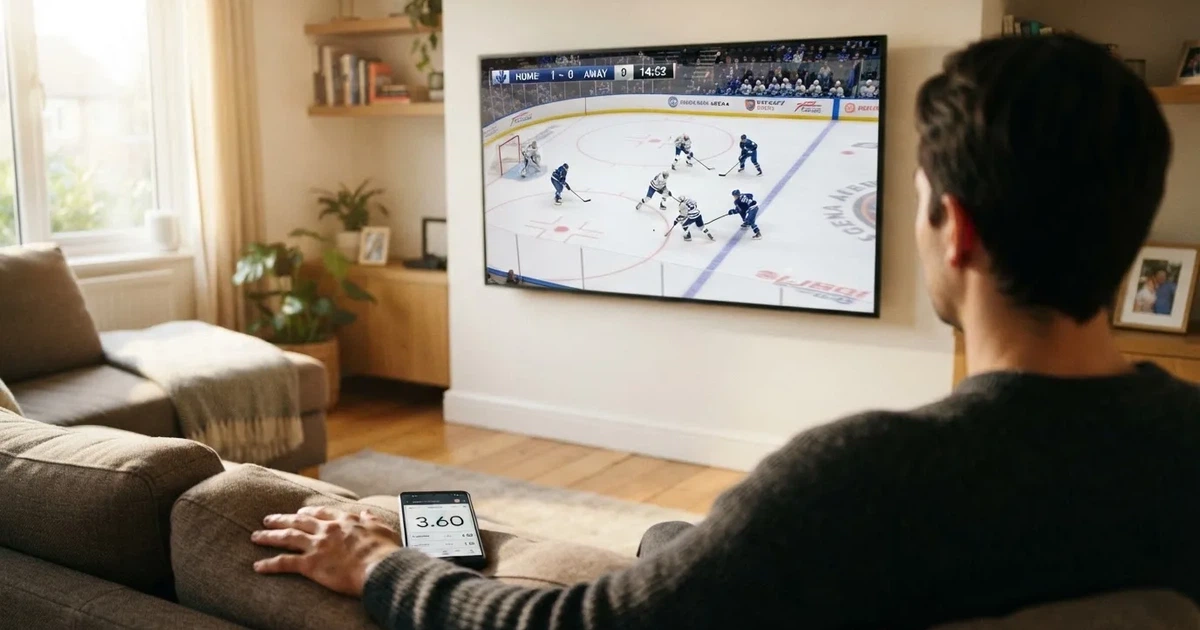
Ice hockey betting moves faster than most sports. Three periods of twenty minutes, stoppages that rarely stop cleanly, overtime that flips a settled favourite into a loser, and a calendar that runs from September through to the Stanley Cup the following June. The market underneath it is no calmer: bookmakers layer prices on every period, total and puck line, reshuffle them when a goal goes in and pay out long before a full-time scoreline exists. This guide sorts the mechanics from the marketing, maps what a licensed UK bookmaker actually offers on the NHL, the IIHF World Championship and the leagues underneath, and works through the ten operators where ice hockey bettors in Great Britain can place a wager in 2026.
Ice Hockey Apps and Mobile Betting
The smartphone is where most ice hockey bets are priced and placed. A bookmaker’s app has to handle real-time odds, live in-play markets on a fast-moving game, a bet slip that survives a phone call from the third period, and withdrawals that don’t take a working day to clear. The cluster that follows ranks what matters and what costs.

What an ice hockey app actually has to do
A puck-line price moves on a power play. An NHL period market updates between face-offs. A bet builder needs to pull together a first-period goal, a player shot total and a moneyline into one ticket without the odds resetting in the cart. Every operator on this page handles those tasks, but the amount of friction differs. Some push a notification the moment a goal goes in. Others wait for the bettor to load the screen. The difference between the two is the difference between catching a price and chasing one.
bet365 leads the GB app market on volume of download, and the size of its in-play product is the reason — its app loads Bet Builder+ markets on a single event before play, opens an in-play tab on most NHL games and runs a live stream on hundreds of fixtures each week. For a bettor who wants to combine markets from one game, follow the puck live, and cash out mid-period, the workflow sits inside a single app. For an ice hockey bettor whose phone is the only screen they use, the app does the job.
Smaller apps, specific jobs
Not every bettor wants the all-in-one app. Some want speed over feature count. Kwiff’s app, which carries a 17+ age rating and runs under the brand Spryme Ltd, opens to a stripped-back market list and is built around the bettor who wants to back a price and leave again. Fitzdares, by contrast, positions as a higher-stakes product on its iOS app, with cash out, accumulators, Lucky 15s, specials and ante-post markets on horse racing, football, tennis, rugby, cricket, golf and American football, with in-play live odds for whoever follows several sports at once.
London Bet keeps the surface area tight: sports from football, tennis, horse racing and greyhounds through to darts, golf, cricket, NFL, NBA, MLB and snooker, with Pragmatic Play casino slots and live in-play underneath. Lottoland’s app wraps casino, sports, scratchcards and lottery betting together — useful for a bettor who splits time between them, less useful for someone whose phone has only ever held a sportsbook.
What to check before downloading
A good ice hockey app has three things that don’t make the marketing screenshots: an iOS and an Android build with feature parity, a search bar that surfaces an NHL team rather than a league, and a withdrawal route that doesn’t force a bettor back to a desktop. The browser version of any of these brands does the same job at home; the app exists for the bettor who isn’t at home, which in a sport that plays at midnight Eastern Time means most nights from October to April. A blank screen at a minute like that is more common than a tight one — the gap between the two is mostly engineering.
Live Ice Hockey Betting and Cash Out
In-play on ice hockey runs at a tempo that other sports don’t match. Two goals in a third of a period is not unusual, a major penalty can swing a price inside thirty seconds, and a tied game in the third period produces more volume on the betting exchanges than the rest of the calendar combined. The product underneath those bets matters: a sluggish cash-out or a frozen in-play tab costs the bettor the exact move they were trying to make.
How the in-play product is built
A GB-licensed bookmaker offers three live products on most NHL games: a 60-minute moneyline (settled on regulation time, not including overtime), a 3-way line including the tie, and totals over and under goals. The deeper markets — next goal, period betting, player shot totals, race to X goals — sit underneath, and are usually suspended for ten seconds after a goal before the new line lands. Some operators run those markets all the way through overtime; others shut the book and pay out as a push if the game goes to extra time.
bet365 layers its in-play product with Bet Track, Match Live and a live stream library on hundreds of games a week, which is closer to a broadcast than a betting interface. Midnite takes a different shape: in-play events acca builder, popular accas and price boosts with maximum-stake limits are pinned to its sports home page, so a bettor who wants a pre-built multi goes there quickly. BoyleSports, BetUK, Unibet and BetGoodwin all run in-play ice hockey markets but none of them markets the feature — finding the live tab on the app is the way in.
When cash out actually pays
Cash out is a button that pays a ticket before the final whistle. On a single goal-line bet, the maths behind the button is the back-and-lay price the bookmaker would face if the bettor laid the same selection on a betting exchange; the offer is therefore a spread, not a free option, and the price the bettor sees is usually worse than backing the other side at the same moment. On an accumulator, cash out is a different product: the price moves with each leg, and a bettor who cashes out a five-fold after four winners takes a guaranteed small win instead of risking the whole thing on a single game in overtime.
Fitzdares advertises cash out on its iOS product across accumulators and specials. BoyleSports, BetUK and Unibet run cash out on most singles and accumulators, suspended after a goal and re-opened when the new line is set. Kwiff markets the cash-out button as one of its features but it functions only on selected markets — a bettor who plans to use it on a fast-moving in-play line should check that the sport is enabled before staking.
Live streaming as a betting tool
Watching the game changes how the bet is placed. The bookmakers who license streams — bet365 most visibly, plus BoyleSports and Unibet on a smaller catalogue — let the bettor watch a goal go in and lay a price at the same moment. The bettor without a stream is reading a tickertape. The difference is sharper in hockey than in any other sport because the time between a shot and a price change is so short.
Predictions, Tips and the Reality of Strategy
A bookmaker’s margin sits inside every price, and no tipster service, no system and no model beats a margin in the long run. That is the only honest starting point. The rest of this section is about what the bettor can and cannot change — which markets they pick, which lines they time, and what an “edge” is worth once the margin has taken its cut.
Why tipsters cannot beat a margin
A tipster charges a subscription. A model charges a stake. The bookmaker charges a margin on every bet. The three sit on the same transaction: a tip that wins at odds of 1.91 costs the bettor 1.91 × their stake, of which roughly 4-5% of every unit staked is the bookmaker’s margin. To beat that on a tip alone, the tipster must post prices that are sharper than the bookmaker’s, and sharper prices on a market where the outcome is uncertain is not what a tip service produces. Most tipster tipsters run a strike rate of around 45% on hockey at the offered odds; the strike rate needed to break even on a market with a 5% margin is closer to 52-53%. The gap is the house edge, and no selection of tips closes it.
A model is a different claim. A model uses data — shots, expected goals, line combinations, goaltender save percentages — and produces a probability. The probability is converted into a price the bettor compares with the bookmaker’s. Where the model says 55% and the bookmaker says 50%, the bet has a positive expected value. The catch is that the model needs to be sharper than the bookmaker’s, which means the input data needs to be sharper than the bookmaker’s, and for a sport that ends on a single overtime goal, the noise floor is high enough that even a strong model produces fewer correct prices than a bettor expects. The better models make money; they make less than their subscribers think.
What bankroll discipline actually does
Bankroll discipline does not change the price of the bet; it controls the bettor’s exposure. A stake sized at 1-3% of the bank survives a losing run. A stake sized at 10% does not. The bettor who stakes the same amount on every bet has no edge from their bankroll — they have exposure to variance. The bettor who stakes proportional to perceived edge has a small edge on sizing but most of their advantage from the bets they choose to place.
A staking plan looks like this in plain numbers: a bank of £1,000, a unit of 2%, a typical stake of £20. A losing run of five bets at average odds of 1.91 loses roughly £80. A winning run of five bets at the same odds wins roughly £110. The bettor who raises the stake after a loss and cuts it after a win is pursuing the loss; the bettor who holds the unit flat across both has a lower peak and a higher trough, but a longer career.
What an ice hockey tip really costs
A tip is a recommended selection at a price. The tip’s value is not whether the selection wins — the bettor places the bet, the book settles it. The tip’s value is whether the tipster’s strike rate at the price they quote is high enough to beat the margin. That calculation can be done on paper using the bets the tipster recommends; it cannot be done using the bets the bettor placed when they decided to ignore two of the five selections that week. An honest tip service records every recommendation, including the ones nobody took, and the bettor who reads the record does better than the one who reads the email.
Bet Types and How Ice Hockey Odds Are Built
The odds the bookmaker offers on a game are not three numbers. They are a margin wrapped around a market, a set of rules about what counts as a goal, and a mechanism that settles bets one of three ways — win, lose or push. Reading the odds means reading the rules underneath them.
The markets on a single game
A full-price NHL game at a GB-licensed bookmaker carries between thirty and sixty markets, depending on the operator and the time of game. The skeleton is the same: a 60-minute moneyline (1X2 against the regulation-time result, with the tie priced in as a third outcome), a 3-way line including overtime, a puck line (a handicap of 1.5 goals; backing the favourite means they must win by two or more), and totals on goals scored, usually priced in half-goal steps so that an over and an under cannot both win.
Underneath are period markets (first period, second period, third period) on the same three-way line and the totals line, with the period settled at the buzzer regardless of what happens in overtime. Player markets — shots on goal, points scored, anytime goalscorer — are priced before play and then suspended for the in-play book. Race markets (race to two goals, race to three goals) settle during the game. Grand Salami markets combine every game’s total in a slate into one over-or-under ticket. Each of those markets has its own margin; the headline 1X2 line is the cheapest one to price.
How the margin is built into the odds
The margin is the difference between what the bettor would win on a fair market and what the bookmaker pays out. On a two-way line at odds of 1.90 and 1.90, the implied probabilities are 1 ÷ 1.90 = 52.63% on each side, adding to 105.26% across the book. The 5.26% over 100% is the bookmaker’s margin — the share of every unit staked the bookmaker keeps on average across the market.
A wider margin means the bookmaker keeps more of every bet. A 10% margin is roughly twice the cost of a 5% margin across a season of betting, and on a deep in-play market with three outcomes the margin can run higher than on the headline moneyline. The bettor who cares about price compares margins across books the way a shopper compares unit prices on the supermarket shelf.
Worked example: a market at 1.90 / 1.90
Take a regulation-time moneyline priced at 1.90 on the home team and 1.90 on the away team — a symmetrical book around the tie in a 3-way line, simplified here to two outcomes for arithmetic.
Implied probability on each side: 1 ÷ 1.90 = 52.63%. The two sides add up to 105.26%, so the payout share — the share of every unit staked that the bookmaker returns to bettors across both outcomes — is 100 ÷ 105.26 = 95%, and the bookmaker’s margin is 100% − 95% = 5%.
A 5% margin is on the cheap side for a two-way market — that’s the band the leading GB bookmakers sit in on headline hockey lines. A 7-10% margin is more usual on a totals line, a period market or a niche player prop, and a 12% margin or higher shows up on some ante-post and novelty markets. The lower the margin on the market a bettor picks, the more of every unit staked returns to bettors over time.
How a winning bet pays back
A £20 bet at odds of 2.50 returns £20 × 2.50 = £50 if it wins — that is the total payout, including the stake. The profit is £50 − £20 = £30. On an accumulator, the odds of each leg multiply into one price; a four-fold at 2.00, 1.80, 1.91, 1.91 lands at 2.00 × 1.80 × 1.91 × 1.91 = 13.13, so the same £20 stake returns £262.60 if all four legs win. Each leg’s margin is built into the leg’s odds; an accumulator’s total margin is the combined margin of all four legs.
The takeaway is mechanical but worth saying once: the more legs in a multi, the more the margin compounds, and the harder the bet is to clear on a stake-by-stake basis. A 2.50 single at a 5% margin has a 5% margin. A 13.13 four-fold built from four singles at a 5% margin each has a compounded margin closer to 19%. The marketing that frames an accumulator as bigger value is the marketing that compounds the bookmaker’s edge fastest.
What a push means in ice hockey
A push is a bet that neither wins nor loses because the result landed exactly on the line. On a totals line of over/under 6 with a stake returned if exactly six goals are scored, the stake comes back. Most ice hockey lines are priced in half-goals so a push is impossible; some lines on totals, puck lines and period markets use whole numbers, and the push rule is what makes those bets settle cleanly on a tie.
The push cost the bettor any profit. The push also costs the bookmaker any margin on that specific bet, because the stake is returned whole. Lines that cannot tie — half-goal totals, puck lines of 1.5, period moneylines with the tie priced in — are the lines on which the bettor’s margin cost is exact. Lines that can push are the lines on which the marginal cost is partly hedged for both sides.
Ice Hockey Sports, Tournaments and the Calendar
The NHL dominates the calendar by a distance, but it is not the only ice hockey that takes bets. The IIHF World Championship, the Champions Hockey League and the Winter Olympics all sit underneath. Each has a different shape, a different market depth and a different point in the year.
The NHL at 32 teams, 84 games each
The 2026-27 NHL season starts on 29 September 2026 with 32 teams playing 84 games each — two more than the previous 82-game schedule — and the regular season ends on 10 April 2027, ahead of the Stanley Cup playoffs running into June. The Carolina Hurricanes beat the Vegas Golden Knights in the 2026 Stanley Cup Final, and the market reframes for the new season within weeks. A bettor checking prices on opening night is looking at a team whose off-season trade history the bookmaker has already priced; a bettor checking prices in February is looking at a team whose goal differential the bookmaker has already updated.
The headline market on every NHL game is the 3-way line including overtime. GB bookmakers offer that line, the regulation-time 1X2, totals on goals scored, puck lines at 1.5, period markets and a long tail of player props — shots on goal, points scored, anytime goalscorer — whose depth varies by operator. bet365 and Unibet sit at the deeper end of that catalogue; the smaller operators carry fewer player markets but still run the headline lines.
The IIHF World Championship and the Olympic cycle
The IIHF World Championship runs every May, immediately after the NHL playoffs end, with national teams rather than clubs. The IIHF is the highest governing body of ice hockey, and its tournament is the second-biggest ice hockey event by betting volume behind the NHL. The market depth is shallower — fewer player props, fewer period markets — and the prices are wider-margin as a result. The Olympic cycle adds the men’s tournament every four years and the women’s tournament (added to the Winter Olympics in 1998) on the same cycle; men’s ice hockey has been part of the Winter Olympics since 1924.
The dead time in the calendar is the gap between the Olympic final and the NHL’s opening night in October. Bets on the KHL, the SHL and other European leagues run throughout the off-season at a smaller book. A bettor whose interest is year-round keeps an eye on the Champions Hockey League, which runs mid-season through European clubs and produces a deep enough market for headline lines.
Tied games and how overtime settles them
The NHL regular season follows overtime with a penalty shootout — a tied game after three-on-three overtime stays tied and ends on a skills competition that counts as a goal but not as a normal goal for most markets. Since 2019, the IIHF World Championships and the Olympic gold medal game use three-on-three overtime without a shootout at that level. A bet on the regulation-time 3-way line gets settled at the end of the third period; a bet on the overtime-inclusive line gets settled at the final whistle, including overtime goals.
A bettor who does not check the rule on the ticket they are placing ends up with one of two errors. They either back a team in overtime when they meant the regulation-time price, or they back a regulation-time result when the game goes to overtime and the bookmaker settles it on the overtime price instead. The marketing screenshot doesn’t always say which. The rule is on the market name — “incl. OT” or “60 min only” — and the bettor who reads it does not lose on a settled bet.
The 2026 Shortlist of Ice Hockey Bookmakers in Great Britain
Ten operators carry a Gambling Commission remote licence for real-event betting and take customers in Great Britain. They are not interchangeable. Some run deeper markets than others; some run a smaller bonus and a sharper price; some are built for the phone, others for the desktop, and one or two are built for the kind of customer who places £5,000 on a single NHL game. What follows is the assessment of each on the criteria that matter for an ice hockey bettor.
The standalone table that compares them on the relevant licence detail sits at the end of this section. Each write-up that follows reads against that table on its own terms — the licence holder is the entity that runs the brand on a day-to-day basis, and the column on terms notes what each operator’s own conditions say on the subject of ice hockey specifically, where the public information supports one. Where the licence register and the brand’s own statement diverge, the register is the truth.
How the ranking is built
The ranking runs on five tests. The first is the depth of the in-play ice hockey product — a sport this fast punishes a slow book. The second is the scale of the pre-match catalogue — total markets per game, player props, period markets. The third is the operator’s own track record on withdrawals and limits. The fourth is the welcome offer, described as the brand’s own terms describe it and not as a voucher. The fifth is the licence — verified against the Gambling Commission’s public register, with the licence holder named on the register noted beside the brand name.
A bookmaker can fail one of those tests and still make the top ten. The ranking does not average out the failures. Where the in-play product is strong but the welcome is thin, both notes land on the page.
Licence position across the featured set
The featured set is not the licensed market. There are more than ten GB-licensed online bookmakers; this comparison takes in ten of them, and the bettor looking for a wider choice should check the Commission’s public register for the full list. Every brand in this comparison carries a remote general betting standard (real events) licence; several brands can run under one licensee (Ladbrokes and Coral, Paddy Power and Betfair are the visible pairings), and the licence holder listed in the table is the entity registered with the Commission, which may not be the brand name on the app.
| Brand | Gambling Commission remote licence | Licence holder | What the operator’s own terms say on ice hockey |
|---|---|---|---|
| Fitzdares | 000400-R-103839-030 (account 400) | Fitzdares Limited | iOS app offers cash out, accumulators, Lucky 15s, specials and ante-post markets on horse racing, football, tennis, rugby, cricket, golf and American football; in-play live odds |
| BetUK | 039198-R-319450-029 (account 39198) | LeoVegas Gaming PLC | Sports welcome offer: £10+ deposit and a sports bet within 7 days of registering returns four £10 free bets (two football accumulators of 4+ selections and two multiples of 2+), valid 7 days, opt-in required |
| Unibet | 045322-R-324275-019 (account 45322) | Platinum Gaming Limited | “Get £40 in Free Bets when you bet £20”: deposit and sports bet of £20+ at minimum odds of 2.0 (1/1), free bets expire within 7 days, new GB customers, debit card or instant bank transfer |
| BoyleSports | 039469-R-319383-025 (account 39469) | Boylesports Enterprise | UK players welcome: £20 in free bets on a £10 bet (Ireland: €30 in free bets on a €10 bet) |
| Octobet | 062545-R-337248-006 (account 62545) | Octopus Game Limited | Sportsbook welcome: 50% back as a free bet up to £50, plus a £10 casino bonus for new customers |
| BetGoodwin | 002927-R-327985-008 (account 2927) | Goodwin Racing Limited | “Bet £10 & Get £15 in Free Bets”: £5 sports bet, a £5 acca and a £5 Sub-Cover bet |
| London Bet | 066162-R-340278-004 (account 66162) | Thistle Bet Limited | App combines sports betting (football, tennis, horse racing, greyhounds, darts, golf, cricket, NFL, NBA, MLB, snooker) with Pragmatic Play casino slots and live in-play |
| Fitzwilliam Sports | 048760-R-335434-009 (account 48760) | SBKI Limited | Dublin bookmaker with capped membership; “High Stakes Welcome” subject to compliance criteria |
| bet365 | 055148-R-331498-002 (account 55148) | Hillside (UK Sports) ENC | Official global betting partner of the UEFA Champions League; offers Bet Builder+, Super Boosts, Winnings Boosts and daily Bet Boosts; in-play and live streaming with Bet Track, Match Live and a Live Golf Tracker |
| Kwiff | 044448-R-323408-017 (account 44448) | Eaton Gate Gaming Limited | UK Gambling Commission licensee; trademark operated by Spryme Ltd; iOS age rating 17+ |
The bettor should treat the licence holder column as the registered name on the public register rather than the trading name on the app. Where the two diverge — Unibet’s licence is held by Platinum Gaming Limited, for example — the bettor has no extra protection just because the brand and the registered name differ. The protection is the licence itself, and that sits with Platinum Gaming Limited.
BetUK
BetUK runs under LeoVegas Gaming PLC’s Gambling Commission licence and is positioned as the group’s UK-facing sportsbook. The pre-match ice hockey catalogue carries the headline lines (regulation moneyline, overtime-inclusive moneyline, totals in half-goal steps, puck line at 1.5) and a reasonable set of period markets; the in-play product is functional but does not stream every NHL game, and the cash-out button works on most singles and accumulators with a typical suspension after a goal.
The £10-£10 welcome is one of the better-shaped offers across the featured set: £10 in, four £10 free bets (two football accumulators of 4+ selections and two multiples of 2+), seven-day expiry. The bettor who likes a packaged welcome, the bettor whose football accumulator habit dovetails with their ice hockey betting, and the bettor who moves between the two products gets the most from it. The bettor who only bets ice hockey is paying for a football-shaped welcome they don’t use.
BetUK is the brand for a bettor who has decided that the LeoVegas platform sits behind the trading name and is happy with that — the same engine as the casino. The bettor who wants the deepest ice hockey product and the longest-running GB sports brand on a separate licence should look elsewhere.
Unibet
Unibet has run since 1999 under Platinum Gaming Limited, with a UK licence account of 45322 and a brand recognition that few GB-licensed books match. The ice hockey product is deep on the headline lines, full-on in-play, with the same Bet Builder feature the brand markets across sports. The app is one of the cleaner ones to navigate on a busy evening with four games overlapping.
The “Get £40 in Free Bets when you bet £20” welcome is straightforward: £20 sports bet at minimum odds of 2.0 (1/1), seven-day expiry, new GB customers, debit card or instant bank transfer. The minimum price for a qualifying bet is higher than most of the featured set, but the offer is paid in straight free bets rather than split across conditions, which makes it easier to value as a package.
The bettor who wants a long-tenured GB-licensed brand, a deep in-play product, and a free bet they can drop on a single NHL game rather than a four-fold should pick Unibet. The bettor who cares most about prices — the headline margin — and the bettor who already has an account with the group under another licence, will find the same product on a different login.
BoyleSports
BoyleSports holds account 39469 under Boylesports Enterprise and is the largest Irish-owned bookmaker that also takes GB customers. The UK welcome is a £20 free bet on a £10 bet (€30 free bets on a €10 bet for Irish players), with the same seven-day window most of the featured set runs to. The in-play ice hockey product is adequate; the pre-match catalogue is mid-table; the bettor who values BoyleSports is typically a bettor who has used the brand in person at a UK or Irish shop and now wants the same experience on a phone.
The combination of a UK and an Irish offer under one brand is unusual across the featured set and is the reason a GB bettor who keeps an Irish account keeps BoyleSports as the second of the two. The bettor who only bets GB-side has no reason to pick BoyleSports over a UK-only operator. The bettor who bets on both sides of the Irish Sea has, in BoyleSports, one of the few brands that can settle on a single ticket across the two licences’ currency differences.
BetGoodwin
Goodwin Racing Limited runs the brand under account 2927; the brand is rooted in horse racing — the book was a horse-racing telephone operation — and sports betting sits underneath it. The “Bet £10 & Get £15 in Free Bets” welcome splits across a £5 sports bet, a £5 acca and a £5 Sub-Cover bet. The Sub-Cover bet is the bettor’s chance of going some way to a payout if a single leg of a multiple loses; the price is more conservative as a result.
Ice hockey coverage is not the headline product and the catalogue shows it. The bettor whose main interest is horse racing with a few NHL bets during the season is the right reader for BetGoodwin. The bettor whose main interest is ice hockey will find the catalogue thin.
Octobet
Octopus Game Limited holds account 62545 for Octobet; the welcome is a 50%-back-as-a-free-bet up to £50 plus a £10 casino bonus, and the structure is the kind that runs across sports and casino rather than sports alone. The cap on the free bet is tied to the first deposit — a £100 first deposit returns £50 as a free bet — which makes the offer scale with stake rather than run as a flat £10-£20 free bet.
The mixed-product structure carries a footnote that matters under current GB rules: mixed-product promotions, an offer requiring gambling on two or more product types such as betting, casino, bingo and lottery, are banned in GB marketing under the 19 January 2026 promotion rules. The Octobet welcome above is offered to new customers — a betting and casino bundle at sign-up rather than a promotional condition inside an existing account. The bettor who has any doubt about how an offer sits under the current rules should check the operator’s own terms at the time of registering; the cap on what they can claim under the promotion can change.
The brand is new enough that the depth of the ice hockey catalogue is mid-table. The bettor who wants a sportsbook that bundles casino and a single offer covering both will find Octobet carries the shape they want.
London Bet
Thistle Bet Limited holds account 66162 for London Bet; the brand sits on an app that combines sports betting across a wide catalogue — football, tennis, horse racing, greyhounds, darts, golf, cricket, NFL, NBA, MLB and snooker — with Pragmatic Play casino slots and live in-play. The ice hockey section is on the catalogue but is not the strongest; the live in-play product is functional but does not stream.
The bettor who wants an app that runs across sports without a casino ringfence, who values the slot game library alongside their NHL bets, and who doesn’t need depth on player props, will read London Bet as a sensible choice at this size. The bettor whose interest is competitive ice hockey prices on a deep catalogue will not.
Fitzwilliam Sports
SBKI Limited holds account 48760 for Fitzwilliam Sports; the brand is a Dublin bookmaker with capped membership and a “High Stakes Welcome” subject to compliance criteria. The bettor who finds themselves in front of Fitzwilliam has likely been invited — the membership cap means the brand is curated rather than open, and the welcome offer is described in the operator’s own framing rather than as a feature on the marketing pages.
The bettor whose staking is at the higher end and who has the compliance process done already has access to a brand that does not chase the volume of the bigger books. The bettor whose staking is at the volume end of the market will find that the membership itself is a filter — the brand is built to keep customers who fit its profile out, not to win them in.
The platform offers instant deposits, fast withdrawals, timeouts and deposit limits, with links to GambleAware, GamStop and Gamblers Anonymous. The responsible-gambling infrastructure is the same surface every GB-licensed bookmaker carries, scaled to a smaller customer base.
bet365
Hillside (UK Sports) ENC holds account 55148 for bet365; the brand is the largest by volume in the UK and globally, the official global betting partner of the UEFA Champions League, and the most-downloaded sports betting app in the UK. The ice hockey product is the deepest in the comparison.
Bet Builder+ combines markets from one event into a single bet, available pre-match and in-play; Super Boosts, Winnings Boosts on Bet Builders and selected singles, and daily Bet Boosts run alongside. In-play betting and live streaming of events worldwide is core, with Bet Track, Match Live and a Live Golf Tracker for following bets in play. For an ice hockey bettor who plans to combine markets from one game and follow the puck live on the same screen, the workflow is more focused here than anywhere else in the featured set.
The bettor whose interest is the deep product and the bigger brand, and who is willing to accept the more aggressive marketing around price boosts and accumulator features, has the right fit. The bettor whose interest is a smaller welcome book and tighter margin has a different choice.
Kwiff
Eaton Gate Gaming Limited holds account 44448 for Kwiff; the brand is operated as a trademark of Spryme Ltd and the app carries a 17+ age rating. Kwiff markets itself on the “surprise” of a randomly boosted price — a stake the bettor places at one odds level can be paid out at a higher one if the brand’s price-boost engine hits. The cash-out feature on the app is partial: it runs on selected markets rather than across the catalogue.
The ice hockey catalogue carries the headline lines and the headline markets; the bettor who values the occasional price boost and a smaller brand shape has the right fit. The bettor whose interest is consistent cash-out on every market and the deepest possible catalogue will not.
The brand is licensed by the UK Gambling Commission; the trademark and the iOS rating are the signals a bettor uses to confirm what sits on the device. The combination — a smaller catalogue, a feature-led product — is the trade-off against the bigger brands in the comparison.
Fitzdares
Fitzdares Limited holds account 400 for Fitzdares; the brand is one of the longer-tenured sportsbooks in the comparison and positions at the higher-stakes end of the market. The iOS app offers cash out, accumulators, Lucky 15s, specials and ante-post markets on horse racing, football, tennis, rugby, cricket, golf and American football, with in-play live odds.
The ice hockey catalogue is moderate. The bettor who places a £50-£500 bet across several sports and values a tenured book that runs specials has the right fit. The bettor whose interest is the most aggressive price boost or the deepest player-prop catalogue on ice hockey specifically is looking at the wrong operator.
A note on Fitzdares and on the wider FCA question: financial spread betting, where the stake is lost on an unfavourable move and can exceed the deposit on extreme outcomes, is regulated by the Financial Conduct Authority. Spreadex — a brand outside the featured set for ice hockey specifically — operates under both an FCA licence for spread betting and a Gambling Commission licence for fixed-odds betting, with the brand’s own terms stating that spread betting losses can exceed the deposit. The bettor looking at any spread-betting product on an ice hockey market checks the regulator on the offer; the bettor looking only at fixed-odds betting here is on the Gambling Commission’s register and not the FCA’s.
How UK Ice Hockey Betting Is Regulated
The Gambling Commission licenses the whole commercial market under the Gambling Act 2005. A bookmaker serving customers in Great Britain needs a Commission licence wherever it is based, and the Commission’s public register is the whole test of who holds one. Several other regulators sit alongside it. The shape of the regulation, not just the name of it, decides what an ice hockey bettor can do and what protection they get when they do it.
The Gambling Commission and the public register
The Commission is a non-departmental public body sponsored by the Department for Culture, Media and Sport. The Gambling Act 2005 covers Great Britain (England, Scotland and Wales); Northern Ireland is outside the Act and has its own older law. Since the Gambling (Licensing and Advertising) Act 2014 an operator whose remote facilities are used in Great Britain needs a Commission licence wherever it is based — sections 33 and 36 of the 2005 Act as amended — so a Curaçao, Maltese or Gibraltar licence is not a substitute for the GB consumer-facing one.
The Commission’s public register can be searched by business name, trading name, domain or account number and is the whole test of whether a brand holds a licence. The licence holder column above is the registered entity. The trading name on the app can be one or two steps removed from the registered entity, and the bettor who wants to confirm they are dealing with a GB-licensed bookmaker searches the register with the licence number, the account number or the domain. Quoted counts of licence holders depend on the access date; the register moves monthly.
Customer checks and verification
A licensed operator verifies name, address and date of birth before a customer can deposit or gamble, a regime in force since 7 May 2019 and including free bets or bonuses. The bettor at a licensed site who has not done the identity check cannot place a wager — they can browse and that is it. The same regime is the reason no anonymous play exists at a licensed site, and the regime is also the trade-off a reader who values privacy has to weigh against the protection. The non-licensed operator has neither the checks nor the protection.
Identity checks extend at higher spend. A financial vulnerability check under LCCP condition 3.4.4 has been in force since 30 August 2024 and applies to licensed remote betting when a customer’s deposits minus withdrawals exceed £150 in a rolling 30 days, with the date the threshold took effect being 28 February 2025. It is a public-record check (bankruptcy or county court judgments, for example), not an income check and not a credit reference check. The bettor who trips the threshold runs through the check; the check is not a credit score.
Financial risk assessments — the “affordability checks” of the press — were announced in a staged plan in a Commission article dated 7 July 2026 with no start date. Until a date is set, the bettor at a licensed site does not face an affordability check. The bettor reading about it now knows the rule is announced and staged; a rule with a date would be different.
Stake and deposit limits
The Commission announced deposit-limit changes (RTS 12): the first changes have applied since 31 October 2025, a second phase was postponed to 30 September 2026, and whether it is live is not established. There is no state-set deposit or loss ceiling for betting: limits are the customer’s choice, set on the operator’s platform, and the bettor who wants a limit sets it themselves.
General Betting Duty is the operator’s tax on gross profits, currently 15%. From 1 April 2027 a new remote betting rate of 25% applies within it, while remote bets on UK horse racing, bets on self-service betting terminals in licensed premises, pool betting and in-person betting stay at 15%, set out in an HM Government policy paper of 26 November 2025. Until 1 April 2027 the remote rate stays at 15% for the bettor’s ice hockey book. Whether operators pass duty on through odds is not established; the bettor is not charged duty, and never reads a line that says the duty is theirs.
Advertising and bonus rules
Advertising runs through the CAP Code (non-broadcast) and BCAP Code (broadcast), enforced by the ASA, alongside the LCCP marketing conditions. CAP Code section 16: marketing must be socially responsible, must not be of strong appeal to under-18s, and no one who is or seems to be under 25 may be featured gambling or play a significant role in gambling-related marketing, with an exception for marketing placed where a bet can be made directly. The rule is about who appears in the advertisement, not who may bet; the bettor under 25 is not banned from placing a wager.
Promotion rules in force since 19 January 2026 cap wagering requirements on bonuses at 10x — a £10 bonus at 50x needed £500 of qualifying bets; under the cap no more than £100 in qualifying bets. Mixed-product promotions — an offer that requires gambling on two or more product types such as betting, casino, bingo and lottery, for example “bet on football to get free spins” — are banned. Whether the cap applies to free bets with no wagering condition, and any cap on the money value of a bonus, are not established from this register.
Betting advertisements are not shown on TV from five minutes before a live sporting event to five minutes after it, before the 9pm watershed (with horse racing and greyhound racing excluded), since 1 August 2019. The Premier League clubs’ withdrawal of gambling sponsorship from the front of matchday shirts from 2026/27 is a voluntary commitment, not law; sleeves and hoardings continue.
Player Protection, Self-Exclusion and Support
The protected bettor is one whose checks, limits, self-exclusion and support all sit inside the licensed market. Outside of it, none of the four applies. The difference matters when the bet goes wrong.
GAMSTOP and self-exclusion
GAMSTOP is the national multi-operator online self-exclusion scheme and a mandatory licence condition for online operators since 31 March 2020. The bettor who registers with GAMSTOP is excluded from every licensed online operator in Great Britain for six months, one year, five years, or five years with auto-renewal; after the minimum period the exclusion stays in place for a further seven years unless the customer asks GAMSTOP to remove it. The scheme covers online sites and apps; betting shops use a separate service, the multi-operator self-exclusion scheme operated in person.
The bettor facing the question — the bettor who has decided that they have a problem — registers with GAMSTOP and the licensed sites close. The bettor who tries an offshore book to keep betting during the exclusion does so without the protection: no GAMSTOP coverage, no Commission complaints route, no approved dispute-resolution body, no British consumer redress if funds are withheld, and the offshore brand is not bound by the 10x bonus cap or the £150 vulnerability check. The trade-off is binary.
Help, support and the channels that work
GamCare runs the National Gambling Helpline; GambleAware funds treatment and harm-reduction work; NHS gambling clinics operate across England in person; Gamblers Anonymous runs peer-led meetings. The bettor who needs help can call, can self-refer to an NHS clinic, or can ask their operator to signpost them through the safer-gambling pages on the licensed site’s platform. The bettor at an unlicensed site is on their own.
The stigma question is real: the bettor who has decided to get help is the bettor who has paid a tax the system does not refund. The numbers on the helpline, the clinic waiting lists and the recovery rate are blunt measurements of harm that could have been smaller with an earlier call. A licensed operator’s safer-gambling pages are not the help itself; they are the address of it.
What unlicensed operators cannot do for you
A GB licence is compulsory at the point of consumption. Providing gambling facilities in Great Britain without the licence the Act requires is an offence under section 33 of the Gambling Act 2005, on summary conviction up to 51 weeks’ imprisonment, a fine up to level 5, or both; six months in Scotland — and the offence is aimed at the operator, not the customer. The bettor who places a wager at an unlicensed site has committed no offence that has been prosecuted; the bettor has lost the consumer protection that the licence provides.
The unlicensed site does not run GAMSTOP. The unlicensed site does not run a Commission-verified customer check. The unlicensed site will not have an approved dispute-resolution body to handle a complaint about a withheld withdrawal. An honest framing is that licensed equals checks and limits, but the licensed bet also pays the verification tax and the margin; unlicensed equals none of those protections and possible loss of funds, without the verification tax. Neither is “the safe choice” by default.
Crypto and Anonymity in Ice Hockey Betting
The crypto and anonymity cluster pulls questions whose interest is less the coin of choice and more the visibility of the betting itself: who can see it, what ties to whom, and what the bettor gives up.
Licensed GB operators and crypto deposits
A British named-account rule, a state list of permitted payment methods and any rule for or against cryptocurrency deposits at licensed operators are not established. The licensed operator’s product treats crypto as one of several payment methods where the operator’s own terms permit it; the bettor who wants to deposit in Bitcoin at a GB-licensed book should check that operator’s own banking page before staking. Where a licensed operator does not accept crypto, the bettor’s choice is to use a non-licensed operator, with the loss-of-protection consequences on the previous section.
Offshore operators and the loss-of-protection trade
The bettor who chooses crypto-first play is choosing an offshore operator, by definition — the GB-licensed brands in this comparison do not market themselves as crypto bookmakers. The trade-off is the same as for any unlicensed site: no GAMSTOP coverage, no Commission complaints route, no approved dispute-resolution body, and no British consumer redress if funds are withheld. The crypto angle adds a layer — the blockchain records the deposit and the withdrawal on a public ledger anyone can read — but it does not add the licence that would turn the trade-off around. The bettor who reads about privacy in crypto betting rarely reads about the offshore dispute clause it sits next to.
What the licence register does and does not show
The public register holds the licensed names, the account numbers and the categories. It does not hold the payment methods an operator accepts. The bettor who wants to know what an operator accepts checks the operator’s own terms; the bettor who wants to know what the law demands checks the Commission’s guidance and the Act. The two are not the same: “permitted by the operator” and “permitted by the regulator” answer different questions.
Bonuses and Free Bets on Ice Hockey
The bonus page is the page the marketing wants the bettor to read first, and the page the bettor should read last. Wagering requirements, minimum prices, expiry dates and the type of reward (free bet versus cash) are listed on the offer’s own terms. The summary is mechanical — turnover at a multiplier, on markets with a minimum price — and the trade-off is the same across bookmakers, dressed in different offers.
Free bets, and what they really pay back
A free bet whose stake is not paid back on a win is a bet at odds of x with a return of (odds − 1) × stake. A £10 free bet at odds of 3.00 returns £20 of profit if it wins — the £10 stake is not part of the return. The bettor who values the free bet does so at the implied price: the value of a £10 free bet at 3.00, on a market with a 5% margin, is £10 × (3.00 − 1) ÷ 3.00 × 95% = £6.33. That is the value of the offer on average across many bets, not what a single bet pays back.
The free-bet value is the average. A bettor who lands one bet on a long shot wins more than £6.33 on a single ticket. A bettor who lands one bet on the favourite wins less. The advertised headline of “£40 in free bets” is the gross value of the reward across tickets; the meaningful value is the average win across the marketing claims of how those tickets would settle, and that value depends on the markets the bettor chooses.
Wagering requirements, minimum prices and expiry dates
Promotion rules in force since 19 January 2026 cap wagering requirements on bonuses at 10x — a £10 bonus at 50x needed £500 of qualifying bets; under the cap no more than £100 of qualifying bets. A £10 bonus at 10x asks for £100 of qualifying bets at a minimum price the offer names. A £50 bonus at 10x asks for £500 of qualifying bets. The £500 in turnover is not the bonus; the £500 in turnover is what clearing the bonus costs, and the cost is the marginal loss on every unit staked over the price’s margin.
Minimum prices attach to the qualifying bets. A bonus that requires bets at minimum odds of 1.50 is asking for bets the bettor could place anywhere; a bonus that requires bets at minimum odds of 2.00 is asking for bets the bettor has to choose more carefully. The bettor who picks the closer to the minimum odds is paying the bonus back in margin at the rate of every tick over a fair line. The bettor who picks the longer price is taking on more variance for the same bonus. The marketing of a “big” bonus often hides a tight minimum-price requirement.
Expiry dates compress the same mechanics into a tighter window. A seven-day expiry on a free bet issued weekly asks the bettor to use the ticket every week or lose it. A 30-day expiry on the same offer gives the bettor time to wait for a price they want. The bettor with a calendar wins on the longer window; the bettor without one pays for the tighter one with a smaller average value per ticket.
Cash bonuses versus free bets
A cash bonus is a cash addition to the bettor’s account, withdrawable after the wagering is done. A free bet is a ticket whose stake is not paid back on a win. The marketing language calls both a “bonus”. The difference in value to the bettor is real and on the order of the stake itself — a £10 cash bonus withdrawable after £100 of betting at a 5% margin is worth £5 more than a £10 free bet at the same turnover, because the stake of the cash bonus stays with the bettor on a win.
The Octobet welcome of 50% back as a free bet up to £50 is a free bet: the stake is not paid back. The BetUK welcome of four £10 free bets is the same shape. The Unibet “Get £40 in Free Bets when you bet £20” is the same shape. The bettor who reads the small print for the word “stake” or “free bet” reads the right page.
Final Assessment
The ten operators above are ten of the more than ten GB-licensed ice hockey books. The bettor who picks one of them gets a bookmaker under the Gambling Commission’s licence regime, with all the protections that regime provides: identity verification before the first deposit, GAMSTOP coverage, a Commission complaints route, and a marketing regime bounded by the LCCP and the CAP/BCAP codes. The bettor who picks outside the licensed set gets none of that, regardless of how competitive the price or how clean the bettor interface.
The differentiator inside the licensed set is product depth and staking pattern. bet365 and Unibet carry the deeper ice hockey product, with the in-play function that the sport’s tempo rewards. BetUK, BoyleSports and BetGoodwin carry welcome offers shaped for a multi-sport bettor — the ice hockey bettor who also plays football accumulators is the right reader. Octobet and London Bet carry a sports-and-casino shape that the purely-hockey bettor will not use fully. Fitzwilliam Sports carries a curated, capped-membership model for the higher-stakes customer. Kwiff is the price-boost-led smaller brand. Fitzdares is the tenured multi-sport book at the higher-stakes end.
The welcome offer is the marketing that frames the bookmaker; the in-play product is the work that decides whether the bettor keeps the bookmaker. The bettor who registers for the welcome and stays for the in-play read the offer on its own terms: the £40 in free bets is the £6.33-per-ticket average across the markets they will choose, and the in-play tab is where most of the betting happens between October and April.
The market beneath all of it is the bookmaker’s margin. A 5% margin on the headline line is on the cheap side; 7-10% is the band most in-play and period markets run to; 12% or more shows up on ante-post and novelty markets. The bettor whose stakes sum to a season of NHL betting will pay the margin on every ticket, and the lower the margin on the markets they pick, the more of every unit staked returns to the bettor over the season.
Frequently Asked Questions
How is the return on a bet worked out from the stake and the odds?
A £20 bet at decimal odds of 2.50 returns £20 × 2.50 = £50 if it wins, including the original stake; the profit is £50 − £20 = £30. On an accumulator the odds of each leg multiply into one price. The bookmaker’s margin is built into the odds on every leg, so each leg added to a multi compounds the margin the bettor pays.
How can it be checked that a bookmaker holds a Gambling Commission licence?
The Commission’s public register is searchable by business name, trading name, domain or account number, and is the whole test of whether a brand holds a licence. The featured set on this page is verified against that register at the date stated in the stamp at the top.
What is the bookmaker’s margin and how can it be seen in the odds?
The margin is the share of every unit staked the bookmaker keeps on average across all outcomes of one market. For a two-way market at odds of 1.90 / 1.90, implied probabilities are 52.63% on each side, totaling 105.26%; the payout share is 95% and the margin is 5%. A wider margin on the same bet means more of every unit staked is kept by the bookmaker and less returned to bettors across the season.
How to bet on ice hockey?
Pick a GB-licensed bookmaker, register, complete the identity check, deposit by debit card or bank transfer, find the NHL or IIHF event on the app, choose a market (regulation-time 3-way, overtime-inclusive 3-way, totals, puck line, period, player prop), set a stake at a unit size that fits the bank, and place the bet. In-play markets work the same way during the game; cash out settles early at a price the bookmaker sets.
How is ice hockey betting regulated in Great Britain?
The Gambling Commission licenses the whole commercial market under the Gambling Act 2005; the Commission’s public register is the only test of who holds a licence. In-play betting, payment methods, stake and deposit limits are the operator’s own settings under the LCCP. GAMSTOP is mandatory for online operators since 31 March 2020; the financial vulnerability check applies once a customer’s deposits minus withdrawals exceed £150 in a rolling 30 days.
US & other team sports – Basketball betting
Content created by the «Basketball betting» team
