
MMA betting online in 2026: apps, in-play markets and the operators behind the odds
 Available in US
Current as of 27 October 2026. Verified against the Gambling Commission’s public register of remote operating licences and the operators’ own published terms.
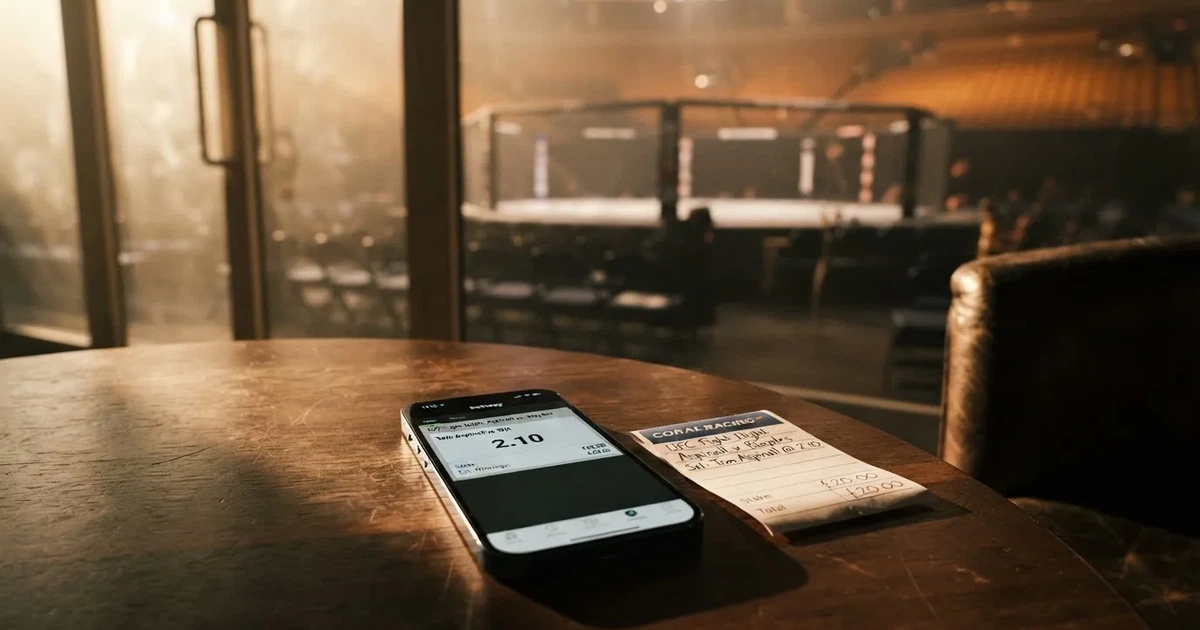
MMA betting has moved from a niche corner of the sportsbook to a fully fledged vertical in 2026, with every major British bookmaker carrying UFC cards, Bellator events and an expanding list of regional promotions. The question is no longer whether to bet on it but where the price is best, how the in-play product behaves, and what a bettor is actually paying for the welcome offer attached to it. This guide walks through the lot: the apps that carry the action, the live markets that open once the cage door closes, the bet types and odds formats that govern every wager, and the ten UK-licensed operators that sit behind the prices.
MMA apps on a phone: what changes and what stays the same
A native app is the dominant way British bettors place an MMA wager in 2026. Browser-only betting still works, but the operators have spent years tailoring the touchscreen experience: swipe between events, tap to add a leg to a bet builder, slide the cash-out slider mid-round. What stays the same is the licence — the Gambling Commission regulates the app, the mobile site and the desktop site under one remote operating licence, so a bettor does not switch legal regime by switching device.
Betfred’s app is published by Done Brothers (Cash Betting) Ltd and covers 21 sports plus more than 2,000 casino-style games under one roof. It is the kind of generalist product where MMA lives inside the “Combat Sports” tab alongside boxing. Fitzdares leans the other way: its app foregrounds cash out, accumulators, Lucky 15s, antepost markets and in-play live odds across horse racing, football, tennis, rugby, cricket, golf and American football — MMA sits inside that menu without its own front page. DragonBet, a Welsh bookmaker published by DragonBet Ltd, builds the experience around Welsh football and rugby but carries racing, American football, in-play betting and a bet builder feature that handles MMA markets.
Spreadex is the outlier. It combines fixed-odds betting with financial spread betting in a single app, and that is the consequence the bettor meets first: a separate spread-bet tab, one-click cash out, partial cash out, auto cash out, and a Bet Builder that crosses both products. Spreadex is regulated by the Gambling Commission for fixed-odds betting and by the Financial Conduct Authority for spread betting; the FCA’s authorisation exists precisely because spread betting is a financial product where losses can exceed deposits. The MMA markets sit on the fixed-odds side; the spread product is a separate product line with its own rules and its own duty rate.
A native app reaches roughly the same features as the mobile site and outpaces it for two practical reasons. Push notifications fire when a price moves or a fight goes live, and the phone’s biometric login is faster than typing a password into a browser. The cost is storage space and the obligation to update the app when the operator pushes a new build — older builds get retired on a schedule the operator sets.
The consequence is a small one but worth naming. A bettor who downloads every bookmaker’s app to chase the best line on every fight ends up with a phone full of betting software, each one carrying its own identity-verification flow, deposit method and login. The cleaner approach is two or three apps that cover the events the bettor actually wagers on, and a browser bookmark for anything else.
Live MMA betting and cash out: what happens after the first bell
Live MMA betting is not like live football. A football match settles a corner every couple of minutes; an MMA round is five minutes long, the action inside it is non-linear, and the markets reflect that. Most bookmakers suspend moneyline betting between rounds because there is no clean point at which to take a price, then reopen it the moment the cage door closes for the next round. Method-of-victory markets go in and out of suspension more often because a finish in the last ten seconds of a round is worth a different grade of price from one in the first ten.

Cash out is the bettor’s escape route during those suspensions. bet365’s app — published by Hillside (Sports) ENC Ltd and described as the most downloaded sports betting app in the UK — ships Bet Builder+ that combines markets from one event into a single bet, available pre-match and in-play, with Super Boosts, Winnings Boosts on Bet Builders and selected singles, and daily Bet Boosts. Spreadex offers one-click, auto and partial cash out alongside its Bet Builder and live streaming of UK and Irish horse racing, greyhounds, tennis, NFL and selected football. Cash out at a licensed British bookmaker settles to the operator’s own model: the price offered is the operator’s, not the back or lay on an exchange, and during a flurry of strikes the offer moves sharply. A bettor who sets a stop-loss by cashing out at a preset level takes the operator’s price at that instant, not the best price they would have liked.
The in-play product carries two real costs the marketing does not name. The first is suspension latency: between the moment a takedown lands and the moment the bookmaker takes the bet back off the board, there is a window of perhaps five to fifteen seconds where prices are stale. The second is the vig baked into in-play prices, which runs higher than pre-match because the bookmaker has less time to balance the book. A bettor who treats live betting as a separate discipline from pre-match betting — separate bankroll, separate staking plan, separate log — keeps the lines up. A bettor who drifts in and out of live markets without that discipline burns through bankroll faster than they realise.
The practical order a live bettor goes through on a UFC card is roughly this: price the card the night before, place what they want pre-match, watch the early fights without betting to learn how the operator’s in-play product behaves, then size their in-play stakes conservatively once they have seen how often the bookmaker pulls the markets. Most licensed British bookmakers offer in-play MMA; the controls are licence-condition-driven and the marketing language describing it (“fastest in-play”, “live streaming”, “real-time odds”) describes a feature set rather than a legal regime.
AI agents and prediction markets: the analytics layer around the cage
An MMA betting tip sheet is only as good as the record behind it. The reputable outfits publish a closing-line value (CLV) for every pick — the price they recommended against the price the market closed at — and a long-run CLV above zero is the closest thing in this market to proof that the tipster knows something the bookmaker does not.
The analytical layer a serious MMA bettor builds has three parts. The first is a record of every bet placed: date, event, fighter, market, odds taken, stake, result. The third-party tracker the bettor uses does not change the math; what matters is that every bet is logged consistently from day one. The second is a sense of where the public money is going, which the betting exchanges and the major sharp bookmakers surface through market liquidity. The third is a model of value that compares the bettor’s own probability estimate against the implied probability in the price — a price of 2.50 implies a 40% chance of winning, so a bettor who thinks the real probability is 48% has a positive expected value of roughly 8 percentage points before margin and commission.
The bookmaker’s margin sits inside every price, and that is the one number the marketing never names. At a price of 1.90 / 1.90 on a two-way market, the implied probabilities add to 105.3% — the extra 5.3% is the overround, while the margin is 5.0%. A bettor who backs both sides at those prices is paying 5.0% for the privilege. A bettor who backs only the side whose price is out of line with their own probability is paying far less, and may be paying nothing at all.
The temptation to treat AI agents and model-based tipsters as agents to follow rather than tools to interrogate is the commonest mistake a new MMA bettor makes. A model that prints “fighter X wins by KO in round 2” is a probability statement with a confidence band, not a tip — and the bettor who reads it as a tip ends up over-betting low-confidence picks and under-betting high-confidence ones. The honest framing: predictions run on a board, the board is the bettor’s own record, and the record keeps the lines up.
Bet types and odds: the mechanics of an MMA wager
An MMA wager is a contract between the bettor and the bookmaker on the outcome of a defined event, settled at the bookmaker’s terms. The price quoted is decimal in Britain by default — 1.91 means a £10 stake returns £19.10 if it wins, of which £9.10 is profit. The fractional form is shown alongside on most apps: 1.91 in decimal is roughly 10/11 in fractions, and the conversion is decimal minus one written as a fraction. The bookmaker offers both because the older clientele reads fractions and the newer clientele reads decimals, and the operators do not want to lose either.
The bet types on an MMA card are narrower than on a football card but deeper on each fight. The moneyline is the headline market: fighter A to win, fighter B to win. The method-of-victory market splits wins into KO/TKO, submission and decision, and the price reflects the bookmaker’s view of how the fight ends. The “go the distance” market is its mirror: yes means the fight runs to the judges’ scorecards, no means it ends inside the distance. Round groupings (win in rounds 1, in round 2, in rounds 3 or 4, in round 5) are offered on title fights where the bout runs five rounds. Over/under on total rounds — over 1.5 rounds, under 1.5 rounds — is the closest the MMA market gets to a totals line.
Combination bets and accumulators work the same as on any other sport. A double is two selections, both must win; a treble is three; an accumulator (“acca”) is four or more. The odds multiply: a treble at 1.80 / 2.20 / 1.95 prices at roughly 7.72. Bet Builder, or same-game multi, lets the bettor combine markets from one fight into a single wager — fighter A to win and the fight to go over 1.5 rounds — and the price is computed by the bookmaker’s own model, typically with a margin on top of the underlying singles. The point of a Bet Builder is convenience and a small price discount versus backing the legs as singles; the cost is that one bad leg voids the whole ticket.
The expected return from any single bet is straightforward: stake multiplied by the decimal odds. The expected cost of the bet, averaged across many bets at the same price, is the stake multiplied by the bookmaker’s margin on that market. The two numbers do not describe the same thing. A £10 stake at 1.91 returns £19.10 if it wins; the same stake costs roughly 53p on average across many bets at a 5.3% margin. The bettor who treats the return figure as the upside and the margin as the price is the one who keeps a bankroll intact over time.
Settlement rules are the part the marketing rarely explains. A bout that ends in a no contest — typically because of an unintentional foul that incapacitates a fighter — voids almost every market at every bookmaker. A disqualification for an intentional foul that incapacitates a fighter is treated differently: at some operators it settles as a win for the fouled fighter, at others as a no contest. The method-of-victory market on a disqualification typically settles to “disqualification” as its own line rather than to KO/TKO or submission. The bettor who reads the rules before the card starts keeps their tickets from going on the wrong side of a void.
Sports and tournaments: the fixture list behind the markets
Mixed martial arts is an umbrella over a dozen promotions, and the British bookmaker’s fixture list is dominated by three. The Ultimate Fighting Championship is the flagship — founded on 12 November 1993, when UFC 1 was held at McNichols Sports Arena in Denver, Colorado — and it organises the sport’s 11 weight divisions, eight men’s and three women’s. Bellator ran as the principal US challenger until its closure in 2024; its former roster is now distributed across the Professional Fighters League, ONE Championship and a handful of regional promotions. ONE Championship carries a distinct rule set across its Asia-Pacific events and offers a separate set of betting markets.
Under the Unified Rules of MMA each round lasts five minutes with a one-minute rest between rounds; non-title bouts normally run no more than three rounds while title bouts can be sanctioned for five rounds. In the 10-point must system three judges score each round: the round winner gets 10 points, the loser 9 or fewer, and an even round is scored 10–10. Under those rules a decision can be unanimous, majority or split, and a draw can also be unanimous, majority or split. A bout ends in disqualification if an intentional foul incapacitates a fighter and in a no contest if an unintentional foul incapacitates a fighter — a distinction that matters at the betting window because a disqualification settles markets differently from a no contest.
Regional promotions — Cage Warriors, Brave Combat Federation, KSW, ACB and others — round out the card at most British bookmakers. The fixture list is denser in the heavyweight and light-heavyweight men’s divisions than in the lighter women’s divisions, and the women’s featherweight and women’s bantamweight divisions carry the deepest prices. The bettor who follows one or two promotions closely and reads the fighters’ records has more information than one who scans every card and remembers nothing.
The tournament calendar is what drives the betting calendar. UFC’s numbered events run roughly one a week, with a pay-per-view card roughly once a month. Bellator’s former schedule ran on a similar cadence under its old name; the post-Bellator calendar is more dispersed. ONE Championship runs across Asia-Pacific time zones, which means the British bookmaker’s overnight card is heavier on ONE than on UFC. The bettor who plans around the calendar — staking plan set a week ahead, not as the fights are announced — avoids the trap of betting on a card they have not had time to price.
The consequence of a thin fixture list is a thinner market. A regional card with six fights has fewer markets per fight and wider prices than a UFC pay-per-view with thirteen fights; a method-of-victory market on a regional bout may not exist at all. The bettor who wants method-of-victory prices fights themself by combining the moneyline with the method market at another bookmaker, then arbing the difference, but that is a separate discipline from the one this guide covers.
The MMA bookmaker shortlist: ten UK-licensed operators compared
| Brand | Licence holder | Account | Key terms for MMA bettors |
|---|---|---|---|
| Betfred | Petfre (Gibraltar) Limited | 39544 | 21 sports, 2,000+ games in one app; MMA inside the Combat Sports tab |
| Fitzdares | Fitzdares Limited | 400 | Cash out, accas, Lucky 15s, antepost, in-play across racing, football and US sports |
| DragonBet | DragonBet Ltd | 64908 | Welsh football and rugby focus; racing, American football, in-play, bet builder |
| BetUK | LeoVegas Gaming PLC | 39198 | Four £10 free bets on £10 deposit plus qualifying sports bet within 7 days |
| Spreadex | Spreadex Limited | 8835 | Fixed-odds and spread betting in one app; one-click, partial and auto cash out |
| BetTom | Bet Tom Limited | 64959 | 50% back as a free bet up to £50 on sports, matching casino free slot funds |
| BetVictor | BV Gaming Limited | 39576 | Best Odds Guaranteed on UK and Irish racing; enhanced live streaming; Smart Stats |
| Unibet | Platinum Gaming Limited | 45322 | £40 in free bets on a £20 qualifying bet at minimum odds 2.0 |
| Fitzwilliam Sports | SBKI Limited | 48760 | Capped-membership Dublin bookmaker with a high-stakes welcome |
| Geoff Banks | GB Sports Advisors Limited | 54095 | Live in-play and ante-post prices on future events |
Every brand on this list holds a Gambling Commission remote licence and is listed on the Commission’s public register against the holder named in the table. The licence is the prerequisite, not the recommendation: a place in the comparison is not a licence, and a licence is not a place in the comparison. MMA coverage varies — some brands carry UFC and Bellator only, others add regional promotions — and the table’s right-hand column names what the operator’s own published terms state about the products an MMA bettor uses most. The bettor’s job is to match that profile against the events they actually want to bet on, and the section that follows walks through each brand in that light.
Betfred
Betfred has run a UK retail bookmaker since 1967 and a remote one under Petfre (Gibraltar) Limited since the early 2000s, with Gambling Commission account 39544 covering remote general betting standard (real events). The app is published by Done Brothers (Cash Betting) Ltd, which is the trading-side company that has run the high-street estate for decades. The product is generalist: 21 sports and 2,000-plus casino-style games under one roof, with MMA inside the “Combat Sports” tab. The bettor who uses Betfred for MMA is using a book whose first job is racing and football, and that has consequences for depth: method-of-victory markets are priced on UFC pay-per-view cards and on the bigger Bellator cards, but the mid-tier regional events are thin or absent.
The verdict is that Betfred suits the MMA bettor who also wagers on racing and football and wants one app with a familiar interface for all three. The bettor who lives on regional MMA cards alone will find the card list under-stocked.
Fitzdares
Fitzdares runs under Fitzdares Limited with Gambling Commission account 400, one of the older remote licences on the register. The app foregrounds cash out, accumulators, Lucky 15s, specials and antepost markets on horse racing, football, tennis, rugby, cricket, golf and American football, with in-play live odds. MMA sits inside that menu without its own front page, and the depth on regional cards is thinner than on UFC pay-per-views. The product leans British — racing is the headline, football the second pillar — and the MMA bettor uses Fitzdares as a complement to a bookmaker that runs the cards more deeply.
The verdict is that Fitzdares suits the MMA bettor whose main interest is the parlay products (Lucky 15s, accumulators, specials) and who wants a British bookmaker with a long licence history. The bettor who wants the deepest MMA markets goes elsewhere.
DragonBet
DragonBet Ltd holds Gambling Commission account 64908 and the Welsh bookmaker publishes the app itself under the DragonBet name. The product is built around Welsh football and rugby but carries racing, American football, in-play betting and bet builder markets that handle MMA. The MMA card list is broad enough to cover UFC and Bellator’s successor promotions, and the bet builder handles method-of-victory combinations. The operator’s Welsh roots show in the front page: a bettor logging in during a Wales match will see that fixture first, and the MMA tab is two taps away.
The verdict is that DragonBet suits the MMA bettor who likes a smaller bookmaker with a regional identity and a clean bet builder. The bettor who needs the deepest market per fight will find the price book thinner than at the larger generalists.
BetUK
BetUK runs under LeoVegas Gaming PLC with Gambling Commission account 39198. The brand sits inside the LeoVegas group and the app carries the standard LeoVegas product: sports, casino, live casino under one roof. The MMA coverage is broad across UFC and the post-Bellator promotions, and the welcome is four £10 free bets (two football accumulators of four or more selections, two multiples of two or more) for new customers who deposit £10 or more and place a sports bet within 7 days of registering, with opt-in required. The free bets expire within 7 days of issue.
The verdict is that BetUK suits the MMA bettor who also wagers on football and wants a free-bet welcome that pays out across multiple sports. The bettor who only wagers on MMA and ignores the football legs forfeits the free bets on the wrong side of the welcome.
Spreadex
Spreadex runs under Spreadex Limited with Gambling Commission account 8835. The product combines fixed-odds betting with financial spread betting in one app, which is the consequence the bettor meets first: a separate spread-bet tab, one-click cash out, partial cash out, auto cash out, and a Bet Builder that crosses both products. Spreadex is regulated by the Gambling Commission for fixed-odds betting and by the Financial Conduct Authority for spread betting, and the FCA’s authorisation exists because spread betting is a financial product where losses can exceed deposits. The MMA markets sit on the fixed-odds side; the spread product is a separate product line with its own rules and its own duty rate. Live streaming covers UK and Irish horse racing, greyhounds, tennis, NFL and selected football.
The verdict is that Spreadex suits the MMA bettor who also wagers on financial spreads and wants one app that handles both, or who likes the partial-cash-out control on fixed-odds in-play. The bettor who does not touch the spread side is paying for a feature they will never use, and should check whether a fixed-odds-only competitor offers a tighter welcome.
BetTom
BetTom runs under Bet Tom Limited with Gambling Commission account 64959. The app is published by Bet Tom Limited and offers a sports welcome of 50% back as a free bet up to £50, with a matching 50% back up to £50 as free slot funds for casino play. Full terms apply at the betting site. The product mixes sports and casino under one roof and the MMA coverage sits inside the sportsbook without a dedicated front page.
The verdict is that BetTom suits the MMA bettor who also plays casino games and wants a matched welcome across both verticals. The bettor who plays only sports is paying for the casino half of the welcome in identity-verification time they will not redeem.
BetVictor
BetVictor runs under BV Gaming Limited with Gambling Commission account 39576, one of the longest-standing remote licences on the register. The product is generalist with a racing tilt: Best Odds Guaranteed on UK and Irish horse racing, enhanced live race streaming and a BetFinder feature for finding racing bets, alongside Smart Stats. The MMA coverage runs across UFC pay-per-view cards and the major regional promotions. The British racing heritage shows in the front page and the welcome is structured around the racing product, with the sports welcome extending to MMA on a competitive basis.
The verdict is that BetVictor suits the MMA bettor who also wagers on British racing and wants Best Odds Guaranteed on the racing side and a competitive price book on the MMA side. The bettor who only wagers on MMA will find the racing-first front page a small friction.
Unibet
Unibet runs under Platinum Gaming Limited with Gambling Commission account 45322, and the operator states it has run since 1999. The UK site is published by Platinum Gaming Limited, Gibraltar. The sports welcome is “Get £40 in Free Bets when you bet £20”: a deposit and sports bet of £20 or more at minimum odds of 2.0 (1/1), with free bets expiring within 7 days of issue, for new GB customers using a debit card or instant bank transfer. The MMA coverage is broad across UFC and the post-Bellator promotions, and the in-play product supports method-of-victory markets during the bigger cards.
The verdict is that Unibet suits the MMA bettor who wants a £40 free-bet welcome on a £20 qualifying bet and a broad product across other sports. The bettor who uses an e-wallet for deposits falls outside the welcome’s payment-method scope and should pick a bookmaker whose welcome does not require a debit card or instant bank transfer.
Fitzwilliam Sports
Fitzwilliam Sports runs under SBKI Limited with Gambling Commission account 48760. The brand describes itself as a Dublin bookmaker with capped membership, and its welcome is a “High Stakes Welcome” subject to compliance criteria. The product offers instant deposits, fast withdrawals, timeouts and deposit limits, with links to GambleAware, GAMSTOP and Gamblers Anonymous. The capped membership is the consequence: not every applicant is accepted, and the high-stakes welcome is targeted at bettors the operator has vetted.
The verdict is that Fitzwilliam Sports suits the MMA bettor with a larger bankroll who has been accepted into the membership and wants the high-stakes welcome. The bettor who has not been accepted, or who wagers at lower stakes, will find the welcome structured around a use case that does not fit.
Geoff Banks
Geoff Banks runs under GB Sports Advisors Limited with Gambling Commission account 54095. The app is published by GB Sports Advisors Ltd and offers live in-play prices and ante-post prices on future events. The product is small and tightly focused, with MMA inside a sportsbook that emphasises racing and ante-post football. The welcome is modest and the operator’s identity is closer to a tipster-turned-bookmaker than to a high-street chain.
The verdict is that Geoff Banks suits the MMA bettor who likes a smaller bookmaker with a racing-and-ante-post tilt and who wants live in-play prices on the bigger cards. The bettor who needs the deepest MMA market per fight goes elsewhere.
Where MMA betting sits under British law
The Gambling Commission licenses the whole commercial market under the Gambling Act 2005, which covers Great Britain (England, Scotland and Wales). Northern Ireland is outside the Act and has its own older law, so the term to use is “Great Britain licence” or “GB-licensed”, never that a GB licence regulates Northern Ireland. Since the Gambling (Licensing and Advertising) Act 2014 an operator whose remote facilities are used in Great Britain needs a Commission licence wherever it is based (sections 33 and 36 of the 2005 Act as amended); a Curaçao, Maltese or Gibraltar licence is not a substitute.
There is no statutory list of permitted sports or markets in Britain. A bookmaker serving customers in Great Britain holds a licence in a category — remote general betting standard (real events) is the category that covers MMA — and offers markets under its own rules and the Licence Conditions and Codes of Practice. The Commission’s public register can be searched by business name, trading name, domain or account number and is the whole test of whether a brand holds a licence. The minimum age is 18, and since 7 May 2019 name, address and date of birth are verified before a customer can deposit or gamble, including with a free bet or bonus.
The consequence for the bettor is that the licence check is one search away. A bookmaker’s “About” page or terms will state the licence holder and the account number; the Commission’s register confirms both. A bookmaker that refuses to name its licence holder, or whose licence holder does not appear on the register, is not a bookmaker to bet with. That is the test, and it is the only test.
Credit cards are banned for gambling in Great Britain since 14 April 2020 (LCCP condition 6.1.2), including credit-card-funded payments through an e-wallet; debit cards and bank-based payments are not covered by the ban. Identity verification before the first deposit means no anonymous play at a licensed site, and source-of-funds questions at higher spend are normal under the money-laundering rules. A British named-account rule, a state list of permitted payment methods and any rule for or against cryptocurrency deposits at licensed operators are not established in the public register; describe payments qualitatively and only from each operator’s terms.
The player pays no tax on betting winnings in Great Britain — general information, not tax advice; a professional gambler should ask HMRC or an adviser. General Betting Duty is the operator’s tax on gross profits, currently 15%; from 1 April 2027 a new remote betting rate of 25% applies within it, while remote bets on UK horse racing, bets on self-service betting terminals in licensed premises, pool betting and in-person betting stay at 15%. Until 1 April 2027 the remote rate stays at 15%; whether operators pass duty on through odds is not established, and the player is not charged duty directly.
The honest framing is that a GB licence means checks, limits, GAMSTOP and a 10x bonus cap, but also verification before the first bet; operating outside the licence means none of those protections and possible loss of funds. Neither is “the safe choice” by default.
Responsible gambling: the framework around the bet
The protection regime around a British-licensed MMA bettor runs through four channels. The first is GAMSTOP, the national multi-operator online self-exclusion scheme, a mandatory licence condition for online operators since 31 March 2020. Periods are six months, one year, five years, or five years with auto-renewal, and after the minimum period the exclusion stays in place for a further seven years unless the customer asks GAMSTOP to remove it. GAMSTOP covers online sites and apps; betting shops use a separate service.
The second is the financial vulnerability check (LCCP condition 3.4.4, in force since 30 August 2024). It applies to licensed remote betting when a customer’s deposits minus withdrawals exceed £150 in a rolling 30 days (since 28 February 2025): a public-record check (for example bankruptcy or county court judgments), not an income check and not a credit reference check. Financial risk assessments — the “affordability checks” of the press — are announced in a staged plan (Commission article of 7 July 2026), with no start date; the published line is “announced, staged, no start date”. Deposit limits under RTS 12 require operators to offer a gross deposit limit on a fixed time frame; the first changes have applied since 31 October 2025, a second phase was postponed to 30 September 2026, and whether it is live is not established. There is no state-set deposit or loss ceiling for betting: limits are the customer’s choice.
The third is the operator’s own safer-gambling tools. Every operator on the comparison list is a GAMSTOP member and offers timeouts, deposit limits, session reminders and self-exclusion. The bettor who wants those tools configured before their first bet, not after, keeps the framework around them.
The fourth is the help network: GamCare (National Gambling Helpline), GambleAware, NHS gambling clinics and Gamblers Anonymous. The bettor who notices the pattern shifting — chasing losses, betting longer than planned, hiding the stake — is the one who should reach for the help line before the bet. The bookmaker does not know the bettor is in trouble before the bettor does, and the framework around the bet works only when the bettor uses it.
The consequence is that the responsible-gambling layer is genuine at a licensed operator and absent at an unlicensed one. The bettor who treats the framework as a check-box exercise loses the protection it offers; the bettor who treats it as a daily practice — deposit limit set, session reminder on, GAMSTOP considered — keeps the protection they have paid for with the licence check.
Crypto and anonymity: the question the British framework answers
The MMA bettor who wants to bet with bitcoin or another cryptocurrency runs into the British framework at the first deposit. Identity verification under the money-laundering rules means a licensed operator must verify the customer’s name, address and date of birth before they can deposit or gamble, including with a free bet or bonus. Cryptocurrency deposits are not banned at a British-licensed operator per se, but they are not anonymous either: the operator must verify the source of funds and may decline the deposit if it cannot. The licensed-operator route delivers no anonymity at the betting window.
The unlicensed route delivers less protection, not more. An offshore operator with a Curaçao or Maltese licence may accept cryptocurrency and may not verify the customer’s identity, but the bettor loses GAMSTOP coverage, the Commission’s complaints route, the approved dispute-resolution body, and British consumer redress if funds are withheld. The 10x bonus cap, the £150 vulnerability check, the credit-card ban and the LCCP marketing rules do not apply. Providing gambling facilities in Great Britain without the licence the Act requires is an offence under section 33 of the Gambling Act 2005, aimed at the operator; the bettor who uses such a site is exposed to the loss of protection that follows.
The honest framing is that the licensed route is not anonymous and the unlicensed route is unprotected. The bettor who wants anonymity chooses the trade-off; the bettor who wants protection chooses the verification. The two do not co-exist under British law.
Bonuses and free bets: the arithmetic behind the marketing
A welcome offer is a marketing word for a contract. The contract specifies what the bettor must do (a deposit, a qualifying bet, a minimum price), what they receive (free bets, bonus funds, free spins) and what they must do before they can withdraw (a wagering requirement, a minimum price for settled bets, a deadline). The marketing name on the front of the offer — “£40 in free bets”, “50% back”, “bet £10 get £40” — is the headline; the terms are the contract.
The wagering requirement is the number that decides what the offer costs. The promotion rules in force since 19 January 2026 cap wagering requirements on bonuses at 10x: a £10 bonus at 50x needs £500 of bets, and under the cap no bonus may require more than £100 of qualifying wagering per £10 of bonus value. Mixed-product promotions — an offer that requires gambling on two or more product types such as betting, casino, bingo and lottery — are banned. Whether the cap applies to free bets with no wagering condition, and any cap on the money value of a bonus, are not established in the public register.
The bettor who reads the wagering requirement first, the minimum price second and the deadline third is the one who keeps the offer’s arithmetic honest. A free bet at minimum odds of 2.0 that expires in 7 days is worth less than the same free bet at minimum odds of 1.5 that expires in 30 days, because the tighter window forces the bettor onto shorter-priced markets. A deposit-gated bonus that needs a debit-card deposit excludes the e-wallet user. The bettor who reads the small print keeps the offer from becoming the cost.
The value of a free bet whose stake is not returned with the win is the free-bet amount multiplied by the difference between the odds and one, divided by the odds, scaled by the payout share of the market. At a free bet of £10, odds of 3.00 and a market with a 95% payout share, the value works out to £10 × 2.00 ÷ 3.00 × 0.95, or roughly £6.33. That is what the free bet is worth on average across many bets at that price — it is not what the free bet wins. A bettor who treats the headline figure (“£40 in free bets”) as the upside and the wagering requirement as the cost keeps the arithmetic honest.
The consequence is that the welcome offer is the cheapest part of the bettor’s first month at a new bookmaker only when the terms are read. The most expensive part is the bettor’s own staking plan, which the welcome offer tempts them to over-extend. A £40 free bet is not £40 of bankroll; it is roughly £25 of expected value at an honest staking plan, and the bettor who stakes it as if it were £40 is the one who loses the arithmetic.
Reading the bookmaker’s margin: the calculation that decides the price
The bookmaker’s margin sits inside every price, and the arithmetic that reveals it is straightforward. A two-way market at decimal odds of 1.90 / 1.90 implies probabilities of 52.6% on each side, which sum to 105.3%. The extra 5.3% is the overround, the slice of every pound staked that the bookmaker keeps on average across the market. The payout share — the proportion of stakes returned to bettors as winnings on a perfectly balanced book — is 1 ÷ (1/1.90 + 1/1.90), or 95.0%. The margin is 1 minus the payout share, or 5.0%.
The consequence for the bettor is that the margin is the price of admission. A £10 stake on each side at 1.90 / 1.90 returns £19 if either side wins, costing the bettor £1 on average — the 5.3% margin. A bettor who backs only one side pays no commission on losing bets but pays the margin on the winning bet through the unfavourable implied probability. A bettor who backs both sides at a balanced bookmaker pays 5.3% for the privilege; a bettor who backs only the side whose price is out of line with their own probability may pay nothing at all, or may even capture positive expected value.
The result is a band rather than a single number. At 1.90 / 1.90 the margin is 5.3% on a perfectly balanced book; at 1.85 / 1.95 the margin is roughly 4.4%; at 1.95 / 1.85 it is roughly 4.4% again. As the price shortens on one side, the other lengthens, and the margin narrows because the bookmaker’s exposure is more balanced. A bettor who prices the market across two or three bookmakers sees the band in real time, and the band is the information that tells them which bookmaker is offering the closer-to-fair price.
The honest framing is that the margin is the only number the bookmaker does not publish but always charges. A bettor who reads the margin on every market they bet on, and who backs only the side whose implied probability is wider than their own estimate, is the one who keeps the bankroll intact over time. A bettor who reads the headline price and ignores the margin is the one who pays the tax without knowing it.
MMA markets by operator: the practical order a bettor goes through
The MMA bettor who places a serious wager at a British bookmaker goes through a sequence that looks roughly like this. First, the licence check: the operator’s “About” page or terms state the licence holder and the Gambling Commission account number; the Commission’s public register confirms both. Second, the welcome offer: read the wagering requirement, the minimum price for settled bets, the deadline, the payment-method scope. Third, the market depth: price the same fight at three or four bookmakers, and pick the one whose margin is tightest on the markets the bettor actually wagers. Fourth, the staking plan: deposit limit set, session reminder on, staking plan sized to a percentage of bankroll, not a percentage of the welcome offer.
Fifth, the in-play discipline: do not bet on every fight, do not chase losses mid-card, cash out only when the operator’s price matches the bettor’s stop-loss level. Sixth, the record: log every bet, every stake, every result, and review the record monthly. The bettor who follows the sequence keeps the framework around the bet; the bettor who skips a step loses the protection that step offered.
The consequence is that the MMA bettor’s edge is not in picking winners — no model picks winners reliably enough to overcome the bookmaker’s margin over the long run — but in pricing markets more accurately than the bookmaker’s model and staking more conservatively than the marketing tempts. The bookmaker’s margin is the tax; the bettor’s edge is the rebate on that tax they capture by being more accurate.
Frequently asked questions
How does MMA betting work?
MMA betting is a contract between the bettor and the bookmaker on the outcome of a defined event, settled at the bookmaker’s terms. The moneyline is the headline market — fighter A to win, fighter B to win — with method-of-victory, “go the distance”, and round-grouping markets priced on the bigger cards. The price quoted is decimal in Britain by default; the stake multiplied by the decimal odds gives the return if the bet wins, of which the difference is profit.
Where can an MMA bettor find the highest odds?
The price varies by bookmaker and by market. At a balanced bookmaker a two-way market at 1.90 / 1.90 carries a margin of 5.0%, meaning the bookmaker keeps 5.0p of every pound staked across the market on average. Pricing the same fight at three or four bookmakers, and backing the side whose implied probability is widest, is how a bettor captures the highest odds the market offers. There is no single “best odds” operator; the highest price moves from fight to fight and from market to market.
Are there top-value MMA bets for this weekend?
A value bet is one whose implied probability is narrower than the bettor’s own estimate of the probability of a real outcome. At odds of 2.50 the market implies a 40% chance of winning; a bettor who thinks the real probability is 48% has a value bet with an 8-percentage-point edge before margin and commission. Whether any specific pick is value is a question the bettor’s own model answers, and no model is reliable enough to publish a “sure” bet on. The honest framing: value bets exist in every card, the bettor who finds them keeps the bankroll intact, and the tipster who promises them is selling the wrong product.
How is it checked that a bookmaker holds a Gambling Commission licence?
The Gambling Commission’s public register can be searched by business name, trading name, domain or account number, and it is the whole test of whether a brand holds a remote operating licence for Great Britain. A bookmaker’s “About” page or terms state the licence holder and the account number; the register confirms both. A bookmaker that refuses to name its licence holder, or whose licence holder does not appear on the register, is not a bookmaker to bet with.
How is the return on a bet worked out from the stake and the odds?
The return on a winning bet is the stake multiplied by the decimal odds. A £10 stake at decimal odds of 1.91 returns £19.10, of which £9.10 is profit. A combination bet multiplies the odds of the legs into one price: a treble at 1.80 / 2.20 / 1.95 prices at roughly 7.72, and the £10 stake returns £77.20 if all three legs win. The bookmaker’s margin sits inside the price, so the return figure is the upside; the expected cost is the margin, averaged across many bets at the same price.
What is the bookmaker’s margin and how can it be seen in the odds?
The bookmaker’s margin is the slice of every pound staked that the bookmaker keeps on average across a market, calculated as 1 minus the payout share. At odds of 1.90 / 1.90 the implied probabilities add to 105.3%; the extra 5.3% is the overround, and the payout share is 95.0%. The margin is the same number from the other side of the same ledger: a payout share of 95% and a margin of 5% describe the same market. The narrower the margin, the closer to fair the price, and pricing the same market across two or three bookmakers is how a bettor sees the margin in the odds.
Combat & motorsport – Basketball betting
Content created by the «Basketball betting» team
