
Snooker odds at the GB-licensed bookmakers that carry the World Championship
 Available in US
A snooker match looks orderly from the stands, but the betting market around it is anything but. Behind every price sits a margin, a model of player form and a set of rules that decide what happens when the final ball is potted. The snooker calendar concentrates around a handful of marquee events, the licensed bookmakers that carry them sit on a narrow regulatory base, and the welcome offers that accompany them carry a price of their own. Reading those prices is where the practical work sits.
Current as of 27 October 2026 · verified against the UK Gambling Commission’s public register
The fundamentals of a snooker betting price
The price on a snooker market is the punter’s window into how the operator thinks the match will go. Outright, match, frame, handicap, total frames, highest break and century markets all carry different prices. Each price already has the bookmaker’s margin inside it, baked in before the customer ever sees the number.
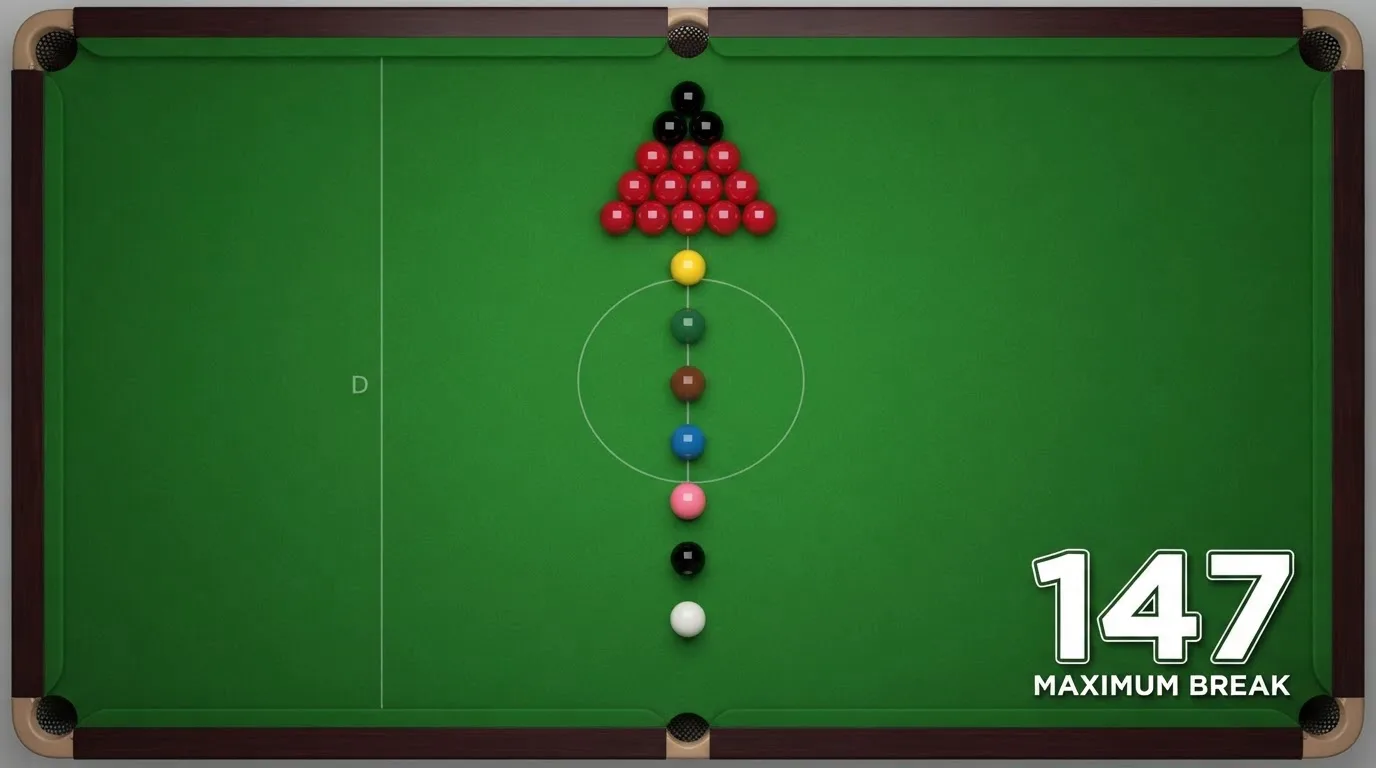
Match winner is the simplest. Each player carries a price and the punter backs the one they think will win more frames than their opponent across the agreed format. Outright is the tournament winner market, priced before a ball is struck and recalibrated as the field thins. Frame markets let the punter bet on the result of an individual frame, with prices moving frame by frame. Total frames (over or under a set number) and handicap markets give the punter a way to back a heavy favourite at a longer price, or back an underdog to keep the match close. Highest break and century markets are novelty-priced, paying out when a player pots a 147 maximum, scores 147 in a single visit, or hits a century break in a frame.
Decimal odds are the form used across licensed UK sites. A price of 1.90 means a £10 stake returns £19 (£10 profit plus the £10 stake). A price of 5.50 returns £55. The shorter the price, the more confident the market, and the less the punter wins for each pound staked. Fractional odds (5/1, 11/4, evens) appear in older materials; converting is a ÷ b + 1, so 5/1 becomes 6.00 in decimal and 11/4 becomes 3.75.
The price never tells the whole story. A two-way market at 1.90 on each side returns £1.90 from a £1 stake, but the bookmaker’s slice of every pound is taken before that number is set. The margin is what the operator keeps, averaged across every bet placed on the market. The arithmetic below runs through a 1.90 / 1.90 example and shows what that margin looks like in real numbers.
Bookmakers refresh snooker prices constantly. Outright markets tighten as the field narrows, match markets move on form news and frame markets shift as the frames unfold. A price printed at 9 am is not the price the punter will see at 7 pm.
Fixtures, tournaments and the professional season
The snooker calendar is unusually concentrated. A handful of ranking events and invitationals carry the season’s weight, and the betting market reshapes itself around them.
The World Snooker Championship has been held at the Crucible Theatre in Sheffield since 1977. The tournament runs over seventeen days in April and May, with the final framed as the showpiece. Wu Yize beat Shaun Murphy 18-17 in the final of the 2026 World Championship, taking the winner’s share of £500,000 from a total prize fund of £2,395,000. The tournament runs from best of 19 frames in the first round to best of 35 in the final, and the format lengthens as the rounds progress.
The UK Championship runs at the Barbican in York in late November and early December. The Masters is the January invitational at Alexandra Palace, restricted to the top sixteen players on a one-year ranking list. The Champion of Champions and the Tour Championship round out the invitational calendar. The Shanghai Masters, the European Masters, the English Open and the Scottish Open are the higher-profile ranking events outside the Triple Crown.
Professional snooker is governed by the World Professional Billiards and Snooker Association (WPBSA), which owns the official rules of the game. The International Billiards and Snooker Federation (IBSF) governs the amateur game. Most professional matches are played as best of 7, best of 9 or best of 11 frames; ranking-event finals extend further.
Match format matters to the price. A best of 7 frame match settles quickly, and the outright price on a heavy favourite reflects that. The shorter the format, the higher the variance for the underdog. A best of 35 final rewards the better player over a longer surface, and the outright market compresses as a result.
The Crucible era has produced the game’s headline records. Stephen Hendry and Ronnie O’Sullivan each hold seven World Championship titles. Joe Davis, in the pre-Crucible era, won fifteen titles in a row between 1927 and 1946, a record that no modern era has touched. The maximum break is 147, scored by potting all fifteen reds with blacks and clearing the six colours in a single visit. A full-size snooker table measures 12 feet by 6 feet, with six pockets.
The season’s compression around a small number of marquee events gives the betting market its rhythm. Outright prices crystallise weeks before a ranking event opens, then sharpen through the early rounds. Match prices tighten once the draw is published and the form book is digested. Frame markets move in real time.
Ten GB-licensed bookmakers side by side
Ten brands, each holding a Gambling Commission remote licence, carry snooker markets in Great Britain. The table sets them side by side on three points: licence, licence holder, and what the operator’s own terms state about snooker or its surrounding offer.
| Brand | Gambling Commission remote licence and licence holder | What the operator’s own terms state |
|---|---|---|
| BetMGM | Remote licence 039198-R-319450-029 (account 39198); LeoVegas Gaming PLC | Welcome offer: deposit £10 or more and place a sports bet within seven days for four £10 free bets (two football accumulators of four selections or more, two sports multiples of two or more); free bets valid seven days, minimum odds apply, opt-in required |
| Bar One Racing | Remote licence 056516-R-332750-007 (account 56516); Bar-One Racing Limited | Irish independent bookmaker, rebranded as BAR 1 Betting; sponsorships at Dundalk, Fairyhouse, Navan, The Curragh, Curraheen Park and Cork, racing-led product with a general sportsbook alongside |
| QuinnBet | Remote licence 061011-R-335683-004 (account 61011); QuinnBet (Gibraltar) Limited | Best Odds Guaranteed applies to Irish and UK horse racing bets from 10:00 daily on singles, multiples and system bets; maximum benefit £150 per customer per race |
| Coral | Remote licence 054743-R-330863-014 (account 54743); LC International Limited | Welcome offer: bet £20 on sports and receive £40 in free bets; minimum odds 2.0 (1/1), free bets issued within seven days, expire seven days after issue, opt-in required for new GB customers |
| Smarkets | Remote licence 039173-R-319366-011 (account 39173); Smarkets (Malta) Limited | Betting exchange: UK open-bank-transfer deposits instant £10 to £10,000; withdrawals processed within six hours, £10 to £100,000; UK debit-card deposits instant £10 to £15,000 |
| VBet | Remote licence 044662-R-324273-022 (account 44662); SCGO Limited | Welcome offer: £10 free bet if a new verified customer stakes £10 or more on a first bet that loses |
| Unibet | Remote licence 045322-R-324275-019 (account 45322); Platinum Gaming Limited | Operates since 1999; welcome offer: bet £20 on sports and receive £40 in free bets; minimum odds 2.0 (1/1), free bets expire within seven days of issue for new GB customers using a debit card or instant bank transfer |
| 888sport | Remote licence 039028-R-319297-014 (account 39028); 888 UK Limited | Pre-match and in-play betting, Cash Out, Bet Builder, racing streams, BetFinder form tools, a live bet feed, daily boosted odds |
| Tote | Remote licence 054779-R-331321-008 (account 54779); TDCO Limited | Pool-betting operator with a general sportsbook alongside; pricing on horse racing reflects the pari-mutuel model |
| Kwiff | Remote licence 044448-R-323408-017 (account 44448); Eaton Gate Gaming Limited | UKGC-licensed; the trademark is operated by Spryme Ltd; the app carries a 17+ age rating on the App Store |
The licence number is a point of check, not a point of distinction. Every brand on the list is licensed by the Commission to take remote bets from customers in Great Britain; that is the test, and every one of them passes it. The differentiator between them is what they have built on top of that permission, from the product set and the market depth to the welcome offer and the speed at which money moves in and out.
Several of these brands sit under the same parent. Coral and Ladbrokes both run under LC International Limited. The Commission’s register shows the licence holder, not the brand. That is the entry that proves a brand is licensed, and it is the entry that decides whether a customer sits inside the British regulatory perimeter.
What a snooker bet actually looks like for a UK punter
The punter opens a betting app, finds a snooker event under the sports menu and sees a list of matches with prices. Tapping a match opens the markets: match winner, frame winner, total frames, handicap, highest break, outright. Each market is a row of two or more prices; tapping one adds it to the bet slip, where the punter enters a stake and confirms.
The bet settles when the event resolves. Match winner settles on the player who wins the most frames. Outright settles on the tournament winner at the end of the final frame. Total frames settles on whether the actual frame count is over or under the line. Highest break settles on the player who scores the highest break across the match, or the tournament, depending on the market definition. A bet on the final frame settles on that frame’s result, not the match’s.
Same-game multis, sometimes called bet builders, let the punter combine several selections from one match into a single bet at multiplied odds. A bet on O’Sullivan to win, over 18.5 total frames and a highest break over 99.5 is three selections combined into one price. The combined bet pays only if all three land. The price multiplies through the combination; the risk multiplies with it.
Cash out is the punter’s exit before the event has resolved. The section on in-play, cash out and momentum markets below covers how that works in detail.
Statute, the regulator and what a GB licence covers
The Gambling Commission is the regulator for the British commercial betting market. It is a non-departmental public body sponsored by the Department for Culture, Media and Sport, and it licenses operators under the Gambling Act 2005. The Act covers Great Britain: England, Scotland and Wales. Northern Ireland sits outside the Act and runs on its own older law, so a GB-licensed bookmaker is licensed for those three jurisdictions and no others.
An operator whose remote facilities are used in Great Britain needs a Commission licence, wherever it is based, since the Gambling (Licensing and Advertising) Act 2014 came into force. A Curaçao, Maltese or Gibraltar registration is not a substitute. The Commission’s public register can be searched by name, trading name, domain or account number, and the entry that comes back is the test of whether the brand holds a GB licence. The domain tells the punter nothing: licensed operators use both .com and .co.uk, and a .co.uk does not mean a brand is licensed.
The Commission’s register lists several licence categories. The relevant one for a snooker bookmaker is remote general betting standard (real events). A betting exchange runs under a separate category, remote betting intermediary. Pool betting on horse or dog racing is another distinct category. Several brands can run under one licensee; the entry shows the holder, not the brand, and a punter comparing offers should check the holder as well as the trading name.
There is no statutory list of permitted sports or markets. A bookmaker licensed for general betting standard offers markets under its own rules and the Licence Conditions and Codes of Practice (LCCP). In-play betting on snooker is offered by licensed UK bookmakers; the controls are the operator’s licence conditions and customer-protection duties, not a statutory rule. No statutory cap on stakes in sports betting exists; operators set their own maximums and may restrict individual customers.
Financial spread betting is regulated by the Financial Conduct Authority, not the Gambling Commission. Spread bets on a financial market can lose more than the deposit; the operator’s site states this plainly. Snooker is not the typical subject of a financial spread bet, but the FCA-versus-UKGC boundary matters for any operator offering both fixed-odds and spread products.
Identity verification happens before a customer can deposit or gamble at a GB-licensed site. Name, address and date of birth are checked, and the verification applies to free bets and bonuses as much as to cash stakes. A customer who wants anonymous play will not find it at a licensed site. A licensed site that takes crypto deposits and asks for no documents is not licensed.
The player pays no tax on betting winnings in Great Britain (general information, not tax advice; a professional gambler should ask HMRC or an adviser). General Betting Duty is the operator’s tax on gross profits, currently 15%; from 1 April 2027 a new remote betting rate of 25% applies within it, while remote bets on UK horse racing, pool betting and in-person betting stay at 15%. Until 1 April 2027 the remote rate stays at 15%; whether operators pass duty on through odds is not established, and the player is never charged duty directly. Spread betting has its own rates (3% financial, 10% other). The Commission’s statutory levy is a separate charge, not a tax.
Offshore brands are a different question. A GB licence is compulsory at the point of consumption, and providing gambling facilities in Great Britain without the licence the Act requires is an offence aimed at the operator under section 33 of the 2005 Act. A punter who uses an offshore site loses the British protections: no GAMSTOP coverage, no Commission complaints route, no approved dispute-resolution service, no British consumer redress if funds are withheld, and no application of the 10x bonus cap or the £150 vulnerability check. Enforcement against unlicensed operators runs through cease-and-desist notices, search-engine referrals, work with registrars and payment providers, and court-order DNS blocking powers the Commission has been given or is about to receive, not customer-side blocking.
Safer gambling: limits, GAMSTOP and where to get help
The British regulatory framework treats safer gambling as a licence condition, not an opt-in. Three pieces matter most to a snooker punter.
GAMSTOP is the national multi-operator online self-exclusion scheme and a mandatory licence condition for online operators since 31 March 2020. A punter who registers with GAMSTOP excludes themselves from every GB-licensed online betting site and app for six months, one year, five years, or five years with auto-renewal. After the minimum period the exclusion stays in place for a further seven years unless the punter asks GAMSTOP to remove it. The scheme covers online sites and apps; betting shops use a separate service. Every operator reviewed below is a GAMSTOP member.
The financial vulnerability check (LCCP condition 3.4.4, in force since 30 August 2024) applies to licensed remote betting when a customer’s deposits minus withdrawals exceed £150 in a rolling 30-day window (since 28 February 2025). It is a public-record check (bankruptcy or county court judgments, for example), not an income check and not a credit reference check. Financial risk assessments, the “affordability checks” of the press, were announced in a staged plan in a Commission article dated 7 July 2026, with no start date yet. Until that announcement lands in force, the £150 vulnerability check is the live threshold.
Deposit limits are the punter’s own tool. Operators must offer a gross deposit limit on a fixed time frame (RTS 12); the first changes have applied since 31 October 2025, and a second phase was postponed to 30 September 2026. The punter sets the limit, not the operator; there is no state-set ceiling for betting, and the limit can be lowered immediately and raised only after a cooling-off period.
Help is available through GamCare (the National Gambling Helpline), GambleAware, the NHS gambling clinics network and Gamblers Anonymous. GamCare runs the National Gambling Helpline on 0808 8020 133, free from any UK phone.
Credit cards are banned for gambling in Great Britain since 14 April 2020 (LCCP condition 6.1.2). The ban covers credit-card-funded payments through an e-wallet as well as direct credit-card deposits. Debit cards and bank-based payments are not covered.
Advertising rules apply to the marketing that surrounds the offer. The CAP Code (non-broadcast) and BCAP Code (broadcast) are enforced by the ASA alongside the Commission’s marketing conditions. CAP Code section 16 sets the wider framework: marketing must be socially responsible and must not strongly appeal to under-18s; no one who is or seems to be under 25 may be featured gambling or play a significant role, with a narrow exception for marketing placed where a bet can be made directly. Since 19 January 2026, wagering requirements on bonuses are capped at 10x and mixed-product promotions, an offer that requires the punter to bet on football to get free spins for example, are banned.
Crypto, anonymity and the licensed UK route
A licensed UK bookmaker takes real-money deposits from a verified customer, asks where the money came from when the spend warrants it, and processes withdrawals back to the same customer. That is the shape of the relationship under the British money-laundering rules, and it is the reason a snooker punter looking to deposit bitcoin, ethereum or any other crypto at a GB-licensed site will find the choice narrow or absent.
The point of regulation is to know who is on the other end of the bet. A licensed site verifies the customer’s name, address and date of birth before the first deposit. Source-of-funds questions at higher spend are routine. None of that is compatible with a flow that begins in a self-custody wallet and ends in an account that has never been checked.
Snooker punters who want to bet with bitcoin or another crypto have a different route available: offshore sportsbooks licensed in Curaçao, Anjouan or similar jurisdictions. Those operators do take crypto deposits, do not ask for full identity verification before a first deposit, and process withdrawals back to a wallet without the British intermediary checks. The trade-off is set out in the section on statute, the regulator and what a GB licence covers: no GAMSTOP coverage, no British complaints route, no approved dispute-resolution body, no British consumer redress if funds are withheld.
A punter weighing the two should ask which protections matter. A regulated British site verifies identity at the door, restricts credit-card deposits and caps wagering requirements on bonuses. An offshore crypto site does none of those things and offers something the licensed site does not: privacy of payment and the absence of a British middleman. Neither is “the safe choice” by default, and the choice is between two different sets of trade-offs that the punter picks between.
Bonuses, free bets and what they really cost
Welcome offers are the front door of the snooker betting market. The shape is familiar: deposit, place a qualifying bet at minimum odds, receive free bets in return. The price of that door is what this section is about.
A “free bet” sounds like a gift. It is not. The stake is usually not paid back with a win, so a £10 free bet at 3.00 returns £30, not £40, because the £10 stake is forfeit. The free bet’s value, on average, depends on the odds the punter takes and the margin of the market they bet into. A free bet at 5.00 on a market with a 5 per cent margin is worth close to its face value in expectation; a free bet at 1.50 on the same market is worth much less, because the short price pays a thin return on the lost stake.
The “Get £40 in free bets when you bet £20” pattern, offered by Coral and Unibet among others, works as follows. The customer deposits, places a £20 sports bet at minimum odds of 2.0 (1/1) and receives £40 in free bets within seven days. The free bets expire seven days after issue. The £20 stake is the punter’s money, kept by the operator if the bet loses. The £40 in free bets is the operator’s money, kept by the operator’s margin if the free bets win. The punter’s gain, on average, is the value of the free bets minus the expected loss on the £20 qualifying bet at 2.0.
A refund-as-free-bet offer, structured as “£10 free bet if your first bet loses”, works differently. The customer stakes £10 of their own money, the operator refunds it as a free bet if the bet loses, and the punter keeps the winnings if the bet wins. The refund is not cash; it is a free bet whose stake is not returned. The backstop is the refund; the customer pays for it in the margin baked into the qualifying bet’s price.
BetMGM’s welcome offer parcels the bonus into specific bet types: two football accumulators of four selections or more, and two sports multiples of two or more. The structure steers the punter toward combination bets at multiplied odds. Combination bets carry the same margin as singles multiplied across the legs, plus the compounding effect of any leg failing. The punter who claims this offer is being directed toward a more volatile product than the £40-in-free-bets flat structure.
The wagering cap, in force since 19 January 2026, limits bonus wagering requirements to 10x. A £10 bonus at 50x would have required £500 of qualifying bets; under the cap, no more than £100. The cap applies to wagering requirements; whether it extends to free bets with no wagering condition or to the money value of a bonus is not established. Mixed-product promotions, an offer that requires the punter to bet on football to get free spins for example, are banned under the same set of changes.
In-play, cash out and momentum markets
In-play betting is the live market on a match in progress. The bookmaker offers prices that update as the match unfolds; the punter backs or lays at the moving price. Snooker suits in-play because frames resolve quickly and the scoreboard tells the whole story. The price on the next frame, the price on total frames, the price on the match winner and the price on a century in the next frame all update together.
Cash out is the punter’s exit. The bookmaker offers to settle the bet before the event has resolved, at a price that reflects the current state of the market. A punter who backed O’Sullivan at 1.80 before the match, and the operator is offering 2.20 after O’Sullivan took a 5-3 lead, can take the cash out and lock in the implied profit. The cash-out price is built on the bookmaker’s model of where the market should sit at that moment, not the back-and-lay price on an exchange, and it carries the operator’s spread inside it.
Cash out is more useful on matches that are turning than on matches that are settled. A punter holding a winning bet on a player who is now 8-3 up with four frames to play will see a cash-out price that already reflects the lead; the offer is closer to the original stake than the punter might wish. A punter holding a losing bet on the same player will see a cash-out price that reflects the gap, which is the price of cutting the loss.
Streaming is the third leg. Several of the brands in the reviewed set, 888sport among them, stream racing; snooker streaming at licensed UK bookmakers is less common, and the punter looking to watch the match live usually finds a separate broadcaster, with the BBC carrying the World Championship semi-finals and final under the WPBSA’s UK broadcast rights.
Tips, predictions and the limits of forecasting
A snooker market looks predictable from a distance. The top sixteen players win most of their matches; the bottom sixteen lose most of theirs; the gap between Ronnie O’Sullivan’s level and a mid-ranking tour player’s level is wide. The punt comes in where the gap narrows, the unseeded player in form, the favourite returning from injury, the home player at a ranking event in his own country.
Tipsters package that forecasting as a service. They sell a tipping record, a subscription, an accumulator of the day, a “best bet” of the day. None of that changes the underlying problem: nobody knows who will pot the next black, and no model prices a missed pink at the crucial. A tipster’s published record can be cherry-picked; a tipster’s losing run is usually quieter than a tipster’s winning streak. Punters who pay for tips are paying for someone else’s time, not for an edge.
Bankroll management is the only forecasting tool the punter fully controls. Stake sizing, the discipline of taking the price the market offers rather than the price the tipster promises, and the willingness to walk away from a session that is going badly are all in the punter’s hands. A stake of 1-2 per cent of the bank on any single selection keeps a losing run survivable; a stake of 10 per cent of the bank on the same selection can wipe out a session in three or four losers.
Form study is the closest thing to a forecasting edge. Head-to-head records on a particular venue, results on tables of similar speed, performance in matches of the same format, and recent run of results are all on the public record through the WPBSA’s tournament pages and ranking-event result lists. The punter who reads those pages before the match is doing what a tipster does, but with the source documents in front of them.
The honest framing: snooker betting odds are a way to express a view, not a way to know the answer. The market is a better forecaster than any individual punter, and the bookmaker’s margin is the cost of using it. A punter who accepts the role of the market, paying the margin, taking the price the market offers, walking away when the edge is gone, is the punter who lasts.
The bookmakers reviewed
BetMGM
BetMGM runs on a LeoVegas Gaming PLC licence (Commission account 39198) and is part of a wider gaming group. The site carries pre-match and live snooker markets, an acca builder and price boosts with maximum-stake limits applied at the operator’s discretion. The welcome offer parcels the bonus into four £10 free bets tied to two football accumulators of four selections or more and two sports multiples of two or more; the punter who wants to use the free bets on snooker is constrained by the bet-type definition.
Verdict: BetMGM’s offer is shaped by the brand’s wider sportsbook, and the snooker punter who claims the welcome is steered toward accumulator and multiple formats. The structure suits an acca builder, less so a punter betting singles on snooker outrights.
Bar One Racing
Bar One Racing has rebranded as BAR 1 Betting and remains an Irish independent bookmaker with shops across Ireland. The remote licence (Commission account 56516) sits with Bar-One Racing Limited, and the brand’s sponsorships at Dundalk, Fairyhouse, Navan, The Curragh, Curraheen Park and Cork show where the product sits. Horse racing is the headline; snooker is a smaller slice of the sportsbook.
Verdict: Bar One Racing carries snooker through a general sportsbook rather than as a flagship market, and the racing-led product is what the punter signs up for. Irish focus is the strength; snooker depth is not.
QuinnBet
QuinnBet holds a remote licence through QuinnBet (Gibraltar) Limited (Commission account 61011). The headline product is Best Odds Guaranteed on Irish and UK horse racing from 10:00 daily on singles, multiples and system bets, with a maximum benefit of £150 per customer per race. Snooker is offered alongside the racing product.
Verdict: QuinnBet’s snooker punt comes bundled with a racing product whose headline feature is Best Odds Guaranteed. Backing a horse at a better price is the trade on offer; the snooker markets sit on top.
Coral
Coral runs on LC International Limited’s licence (Commission account 54743) and is one of the established high-street names that has moved online. The welcome offer is “Get £40 in free bets when you bet £20”: a sports bet of £20 or more at minimum odds 2.0 (1/1), with £40 in free bets issued within seven days and expiring seven days after issue. The brand’s product set covers pre-match, in-play and racing markets.
Verdict: Coral’s welcome offer is the £40-in-free-bets pattern at its most established, and the snooker product sits on a deep sportsbook. A familiar British bookmaker at a familiar British welcome: the economics are what the £40-in-£20 structure dictates.
Smarkets
Smarkets is a betting exchange rather than a traditional sportsbook, operating under Smarkets (Malta) Limited’s remote betting intermediary licence (Commission account 39173). The exchange model is peer-to-peer: the punter backs at one price or lays at another, and the operator takes a commission on net winnings rather than baking a margin into the price. UK open-bank-transfer deposits are instant between £10 and £10,000; withdrawals are processed within six hours between £10 and £100,000; UK debit-card deposits are instant between £10 and £15,000.
Verdict: Smarkets is the snooker punter’s route when the bookmaker’s price looks short. The exchange carries snooker markets where liquidity allows, and the commission model produces prices closer to the true probability than a traditional sportsbook. A punter looking to lay or back at a sharper price has it; one looking for a sportsbook welcome offer does not.
VBet
VBet runs on SCGO Limited’s licence (Commission account 44662). The welcome offer is a £10 free bet if a new, verified customer stakes £10 or more on a first bet that loses. The structure is a backstop rather than a flat bonus.
Verdict: VBet’s welcome offer is the smallest in the reviewed set, and the refund-as-free-bet shape puts the punter back where they started after a loser. A low-stakes entry to snooker markets is what the offer buys; headline bonus value is not on the table.
Unibet
Unibet has operated since 1999 and runs on Platinum Gaming Limited’s Gibraltar-based operation under Commission account 45322. The welcome offer mirrors Coral’s structure: “Get £40 in free bets when you bet £20”, with minimum odds 2.0 (1/1) and free bets expiring within seven days for new GB customers using a debit card or instant bank transfer.
Verdict: Unibet’s snooker product sits on a sportsbook that has been live since the late 1990s, and the welcome offer matches the established British pattern. A long-established international brand with a recognisable welcome is what the punter gets; the offer’s economics are the standard ones.
888sport
888sport runs on 888 UK Limited’s licence (Commission account 39028). The product set is the widest in the reviewed set: pre-match and in-play betting, Cash Out, Bet Builder, racing streams, BetFinder form tools, a live bet feed and daily boosted odds. The welcome offer changes frequently and sits behind the app.
Verdict: 888sport’s snooker product is bundled with the broadest feature set in the reviewed set, with Cash Out, Bet Builder, racing streams and boosted odds sitting on the same app. Snooker markets are deep; the welcome offer’s headline is fluid enough that the punter should check the current terms before claiming.
Tote
Tote runs on TDCO Limited’s licence (Commission account 54779) and is the British pool-betting brand. The Tote’s heritage is pari-mutuel pool betting on horse racing, from Placepot to Jackpot and Scoop6, and the modern Tote runs a general sportsbook alongside the pool product.
Verdict: Tote’s snooker product sits inside a wider pool-betting brand whose pricing on horse racing reflects the pari-mutuel model. Pool-style pricing on racing is the headline; the snooker markets are a smaller part of the offering.
Kwiff
Kwiff holds a UKGC licence through Eaton Gate Gaming Limited (Commission account 44448), and the trademark is operated by Spryme Ltd. The app carries a 17+ age rating on the App Store. The product’s headline is the “kwiff” itself: a surprise enhancement to odds or a stake at the operator’s discretion, which adds a randomised element to the price.
Verdict: Kwiff is the snooker punter’s route when the operator’s price looks routine. The randomised enhancement can lift a short price to a longer one; it can also leave the price as it was. A familiar sportsbook price should be looked for elsewhere; a chance at an enhanced payout is what stays.
What the margin really means
The bookmaker’s margin is the slice of every pound staked that the operator keeps, averaged across the market. The arithmetic is the same whatever the sport.
Take a two-way market at decimal odds 1.90 on each side, the kind of even-money line that recurs across snooker, football, tennis and the rest. The payout share is the proportion of every pound staked that the market pays back if every outcome wins at the published price. For a two-way market at 1.90 on each side, the payout share works out to 1 ÷ (1 ÷ 1.90 + 1 ÷ 1.90). The reciprocal of 1.90 is approximately 0.5263; the two reciprocals sum to roughly 1.0526; one divided by that sum lands at 0.95. The margin, one minus the payout share, is 0.05, or around five per cent of every pound staked.
Five per cent is a representative band for a competitive two-way market at a UK-licensed bookmaker. Football 1X2 margins typically sit in the 5-8 per cent range; outright snooker markets run tighter on the favourites and wider on the field; handicap markets carry a different margin again. The number to keep is the shape: payout share plus margin equals one, and a lower margin means more of every pound goes back to the punter in the long run.
The punter cannot change the margin on a single bet. The market carries it, baked into the price before the punter ever sees the number. What the punter can do is shop the price: the same match at a different operator carries a different margin, and a small difference compounds over hundreds of bets.
Frequently asked questions
How does a snooker bet work?
A snooker bet is a stake against a price on a market – match winner, frame winner, total frames, handicap, highest break or outright tournament winner. The punter backs the selection at the published price, the stake settles against the result, and the return is the stake multiplied by the price if the selection wins. Outright bets run through a whole tournament; match and frame bets settle when the relevant frame is played.
Where can a punter bet on snooker in Great Britain?
A punter in Great Britain can bet on snooker at any GB-licensed online bookmaker, at a licensed betting shop, or through a betting exchange licensed by the Gambling Commission. The Commission’s public register lists every brand and licensee holding a remote licence for general betting or betting intermediary. Offshore brands accept GB customers without a Commission licence; the trade-off is the loss of British consumer protections.
How is a bookmaker’s licence checked?
A bookmaker’s Gambling Commission licence can be checked on the Commission’s public register, which is searchable by business name, trading name, domain or account number. The register entry shows the licence number, the categories the licence covers, the licence holder and the trading names operated under that holder. The entry is the test; the domain or marketing language is not.
How is the return on a bet worked out from the stake and the odds?
The return on a winning bet is the stake multiplied by the decimal odds. A £10 stake at 1.90 returns £19, the stake plus the profit. A £10 stake at 5.50 returns £55. For fractional odds, the conversion is a ÷ b + 1, so 5/1 becomes 6.00 and 11/4 becomes 3.75. Combination bets multiply the leg prices into one combined price, and the return is the stake multiplied by that combined price if every leg wins.
What is the bookmaker’s margin and how can it be seen in the odds?
The bookmaker’s margin is the slice of every pound staked that the operator keeps, on average across the market. It is the gap between the true probability of every outcome and the implied probability of the prices offered. A 1.90 / 1.90 line implies 52.6 per cent on each side; the two chances add to 105.3 per cent, and the 5.3 per cent excess is the margin. Comparing two bookmakers’ prices on the same selection is comparing their margins in disguise.
Tennis, darts & cue sports – Basketball betting
Content created by the «Basketball betting» team
