
Volleyball betting tips
 Available in US
Anyone searching for “volleyball betting tips” wants a forecast, a pick, a name circled on a slip. This page is the longer, more honest answer: a guide to how a tip is constructed, why the bookmaker’s margin sits inside every price, and what makes a tip worth the stake a reader risks on it. No specific match is tipped, no predicted result is offered, and no system is sold as one that wins. What follows is a working account of the method — and the maths that turns “this team should win” into a number worth putting money behind. The data on which the comparison rests is current as of 27 October 2026 and has been checked against the Gambling Commission’s public register.

What a “volleyball betting tip” actually is
A tip is a price opinion. It is the answer to a question with two parts: how likely is this outcome, and does the price on offer pay enough for that probability to be worth backing. Both halves matter and they answer each other. A confident forecast at a short price is not a tip; the margin hides in the short price. A bold forecast at a long price is not a tip either, because the bettor who keeps paying long prices for unlikely winners is paying for the bookmaker’s appetite for chalk. The skill lives where a fair probability meets a generous price, and that meeting is rarer than the marketing suggests.
The construction work has four steps and a fifth that decides whether the whole thing is worth doing. A reader who runs through the five in order, for every selection, will arrive at a thinner betting slip than the one a tipster hands out — and that is the point.
Step one is the form picture. Recent results, set scores, the trajectory of the last few matches. Form is the easiest layer to find and the easiest to over-read. A team that has dropped a set in five of its last six fixtures is in poor form, but a side that has dropped the same set in three of them after winning the first two is rotating its squad through a long tournament. The form picture is read in context, not as a sequence of Ws and Ls.
Step two is the deeper numbers. Points per set, side-out efficiency, reception quality, serve aces, blocking errors, unforced errors per set. These come from federation data and from specialist volleyball statistics sites, and they describe the underlying quality of a side more honestly than results do. A team that has lost three matches in a row but improved its attack efficiency in each of them is trending the right way and is a more interesting selection than the form table alone shows.
Step three is the human layer. Injuries, rotation, the setter’s form, the starting six for this match. Volleyball teams are small: six on court, twelve or so on a tournament roster, every position is load-bearing. A starting setter change can rewire a team’s offence in a way no league-table reading will catch. Line-ups announced the morning of the match are the single most under-used input on a betting slip, and they matter most in the bigger matches where the field is closer.
Step four is the head-to-head and the schedule. Some match-ups are stylistic: a slow side against a fast side, a tall blocking team against an attack that lives off the net. The head-to-head reads best when the same two teams have met in this competition, in this venue, in the last twelve months. Schedule matters because a team on day three of a five-match block, with travel behind it, is not the team it was on day one.
Step five is the price. Form, statistics, line-ups and schedule are the inputs to an opinion about probability. The price is the input to a decision about whether to bet. A probability opinion is converted into a “fair” decimal price — 1 divided by the probability, in decimal form — and the bet is placed only when the price on offer is greater than the fair price. The gap is the value. When the price on offer is less than the fair price, the bet is a pass, however much the bettor fancies the team. Discipline at this step is what separates the betting slip from the wish list.
The whole exercise is statistical. A tip is a probability statement, and a probability statement is a long-run claim about an event that has not yet been played. The bettor who runs the five steps honestly will be wrong more often than not — the bookmaker’s margin alone ensures that — and the bettor’s edge, if there is one, is measured over hundreds of bets, not over a weekend.
Markets and odds: what a volleyball bet actually lets the punter back
A volleyball match is the best of five sets and a single set is won at 25 points with a two-point lead, with the deciding set to 15 on the same rule. The bookmaker’s market list is built around that structure, and the markets fall into three groups: the result, the set, and the micro-event within a set.
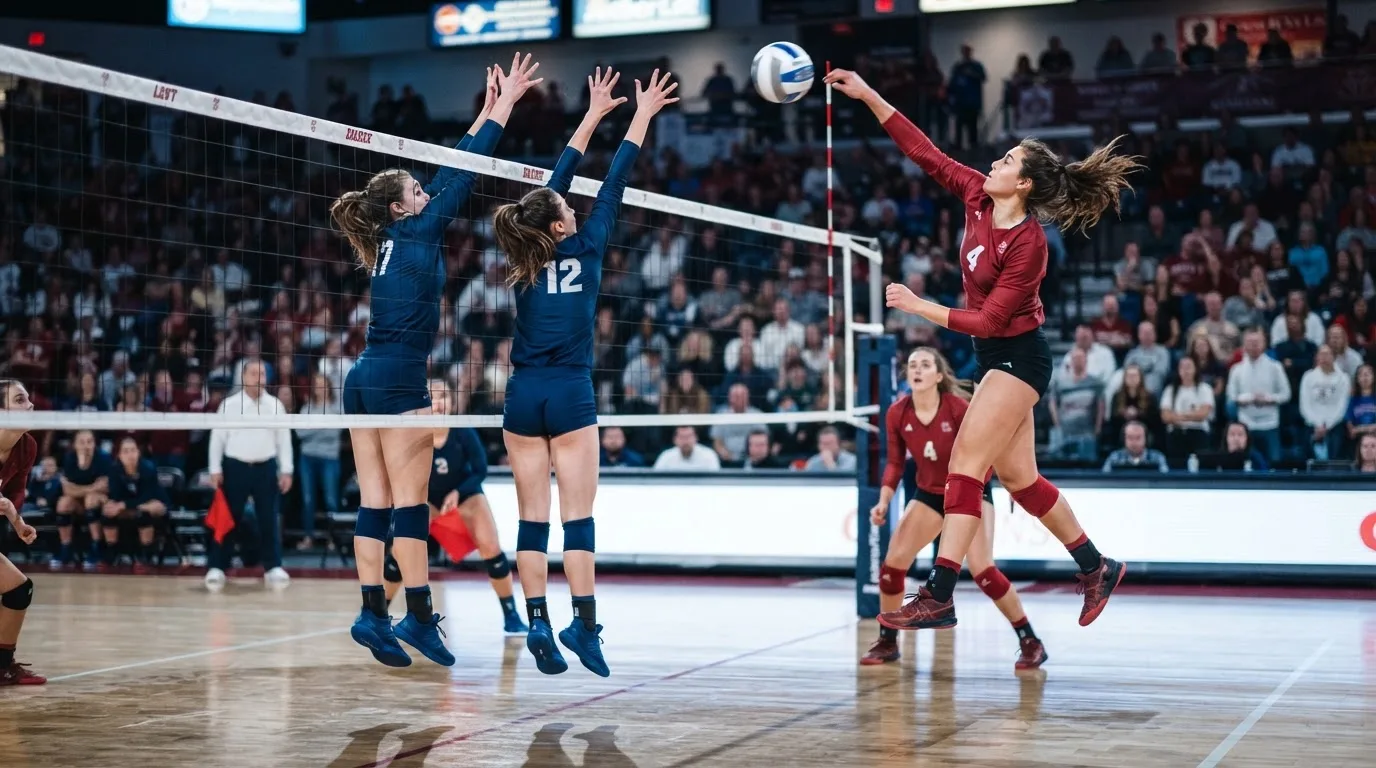
The most common starting point is the match winner — a two-way market in which the draw is removed by the best-of-five format. From there, a whole ladder of set markets opens. Set winner, set handicap and set total points (over or under a line, typically set around 44.5 or 45.5 for a regular set and 30.5 for the deciding set) describe what happens inside the match. Correct set score — 3-0, 3-1, 3-2 — is a single market that pulls set-by-set performance into one price. Match handicap runs on the same idea at the match level, with a side given a -1.5 set handicap or a +1.5 set handicap against the favourite.
The in-play layer adds point markets: who wins the next point, who wins the next set, who wins the match from the current score. These are fast markets with prices that change every serve, and the bettor’s edge inside them is small because the bookmaker is also recalculating in real time. Volleyball’s scoring structure makes it an unusually friendly sport for in-play work: a two-point swing, a service break, a set point — each is a small event with a large price movement around it, and a reader who has done the pre-match work has a head start when the live market moves sharply.
The settlement rules vary by market and by operator. A walkover is a void. A retirements market — a team that forfeits mid-set — is settled on the operator’s own terms. A match that is suspended overnight is held until completion; a match that is abandoned and not rescheduled settles on the score at the point of stoppage under the operator’s abandoned-match rule. These terms are stated on the operator’s site and should be read once, in full, before the first bet goes on.
How a return is calculated from the stake and the odds
Every other judgement on this page sits downstream of one calculation. The return on a winning bet is the stake multiplied by the decimal odds. The profit, which is what a tip is really about, is the stake multiplied by the odds minus one. On a £10 bet at decimal odds of 2.50, the return is £25 and the profit is £15. On the same stake at 1.50, the return is £15 and the profit is £5. The shorter the price, the smaller the profit on a winning bet, and the harder the margin has to work against the bettor’s running total.

For an accumulator the legs multiply into a single price: 1.80 × 1.95 × 2.10 = 7.37, and the return on a £10 stake is £73.70 with a profit of £63.70. The headline number is large, which is why accas are marketed so heavily, and the reason they are marketed so heavily is also why the margin across three selections sits inside a longer chain than the margin on a single match. The price looks generous because three bookmakers’ margins have been built into it.
The reverse arithmetic — turning a probability into a fair price — is the second calculation that decides whether a bet is worth making. A probability of 60% is a fair decimal price of 1 ÷ 0.60 = 1.67. If the price on offer is 1.80, the bet carries value; if it is 1.55, the bet is a pass, and the form picture, the statistics, the line-ups and the schedule, however favourable, do not change that.
The bookmaker’s margin, written into the odds
Every price on every market carries a margin. It is the cut the bookmaker keeps from every pound staked, and it is built into the prices themselves, not added at the till. It is easiest to see on a two-way market where the true probabilities are roughly equal. A volleyball match between two evenly matched sides should price each side at decimal odds of 2.00 if the operator took no cut, because a 50% chance should return £2 for every £1 staked. What the operator actually offers is closer to 1.90 on each side, and the gap is the margin.
For the arithmetic, take a worked illustration: an even two-way market priced at 1.90 on each side, with no favourite and no underdog. The payout share is calculated by summing the implied probabilities — 1 ÷ 1.90 gives 0.5263 on each side, and the two together come to 1.0526. The payout share is 1 ÷ 1.0526 = 0.95, or 95%, and the margin is 1 − 0.95 = 0.05, or 5%. The bookmaker pays out 95p of every pound wagered on this market on average, and keeps 5p. On a market with three outcomes, or on a handicap or total where the line is set off-centre, the calculation is the same in shape but wider in scope: every selection in the market is summed as an implied probability, the payout share is its reciprocal, and the margin is the difference from 100%. A 5% margin on a single bet looks small, and across a thousand bets it is the difference between a flat bankroll and an empty one.
The margin moves with the market. Match winner on a flagship event can run as low as the low single digits; set winner, correct score and the deeper handicaps run higher because they are priced off less liquid information. The bettor who has done the form and statistics work pays the margin on a price that already reflects that work; the bettor who has not done the work pays the margin on a price that also covers the bettor’s ignorance. The first is sustainable. The second is not.
The consequence lands here, not earlier. The tip a reader came for is a price opinion. The price a reader is offered is a probability statement the bookmaker has already taken a cut from. Between the two sits the calculation, and the calculation is what the bet is. A winning weekend is a good weekend; a winning month is a year of work, and a year is what the margin asks for.
Where volleyball bets are placed: the competition calendar
A reader who has never placed a volleyball bet is sometimes surprised at how much volleyball is on. The FIVB, the Fédération Internationale de Volleyball, runs the global calendar: national-team events (the Volleyball Nations League, the World Championship, Olympic qualifiers, continental championships), the club competitions (the Champions League for men and women, the CEV Cup, the Challenge Cup), and the national leagues of the bigger federations — Italy, Brazil, Russia, Turkey, Poland, Japan, France, Germany, plus the American college system. Beach volleyball runs in parallel: an FIVB tour, a four-person Olympic event, and a deep international circuit that runs through the European summer.
Most GB-licensed bookmakers carry the headline events: the Volleyball Nations League, the World Championship, the Olympic tournament, the Italian SuperLega, the Brazilian Superliga, the Polish PlusLiga, the Turkish Sultanlar Ligi for women, the Russian League, the Champions League and a handful of national cups. Below the headline level the depth of coverage varies sharply: some operators carry lower-division Italian and Brazilian matches, some carry only the top-flight matches of those leagues, and some restrict the volleyball book to internationals. The depth of a bookmaker’s volleyball coverage is one of the more honest signals of how seriously it takes the sport as a betting product, and it is the first thing a serious volleyball bettor checks on a new site.
Beach volleyball runs on a smaller and more weather-dependent calendar. The FIVB tour is the headline; the Olympic event comes around every four years and is the only one a casual bettor is likely to see at the start of the calendar. The scoring is the same, the matches are best of three sets to 21 in the first two and 15 in the third, and the markets follow the same shape as the indoor product with the handicap and total points lines adjusted for the shorter match.
The Olympic cycle, and the World Championship cycle inside it, are the two windows in which casual interest in volleyball betting peaks. The window passes quickly and the better-priced markets dry up while casual money is on. A bettor who has done the form and statistics work before the casual money arrives is in a stronger position, and a bettor who waits for the casual money to leave is in a stronger one still.
The math of a two-way market, with the work shown
The margin is best seen as a number rather than a feeling, and a worked example is the cleanest way to do that. Take an illustrative two-way volleyball market — the match winner, two sides priced evenly. A bookmaker that offered true odds would price each side at 2.00, because each side is 50% likely to win, and 1 ÷ 0.50 = 2.00. The price the bookmaker actually offers on a typical match-winner market is 1.90 on each side. Summing the implied probabilities: 1 ÷ 1.90 is 0.5263, and 0.5263 + 0.5263 is 1.0526. The reciprocal is 1 ÷ 1.0526, which is 0.95, or 95%. The margin is 1 minus that, which is 0.05, or 5%. The bookmaker pays out 95p of every pound staked on this market, on average, and keeps 5p.
The same arithmetic on the same 1.90 / 1.90 line gives a different reading if the bettor prefers to think in fractional terms. 1.90 in decimal is 9/10 in fractional, or “10/11 on” in the older British phrase — a short price that returns £1.90 for every £1 staked. The “5%” that comes out of the calculation is the same 5% that comes out of the fractional reading, and the band — 4% to 6% is the working range on a flagship event — describes what a serious volleyball bettor pays to be in the market at all.
A price research gives for one brand on one event is the price for that event at the snapshot time. It is not the price the same brand will offer on the next event, on the same match tomorrow, or on the same line six hours from now. The band the calculation above gives is the working assumption; the exact figure for a particular bet is whatever the bookmaker’s slip shows at the moment the bet is placed, and the slip is the only honest source.
Who can take a volleyball bet, and who decides
A bookmaker that takes bets from customers in Great Britain needs a Gambling Commission licence wherever it is based, since the Gambling (Licensing and Advertising) Act 2014 came into force. The Commission is a non-departmental public body sponsored by the Department for Culture, Media and Sport, and the Gambling Act 2005 is the statute it works under. The licence categories the volleyball bettor meets are remote general betting standard (real events) — the working licence for a sportsbook — and remote betting intermediary, the licence for a betting exchange. Spread betting on a financial product is the Financial Conduct Authority’s territory, not the Commission’s. A Curaçao, Maltese or Gibraltar licence, on its own, is not a substitute for a Commission licence at the point of consumption.
The Commission’s public register is the test of who holds a licence, and it can be searched by business name, trading name, domain or account number. The register is the only authoritative source for the claim that a brand is GB-licensed, and any claim to the contrary should be checked against it before a deposit. A licensed operator will use a .com or a .co.uk domain, and the domain alone proves nothing. The licence is the proof.
The licence categories on the register, for the ten brands reviewed further down this page, are remote general betting standard (real events) in every case. Several brands can run under one licensee, and a reader who sees Ladbrokes and Coral, or Paddy Power and Betfair, on the same list should know they are siblings, not competitors.
The rules the licence is conditional on are wider than the gambling law itself. The Licence Conditions and Codes of Practice, the LCCP, set the social responsibility and customer-protection duties. The Remote Technical Standards (RTS) sit alongside. The Commission’s enforcement is not a separate function; it is the same office that grants the licence, audits against the LCCP and the RTS, and revokes for cause. A complaint about a licensed operator is the Commission’s complaint, with the alternative dispute resolution body the operator is a member of sitting between the customer and the Commission.
What may be bet on, and what is held back
No statute in Great Britain publishes a list of permitted volleyball markets. The operator holds a licence for a category and offers markets under its own rules and the LCCP. The practical effect is that the GB-licensed bookmakers offer match winner, set markets, handicaps, totals, in-play, outrights and player props on the headline events, and they offer fewer of those on the lower-tier events. Esports and virtual events are treated separately; volleyball has no virtual product on most books because the live product is deep enough.
In-play betting is allowed, and GB bookmakers offer it across the headline volleyball calendar. The controls are the operator’s licence conditions and customer-protection duties, not a separate statute on in-play. The bettor who uses in-play should know that the price moves every serve, that the slip is filled on the price at the time of placement, and that the live market is the bookmaker’s most margin-protected product.
The rule of verification, and what it costs anonymity
Identity is verified before the first deposit, since 7 May 2019, and a bet cannot be placed — including with a free bet or bonus credit — until name, address and date of birth have been confirmed. The rule applies to a free bet as fully as to a paid stake, and it applies to a no-deposit free bet as fully as to a deposit-gated offer. Anonymous play is not available at a GB-licensed site, and the offshore alternative is not equivalent: a Curaçao-licensed site that does not verify a customer is not bound by the LCCP, the RTS, the GAMSTOP coverage, the £150 financial-vulnerability check, or the 10x bonus cap, and the customer is also outside the Commission’s complaints route and outside the approved alternative dispute resolution route if funds are withheld. A GB licence is the consumer protection. The verification step is part of that protection.
A different cost lands on the customer in the shape of source-of-funds questions. At higher cumulative spend the operator is required, under anti-money-laundering rules, to ask where the money comes from. The questions are normal under the regime and not a sign that anything is wrong, but they are part of the licensed experience and they do not exist at the unlicensed shop.
Safer gambling: the rules that sit on top of the licence
The licence is the floor. On top of it sit the safer-gambling tools the operator is required to offer and the wider national framework the customer can step into. Every GB-licensed remote operator takes part in GAMSTOP, the national multi-operator online self-exclusion scheme that has been a mandatory licence condition since 31 March 2020. A customer who registers with GAMSTOP is excluded from every licensed online operator for six months, one year, five years, or five years with auto-renewal, and after the minimum period the exclusion stays in place for a further seven years unless the customer asks GAMSTOP to remove it. GAMSTOP covers online sites and apps; betting shops run a separate service.
A deposit limit is a customer-set ceiling on the amount that can be staked over a fixed time window. The customer sets it, the operator enforces it, and the limit is one of the most effective single interventions for a customer who is starting to lose more than they planned. The Commission’s remote technical standards, RTS 12, set a framework around deposit limits: the first changes have applied since 31 October 2025, a second phase was postponed to 30 September 2026, and the state of that second phase on the day a reader reads this page should be checked on the Commission’s site. There is no state-set ceiling on deposits, and the limit is the customer’s choice, not the regulator’s.
A financial vulnerability check applies to licensed remote betting when a customer’s deposits minus withdrawals cross £150 in a rolling 30 days (the rule has been in force since 28 February 2025 under LCCP condition 3.4.4). The check is a public-record check, not an income check and not a credit reference check; it is searching for markers such as a bankruptcy or a county court judgment. A more intrusive financial risk assessment — the “affordability check” of the press coverage — has been announced in a staged plan, with no start date at the time of writing. The state of the rules on any given day is the Commission’s own state of play.
A time-out is a shorter version of self-exclusion: a customer-set break, typically from 24 hours to six weeks, during which the account is locked and cannot be reopened. A product restriction removes one part of the operator’s offering — sports, casino, bingo — from the customer’s account. A reality check is a pop-up that interrupts play at a set interval to remind the customer how long they have been on the site.
The national support services are the safety net the licence does not provide. GamCare runs the National Gambling Helpline. GambleAware funds research, treatment and education. NHS gambling clinics offer treatment in person and online. Gamblers Anonymous runs peer-support meetings across the country. The safer-gambling pages of every GB-licensed operator link to these services, and the bettor who is starting to find the slip has stopped being entertainment should reach out before the slip becomes the week.
Crypto, e-wallets, and the shape of payment at a licensed site
Volleyball betting with bitcoin, ether, USDT and the rest is a real product on offshore and crypto-native sportsbooks. At a GB-licensed site it is not. A British named-account rule, a state list of permitted payment methods, and any rule for or against cryptocurrency deposits at licensed operators are not established; the practical state of the licensed market is that the deposit methods are debit cards, bank transfer, instant bank transfer, and the established e-wallets, with the operator’s own terms page as the source for which of those is enabled on a given account.
The single hard rule on payment at a licensed site is the credit card ban, in force since 14 April 2020 under LCCP condition 6.1.2. Credit cards cannot be used for gambling in Great Britain, including credit-card-funded payments through an e-wallet. Debit cards and bank-based payments are not covered by the ban. The rule’s purpose is to remove the easy credit path that turns a losing weekend into a credit-card bill; it is not a comment on e-wallets or bank transfer as such.
A separate consequence lands on the customer who wants to be paid in crypto. A GB-licensed operator pays out in the same currency the customer deposited in, and that is sterling, the euro, or the dollar on the bigger books. The bettor who wants to receive winnings in bitcoin is, by definition, betting on a site that is not a GB-licensed site for that transaction. The trade is between the licensed site’s consumer protection and the unlicensed site’s payment flexibility, and a reader who values the second more than the first has made the choice knowingly.
The practical rule for a GB-licensed volleyball bettor is that the payment method is the operator’s terms, not the regulator’s list, and the credit-card ban is the only universal. A reader who wants to know what the operator on the comparison below takes, and what the operator pays out in, reads the operator’s terms page.
Bonuses, free bets, and the rollover behind the headline
The welcome offer is the single most marketed part of an online sportsbook, and it is also the part that costs the most to misunderstand. A bonus is not free money. A free bet is not a free bet. A “risk-free” bet refunded as a free bet is a refund in betting credit, not in cash, and the difference is the lesson the offer is teaching.
Three mechanics cover most of what a volleyball bettor will see. A deposit bonus matches a percentage of the customer’s first deposit and credits the matched amount as bonus money, with a wagering requirement (a “rollover”) that has to be cleared before the bonus is withdrawable. A free bet credits the customer with a stake that can be placed but is not paid back with a win: a £10 free bet at 2.50 returns the winnings only, which is £15, and the £10 stake is not part of the return. An enhanced odds or price boost raises the price on a specific selection for a window, often the first bet after the account is opened.
The cost of each is on the back of the offer, not the front. A deposit bonus carries a wagering requirement. The Commission’s 10x cap on bonus wagering, in force since 19 January 2026, limits the requirement to ten times the bonus: a £10 bonus at 50x needs £500 of qualifying bets, and a £10 bonus at 10x needs £100. The cap is the consumer’s protection; the requirement is the cost. A free bet carries an expiry, often seven days, and sometimes a minimum price for the selection it can be placed on. A price boost carries its own expiry, often 24 to 72 hours, and is sometimes paid as free-bet winnings rather than cash winnings.
The mixed-product promotion ban, also in force since 19 January 2026, closes the “bet on football to get free spins” route. An offer that requires the customer to gamble on two or more product types — betting plus casino, betting plus bingo, betting plus lottery — is no longer permitted at a GB-licensed site. Single-product offers are the consumer’s right; mixed-product offers are the licence-condition breach.
The arithmetic of a free bet shows the cost in one line. A £10 free bet at 2.50 returns £25 if it wins: the winnings are £15, the stake is not paid back, and the average value of the free bet on a market with a 5% margin — the typical flag-ship event — is £10 × (2.50 − 1) ÷ 2.50 × 0.95 = £5.70. The free bet is worth £5.70 of expected value on that market, not £10. A free bet at 1.50 is worth £10 × 0.50 ÷ 1.50 × 0.95 = £3.17, and a free bet at 5.00 is worth £10 × 4.00 ÷ 5.00 × 0.95 = £7.60. The headline value is the stake. The realised value is the working assumption the calculation gives, and the difference is what the rollover costs.
The same calculation explains why a high-odds free bet is worth more than a low-odds one. The free bet at 5.00, in the example above, is more than twice as valuable as the free bet at 1.50. The bettor who uses a free bet on a short price has thrown most of its value away; the bettor who uses it on a long price, in a market where the long price still has a value case, has not. The lesson is the same as the one the form, statistics, line-ups and schedule work already gave: a tip is a price opinion, and a price is only worth taking when it pays enough for the probability of it landing.
The terms that turn a welcome offer into a cost
Three terms, named on the operator’s terms page, decide whether a welcome offer is worth claiming. The minimum odds for the qualifying bet, the deadline for placing the qualifying bet, and the expiry of the free bet. A £10 free bet that has to be placed within 48 hours on a market at 1.50 or greater is a different product from a £10 free bet that has to be placed within 14 days on any market. The first is a use-it-or-lose-it proposition. The second is closer to a starter credit. The numbers are small and the differences are real.
A second set of terms sits on the withdrawal side. The cap on free-bet winnings is the maximum amount a winning free bet can pay out, and a free bet that pays up to £500 is a different product from a free bet that pays up to £5,000. The payment method restriction is the rule that some operators apply — a free bet cannot be used on a market that is settled in a way the operator restricts, and a deposit-gated offer requires a specific deposit method, often debit card or instant bank transfer, with the e-wallet deposit not qualifying.
A third set sits on the bonus side. The wagering requirement is the rollover that the bonus balance has to be cleared through. The contribution rate is the share of each bet that counts towards clearing: a £10 bet on a market that contributes 100% counts as £10 of rollover, and a £10 bet on a market that contributes 50% counts as £5. The maximum stake while the bonus is being cleared is the cap on the bet size that counts towards the rollover, and a bonus that limits qualifying bets to £5 is a different bonus from one that allows £50 stakes.
The rules are the same on every licensed site, and the numbers differ. A reader who reads the terms before claiming the offer pays less for the bonus than a reader who reads the terms after.
Live betting and cash out: the price that moves every serve
Volleyball is unusually well-suited to in-play betting. The scoring is fast, the events are short, and a single service break can swing the price on the next point by enough to matter. A two-set swing, a timeout called at set point, a side-out at 24-24 — each is a moment in which a price opinion held from before the match is worth more than the price the bookmaker is now offering, and the bettor with the pre-match work in their head is the one who can tell the difference.
The two product layers on top of the in-play market are cash out and streaming. Cash out is the operator’s offer to settle a bet, in full or in part, before the match is over, at a price the operator sets at the moment of the request. The price is the operator’s, not the market’s, and the cash-out price is always a touch worse than the live market would offer on the same selection. The bettor who uses cash out trades a worse price for the certainty of the locked-in return. The bettor who does not use cash out lets the bet ride to settlement, with the live price as the only exit.
Live streaming is the second layer. The bigger GB-licensed operators stream volleyball from the FIVB tour, the Volleyball Nations League, the Champions League, and a handful of national leagues, with the operator’s terms page the source for what is on and what is not. The quality of a bookmaker’s volleyball stream is, alongside the depth of its in-play markets, the second most honest signal of how seriously it takes the sport as a live product.
The mechanics of in-play volleyball markets are a separate work from the pre-match markets. The price on the next point is the most volatile product on the book, the price on the next set is the most volatile on a longer time horizon, and the price on the match from the current score is the most volatile on the longest. Each is a market in its own right, and each is settled on the operator’s own rules. The bettor who is in-play-only is paying the margin on the most volatile product on the book, and the margin is the largest part of the cost.
The match-winner margin in a live context
The margin on a live match-winner market runs wider than the margin on the pre-match market, because the live price is being recalculated in real time and the operator’s model is working with less information. A 5% margin on a pre-match match-winner market is the working assumption; a 7% to 9% margin on the same match in-play is a reasonable band for a flagship event, and a higher margin still on a lower-tier event. The bettor who reads the margin as a cost, not a curiosity, is the bettor who decides when to be in-play and when to be pre-match, and the decision is part of the edge.
Predictions, strategy, and the bankroll that makes them workable
A prediction is a probability statement. A strategy is the rule that decides when the probability statement turns into a bet. The strategy is the part a tipster does not sell, because the strategy is the part the customer has to write themselves, and the strategy is the part that decides whether a year of tipping is profitable or not.
Three rules cover most of what works, and they are the same rules for volleyball as for any other sport. A bankroll is a fixed amount of money, set aside from the household budget, that the bettor is willing to lose in full and that the bettor does not add to during a losing run. A stake size is a fixed percentage of the bankroll, often 1% to 3% per selection, that the bettor does not vary with confidence. A record is a log of every bet placed, with the price, the stake, the market, the bettor’s probability opinion, and the result, that the bettor reviews monthly to see whether the strategy is working.
The three are interlocked. The bankroll is the budget. The stake size is the speed. The record is the steering. A reader who sets the bankroll and skips the stake size is over-betting on the days they feel confident. A reader who sets the bankroll and the stake size but skips the record is repeating the mistakes the record would have shown. A reader who runs all three and ignores the result is the worst case of all, because the result is the only feedback loop the system has.
The value bet, the bet the form and statistics work has been pointing at, is the bet the bettor places only when the price on offer is greater than the fair price the probability opinion implies. A 60% probability at decimal odds of 1.80 is a value bet; the same probability at 1.55 is not. The bettor who places the value bet is taking the long-run expected value of the bet, and the long-run is the only horizon on which the bettor’s edge shows up.
A second, harder rule is the closing-line value test. The closing line is the price on offer just before the event starts, and it is the most informed price on the book, because the betting public has had the longest time to react to the form, the line-ups and the schedule. A bettor whose average price taken is better than the average closing price is, in the long run, a profitable bettor. The test is the only one a tipster can apply to their own work without seeing the result, and a tipster who cannot beat the closing line is a tipster the bettor should not pay.
The harder truth is that the strategy does not promise a winning week, a winning month, or a winning year. The strategy promises a long-run edge, and the long run is hundreds of bets and years of record-keeping. A reader who is looking for a winning weekend is in the wrong place, and a tip that promises one is selling the wrong product.
No tip is certain, and the licence is not a tip
The five-step construction work — form, statistics, line-ups, schedule, price — produces a probability statement. The probability statement produces a value bet, a pass, or a small-stake flier. None of the five steps is a forecast, and none of them is a tip in the marketing sense. A “tip” in the marketing sense is a name circled on a slip and a price on offer for that name. A tip in the working sense is a probability statement, a fair price, and a gap.
The bookmaker’s licence is not a tip, either. A bookmaker is licensed because it has met the Gambling Commission’s conditions, not because its prices are honest, accurate, or value-bearing. A licensed bookmaker’s prices carry a margin, and the margin is the cost of being in the market. A licensed bookmaker’s free bets carry terms, and the terms are the cost of the free bet. The licence is the consumer protection. The price is the price, and the bet is the bet.
The consequence of all of the above is that the bettor’s edge is the probability statement minus the margin, the value bet minus the rollover, the long run minus the long losing streak that the long run contains. A reader who has read to this point has the working parts of the analysis. The rest of the page is the comparison that the analysis applies to.
The ten reviewed bookmakers, and what each is worth
The comparison that follows is built on the same five-step method, applied to each brand on the list. The licence is checked against the Commission’s public register; the offer is read on the operator’s own terms; the safer-gambling tools are read on the operator’s own page; the in-play and cash-out products are read on the operator’s site. Every brand on the list is GB-licensed, and the brand order is editorial, not regulatory. A reader who scans the list for the licence number has read the page correctly.
Hollywoodbets
Hollywoodbets’ sports welcome offer, on the operator’s own terms, returns the stake as a free bet of up to £30 to a new player whose first qualifying bet loses: a deposit of £10 or more by card, an accumulator of three or more legs at minimum odds of 4/1, settled within seven days, one free bet per customer. The licence is the Commission’s remote general betting standard for real events, and the licensee is Hollywoodbets International UK Limited. The brand is a deeper-than-expected volleyball book for an operator whose centre of gravity is South African horse racing, and a reader who wants the international volleyball calendar on a single slip will find the depth here that a UK-only operator tends to lack. The free-bet cap is the working constraint: a £30 ceiling on a losing-stake refund is modest, and the seven-day settle window means the bettor who takes the offer needs to be ready with a selection list on day one.
Unibet
Unibet’s sports welcome offer, on the operator’s own terms, returns £40 in free bets to a new GB customer who deposits and bets £20 or more at minimum odds of 2.0 (1/1), with the free bets expiring within seven days and the deposit qualifying only on a debit card or instant bank transfer. The licence is held by Platinum Gaming Limited, Gibraltar, under Commission account 45322, and the operator has run since 1999. The safer-gambling toolkit is a serious one — deposit limits, a Player Profile test, product restrictions, self-exclusion, live chat support, and links to BeGambleAware, GamCare, GAMSTOP, Gambling Therapy and the BGC — and a reader who values the consumer-protection layer above the headline offer will find the depth here. The volleyball coverage is a long-running strength: the Italian, Brazilian, Polish and Turkish leagues, the VNL, the World Championship, the Olympic event. The brand is the broadest of the ten on the list, and the consequence is that the offer is a starting point rather than the headline.
Betfred
Betfred’s product line, on the operator’s own terms, includes Bet Builder, Sub Switch, Racing Post data, Extra Places, live casino and bingo. The licence is held by Petfre (Gibraltar) Limited under Commission account 39544, and the operator is a high-street brand that has carried its name into the online product. The volleyball book is mid-depth by the standard of the list, and the operator’s strength on the British racing calendar does not always carry over to the international volleyball calendar. The bettor who values the British-racing product and wants volleyball on the same slip will find the package, and the bettor whose priority is the international volleyball calendar will find a thinner volleyball book than the leader on this list. The brand is the high-street name on a GB licence, and that combination is a market position the rest of the list does not occupy.
Kalooki Sportsbook
Kalooki Sportsbook is operated by Kalooki Sports Book Ltd (company number 12938274), licensed by the Commission under account 57730, and a GAMSTOP member. The offer sheet, on the operator’s own terms, advertises instant withdrawals by bank transfer within minutes, Best Odds Guaranteed on UK and Irish horse racing, in-play betting, daily boosts and extra place races. The volleyball book is at the deeper end of the lower-tier events, and the brand is one of the smaller operations on the list, which is a feature for a reader who wants a less crowded bettor pool and a constraint for a reader who wants the breadth of the leader. The instant-withdrawal pitch is the most concrete product claim on the list, and the bettor who values the speed of the payout will read the terms before assuming the speed. The brand is the smaller operator on the Commission’s register, and the smaller scale is its own reason to be on the list.
QuinnBet
QuinnBet’s free-bet terms, on the operator’s own terms, are valid for seven days from credit, can be used on any market at odds of 1/2 (1.5) or greater with maximum odds of 50/1, and allow straight accumulators but not Trixies, Patents or Yankees. The licence is held by QuinnBet (Gibraltar) Limited under Commission account 61011. The volleyball book is mid-depth, and the operator’s strength on the British and Irish racing calendar is the headline product, with the international volleyball calendar sitting on the wider product line. The free-bet terms are tighter than the rest of the list in two places: the maximum odds of 50/1 is a hard ceiling, and the exclusion of Trixies, Patents and Yankees is a feature of the operator’s house rules. The bettor who wants the freedom of an accumulator shape should read the terms before assuming the shape is allowed.
BetMGM
BetMGM’s sports welcome offer for new UK customers, on the operator’s own terms, is four £10 free bets to a customer who deposits £10 or more and places a sports bet within seven days: two football accumulators of four or more selections and two sports multiples of two or more, with minimum odds and opt-in required, and the free bets valid for seven days. The licence is held by LeoVegas Gaming PLC under Commission account 39198, and the parent brand is the international gaming name the UK arm sits under. The volleyball book is mid-depth, with the international calendar sitting under the wider product line, and the welcome offer is a four-piece bundle rather than the single free bet of the rest of the list. The bundle is a feature for a bettor who wants four separate entries and a constraint for a bettor who would rather have a single larger credit. The brand is the international gaming name on a GB licence, and that combination is the second of the two that the rest of the list does not occupy.
Spreadex
Spreadex is regulated by the FCA for spread betting and by the Gambling Commission for fixed-odds betting, and the operator’s own page states that spread betting losses can exceed the deposit. The new customer offer, on the operator’s own terms, is £60 in free bets for a £10 fixed-odds bet, with the free bets usable across fixed odds and spread betting and the qualifying bet to be placed within 28 days of account opening. The licence is held by Spreadex Limited under Commission account 8835. The two-product model — fixed-odds plus spread — is the brand’s distinguishing feature, and the volleyball bettor who wants the spread-bet product on a volleyball set handicap or total will find it here in a way the rest of the list does not offer. The 28-day qualifying window is the longest on the list, and the FCA-regulated status of the spread-betting product is a different consumer protection regime from the Commission’s. The bettor who values the spread product has a reason to be on this list that the rest of the comparison does not give them.
Swifty Sports
Swifty Sports offers Best Odds Guaranteed, Cash Out on markets including horse racing and football, daily price boosts, live streaming and in-play betting, and Bet Builder is listed as coming soon. The licence is held by Swifty Global (UK) Ltd under Commission account 58957. The volleyball book is mid-depth by the standard of the list, and the operator’s product line is the broader one — the live streaming, the in-play, the daily boosts — with Bet Builder as the not-yet-shipped product. The “coming soon” tag is the brand’s own product roadmap, and a reader who needs Bet Builder on day one should not assume it. The brand is a newer GB-licensed operator on a parent group that has not run as long as the leader of the list, and the consequence is a product line that is broad on the racing and football product and thinner on the international volleyball calendar.
BetVictor
BetVictor offers Best Odds Guaranteed on UK and Irish horse racing, enhanced live race streaming, a BetFinder feature for finding racing bets, and Smart Stats. The licence is held by BV Gaming Limited under Commission account 39576. The volleyball book is mid-depth, and the operator’s strength is the racing and football product line, with Smart Stats as the data feature. The brand is one of the longer-established names on the list, and the consequence is a product line that has had time to settle on the British-racing product and to a lesser extent on the international volleyball calendar. The bettor who values Smart Stats and the longer-established brand has a reason to be here, and the bettor whose priority is the deepest volleyball book on the list will find a thinner offer than the leader.
Fafabet
Fafabet pays Best Odds Guaranteed on UK and Irish horse racing win and each-way bets from 9am on race days, with the bigger of the original price and the starting price paid when the starting price is bigger. The licence is held by Taichi Tech Limited under Commission account 57385. The volleyball book is at the thinner end of the list, and the operator’s strength is the racing product, with the BOG pitch the headline. The bettor who values the BOG product on a racing-heavy slip and wants volleyball on the same book will find a thinner volleyball offer than the leader. The brand is one of the newer GB-licensed operators, and the consequence is a product line that is racing-first and volleyball-second, and a bettor who reads the offer correctly will not be surprised by that.
What the licence check actually says
The licence check is the Commission’s public register, and the working test of who is on it. Every brand on the list above is on it, and the licence type is remote general betting standard (real events) in every case. Several brands can run under one licensee, and a reader who sees Ladbrokes and Coral, or Paddy Power and Betfair, on the same list should know they are siblings. A brand that is not on the register is not a GB-licensed brand, and an offer from such a brand is not bound by the LCCP, the RTS, the GAMSTOP coverage, the £150 financial-vulnerability check, or the 10x bonus cap. The brand is also outside the Commission’s complaints route and outside the approved alternative dispute resolution route if funds are withheld. The register is the test. The rest is the operator’s marketing.
| Brand | Gambling Commission remote licence | Licence holder | What the operator’s own terms state on the key subject |
|---|---|---|---|
| Hollywoodbets | 053028-R-330019-013 (account 53028) | Hollywoodbets International UK Limited | Sports welcome offer: stake returned as a free bet of up to £30 to a new player who deposits £10+ by card, on a losing first accumulator (3+ legs, minimum odds 4/1, settled within 7 days), one free bet per customer. |
| Unibet | 045322-R-324275-019 (account 45322) | Platinum Gaming Limited | Sports welcome offer: £40 in free bets for a £20+ deposit and sports bet at minimum odds of 2.0 (1/1), free bets expire within 7 days, debit card or instant bank transfer deposit required, new GB customers only. |
| Betfred | 039544-R-319290-010 (account 39544) | Petfre (Gibraltar) Limited | Product line: Bet Builder, Sub Switch, Racing Post data, Extra Places, live casino and bingo. |
| Kalooki Sportsbook | 057730-R-333396-005 (account 57730) | Kalooki Sportsbook Limited | Instant withdrawals by bank transfer within minutes, Best Odds Guaranteed on UK and Irish horse racing, in-play betting, daily boosts and extra place races. |
| QuinnBet | 061011-R-335683-004 (account 61011) | QuinnBet (Gibraltar) Limited | Free bets valid for 7 days from credit, usable on any market at odds of 1/2 (1.5) or greater with maximum odds of 50/1, straight accumulators allowed but Trixies, Patents and Yankees are not. |
| BetMGM | 039198-R-319450-029 (account 39198) | LeoVegas Gaming PLC | Sports welcome offer: four £10 free bets (two football accumulators of 4+ selections and two sports multiples of 2+), new UK customers depositing £10+ and placing a sports bet within 7 days, 7-day free-bet validity, minimum odds and opt-in required. |
| Spreadex | 008835-R-104580-022 (account 8835) | Spreadex Limited | New customer offer: £60 in free bets for a £10 fixed-odds bet, free bets usable across fixed odds and spread betting, qualifying bet within 28 days of account opening. |
| Swifty Sports | 058957-R-334734-006 (account 58957) | Swifty Global (UK) Ltd | Best Odds Guaranteed, Cash Out on markets including horse racing and football, daily price boosts, live streaming and in-play betting; Bet Builder listed as coming soon. |
| BetVictor | 039576-R-319370-028 (account 39576) | BV Gaming Limited | Best Odds Guaranteed on UK and Irish horse racing, enhanced live race streaming, BetFinder feature for finding racing bets, Smart Stats. |
| Fafabet | 057385-R-333191-006 (account 57385) | Taichi Tech Limited | Best Odds Guaranteed on UK and Irish horse racing win and each-way bets from 9am on race days, with the bigger of the original price and the starting price paid when the starting price is bigger. |
What follows from all this: the reading list, the rules and the long run
Three consequences follow from the analysis above, and each is the kind of decision a reader makes with the slip, not with the marketing.
The first consequence is that the bookmaker’s choice is the lesser of the analysis. A GB-licensed operator is a floor, not a ceiling. The licence is the consumer protection; the price is the price; the offer is the offer. The choice between two licensed operators is, at the margin, a choice between the depth of the volleyball book, the speed of the payout, the generosity of the welcome offer’s terms, and the breadth of the safer-gambling tools. The choice is not between “safe” and “unsafe”, because every brand on the list is licensed. The choice is between two consumer-protection regimes, both of which meet the Commission’s standard, with different product depth and different offer terms.
The second consequence is that the form, statistics, line-ups and schedule are the bet, and the price is the gate. A tip is a price opinion, and a price opinion is a long-run claim. The bettor who has done the work and skipped the price check is paying the margin on a bet they would not have placed. The bettor who has done the price check and skipped the work is paying the margin on a bet they cannot justify. The bet is the meeting of the two, and the meeting is the only part that matters.
The third consequence is that the long run is the only honest horizon. A winning weekend is luck. A winning year is the work. The strategy that runs through the bankroll, the stake size, and the record is the only strategy that produces a year, and a year is what the bookmaker’s margin asks for. A reader who skips the strategy and reads only the tip has paid for the marketing and not for the analysis.
The most honest framing of the page’s content is that volleyball betting is a long-run statistical exercise inside a margin-bearing price. The bookmaker is licensed, the price carries a margin, the offer carries terms, the strategy carries a record, and the bet is the meeting of all four. A reader who runs the four honestly will have a thinner slip and a longer horizon than a reader who runs none of them, and that is the page’s working conclusion.
Frequently asked questions
How do you bet on volleyball?
Volleyball betting is the same as any other sports betting at the basic level: choose a market, choose a selection, choose a stake, and place the bet at the price on offer. The shape that makes volleyball its own sport is the best-of-five sets format — match winner is a two-way market because the draw is removed — and the depth of markets that come from it: set winner, set handicap, correct set score, set totals, match handicap and in-play point markets. A new bettor starts with the match-winner market and the headline international calendar (the Volleyball Nations League, the World Championship, the Olympic event, the Italian SuperLega, the Brazilian Superliga, the Polish PlusLiga, the Turkish women’s league, the Champions League), and only moves into the deeper markets after the pre-match work — form, statistics, line-ups, schedule — is in hand.
How do you place a volleyball bet?
Open an account with a Gambling Commission-licensed operator, verify name, address and date of birth, deposit (debit card or bank transfer; credit cards are banned for gambling in Great Britain), and place the bet at the price on offer on the operator’s site or app. The slip records the selection, the price, the stake and the potential return. Settlement is automatic on completion of the event. The first-time experience for a new bettor is the verification step before the first deposit, which is a Commission requirement since 7 May 2019 and applies to free bets and bonus credit as fully as to a paid stake.
Can you bet on volleyball?
Yes, at any Gambling Commission-licensed sportsbook, on the headline international and major-domicile national-league events. The depth of coverage varies by operator, and the lower-tier events (lower divisions of national leagues, smaller national cups) are carried by some operators and not others. A reader who wants a specific event covered should check the operator’s site before opening an account.
What is a value bet, and why is no tip ever certain?
A value bet is a bet whose price on offer is greater than the fair price the bettor’s probability opinion implies. A 60% probability is a fair decimal price of 1.67; if the price on offer is 1.80, the bet carries value, and if the price is 1.55, the bet is a pass. No tip is certain because every probability opinion is a long-run claim about an event that has not been played, the bookmaker’s margin is built into every price on offer, and the bettor’s edge, if there is one, is measured over hundreds of bets rather than over a single weekend. A tip is a price opinion, and a price opinion is always a probability statement, never a forecast.
What is the bookmaker’s margin and how is it seen in the odds?
The margin is the cut the bookmaker keeps of every pound staked on a market, and it is built into the prices themselves rather than added at the till. On a two-way market priced at 1.90 on each side, the sum of the implied probabilities is 1.0526, the payout share is 0.95 (or 95%), and the margin is 1 minus that, which is 0.05, or 5%. The bookmaker pays out 95p of every pound staked on this market on average, and keeps 5p. The margin varies by market, by event and by operator: the match-winner market on a flagship event can run as low as the low single digits, and the deeper markets (set handicap, correct score, in-play) run higher. A 5% margin looks small and across a thousand bets is the difference between a flat bankroll and an empty one.
How is the return on a bet calculated from the stake and the odds?
The return on a winning single bet is the stake multiplied by the decimal odds; the profit is the stake multiplied by the odds minus one. A £10 stake at decimal odds of 2.50 returns £25 and produces a profit of £15. On an accumulator the legs multiply into a single price: 1.80 × 1.95 × 2.10 = 7.37, and the return on a £10 stake is £73.70. The decimal price is the standard form on GB-licensed sites; the same price is read in fractional form as 9/10, 6/4, 5/2, evens (1/1) and so on, with the conversion from fractional a/b to decimal a ÷ b + 1. The return is the calculation; the profit is what a tip is really about.
US & other team sports – Basketball betting
Content created by the «Basketball betting» team
