
What a Trixie Bet Actually Costs
 Available in US
A Trixie is a system bet that turns three selections into four bets: three doubles and one treble. The stake is paid once on each line, so a £1 unit stake costs £4. The Trixie rewards the bettor for getting combinations right rather than demanding a clean sweep of all three, and a single losing leg wipes out exactly the doubles that contained it while the others can still pay. Understanding that structure is the difference between knowing what a Trixie is and understanding what it costs.
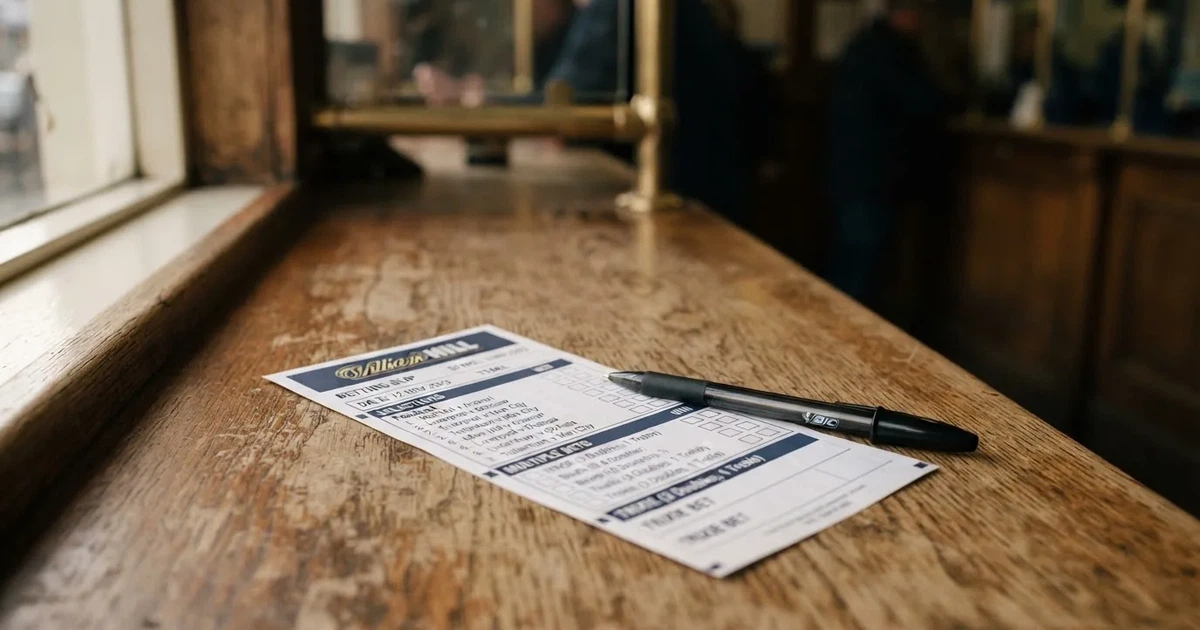
This guide is written for readers in Great Britain in 2026. It covers how a Trixie is built and settled, what the return looks like at common odds, the rules the Gambling Commission sets around the operators who take one, and the ten UK-licensed brands reviewed for the comparison. The angle is cost: every block below is written to expose what the stake is actually buying and what the bookmaker’s margin takes out of it.
_Verified against the Gambling Commission’s public register and operator terms as of 27 October 2026._
The Ten Bookmakers Reviewed for a Trixie Bet in 2026
A Trixie is offered by virtually every UK-licensed sportsbook because it is built into the bet slip the moment a customer adds three selections. Choosing where to place it still matters: the odds on each leg vary from one bookmaker to the next, the free bet terms decide whether the bet can be cleared on a Trixie at all, and the payout speed decides what happens when a winning treble is settled on a Sunday evening. The ten brands below are the comparison set for 2026. Each holds a remote general betting standard (real events) licence from the Gambling Commission and is named in the Commission’s public register. None of them is “the only” licensed operator; many other brands hold the same licence and are not reviewed here.
| Brand | Gambling Commission remote licence | Licence holder | What the operator’s own terms state on system bets |
|---|---|---|---|
| NetBet | 039170-R-319343-032 (account 39170) | Netbet Enterprises Limited | Daily Boosts, Profit Boosts, free bet offers, Bet Builder with instant dynamic odds, and sports stats for major leagues; system bet support is built into the bet slip. |
| QuinnBet | 061011-R-335683-004 (account 61011) | QuinnBet (Gibraltar) Limited | Free bets can be used on any market at odds of 1/2 (1.5) or greater, with a maximum odds cap of 50/1; Trixies, Patents and Yankees are not eligible markets for free bet staking. |
| BetTom | 064959-R-339314-003 (account 64959) | Bet Tom Limited | Sports welcome offer is 50% back as a free bet of up to £50, matched by 50% back up to £50 as free slot funds for casino play; full terms apply to both halves. |
| Dabble | 065677-R-340363-005 (account 65677) | Dabble Sports UK Ltd | Welcome offer is Bet £10, Get £10 in Free Bets on first deposit, with minimum odds, a 7-day free bet expiry and the stake not returned on a winning free bet. |
| BetUK | 039198-R-319450-029 (account 39198) | LeoVegas Gaming PLC | Free bets exclude virtual sports, esports and non-UK/IE horse racing, and minimum odds apply to every free bet stake. |
| DAZN Bet | 048756-R-327274-019 (account 48756) | DZBT Limited | Cash Out, Bet Builder, daily bet boosts and in-play betting; cash out availability is not guaranteed and bets stand if it is unavailable. |
| 10bet | 043173-R-322899-023 (account 43173) | Blue Star Planet Limited | Sportsbook covers football, tennis and horse racing, with Cash Out, Bet Builder and Live Streaming. |
| Tote | 054779-R-331321-008 (account 54779) | TDCO Limited | Pool-betting heritage with fixed-odds sports and a bet slip that handles combination bets including the Trixie. |
| Betfred | 039544-R-319290-010 (account 39544) | Petfre (Gibraltar) Limited | App features Bet Builder, Sub Switch, Racing Post data, Extra Places, live casino and bingo. |
| Fitzdares | 000400-R-103839-030 (account 400) | Fitzdares Limited | Cash out, accumulators, Lucky 15s, specials and ante-post markets on horse racing, football, tennis, rugby, cricket, golf and American football, with in-play live odds. |
The full detail on each brand sits in the write-up further down the page. The table is the frame; the judgements are below.
How a Trixie Bet Is Built and What Settles
A Trixie is a full cover bet. The phrase “full cover” means the bet covers every possible multiple that can be made from the chosen selections, less the singles. Three selections give four multiples: AB, AC, BC and ABC. A Patent adds the three singles on top of that, taking the count to seven bets. A Yankee over four selections has eleven bets, a Lucky 15 has fifteen, a Canadian or Super Yankee has twenty-six, a Heinz has fifty-seven, and a Goliath has two hundred and forty-seven. The stake on a Trixie is the unit stake multiplied by four, so a £5 unit costs £20. The four lines settle independently, and the winning returns are added together.
A Trixie needs a minimum of two selections to win to pay anything back. One winner means three losing lines and zero return. Two winners mean one winning double: the line connecting the two winning legs pays, and the other two doubles plus the treble lose. Three winners pay every line: the three doubles and the treble, which is where the Trixie earns its keep. The Trixie is therefore a bet for bettors who are confident enough in three picks to want cover, but not so confident that they would stake all four lines on the treble alone.
A worked example from the standard odds: selections at decimal odds of 2.0, 3.0 and 4.0 with £1 on each line, total stake £4, return £50 if all three selections win. The three doubles are 2.0 × 3.0 = 6.0, 2.0 × 4.0 = 8.0, 3.0 × 4.0 = 12.0, and the treble is 2.0 × 3.0 × 4.0 = 24.0. Adding the four returns: 6.0 + 8.0 + 12.0 + 24.0 = 50.0, which matches the cited return. The profit is £46 on a £4 stake. Two winners, say the 2.0 and 3.0 legs, return the single winning double of 6.0, profit £2 on the £4 stake. One winner returns nothing.
The mechanics are simple, but the cost is not. Four lines at a £10 unit stake mean £40 risked for a chance at the full payout, and the bookmaker’s margin sits inside every price on every line. A 5% margin across a market takes 5% of the total amount staked across all outcomes of that market in the long run. On a four-line Trixie the bettor is exposed to four different markets at once, so the cumulative margin across the bet is higher than on a single. The arithmetic on that sits in the calculation section further down.
The Selection, the Slip and the Stake
A Trixie starts with three selections. The bettor adds each to the slip, opens the multiple-bet menu and chooses Trixie. The slip shows four lines and a total stake equal to the unit stake multiplied by four. Most UK bookmakers let the bettor enter a unit stake, and the slip recalculates the total. Some bookmakers default to entering the total stake and dividing it by four; either way, the bettor pays the unit stake four times.
Each of the three legs can come from a different sport, a different market and a different event. A Trixie on a football home win, a tennis match winner and a horse race is legal under the standard rules. Bookmakers vary on whether the three legs need to be from separate events: some allow same-event combinations through the Bet Builder, others restrict it. A Trixie is settled when the last of its three legs is decided, and the return is paid into the cash balance once settlement is complete. Each-way Trixies are offered by some bookmakers for horse racing and greyhound racing: each line is doubled (a win double and a place double, a win treble and a place treble), so an each-way Trixie is eight bets, not four.
Cash Out on a Trixie is offered by some operators, including DAZN Bet, 10bet and Fitzdares, but availability is not guaranteed and the bookmaker’s terms state that bets stand if Cash Out is unavailable. Partial Cash Out on a Trixie closes some lines while leaving others open, and the value shown on the slip is the bookmaker’s own estimate of what the remaining lines are worth at that instant. That estimate carries the bookmaker’s margin and is not the same as a fair price.
What a Trixie Returns at Common Odds
The simplest way to see what a Trixie costs is to run three illustrative selections through it. Take three picks at decimal odds of 1.50, 2.00 and 2.50, the kind of prices a punter sees on short favourites and outsider draws. A £10 unit stake costs £40 across the four lines. If all three selections win, the four returns are:
- Double on 1.50 and 2.00: 3.00
- Double on 1.50 and 2.50: 3.75
- Double on 2.00 and 2.50: 5.00
- Treble on 1.50, 2.00 and 2.50: 7.50
The total return is 3.00 + 3.75 + 5.00 + 7.50 = 19.25, profit £-20.75 on the £40 stake. Even with all three legs winning, the bettor is underwater, because the short prices on each leg leave the combined multiples well short of the four-line stake. That is the Trixie’s quiet cost: it multiplies the stake by four on a bet that the punter often prices as if it were a single accumulator. A £10 single accumulator at 1.50 × 2.00 × 2.50 = 7.50 returns £75 profit on a £10 stake; the same selections on a Trixie return a loss.
The result changes with longer prices. Take three selections at 2.00, 3.00 and 4.00, a £2 unit stake, total stake £8. The four returns are:
- Double on 2.00 and 3.00: 6.00
- Double on 2.00 and 4.00: 8.00
- Double on 3.00 and 4.00: 12.00
- Treble on 2.00, 3.00 and 4.00: 24.00
Total return 6.00 + 8.00 + 12.00 + 24.00 = 50.00, profit £42 on an £8 stake. The longer the individual prices, the more the four-line structure pays for the extra cover. At shorter prices the cover costs more than it returns. The Trixie is a tool that suits a particular shape of pick, and a punter using it on three short favourites is paying for insurance that the odds make worthless.
The third case is two winners and one loser, which is what the Trixie is designed for. Take the same three selections at 2.00, 3.00 and 4.00, with the 4.00 leg losing. The two winning doubles are 2.00 × 3.00 = 6.00, the 2.00 × 4.00 line is dead, the 3.00 × 4.00 line is dead, and the treble is dead. Return is £6.00 on the £8 stake, a loss of £2. A single accumulator would have returned zero. That is the Trixie’s pitch, and it works in the long run only if the punter picks the two winners often enough to make up the small losses when only one double lands.
The bookmaker’s margin sits inside each of those prices, and it is the part of the calculation nobody advertises. A market margin of 5% means a payout share of 95%, and a 10% margin means a payout share of 90%. On a Trixie the bettor is exposed to three selections across four lines, and the margin on each market is the bookmaker’s edge on that market. The total cost of the margin across the bet is the sum of the margins on the individual legs, weighted by the stake on each leg. That is a higher number than the margin on any single line, and it is the reason system bets feel more expensive than they look.
The Statutory Frame for a Trixie Bet in Great Britain
A Trixie is offered under an operator’s general betting licence, not under any specific rule that names the bet. The Gambling Commission licenses operators under the Gambling Act 2005, which covers Great Britain: England, Scotland and Wales. Northern Ireland sits outside the Act and runs under older legislation, so a “GB licence” regulates Great Britain only, and a brand holding one is not licensed in Northern Ireland by virtue of that licence alone.
The Commission’s public register is the test of who holds a licence. It can be searched by business name, trading name, domain or account number, and any brand that takes a Trixie from a customer in Great Britain has to appear on it. Since the Gambling (Licensing and Advertising) Act 2014 an operator whose remote facilities are used in Great Britain needs a Commission licence wherever the operator itself is based, so a Curaçao, Maltese or Gibraltar licence is not a substitute for the GB one. Several brands reviewed below are run by companies in Gibraltar, including QuinnBet and Betfred, and they hold GB remote licences alongside their overseas incorporation.
The licence category that covers a Trixie is “remote general betting standard (real events)”. The other categories are remote general betting standard (virtual events), remote general betting limited, remote pool betting and remote betting intermediary, the last being the licence for betting exchanges. The bet type itself is not regulated: no statutory list of permitted bet types exists, and the Commission does not approve or reject the Trixie as a structure. What the Commission does is set the conditions under which the operator offers it, and those conditions are the social responsibility code, the Licence Conditions and Codes of Practice (LCCP), and the Remote Technical Standards (RTS).
Identity verification is one of those conditions and it applies before the first deposit. Since 7 May 2019 a licensed operator has to verify the customer’s name, address and date of birth before the customer can deposit or gamble, and that includes using a free bet or bonus. Anonymous play is not available at a GB-licensed site, and any brand offering anonymous play is by definition not licensed. The minimum age for any gambling product in Great Britain is 18.
There is no statutory cap on stakes, and the bookmaker sets its own maximum stake on each market. The bookmaker can also restrict a customer, and the operator’s own terms set out the conditions. There is no statutory list of permitted markets either: the operator decides what to offer, and the LCCP sets the boundary. In-play betting on sports is allowed and is offered by every brand reviewed below. Esports are treated like any other event, virtual events are a separate licence category, and bets on politics, TV shows and novelty markets are offered by GB bookmakers with no statutory prohibition found.
The Offshore Caveat
A GB licence is compulsory at the point of consumption, and providing gambling facilities in Great Britain without one is an offence under section 33 of the Gambling Act 2005, aimed at the operator, not the customer. There is no statutory offence for the customer who bets on an unlicensed site, but the loss of protection is real: no GAMSTOP coverage, no Commission complaints route, no approved dispute-resolution body, no British consumer redress if funds are withheld, and the operator is not bound by the bonus cap, the vulnerability check or the marketing rules. A punter who bets on an offshore site has none of the safeguards a GB-licensed site is required to offer.
The Commission’s enforcement is disruption, not blocking: cease-and-desist notices, search-engine referrals, work with registrars, hosts and payment providers. The Commission has been given, or is about to receive, court-order DNS blocking powers. Whether those powers are now in operation is not established; the page does not say they are. The honest framing is that a GB-licensed brand offers checks, limits, GAMSTOP and the bonus cap, alongside the verification before the first bet, and an unlicensed brand offers none of those protections, with the additional risk that funds can be withheld without recourse. Neither is the safe choice by default; the licensed choice is the choice with the safety net.
Responsible Gambling Around a Trixie Bet
GAMSTOP is the national multi-operator online self-exclusion scheme, and a mandatory licence condition for online operators since 31 March 2020. A self-exclusion period is six months, one year, five years, or five years with auto-renewal, and after the minimum period the exclusion stays in place for a further seven years unless the customer asks GAMSTOP to remove it. GAMSTOP covers online sites and apps; betting shops use a separate, in-shop self-exclusion service. Every GB-licensed online operator takes part in GAMSTOP, and a brand that does not is not licensed.
A financial vulnerability check, LCCP condition 3.4.4, came into force on 30 August 2024, and applies to licensed remote betting once a customer’s deposits minus withdrawals exceed £150 in a rolling 30-day window, a threshold that took effect on 28 February 2025. The check is a public-record check (bankruptcy, county court judgments and the like), not an income check and not a credit reference check. Financial risk assessments, the more searching affordability checks the press describes, are announced in a staged plan with no start date. Write that they are announced, staged, and not yet in force, never that they are in force today.
Deposit limits under RTS 12 require operators to offer a gross deposit limit on a fixed time frame. The first changes have applied since 31 October 2025, a second phase was postponed to 30 September 2026, and whether that second phase is now live is not established. The limit the customer sets is the customer’s own choice; the operator is required to make the choice available. There is no state-set deposit or loss ceiling, and the page does not quote one.
Help is available through GamCare, which runs the National Gambling Helpline, GambleAware, the NHS gambling clinics network, and Gamblers Anonymous. The section on safer gambling further down the page covers the practical routes a punter can take if the betting stops being fun, and the wider context sits in the block on protection and limits.
Free Bets, Bonuses and the Trixie
A free bet is a bet the bookmaker pays the stake for, and the stake is not returned with a winning free bet. A £10 free bet at odds of 3.00 returns £20 in profit, not £30. That is the standard structure, and it is the structure the brands reviewed below use unless their terms say otherwise. A bonus is a different product: a cash bonus paid into the balance, often with a wagering requirement, and the bonus is treated as bonus funds until the requirement is met.
The promotion rules that took effect on 19 January 2026 cap wagering requirements on bonuses at 10x. A £10 bonus with a 50x wagering requirement asks for £500 of qualifying bets; under the cap, no more than £100. The cap applies to bonuses, and whether it also applies to free bets with no wagering condition is not established. Mixed-product promotions, an offer that requires gambling on two or more product types such as betting, casino, bingo and lottery, are banned, so a “bet on football to get free spins” offer is no longer permitted at a GB-licensed site. A free bet offered on its own, with no casino or bingo condition, is a different offer and remains common.
The Trixie’s relationship with free bets is set by each bookmaker’s own terms. QuinnBet states that free bets cannot be used on Trixies, Patents and Yankees: only singles, doubles, trebles and accumulators, plus the same-game options, are eligible markets. That is a meaningful restriction, because a Trixie is a system bet that distributes the stake across four lines, and a bookmaker that excludes it is asking the punter to use the free bet on a different structure. BetUK’s terms exclude virtual sports, esports and non-UK/IE horse racing from free bet staking, with minimum odds applying, and a Trixie that included any of those markets would be rejected. Dabble’s welcome offer has a 7-day expiry on the free bet and minimum odds, and the stake is not returned. BetTom offers a sports welcome package of 50% back as a free bet of up to £50 alongside a casino match of the same shape, and the two halves of that package are settled separately.
The cost of a free bet to the punter is the lost stake. A £10 free bet used on a Trixie with three legs at 2.00, 3.00 and 4.00 and a £2 unit stake costs the punter the £8 of stake the bookkeeper would otherwise have paid. On a winning Trixie, the return is £50 minus the £8 stake, which is £42, but a real-money Trixie at the same prices returns the same £50 minus an £8 real-money stake, also £42. The free bet, in other words, is not free in the way a punter might read it; it is a stake credit that does not return its own value, and the only way to extract more from a free bet than from a real-money stake at the same odds is to use it on a price long enough that the stake’s absence matters less than the winnings. A free bet is most valuable at long odds, least valuable at short odds, and worthless if it loses.
The bonus cap is the same point made on the bonus side. A £10 bonus at 10x requires £100 of qualifying bets, and at a 5% market margin the expected cost of clearing the bonus is £5, leaving £5 of value on average. A £10 bonus at 50x is no longer permitted at a GB-licensed site, and any offer still advertising that level is either pre-cap advertising, an offshore brand, or marketing that does not survive a check against the terms.
Strategy, Tips and the Trixie System
The Trixie is a system bet, and the term “system” means the structure of the bet rather than a winning method. A Trixie does not predict outcomes, and no arrangement of bets converts uncertain events into certain ones. The only question a Trixie answers for the punter is how much cover to buy when three selections are in play. The right answer depends on the prices, the punter’s confidence in each leg, and the stake the punter is willing to lose.
Three principles hold across the strategy material. First, the Trixie suits three selections at decent prices, not three short favourites. A Trixie at 1.50, 1.80 and 2.00 is a stake-multiplying structure on legs that do not justify the cover, and the calculation further up the page shows the loss. Second, the Trixie protects against one losing leg, not two, so a punter who expects two of three selections to win is buying a useful structure, while a punter who expects one of three to win is buying a refund. Third, the margin on each leg is a cost the punter pays on the bet, and a Trixie at three heavily-margin markets is more expensive than a Trixie at three efficient markets; the price on the slip is the only public measure of that.
The bankroll question is how much of a staking budget to put on a Trixie. The standard advice is to keep the unit stake to a small percentage of the total bank, because a Trixie is a four-line bet and the punter can lose four units in a session. The advice is the same as for any system bet, and it is the kind of rule a punter should set before opening the slip. A punter who chases losses by increasing the unit stake is paying the bookmaker’s margin at a higher rate and is more likely to clear the bankroll than to recover it.
The “trixie system bet” or “trixie betting strategy” advertised on tipster sites is usually a staking plan, sometimes a version of Labouchere or Fibonacci applied to a Trixie, and the staking plan does not change the underlying math. The bookmaker’s edge is in the margin, and a staking plan that increases the size of the bet after a loss increases the size of the edge the punter pays. The honest version of the advice is that no system of staking changes a negative expectation into a positive one, and a punter who treats the Trixie as a structure for cover rather than as a system for winning is closer to the truth.
Trixie Versus the Other Full Cover Bets
A Trixie is one of a family of full cover bets, and the choice between them is a choice about how much of the stake to put down and how much cover to buy. The family runs from the four-bet Trixie to the 247-bet Goliath, and each step up adds singles or adds combinations. The Patent adds the three singles to the Trixie’s four combinations, so seven bets, and gives the punter a return on any single winner. The Yankee adds four selections and eleven bets, and the Lucky 15 adds the four singles to the Yankee for fifteen bets. The Canadian or Super Yankee has twenty-six bets over five selections, the Heinz has fifty-seven over six, and the Goliath has two hundred and forty-seven over eight.
The Trixie is the smallest full cover bet that does not include singles, and the punter who wants a return on a single winner chooses the Patent. The punter who wants more combinations over four selections chooses the Yankee or the Lucky 15, and the punter who wants full cover over six or more selections chooses the Heinz or the Goliath. Each step up multiplies the unit stake by the number of lines, so a £1 Lucky 15 costs £15 and a £1 Heinz costs £57. The punter is buying more combinations and more cover, and the cost of that cover is the extra stake.
The Trixie’s niche is the three-selection case where the punter is confident enough to want combinations, not confident enough to bet all four lines on the treble alone. The Patent’s niche is the same shape of pick with the additional requirement that any single winner pays something back. The Lucky 15’s niche is the four-selection case where the punter wants the singles plus the combinations. The Heinz’s niche is the large-field punter who wants every combination over six picks, and the Goliath’s niche is the same shape at eight picks. Each structure is a tool, and the right tool is the one that matches the punter’s confidence and budget.
The Ten Brands in Detail
The write-ups below are the page’s own judgements of each brand for a Trixie bet in 2026. Each is built from the brand’s licence, the features the brand’s own terms state, and what the page’s calculation shows about the cost. None of the write-ups recommends signing up; the page describes and judges, and the punter decides.
NetBet — established sportsbook with daily boosts and Bet Builder
NetBet runs under Netbet Enterprises Limited on Gambling Commission account 39170, with a remote general betting standard (real events) licence. The brand’s app states that it offers Daily Boosts, Profit Boosts, free bet offers, a Bet Builder with instant dynamic odds, and sports stats for major leagues. The Trixie is built into the standard bet slip, and a punter adding three selections can switch to a Trixie and see the four-line stake calculated in real time. The Profit Boost is the most relevant feature for a Trixie punter: a price boost on a chosen accumulator or combination can lift the return on a winning Trixie, although the boost is paid as bonus funds or bet credits in most cases and not as cash. NetBet’s appeal for a Trixie punter is the everyday price structure: a bookmaker offering daily boosts and Bet Builder on the same slip is a useful home for a punter who wants to combine different markets into the four lines of a Trixie.
QuinnBet — sharp free bet terms that exclude the Trixie
QuinnBet runs under QuinnBet (Gibraltar) Limited on Commission account 61011. The brand’s terms state that free bets are valid for 7 days from credit, can be used on any market at odds of 1/2 (1.5) or greater, and have a maximum odds cap of 50/1. Straight accumulators are allowed. Trixies, Patents and Yankees are not. That is the one feature a Trixie punter needs to read before claiming a QuinnBet free bet, because a Trixie staked with a free bet at QuinnBet will be voided or rejected. The rule exists because a free bet is a single stake credit and a system bet is a multi-line structure, and QuinnBet’s policy is to refuse the combination. The Trixie punter at QuinnBet is paying with real money, not with a free bet, and the punter who wants the free bet to clear through a system bet is looking at a different brand.
BetTom — split welcome package, two halves, two products
BetTom runs under Bet Tom Limited on Commission account 64959. The sports welcome offer is 50% back as a free bet of up to £50, matched by 50% back up to £50 as free slot funds for casino play. The two halves of the package are settled separately, and the casino half cannot be cleared through sports betting. The sports half is a free bet on the sportsbook, and the Trixie punter can use it on a qualifying bet at minimum odds, subject to the standard free bet terms. The split structure is BetTom’s way of marketing across two product verticals, and the mixed-product promotion ban that took effect in 2026 would not catch a structure of this kind if the two halves are settled independently rather than as one combined offer. The Trixie punter at BetTom is dealing with a small, sharp bookmaker with a defined sportsbook product, and the offer is useful for clearing on a single qualifying bet rather than a system bet.
Dabble — social-led sportsbook with a Trixie-eligible free bet
Dabble runs under Dabble Sports UK Ltd on Commission account 65677. The welcome offer is Bet £10, Get £10 in Free Bets on a first deposit for new customers, with minimum odds, a 7-day expiry and the stake not returned on a winning free bet. The Trixie is not excluded from Dabble’s free bet terms in the way it is at QuinnBet, and a punter using the free bet on a Trixie can clear it through the four lines subject to the minimum odds. The 7-day expiry is the practical limit: a punter who wants to wait for the right three selections has a week to find them. The stake not returned is the standard free bet structure, and the calculation further up the page on the cost of a free bet is the working number here. Dabble’s social-led product is a different shape from the more established brands, and the Trixie is supported on the standard bet slip.
BetUK — LeoVegas-powered brand with restricted free bet markets
BetUK runs under LeoVegas Gaming PLC on Commission account 39198. The brand’s terms state that free bets exclude virtual sports, esports and non-UK/IE horse racing, with minimum odds applying to every free bet stake. The exclusion list is narrower than QuinnBet’s and broader than the unrestricted brands: a Trixie on three football selections is fine, a Trixie that includes an esports leg is not. The Trixie punter at BetUK is choosing real-money stakes for any combination that touches the excluded markets and free bet stakes for the rest, and the slip will reject a free bet staked on a Trixie that includes a non-qualifying leg. The LeoVegas engine behind the brand is a mature platform, and the standard bet slip includes the Trixie option automatically for any triple-selection combination.
DAZN Bet — Cash Out and Bet Builder for the in-play Trixie
DAZN Bet runs under DZBT Limited on Commission account 48756. The brand’s help pages state that it offers Cash Out, Bet Builder, daily bet boosts and in-play betting, with the caveat that Cash Out availability is not guaranteed and bets stand if it is unavailable. The Trixie punter at DAZN Bet is interested in Cash Out on a Trixie: a punter who wants to lock in a return on a winning double while leaving the treble open can use Partial Cash Out if DAZN Bet offers it on the relevant market. The brand’s bet boosts are the other relevant feature: a daily boost on a chosen accumulator or combination can lift the return on a Trixie, and the boost terms decide whether the extra return is paid as cash or as a free bet. DAZN Bet is a relatively new entry to the UK market, and the platform allows Trixie selections to be managed directly from the bet slip interface.
10bet — Cash Out, Bet Builder and Live Streaming
10bet runs under Blue Star Planet Limited on Commission account 43173, with the app published by 10bet Limited. The sportsbook covers football, tennis and horse racing, with Cash Out, Bet Builder and Live Streaming. The Trixie punter at 10bet has the standard structure plus Live Streaming, which is useful for in-play Trixies on football and tennis where the punter wants to watch a leg settle before deciding whether to Cash Out the others. The bet boost and free bet terms are the practical limits, and the punter should check the brand’s own terms before staking a Trixie on a free bet. 10bet’s product is a full sportsbook with a Trixie-eligible bet slip.
Tote — pool-betting heritage with a fixed-odds Trixie
Tote runs under TDCO Limited on Commission account 54779. The brand’s heritage is pool betting on horse racing, and the modern Tote site also offers fixed-odds sports and a bet slip that handles combination bets including the Trixie. The Trixie punter at Tote is using a brand that settles pool bets and fixed-odds bets under the same licence, and the brand’s terms on free bets and promotions are stated on the site. Tote is a useful home for a Trixie on horse racing because the brand’s pool-betting experience informs the way it prices and settles combination bets, and the punter who wants a Trixie on three horses can place it through the standard slip. The brand’s fixed-odds offering is the relevant product for the Trixie punter, and the licence covers the activity.
Betfred — mainstream sportsbook with Bet Builder and Sub Switch
Betfred runs under Petfre (Gibraltar) Limited on Commission account 39544. The brand’s app features Bet Builder, Sub Switch, Racing Post data, Extra Places, live casino and bingo. The Trixie punter at Betfred has the standard structure on a mature UK sportsbook, and Sub Switch is the relevant feature: a punter who has staked a Trixie on a football team can swap a player out of the Bet Builder leg before kick-off. The feature applies to the Bet Builder market rather than to the Trixie structure, and the punter who wants Sub Switch on a Trixie leg needs the leg to be a Bet Builder market rather than a standard match-winner market. Betfred’s heritage is high-street bookmaking, and the digital bet slip supports full Trixie functionality on both app and web platforms.
Fitzdares — premium sportsbook with Lucky 15s and ante-post markets
Fitzdares runs under Fitzdares Limited on Commission account 400. The brand’s app offers cash out, accumulators, Lucky 15s, specials and ante-post markets on horse racing, football, tennis, rugby, cricket, golf and American football, with in-play live odds. The Trixie punter at Fitzdares is dealing with a premium product positioned at higher-stakes customers, and the bet slip supports the Trixie alongside the Lucky 15s the brand advertises. The ante-post offering is the relevant feature for a Trixie on horse racing, and a punter who wants to combine three ante-post selections into a Trixie is using a market the brand prices separately from the day-of-race market. Fitzdares is a useful home for a Trixie on horse racing, and the licence covers the activity.
The Calculation: What a Trixie Returns at Three Common Prices
The arithmetic below is the page’s worked example. It is illustrative, not a quoted price, and the assumptions are stated so the reader can run the same calculation on the prices on a real bet slip.
Three selections at decimal odds of 1.50, 2.00 and 2.50, with a £2 unit stake on each of the four Trixie lines, total stake £8. If all three selections win, the four returns are:
- Double on 1.50 and 2.00: 1.50 × 2.00 = 3.00
- Double on 1.50 and 2.50: 1.50 × 2.50 = 3.75
- Double on 2.00 and 2.50: 2.00 × 2.50 = 5.00
- Treble on 1.50, 2.00 and 2.50: 1.50 × 2.00 × 2.50 = 7.50
Total return on the winning Trixie: 3.00 + 3.75 + 5.00 + 7.50 = 19.25. Net profit: 19.25 − 8.00 = 11.25, a return of 140.6% on stake. If only two of the three selections win, the only paying line is the double on those two legs; the example assumes the 2.00 and 2.50 legs win, returning 5.00, net profit −3.00, a loss of £3 on the £8 stake. If only one leg wins, no line pays and the Trixie returns zero.
The result is conditional on all three legs winning. At shorter prices the four-line structure costs more than it returns, and a punter using a Trixie on three short favourites is paying for cover the odds do not reward. The same calculation at longer prices — 2.00, 3.00 and 4.00 with a £2 unit stake, total stake £8 — returns 6.00 + 8.00 + 12.00 + 24.00 = 50.00 on a winning Trixie, profit 42.00, a return of 525% on stake. The Trixie’s value lives at the longer end of the price range, and the calculation makes the point in two numbers.
The bookmaker’s margin is the cost that sits inside each of those prices. A market margin of 5% means a payout share of 95%, and the punter’s expected return on a market at 5% margin is 95p for every £1 staked across all outcomes. On a Trixie the punter is exposed to three markets and four lines, and the cumulative margin across the bet is higher than on any single line. The punter who wants the cheapest Trixie looks for the three most efficient markets on the slip, and the punter who wants the most expensive Trixie looks for the three least efficient. The price on the slip is the only public measure of that, and the comparison between bookmakers is the practical route to a cheaper Trixie.
Safer Gambling and Where to Get Help
The Trixie is a structure for spending a stake across four lines, and the structure makes it easier to spend more than a punter intended. A punter who would not normally stake £40 on three selections can stake it through a Trixie at a £10 unit stake without quite noticing the multiplication. The safer gambling advice is to set the unit stake before opening the slip, to treat the total stake as four units, and to log out when the planned stake is spent.
GAMSTOP is the route for a punter who wants a multi-operator break. The self-exclusion period is six months, one year, five years, or five years with auto-renewal, and the minimum period is followed by a seven-year period during which the exclusion stays in place unless the customer asks GAMSTOP to remove it. GAMSTOP covers every GB-licensed online operator and app. The brand’s own deposit limit, time-out and product-block tools are the day-to-day routes, and the punter can set a deposit limit on a fixed time frame under RTS 12.
Help is available outside the betting apps. GamCare runs the National Gambling Helpline on 0808 8020 133, and the service is free and confidential. GambleAware funds treatment and support across Great Britain. The NHS runs gambling clinics in several regions, and a GP can refer a punter into the service. Gamblers Anonymous runs peer-support meetings in person and online. The block on protection and limits further up the page covers the legal frame; this block is the practical routes a punter can take when the betting stops being fun.
What This Page Does Not Cover
The Trixie is one structure, and the page does not cover the betting systems that promise a return. No arrangement of bets converts an uncertain event into a certain one, and the staking plans advertised on tipster sites do not change the underlying math. The bookmaker’s margin is the cost, and a punter who treats the Trixie as a tool for cover rather than as a system for winning is closer to the truth.
The page does not name selections, predict outcomes or recommend a bet. A prediction is somebody’s opinion about an event, and the page is not in that business. The Trixie is a structure, and the punter supplies the picks.
Frequently Asked Questions
What is a Trixie bet?
A Trixie is a system bet on three selections that turns them into four bets: three doubles and one treble. The unit stake is paid once on each line, so a £1 unit costs £4. The Trixie is a full cover bet, meaning it covers every possible multiple that can be made from the three selections less the singles. A minimum of two selections must win to return anything; three winners pay every line.
How does a Trixie bet work?
A punter adds three selections to the bet slip, opens the multiple-bet menu and chooses Trixie. The slip shows four lines, and the total stake is the unit stake multiplied by four. The four lines settle independently, and the returns from the winning lines are added together. A single losing leg wipes out the doubles that contained it, but the other doubles and the treble can still pay if the other two legs win. Three winners pay the full Trixie.
How can a bookmaker’s Gambling Commission licence be checked?
The Commission’s public register at gamblingcommission.gov.uk can be searched by business name, trading name, domain or account number. The register lists every licensed operator, the licence category, the account number and the trading names covered by the licence. A brand that takes bets from customers in Great Britain has to appear on the register, and the licence category for a sportsbook offering a Trixie is remote general betting standard (real events). The register is the whole test, and a brand that does not appear on it is not licensed for Great Britain.
How is the return on a bet worked out from the stake and the odds?
For a single bet, the return is the stake multiplied by the decimal odds, and the net profit is the stake multiplied by the odds minus one. For a combination bet the odds of the legs multiply into one price: a double on 2.00 and 3.00 is 6.00, a treble on 2.00, 3.00 and 4.00 is 24.00. A Trixie is four separate bets, and the return is the sum of the returns on the winning lines. A £2 unit stake on a Trixie at 2.00, 3.00 and 4.00 costs £8 and returns £50 if all three legs win.
What is the bookmaker’s margin and how does it show in the odds?
The bookmaker’s margin is the cut the bookmaker keeps of every unit bet on a market, and it sits inside the odds on every outcome. A market margin of 5% means a payout share of 95%, and a margin of 10% means a payout share of 90%. The margin is calculated from the odds on all outcomes of a market: the sum of the inverse of the decimal odds, inverted, gives the payout share, and 1 minus the payout share is the margin. The tighter the margin, the cheaper the market is for the punter. On a Trixie the punter is exposed to three markets at once, and the cumulative margin across the bet is the sum of the margins on the individual legs.
Bet types & in-play – Basketball betting
Content created by the «Basketball betting» team
